
You plan trips where cold evenings can cut a day short or make sleeping miserable. A suitable hot-tent stove can warm a compatible shelter, provide a cooking surface, and extend your cold-weather season. The best choice depends on your shelter’s stove jack, chimney diameter and height, transport method, preferred fuel, and willingness to manage the fire.
Quick Verdict
Best overall: the Gonex Hot Tent Stove offers the best balance of verified weight, stainless construction, firebox length, and included venting hardware for smaller shelters. Choose the AVOFOREST for a compact cast-iron body, the unho for heavier stainless construction, or the Green Stove Hori 5 when longer pellet burns and an oven matter more than weight.
Essential Tent-Stove Safety
Use a stove only in a shelter specifically designed for stove use and fitted with a compatible heat-rated stove jack. Follow the stove and shelter manufacturers’ installation, clearance, pipe-support, and ventilation instructions. Complete the first burn outdoors, keep combustible gear away from the stove and chimney, use a heatproof floor protector, and carry working battery-powered carbon-monoxide and smoke alarms plus a suitable fire extinguisher. Never treat any stove as unattended or “set-and-forget” heat while occupants sleep.
Top Picks
|
Category |
Product |
Best For |
Amazon Link |
|---|---|---|---|
|
Best Overall |
Solo campers, couples, ice-fishing shelters, and first-time hot-tent users who want a balanced stainless model. |
||
|
Best Cast-Iron Option |
Campers who prefer a compact cast-iron body and a viewing window for fire management. |
||
|
Best Heavy-Duty Stainless Pick |
Car camping, wall tents, hunting camps, and users who prioritize sturdy stainless construction. |
||
|
Best for Longer Pellet Burns |
Car camping, pulk-supported trips, and campers who value longer pellet burns and an integrated oven. |
How We Picked These Stoves
We prioritized products that still match the core search intent: portable wood- or pellet-burning stoves sold for compatible hot tents, wall tents, ice-fishing shelters, and similar outdoor setups. Selection factors included current listing relevance, material, verified dimensions and weight where available, firebox and chimney design, portability, fuel-management demands, cooking utility, cleanup, and buyer-reported concerns about seals, smoke, assembly, and durability.
We excluded listings that no longer showed a normal featured offer or appeared limited to used or third-party availability at the time of review. Because stock, included components, and listing details can change, verify the current Amazon page before purchasing.

Why You’ll Like It
Choose this model when rugged stainless construction matters more than carrying weight. Its compact body suits wall tents, ice-fishing shelters, hunting camps, and other basecamp setups where you can transport the stove by car, truck, or sled.
What to Know Before You Buy
At 22 pounds, it is not a realistic backpacking stove. The current listing also contains inconsistent chimney-section wording, so verify the included pipe count and total installed height before ordering.
Buyer Feedback Themes
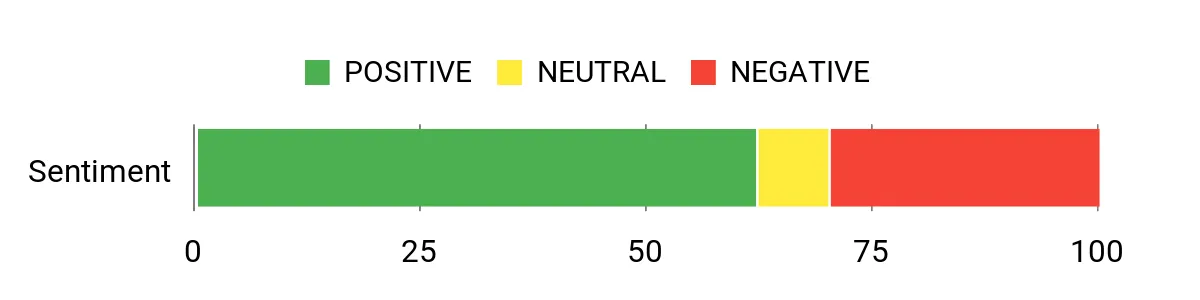
Buyer feedback in the source article is mixed-to-positive on heating speed, stainless construction, and packability. Recurring cautions involve door or ash-drawer sealing, latch fit, and the need to complete a first burn outdoors before enclosed-shelter use.
Who Should Buy This
Car camping, wall tents, hunting camps, and users who prioritize sturdy stainless construction.
Who Should Avoid This
Avoid it for backpacking or when you want a nearly maintenance-free stove with minimal setup checks.
Key Benefits
- Stainless-steel body suited to repeated vehicle-supported trips
- Compact stove body with foldable legs and included carry bag
- Multi-section chimney system with airflow control components
- Flat top and side rack support simple cooking and gear drying
- Slide-out ash drawer simplifies cleanup after the stove cools
Why You’ll Like It
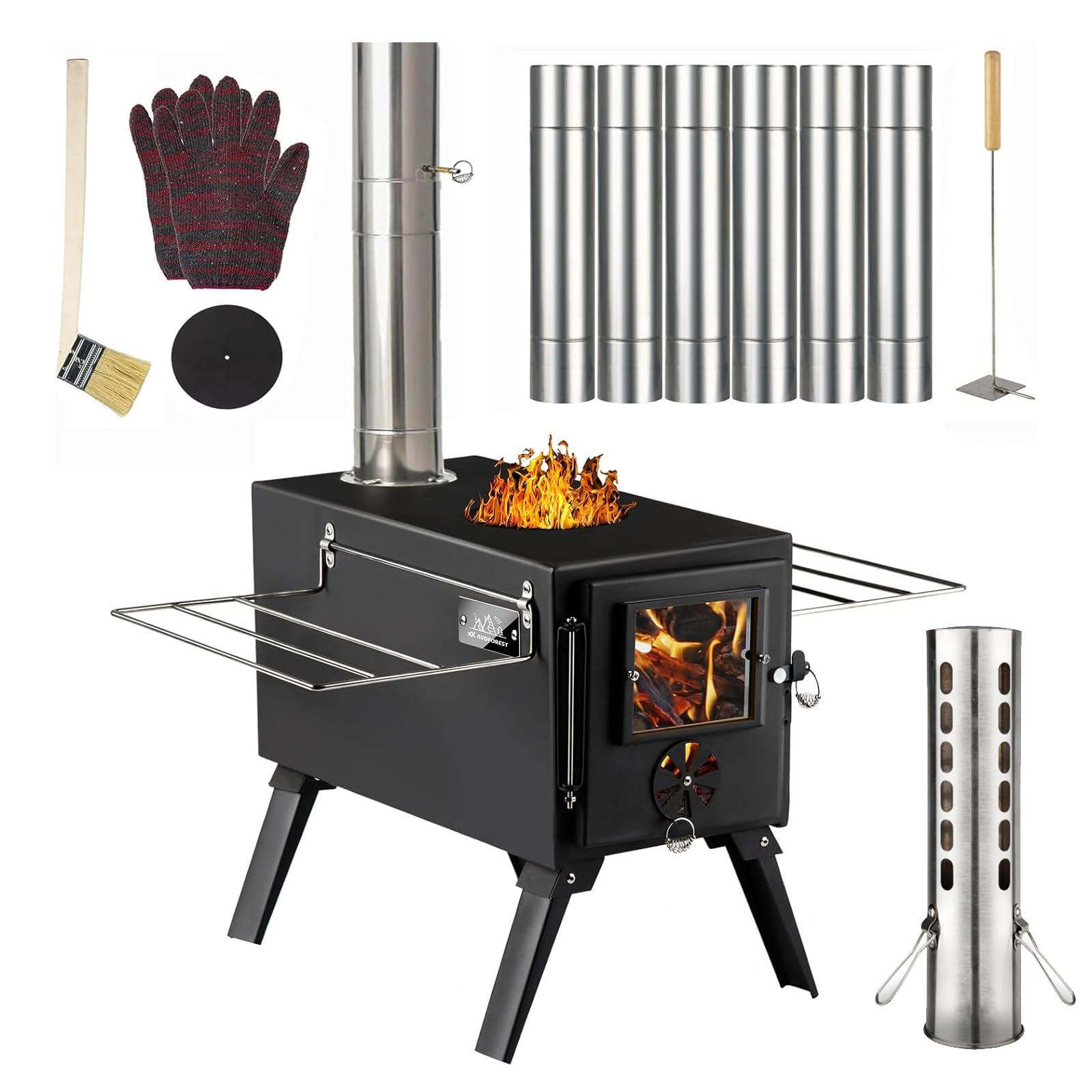
This is the most straightforward cast-iron choice in the remaining group. It is lighter than the unho and GREEN STOVE models while still targeting hot tents, ice-fishing shelters, and hunting camps where heat retention and a sturdy body are useful.
What to Know Before You Buy
Cast iron is less forgiving of rough impacts than thin stainless sheet and still makes this a vehicle-supported stove. Complete the manufacturer-recommended outdoor burn before tent use and confirm that the chimney diameter fits your stove jack.
Buyer Feedback Themes
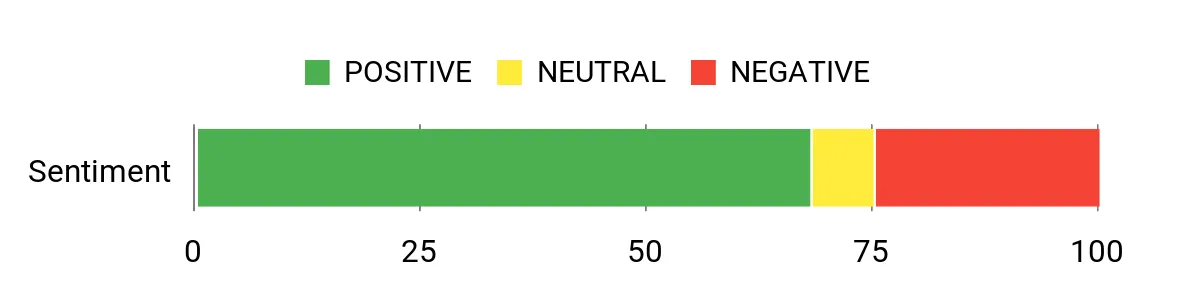
The source article highlights quick heating, a solid feel, compact pipe storage, and an easy-to-monitor glass window. Smoke during the first burn and imperfect sealing are the main recurring concerns, so initial setup and draft checks matter.
Who Should Buy This
Campers who prefer a compact cast-iron body and a viewing window for fire management.
Who Should Avoid This
Avoid it when every pound matters or when your tent jack cannot accommodate the supplied chimney system.
Key Benefits
- Cast-iron stove body with a stainless-steel chimney system
- Seven chimney sections allow height adjustment for different shelters
- Viewing window helps you monitor fuel without repeatedly opening the door
- Damper and lower air control support burn-rate adjustment
- Included tools and gloves improve first-time setup convenience
Why You’ll Like It
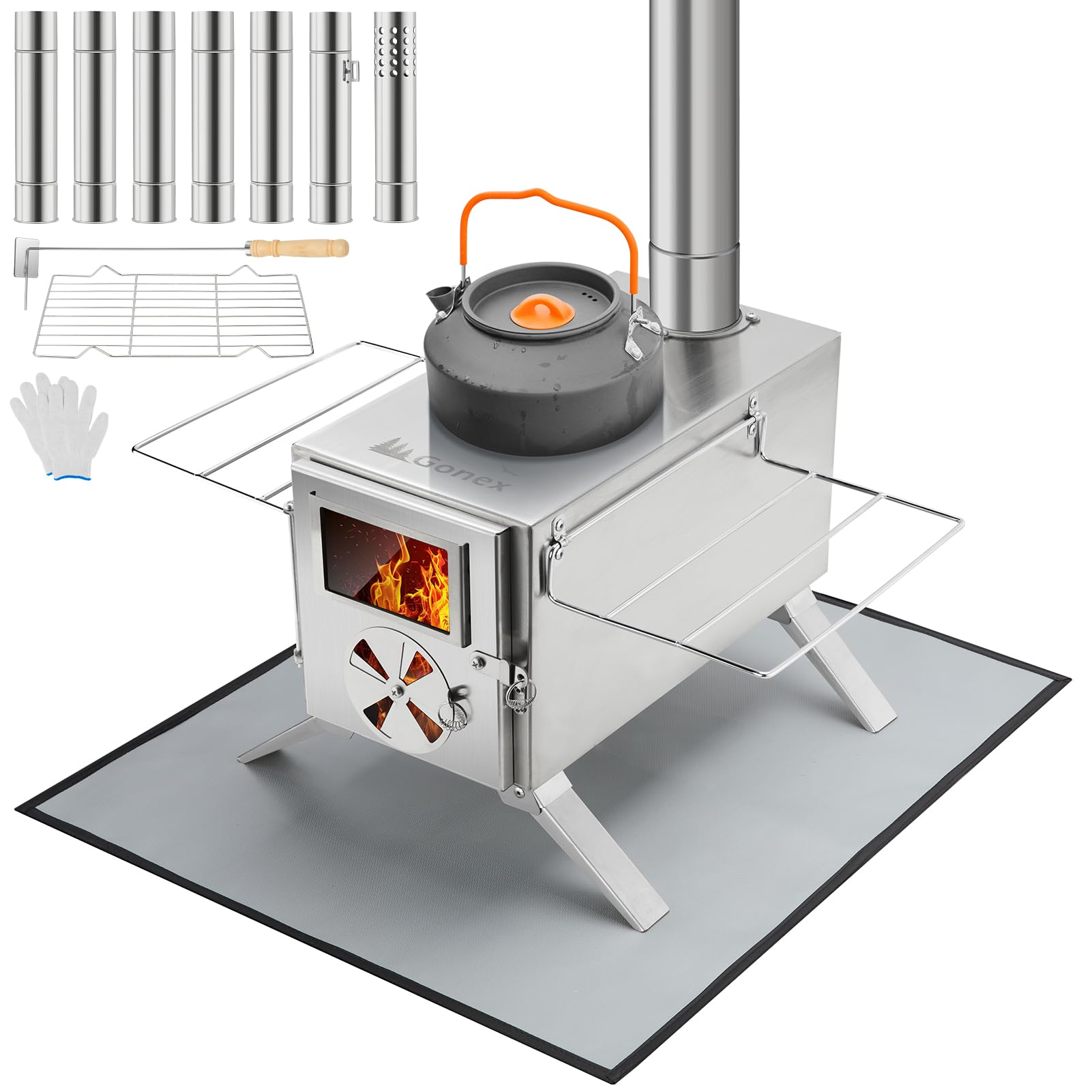
This is the strongest all-around fit for buyers who want a manageable weight, verified stainless construction, useful firebox length, and a chimney package intended for tent heating and basic cooking. It is better suited to solo or two-person shelters than large wall tents.
What to Know Before You Buy
It is still too bulky for most long-distance backpacking, and a lightweight chimney requires careful guying in wind. Confirm pipe height, stove-jack diameter, and clearances for your exact shelter before use.
Buyer Feedback Themes
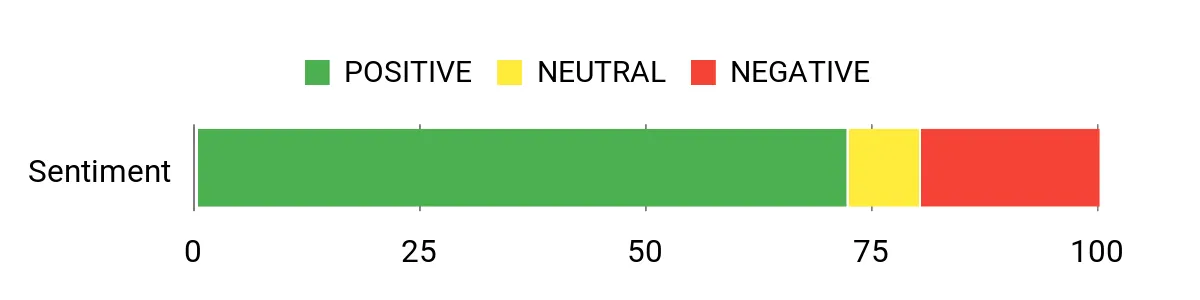
The source article reports positive themes around quick assembly, fast heat in smaller tents, compact storage, and easy transport. Thin metal in some areas, pipe stability in wind, and window sealing are the main cautions.
Who Should Buy This
Solo campers, couples, ice-fishing shelters, and first-time hot-tent users who want a balanced stainless model.
Who Should Avoid This
Avoid it for large group shelters or trips where the stove must be carried long distances on foot.
Key Benefits
- 304 stainless-steel construction listed by the manufacturer
- 13.95-pound weight is easier to manage than heavier basecamp stoves
- Firebox accepts wood up to about 15 inches according to the listing
- Adjustable chimney, damper, spark guards, and raised chimney base
- Top surface supports boiling water and simple one-pan meals

Why You’ll Like It
Pick this model when reducing refueling frequency matters more than low weight or simple controls. The pellet feed and oven make it the most specialized option here for vehicle-supported winter camps and longer basecamp stays.
What to Know Before You Buy
This is the heaviest and most complex stove in the shortlist. Correct coordination of the feed control and chimney damper is essential, and the manufacturer identifies the pellet cage as a consumable part that may eventually need replacement.
Buyer Feedback Themes
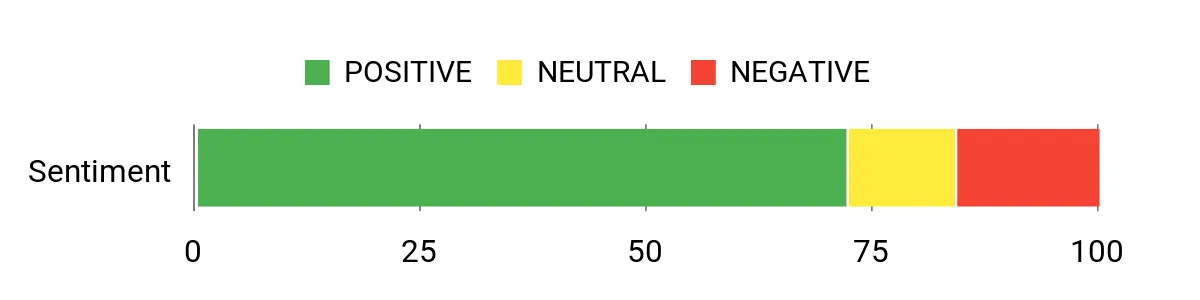
The source article emphasizes steady heat, long pellet runtime, compact packing, and a useful oven. It also notes a learning curve for setup, feed control, oven temperature, and repacking the stove and accessories.
Who Should Buy This
Car camping, pulk-supported trips, and campers who value longer pellet burns and an integrated oven.
Who Should Avoid This
Avoid it when weight, quick setup, or simple wood-only operation is your main priority.
Key Benefits
- Pellet hopper reduces the frequency of manual refueling
- Manufacturer lists a 5-to-10-hour burn range with proper adjustment
- Stainless-steel body, chimney components, ash rake, and carry bag included
- Integrated oven adds warming, toasting, and simple baking capability
- Optional wood mode broadens fuel flexibility when configured correctly
Hot Tent Stove Buying Guide
Before You Buy Checklist
- Shelter compatibility: Confirm that your tent is specifically designed for stove use and has a heat-rated stove jack.
- Pipe fit: Match chimney diameter, installed height, and exit angle to the stove jack and shelter instructions.
- Clearances: Check the required distance from tent walls, bedding, clothing, wood, and other combustibles.
- Transport: Decide whether the stove will travel by backpack, vehicle, ATV, or sled; every remaining model is best treated as vehicle- or sled-supported gear.
- Fuel: Choose wood for broad fuel flexibility or pellets for a more controlled feed system that requires the correct fuel and adjustment procedure.
- Fire management: Larger fireboxes may accept longer wood, but burn time varies with fuel species, moisture, airflow, weather, and stove design.
- Safety equipment: Pack a heatproof floor protector, gloves, spark-control components, pipe supports, battery-powered CO and smoke alarms, and a suitable extinguisher.
Wood vs. Pellet Tent Stoves
Wood stoves are simpler and let you use appropriately sized dry firewood, but they normally require more frequent tending. Pellet stoves can provide a steadier feed and longer manufacturer-claimed run times, but they are typically heavier, depend on dry pellets, and require more careful coordination of feed and airflow controls.
Stainless Steel vs. Cast Iron
Stainless steel resists corrosion and can be easier to transport at a given size, though thinner panels may cool quickly or distort if overheated. Cast iron is dense and can retain heat well, but it is heavier for its size and should be protected from hard impacts and moisture. Material alone does not determine safety or durability; construction quality, seals, chimney stability, and correct operation matter just as much.
Firebox Size, Burn Time, and Cooking Space
A larger firebox can accept longer pieces of wood and may reduce cutting and refueling, but no burn-time promise applies in every condition. Treat advertised runtime as a best-case reference, not a guarantee. For cooking, look for a stable flat top with enough room for your actual kettle or pan, while keeping handles and clothing clear of the chimney and hot surfaces.
Chimney and Stove-Jack Compatibility
Do not assume that every pipe fits every tent. Verify the pipe’s outside diameter, total installed height, spark-arrestor configuration, and required support or guy lines. The chimney should extend and terminate exactly as the stove and shelter manufacturers specify so it can draft properly and keep hot pipe away from fabric.
FAQ
How Do I Choose the Right Tent Stove for My Trip?
Start with shelter compatibility, not stove size. Confirm that the tent is designed for a stove and that its jack matches the chimney diameter and installation requirements. Then compare packed weight, firebox dimensions, fuel type, cooktop area, ash removal, and how frequently you are willing to tend the fire. For car camping and basecamps, a heavier steel or cast-iron model may be reasonable; for sled or pulk travel, packed shape and total system weight become more important.
Can I Use a Tent Stove in Any Camping Tent?
No. Use a tent stove only in a shelter whose manufacturer specifically permits stove use and provides a compatible heat-rated stove jack and clearance instructions. An ordinary nylon or polyester tent without a designed stove system can ignite, melt, or trap dangerous combustion gases.
Can I Leave a Tent Stove Burning While I Sleep?
Do not present any portable tent stove as safe unattended heat. Follow the manufacturers’ instructions and campsite rules, maintain ventilation, use working CO and smoke alarms, and keep a responsible adult actively monitoring the stove. A long advertised burn time does not remove the risks of carbon monoxide, chimney blockage, sparks, shifting pipe sections, or nearby combustibles.
How Do I Reduce Smoke Backflow?
Use dry, seasoned fuel; assemble the chimney to the required height; keep the pipe clear; and establish a strong draft before reducing airflow. Open the damper as directed when lighting or refueling, avoid overloading the firebox, and check door, ash-drawer, and pipe joints. If smoke enters the shelter, extinguish the stove if it is safe to do so, ventilate and evacuate the shelter, and do not resume use until the cause is corrected.
What Maintenance Helps a Tent Stove Last Longer?
After the stove is completely cold, remove ash, inspect the firebox and door hardware, clean the glass using the manufacturer-approved method, and brush soot or creosote from the chimney. Inspect pipe joints, spark-control components, gaskets, fasteners, and any pellet-feed parts before each trip. Store the stove dry to reduce corrosion and replace damaged components rather than improvising repairs in the field.
What Campers Prefer
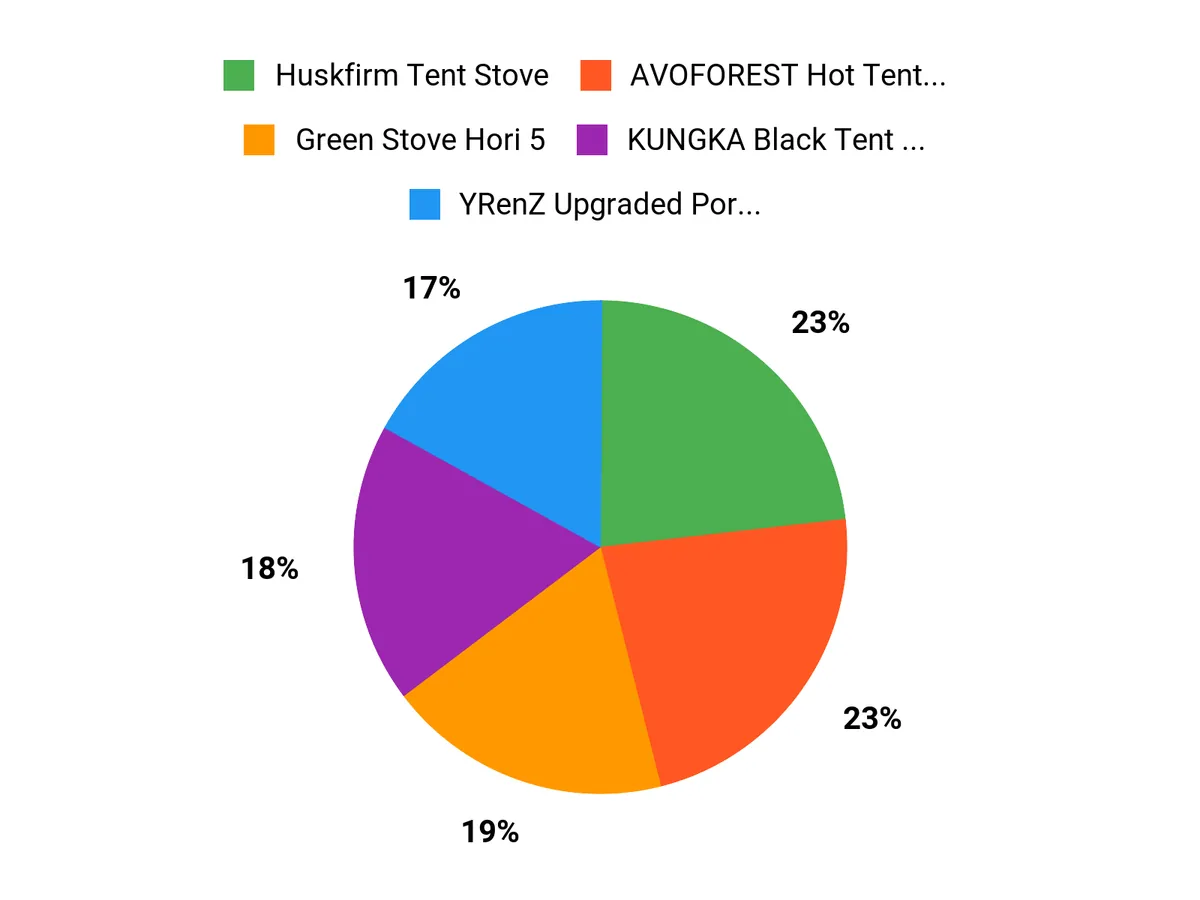
Most buyers compare heat output, firebox size, packed weight, chimney stability, ease of assembly, ash cleanup, and whether the stove offers a usable viewing window or cooking surface. The best choice is not automatically the hottest stove; it is the model that fits the shelter, transport method, fuel supply, and level of fire tending the user can safely manage.
Final Recommendation
For most small hot-tent and ice-fishing setups, start with the Gonex Hot Tent Stove because it combines the lightest verified weight in this shortlist with stainless construction, a practical firebox length, and a complete chimney package. Choose AVOFOREST when you prefer cast iron, unho when heavier stainless construction is the priority, or Green Stove Hori 5 when longer pellet-fed operation and an oven justify extra weight and complexity.
Whichever model you choose, verify current included parts and availability, match the pipe to the stove jack, complete an outdoor test burn, and follow both the stove and shelter manufacturers’ safety instructions.
Detailed Comparison
| Product Name | Image | Best For | Fuel | Material | Weight | Dimensions | Amazon Link |
|---|---|---|---|---|---|---|---|
| Gonex Hot Tent Stove |
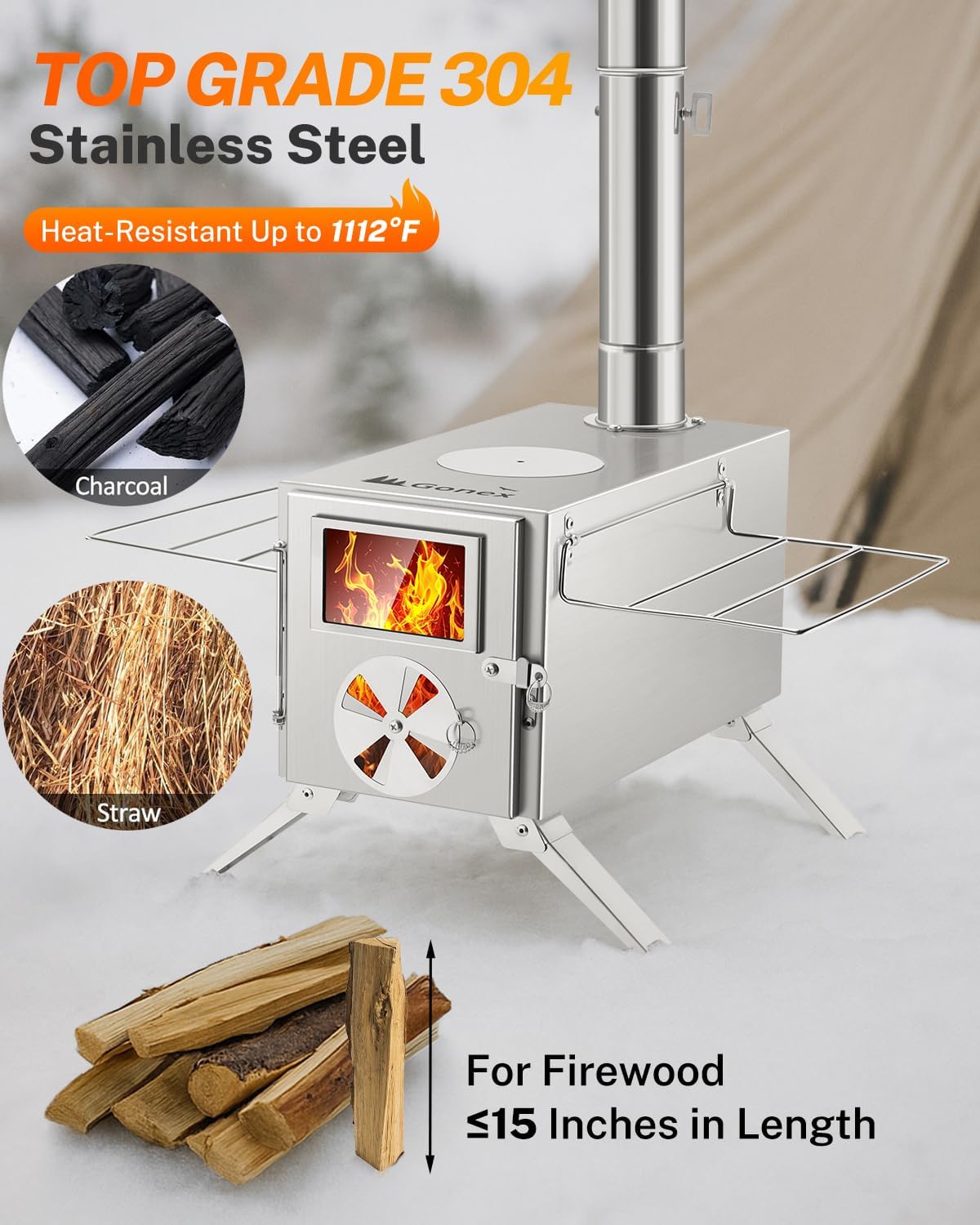 |
Best Overall | Wood | Stainless steel | 13.95 lb | 15 in L × 7.8 in W × 11.8 in H | View on Amazon |
| AVOFOREST Hot Tent Stove |
 |
Best Cast-Iron Option | Wood | Cast iron | 15.32 lb | 17.8 in L × 11 in W × 9.73 in H | View on Amazon |
| unho Hot Tent Stove |
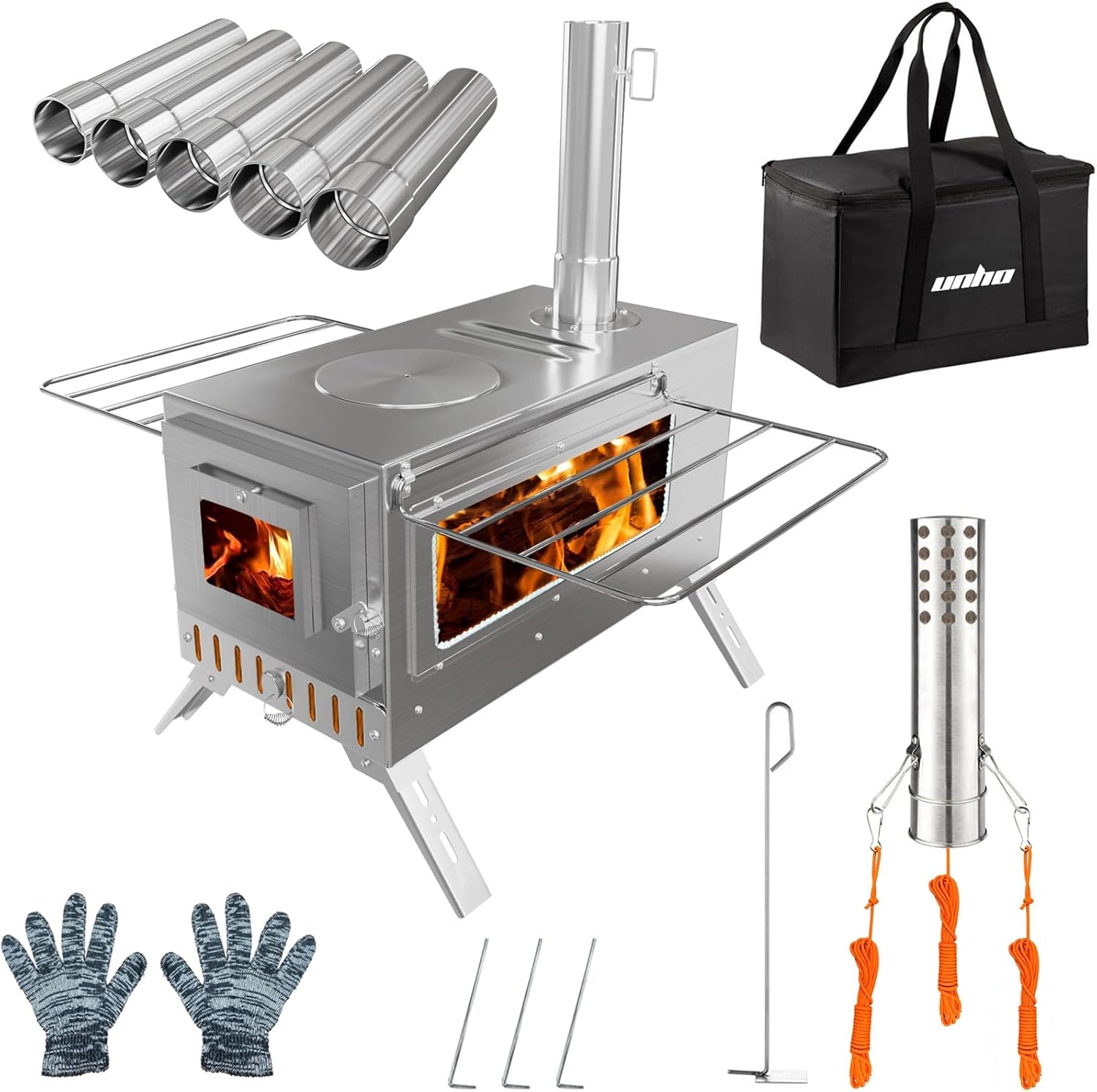 |
Best Heavy-Duty Stainless Pick | Wood | Stainless steel | 22 lb | 15.75 in D × 12.2 in W × 7.68 in H | View on Amazon |
| Green Stove Hori 5 |
 |
Best for Longer Pellet Burns | Pellets; listing also describes a wood mode | Stainless steel | 29.7 lb | 16.13 in D × 7.87 in W × 11.02 in H | View on Amazon |
Affiliate disclosure: This roundup is reader-supported. When you click an Amazon link and make a qualifying purchase, we may earn a commission at no additional cost to you. Product availability, included components, and listing details can change; verify the current seller page before ordering.
