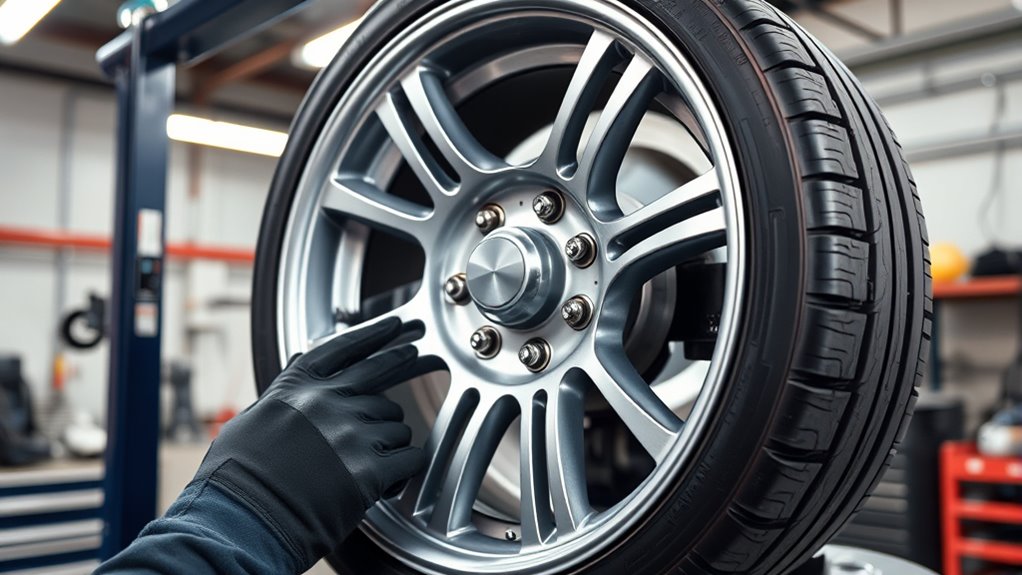
Off-car wheel balancing begins with accurate setup. The technician records the wheel measurements, checks inflation, and mounts the assembly on the balancer. Any imbalance is identified, then corrective weights are placed at the specified locations. The wheel is spun again to confirm the result. If the readings are still off, the weights are adjusted until the assembly meets balance limits and the source of vibration is reduced.
Off-Car Wheel Balancing Basics
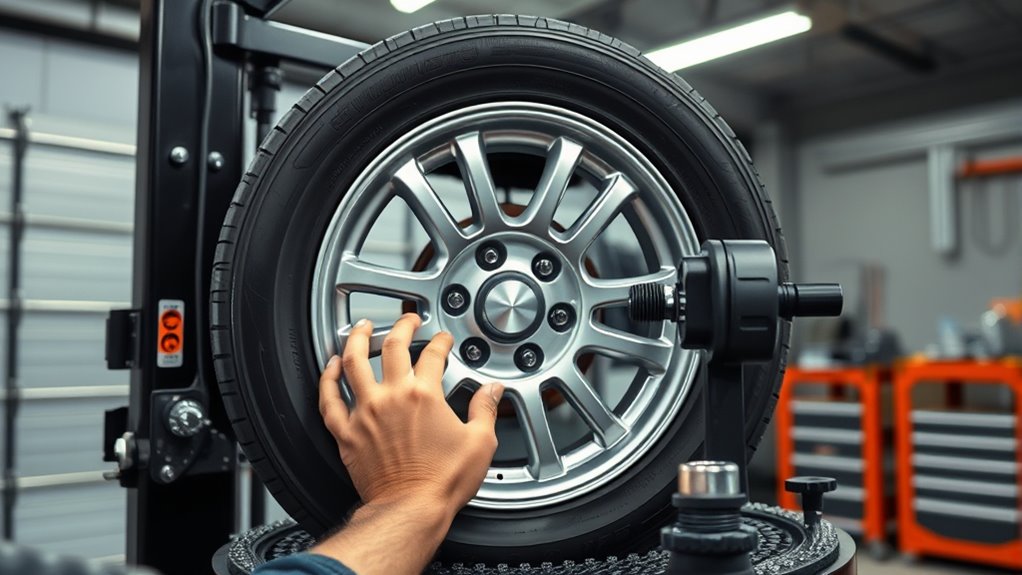
Off-car wheel balancing begins by mounting the tire and wheel assembly on a specialized balancer and entering the wheel’s diameter and width for accurate measurement.
The tire assembly is mounted on the balancer so the wheel balancer can identify weight imbalances that generate vibrations during travel. Using tire balancing procedures, the machine evaluates static and dynamic conditions, then applies balancing techniques to determine the correction required.
Mounted on a balancer, the assembly reveals imbalances, and the machine determines the correction needed.
The display indicates the placement and amount of adhesive weights, commonly positioned at the top dead center reference. Each correction is intended to reduce oscillation, support free rotation, and optimize performance without unnecessary restraint.
After weights are installed, the assembly is spun again to confirm the imbalance has been removed. This procedure preserves wheel integrity, improves fuel efficiency, and limits uneven wear.
Proper off-car balancing offers a precise mechanical remedy, allowing the driver to move with less disturbance and greater control.
Enter the Wheel Measurements
The wheel balancer must be set with the correct rim width, diameter, and distance from the backing plate before any balancing correction is calculated. These wheel measurements define how wheel balancers place correction weights and prevent wasted motion.
After tire inflation and seating are confirmed, the operator records rim width and diameter, then measures the backing plate offset. Modern wheel balancers may use automatic measuring arms to capture data quickly and reduce entry error.
Where manual entry is required, wheel rim calipers provide a precise check. Incorrect values can force repeated trials, creating chasing weights and delaying accurate balancing. The procedure is direct and disciplined, serving orderly output and ideal balance.
- Verify tire inflation and seating.
- Measure rim width with calipers.
- Confirm diameter and backing plate distance.
- Enter data into the balancer.
Mount the Wheel Correctly
With the rim width, diameter, and backing plate distance entered, the wheel is prepared for mounting on the balancer. The technician confirms the wheel is clean and free of debris so the mounting method does not introduce error.
For alloy wheels, a back cone is selected to support the center of the wheel and reduce runout; other wheel types receive the appropriate centering cone for the wheel hub. The wheel is then positioned on the balancing equipment spindle and held with pin or finger plates to secure the wheel firmly.
Alignment is checked so the assembly tracks true on the balancer, preserving measurement accuracy and consistent static balance results. The operator verifies alignment again after tightening, then inspects the machine settings and calibration before proceeding.
This disciplined procedure protects the user from false readings and keeps the process efficient, precise, and mechanically honest.
Add Weights to Balance the Wheel
Any previous wheel weights are removed before correction begins, clearing the rim for an accurate balance reading.
In wheel balancing, the machine identifies imbalance after spin and displays the required weights and placement, often at the 12 o’clock mark. The operator then selects clip-on weights or tape-on weights to suit wheel design and preserve tire balance.
For static balancing or dynamic balance, the goal is precise mass correction without excess material.
- Inspect the reading and note the indicated position.
- Choose weights matched to the rim and location of imbalance.
- Install, add, or reposition weights to adjust weights at the specified point.
- On alloy wheels, place components discreetly to protect appearance and function.
Secure fit matters; loose weights weaken performance and compromise liberation from vibration.
After placement, the corrected state should be ready for a later verify adjustment step, with no interference from the added correction.
Recheck Balance and Adjust Weights
Spin the wheel on the balancer again to confirm that the imbalance reads zero or remains within acceptable limits, typically under 1 ounce of deviation. The operator should recheck balance in the selected balancing modes and observe the imbalance readings without delay.
If error remains, adjust weights by adding, removing, or repositioning wheel weights according to the display. Effective placement is usually near top dead center, where correction force is greatest and the path to ideal balance is shortest.
The machine may indicate clip-on or adhesive weights, and the selected type should match wheel material and design. After each weight adjustments cycle, spin the wheel again to verify improvement. Continue until the readings are minimized or eliminated.
Every change should be recorded in service notes, including weight type, position, and amount. Such documentation supports repeatable results, reduces guesswork, and keeps the process clear, controlled, and free from unnecessary dependence.
Frequently Asked Questions
What Is the Proper Procedure for Wheel Balancing?
The proper procedure for wheel balancing is to mount the wheel securely, verify wheel alignment, enter measurements into balancing machines, then spin the assembly to identify imbalance.
Balancing weights are added, removed, or repositioned as indicated, with rechecks after each adjustment.
Safety checks, maintenance tips, and tire rotation support accuracy.
This process reduces vibration issues, limits tire wear, improves driving experience, and helps performance remain stable through seasonal changes.
How Much Does Wheel Balancing Usually Cost?
Wheel balancing usually costs $15–$50 per axle, like tuning a drum for a smooth ride.
Cost comparison shows road-force service at $30–$75 per wheel, while tire rotation or wheel alignment bundles may reduce expense.
Technicians add balancing weights to limit vibration issues, tire wear, and safety concerns. Proper service frequency supports driving comfort.
Maintenance tips: compare shops, ask about free balancing with new tires, and confirm pricing for larger vehicles.
What Are the Different Types of Wheel Balancing Processes?
Wheel balancing processes include Static balancing, Dynamic balancing, Road force balancing, Off car methods, and On car techniques.
Static balancing corrects rest-state imbalance; Dynamic balancing addresses rotational forces; Road force evaluates load-related variation.
Balancing weights are applied through Equipment types and Balancing machines using Precision measurement.
These procedures reduce vibration, improve Tire wear, and grant drivers freer, smoother motion through accurate correction of wheel and tire assemblies.
How Long Does Wheel Balancing Take?
Wheel balancing usually takes 30 to 60 minutes per vehicle, with full service near 1 to 1.5 hours: a tiny circus of spinning rims and obedient weights.
Technicians may inspect wheel alignment, tire wear, and tire pressure before using balancing machines.
Vibration reduction improves driving comfort, lowers road noise, and supports seasonal changes.
Maintenance tips include checking balancing frequency and correcting imbalance promptly to preserve liberated motion and safety.
Conclusion
In Photo Sequence 5, the off-car wheel balancing process concludes with the wheel assembly confirmed, mounted, weighted, and rechecked on the balancer. Each step supports accurate correction of static and dynamic imbalance, reducing vibration and improving ride quality. When measurements are set correctly and weights are applied securely, the assembly runs within specification. In this procedure, precision is the name of the game, ensuring the wheel returns to service balanced, stable, and ready for operation.

