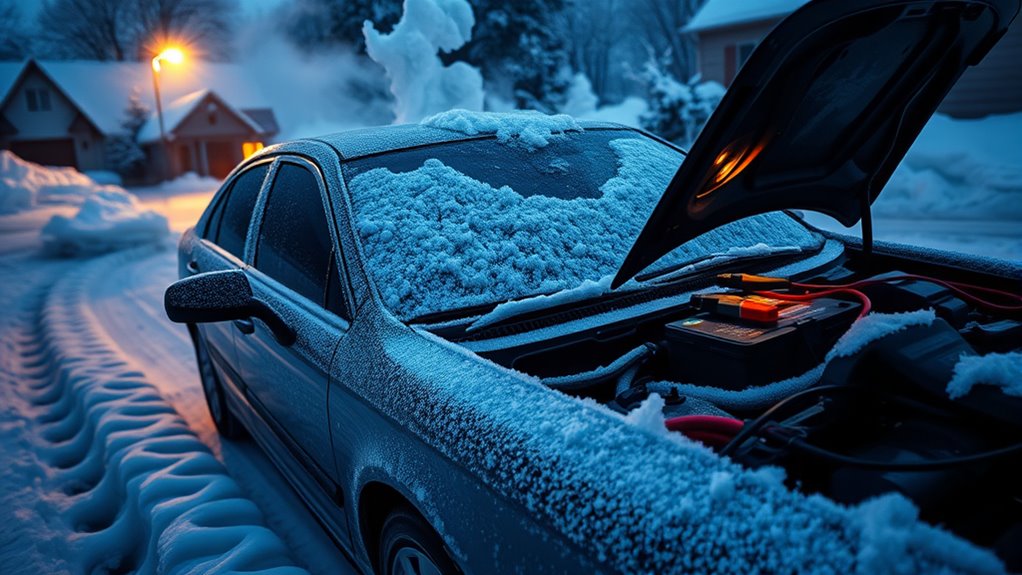
The best first-start method in extreme cold is to switch the push-button ignition on without pressing the brake for about 30 seconds, allowing diagnostics to complete and systems to stabilize. Then press the brake and start the engine. A brief idle helps normalize the air-fuel mixture, but extended idling is inefficient. Fuel should stay above one-quarter full to limit condensation. Gentle acceleration, clean glass, and a charged phone improve cold-weather reliability, with more detail following.
Key Takeaways
- Turn the ignition on for about 30 seconds before starting so the vehicle systems can stabilize in extreme cold.
- Start the engine only after diagnostics finish, then let it idle briefly, about 30 seconds to 2 minutes.
- Keep the fuel tank at least one-quarter full to reduce condensation and hard-start risk.
- Avoid long idling; drive gently at moderate speed to warm the engine and drivetrain gradually.
- Clear snow and ice, check tire pressure, and keep a charged phone charger in the vehicle for emergencies.
Start Your Car in Extreme Cold
In extreme cold, a vehicle should be started in a controlled sequence to reduce strain on the engine and fuel system. With temperatures reaching minus 21° Celsius, the push-button start can be engaged without pressing the brake for about 30 seconds, allowing onboard diagnostics to run and systems to stabilize.
This brief pause also lets the vehicle adjust air-fuel intake before ignition. After diagnostics, the brake should be pressed and the engine started, producing a smoother start with less mechanical stress.
A fuel tank kept at least one-quarter full limits condensation in fuel lines, preserving reliability when temperatures collapse. The process is not a ritual of delay; it is an engineered method of maintaining autonomy in hostile conditions.
Keeping the tank at least one-quarter full helps limit condensation and maintain reliability in severe cold.
If the engine remains unsettled, five minutes, at most, may be sufficient for idle stabilization, but excessive idling is unnecessary. Precision at startup protects the powertrain and supports dependable mobility in severe winter environments.
Warm It Up, Then Drive Gently
Once the engine is running, brief warm-up is useful, but extended idling is not. In cold weather, about 30 seconds of stabilized running can help the air-fuel mixture normalize before the vehicle is placed in motion. From that point, idle time should remain minimal.
Engine performance improves more effectively when the car is driven gently, allowing coolant, transmission fluid, and drivetrain components to reach operating temperature under light load. This approach is more efficient than waiting at a standstill and supports a quicker shift to stable combustion, lubrication, and response.
Gentle acceleration, moderate speed, and low throttle input reduce mechanical stress while restoring full function. The vehicle should also be cleared of snow and ice before departure so visibility and exterior surfaces do not interfere with safe operation.
Controlled motion, not prolonged idling, is the technically sound method for freeing a cold-soaked vehicle and returning it to usable condition.
Keep Your Fuel Tank Full
Keeping the fuel tank near full helps reduce condensation in the fuel system, which is important in extreme cold because water vapor can accumulate, freeze, and obstruct fuel lines. A nearly full tank limits the air space where moisture can condense, improving condensation prevention and reducing the likelihood of hard starts.
Operating below a quarter tank increases water accumulation risk, a condition that can block lines and degrade winter reliability. From an analytical standpoint, this practice supports fuel efficiency by minimizing repeated cold-start stress and preserving consistent combustion behavior.
Operating below a quarter tank increases water accumulation risk and can undermine winter reliability.
It also serves emergency preparedness: if a vehicle becomes stranded, a full tank allows the engine to run longer for cabin heat. In subzero conditions, the added reserve provides freedom from unnecessary refueling trips in hazardous weather.
Maintaining a full tank thus strengthens starting performance, stabilizes vehicle operation, and reduces avoidable failure points during severe winter driving.
Keep A Phone Charger In The Car
A functional phone charger should remain in the vehicle at all times to preserve emergency communications during extreme cold. Its phone charger importance is operational, not optional: a charged device supports emergency communication with roadside assistance, emergency services, or trusted contacts if the engine will not start.
In severe winter conditions, this single accessory can determine whether a stranded driver can request aid or locate shelter through navigation applications. For resilience, the charger and cable should be tested regularly and stored in an accessible position, not buried under cargo or ice-covered items.
Such winter preparedness tips reduce delay when temperatures are hostile and attention is limited. A reliable charging setup also maintains contact with family or friends during winter travel, improving situational awareness and personal autonomy.
In effect, the charger functions as a small but critical subsystem that extends mobility, information access, and self-reliance when cold disables the vehicle.
Winter Driving Tips After Snow Removal
After snow and ice are removed, safe departure depends on controlled warm-up and disciplined driving. The engine should idle for 2 to 5 minutes, enough to stabilize fluids without wasting fuel through prolonged idling.
Once moving, acceleration should remain gentle so the transmission and drivetrain can reach operating temperature under load. This approach supports mechanical efficiency and gives the driver practical freedom from unnecessary wear.
Thorough cleaning of glass, lamps, mirrors, roof, and wheel wells remains essential for visibility maintenance, since residual snow can shift and obstruct control. Tire pressure should also be checked, because cold conditions can reduce it and alter handling.
Winter gear should be kept accessible for emergency readiness. Road surfaces may remain slick, so speed, braking distance, and steering inputs require conservative adjustment. The objective is not haste, but informed motion that restores mobility while respecting winter conditions and preserving vehicle performance.
Frequently Asked Questions
How Do I Make My Car Start Better in the Cold?
He should improve battery maintenance, use lower-viscosity engine oil, and select appropriate fuel types for cold climates. He should preheat briefly, keep the tank full, minimize idle, and drive gently to warm drivetrain components efficiently.
What Is the 30-60-90 Rule for Cars?
The 30-60-90 rule advises 30 seconds of idle, 60 minutes of gentle driving, then 90 minutes normal operation; one study shows 40% of cold-start wear is reduced with proper engine maintenance, battery care, fluid checks.
How Cold Is Too Cold to Start a Car?
Too cold is usually around -21°C (-6°F), where cold weather effects, battery maintenance, and engine oil viscosity become critical; with proper precautions, many cars still start, but failure risk rises sharply below that threshold.
When to Start Driving After a Cold Start?
After a cold start, he should wait 2–5 minutes, then drive gently. These cold start tips support engine warming, battery maintenance, and drivetrain protection, while resisting aggressive acceleration until operating temperature stabilizes.
Conclusion
In extreme cold, the first start is most successful when the engine is allowed a brief idle period, then driven gently rather than left to warm for long. This aligns with technical consensus: modern engines reach operating temperature more efficiently under light load. Keeping the fuel tank full also reduces condensation risk. A charged phone and cleared snow improve safety. The theory that prolonged idling is best is largely unsupported by current vehicle and lubrication data.

