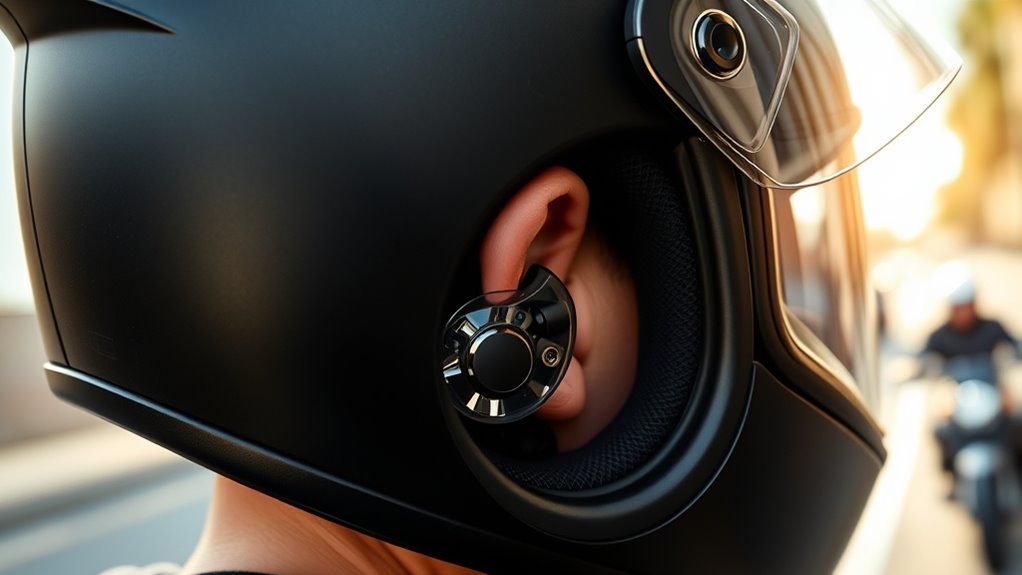
Nothing Ear (open) can work under a motorbike helmet if the helmet fit is not too tight and the earbuds stay stable. Their open design keeps riders aware of traffic, and comfort is strong on short rides. At speed, wind noise quickly limits clarity, especially above 60 mph. They suit riders who value awareness over isolation, but they are not ideal for bass, long commutes, or noisy highways, and the details below explain why.
Key Takeaways
- Nothing Ear (open) can fit under some helmets, but comfort depends heavily on helmet shape, padding depth, and ear anatomy.
- The open design improves traffic awareness, making it safer than sealed earbuds for riding in busy or unpredictable conditions.
- Audio stays usable at moderate speeds, but wind noise becomes a major problem above about 60 mph.
- Tight helmets can create pressure points and shift the earbuds inward, while loose helmets may let them move or fall out.
- It suits short, open-road rides better than fast commuting, and it is not a full replacement for helmet communicators.
Nothing Ear (open) on a Motorcycle
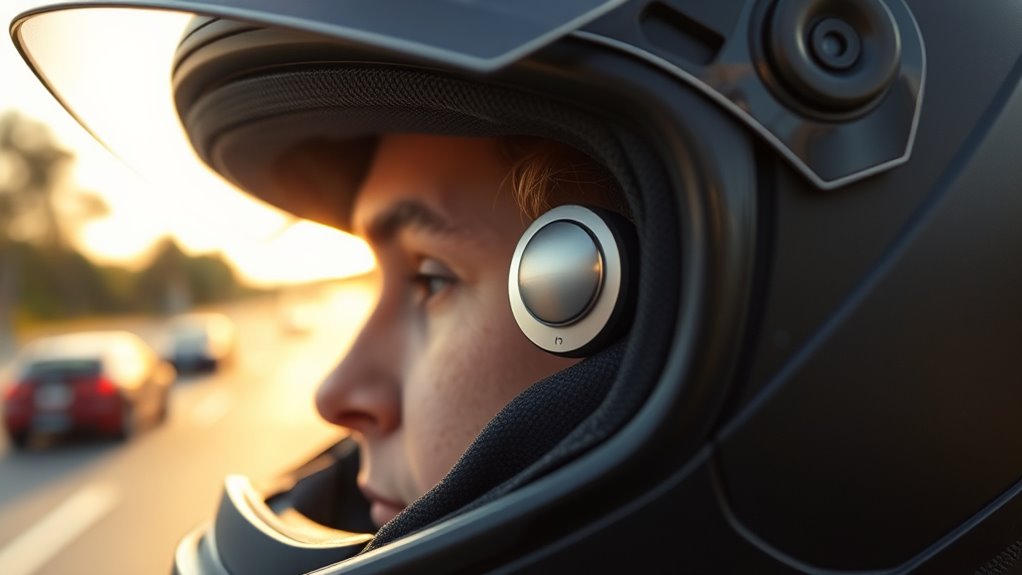
The Nothing Ear (open) can be a practical option for motorcycle riders who want ambient awareness while listening to audio or taking calls. Its open design helps preserve awareness of traffic, sirens, and nearby hazards, supporting safer, more liberated riding.
The Nothing Ear (open) keeps riders aware of traffic and hazards while enjoying music or calls.
The Nothing Ear (open) also uses a lightweight, ergonomic fit that can remain comfortable on long journeys and sit securely under many helmets. Bluetooth connectivity enables hands-free calls and music playback, reducing the need for stop-and-start handling.
Battery life is strong, with up to 34 hours of total playtime, which suits extended rides and commutes. That said, the open structure will not block wind noise as well as traditional in-ear models.
Helmet style and riding speed matter, so riders should test the fit and sound performance before relying on it daily.
Will Nothing Ear (open) Fit Under a Helmet?
Fit under a helmet is one of the main questions for riders considering the Nothing Ear (open). The Nothing Ear (open) has a lightweight, open-ear shape that can sit more naturally beneath many helmets than bulkier earbuds. Its lack of silicone tips may reduce pressure points and limit unwanted shifting when the helmet pads clamp down.
That said, fit is not universal. Helmet interior shape, padding depth, and ear anatomy all affect comfort and stability. A narrow race helmet may feel different from a touring lid, and one rider’s freedom can become another rider’s irritation.
The practical answer is to test the Nothing Ear (open) with the exact helmet model before committing to use on the road. If the fit is clean, it can support a more liberated, less obstructed ride. If it presses or moves, the helmet-earbud pairing should be reconsidered.
How Nothing Ear (open) Sound at Speed
At speed, the Nothing Ear (open) can still deliver clear audio, with users reporting usable sound up to around 70 mph (112 km/h), but wind noise becomes the main limitation.
For riders asking how nothing ear (open) sound at speed, the answer is practical: the open design preserves awareness, yet it gives up isolation, so traffic, airflow, and road noise can intrude on music playback.
In calmer conditions, voices and mids remain intelligible, and the liberated rider stays connected to the environment.
As pace rises, clarity depends on the surrounding wind and may require a higher volume setting to maintain detail. That extra gain can become tiring on longer journeys.
In short, these earbuds suit short, open-road stints best, especially where situational awareness matters more than bass weight or sealed-in immersion.
Under a helmet, they remain serviceable, but not silent.
How to Wear Nothing Ear (open) Under a Helmet
Because the Nothing Ear (open) uses a semi-open design, it can be worn under a helmet while still preserving some ambient awareness, but placement matters.
The earbuds should sit securely in the ear canal, with a snug seal that resists shifting as the rider turns, brakes, or leans. A Motorcycle Helmet with adequate internal space is preferable, since cramped padding can press the shells inward and create irritation.
Strap tension should be adjusted so the helmet stabilizes without pinching the earbuds. The aim is a balanced fit that protects, stays comfortable, and leaves the rider free.
Before committing to a longer run, it is wise to test the setup at low speed, where wind and vibration are easier to assess. If the fit remains stable and the audio stays usable, the arrangement is ready for the road.
Nothing Ear (Open) Vs Helmet Comms
Nothing Ear (Open) offers a lighter, less intrusive fit under a helmet than most built-in comms systems, which can improve comfort on longer rides.
Its open-ear design can provide clear audio at lower speeds while preserving awareness, but wind noise becomes a stronger factor as speed rises.
In contrast, helmet comms still lead for hands-free rider-to-rider communication, making the choice a tradeoff between audio-only convenience and full intercom functionality.
Audio Clarity Vs Speed
When it comes to audio clarity at speed, the Nothing Ear (Open) has an edge over many helmet communicators, especially once wind noise starts to rise.
Its open design preserves ambient awareness while still delivering strong audio clarity under a helmet. Paired with earplugs, it can hold sound quality effectively up to 75 mph, beyond the practical comfort zone of many Sena or Cardo units, which usually perform well to about 60 mph.
That makes it a freer, more flexible listening option for riders who value clean playback and road awareness. The tradeoff is leakage in loud environments, where closed helmet systems remain better at rejecting outside noise and supporting rider-to-rider communication.
Still, for solo riding, the Nothing Ear (Open) favors speed without sacrificing clarity.
Hands-Free Comms Tradeoffs
For hands-free communication, the Nothing Ear (Open) is a compromise rather than a replacement for a helmet communicator. It can support casual calls and navigation prompts, but its open design and lack of intercom or active noise cancellation limit true hands-free comms at speed.
Dedicated systems from Cardo and Sena are built for rider communication, with clearer voice pickup, better integration, and more reliable operation while moving. Nothing Ear (Open) preserves ambient awareness, which suits riders who want a lighter, less sealed experience, yet wind and engine noise can erode clarity on fast roads.
The result is practical freedom for short, relaxed rides, but not the robust communication control that helmet comms deliver when uninterrupted conversation and navigation matter most.
Helmet Fit And Comfort
Helmet fit often becomes the deciding factor between the Nothing Ear (Open) and a helmet communicator. For riders seeking freedom, the Nothing Ear (Open) offers lightweight comfort and a less intrusive profile, especially under helmets with enough internal space.
Traditional comms can press on the ears and feel restrictive over distance.
- helmet fit varies by shell shape.
- comfort improves with the open-ear design.
- security favors helmet comms during aggressive riding.
- wind noise control remains stronger with dedicated systems.
The tradeoff is clear: the Nothing Ear (Open) may shift or loosen, while helmet communicators usually stay put and deliver steadier audio.
Practical choice depends on whether comfort and openness outweigh maximum retention and clarity.
Nothing Ear (Open) Vs Noise-Cancelling Earbuds
Compared with noise-cancelling earbuds such as the AirPods Pro, the Nothing Ear (Open) takes a different approach to riding audio by keeping ambient sound in the mix rather than suppressing it. This open-ear design supports awareness of traffic, sirens, and road cues, which matters when liberty on two wheels depends on reading the environment, not sealing it out.
The Nothing Ear (Open) sits lightly under a helmet and avoids the pressure and bulk often associated with noise-cancelling earbuds. That makes it a practical choice for riders who want comfort and breathability over total isolation.
Where Nothing Ear (open) Struggle Under a Helmet
Nothing Ear (open) can create pressure points under a motorcycle helmet because their shape may press against the padding and cause discomfort.
Their open design also leaves riders exposed to wind noise, which reduces audio clarity at speed.
A loose fit adds another problem, since the earbuds can shift or fall out while riding.
Helmet Pressure Points
When worn under a tight motorbike helmet, the Nothing Ear (open) can create noticeable pressure points around the ears. These helmet pressure points matter because the design sits where helmet padding already exerts force, reducing comfort and stability on longer rides.
- Helmet fit can push the earphones inward, shifting their position.
- Ear tips may rub against internal padding, increasing local pressure.
- Head shape and helmet style change the severity of discomfort.
- Compared with bone-conduction alternatives, the fit can feel less liberated.
The result is a less secure setup and possible changes in sound quality while riding.
For riders seeking freedom, the practical test is simple: if pressure builds quickly, the arrangement is unlikely to stay comfortable enough for regular use.
Wind Noise Interference
Pressure is only part of the problem; once the bike is moving, wind noise becomes the bigger limitation. The Nothing Ear (open) design leaves external sound paths open, so helmet airflow quickly overwhelms music and calls. Above 60 mph (100 km/h), wind noise can dominate the cabin-like space under the shell, making speech thin and tracks hard to follow. No noise-cancelling means no electronic defense against gusts.
| Speed | Wind noise load | Result |
|---|---|---|
| 30 mph | Low | Usable |
| 50 mph | Moderate | Reduced clarity |
| 60 mph | High | Music fades |
| 70 mph | Very high | Calls fail |
| Bone conduction | Lower | Better isolation |
For riders seeking freedom, the practical verdict is simple: these earphones are not built for fast, windy helmet use.
Loose Open-Ear Fit
Although the Nothing Ear (open) is designed for everyday openness, its loose fit becomes a liability under a motorcycle helmet. The loose open-ear fit offers little anchor point, so helmet pressure can push the earbuds out of position, especially at speed. This instability reduces freedom rather than supporting it.
- Shifting fit: movement breaks seal consistency.
- Drop risk: a jolt can dislodge one side.
- Sound leakage: audio escapes while road noise enters.
- Safety impact: distraction grows as adjustments increase.
For riders seeking liberation, a secure alternative is usually wiser. Bone conduction headphones or snug-fitting earbuds provide greater stability, less interference, and a more dependable listening experience beneath a helmet.
Who Should Skip Nothing Ear (open) for Riding?
Riders who need strong wind-noise isolation, a secure under-helmet fit, or dependable communication should skip the Nothing Ear (open) for riding. Its open design does not seal out wind noise, so motorcycle riding at speed can quickly become fatiguing and distracting.
The Nothing Ear (open) also may shift under a helmet, which weakens comfort and raises the chance of loss during a ride. For riders seeking freedom on the road, that instability matters.
Communication users should look elsewhere as well. In noisy conditions, its microphone may struggle to deliver clear voice pickup, reducing reliability for calls or intercom use.
Riders who want bass-heavy sound may also feel underpowered, since the tuning is balanced rather than impact-focused. For high-speed commuting, exposed routes, or windy weather, another option will usually offer better control, better wind noise isolation, and more confidence.
Are Nothing Ear (open) Worth It for Riders?
For some motorcyclists, the Nothing Ear (open) can be a practical choice, but only in the right conditions. Its semi-open structure may improve airflow under a helmet, and the lightweight 4.6-gram build can reduce pressure during long rides.
The Nothing Ear (open) also preserves ambient awareness, which supports safer riding when hearing traffic, sirens, and road cues matters.
- Better comfort than sealed in-ears for many helmets.
- Stronger situational awareness for urban and mixed traffic.
- Up to 34 hours of battery life for extended freedom.
- Less wind blocking, so clarity may drop at speed.
That trade-off is decisive. Riders seeking isolation from wind noise may find the Nothing Ear (open) underwhelming on fast roads, where external noise can overpower audio.
For calm commutes, touring stops, and riders who value openness over max sound blocking, they can be worth it.
Frequently Asked Questions
How to Wear Earbuds Under a Motorcycle Helmet?
Earbuds should be seated firmly before the helmet goes on, with low volume and a snug, pressure-free fit. Sound Isolation improves if helmet space is ample; testing beforehand prevents discomfort, shift, or loss during riding.
What Are the Best Earbuds to Wear Under a Motorcycle Helmet?
Galaxy Buds, Sony XM5, and Plugfones are best; Earbud Comfort is paramount. They fit low-profile under helmets, handle wireless freedom, and resist wind noise. For riders, their performance is almost heavenly.
Can You Wear Headphones Under a Motorcycle Helmet?
Generally, no; wearing headphones under a motorcycle helmet can reduce fit, comfort, and safety. Noise Isolation may seem appealing, but helmet communicators or bone-conduction options better preserve awareness, freedom, and reliable performance.
What Are the Best Headphones to Wear Under a Helmet?
The best headphones under a helmet are low-profile, helmet-friendly in-ear or open-ear models with Noise Isolation and secure fit; they glide under padding like a whisper, balancing comfort, safety, battery life, and wind resistance.
Conclusion
Nothing Ear (open) can work under a helmet, but they are not a miracle solution. Riders who want light, open sound for short commutes may find them useful, yet wind noise, fit, and helmet pressure remain real limits. In this modern age, they are a small tool, not a grand tourer of audio. For long rides, intercoms or true riding gear still make more sense. The best choice depends on speed, comfort, and tolerance for compromise.