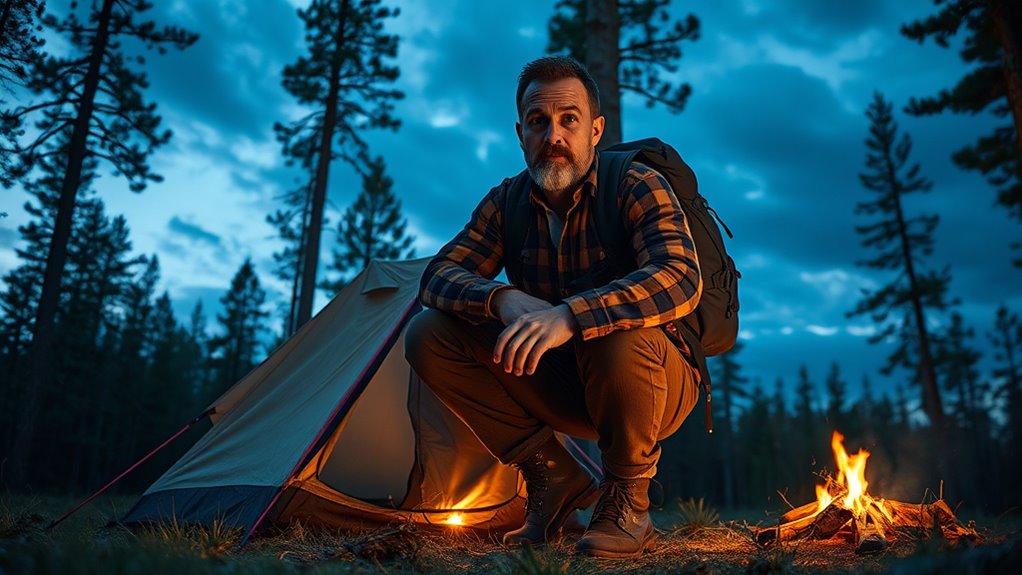
Camping outside at 9 feet tall is possible with the right setup. Beginners should choose easy 2–5 mile trails with under 500 feet of gain, then plan 30–45 minutes per mile. A tall camper needs a tent with at least 75 inches of peak height and a sleeping bag that fits and insulates well. Budget campsites, book early, pack maps, water, and food, and the rest becomes much more manageable, with useful details ahead.
Key Takeaways
- A 9-foot-tall camper needs extra-tall tents, ideally with at least 75 inches of peak height for easier movement.
- Choose insulated sleeping bags rated for the coldest expected temperatures and at least 6 feet long for better fit.
- Beginner-friendly campsites and trails should be well-marked, short, and manageable, with easy footing and under 500 feet of elevation gain.
- Budget camping in 2026 can stay affordable by using shoulder-season rates, dispersed camping, and meal prepping.
- Plan safety carefully by sharing your route, downloading maps, and packing water, snacks, first aid, and sun protection.
Why Beginner Campers Need Better Gear
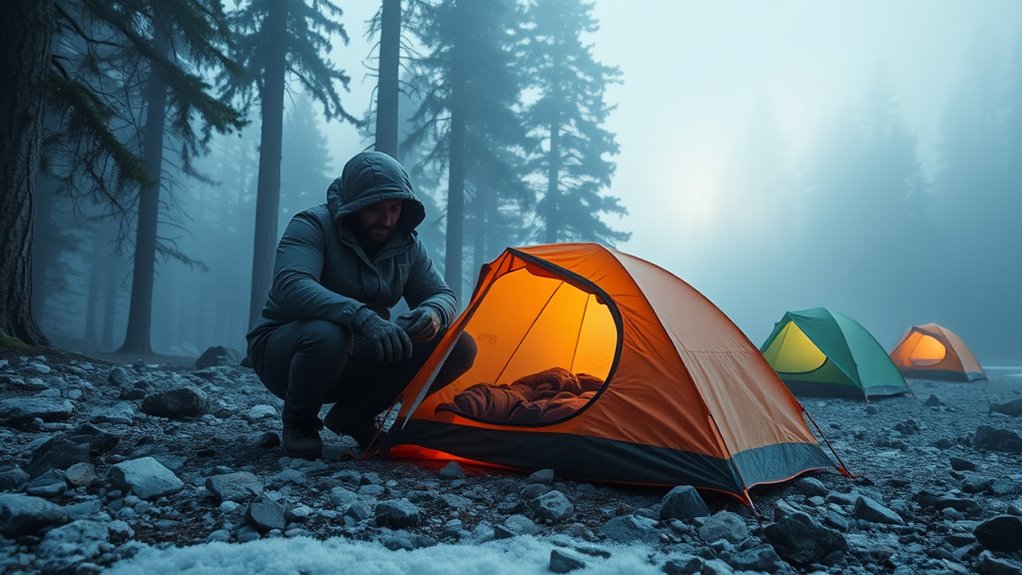
Beginner campers often underestimate how much the right gear affects both comfort and safety, yet a well-designed tent and sleeping bag can make a major difference on a first trip.
Better gear helps new campers stay dry, warmer, and less rattled when weather shifts after dark. In 2026, average costs for camping trips can run $85 to $150 for a family weekend, so budget-friendly choices matter.
Better gear keeps beginners dry, warmer, and calmer when weather turns, and budget-friendly choices matter.
The smart approach is to select tents with solid weather resistance, simple setup, and enough room to move without hassle. Lightweight sleeping bags also reduce fatigue while improving rest, which keeps energy steady on the trail and at camp.
When equipment is functional, beginners spend less time fighting failures and more time enjoying open air, quiet mornings, and the freedom that comes with self-reliance.
Reliable, budget-friendly gear is not luxury; it is the foundation of a safer, calmer start.
Pick a Beginner-Friendly Trail
A beginner-friendly trail should stay in the 2–5 mile range, with wide, well-marked footing such as hard-packed dirt or gravel so the route stays easy to follow.
An elevation gain under 500 feet helps keep the hike manageable, especially on an out-and-back route where total mileage and a 30 to 45 minute-per-mile pace should be planned in advance.
Trail apps like AllTrails and printed maps can provide distance, difficulty, current conditions, and a backup if cell service drops.
Easy Trail Length
For those new to hiking, trails in the 2- to 5-mile range usually offer the best balance of scenery and manageability, especially when the route stays under 500 feet of elevation gain.
This easy trail length lets beginners move freely without feeling trapped by distance or strain. The National Park Service and many Public Lands listings often flag beginner trails with clear mileage notes, making route choice simpler.
Wide, well-marked paths of hard-packed dirt or gravel support steady footing and a calm pace. Trail apps such as AllTrails help compare distance, difficulty, and current conditions before setting out.
With more than 150,000 miles of trails across the U.S., there is room to choose a route that opens the outdoors while keeping the first journey grounded, safe, and liberating.
Gentle Elevation Gain
Gentle elevation gain keeps a first hike comfortable and steady, with routes under 500 feet of climbing often giving new hikers enough challenge without turning the outing into a grind. For beginner-friendly camping, that balance supports confidence and freedom on the trail.
- Choose 2-5 mile routes.
- Favor wide, well-marked paths.
- Look for hard-packed dirt or gravel.
- Explore National Forests and Grasslands nearby.
These landscapes offer abundant access, since more than 70% of Americans live near one. A calm ascent lets legs settle into a rhythm, keeping the journey practical and rewarding.
With gentle elevation gain, the outdoors feels open rather than punishing, making it easier to move lightly, breathe deeply, and enjoy the wild without overreach.
Trail Apps And Maps
Once the route has a comfortable grade, the next step is picking a trail that matches a beginner’s range and confidence. Trail apps such as AllTrails help by listing difficulty, distance, elevation gain, and current conditions, giving hikers a clear read before setting out. For navigation, maps remain essential, especially where cell service fades. Beginner trails usually run 2-5 miles and stay under 500 feet of climb, with wide, well-marked surfaces of hard-packed dirt or gravel. That keeps hiking steady and liberating, not stressful.
| Trail check | What to seek |
|---|---|
| Distance | 2-5 miles |
| Surface | Wide, firm, marked |
With over 70% of Americans near a National Forest or Grassland, options are close, practical, and ready.
Plan Your Hike Time
A hiker planning an out-and-back route should count the return mileage first, then estimate time using about 30 to 45 minutes per mile on easy ground, with extra minutes for snacks, photos, and brief rests.
A 3-mile trek may require 90 minutes to more than two hours depending on pace and stops, so trail length alone does not tell the full story.
Time of day, weather, and trail apps such as AllTrails can help confirm conditions, difficulty, and a realistic finish time before heading out.
Hike Length Estimates
When planning a hike, it helps to estimate 30 to 45 minutes per mile on easy terrain. So a 3-mile outing may take about 90 minutes to more than 2 hours once breaks are included.
These hike length estimates support a freer, calmer camping trip and keep plans realistic.
- For out-and-back routes, double the mileage to find the total hike distance.
- For beginner hikes, choose 2- to 5-mile trails with under 500 feet of gain.
- Use trail apps such as AllTrails to check distance, difficulty, current conditions, and elevation gain.
- Leave room for snacks and photo stops, because the trail is meant to be lived, not rushed.
Clear planning gives hikers more room to roam with confidence.
Trail Time Factors
Trail time depends on more than mileage, so careful planning keeps a hike comfortable and safe.
On out-and-back routes, total distance should be doubled before estimating hiking time, because the return leg changes the day.
On easy terrain, 30 to 45 minutes per mile is a solid guide, so a 3-mile outing may take 90 minutes to well over two hours with breaks.
Snack stops and photo pauses deserve space in the plan; they improve the experience and help stay safe.
Weather, daylight, and trail apps like AllTrails can reveal current conditions, difficulty, and distance.
That information helps hikers choose camping spots wisely and move with freedom, not pressure.
Choose a Campground That Fits Your Budget
Camping costs can vary widely, so choosing a campground that fits the budget starts with comparing fees, amenities, and timing. In the 2026 camping season, developed campgrounds often charge $20 to $90 for two nights, so budget-conscious campers should weigh what each site actually includes.
Shoulder months like April-May and September-October usually bring 20-40% lower rates, opening room for affordable camping options without sacrificing the open-air freedom sought in the wild.
- Check Recreation.gov early for popular sites, since weekends and holidays book out fast.
- Scan over 170 national forests for dispersed camping, where free spots can keep costs low.
- Compare state parks and local tourism board listings for quieter, less expensive alternatives.
- Match the campground to the trip’s purpose; a simple, well-located site can preserve money for longer journeys and fuller horizons.
Pack Sleep Gear That Fits
A good night under the stars starts with gear that matches the weather and the body. A sleeping bag should have enough insulation for the coldest hours and at least 6 feet of length for taller campers.
A sleeping bag should match the coldest hours and give taller campers at least 6 feet of length.
In a camping tent, a peak height of 75 inches or more helps the body move, sit, and change layers without constant crouching.
Sleeping pads matter just as much: lightweight air pads trim pack weight for those chasing freedom on the trail, while thicker foam models add cushioning and steady warmth on rough ground. The right balance depends on the route, the forecast, and how much comfort is worth carrying.
A pillow, or a stuff sack packed with clothes, supports the neck and keeps rest more complete. When sleep gear fits well, the night feels less like endurance and more like open-air recovery.
Book Campsites Before They Sell Out
Once sleep gear is squared away, the next step is locking in a place to use it, because popular campgrounds can disappear fast.
To book campsites before they sell out, a traveler should watch opening dates closely, especially for a National park or state parks with heavy demand. Yellowstone often opens six months ahead; Yosemite, five. Public land reservations on Recreation.gov make it simple to check availability and secure a site before weekends and holidays vanish.
- Mark release dates on a calendar.
- Search Recreation.gov early and often.
- Consider first-come, first-served spots, but arrive at dawn.
- Scan local tourism boards for quieter, less obvious campgrounds.
Peak season crowds move quickly, so planning ahead preserves freedom and choice.
With flexible reservations and a few backup options, the road stays open and the campsite stays theirs.
Stay Safe on the Trail and at Camp
Safety starts before the boots hit the trail, with a clear plan shared with someone back home, including the route and expected return time. Those hiking plans strengthen safety and give freedom to roam with less risk.
Trail maps should be downloaded or printed, because cell service often fades where the land opens up. Essential items belong in the pack: water, snacks, a basic first aid kit, sun protection, and bug or bear spray.
Solo hiking or camping can raise danger, so beginners are better with a partner or group. On trail and at camp, attention must stay on weather, fatigue, and pain signals; turning back is wisdom, not defeat.
Leave No Trace principles should guide every step, from campsites to crossings, preserving wild places for the next wanderer. With preparation, the outdoors stays open, safe, and liberating.
Camp on a Budget in 2026
Budget-minded campers in 2026 can still get a solid outdoor trip without spending much, especially when they choose developed campsites where average U.S. fees hover around $20 per night and rustic cabins start near $45.
That makes camping on a budget practical, not punishing, for those chasing open air and room to breathe.
- Pick shoulder seasons: April-May and September-October often run 20-40% cheaper than peak summer.
- Consider dispersed camping: over 170 national forests offer free, low-impact sites for self-reliant travelers.
- Use meal prepping: packing food at home can keep a family weekend near $85-$150.
- Reuse household gear: blankets, bins, and kitchen tools reduce new purchases and protect funds for essentials.
With simple planning, the budget stays light while the horizon stays wide.
Save Money on Food and Fuel
Food and fuel costs can stay manageable when campers plan ahead and keep logistics simple. Smart meal prepping at home trims camping food expenses by replacing pricey packaged items with simple dishes built from grocery staples and bulk buys.
Families often keep weekend food spending near $30-$60 by packing rice, oats, pasta, beans, and trail mix, then portioning them into reusable containers. Freezing water bottles before departure adds drinking water and works as ice packs, cutting the need for extra ice purchases.
Families keep weekend food costs near $30-$60 by packing staples and using frozen water bottles as ice packs.
To lower fuel costs, travelers can choose economy cars with stronger mileage, especially on long runs to remote sites. Meals that need little cooking also save fuel by reducing stove time and the amount of gear hauled.
With careful planning, campers carry less, spend less, and move with more freedom into the wild. Such choices support a lean, liberated trip and leave more cash for maps, fuel, and time outdoors.
Frequently Asked Questions
What Is the 3-3-3 Rule for Camping?
The 3-3-3 rule for camping recommends hiking no more than 3 miles, gaining under 300 feet, and finishing within 3 hours. It supports campfire safety, tent setup, hiking essentials, and wildlife encounters.
What Is the Most Forgotten Item When Camping?
The most forgotten item is a reliable water filtration system. On any packing checklist, this camping essential supports outdoor safety and campfire cooking, while portable chargers, first aid kits, snacks, and multi-tools also deserve attention.
What Is the 200 Rule for Camping?
The 200 rule means camping at least 200 feet from water, protecting wildlife and reducing erosion. It supports camping safety, gear essentials, outdoor cooking, and campsite etiquette, while preserving freedom through Leave No Trace practices.
What Is the 4-4-4 Rule for Camping?
The 4-4-4 rule for camping may seem rigid, yet it frees campers: plan four days ahead, pack four essentials, and finish tent setup within four hours. It supports meal planning, campfire safety, wildlife encounters, and calm readiness.
Conclusion
For the first-time camper, the smartest move in 2026 is simple: start with the right gear, the right trail, and a campsite that matches both skill and budget. One useful statistic stands out—many beginners who prepare properly report far fewer problems on their first trip. With sleep gear that fits, reservations made early, and careful planning for food and fuel, the outdoors becomes less intimidating and a lot more rewarding.

