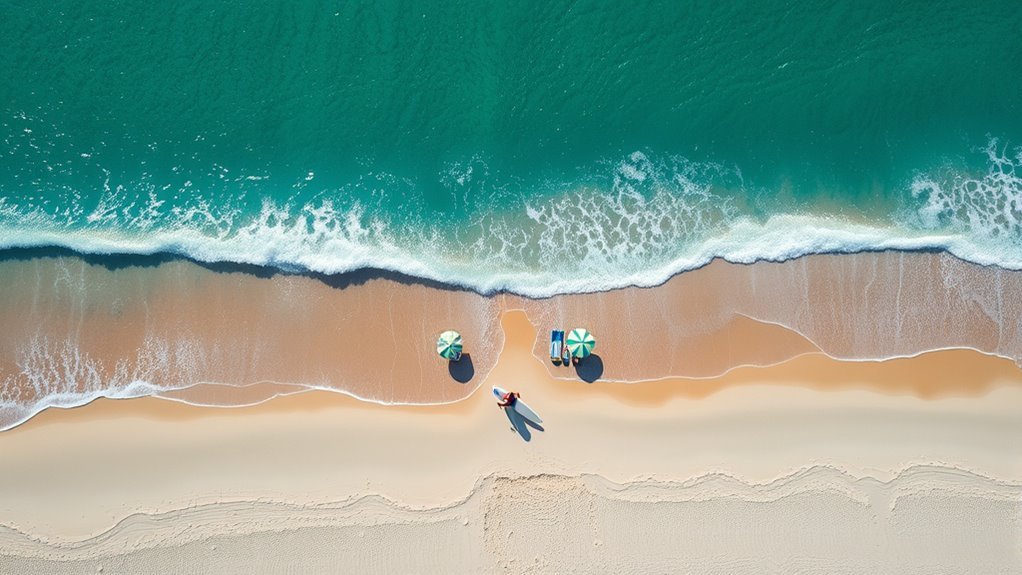
Top-down drone shots turn ordinary scenes into maps of line, shape, and texture. Roads, fields, rooftops, shorelines, and crowds all behave differently from above, especially when light is low and geometry is clean. The real challenge is not lift, but control: framing, altitude, shutter speed, and color separation. The strongest images often come from simple subjects arranged with precision. What works best is not always obvious.
How Top-Down Drone Shots Work
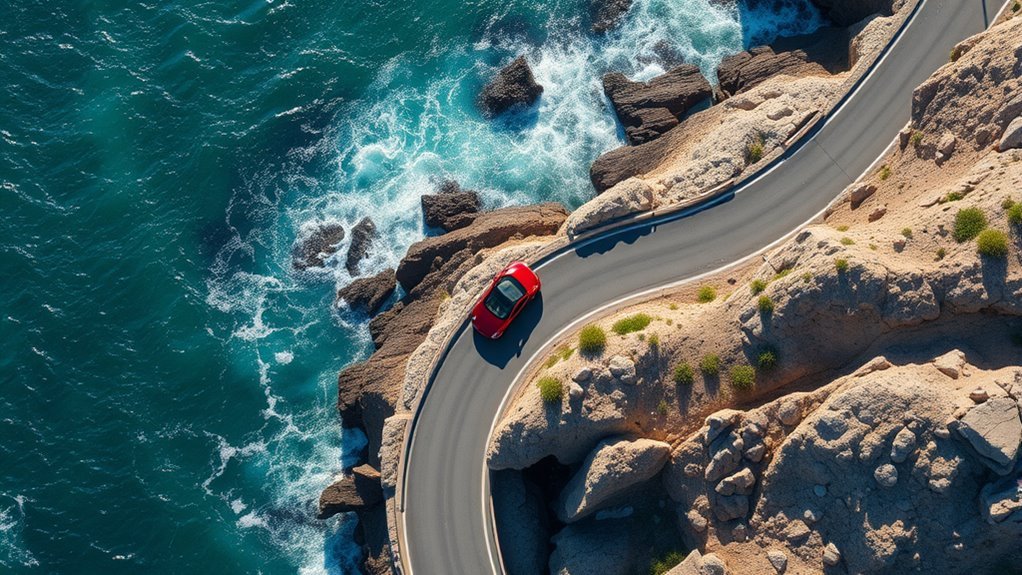
Top-down drone shots, or bird’s-eye views, capture subjects straight from above, revealing geometry, patterns, and spatial relationships that are invisible at ground level. In top-down drone shots, the camera points vertically downward, flattening depth into clean structure while preserving context.
A minimum altitude of 60–80 meters usually expands the frame enough to include broader formations without losing detail. The image reads best when leading lines, grids, and repeating shapes pull the eye across the frame with disciplined force.
Light matters: golden hour can carve texture into surfaces through long shadows, giving relief to otherwise flat scenes. Shooting RAW is essential, because exposure often shifts between bright sky edges and darker ground tones.
Golden hour sculpts flat scenes with long shadows, while RAW preserves the balance between bright edges and dark ground.
That format keeps latitude for correction, letting post-processing restore balance without crushing detail. When executed with precision, top-down drone shots turn terrain into pattern, and pattern into a clear visual field.
Best Subjects for Top-Down Drone Shots
Top-down drone shots render landscapes and patterns as compressed geometry, turning fields, shorelines, and textured ground into clean abstract forms.
Roads, rivers, and other linear features act as strong visual guides, creating movement and directional flow across the frame.
Rooftops and urban grids are especially effective subjects, exposing symmetry, repetition, and structural order from above.
Landscapes And Patterns
Landscapes with strong geometry are especially effective from overhead, where agricultural grids, winding rivers, urban blocks, and shoreline contours resolve into clear visual patterns.
In drone photography, these scenes free form from ground-level clutter and expose structure directly. Forest canopies, sand dunes, and reflective water bodies add texture, especially when shot at golden hour, when low light deepens color and relief.
Varied terrain often benefits from slight altitude changes, usually 20–60 meters, to reveal a cleaner balance of detail and shape. At these heights, patterns read with precision, while the frame retains scale and openness.
The result is a liberated, map-like image: abstract, ordered, and visually calm, yet rich enough to hold the eye and reward close inspection.
Roads, Rivers, And Lines
Roads, rivers, and other linear elements often become the strongest subjects in overhead drone work, because their shapes impose order on the frame. In drone shots, roads,rivers,and lines direct attention with minimal clutter, allowing the image to read instantly and cleanly. Roads can function as leading vectors, whether straight across open land or curling through hills. Rivers add softer motion, their serpentine paths and reflections contrasting with terrain.
| Subject | Effect |
|---|---|
| Roads | Lead the eye |
| Rivers | Add flow and shimmer |
| Lines | Build rhythm and balance |
From above, these forms feel open and unconfined, turning structure into visual freedom. Their geometry supports clarity, while repetition and curvature create disciplined, compelling composition.
Rooftops And Urban Grids
Rooftops and urban grids offer some of the strongest compositions in overhead drone work, because their hard edges, repeating forms, and clustered geometry translate cleanly from above.
In drone photography composition, rooftops expose vents, skylights, HVAC units, and rooflines as precise graphic marks. Urban grids add ordered tension: streets, intersections, and blocks form patterns that feel both controlled and alive.
Pockets of green against concrete interrupt the matrix, creating contrast and relief. Golden hour heightens the scene, casting long shadows that sharpen texture and reveal depth.
How to Compose Top-Down Drone Shots
Strong top-down compositions begin with clear shapes that read instantly from above, such as circles, grids, roads, or field edges.
Repeating patterns and directional lines should be used to guide the eye and organize the frame with precision.
Space must be balanced against the main subject so the image feels structured, not crowded, while still preserving visual focus.
Finding Strong Shapes
From above, the most effective compositions often emerge from simple geometry: fields divided into clean rectangles, roads tracing deliberate diagonals, and buildings forming hard-edged patterns that give the frame structure.
A drone reveals geometric patterns with precision, turning terrain into a disciplined grid. The strongest shapes feel free because they strip away clutter and let the eye move without resistance.
- Place the subject inside a clear outline to create visual calm.
- Seek contrast between organic land and man-made edges for tension.
- Favor forms that read instantly, so the frame feels open and decisive.
Top-down work gains power when shape is legible at once. Every boundary becomes a release from noise, every angle a route toward clarity.
Using Patterns And Lines
Patterns and lines give top-down drone frames their structure: fields, roads, rivers, tree rows, and building grids can form repeating rhythms that organize the image at a glance.
These patterns turn terrain into legible design, letting the drone trace geometry rather than chase noise. Leading lines from paths, waterways, or crop rows pull the eye through the frame and give the composition momentum.
Contrast in color and texture sharpens the effect, separating surfaces so patterns read instantly. Altitude can be adjusted to isolate fine repetition or reveal larger systems.
In soft golden hour light, shadows deepen seams and edges, making the structure feel tactile and free, as if the land itself has been momentarily unbound into visible order.
Balancing Space And Focus
Balancing space and focus in a top-down drone shot depends on controlling how the frame distributes attention. In composition, the subject is held against open negative space, so the eye can move freely yet land decisively.
Leading lines and geometric patterns should steer that movement without crowding the scene. The strongest frames feel liberated, not busy.
- Place the subject where color or texture breaks the field.
- Use lower altitude for intimacy, higher altitude for scale.
- Let golden-hour shadows carve depth and rhythm.
A clean frame removes distraction and gives the subject authority. When space is managed with precision, the image gains clarity, tension, and release.
Use Light, Shadow, and Color Well
The best top-down drone images often rely on disciplined control of light, shadow, and color. At golden hour, low sunlight stretches shadow across surfaces, revealing texture and carving depth into otherwise flat scenes. This interplay can turn roads, fields, rooftops, and water into liberated graphic forms.
Strong light and shadow also define geometric patterns, guiding the eye through lines, edges, and negative space with precision. Vibrant color adds another layer: bright roofs, clothing, umbrellas, boats, or crops can become bold blocks that read as shapes from above. When contrast is managed well, color feels intentional rather than decorative.
Overcast skies can be equally effective, softening glare and saturating tones while keeping detail even across the frame. The result is a cleaner, more expressive aerial composition where mood emerges from light, shadow, color, and ordinary terrain becomes visually striking without excess intervention.
Set the Right Drone Settings
Dialing in the right drone settings keeps top-down frames sharp and controlled. For clean geometry and a sense of visual freedom, the pilot treats exposure like a precision instrument. A shutter speed of at least 1/500s freezes movement and preserves edge detail.
ISO should stay at 100-200 to keep textures clean and colors open. RAW capture gives room to recover shadows and highlights later, while ND4 or ND8 filters tame bright light without crushing the scene. Horizon leveling display helps maintain exact framing overhead, so lines stay square and calm.
- 1/500s shutter — crisp surfaces, no smear.
- ISO 100-200, RAW — low noise, wide recovery.
- ND filter + leveling display — balanced exposure, true alignment.
These drone settings let the image breathe, reducing technical friction and leaving space for composition. The result feels spacious, deliberate, and liberated from guesswork, ready for clean top-down storytelling.
Avoid Common Top-Down Mistakes
Common top-down mistakes usually come from a tilted horizon, blown highlights, or loose framing that weakens the geometry of the shot. To avoid common mistakes, the pilot should keep a level horizon even in strict nadir top-down shots, because balance supports clean composition and clearer visual freedom.
| Problem | Fix |
|---|---|
| Tilted frame | Level horizon before every pass |
| Blown highlights | Use ND filters and monitor exposure |
| Weak subject placement | Align forms with leading lines |
| Flat scale | Drop to 20–30m for immersive perspectives |
At 60–100m, broad scenes stay readable; lower altitudes sharpen texture and pull the viewer closer. Golden hour gives soft directional light, revealing relief without harsh clipping. Light management matters: preserve shadow detail, protect bright surfaces, and let geometry breathe. Smart subject placement within grids, streets, or patterns keeps the eye moving. With disciplined composition, top-down shots feel liberated, not accidental, and each frame carries structure, depth, and intent.
Edit Top-Down Drone Shots Cleanly
Clean top-down drone editing begins with a straight horizon and disciplined tonal control, because a level capture simplifies alignment and preserves the shot’s geometry.
To edit top-down drone shots cleanly, the editor should first correct white balance, removing color casts so concrete, water, sand, and foliage read with natural restraint. Layers then isolate foreground and background, giving each plane cleaner separation and a quieter visual rhythm.
- Level the frame, then lock the crop.
- Clean up distractions with clone stamp or healing brush.
- Sharpen only the subject, then reduce noise where ISO rises.
These moves strip away clutter and restore visual freedom. The image feels lighter when stray objects vanish, edges stay crisp, and tones remain calm.
In top-down work, precision is not decoration; it is release.
Frequently Asked Questions
What Are Some Creative Drone Shot Ideas?
Creative drone shot ideas include geometric fields, winding roads, river bends, and forest canopies viewed from above.
He or she can frame Cinematic Landscapes through symmetry, leading lines, and natural textures, then amplify them with golden-hour shadows.
Urban grids, beach patterns, and moving boats can add scale and rhythm.
What Is the 20 60 20 Rule in Photography?
The 20 60 20 rule is a compass for Visual Balance in photography: 20% foreground, 60% subject, 20% background.
Like a well-tuned frame, it directs the eye through space without clutter. The foreground adds entry, the middle holds the main subject, and the background supplies context.
This structure is a guideline, not a cage; photographers may bend it to free the image when the scene demands more tension or simplicity.
What Is the 1:1 Rule for Drones?
The 1:1 rule for drones means the drone should sit 1 foot away horizontally for every 1 foot of altitude, preserving balanced framing and detail.
This ratio keeps Drone Angles clean, reduces distortion, and holds subjects in sharp proportion. Larger subjects may need more distance.
What Are the Best Ways to Set up a Top-Down Camera Setup?
Position the drone overhead, level it, and lock the gimbal for Camera Stability; position the frame, balance the exposure, and set RAW capture for maximum control.
A 60–80 meter altitude suits broad scenes, while 20–30 meters reveals texture. ND4 or ND8 filters tame brightness, and leveling display keeps the horizon true.
With smooth stabilization and disciplined settings, the top-down view becomes clean, precise, and visually unbound.
Conclusion
Top-down drone shots turn the world into a tidy diagram, where roads, fields, and rooftops suddenly behave as if they were designed for a map. Their irony is simple: the higher the camera climbs, the more order appears in scenes usually built from chaos. With clean framing, sharp settings, and disciplined light, the drone does not just record terrain; it exposes patterns, geometry, and color with almost unnerving clarity.
