
This roundup is reader-supported. When you click through Amazon links, we may earn a referral commission on qualifying purchases. As an Amazon Associate I earn from qualifying purchases.
You want a welder that helps you learn quickly, handles common repairs, and does not make setup harder than it needs to be. This guide focuses on beginner-friendly MIG and flux-core welders that fit common home, garage, hobby, farm, and small repair work. Look for a machine that matches your outlet, material thickness, portability needs, and learning style. A simple 110V flux-core welder is often easiest for quick repairs, while a dual-voltage multiprocess unit gives you more room to grow.
Quick Verdict
Best simple starter: YESWELDER FLUX-135PRO if you want a compact 110V flux-core machine for small repairs and practice.
Best dual-voltage beginner pick: YESWELDER YWM-160 if you want 110V convenience now and 220V flexibility later.
Best all-rounder: YESWELDER MIG-205DS PRO if you want more power, gas MIG, flux-core, stick, lift TIG, and spool-gun aluminum compatibility in one machine.
Best advanced feature set: ARCCAPTAIN MIG205MP if you want one larger unit with MIG, TIG, stick, plasma cutting, app controls, and room to grow beyond basic repair work.
Top Picks
|
Category |
Product |
Score |
|---|---|---|
|
💰 Best Simple Starter |
86/100 |
|
|
⚡ Best Dual Voltage |
90/100 |
|
|
🏆 Best All-Rounder |
92/100 |
|
|
🔧 Best For Garage |
88/100 |
|
|
🔋 Best Portable Dual Voltage |
89/100 |
|
|
🛠 Best Small Upgrade |
89/100 |
|
|
🎒 Most Portable Kit |
84/100 |
|
|
🌟 Best Advanced Feature Set |
91/100 |
|
|
🔩 Best Compact Flux-Core |
87/100 |
|
|
🎁 Best Complete Starter Kit |
83/100 |
Selection Criteria
You need a welder that fits your projects, your outlet, and your experience level. We prioritized ease of setup, stable wire feed, beginner-friendly controls, useful amperage range, portability, included accessories, and whether the machine gives you room to grow. We also looked for practical features such as 110V home-outlet compatibility, 110V/220V dual voltage, synergic settings, flux-core operation for gasless outdoor work, and multiprocess modes like stick or lift TIG.
We avoided treating exact ratings, review counts, or temporary availability as fixed facts because those details change often. Use the Amazon links to confirm the current listing, included accessories, latest buyer feedback, warranty details, and whether any optional TIG torch, spool gun, gas regulator, or shielding gas is required.
Before You Buy
- Check your outlet: 110V machines are easier for home garages, while 220V gives more power for thicker steel and longer welds.
- Know your process: flux-core is simple and gasless, while gas MIG gives cleaner welds but needs shielding gas.
- Check included parts: many lift TIG and aluminum setups need extra torches, gas, regulators, or spool guns.
- Plan for safety: use a proper auto-darkening helmet, gloves, jacket, ventilation, fire-safe workspace, and a clean ground clamp.
- Match thickness honestly: compact beginner welders are best for thin sheet, brackets, fences, small frames, and repairs, not heavy production work.
YESWELDER FLUX-135PRO

If you want your first welder to feel approachable, the YESWELDER FLUX-135PRO is one of the easiest picks to understand. It focuses on gasless flux-core MIG for quick outdoor and garage repairs, with stick and lift TIG capability if you add the needed accessories later.
The main appeal is simplicity. You can practice beads, fix brackets, repair gates, patch light steel, and handle small home projects without buying a gas bottle right away. The digital display and synergic control help you get close to usable wire-feed and voltage settings faster, which matters when you are still learning how metal thickness, travel speed, stick-out, and wire size affect the weld.
Who Should Buy This
Choose this if you want a compact, beginner-friendly 110V flux-core welder for small repairs, thin steel, practice coupons, and occasional household projects.
Who Should Avoid This
Skip it if you plan to weld thicker material often, need regular gas MIG, or want aluminum welding support. A dual-voltage or spool-gun-compatible machine will give you more room to grow.
What People Say
Owners often describe it as a practical starter machine for homeowners and hobbyists. Common praise points include easy setup, portability, steady flux-core performance, and enough power for small repairs. Some buyers upgrade clamps, consumables, or accessories over time.
Overall Sentiment: Positive

Durability
The core machine is generally treated as a light-duty home and hobby unit. Expect it to perform best when you stay within its intended range, keep the wire feed clean, use suitable wire, and avoid pushing it like a production welder.
What It’s Good For
This welder is useful for small gate repairs, garage hardware, brackets, practice welds, and light sheet-metal work. It is not meant for heavy continuous fabrication, but it can solve many weekend repair problems.
Why You’ll Like It
- Simple 110V setup for home garages and small repairs
- Flux-core MIG lets you weld without shielding gas
- Synergic control helps beginners get close to usable settings faster
- Compact design makes it easier to move and store
- Stick and lift TIG capability give you room to experiment with added accessories
YESWELDER YWM-160
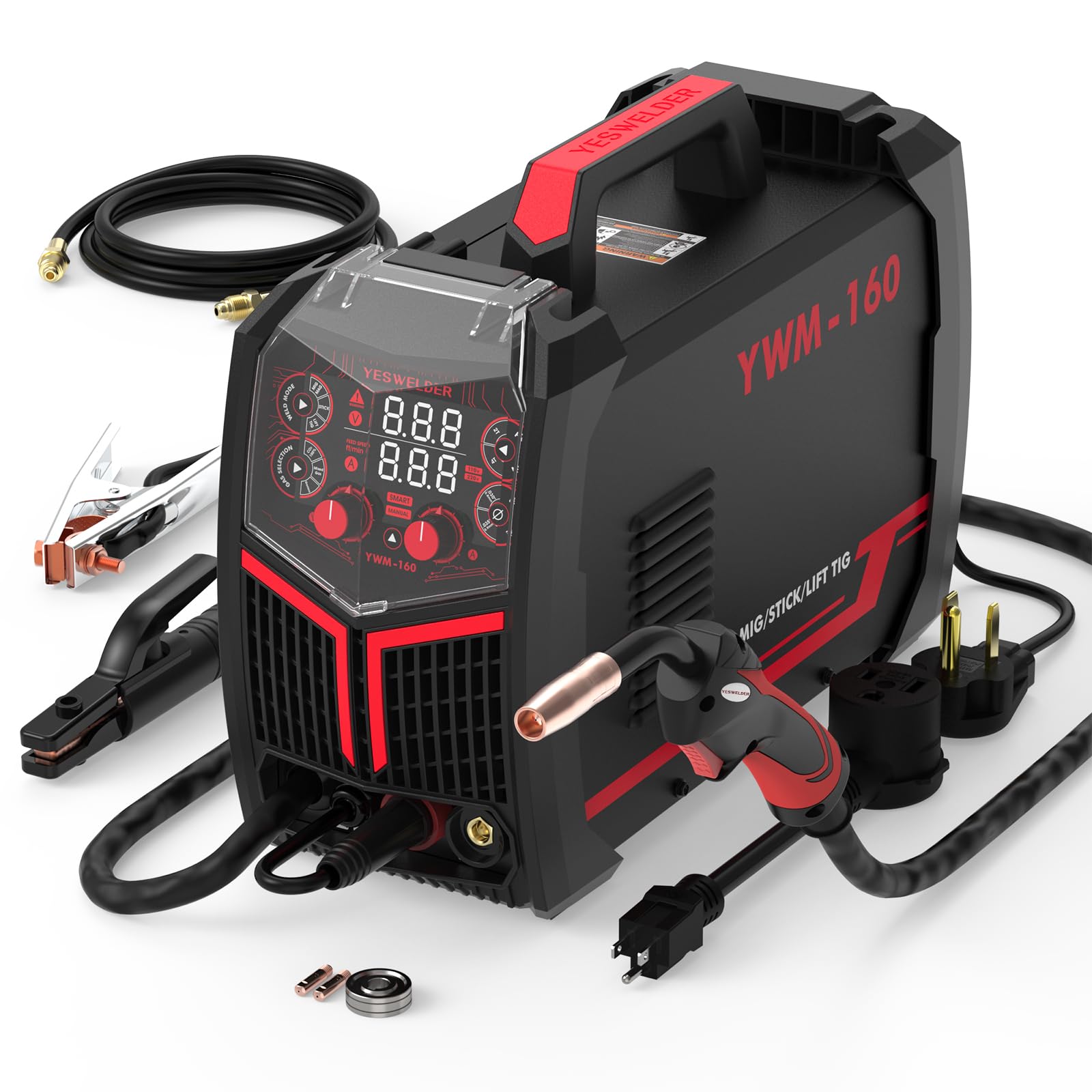
The YESWELDER YWM-160 is a strong middle-ground choice if you do not want to outgrow your first welder too quickly. You can use flux-core for quick repairs, gas MIG for cleaner beads, stick for rougher repair work, and lift TIG later if you add the right torch and setup.
The dual-voltage design is the main reason to consider it. On 110V, it fits many home-garage situations. On 220V, it gives you more headroom for thicker steel and longer welds. The synergic mode helps beginners get started, while manual adjustment gives you more control as you improve.
Who Should Buy This
Buy it if you want a beginner-friendly welder that can handle common home repairs now and heavier garage projects later.
Who Should Avoid This
Skip it if you only need the cheapest, smallest flux-core machine for occasional light repairs. A simpler 110V unit may be enough.
What People Say
Users often like the combination of size, power, and setup help. Many mention that better-quality wire can improve feeding and arc consistency, which is a useful tip for beginners who are troubleshooting spatter or rough beads.
Overall Sentiment: Positive

Durability
For home, farm, and hobby use, owners generally describe the core machine as capable. As with many budget multiprocess units, expect basic accessories and consumables to be the first things you may upgrade.
What It’s Good For
It fits fence repairs, small automotive jobs, brackets, mild fabrication, and general garage work. Use 220V when you need more output and less frustration on thicker stock.
Why You’ll Like It
- 4-in-1 process range: flux-core MIG, gas MIG, stick, and lift TIG
- 110V/220V dual voltage for home and shop flexibility
- Synergic settings help reduce beginner guesswork
- Manual controls let you fine-tune as your skills improve
- Good step-up choice before moving to a more advanced shop welder
YESWELDER MIG-205DS PRO
If you want a welder that can grow with you, the YESWELDER MIG-205DS PRO is the most versatile YESWELDER pick in this list. It gives you gas MIG for cleaner welds, flux-core MIG for outdoor repairs, stick for rougher work, lift TIG for more controlled welds, and spool-gun compatibility if you want to try aluminum later.
It is more machine than a basic beginner may need on day one, but that is also its advantage. You can start with simple mild steel repairs and gradually move into cleaner MIG work, thicker material, and more specialized projects as your skills improve.
Who Should Buy This
Choose it if you want one multiprocess machine for garage fabrication, small shop projects, repair work, and future aluminum capability.
Who Should Avoid This
Skip it if you only want the smallest possible 110V flux-core welder. This model is better for buyers who expect to use multiple welding processes.
What People Say
Buyers often highlight the power, process range, dual-voltage setup, and smoother performance when paired with good wire and proper setup. Some users note that clamps, leads, or consumables may be worth upgrading for frequent shop use.
Overall Sentiment: Positive

Durability
The core machine is best viewed as a capable hobby, repair, and small-shop welder. It should not be confused with a heavy industrial production unit, but it offers a useful balance of features for serious DIY users.
What It’s Good For
Use it for gates, fences, racks, frames, brackets, small automotive work, and mild fabrication. If you plan to weld aluminum, confirm spool-gun compatibility and required accessories before buying.
Why You’ll Like It
- 5-in-1 capability: gas MIG, flux-core MIG, spool-gun MIG, lift TIG, and stick
- Dual voltage for home-garage and heavier shop use
- Good fit for buyers who want to grow beyond basic flux-core
- Spool-gun compatibility supports future aluminum projects
- Digital display helps with clearer setup and adjustments
ARCCAPTAIN MIG135
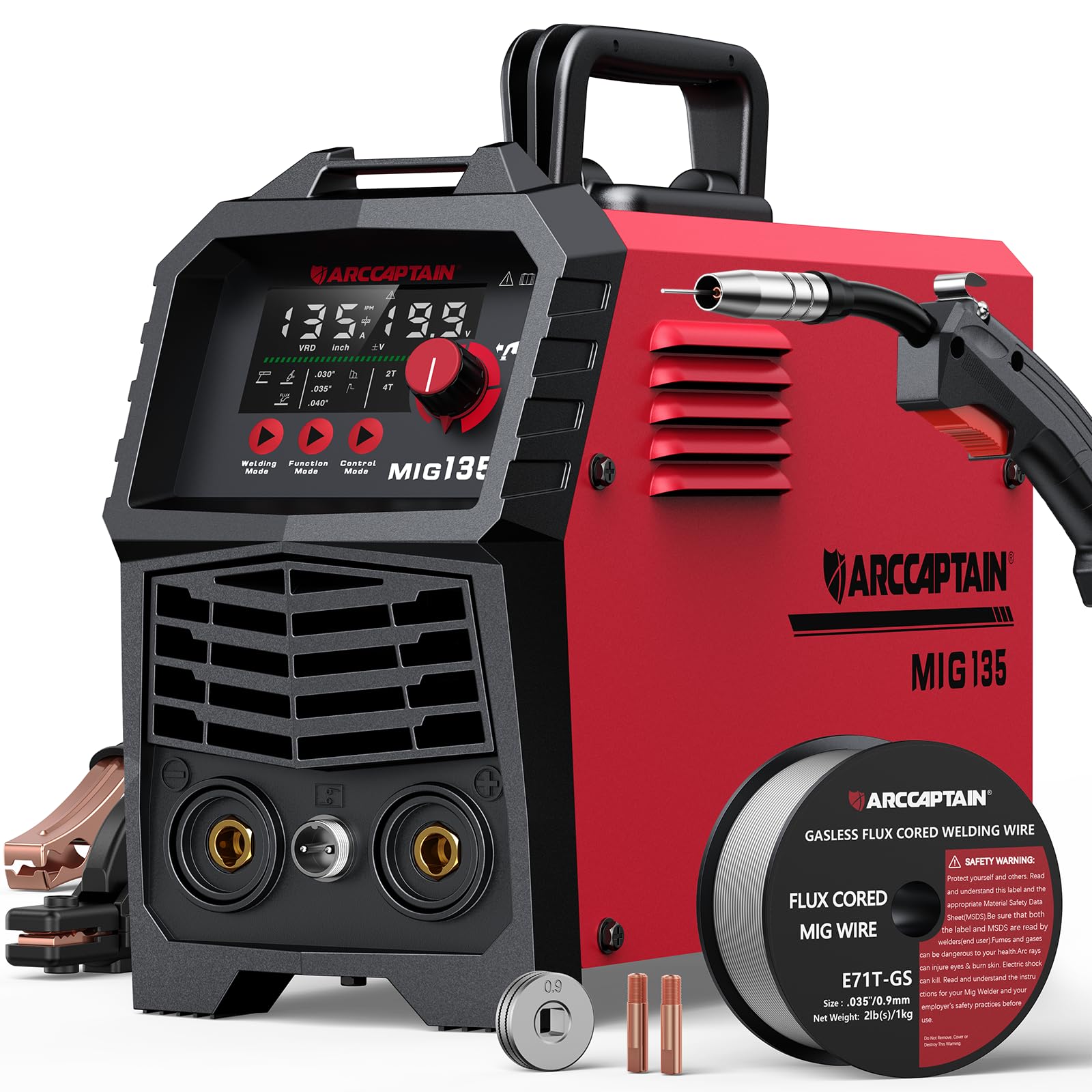
The ARCCAPTAIN MIG135 is a good fit if you want a compact garage welder with a clear display and simple setup help. It is built around gasless flux-core MIG, which is useful for beginners because you can start practicing without a shielding-gas bottle.
The large LED display and synergy mode help reduce setup friction. You still need to prep the metal, clamp a clean ground, and practice travel speed, but the machine gives you a more guided starting point than a bare-bones manual welder.
Who Should Buy This
Buy it if you want a lightweight 110V machine for garage repairs, hobby work, and learning flux-core technique.
Who Should Avoid This
Skip it if you want dual voltage or regular gas MIG out of the box. The ARCCAPTAIN MIG160 or YESWELDER YWM-160 is a better fit for that.
What People Say
Owners often praise the display, quick setup, and easy flux-core performance. A few buyers mention that accessories are basic, so serious users may eventually upgrade nozzles, torches, clamps, or protective gear.
Overall Sentiment: Positive

Durability
For light repair and hobby work, it is generally positioned as a practical compact inverter unit. Keep it clean, avoid overheating it with long heavy welds, and treat included consumables as starter-grade parts.
What It’s Good For
This model is useful for small automotive patches, fence repairs, brackets, household metal fixes, and general practice work. It is not designed for heavy production welding.
Why You’ll Like It
- Simple 110V operation for home-garage use
- Large LED display improves visibility during setup
- Synergy settings help beginners start faster
- Flux-core welding works without shielding gas
- Compact body is easy to carry, store, and set up
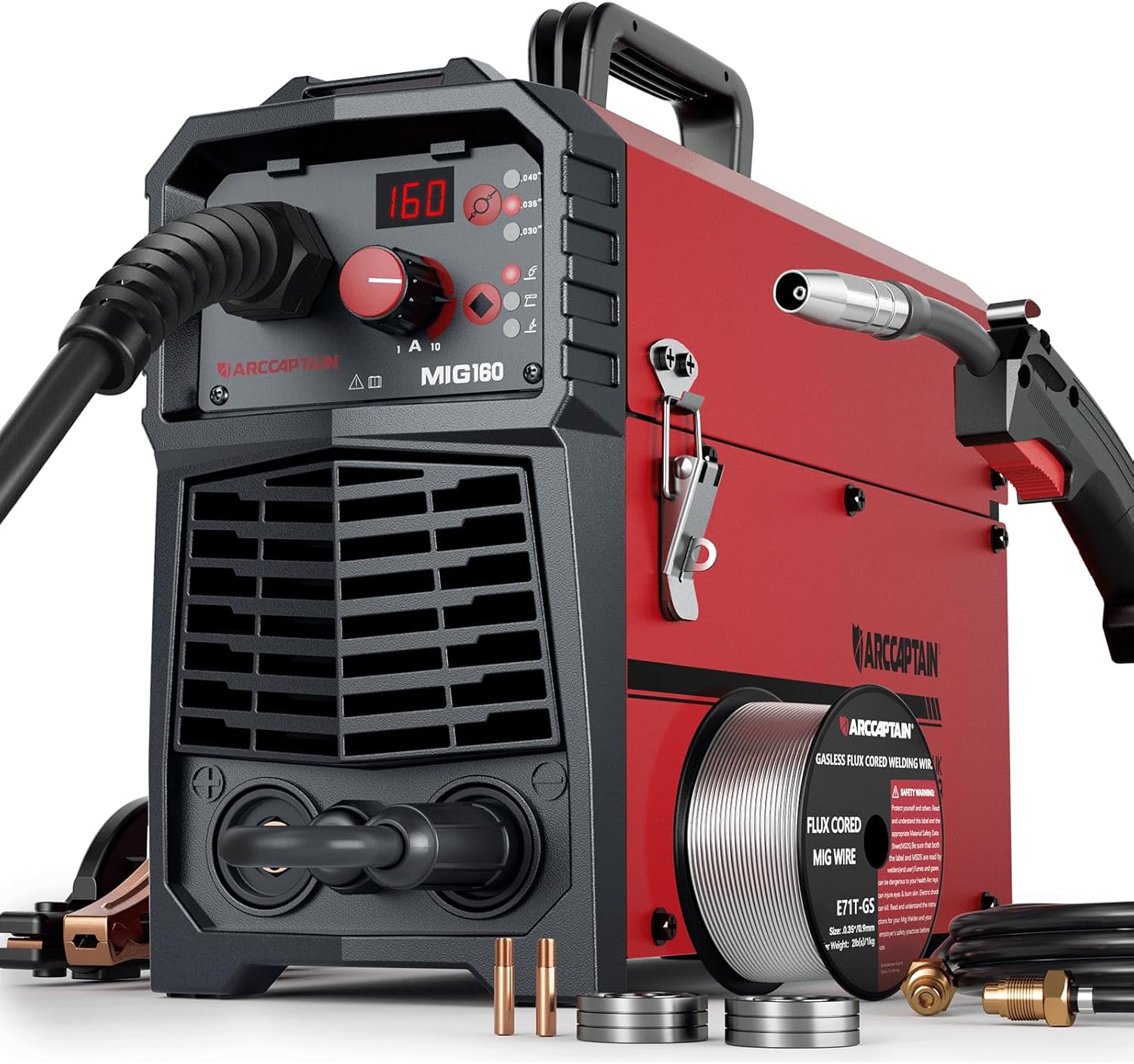
ARCCAPTAIN MIG160
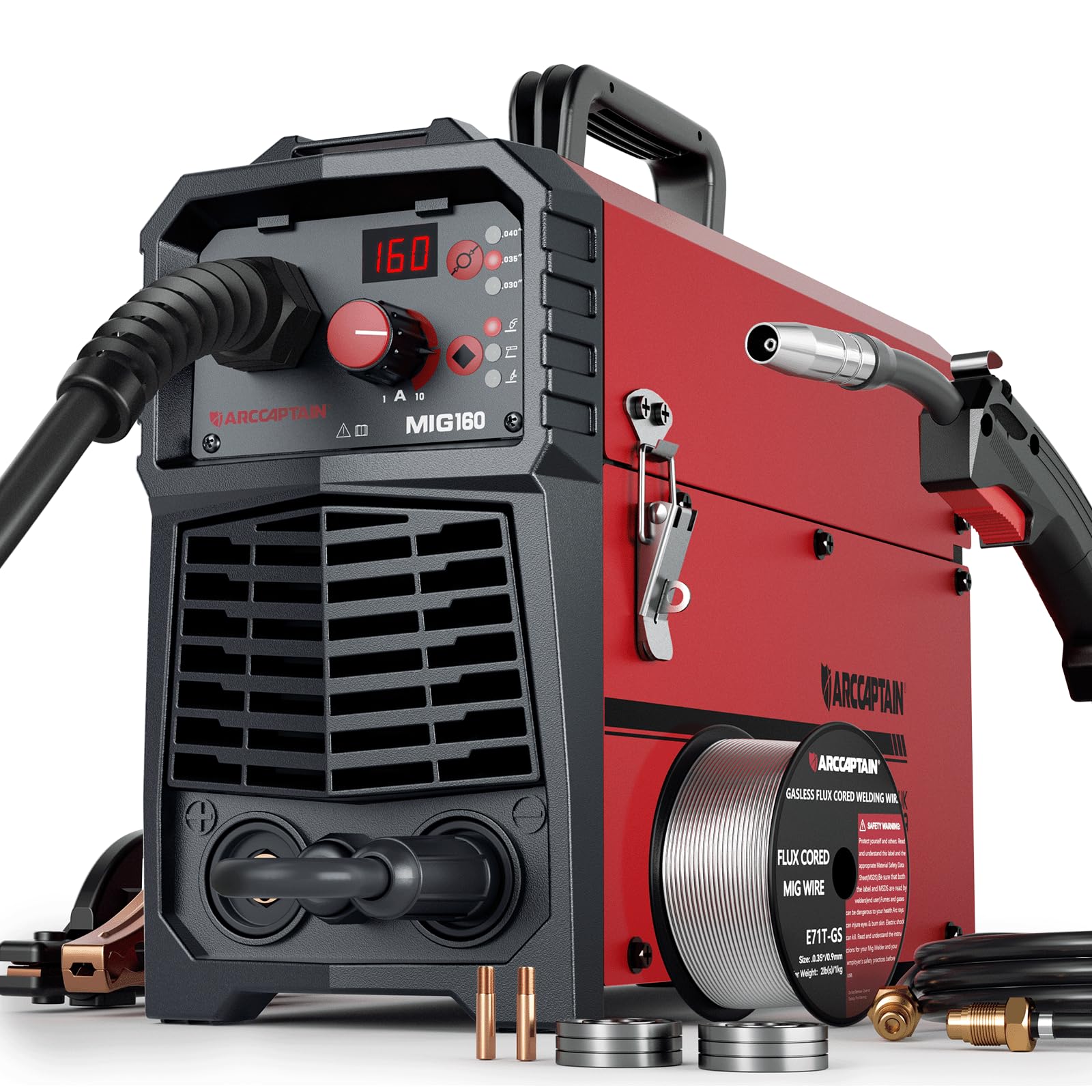
The ARCCAPTAIN MIG160 is a useful step up from a basic 110V-only machine. It gives you gas MIG and gasless flux-core MIG, plus lift TIG and stick modes for specific jobs. That makes it more flexible for a beginner who wants one portable machine for different repair situations.
Use 110V for small repairs and practice. Move to 220V when you need more output for thicker steel or longer welds. The synergy setting can help when you are still learning, but manual control is still there when you want to fine-tune.
Who Should Buy This
Choose it if you want a portable welder that can work from a regular outlet but also benefits from a 220V circuit when available.
Who Should Avoid This
Skip it if you want the simplest possible flux-core unit or if you do not plan to use gas MIG or 220V power.
What People Say
Owners often praise the portability, synergy setup, and ability to switch between gasless and gas MIG. Common buyer notes include upgrading basic accessories and using good consumables for better results.
Overall Sentiment: Positive

Durability
It is best treated as a home, garage, farm, and small repair welder. Keep the cooling path clear, let the machine rest during heavy use, and check connections before long sessions.
What It’s Good For
It handles patching panels, fixing gates, small fabrication, garden projects, and light automotive work. Gas MIG helps when you want cleaner beads, while flux-core is handy outside.
Why You’ll Like It
- 4-in-1 process range: gas MIG, flux-core MIG, lift TIG, and stick
- 110V/220V dual voltage gives you more room to grow
- Synergic control helps with starting settings
- Portable enough for garage, yard, and small site work
- Good balance between beginner ease and upgrade potential
ARCCAPTAIN MIG165
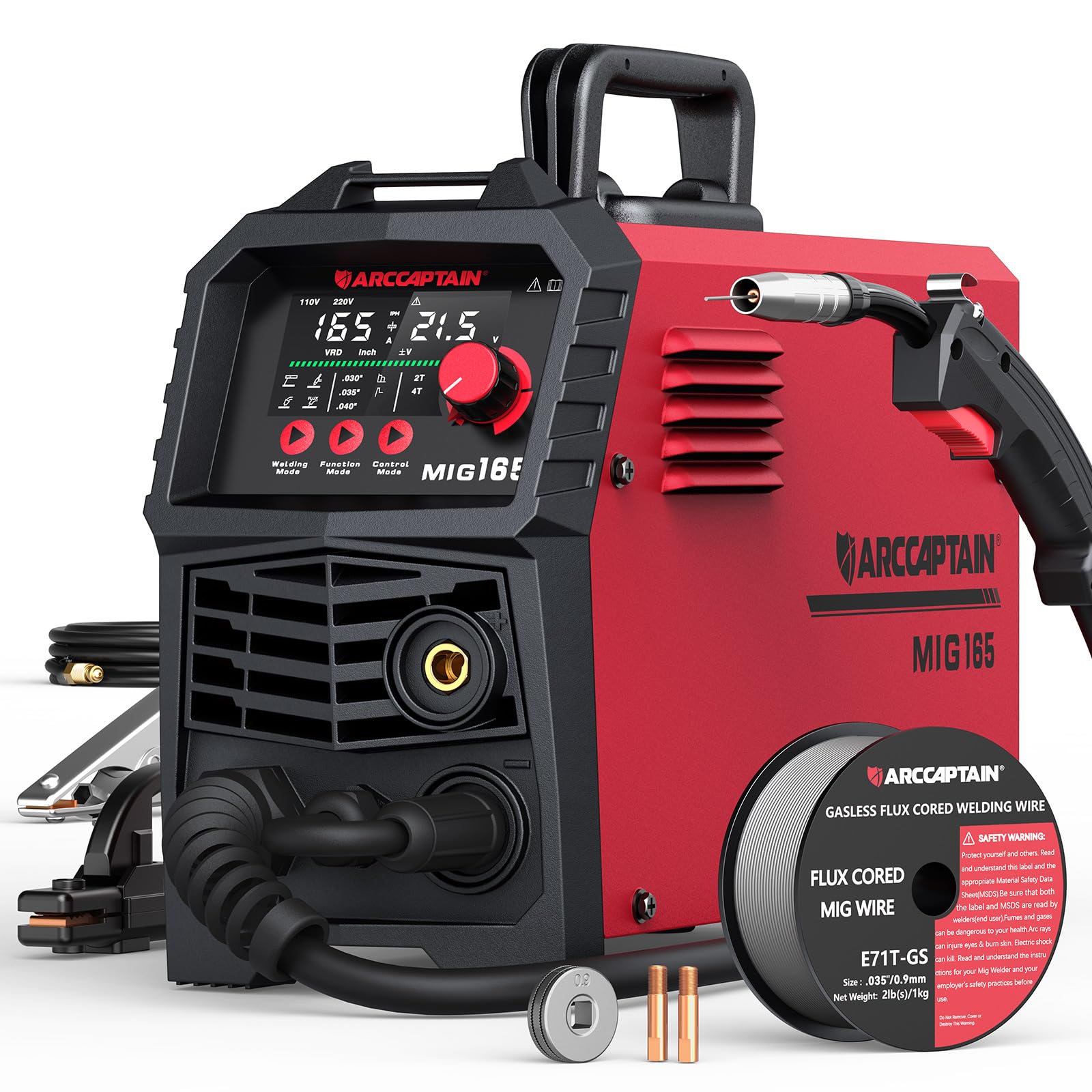
The ARCCAPTAIN MIG165 is a sensible choice if you want a compact multiprocess welder with a bit more capability than the entry-level models. It works for gasless flux-core repairs, cleaner gas MIG beads, and occasional stick or lift TIG tasks when set up properly.
The large display and synergy presets make it easier to get started, while dual voltage gives you a path from casual 110V use to stronger 220V shop performance.
Who Should Buy This
Buy it if you want a compact upgrade pick for garage repairs, hobby fabrication, fence work, and learning multiple welding processes.
Who Should Avoid This
Skip it if you only need a tiny flux-core machine or if you want a more advanced welder with plasma cutting or app control.
What People Say
Buyers often mention that it is easy to set up, produces clean enough beads for hobby work, and gives useful adjustment options. As with similar budget welders, some accessories may be worth upgrading later.
Overall Sentiment: Positive

Durability
It should hold up best for routine homeowner and light shop use. Avoid treating it as a continuous high-amperage production unit, and follow duty-cycle guidance in the manual.
What It’s Good For
Use it for gates, fences, patch panels, small frames, brackets, and light fabrication. It is a practical weekend-project welder with enough features to keep learning.
Why You’ll Like It
- 4-in-1 process range for common repair and hobby tasks
- Dual voltage gives more flexibility than 110V-only welders
- Synergy presets and clear display help beginners set up faster
- Portable enough for home garages and small jobs
- Good middle option between simple starter and advanced multiprocess welder
FEMEROL MIG140R
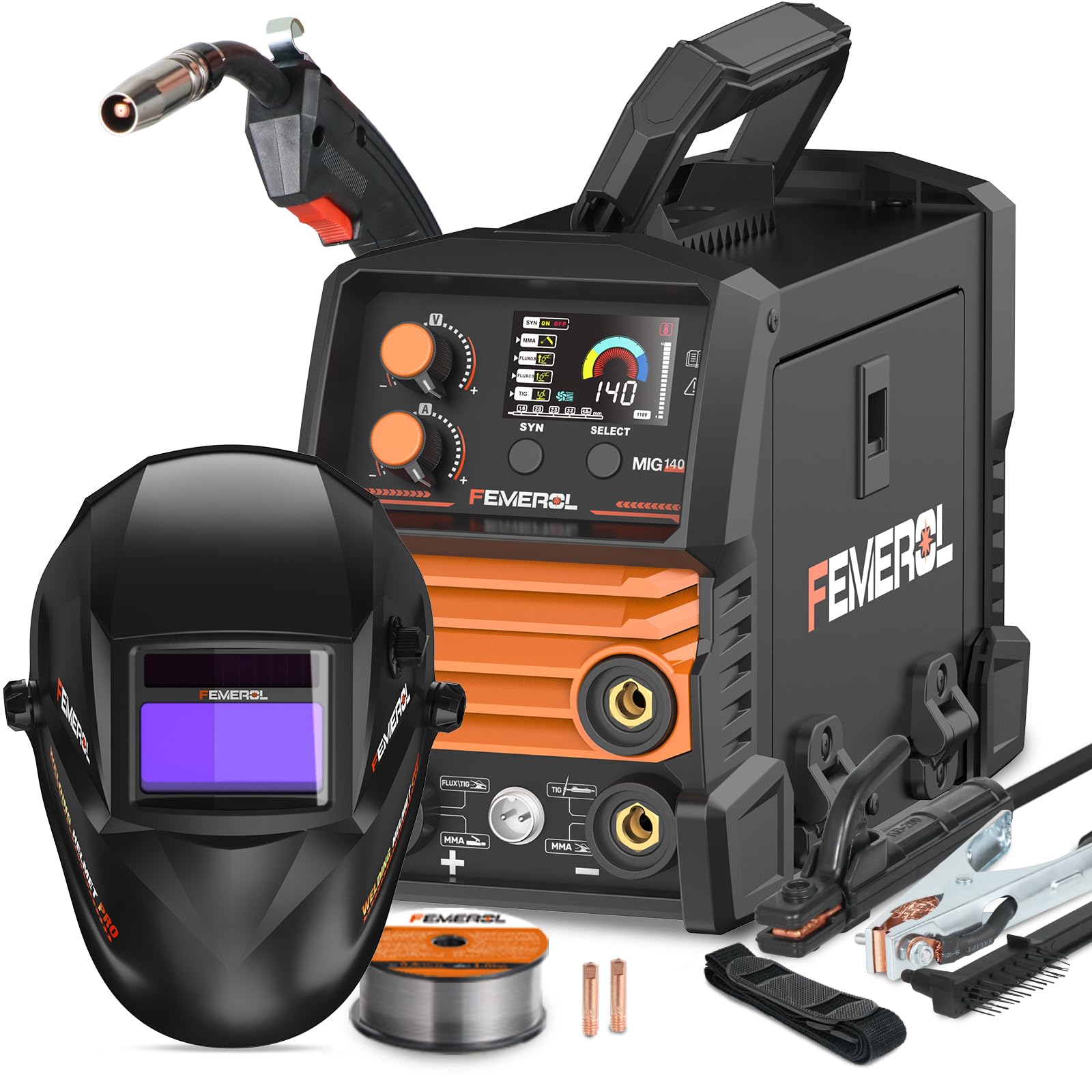
The FEMEROL MIG140R is appealing if you want a compact starter package rather than just the machine. It includes useful basics, which can reduce the number of extra items you need before your first practice session.
It is best for small repairs, brackets, thin steel, hobby fabrication, and learning how flux-core welding feels. The synergic control and LED display help with setup, while manual adjustment gives you room to improve.
Who Should Buy This
Choose it if portability and included accessories matter more than maximum output or dual-voltage flexibility.
Who Should Avoid This
Skip it if you plan to weld thicker material often or want 220V performance. A dual-voltage welder is a better long-term fit.
What People Say
Users often describe it as a convenient starter unit for small jobs. Common positives include the included helmet, simple controls, and compact size. Buyers should still confirm current accessories on Amazon before ordering.
Overall Sentiment: Positive

Durability
It is best treated as a light-duty home and hobby welder. Use it within its intended thickness range, give it cooling breaks, and keep the wire path clean for more consistent feeding.
What It’s Good For
This is a good fit for brackets, small motorcycle or garden projects, light repairs, practice coupons, and portable flux-core jobs.
Why You’ll Like It
- Lightweight 110V unit that is easy to carry and store
- 3-in-1 process range: flux-core MIG, lift TIG, and stick
- Synergic control reduces setup guesswork
- Included starter accessories help you get moving faster
- Good choice for small repairs and first welding practice
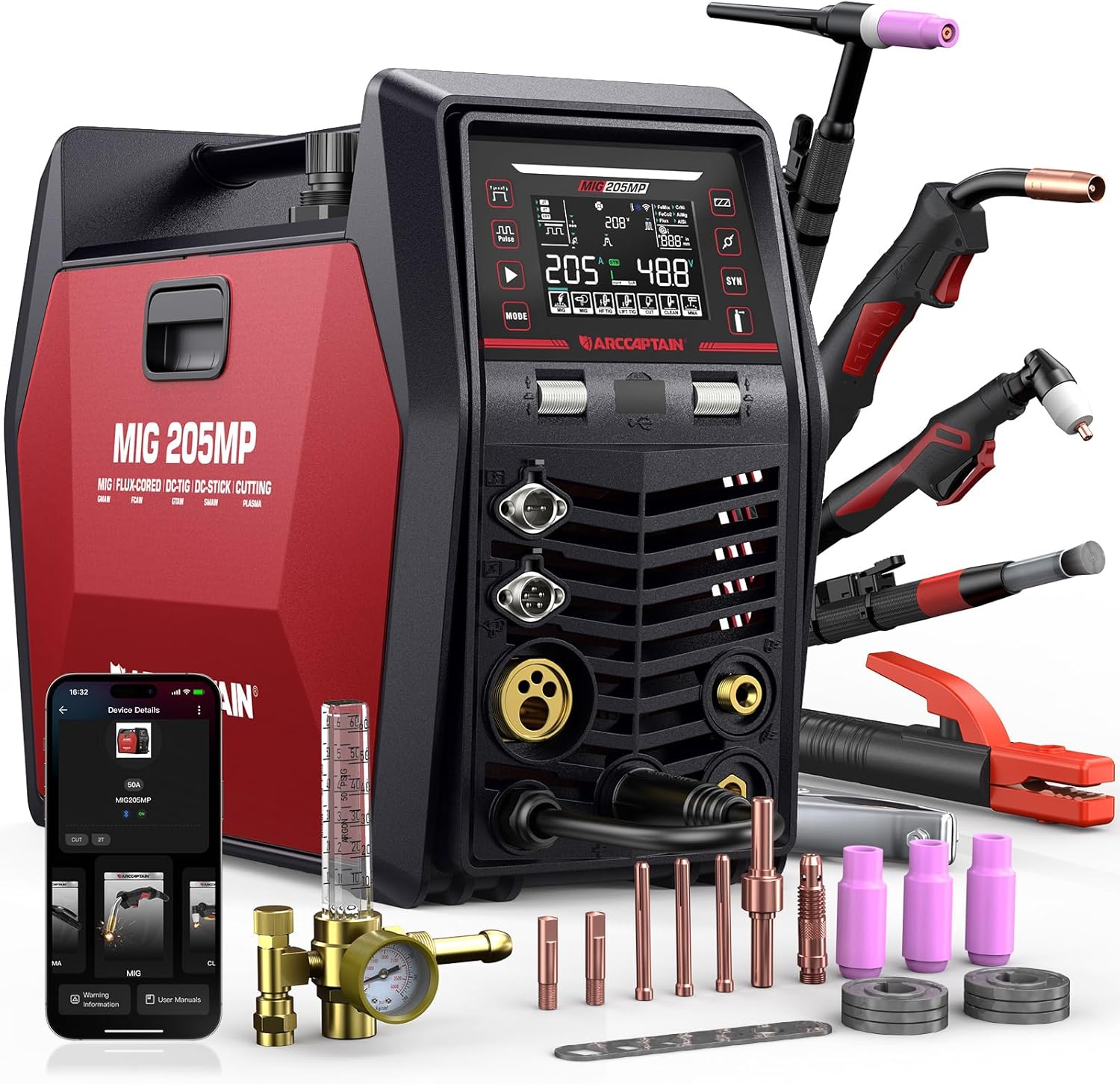
ARCCAPTAIN MIG205MP

The ARCCAPTAIN MIG205MP is not the simplest beginner welder here, but it is the most feature-packed. It makes sense if you want to buy once and explore multiple processes instead of replacing your first machine quickly.
You get gas and gasless MIG, TIG options, stick welding, aluminum spool-gun support with extra accessories, and a built-in plasma cutter. The app controls and saved presets can help if you switch materials and settings often, but beginners should expect a bigger learning curve than with a basic 110V flux-core unit.
Who Should Buy This
Buy it if you want one advanced machine for MIG welding, cutting, repair work, farm projects, fabrication, and future process experimentation.
Who Should Avoid This
Skip it if you want the simplest, cheapest, or lightest beginner welder. It has more functions than many first-time users need.
What People Say
Owners often focus on the wide process range, app control, large display, and plasma cutter. The main buyer hesitation is complexity: you should be comfortable learning settings, accessories, and setup steps for each process.
Overall Sentiment: Positive

Durability
This unit is best for serious DIY, repair, and small-shop work rather than heavy industrial production. The cooling, protection features, and support terms should be confirmed on the current Amazon listing before purchase.
What It’s Good For
It is useful for mixed work: patching panels, repairing farm equipment, cutting sheet metal, building brackets, and experimenting with MIG, TIG, stick, and aluminum setups.
Why You’ll Like It
- Wide multiprocess range for welding and cutting
- Dual voltage for home and shop flexibility
- App control and preset memory for repeat setups
- Large display helps manage more complex settings
- Good choice if you want to grow beyond basic beginner welding
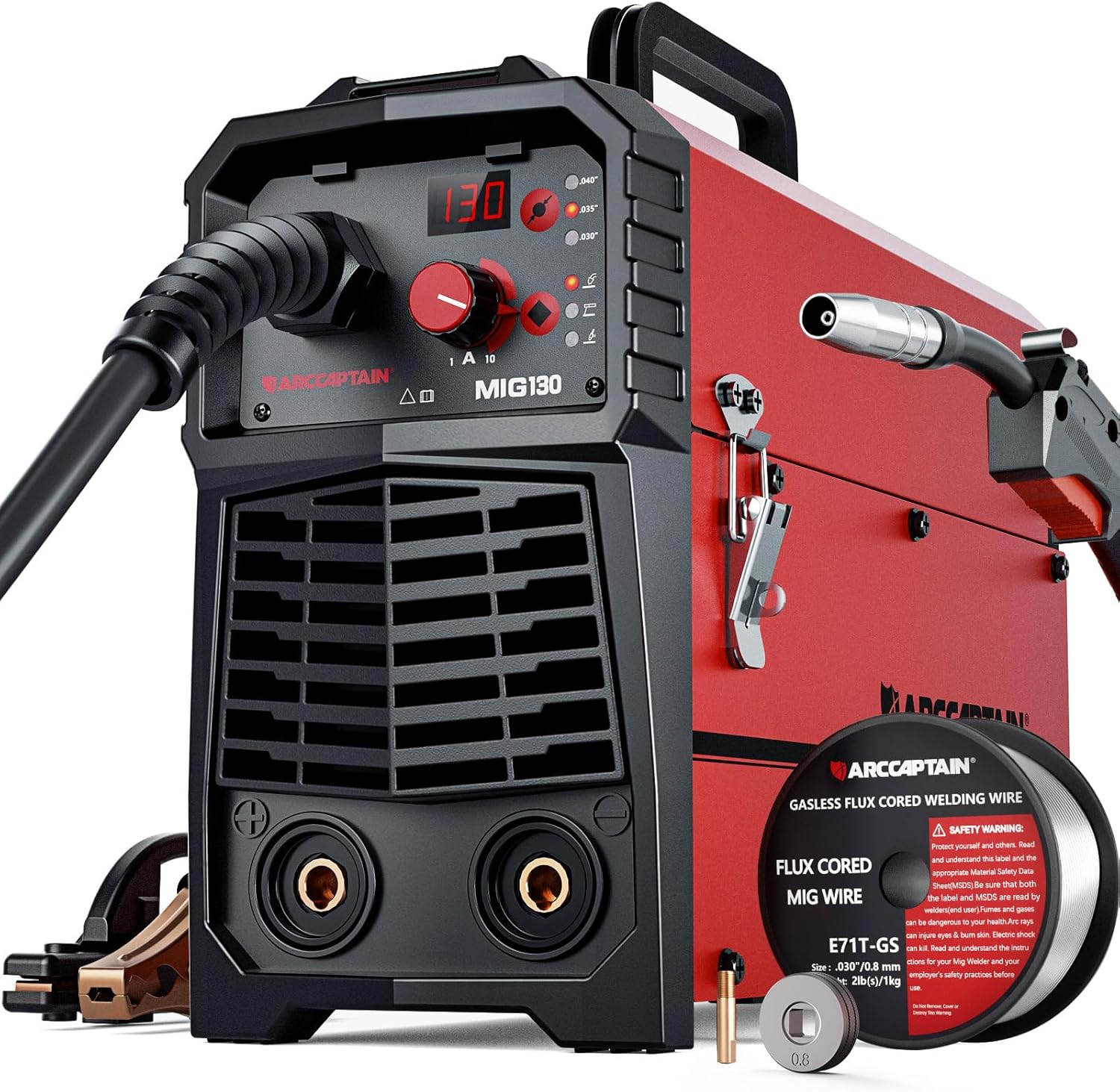
ARCCAPTAIN MIG130
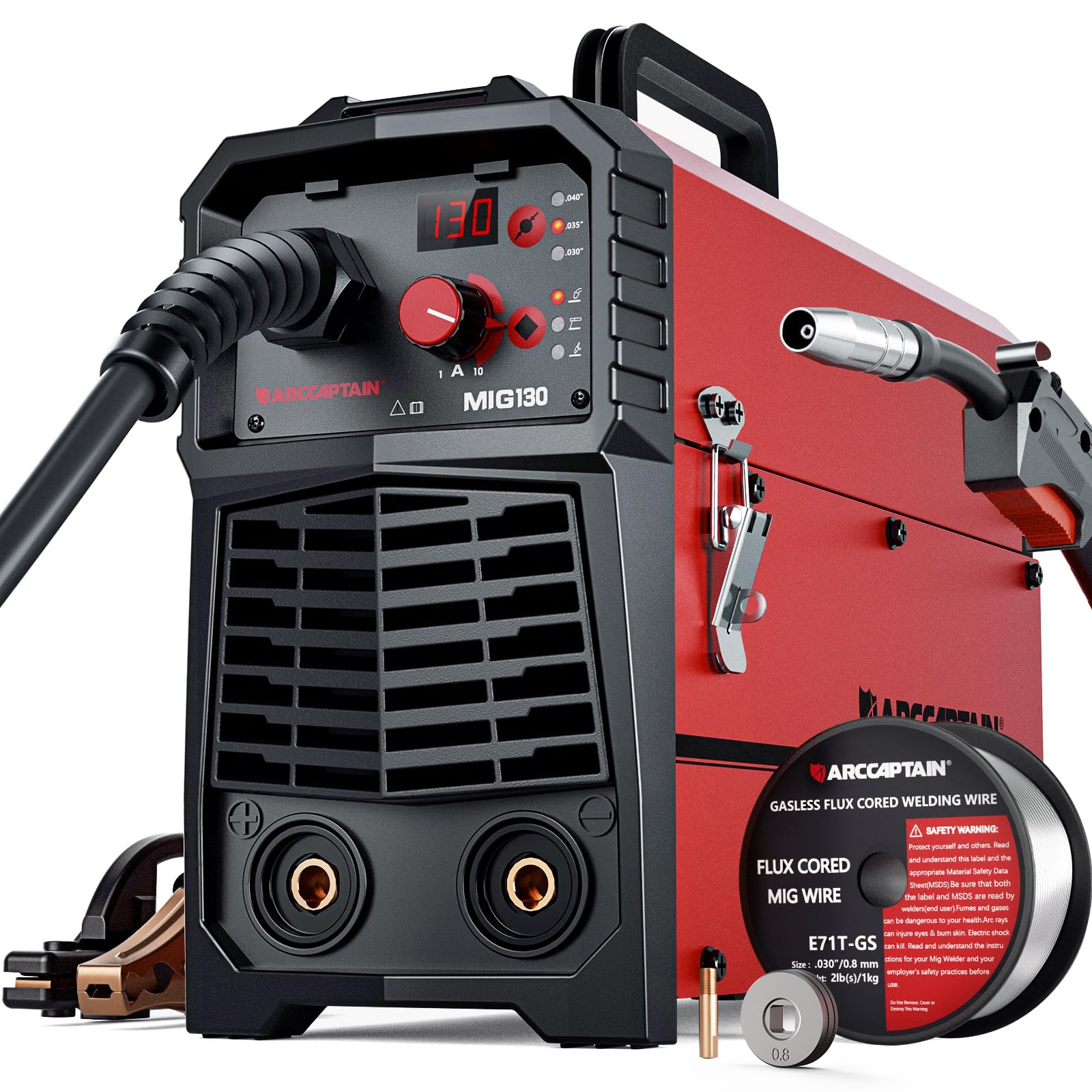
The ARCCAPTAIN MIG130 is the compact, practical choice for small repair work. It is designed for gasless flux-core MIG, with lift TIG and stick capability if you add the needed accessories and setup.
It makes sense if you want something easy to store, easy to carry, and simple enough for weekend fixes. The synergic control helps beginners start with reasonable settings after selecting wire diameter and material thickness.
Who Should Buy This
Buy it if you want a portable flux-core welder for small metal repairs, backyard projects, brackets, trellises, gates, and practice.
Who Should Avoid This
Skip it if you expect to weld thicker steel regularly or want a machine centered on gas MIG and dual voltage.
What People Say
Owners often like the simple controls, portability, and included basics. Some buyers add a better helmet, gloves, or accessories depending on their setup.
Overall Sentiment: Positive

Durability
For light to medium home repair work, it is a useful compact welder. Keep expectations realistic: shorter weld windows, clean metal prep, and suitable wire matter more on small machines.
What It’s Good For
It fits lawn-equipment repairs, small brackets, gates, garden projects, practice beads, and light fabrication. It is not meant for long continuous high-amp work.
Why You’ll Like It
- Compact 110V format for small spaces
- Gasless flux-core welding works without shielding gas
- Synergic control helps simplify setup
- Good option for small home and backyard repairs
- Includes starter wire and basic welding components
Ehomful 145A Mig Welder
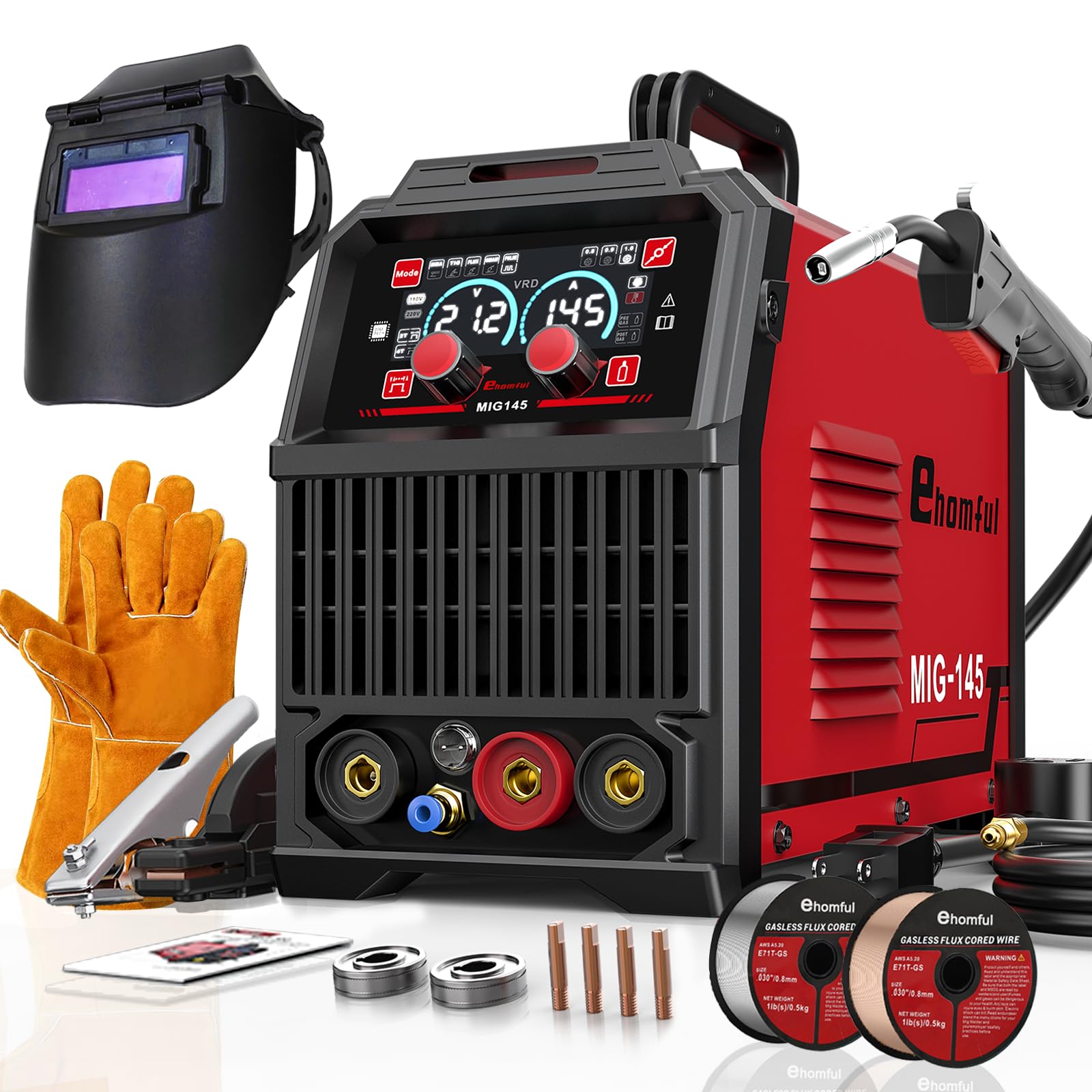
The Ehomful 145A MIG Welder is a good option if you want a broad starter kit instead of piecing everything together one item at a time. It offers gas MIG, gasless flux-core, lift TIG, and stick in one compact machine.
The biggest appeal is convenience. You get dual-voltage flexibility, an inverter design, synergy control, and starter accessories. Because bundle contents can change, check the live Amazon listing before ordering to confirm exactly what comes in the box.
Who Should Buy This
Choose it if you want a flexible starter bundle for learning, home repairs, brackets, light fabrication, and occasional mobile repair work.
Who Should Avoid This
Skip it if you prefer a model with a longer public buyer track record or if you already own safety gear and only need the welder itself.
What People Say
Buyers tend to like the process range, stable arc, digital display, and included starter gear. Since this type of listing may have fewer long-term reviews than older models, confirm recent feedback before buying.
Overall Sentiment: Positive

Durability
It is best for hobbyist, homeowner, and small repair use. Use it within its stated duty cycle and material-thickness range, and check included accessory quality before relying on it for frequent work.
What It’s Good For
This machine works for patching panels, fabricating brackets, repairing lawn or farm equipment, and trying multiple welding processes without buying separate machines.
Why You’ll Like It
- 4-in-1 process range: gas MIG, gasless MIG, lift TIG, and stick
- 110V/220V dual voltage for flexible setup
- Starter accessories reduce first-purchase friction
- Synergy control helps beginners get close to usable settings
- Good option if you want one compact machine for several repair styles
FAQ
How Do I Choose The Right Beginner MIG Welder?
Start with your outlet and your project type. If you only have a normal household outlet and want to learn on small repairs, a 110V flux-core welder is the easiest place to start. If you have access to 220V or expect to weld thicker steel, a dual-voltage machine gives you more power and room to grow.
Also check process support. Flux-core MIG is simple and gasless, gas MIG is cleaner but requires shielding gas, stick is useful for repair work, and lift TIG is helpful for more controlled welds but often needs extra accessories.
Is Flux-Core Better Than Gas MIG For Beginners?
Flux-core is often easier to start with because you do not need a gas bottle, regulator, or indoor-only setup. It is also useful outdoors because wind is less of a problem. The trade-off is more spatter and more cleanup.
Gas MIG usually produces cleaner welds on mild steel, but it adds cost and setup steps. If you want cleaner beads and plan to weld indoors, a welder that supports gas MIG is worth considering.
Can I Weld Aluminum With These Beginner MIG Welders?
Some beginner-friendly multiprocess welders can weld aluminum, but aluminum is more demanding than mild steel. You usually need 100% argon shielding gas, aluminum wire, correct polarity, and often a spool gun because soft aluminum wire can feed poorly through a standard MIG liner.
If aluminum is a priority, choose a model that clearly supports spool-gun aluminum welding and confirm the required accessories before buying.
What Safety Gear Do I Need Before Welding?
At minimum, use an auto-darkening welding helmet, welding gloves, flame-resistant clothing, closed-toe boots, hearing protection when needed, and proper ventilation. Keep flammable items away from the work area and have a fire extinguisher nearby.
Also make sure your electrical circuit matches the welder’s requirements. Avoid undersized extension cords, overloaded circuits, and unclear grounding.
What Practical Tips Help You Get Cleaner Welds?
Clean the metal first. Remove heavy rust, paint, oil, and mill scale where possible. Make sure the ground clamp connects to clean metal, set the correct wire size, check drive-roll tension, and keep your stick-out consistent.
If the arc is erratic, check wire quality, polarity, contact tip condition, spool tension, and ground connection before blaming the welder. Better wire and small consumable upgrades can make a major difference on budget machines.
What Buyers Prefer
Most beginner buyers are choosing between simplicity, portability, and long-term flexibility. A compact 110V flux-core welder is easiest for quick repairs and practice. A dual-voltage multiprocess welder costs more and requires more setup knowledge, but it gives you better room to grow into cleaner MIG welds, stick work, and heavier projects.
Wrapping Up
Choosing the best beginner MIG welder comes down to how much you want to learn, what power you have available, and what kinds of repairs you expect to handle. For the simplest start, choose a compact 110V flux-core welder. For long-term flexibility, choose a dual-voltage multiprocess machine.
If you are still unsure, start with your most common project. Small brackets, thin steel, and quick home repairs favor a lightweight flux-core model. Fences, small frames, thicker steel, and cleaner indoor welds point toward a dual-voltage gas MIG machine.
| Product | Image | Best For | Power Source/Voltage | Welding Processes | Buyer Note |
|---|---|---|---|---|---|
| YESWELDER 135Amp MIG Welder |
 |
Simple 110V flux-core learning | 110V AC |
|
Best if you want gasless repair work and easy storage. |
| YESWELDER Gas Gasless 160A Multiprocess MIG Welder |
 |
Dual-voltage beginner growth | 110V/220V AC |
|
Good middle-ground pick if you want both 110V convenience and 220V headroom. |
| YESWELDER MIG-205DS PRO MIG Welder |
 |
All-rounder with aluminum path | 110V/220V AC |
|
Best if you want one machine for more processes and future aluminum work. |
| ARCCAPTAIN 135A MIG Welder |
 |
Garage repairs on 110V | 110V AC |
|
Good if you want a clear display and simple gasless setup. |
| ARCCAPTAIN 160A MIG Welder |
 |
Portable dual-voltage jobs | 110V/220V AC |
|
Better than a 110V-only machine if you expect heavier weekend projects. |
| ARCCAPTAIN 165A MIG Welder |
 |
Compact upgrade power | 110V/220V AC |
|
Useful if you like ARCCAPTAIN controls but want more than the smallest units. |
| FEMEROL 140A 3 in 1 MIG Welder |
 |
Lightweight starter kit | 110V AC |
|
Best when portability and included starter accessories matter most. |
| ARCCAPTAIN MIG205MP MIG Welder |
 |
Advanced multiprocess work | 120V/240V |
|
Most feature-packed option, but it has a bigger learning curve. |
| ARCCAPTAIN 130A MIG Welder |
 |
Compact gasless repairs | 110V AC |
|
Good for small projects, quick storage, and practice work. |
| ehomful 145A Mig Welder |
 |
Complete starter bundle | 110V/220V AC |
|
Check the current listing to confirm included accessories before ordering. |