
Affiliate disclosure:. As an Amazon Associate I earn from qualifying purchases. This roundup is reader-supported. Eligible Amazon links may earn the publisher a commission at no extra cost to you.
You want an insulated winter jacket that holds warmth without feeling unnecessarily clammy or restrictive. The best choice depends on your activity level, weather exposure, layering plan, and need for packability. This guide compares seven relevant options for breathability, insulation, weather protection, fit, and portability.
Quick Verdict
Best overall for active use: 33,000ft Men’s Hooded Softshell. Best weather-protection balance: TACVASEN Waterproof Ski Jacket. Best women’s value: MAGCOMSEN Women’s Ski Jacket. Best packable: Pioneer Camp Men’s Packable Puffer.
Important: “Breathable” is not a universal standard. Confirm any numeric waterproof or breathability rating on the current product page.
Top Picks
| Category | Product | Best For |
|---|---|---|
| Best Overall for Active Use | 33,000ft Men's Hooded Softshell | Active commuting, hiking, travel |
| Best Weather-Protection Balance | TACVASEN Waterproof Ski Jacket | Skiing, wet commutes, snow days |
| Best Value for Women | MAGCOMSEN Women's Ski Jacket | Women’s winter wear and casual skiing |
| Best for Recreational Skiing | MOERDENG Women's Insulated Ski Jacket | Women’s resort skiing and commuting |
| Best Packable for Men | Pioneer Camp Men's Packable Puffer | Men’s travel and layering |
| Best Travel Companion | Outdoor Ventures Packable Puffer Jacket | Travel, commuting, compact storage |
| Best Lightweight Everyday Style | MAGCOMSEN Men's Puffer Jacket | Men’s everyday wear and layering |
How We Picked These Jackets
We reviewed the source listing information for warmth-to-weight, moisture-management claims, weather protection, layering, mobility, hood and pocket design, packability, and care. We removed products whose identity or breathability fit was too unclear. This is an editorial comparison of listing information; it does not claim laboratory or hands-on testing.
- Breathability: preference for softshell construction, lower bulk, venting, or a clearly stated moisture-vapor claim.
- Warmth: useful insulation without unsupported temperature promises.
- Weather protection: clear separation of water-repellent, water-resistant, and waterproof claims.
- Practical use: fit, layering room, mobility, storage, and care requirements.
Before you buy: Recheck the live size chart, fabric details, care label, included features, and performance claims because marketplace listings can change.

The source listing describes a three-layer softshell with brushed fleece, stretch, adjustable coverage, and water-resistant/breathable construction. It is the strongest fit for readers who move often and want less bulk than a ski parka.
Who Should Buy This
Commuters, hikers, and travelers who prioritize mobility and moisture management.
Who Should Avoid This
People who need maximum stationary warmth or protection during prolonged heavy rain.
Where It Shines
Brisk commutes, day hikes, travel, and layered winter use.
Durability
Polyester softshell construction suits normal recreational use; follow the current care label and protect the water-repellent finish.
Key Benefits
- Moderate warmth without heavy bulk
- Adjustable hood and hem
- Stretch and secure zip pockets
- Better active-use fit than a thick parka
Before You Buy: Published breathability and water-resistance figures were not independently confirmed. Check the current listing and size chart.
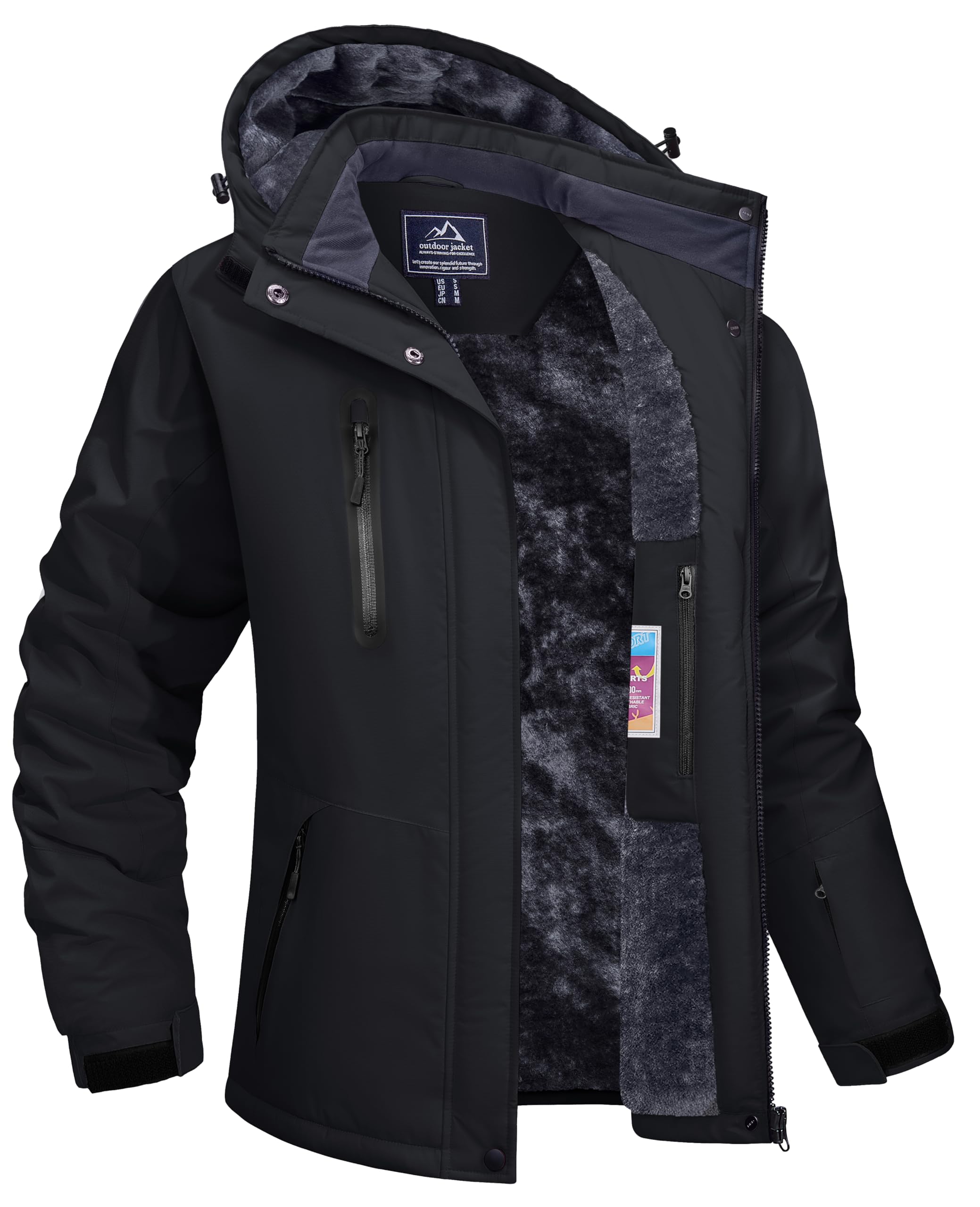
The source listing emphasizes waterproofing and breathability and describes a removable hood, adjustable cuffs, and ski-oriented pockets. It offers more weather coverage than a travel puffer but will feel warmer and less compressible.
Who Should Buy This
Skiers, snow-day users, and wet-weather commuters.
Who Should Avoid This
Ultralight travelers, high-output runners, or buyers who need a fully seam-taped technical shell.
Where It Shines
Resort skiing, wet winter commutes, and moderate outdoor activity.
Durability
The polyester shell and adjustable hardware should suit normal seasonal use; avoid abrasion and follow the current washing instructions.
Key Benefits
- Insulated coverage for cold, damp weather
- Removable hood and adjustable cuffs
- Multiple secure and ski-oriented pockets
- Useful crossover design for slopes and daily wear
Before You Buy: The source gives exact waterproof and breathability ratings, but they could not be independently confirmed. Verify the live listing and seam construction.
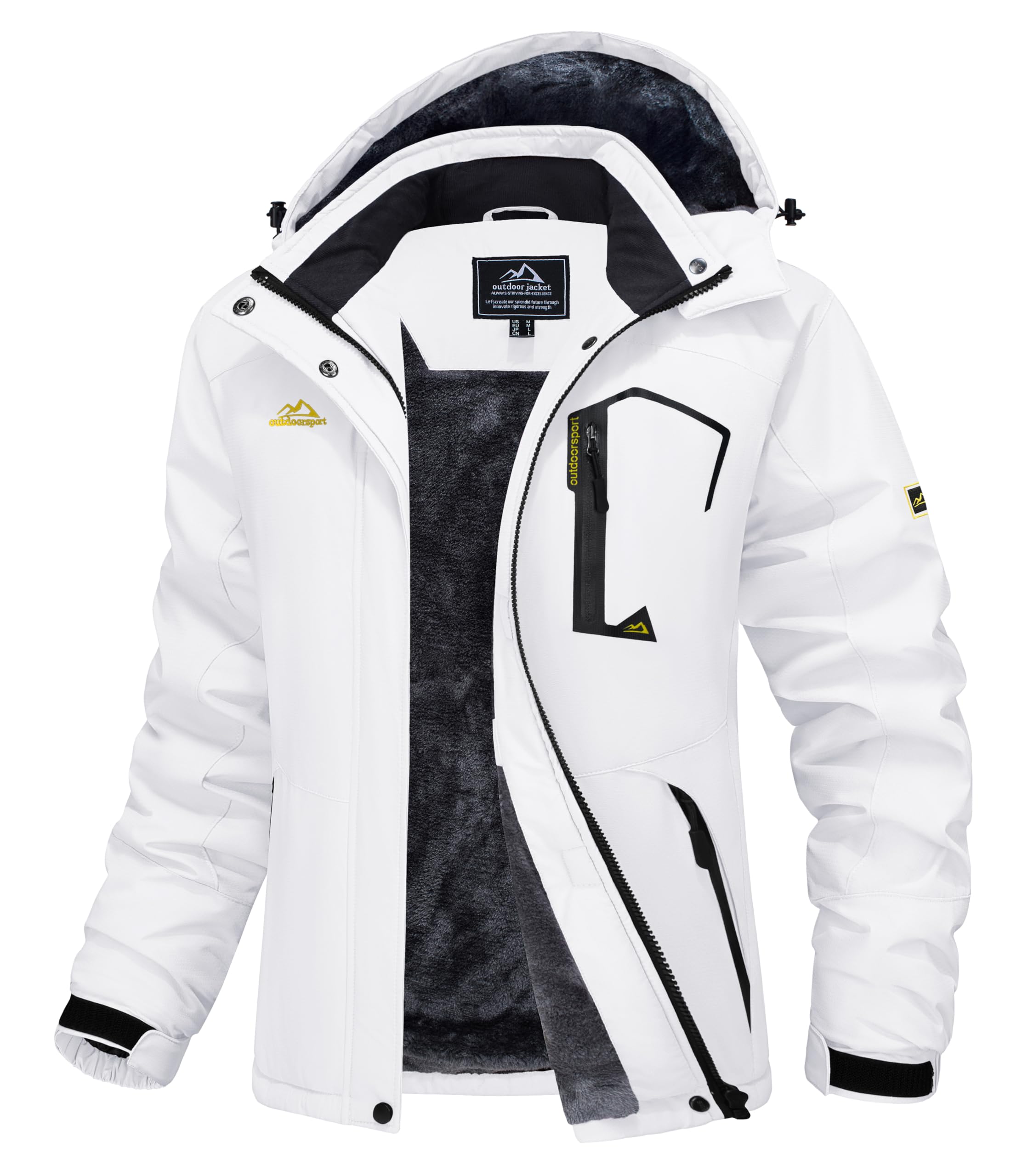
The current Amazon listing describes polyester construction, a fleece lining, detachable adjustable hood, adjustable cuffs, multiple pockets, and 3000mm waterproof fabric. The inner fleece is marketed as breathable, but this remains an insulated ski-style coat rather than a high-output shell.
Who Should Buy This
Women seeking an all-round jacket for commuting, casual snow sports, and everyday winter use.
Who Should Avoid This
Backcountry users, ultralight packers, or anyone who needs a highly compressible layer.
Where It Shines
Everyday winter wear, recreational skiing, and cold-weather travel.
Durability
The polyester shell is appropriate for normal winter use. The current listing specifies hand washing.
Key Benefits
- Fleece-lined everyday warmth
- Manufacturer-stated 3000mm waterproof fabric
- Detachable hood and adjustable cuffs
- Multiple pockets for winter essentials
Before You Buy: Amazon currently flags frequent returns for a loose fit. Use the garment measurements instead of automatically sizing up.

The source describes waterproof and windproof construction, breathable insulation, a removable hood, and multiple zip pockets. It is better aligned with resort use than a minimalist puffer, but no independently verified breathability figure is available.
Who Should Buy This
Women shopping for an affordable resort-skiing and commuting jacket.
Who Should Avoid This
Buyers focused on strenuous uphill activity, ultralight packing, or verified technical-shell specifications.
Where It Shines
Resort skiing, winter commuting, and cold-weather travel.
Durability
Polyester construction is suitable for routine seasonal use; follow the current hand-wash recommendation.
Key Benefits
- Insulated ski-style construction
- Adjustable hood and cuffs
- Multiple secure pockets
- Crossover use for skiing and commuting
Before You Buy: Confirm the current size chart and waterproofing details. Size up only when your measurements and planned layers require it.

This option solves the compact-warmth problem rather than the ski-shell problem. The source describes synthetic insulation, a hood, adjustable hem, elastic cuffs, several pockets, and a water-repellent nylon shell. It is suitable for travel and layering, not prolonged rain.
Who Should Buy This
Travelers and commuters who want compact warmth that can work alone or under a shell.
Who Should Avoid This
Buyers who need heavy stationary warmth or dependable protection in sustained rain.
Where It Shines
Travel, everyday layering, and moderate activity.
Durability
The nylon shell is suitable for regular use but can snag on rough surfaces; store it uncompressed between trips.
Key Benefits
- Packable synthetic insulation
- DWR treatment for brief light moisture
- Hood and adjustable hem
- Useful as an outer layer or midlayer
Before You Buy: A DWR finish is water-repellent, not waterproof. Check garment measurements if you plan to wear thick layers.

The source describes a water-resistant shell, polyester insulation, elastic cuffs and hem, zippered pockets, and a design that packs into its own pocket. It is a convenient lightweight travel jacket, not a specialist high-output or severe-weather shell.
Who Should Buy This
Travelers and commuters who value compact storage and simple warmth.
Who Should Avoid This
People who need heavy insulation, rugged workwear durability, or verified waterproof specifications.
Where It Shines
Airports, road trips, city walking, and layered winter use.
Durability
Treat the lightweight shell as travel outerwear rather than rugged workwear, and watch for fabric catches around the zipper.
Key Benefits
- Packs into its own pocket
- Lightweight synthetic insulation
- Water resistance for brief drizzle
- Hood and multiple zip pockets
Before You Buy: Check the current body and sleeve measurements. Water-resistant construction is not intended for prolonged wet weather.
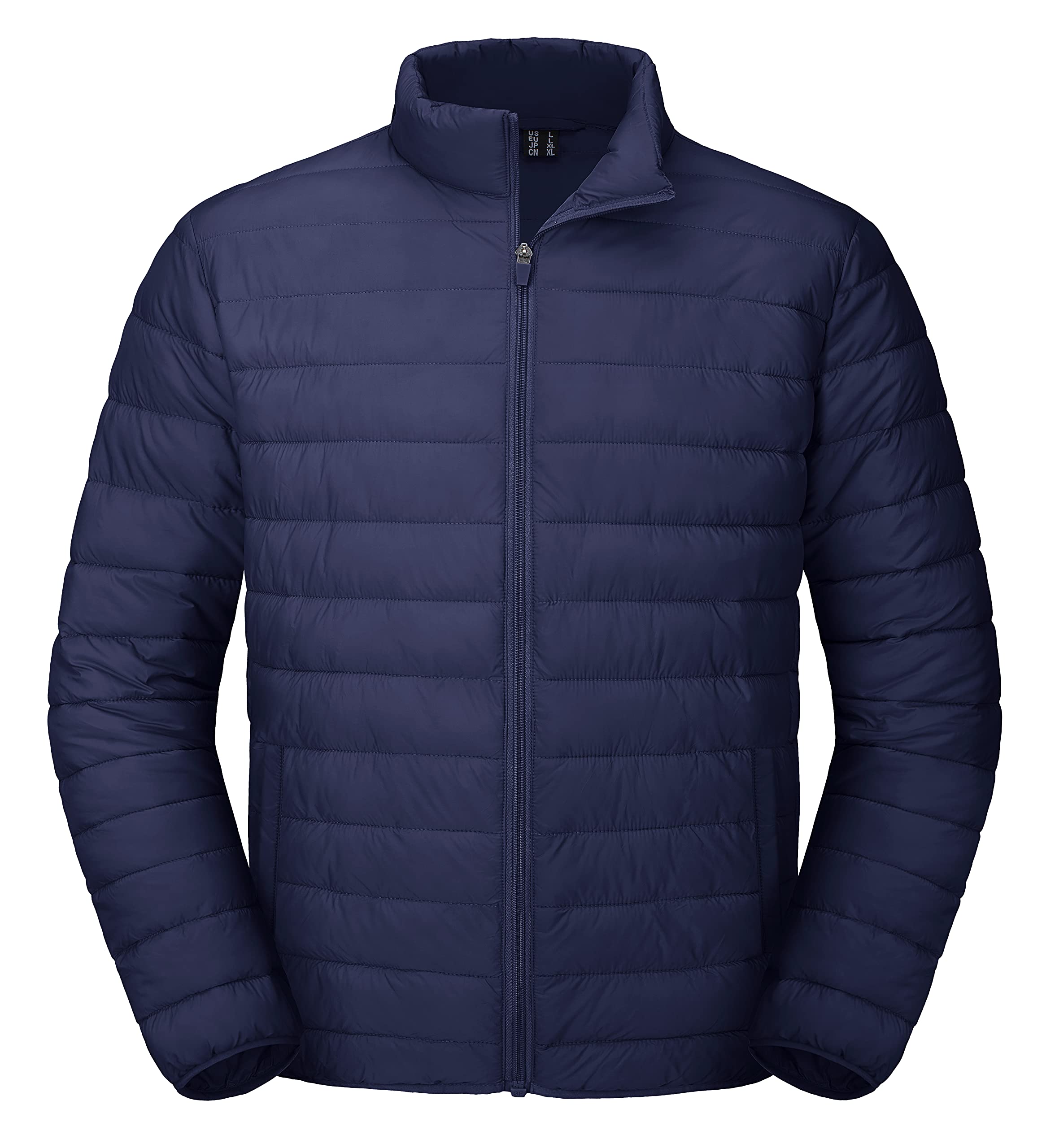
The source describes a breathable nylon shell, polyester insulation, water-repellent treatment, elastic edges, a stand collar, and two side pockets. It is easy to wear for work and travel, but offers less head coverage, storage, and wet-weather protection than a ski jacket.
Who Should Buy This
Men who want a light insulated layer for commuting, casual wear, and travel.
Who Should Avoid This
Buyers who require a hood, many secure pockets, heavy warmth, or waterproof protection.
Where It Shines
Everyday commuting, casual travel, and layering under a shell.
Durability
The lightweight nylon shell is appropriate for daily wear but should be protected from sharp or abrasive surfaces.
Key Benefits
- Low-bulk synthetic insulation
- Breathable-shell claim
- Water-repellent finish
- Stand collar and simple styling
Before You Buy: This model has no hood and only two side pockets. Do not treat water-repellent fabric as waterproof.
How to Choose a Breathable Insulated Jacket
Match Breathability to Activity
For brisk walking, hiking, or frequent indoor-outdoor changes, favor a lighter softshell, lower-bulk synthetic insulation, or verified venting. For lower-output use, prioritize insulation and wind sealing, then manage moisture with base layers.
Understand Weather Terms
Water-repellent usually means brief drizzle protection. Water-resistant suggests more protection but not prolonged exposure. Waterproof should be supported by current membrane and seam details when demanding use is expected.
Choose the Right Insulation
Packable synthetic puffers are easy to carry and layer. Fleece-lined softshells balance mobility and moderate warmth. Insulated ski jackets provide more coverage but can feel warmer during high-output activity. Avoid unsupported temperature-limit claims.
Check Fit and Features
Compare body measurements with the current garment chart and allow room for the layers you actually wear. Check arm mobility, hood adjustment, cuff closure, pocket placement, packability, and care instructions.
FAQ
Which Type Is Best for High-Output Winter Activity?
A lighter softshell or low-bulk synthetic jacket is usually easier to regulate than a thick ski parka. Look for verified breathability information, mechanical venting, stretch, and layering room.
Can a Jacket Be Waterproof and Breathable?
Yes, but both properties involve tradeoffs. Real comfort still depends on temperature, humidity, activity, venting, insulation, and base layers. Confirm the current manufacturer specifications.
Should I Size Up for Layering?
Only when garment measurements show that your normal size will not fit the layers you plan to wear. Excess room can create drafts, while a tight fit can compress insulation and restrict movement.
How Do I Maintain Breathability and Water Resistance?
Follow the care label, use mild or technical detergent, avoid fabric softener, rinse thoroughly, and dry as directed. Refresh a compatible water-repellent finish when water stops beading, and store insulation clean, dry, and uncompressed.
Is a Packable Puffer Good for Skiing?
It can work as a midlayer or for mild, dry resort days, but most packable puffers lack the coverage, face-fabric durability, pass storage, and wet-weather protection of a dedicated ski jacket.
Detailed Comparison
| Product | Image | Best For | Warmth | Breathability Evidence | Weather Protection | Care | Amazon |
|---|---|---|---|---|---|---|---|
| 33,000ft Men's Hooded Softshell |
 |
Active commuting, hiking, travel | Moderate | Softshell; listing describes breathable performance | Wind and light wet weather | Check current label | View Details |
| TACVASEN Waterproof Ski Jacket |
 |
Skiing, wet commutes, snow days | Moderate to warm | Manufacturer-stated; confirm rating | Stronger wet-weather focus | Verify current label | View Details |
| MAGCOMSEN Women's Ski Jacket |
 |
Women’s winter wear and casual skiing | Warm, fleece-lined | Breathable-fleece claim; no rating | 3000mm manufacturer-stated fabric | Hand wash only | View Details |
| MOERDENG Women's Insulated Ski Jacket |
 |
Women’s resort skiing and commuting | Warm, insulated | Claimed; no verified rating | Waterproof/windproof claim | Hand wash listed | View Details |
| Pioneer Camp Men's Packable Puffer |
 |
Men’s travel and layering | Light to moderate | No rating; lower-bulk construction | DWR/light rain | Machine wash listed | View Details |
| Outdoor Ventures Packable Puffer Jacket |
 |
Travel, commuting, compact storage | Light to moderate | No rating; lightweight profile | Light water resistance | Check current label | View Details |
| MAGCOMSEN Men's Puffer Jacket |
 |
Men’s everyday wear and layering | Light to moderate | Claimed; no technical rating | Water-repellent | Hand wash listed | View Details |
Final Recommendation
Choose the 33,000ft Men’s Hooded Softshell for active comfort and layering flexibility. Choose the TACVASEN Waterproof Ski Jacket for wetter snow-focused use. Choose the MAGCOMSEN Women’s Ski Jacket for a practical women’s all-rounder, or the Pioneer Camp Men’s Packable Puffer when compact travel warmth matters most.
Verify the current size chart and product details before ordering. The best jacket is the one that matches your activity, layers, and realistic weather exposure.
This roundup is reader-supported. Eligible Amazon links may earn the publisher a referral commission on qualifying purchases.