
Affiliate disclosure:. As an Amazon Associate I earn from qualifying purchases. This roundup is reader-supported. When you click through qualifying Amazon links, we may earn a referral commission at no extra cost to you.
You want a lightweight two-person tent that packs easily, pitches without a fight, and gives you dependable protection when temperatures drop. The challenge is that not every tent marketed for “all seasons” is suitable for snow, exposed winds, or severe winter weather.
This guide separates winter-ready two-person tents from lighter three-season shelters that are better for mild, sheltered cold-weather trips. We compare pack weight, pole construction, fly coverage, ventilation, vestibule space, and setup so you can choose a tent that matches the conditions you actually expect.
Quick Verdict
Best overall for winter-focused trips: The OneTigris Stella 2P combines a four-season design, a 3000 mm waterproof rating, aluminum poles, and a comparatively low listed weight.
Best value for colder conditions: The Clostnature 4-Season 2P adds snow flaps, dual doors, and dual vestibules, although it is heavier.
Best for mild winter or shoulder-season backpacking: The Naturehike Mongar 2 is roomy, freestanding, and lighter than most budget options, but it remains a three-season tent.
Winter suitability note: A “four-season” label is not a guarantee of expedition performance. For heavy snow, exposed ridgelines, strong winds, or alpine use, choose a shelter with proven winter pole geometry and snow-loading capability. The three-season tents below are recommended only for mild, low-snow, sheltered conditions.
Top Picks
| Category | Product | Cold-Weather Fit |
|---|---|---|
| 🏆 Best Overall Winter Pick | OneTigris Stella 2P | Four-season; suitable for planned cold-weather use |
| ❄️ Best Value Winter-Ready | Clostnature 4-Season 2P | Four-season with snow flaps; heavier carry |
| 🚀 Best Quick-Pitch | Forceatt 2P | Cold-weather capable for sheltered camps; not expedition-grade |
| 🛡️ Best Waterproof Three-Season Pick | Night Cat 2P | Three-season; mild winter and shoulder-season use |
| 🎯 Best Lightweight Backpacking Pick | Naturehike Mongar 2 | Three-season; best for mild, low-snow conditions |
| 💰 Best Spacious Value | Clostnature 2P | Three-season; sheltered cold-weather camping only |
| 💼 Best for Bike or Motorcycle Trips | BISINNA 2P | Three-season; mild weather and protected campsites |
How We Picked These Tents
We prioritized the factors that matter most when carrying a two-person shelter in colder weather: verified occupancy, listed season rating, packed weight, aluminum versus fiberglass poles, full-fly coverage, floor protection, ventilation, door and vestibule layout, and setup simplicity.
We also treated winter claims conservatively. Three-season tents remain in the guide only as options for mild winter or shoulder-season trips, and they are clearly separated from models marketed specifically for four-season use. We removed unsupported internal scores, changing review totals, and unverified sentiment claims so the comparison focuses on specifications and realistic use cases.
Before You Buy: Winter Tent Checklist
- Expected weather: Distinguish a calm campground below freezing from exposed wind, accumulating snow, or alpine conditions.
- Season rating: Use a genuine four-season shelter for regular snow and stronger winter winds; reserve three-season tents for sheltered, low-snow trips.
- Sleeping system: Your sleeping pad and sleeping bag provide most of your warmth. A tent primarily blocks wind and precipitation.
- Two-person space: Check whether two pads fit side by side and whether vestibules can hold winter boots and packs.
- Condensation control: Favor adjustable vents and keep the fly tensioned away from the inner tent.
- Anchoring: Budget for stronger stakes, snow anchors, and extra guylines when the included hardware is too light for the site.

The Stella is the strongest match for shoppers who want a compact two-person shelter built specifically around colder conditions. Its four-season positioning, double-wall construction, aluminum poles, and removable outer fly make it more appropriate for planned winter use than the three-season tents lower in the list.
At about 4.4 lb, it also has one of the better protection-to-weight balances in this roundup. The trade-off is interior space: it is comfortable for one person with winter gear and cozy for two, so bulky packs are best stored in the vestibule area where possible.
Why You’ll Like It
- Four-season design for buyers who camp beyond mild shoulder-season weather
- Listed 3000 mm waterproof rating and nylon construction
- Aluminum poles and a relatively low listed weight
- Removable outer fly for greater seasonal flexibility
- Compact choice for backpacking, bikepacking, and motorcycle travel
Best For
Cold-weather backpackers, solo campers who want extra gear room, and couples who prioritize packability over a spacious interior.
Watch-Outs
Two people with bulky winter gear may find the sleeping area tight. It should not be presented as a substitute for a proven alpine or high-snow expedition tent.

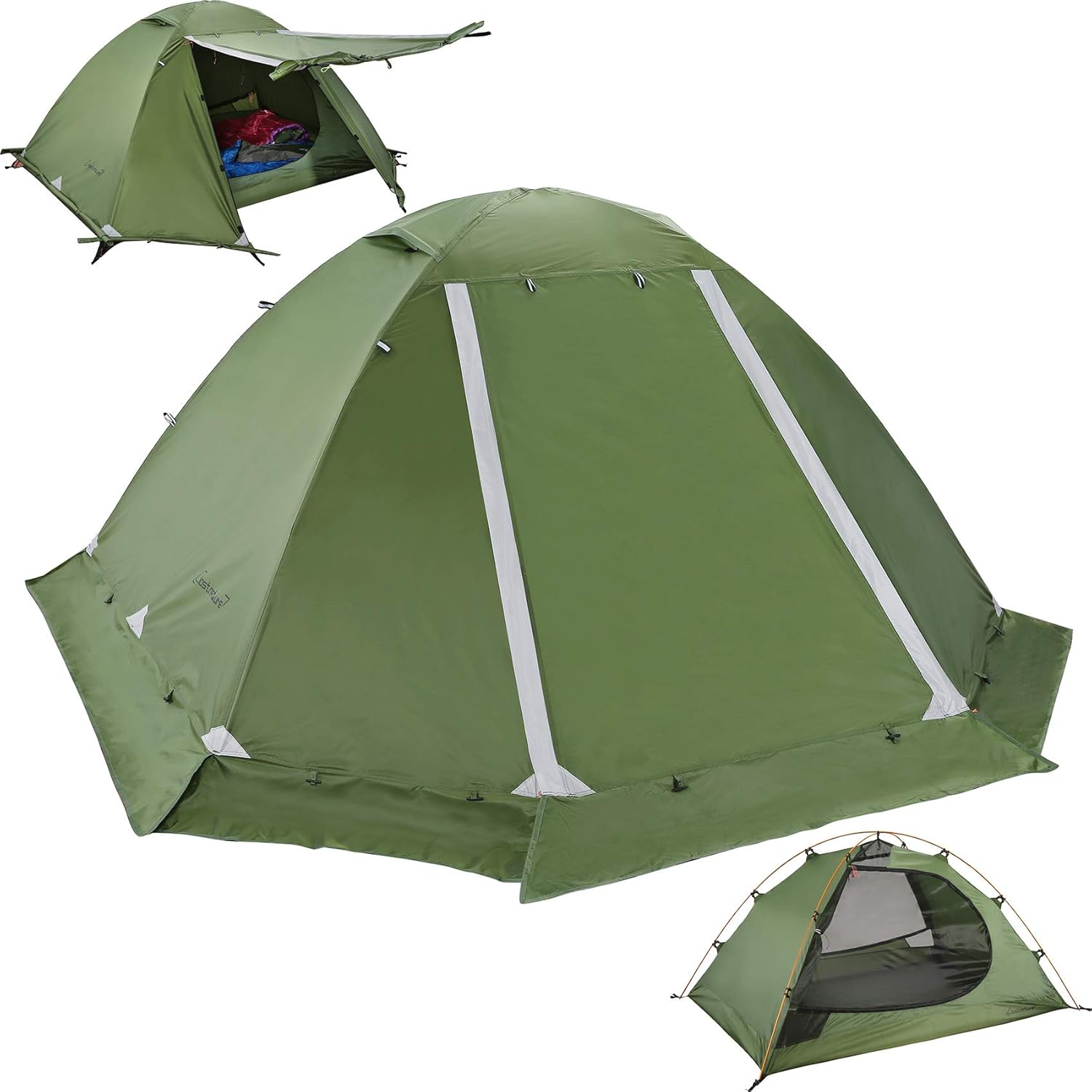
This Clostnature model is the better value-oriented choice when winter-specific details matter more than shaving every ounce. Snow flaps help reduce wind-driven spindrift, while two doors and two vestibules make it easier for two campers to manage boots, wet layers, and packs.
It is heavier than the Stella, so it makes the most sense for shorter backpacking routes, pulk travel, motorcycle camping, or trips where the load can be split between two people. The product listing displays conflicting numeric waterproof information, so the safer buying takeaway is its PU-coated materials, sealed seams, full fly, and winter-oriented construction rather than one precise hydrostatic-head figure.
Why You’ll Like It
- Four-season design with snow flaps for better cold-weather coverage
- Two doors and two vestibules for shared winter gear
- Aluminum poles and a freestanding setup
- Factory-sealed seams and a bathtub-style floor
- Roomier dimensions than the most compact winter picks
Best For
Budget-conscious winter campers who value space and weather features more than minimum packed weight.
Watch-Outs
The total listed weight is around 6.3 lb, and the listing contains inconsistent numeric waterproof ratings. Check the current product details before purchase and use stronger anchors for snow or wind.

The Forceatt 2P is the easiest recommendation for campers who prioritize a quick, familiar dome setup. The clip-on body, aluminum poles, and simple two-pole structure are useful when fingers are cold or daylight is fading. Two doors and vestibules also reduce the frustration of sharing a compact tent.
The listing describes it as a four-season model, but the design is better treated as a versatile budget tent for sheltered cold-weather camps rather than an alpine shelter. It weighs about 5.5 lb, which is manageable when split between two people but heavy by modern ultralight standards.
Why You’ll Like It
- Fast freestanding setup with aluminum poles
- Two doors and two vestibules for easier shared use
- Full-coverage fly and bathtub-style floor
- Listed 3000 mm waterproof rating
- Good balance of ease, space, and entry-level cost
Best For
Weekend campers, beginners, motorcycle travelers, and pairs who want simple setup in cool or damp weather.
Watch-Outs
Do not rely on the season label alone for heavy snow or exposed winter wind. Upgrade the stakes and fully guy out the fly in unsettled weather.
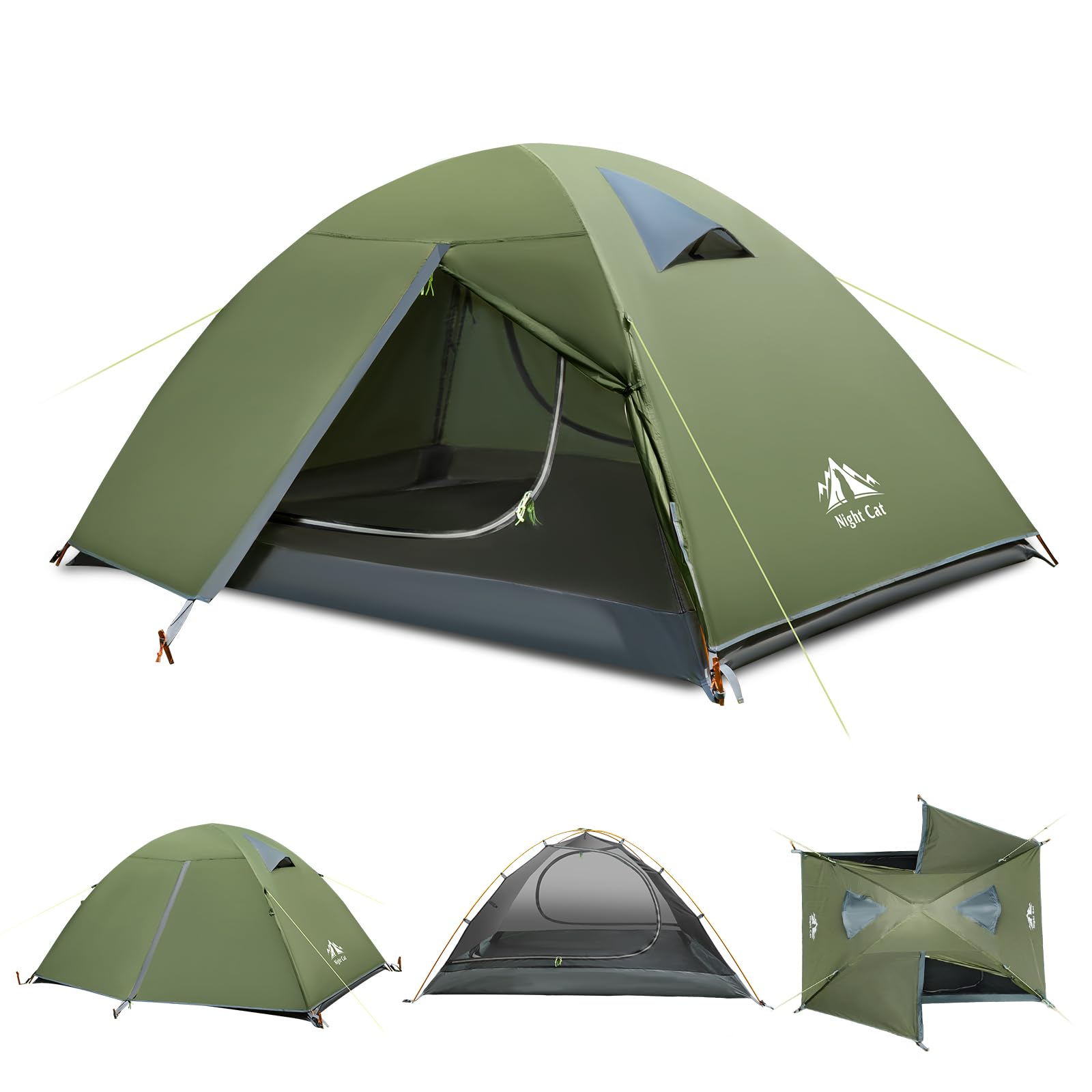
This Night Cat model is a practical option when rain protection and compact packing matter more than true winter architecture. The aluminum poles, double-layer body, and two-door layout are useful upgrades over very basic budget tents.
Because the product is listed as a three-season shelter, it is best for late fall, early spring, or mild winter campground trips without meaningful snow loading. It is roomy for one camper with gear and snug for two adults.
Why You’ll Like It
- Two-person occupancy with two doors for easier entry
- Aluminum poles instead of fiberglass
- Double-wall construction and mesh ventilation
- Compact packed size for bikes, motorcycles, or short hikes
- Strong listed water-resistance specification for its category
Best For
Rainy shoulder-season trips, solo campers who want extra space, and pairs camping in sheltered mild conditions.
Watch-Outs
Despite some broad marketing language, the main product specification identifies it as a three-season tent. Avoid exposed snowstorms and severe winter wind.

The Mongar 2 stands out for backpackers who want a more refined three-season layout. Its Y-frame is quick to pitch, the two doors and vestibules improve livability, and the included footprint reduces the need for a separate purchase.
Its listed full-set weight varies by fabric version, so check the selected variation before ordering. The 210T polyester version in this roundup is a three-season shelter and should be reserved for calm, low-snow winter trips or shoulder-season conditions.
Why You’ll Like It
- Freestanding Y-frame that one person can pitch quickly
- Two doors and two vestibules for balanced shared access
- Included footprint for extra floor protection
- Roomy two-pad interior
- Lighter listed weight than several entry-level competitors
Best For
Backpackers, bikepackers, and couples who want a roomy three-season tent for cool but non-severe conditions.
Watch-Outs
This is not a four-season shelter. Fabric versions differ in weight and waterproof specifications, so confirm the exact Amazon variation before buying.

The three-season Clostnature 2P works well for buyers who want maximum usable space at an entry-level weight and cost. The rectangular floor, generous peak height, two doors, and twin vestibules make it easier for two campers to organize pads, boots, and packs.
Its waterproof coating and sealed seams support wet-weather use, but the season rating matters: this model is a better choice for cool rain, frost, and sheltered shoulder-season trips than for accumulating snow or sustained winter wind.
Why You’ll Like It
- Roomy dimensions for two adults
- Two doors and two vestibules
- Aluminum poles and quick clip-based setup
- Compact packed size for its interior volume
- Good value for occasional backpacking and car camping
Best For
Couples, taller campers, and value shoppers planning mild cold-weather or three-season trips.
Watch-Outs
It weighs more than premium lightweight tents and is not designed for heavy snow. A footprint can help protect the floor on abrasive ground.

The BISINNA 2P is a sensible travel tent for campers who value compact packing, dual access, and a straightforward freestanding pitch. It fits well on a motorcycle, bike rack, kayak, or in a small car where packed bulk matters.
The product page contains conflicting season metadata, but its own detailed description identifies the tent as a three-season model. For that reason, it belongs in the mild-weather end of this roundup rather than among the true winter picks.
Why You’ll Like It
- Two doors and vestibule coverage for shared gear
- Aluminum poles and freestanding construction
- Compact packed dimensions
- Large mesh areas for ventilation
- Useful balance of space and portability for road-based trips
Best For
Bikepacking, motorcycle camping, kayaking, and mild shoulder-season weekends.
Watch-Outs
Treat it as a three-season tent despite conflicting marketplace metadata. Its mesh-heavy inner and 2000 mm fly rating are better suited to protected camps than serious winter weather.
How to Choose a Lightweight Two-Person Tent for Winter
Start With the Weather, Not the Marketing Label
A calm campground at -2°C is a different problem from an exposed ridge with wind and accumulating snow. Choose a true four-season model for regular winter use, and reserve three-season tents for low-snow, sheltered conditions where the forecast is stable.
Compare Total Weight and Minimum Trail Weight
Manufacturers may list total packed weight, minimum trail weight, or both. Total packed weight usually includes stakes, guylines, stuff sacks, and accessories. Compare the same type of weight across products, and remember that two campers can split the tent body, fly, and poles.
Look for Aluminum Poles and a Stable Structure
Aluminum poles generally provide a better strength-to-weight balance than fiberglass. Pole diameter, intersection points, guy-out locations, and overall geometry also affect wind and snow performance, so material alone does not make a tent winter-capable.
Prioritize Fly Coverage, Floor Protection, and Ventilation
A full-coverage fly and bathtub floor help manage rain, wet snow, and splashback. Adjustable ventilation remains essential in winter because condensation from breathing and damp gear can wet the inner tent and sleeping system.
Check Two-Person Livability
Two-person capacity often means two standard sleeping pads with limited spare floor space. Dual doors reduce climbing over a partner, while two vestibules provide separate storage for boots and packs. Taller campers should check floor length and wall slope rather than relying on the capacity label.
Cold-Weather Safety Note
Do not cook in the sleeping area and do not use a fuel-burning heater in a standard backpacking tent. Fire, carbon monoxide, and oxygen-depletion risks can become life-threatening. Keep vents open enough to manage condensation, clear accumulating snow from the fly, and leave the trip if the shelter is not appropriate for worsening conditions.
FAQ
Can a Lightweight Two-Person Tent Keep You Warm in Winter?
A tent reduces wind exposure and keeps precipitation off your sleeping system, but it provides limited insulation. Most warmth comes from a properly rated sleeping bag, an insulated sleeping pad with sufficient R-value, dry base layers, food, and good campsite selection.
Is a 3000 mm or 5000 mm Waterproof Rating Enough?
Those numbers can indicate strong fabric water resistance, but they do not tell the whole story. Seam sealing, fly coverage, floor construction, fabric condition, ventilation, pitch quality, and wind-driven rain all affect real-world performance. Also confirm whether the rating applies to the fly, floor, or both.
Can You Use a Three-Season Tent in Winter?
Yes, but only in limited conditions. A three-season tent can work for a calm, sheltered campground with little or no snow and a stable forecast. It is not the right choice for heavy snow loading, exposed terrain, strong winds, or remote trips where shelter failure would have serious consequences.
Should Two Campers Buy a Two-Person or Three-Person Tent?
Choose a two-person tent when low weight and compact packing are the priority. Size up to a three-person tent when both campers have bulky winter sleeping systems, need interior gear storage, or value comfort more than minimum weight.
What Should You Upgrade Before a Winter Trip?
Useful upgrades include stronger stakes, extra reflective guylines, snow or sand anchors, a footprint, a pole repair sleeve, seam sealer, and a small repair kit. Practice pitching with gloves before the trip and verify that every component is present.
Final Recommendation
Choose the OneTigris Stella 2P when you want the best combination of four-season positioning, low listed weight, and packability.
Choose the Clostnature 4-Season 2P when you want more space, two vestibules, and snow flaps at the expense of extra weight.
Choose the Naturehike Mongar 2 or Clostnature 3-Season 2P when your “winter” trip really means a sheltered, low-snow campground or shoulder-season backpacking route.
Whichever tent you choose, match the shelter to the forecast, bring an insulated sleep system, and leave a safety margin for changing conditions.
| Product | Image | Season Fit | Dimensions (L x W x H) | Listed Weight | Material | Water Resistance | Doors / Vestibules | Best For | Amazon |
|---|---|---|---|---|---|---|---|---|---|
| OneTigris Stella 4 Season Camping Tent |
 |
4 season | Approx. 82.7″ x 50.2″ x 45.3″ | 2 kg (4.4 lb) | 20D nylon outer; nylon floor | 3000 mm listed rating | 1 door / vestibule-style entry | Winter-focused backpacking | Check Amazon |
| Clostnature 2 Person 4 Season Tent |
 |
4 season | 86.6″ x 59″ x 45.8″ | Approx. 6.3 lb total | Polyester with PU coating | Listing shows conflicting numeric ratings; sealed PU-coated construction | 2 / 2 | Value-focused cold-weather camping | Check Amazon |
| Forceatt Tent for 2 Person |
 |
Marketplace-listed 4 season; best treated as sheltered cold-weather use | 88.6″ x 53″ x 43″ | 2.5 kg (5.5 lb) | Polyester; aluminum poles | PU 3000 mm listed rating | 2 / 2 | Fast setup and weekend use | Check Amazon |
| Night Cat 2-Person Backpacking Tent |
 |
3 season | 86.61″ x 55.12″ x 47.24″ | Listing shows 2 kg item weight and about 2.5 kg full set | Polyester outer; Oxford floor; aluminum poles | 5000 mm technology field; component ratings vary in description | 2 / small external storage | Rainy shoulder-season trips | Check Amazon |
| Naturehike Mongar 2 Person Tent |
 |
3 season | 82.7″ x 53.2″ x 41.3″ | About 5.3 lb for the selected full set | 210T polyester; aluminum poles | 3000 mm listed rating | 2 / 2 | Lightweight mild-weather backpacking | Check Amazon |
| Clostnature Lightweight 2-Person Backpacking Tent |
 |
3 season | 86.6″ x 59″ x 45.28″ | 5.29 lb total | Polyester; aluminum poles | PU 5000 mm listed rating | 2 / 2 | Roomy value option | Check Amazon |
| BISINNA 2-Person Camping Tent |
 |
3 season based on detailed product description | Approx. 82.7″ x 55″ x 47.2″ inner | 4.7 lb | 190T polyester; aluminum poles | PU 2000 mm rainfly | 2 / 2 | Bike, motorcycle, and kayak travel | Check Amazon |
Product specifications and marketplace details can change by color, size, seller, and variation. Confirm the selected Amazon listing before ordering.