
Glove fit has a direct effect on welding control. Extra finger length, a loose palm, or a bulky gauntlet can make it harder to hold a torch, feed wire, grip small parts, or handle hot tools with confidence.
In this guide, you’ll find leather welding gloves that balance protection, heat resistance, cuff coverage, and control. Important: a 14-inch glove is not automatically a small-size glove—the length mainly describes overall gauntlet coverage. If you have small hands, check the current size selector and hand measurements before ordering.
Updated for 2026. Product size options can change, so verify the current Amazon variant before ordering.
Affiliate disclosure:. As an Amazon Associate I earn from qualifying purchases. This roundup is reader-supported. When you click through Amazon links, we may earn a referral commission on qualifying purchases at no extra cost to you.
Quick Verdict
Best compact-cuff pick: QeeLink 14-Inch Welding Gloves if you want less gauntlet bulk than a 16-inch design while keeping leather heat and spark protection.
Best 14-inch alternative: TOPDC 14-Inch Welding Gloves if you prefer shorter forearm coverage, but note that the linked variant is commonly listed as Large.
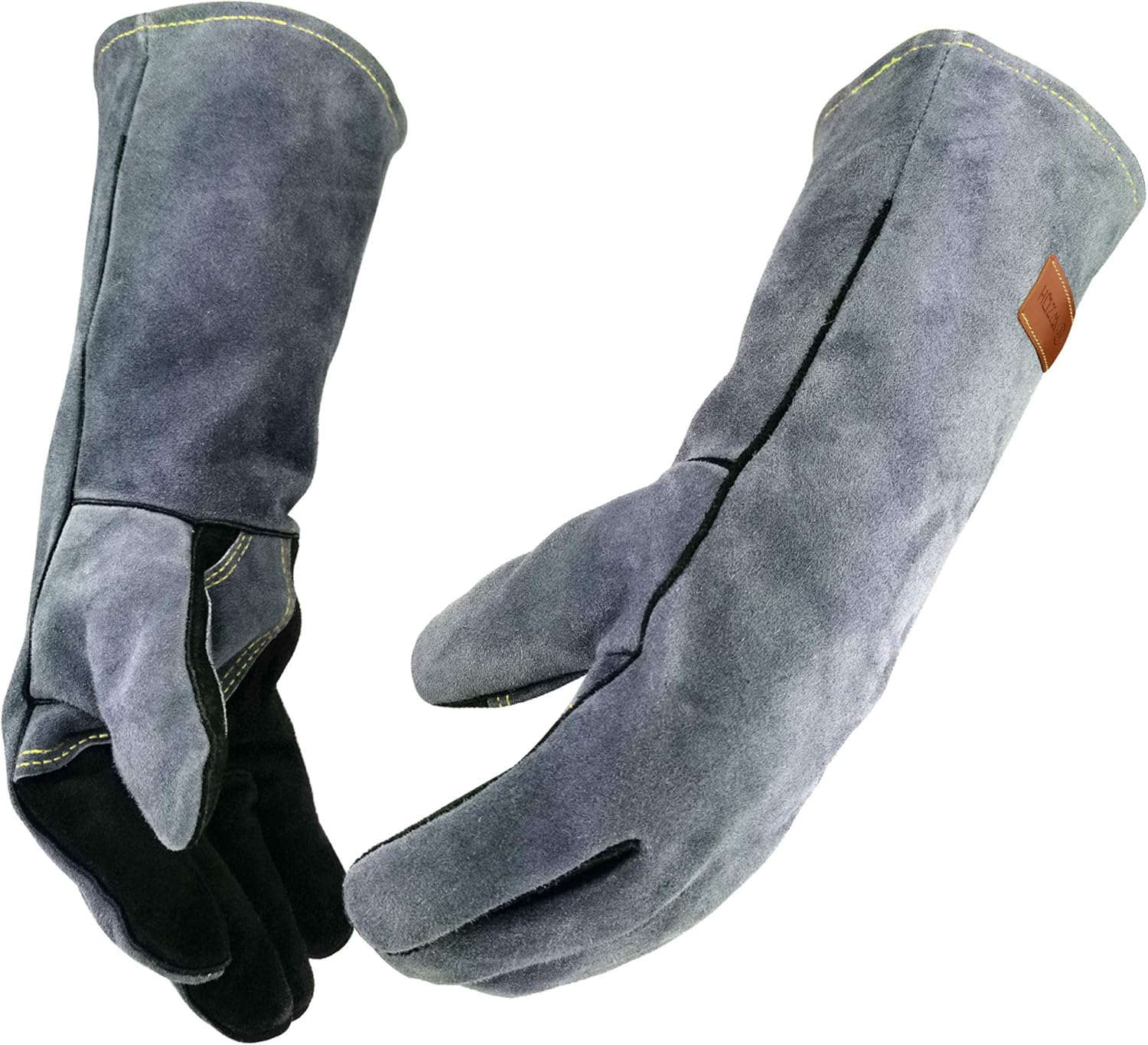
Best sizing-flexibility pick: WZQH 16-Inch Leather Welding Gloves because multiple size variants are listed for this model family; verify the current Amazon size selector before buying.
Small-hand reality check: cuff length is not hand size. The QeeLink and TOPDC 14-inch models reduce gauntlet length, but the listings do not make them true Small-size gloves. If you specifically need a small hand fit, prioritize an actual Small or Medium variant that matches your measurements.
Top Picks
|
Category |
Product |
Best For |
|---|---|---|
|
🏆 Best Compact Cuff |
Less gauntlet bulk, welding and grill use; verify hand fit |
|
|
🚀 Best 14-Inch Alternative |
Shorter forearm coverage; linked variant is commonly listed as Large |
|
|
🔥 Best Sizing Flexibility |
Multiple size variants, longer cuff, heat-focused tasks |
|
|
🎯 Best for Welding Students |
Practice welding, grinding, and basic shop protection |
|
|
🛡️ Best Heavy-Duty Coverage |
Heavy use, forge work, BBQ, and repeated heat exposure |
|
|
🔧 Best All-Purpose |
Welding, fireplace, oven, grill, and general hot-work tasks |
How We Picked These Gloves
You need gloves that protect without taking away useful movement. Hand size, finger length, palm fit, leather thickness, lining, and cuff length all matter. We treated cuff length as a coverage feature—not as proof that a glove fits small hands.
- Fit and sizing: We checked whether the model is sold in named sizes or a standard/one-size format and separated hand sizing from cuff length.
- Dexterity: We looked for softer leather, shorter gauntlet options, thumb designs, and construction that may reduce bulk during tool handling.
- Heat and spark protection: We favored leather, reinforced palms, insulated linings, and cuff coverage suitable for welding, grilling, fireplaces, and hot shop tasks.
- Durability: Reinforced seams, split cowhide, double leather stress points, and abrasion resistance mattered more than flashy claims.
- Honest limitations: We gave extra weight to gloves that are clear about trade-offs, because smaller hands often have to balance protection against bulk.
Before You Buy
- Measure your hand first: Check palm circumference and hand length, then compare those numbers with the current size chart or selector for the exact variant.
- Do not confuse length with size: A 14-inch glove can reduce gauntlet bulk, but it may still be sold only in Large or a regular fit.
- Choose 16 inches for coverage: A longer gauntlet protects more wrist and forearm area. Hand fit still depends on the actual size and finger dimensions.
- Do not rely on heat ratings alone: Gloves reduce heat transfer, but prolonged contact with hot metal, grates, or cookware can still burn you.
- Inspect before every use: Replace gloves with holes, thinning leather, loose stitching, oil contamination, or burn-through.
Leather Welding Gloves for Fit, Control, and Coverage: Reviews

You get a 14-inch leather welding glove that may feel less bulky than a full 16-inch gauntlet. The shorter overall design can be easier to manage when you need to grip pliers, hold tongs, adjust a grill grate, or handle shop parts.
The leather shell, reinforced stitching, cotton liner, and canvas cuff give a practical balance of protection and flexibility. The listing uses a regular-fit format rather than a clearly verified Small size, so buyers with small hands should confirm measurements before ordering.
Why You’ll Like It
- Shorter cuff helps reduce bulk around the wrist and forearm.
- Leather construction helps block sparks, rough edges, and short-contact heat.
- Cotton liner improves comfort during longer sessions.
- Shorter gauntlet can reduce forearm bulk compared with many 16-inch gloves.
Who Should Buy This
- Users who find full 16-inch gauntlets bulky around the wrist and forearm.
- DIY welders, grill users, and fireplace owners who need general heat protection.
- Anyone who values lower cuff bulk over maximum forearm coverage.
Who Should Avoid This
- Choose another model if you need a clearly listed Small or Medium hand size rather than a regular-fit glove.
- Choose a longer glove if you regularly need deeper forearm protection from spatter, coals, or radiant heat.
- Choose a heavier insulated glove for extended high-heat contact or more intense welding work.
Key Benefits
- 14-inch length is easier to handle than many full gauntlet gloves.
- Split cowhide leather helps resist abrasion and sparks.
- Reinforced stitching improves durability at stress points.
- Cotton liner helps with comfort and sweat absorption.
- Useful for welding, fireplace work, BBQ, pruning, and general shop chores.

The TOPDC 14-inch gloves are a practical choice if you want leather protection with less gauntlet length than a 16-inch model. The shorter design can interfere less with wrist movement when you’re working with tongs, clamps, shop parts, or grill tools.
The split cowhide exterior and reinforced stitching suit sparks, rough surfaces, and hot-work tasks. However, the linked B08S3GVG6X variant is commonly listed as Large, so it should not be presented as a true small-hand glove solely because it is 14 inches long.
Why You’ll Like It
- Less bulky than many 16-inch welding gloves.
- Shorter gauntlet may feel less restrictive around the wrist than longer designs.
- Cotton lining improves comfort during repeated use.
- Works across welding, grilling, fireplace, and yard tasks.
Who Should Buy This
- DIY welders who need a more flexible glove for light to moderate work.
- Buyers who fit the listed size and want less forearm bulk than a 16-inch glove.
- Grill and fireplace users who want leather gloves with better control.
Who Should Avoid This
- Skip it if you need maximum forearm coverage for heavy spatter or deep oven/firebox reach.
- Skip it if you specifically need a Small or Medium hand size and the current listing does not offer one.
Key Benefits
- 14-inch cuff balances coverage and mobility.
- Split cowhide leather helps resist abrasion and punctures.
- Reinforced stitching supports longer service life.
- Cotton liner helps manage sweat and heat.
- Useful for welding, forge work, BBQ, campfire, and yard work.

The WZQH 16-inch gloves are the stronger coverage pick if you want more forearm protection than a 14-inch glove provides. They combine leather, layered insulation, and a longer cuff for welding, grinding, wood-stove work, and grill tasks where sparks or radiant heat can reach past your wrist.
The useful difference here is sizing flexibility: this model family is listed in multiple sizes, including smaller options on some seller pages. The Amazon link may open on a different default size, so use the current size selector and compare measurements before ordering.
Why You’ll Like It
- Longer cuff gives better wrist and lower-forearm coverage.
- Layered construction helps reduce heat transfer during short-contact tasks.
- Reinforced palm helps with abrasion and rough handling.
- Good choice for users who want more coverage than a 14-inch glove.
Who Should Buy This
- Welders and grill users who want a more protective cuff.
- People who work around sparks, embers, hot cookware, or wood stoves.
- Buyers who can select a size that matches their hand measurements instead of accepting the default variant.
Who Should Avoid This
- Avoid it if you prioritize fine fingertip control over forearm coverage or if the available size still leaves excess finger length.
- Consider a 14-inch glove if longer cuffs usually feel clumsy on your wrists.
Key Benefits
- 16-inch cuff helps protect wrists and lower forearms.
- Leather shell helps resist sparks and abrasion.
- Insulated lining improves short-contact heat protection.
- Reinforced palm supports tool handling and durability.
- Useful for welding, grilling, wood stove, fireplace, and oven tasks.

The TOPDC 16-inch gloves are a practical choice if you want more traditional welding-glove coverage. The longer cuff helps shield your wrist and lower forearm from sparks, spatter, and hot debris, which is helpful for MIG, stick, grinding, and general shop practice.
Fit still matters more than the 16-inch length. Check the current hand-size information before buying. If wrist mobility matters more than forearm coverage, the TOPDC 14-inch option may be easier to manage, but its linked variant is also commonly listed as Large.
Why You’ll Like It
- Long cuff provides better coverage than shorter shop gloves.
- Split cowhide construction is useful around sparks and rough materials.
- Cotton lining adds comfort during practice sessions.
- Good option for students, beginners, and general workshop use.
Who Should Buy This
- Beginner welders who want a traditional protective gauntlet shape.
- Users who need forearm protection for welding, grinding, and hot work.
- Buyers who want one affordable pair for welding, grilling, and fireplace chores.
Who Should Avoid This
- Skip it if your main concern is fine TIG-style control or you need a verified small hand size.
- Choose a 14-inch glove if long cuffs usually interfere with your movement.
Key Benefits
- 16-inch cuff helps protect wrists and lower forearms.
- Split cowhide leather helps resist sparks, abrasion, and punctures.
- Reinforced stitching improves durability at high-wear points.
- Cotton lining improves comfort and sweat absorption.
- Suitable for welding practice, grilling, fireplace work, and shop chores.
The RAPICCA 16-inch gloves are built for buyers who care more about coverage and layered insulation than a compact feel. They combine a leather shell, insulated layer, soft liner, and long cuff for welding, forge work, BBQ, and fire-pit tasks.
The linked B01N1VJDIQ variant is commonly listed as X-Large, so it is not a strong choice for genuinely small hands. Treat it as a coverage-focused option and verify the current Amazon size before buying.
Why You’ll Like It
- Durable construction for repeated hot-work use.
- Long cuff helps keep sparks and embers away from the wrist and forearm.
- Reinforced palms improve wear resistance.
- Useful for welding, wood-fired ovens, grills, and fire pits.
Who Should Buy This
- Users who want a heavier-duty glove for frequent heat exposure.
- People who need a glove for welding plus BBQ, oven, and fireplace work.
- Buyers who prioritize forearm coverage and durability over maximum dexterity.
Who Should Avoid This
- Choose another model if you need a true Small or Medium hand size.
- Choose a 14-inch glove if you need less wrist and forearm bulk.
- Skip it if oversized fingers usually make it hard for you to handle small parts.
Key Benefits
- Leather exterior helps resist sparks, abrasion, and hot debris.
- Insulating layer and cotton liner improve comfort during short-contact tasks.
- 16-inch cuff protects wrists and lower forearms.
- Reinforced palms support durability during repeated use.
- Works for welding, forge work, BBQ, pizza ovens, and fireplace tasks.
The ARCCAPTAIN 16-inch gloves are a good all-purpose option if you want leather protection for welding, fireplaces, ovens, and grill work. The reinforced palm area helps with durability, while the lined interior makes them more comfortable for repeated handling tasks.
This model is commonly listed as one-size-fits-most rather than as a dedicated Small or Medium glove. That makes it a weaker choice for very small hands, although it can still work for buyers who match the listed fit and want broad hot-work coverage.
Why You’ll Like It
- Good all-purpose coverage for welding and home hot-work tasks.
- Reinforced palm padding helps protect high-wear areas.
- Soft lining improves comfort during longer chores.
- Useful for people who want one glove for several heat-related jobs.
Who Should Buy This
- DIY users who need a glove for welding, fireplace, oven, and grill tasks.
- Buyers who want a durable leather glove with stronger palm protection.
- Users who prefer a protective 16-inch cuff and are comfortable with a one-size-fits-most format.
Who Should Avoid This
- Skip it if you need a clearly sized Small or Medium glove for very small hands.
- Choose a shorter glove if wrist mobility matters more than cuff coverage.
Key Benefits
- Split cowhide construction helps resist sparks and abrasion.
- Double-reinforced palm padding improves durability.
- Insulated cotton lining supports comfort and moisture control.
- 16-inch cuff protects wrists and lower forearms.
- Works for welding, forging, fireplace work, oven use, and grilling.
Quick Comparison
| Product | Image | Best For | Material | Fit and Safety Notes | Details |
|---|---|---|---|---|---|
| QeeLink Welding Gloves |
 |
Best compact-cuff option | Split cowhide leather, cotton liner, canvas cuff | 14-inch length reduces gauntlet bulk, but the listing does not clearly verify a Small hand size. | Check Price |
| TOPDC Welding Gloves 14 Inches |
 |
Best 14-inch alternative | Split cowhide leather, cotton lining | Shorter gauntlet, but the linked variant is commonly listed as Large; do not treat 14 inches as hand size. | Check Price |
| 16 Inches Leather Welding Gloves |
 |
Best sizing flexibility | Cowhide leather, insulated lining | Multiple size variants are listed for this model family; choose the closest current size and verify the selector. | Check Price |
| TOPDC Welding Gloves 16 Inches |
 |
Best for welding students | Split cowhide leather, cotton lining | Traditional long-cuff protection; verify the actual hand size before ordering. | Check Price |
| RAPICCA Welding Gloves |
 |
Best heavy-duty coverage | Leather exterior, insulated layer, cotton liner | Linked variant is commonly listed as X-Large; better for coverage than small-hand fit. | Check Price |
| ARCCAPTAIN Leather Forge Gloves |
 |
Best all-purpose | Split cowhide leather, insulated cotton lining | One-size-fits-most format; useful for broad hot-work coverage but not a dedicated small-hand fit. | Check Price |
Buying Guide: How to Choose Welding Gloves for Fit and Control
Start With Hand Measurements
Measure around your palm at the widest point and measure from the base of your palm to the tip of your middle finger. Compare both numbers with the current product size chart. Do not rely on “men’s,” “women’s,” or cuff-length labels because glove sizing varies by brand and model.
Pick the Right Cuff Length
A 14-inch welding glove gives less gauntlet length around the wrist and forearm, while a 16-inch glove gives more coverage against sparks, grinding debris, and radiant heat. Neither length tells you the palm or finger size. Choose cuff length for coverage, then choose the actual hand size for fit.
Match the Glove to the Welding Job
For MIG and stick welding, thicker leather and longer cuffs can be helpful because sparks and spatter are common. For TIG or detail work, too much bulk can make control harder, so a softer, closer-fitting glove may be better. For grilling and fireplace use, look for leather, lining, and enough cuff length to protect your wrist from short-contact heat.
Check Flexibility and Break-In
Leather gloves often soften after a short break-in period. Wear them for lighter tasks first so the leather can flex more naturally. If the fingertips stay too long or the palm bunches badly, choose a smaller hand size or a different model rather than assuming a shorter cuff will fix the fit.
Inspect Gloves Regularly
Replace gloves when you see thinning leather, holes, loose stitching, oil contamination, hard burned spots, or damage near the fingers. Welding gloves protect you only when the material is intact and dry.
FAQ
How Do I Find Welding Gloves That Actually Fit Small Hands?
Start by measuring your palm circumference and hand length, then compare those numbers with the current Amazon size chart for the exact glove. Look for an actual Small or Medium size when available; do not use 14-inch versus 16-inch length as a substitute for hand sizing. After the gloves arrive, test realistic tasks such as gripping pliers, feeding wire, picking up a nut, or holding tongs before using them for demanding hot work.
Are 14-Inch Welding Gloves Better for Small Hands?
Not necessarily. “14-inch” usually describes glove or gauntlet length, not palm width or finger length. A 14-inch glove can feel less bulky around the wrist and forearm, but it may still be sold in Large. For small hands, prioritize an actual Small or Medium size that matches your measurements, then choose 14 or 16 inches based on the coverage you need.
Will Smaller Gloves Still Protect You From Heat, Sparks, and Punctures?
Yes, if they are made from suitable leather, reinforced stitching, and an appropriate lining for the task. Smaller sizing does not automatically mean weaker protection. The key is choosing a glove built for welding or hot work, then making sure it fits closely enough that you can control your tools safely.
Can I Use Welding Gloves for Grilling, Ovens, and Fireplaces?
Many leather welding gloves can help with BBQ, wood stoves, fireplaces, and short-contact oven tasks. Still, do not treat them as unlimited heat protection. Heat can pass through leather and lining over time, especially if the glove is wet, oily, damaged, or pressed against hot metal for too long.
How Do You Break In Leather Welding Gloves?
Wear them during lighter tasks first, flex your fingers, and let the leather soften naturally. Avoid machine washing or tumble drying. Wipe dirt away with a damp cloth, let the gloves air dry away from direct heat, and replace them if the leather or stitching becomes damaged.
What to Prioritize
Prioritize three things: a close finger fit, enough heat and spark protection for your process, and a cuff that matches your exposure. For fine control, hand sizing matters more than whether the glove is 14 or 16 inches. For heavier spatter or open-flame tasks, longer forearm coverage may be worth the extra bulk.
Wrapping Up
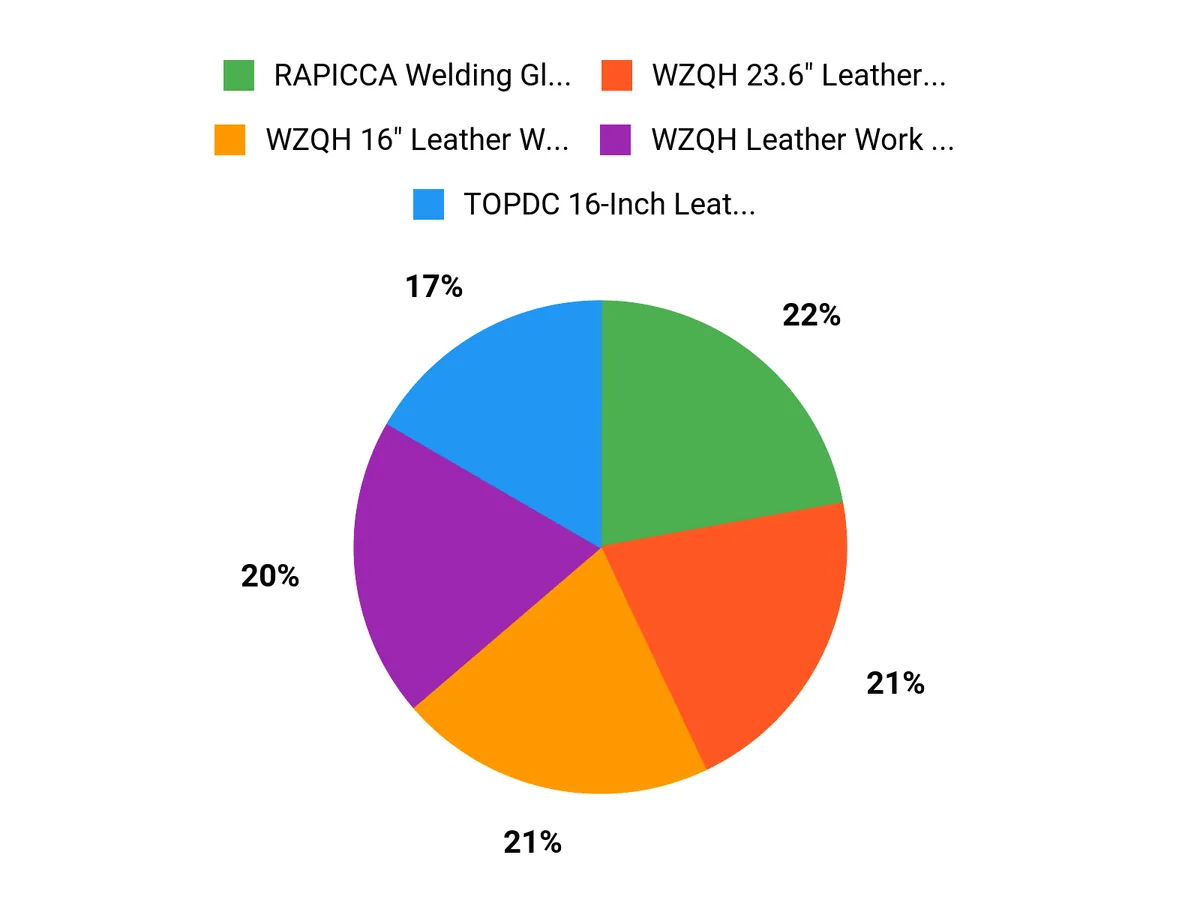
The best welding glove is the one that fits your hand while providing enough protection for the process. QeeLink 14-Inch and TOPDC 14-Inch reduce gauntlet length, but neither should be treated as automatically suitable for small hands. WZQH 16-Inch is the strongest sizing-flexibility option in this group because the model family is listed in multiple sizes, while TOPDC 16-Inch, RAPICCA 16-Inch, and ARCCAPTAIN 16-Inch focus more on extended coverage.
Focus on hand fit first, then choose cuff length, lining, and leather thickness for your task. A shorter gauntlet cannot compensate for fingers that are too long or a palm that is too loose.
This roundup is reader-supported. When you click through links we may earn a referral commission on qualifying purchases.
