This roundup is reader-supported. When you click through links, we may earn a referral commission on qualifying purchases at no extra cost to you. As an Amazon Associate I earn from qualifying purchases.
If you plan to weld seriously this year, choosing the right machine matters because it affects how quickly you learn, the metals you can work with, and how reliable your setup feels during real projects. This guide helps you cut through confusing specs and choose a PrimeWeld machine that matches the work you actually do. You’ll learn which machine gives you the best professional TIG performance, which one delivers strong workshop value, and which combo offers the most versatility so you can decide with confidence.
Quick Verdict
If you want the most control for TIG welding aluminum, stainless, and mild steel, choose the PRIMEWELD TIG225X. If you want a practical garage and shop welder that handles MIG, flux-core, stick, and occasional aluminum work with the included spool gun, choose the PrimeWeld MIG180. If you want one compact machine for plasma cutting, DC TIG, and stick welding, choose the PrimeWeld CT-520D.
Top Picks
|
Category |
Product |
Score |
|---|---|---|
|
🏆 Best Professional TIG |
95/100 |
|
|
💰 Best Value Shop Welder |
90/100 |
|
|
🎯 Most Versatile Combo |
82/100 |
How We Picked These Welders
You want a welder that matches your skill level, your power setup, and the materials you’ll tackle most often. We focused on TIG performance, including AC/DC control, pulse, and cleaning control, because those features matter when you weld thin aluminum and steel cleanly. We also looked at amperage range and duty cycle so the machine can handle the jobs you plan to do without constant cooling breaks.
Input voltage and portability also matter. A dual-voltage machine gives you more flexibility when you move between a home garage and a shop outlet. Included torch, foot pedal, spool gun, consumables, and basic accessories can also affect real value because they decide how soon you can start welding after the box arrives.
We also considered ease of use, documentation, build quality, cooling, support access, and how each machine fits a clear buyer type. Each pick balances those factors to fit different budgets and priorities.
Before You Buy
- Check your outlet: Full output often requires 220 V or 240 V power, even when a machine can run on 110 V or 120 V.
- Match the process to the job: TIG gives cleaner control, MIG is faster for general fabrication, and stick works well for rougher repair jobs.
- Plan for shielding gas: TIG and gas MIG setups need the right gas, regulator, and clean material preparation.
- Budget for extras: You may need tungsten, filler rod, welding wire, tips, cups, plasma consumables, a cart, clamps, and a suitable extension cord.
- Think about portability: A heavier welder can feel stable in a shop but frustrating if you move it often.
- Use proper PPE: Welding requires a suitable helmet, gloves, ventilation, fire-safe workspace, and correct electrical setup.

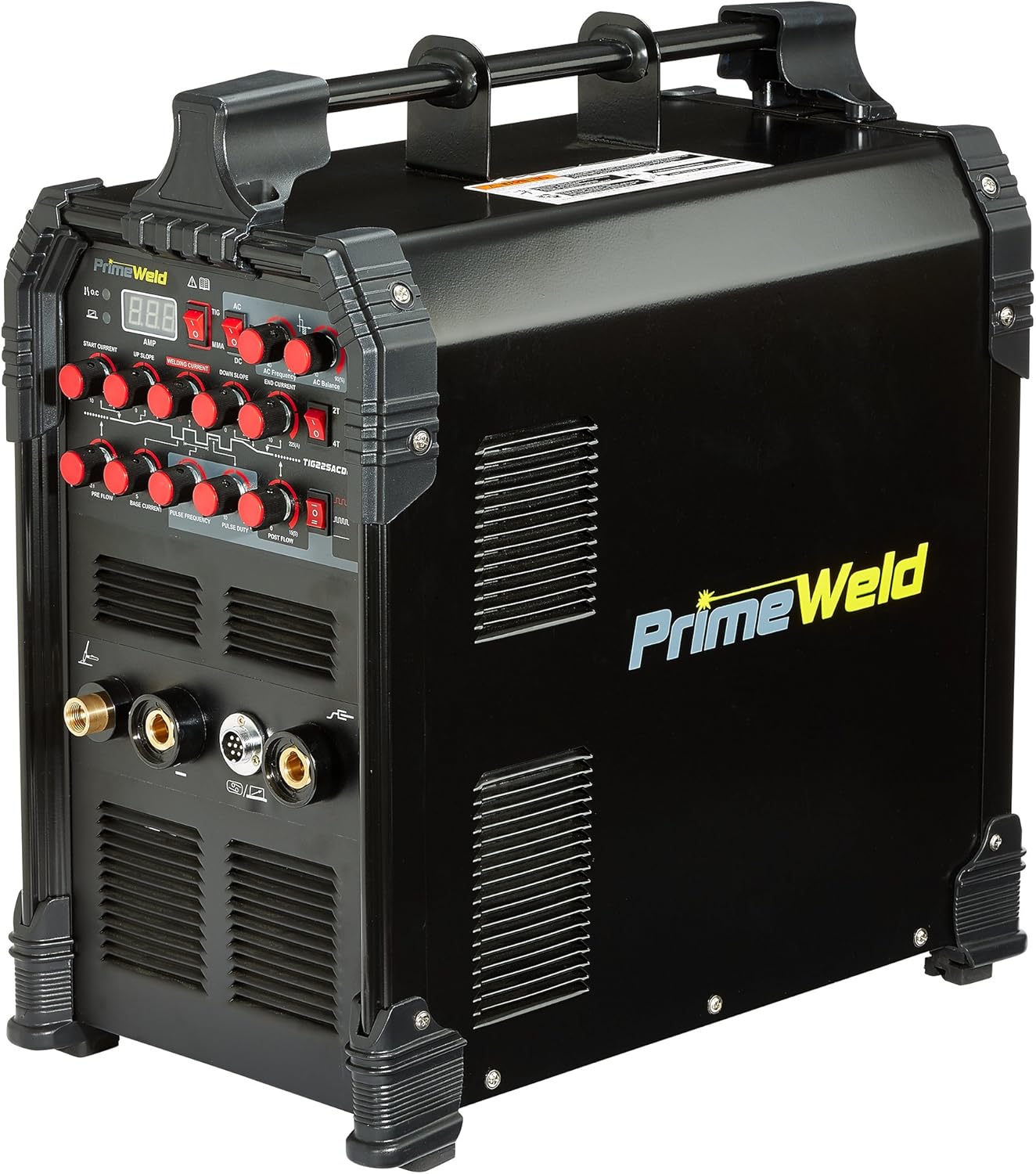
If you want a single machine that can handle serious shop work and weekend projects, this is one to consider. You get AC/DC TIG plus a stick mode, so you can switch between steel, stainless, and aluminum without swapping machines.
The included CK17 flex-head torch and metal foot pedal give you control when you need it. The pulse and AC balance options also make welding thin materials and cleaning aluminum less frustrating once you understand the settings. It is heavy and built like a shop tool, so it is not the kind of welder you shuffle around every day. If you need something dependable and feature-rich for regular TIG use, you’ll appreciate what it brings.
Who Should Buy This
Choose the TIG225X if you want the most TIG-focused machine in this roundup. It makes the most sense for buyers who plan to weld aluminum, stainless, mild steel, and thinner material where precise amperage control matters.
Who Should Avoid This
Skip it if you mainly want fast general fabrication with wire feed, or if you need a lightweight machine for mobile jobs. The TIG225X rewards patience and setup time, but it is more machine than a casual user may need.
What People Say
Buyer feedback often highlights how capable and adjustable the TIG225X is. Many buyers like that it handles aluminum and steel well, and that the included CK torch and foot pedal feel like quality parts. You’ll also see notes about useful support and documentation that make TIG easier to learn.
A few users point out the fan noise and the unit’s weight, but most buyers focus on the performance and feature set.
Overall Sentiment: Positive

|
Pros |
Cons |
|---|---|
|
✅ Very versatile AC/DC TIG with pulse for a wide range of metals |
❌ Heavy at around 90 pounds, so it is not built for frequent transport |
|
✅ Includes CK17 flex torch and smooth foot pedal for precise control |
❌ Fans are noticeable under heavy use |
|
✅ Strong documentation and accessible support resources |
❌ On/off switch location on the back can be awkward |
|
✅ IGBT inverter technology gives stable performance across voltages |
Ease Of Use
|
Feature |
Ease Level |
|---|---|
|
Torch Control |
Easy |
|
Foot Pedal |
Easy |
|
Menu/Settings |
Moderate |
|
Initial Setup |
Moderate |
Problem Solving
This unit makes common TIG headaches easier. It gives you the power and pulse control to weld thin aluminum without burning through, the AC balance to manage oxide on aluminum, and stick mode when you need a simpler approach. If you’re learning TIG, the documentation and support access can reduce the stress of troubleshooting.
Key Benefits
- Versatile AC/DC output so you can weld aluminum and steel with one machine
- Pulse and AC balance controls that help when you’re working thin or delicate parts
- Comes with a CK17 flex torch and a metal foot pedal for finer control
- Strong feature set for buyers who want to learn or improve TIG technique
Customer Feedback: Generally positive. Check the product page for the current Amazon rating, review count, included accessories, and warranty details.

If you want a single machine that covers everyday garage work and occasional aluminum jobs, this one’s worth a look. You get dual-voltage support so you can plug in at home or in the shop, and the included spool gun makes aluminum wire feeding much less fiddly than trying to push soft wire through a standard MIG setup.
It handles MIG, flux-core, and stick without forcing you to swap machines. It also comes with a handy settings chart and feels solidly built, which makes it a practical choice when you want reliable performance rather than a toy. If you need a versatile unit that just gets projects done, this is a sensible pick.
Who Should Buy This
Choose the MIG180 if you want faster welding on common shop materials, repair work, brackets, mild steel projects, and occasional aluminum work. It is the easiest pick here for buyers who prefer wire-feed welding over TIG practice.
Who Should Avoid This
Skip it if your main goal is high-control AC TIG aluminum welding. A MIG welder with a spool gun can handle some aluminum tasks, but it does not replace the fine puddle control of a dedicated AC/DC TIG machine.
What People Say
Buyer feedback often highlights how easy it is to get good results quickly, especially with the included spool gun and the settings chart. People also mention consistent weld quality, useful dual-voltage flexibility, and accessible support. A few note the unit’s weight and fan noise as minor annoyances.
Overall Sentiment: Positive

|
Pros |
Cons |
|---|---|
|
✅ Very versatile with MIG, flux-core, and stick in one package |
❌ Heavier than compact inverters, so it is not ideal if you move it often |
|
✅ Spool gun included for smoother aluminum wire feeding |
❌ Fan can be noticeable under heavy loads |
|
✅ Dual-voltage lets you use 120 V at home or 240 V in the shop |
❌ No automatic metal-thickness presets; you work from the chart |
|
✅ Helpful documentation and accessible customer support |
Ease Of Use
|
Feature |
Ease Level |
|---|---|
|
Initial Setup |
Moderate |
|
Switching Between Guns |
Easy |
|
Using the Spool Gun (aluminum) |
Easy |
|
Tuning Settings |
Moderate |
Problem Solving
This welder solves common shop problems. The spool gun reduces wire kinks when welding aluminum, dual voltage means you won’t be stranded between jobs, and the included settings chart gets you close quickly so you spend less time dialing in parameters. If you run into trouble, the support access and straightforward manual make troubleshooting less frustrating.
Key Benefits
- Dual 110/220V operation so you can use it at home or in a shop
- Includes a spool gun that reduces kinks and makes aluminum wire feeding easier
- Works as MIG, flux-core, and stick, giving you one machine for multiple jobs
- Clear settings chart helps you get up and running without guessing from scratch
Customer Feedback: Generally positive. Check the product page for the current Amazon rating, review count, included accessories, and seller details.

If you want one box that covers cutting, TIG, and stick welding for garage projects or light shop work, this is the kind of machine you’ll appreciate. The plasma cutter can handle many cutting jobs when you feed it good air and proper power, while the 200A DC TIG and stick functions are handy for repairs, fabrication, and occasional stainless or specialty metal work.
It is portable for a multi-process unit, and the 60% duty cycle at max amps helps it keep going on many weekend jobs. Expect to buy a few consumables and accessories, including argon for TIG, a foot controller if you want more amperage control, and maybe a plasma guide for cleaner cuts. For hobbyists and small shops that want flexibility without juggling three machines, this unit is a sensible pick.
Who Should Buy This
Choose the CT-520D if your workspace is small and you want plasma cutting, DC TIG, and stick welding in one portable unit. It fits hobbyists, farm repairs, light fabrication, and users who value flexibility more than dedicated high-end TIG control.
Who Should Avoid This
Skip it if you need AC TIG for aluminum or production-level TIG features. A combo machine is convenient, but a dedicated AC/DC TIG welder gives you more control when precision aluminum welding is the top priority.
What People Say
Buyer feedback often praises how versatile the machine is because it combines a cutter and two welding modes in a single portable unit. Customers report strong plasma cutting performance when running on adequate air and higher voltage, smooth stick welding power, and useful support access. Common gripes are setup documentation and the extra purchases needed for TIG or finer plasma work.
Overall Sentiment: Positive

|
Pros |
Cons |
|---|---|
|
✅ Very versatile because it combines plasma, TIG, and stick in one unit |
❌ Documentation and setup instructions can be vague |
|
✅ Good cutting power for hobby and light shop work |
❌ TIG requires additional accessories such as argon and a foot controller |
|
✅ Portable and reasonably light for moving around jobs |
❌ Plasma cutting performs best on 220 V and a solid air supply |
|
✅ High duty cycle for its class and energy-efficient operation |
❌ Some users report plug or adapter confusion, so check your outlet before setup |
|
✅ Useful option when you want cutting and welding in one compact machine |
Ease Of Use
|
Feature |
Ease Level |
|---|---|
|
Initial Setup |
Moderate |
|
Switching Between Modes |
Easy |
|
Plasma Cutting (with air) |
Moderate |
|
TIG Setup (argon/foot pedal) |
Moderate to Hard |
|
Portability |
Easy |
Problem Solving
This unit solves a common shop headache: needing separate machines for cutting, TIG, and stick work. It frees up space, covers many repair and hobby tasks, and the plasma cutter uses compressed air rather than flammable cutting gases.
You will still need to plan for accessories and proper power and air supply to get the best results. For general-purpose metalwork, though, it reduces the gear juggling that slows projects down.
Key Benefits
- Three functions in one: plasma cutting, DC TIG, and stick welding
- Cuts many metals with the 50A plasma cutter when paired with proper power and air supply
- 200A TIG and stick capability for repairs and light fabrication
- Portable multi-process design with a 60% duty cycle at maximum amps
- Good fit for users who want one compact machine for mixed repair tasks
Customer Feedback: Generally positive. Check the product page for the current Amazon rating, review count, included accessories, plug details, and warranty information.
How To Choose The Right PrimeWeld Machine
Your best choice depends on the process you will use most often. TIG gives you clean control and better puddle management, but it takes more practice. MIG is faster and easier for many garage repairs, brackets, and mild steel projects. Plasma cutting helps when you need to cut sheet metal, plate, or repair parts before welding.
If you mostly want clean aluminum TIG welds, start with AC/DC TIG features. If you mostly want speed and simpler setup, MIG usually feels easier. If you need cutting and basic welding in one portable package, the combo unit makes more sense.
Safety Note
Welding and plasma cutting create heat, UV light, sparks, fumes, and electrical risk. Use a proper welding helmet, gloves, protective clothing, ventilation, fire-safe surfaces, and the correct circuit for the machine. Read the manual before setup, and ask a qualified electrician if you are unsure about outlet, breaker, or plug compatibility.
FAQ
Which TIG Welder Should You Choose For Versatility?
If you want a single machine that covers the widest range of TIG projects in this roundup, you’ll appreciate the PRIMEWELD TIG225X because it combines AC/DC Pulse capability, a full stick function, and a CK17 flex torch so you can weld steel, aluminum, and specialty metals. You should choose it when you need fine aluminum control, strong DC performance for steel, and the option to stick weld without buying a separate unit. Practical tips: plan to run it on 220 V when you need full power and use the supplied metal foot pedal for smoother amperage control.
Also verify current warranty terms, outlet needs, shielding gas requirements, plug compatibility, and consumable availability before you buy.
Are Multi-Function Combos Like The CT-520D Practical For Real Shop Work?
A 3-in-1 combo like the PrimeWeld CT-520D is practical if you value portability and want cutting plus basic DC TIG and stick capability in one box. You should be realistic about its limits, though. The plasma cutter and stick functions fit light to medium-duty jobs, while the TIG output will not match the arc control of a dedicated high-end AC/DC TIG machine for precision aluminum work.
For best results, run the plasma cutter on a proper 220 V circuit with a steady air supply, expect to buy a TIG foot controller and argon setup if you plan to TIG seriously, and review the setup instructions before your first project. The combo is a useful shop starter or travel rig, but separate dedicated gear may fit better as your needs get more specialized.
What Should You Look For When Buying A TIG Or MIG Machine?
Focus on the features that match your materials and workflow. Get AC/DC For Aluminum if you’ll TIG aluminum, choose Dual Voltage if you need both shop and garage flexibility, and check the Duty Cycle so the machine can run long enough for the parts you build. Inspect torch quality, confirm the availability of parts and customer support, and prioritize units with a usable interface and good documentation.
Don’t forget practical items such as gas plumbing, regulator compatibility, foot pedal or fingertip control, consumables availability, adequate ventilation, and PPE. If you’re unsure, compare your most common projects against each machine’s process, output, and setup needs before committing.
Is MIG Or TIG Better For Beginners?
MIG is often easier for beginners because wire feed welding feels more straightforward and works well for many mild steel projects. TIG gives you more control and cleaner results, but it takes more practice because you manage torch angle, filler rod, amperage, and puddle control at the same time. If you want to learn precision welding, TIG is worth the effort. If you want to finish repairs faster, MIG may feel more practical.
Do You Need Dual Voltage?
Dual voltage is useful if you may weld in more than one location. Lower-voltage outlets can help with convenience, but higher-voltage power usually gives you better output and performance on thicker materials. Before buying, check your garage or shop circuit, breaker size, plug type, and extension cord limits so the machine can run safely.
Buyers Top Picks
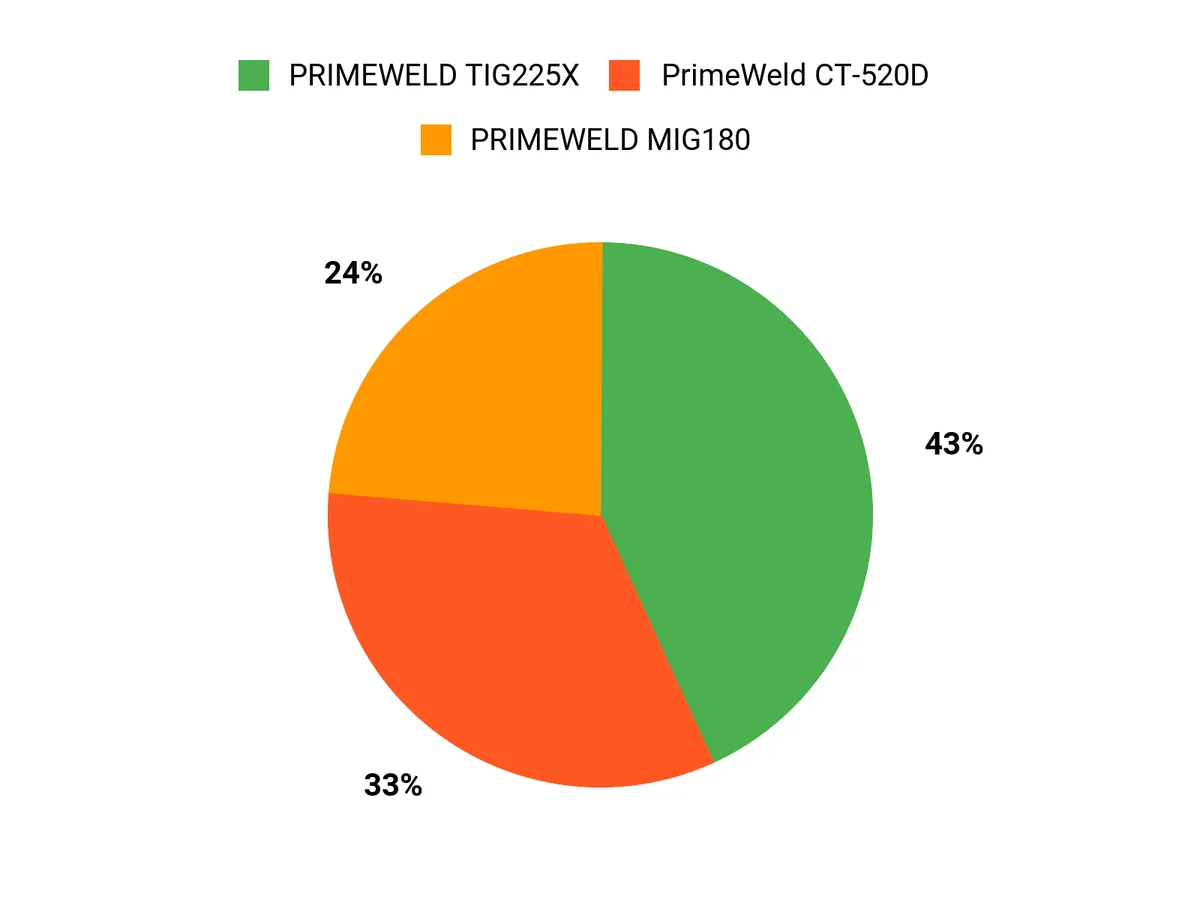
When choosing between the PRIMEWELD TIG225X, PRIMEWELD MIG180, and PrimeWeld CT-520D, you typically prioritize welding process first. TIG precision, MIG speed, and multi-process flexibility solve different problems, so the best machine depends on your most common jobs. You’ll also weigh power, duty cycle, portability, ease of setup, included accessories, and long-term support.
If you need precise aluminum TIG work, lean toward an AC-capable TIG unit like the TIG225X. If faster filler deposition and simpler operation matter more, the MIG180 is the easier shop-value pick. If you want plasma cutting, DC TIG, and stick welding in one compact box, the CT-520D gives you the most functions for mixed repair work.
Wrapping Up
If you need a true TIG workhorse, the PrimeWeld TIG225X gives you professional-style AC/DC performance, pulse control, and a quality CK torch so you can tackle steel, aluminum, and specialty metals with confidence. It is the best fit when weld quality and control matter more than portability.
If your priority is strong shop value and easier aluminum wire feeding with a spool gun, the PrimeWeld MIG180 is a practical choice that still delivers good results for many repair and fabrication jobs. If you want one machine for cutting and multiple welding processes while keeping your setup compact, the PrimeWeld CT-520D combo offers the most versatility. Use this guide to match the machine’s strengths to the kind of projects you plan to do so you buy a welder that grows with your skills.
| PRIMEWELD TIG225X 225 Amp IGBT AC DC Tig/Stick Welder | PrimeWeld MIG180 Mig Welder | PrimeWeld 3-in-1 50 Amp Plasma Cutter, 200 Amp TIG and Stick Welder | |
|---|---|---|---|
 |
 |
 |
|
| Customer Feedback | Generally positive; check current Amazon rating and review count | Generally positive; check current Amazon rating and review count | Generally positive; check current Amazon rating and review count |
| Power Output | 225 Amps AC/DC | 180 Amp class wire-feed machine | 50A plasma, 200A TIG, and 200A stick |
| Weight | About 90 pounds | 55 pounds | About 32 pounds |
| Highlights |
|
|
|
| Best For | Dedicated TIG work, aluminum control, stainless, steel, and users who want more setting control | Garage repairs, mild steel fabrication, MIG projects, and occasional aluminum with the included spool gun | Small shops, mobile repairs, hobby fabrication, plasma cutting, DC TIG, and stick welding in one unit |
| Keep In Mind | Heavy machine, stronger learning curve, and best suited to users who want to practice TIG seriously | Not a dedicated AC/DC TIG machine and does not offer the same aluminum puddle control as the TIG225X | Combo convenience comes with setup tradeoffs, and TIG work may require extra accessories |
| Check Product Details on Amazon | Check Product Details on Amazon | Check Product Details on Amazon |
This roundup is reader-supported. When you click through links, we may earn a referral commission on qualifying purchases at no extra cost to you.