Planning to fish in Minnesota? Your license cost depends on your residency, age, license length, and whether you need extra validations such as trout or sturgeon. Residents can usually choose annual, youth, couple, conservation, and short-term options, while visitors can choose short-term, annual, family, and lifetime options. Before you buy, confirm the current Minnesota Department of Natural Resources fee table because license fees and regulations can change.
Quick Answer
A Minnesota fishing license can cost as little as a short-term resident license or more for annual, family, non-resident, and lifetime options. Residents generally pay less than non-residents. You may also need added validations for trout, sturgeon, or ice shelters, depending on how and where you fish.
Key Takeaways
- Minnesota residents ages 16 to 89 generally need a fishing license; residents under 16 and residents 90 or older may fish without one.
- Non-residents age 16 or older generally need a valid Minnesota fishing license before fishing in state waters.
- Resident licenses include annual, combination, youth, conservation, and short-term options.
- Non-resident licenses include short-term, annual, family, and lifetime options, with different rules and fees.
- Trout validation, sturgeon tags, and ice shelter licenses may add costs depending on your fishing plans.
Who Needs a Fishing License in Minnesota?

If you’re planning to fish in Minnesota, it’s important to know who needs a fishing license. Minnesota residents ages 16 to 89 generally need a license when fishing. If you’re a Minnesota resident under 16 or 90 or older, you can usually fish without one. For out-of-state anglers age 16 or older, a valid Minnesota fishing license is generally required before fishing Minnesota waters.
As a Minnesota resident, you’ll need to provide proof of residency when buying a resident license. A Minnesota driver’s license or Minnesota state ID is commonly used for this purpose.
If you’re in the U.S. Armed Forces on leave, or you qualify under a recent active-duty exemption, you may be able to fish without buying a standard license. Carry the required military or discharge documentation with you while fishing.
Additional exemptions may apply to certain people fishing in state parks, patients in U.S. Veterans Administration hospitals, and residents of Minnesota nursing homes. Because exemptions depend on exact status and activity, confirm your eligibility before fishing.
Note: A license exemption does not always exempt you from every fishing rule. Bag limits, size limits, seasons, special regulations, invasive species rules, and bait rules may still apply.
Who Doesn’t Need a License?

While many anglers in Minnesota need a fishing license, several groups are exempt from this requirement. These exemptions make fishing easier for youth, some seniors, qualifying military members, and certain residents in care settings.
Minnesota fishing license exemptions can apply to resident youth, residents age 90 or older, qualifying military personnel, and certain care-facility residents.
If you’re a resident under 16 years old, you generally don’t need a license to fish. Similarly, residents age 90 or older are usually exempt from the standard fishing license requirement.
Active-duty members of the U.S. Armed Forces on leave may fish without a license when they carry their leave papers. Some residents who served on active duty within the last 24 months may also qualify by carrying proper discharge papers.
Fishing in a state park may also qualify for an exemption in certain situations, but the rule depends on the water body and how the water is managed. Do not assume every water inside or near a state park is license-free.
These exemptions, as outlined by the Minnesota DNR, make it easier for eligible anglers to enjoy fishing without the hassle of securing a standard fishing license.
Resident License Cost

In Minnesota, resident fishing license costs depend on the license type you choose. The individual annual angling license is commonly listed at $25.00 in the fee information reflected in this article. Licenses are generally valid from March 1 through the last day of February the following year, which gives you a full license year for open-water and ice-fishing opportunities.
If you and your spouse fish together, you can choose a combination angling license for $40.00. This option gives each licensed spouse their own possession limit. For residents ages 16 to 17, the youth angling license is listed at $5.00. Conservation licenses are also available at reduced rates, but they usually reduce daily and possession limits to half of the standard limit.
Here’s a quick overview of resident license costs:
| License Type | Cost |
|---|---|
| Individual Angling License | $25.00 |
| Combination Angling License | $40.00 |
| Youth Angling License | $5.00 |
| Conservation License | Varies by license type |
A resident license is usually the best value if you fish several times during the license year. If you only fish once or twice, a short-term license may cost less and still cover your trip.
[Amazon Products Picked for You]

Officially Licensed
Minnesota State Tribute: Display your affection for Minnesota with this Small License Plate Magnet, showcasing the state's iconic design.
Decorative Item Only: This product is a vintage-style decorative license plate, crafted as a replica/artifact. It is NOT a real license plate and cannot be used as such. Please comply with all applicable laws—it must NOT be mounted on any vehicle to replace, cover, or imitate an official license plate. Use only for indoor or outdoor decoration where legally permitted.
Short-term License Options

For those who might not fish regularly or prefer a more flexible option, Minnesota offers a variety of short-term fishing licenses.
You can choose between a 24-hour fishing license for $8.00 or a 72-hour license for $22.00, based on the fee details reflected in this article. These short-term license options are helpful for occasional anglers who want to enjoy fishing without a full-season commitment.
Once you purchase a license, it is usually valid for consecutive days starting from the date and time or date of purchase, depending on the license type. That allows you to get on the water quickly during a weekend trip, family visit, or short vacation.
Whether you’re a local or a visitor, these licenses provide an accessible way to experience Minnesota’s lakes, rivers, and fishing piers.
You can buy short-term licenses online, by phone, or at authorized agent locations across the state.
With these options, you can enjoy a spontaneous fishing trip without the hassle of a full-season license.
Pro Tip: Buy your license before you leave for the lake. Cell service can be unreliable at boat ramps, resorts, remote shorelines, and public access points.
[Amazon Products Picked for You]

FISHING LICENSE HOLDER W/ZIP CLOSURE

The size of the license plate frame is: 12.3" x 6.3" , it fits all standard size US and Canada vehicle license plates.the stylish design frame fits ly on your car license plate.

Durable Material: Car license plate is crafted from high-quality ETP (electrolytic tinplate) with 2 layers of clear epoxy lacquer coating making the car tag water-proof, rust-proof, and weather-resistant
Non-Resident License Cost

If you’re planning a fishing trip to Minnesota, you’ll find non-resident licenses available in several lengths, including one-day, three-day, seven-day, 14-day, annual, and family-style options. Costs vary by duration and license type.
Non-resident anglers age 16 or older generally need a license. Younger non-resident children can often fish without their own license when they follow Minnesota’s youth fishing rules, but a licensed youth may have their own possession limit.
Family and couple options can help reduce the total cost when more than one person will fish during the same trip. Review the current DNR fee table before buying because non-resident prices are easier to mix up than resident prices.
[Amazon Products Picked for You]

Officially licensed

Enough to Use: you will receive 6 pieces of fishing license holders, and 6 pieces of safety pins, abundant in quantity, enough for you to choose and replace, can meet your different needs; You can also share them with your friends

Enough to Use: you will receive 6 pieces of fishing license holders, and 6 pieces of safety pins, abundant in quantity, enough for you to choose and replace, can meet your different needs; You can also share them with your friends
Non-Resident License Options
Wondering what your options are for non-resident fishing licenses in Minnesota? You’ve got a few useful choices.
If you’re planning a quick trip, consider the license for one day at $16. For a longer stay, the three-day license costs $35, and if you want to fish for a week, the seven-day license is $60, based on the fee details reflected in this article.
Some non-resident licenses may include added fees or surcharges compared with resident licenses. If you’re a non-resident youth age 16 or 17, do not assume the adult annual rate applies to you. Check the current youth, annual, and family license categories before purchase.
You can purchase these licenses at authorized agent locations across the state, online, or by phone. Online and phone purchases may include convenience fees.
License Duration and Fees
Minnesota offers a variety of non-resident fishing licenses, each designed to fit different vacation plans and budgets. You can choose from one-day, three-day, seven-day, 14-day, annual, and family options. For those looking for a longer commitment, lifetime license options may also be available through the DNR.
Here’s a quick overview of the non-resident license costs and options discussed in this article:
| License Type | Duration | Cost |
|---|---|---|
| Non-Resident Youth | Annual (16-17) | Check current DNR youth fee |
| Non-Resident Adults | 1 Day | $16 plus any required fee |
| Non-Resident Adults | 14 Days | Varies by individual, couple, or family option |
Keep in mind that non-resident licenses may cost more than comparable resident licenses. Married couples and families may benefit from multi-person license options, especially for longer trips.
Special Discounts Available
For those looking to save on their non-resident fishing license costs, several special license categories may help.
If you’re part of a married couple, you may be able to choose a couple license for certain durations, making it easier to enjoy time on the water together.
For families, annual or family-style permits may cover more than one angler under specific rules. These options can be useful for parents or guardians planning several fishing days with children.
Additionally, non-resident youth age 16 or 17 should review the youth license category before buying an adult license. Younger kids may be able to fish without a license, but possession limits and adult supervision rules can still matter.
With options for one, three, seven, and longer license periods, you’ve got the flexibility to fish as your schedule allows.
Non-Resident Lifetime Licenses

If you’re considering a non-resident lifetime fishing license in Minnesota, you’ll find it offers a convenient solution for long-term fishing without annual renewals.
Keep in mind that these licenses come at a higher price and require proof of identity and residency when you apply through the proper DNR process.
To stay updated on costs, check the Minnesota DNR license fee information before applying. Lifetime license rates may depend on age, residency status, and license category.
License Cost Overview
A non-resident lifetime fishing license in Minnesota can be a long-term investment for those passionate about fishing, though it comes with a higher price tag compared to short-term or annual options.
If you’re considering this license, here are some key points to keep in mind:
- It’s typically more expensive upfront than one, three, or seven-day permits.
- It may not grant spearfishing or hunting privileges.
- Non-resident individuals aged 16 and older generally must have a license to fish in Minnesota waters.
- Discounts for families and married couples usually apply to specific annual or short-term license types, not every lifetime license.
- The lifetime license price depends on the official license category, not just marital status.
Investing in a lifetime license can be worthwhile for avid fishers who frequent Minnesota’s waters year after year.
Application Process Details
Maneuvering through the application process for a non-resident lifetime fishing license in Minnesota is straightforward, but it does require specific steps.
First, confirm whether your lifetime license must be purchased through the DNR License Center or another official DNR channel. Bring or submit proof of identity and residency, along with the required fees.
Remember, this lifetime license grants you long-term fishing privileges without yearly renewals, but it may not cover spearfishing, hunting, or special tags. If you’re looking to engage in those activities, you’ll need separate permits.
Once issued, your lifetime license may remain valid even if your residency status or age changes, making it a strong option for frequent Minnesota anglers.
Additional Requirements for Fishing

While fishing in Minnesota offers a great way to enjoy the outdoors, it’s essential to be aware of the additional requirements that come with it.
Here are some key points to keep in mind:
- Anglers aged 16 and older generally must have a fishing license unless an exemption applies.
- Certain fish species or waters require additional validations or tags, such as trout validation and sturgeon tags.
- If you plan to set up a fixed shelter on ice, you’ll likely need a shelter license.
- Resident shelter licenses may be available for different time periods, depending on ownership and license type.
- Proof of residency is mandatory for Minnesota residents when purchasing resident licenses, and it can often be verified with a state ID or driver’s license.
Warning: Minnesota has special regulations for some lakes, rivers, border waters, trout streams, and protected species. Always check the current rules for the exact water you plan to fish.
Fish Stamps and Tags

When you’re fishing for trout in Minnesota, you’ll usually need trout validation if you are required to have it under state rules.
If you want to add a collectible touch, consider the optional pictorial stamp. Pictorial stamps support conservation and give anglers a keepsake, but they are different from the validation required to legally fish in certain situations.
Required Trout Validation Fees
To fish for trout in Minnesota, many anglers need to pay a trout validation fee, which is mandatory for anglers fishing in designated trout waters or possessing trout when the validation rule applies.
This validation must be purchased alongside a valid fishing license if you are required to have one. Here are some key points to remember:
- Trout validation is required for many trout-fishing situations.
- Licenses may include the trout validation option during purchase.
- Some age groups may be exempt from needing trout validation.
- Validations generally follow the license year from March 1 to the last day of February.
- Always carry proof of your license and validation while fishing.
Make sure you’re prepared with the right permits to enjoy your trout fishing experience.
Optional Pictorial Stamp Costs
If you’re looking to enhance your fishing experience in Minnesota, consider adding optional pictorial stamps to your fishing license.
These stamps not only celebrate your passion for fishing but also support conservation efforts. For instance, the pictorial Trout Stamp may add a pictorial fee to your license, separate from any required trout validation.
If you’re interested in sturgeon fishing, a Sturgeon Tag may be required in specific situations. Additionally, hunting-related stamps such as migratory waterfowl or pheasant stamps follow their own rules and fees and should not be confused with fishing validations.
Always check with the DNR for the latest costs and requirements related to special stamps, tags, and validations.
Where to Buy a Minnesota Fishing License
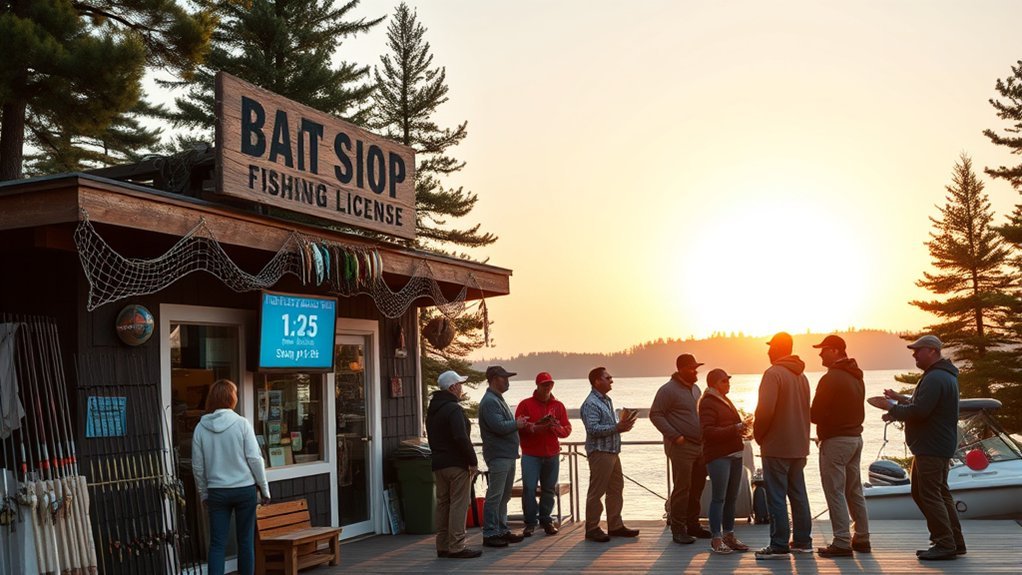
Wondering where to snag your Minnesota fishing license? You’ve got several convenient options.
You can purchase your license online through the DNR website, but keep in mind that the online platform might occasionally be down for maintenance.
If you prefer in-person shopping, there are many authorized license agents across the state, including bait shops, sporting goods stores, and some convenience retailers.
Here’s a quick rundown of your purchasing options:
- Online through the DNR website: Good for quick access before your trip.
- Authorized license agent locations: Helpful if you want face-to-face assistance.
- Phone purchases: Useful when you cannot access the online system.
- Non-resident accounts: Verify your customer record when setting up an online purchase.
- Final sales: License sales are usually final, so review your details before paying.
With these options, getting your Minnesota fishing license is easier than ever.
Common Questions About Minnesota Fishing Licenses

Have questions about Minnesota fishing licenses? You’re not alone.
A standard resident fishing license is listed in this article at $25.00 for individuals, while a combination angling license for married couples is listed at $40.00. If you’re a resident youth aged 16 or 17, the license is listed at $5.00, and residents under 16 generally don’t need one.
Fishing licenses are generally valid from March 1 through the last day of February the following year, so a 2025-26 license would run through the end of February 2026.
Keep in mind that additional fees can apply for specific validations, stamps, and tags, including trout validation, optional pictorial stamps, sturgeon tags, and shelter licenses.
For those who fish occasionally, short-term licenses are available for 24 or 72 hours, giving you the flexibility to enjoy Minnesota’s lakes without a long-term commitment.
Frequently Asked Questions
How much is a MN fishing license?
Minnesota fishing license fees vary by residency, age, and license type. In the fee information reflected in this article, a resident individual angling license is listed at $25, a resident combination license at $40, and a resident youth license at $5. Short-term and non-resident licenses have separate prices.
Do senior citizens have to pay for a fishing license in Minnesota?
Some seniors still need a license. Minnesota residents age 90 or older are generally exempt from the standard fishing license requirement. Seniors below that age should check the current DNR rules and fee table before fishing.
How do you get a free fishing license in MN?
Free fishing privileges depend on eligibility. Resident youth under 16, residents age 90 or older, qualifying military personnel, some veterans, and certain care-facility residents may qualify for exemptions or no-fee options. Carry proof of eligibility when required.
What is the fishing limit in Minnesota in 2025?
Minnesota fishing limits vary by species, season, water body, and special regulation. Do not rely on one statewide number. Check the current Minnesota fishing regulations for your target species and the exact lake, river, or border water you plan to fish.
Can you buy a Minnesota fishing license online?
Yes. You can usually buy a Minnesota fishing license online through the DNR system. You may also buy one by phone or from an authorized license agent. Review your license type carefully before payment because license sales are generally final.
Do you need a trout stamp in Minnesota?
Many anglers need trout validation to fish designated trout waters or possess trout, but exemptions may apply by age or license type. Optional pictorial trout stamps are separate collectibles and do not replace required validation when validation is needed.
Conclusion
To summarize, whether you’re a resident or a non-resident, fishing in Minnesota offers a range of license options tailored to your needs. You can choose a simple individual license, a budget-friendly combination license for couples, or a short-term option for occasional anglers.
Before you buy, check whether you need extra validation for trout, a sturgeon tag, an ice shelter license, or a special permit for the water you plan to fish. Fees and rules can change, so confirm the latest details through the Minnesota DNR before your trip.
Once you have the right license, grab your gear, plan your trip, and enjoy the beautiful waters of Minnesota. Every cast is a chance for adventure.
Sources
- Minnesota DNR Fishing Licenses — license types, purchase options, and general fishing license guidance.
- Minnesota DNR Fishing Regulations — seasons, limits, special regulations, and species-specific rules.
- Minnesota DNR License Agents — where anglers can buy licenses in person.
- Minnesota DNR State Park Fishing — state park fishing access and license-related guidance.