
How a Plasma Torch Works: Science & Components
When you explore how a plasma torch operates, you uncover the controlled mix of electricity, gas flow, heat, and precision. A plasma torch creates an electric arc, ionizes a gas stream, and turns that gas into a focused plasma jet hot enough to melt conductive metal. Understanding the process helps you see why plasma cutting is fast, clean, and useful in shops, fabrication work, repair jobs, and CNC cutting systems.
A plasma torch works by forcing gas, such as compressed air, nitrogen, oxygen, or argon, through a narrow nozzle while exposing that gas to an electric arc. The arc ionizes the gas, changing it into plasma that can reach temperatures up to 40,000°F. This high-velocity plasma jet melts metal at the cut line, while the gas stream blows the molten material away to form a clean kerf.
[Amazon Products Picked for You]
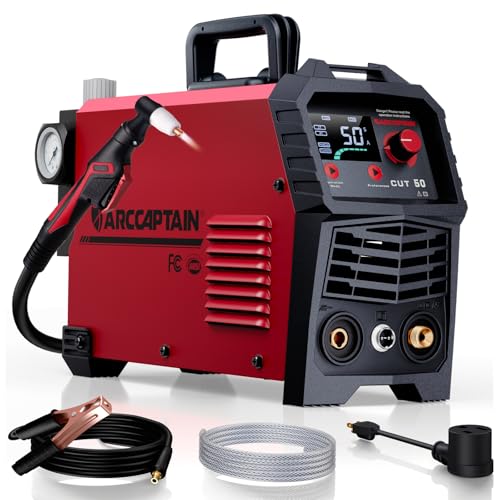
【Powerful Cutting Ability】Switch effortlessly between 110V and 220V for home or workshop use. Achieve professional 1/2" clean cuts on steel, aluminum, and copper with advanced LGBT technology. Perfect for DIY projects and heavy-duty tasks. Recommended maximum cutting thickness: 12mm @ 35A / 110V / 55 PSl; 18mm @ 50A / 220V / 75 PSI. Note: Requires compressed air (compressor sold separately).

【Non-Touch Pilot Arc Function】The ARCCAPTAIN 55A plasma cutter features a pilot arc function. It utilizes a high-frequency non-touch arc starting mode. The torch head does not need to touch the metal plate, reducing energy consumption during non-cutting work, minimizing electrode burning, and extending service life. NOTE: Do not switch voltages until the screen turns off and the fan stops.

CUTTING THICKNESS UP TO 20MM: Featuring a brand-new MCU technology upgrade, the plasma cutter machine has a high degree of internal integration, combining full digitalization for more precise control of cutting parameters such as current and voltage. This results in better cutting effects and improved stability. Cutting thickness: Quality 12mm (1/2"), maximum 20mm (3/4").
Key Takeaways
- Plasma State: Ionized gas becomes electrically conductive, allowing energy to move through the plasma stream.
- Extreme Heat: The electric arc can generate temperatures up to 40,000°F, enough to melt many conductive metals quickly.
- Gas Dynamics: Controlled gas flow shapes, stabilizes, and accelerates the plasma jet for better cut quality.
- Pilot Arc: A high-voltage spark starts ionization before the main cutting arc fully transfers to the workpiece.
- Core Components: The power supply, electrode, nozzle, swirl ring, and gas system work together to create a stable cutting stream.
Understanding Plasma: The Fourth State of Matter
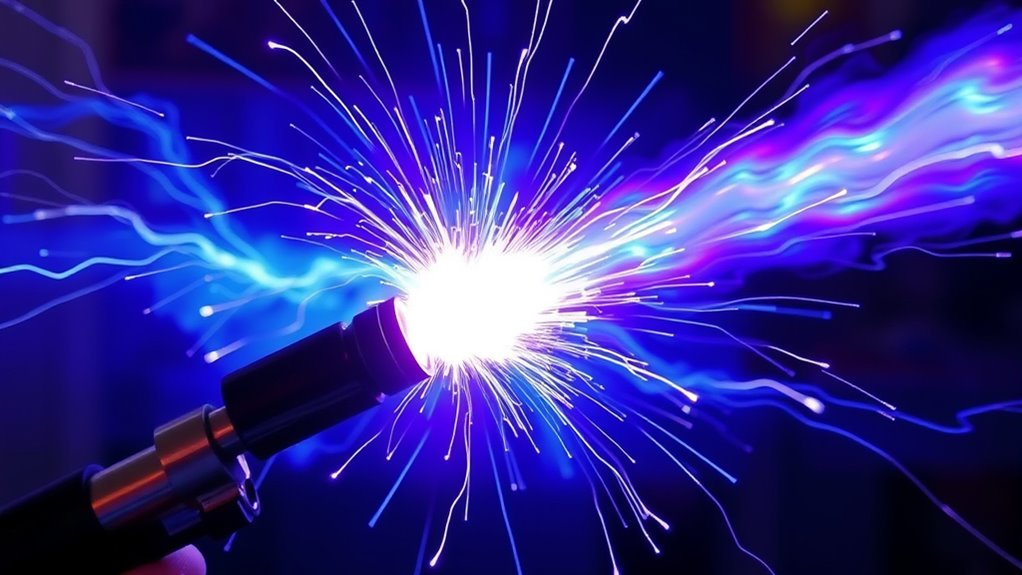
When exploring plasma, often called the fourth state of matter, you enter a state where gas becomes an electrically conductive medium through ionization. Unlike solids, liquids, or ordinary gases, plasma contains free-moving electrons and ions. Those charged particles let electrical energy pass through the gas stream.
This transformation happens when gas receives enough energy to separate electrons from atoms or molecules. In a plasma torch, that energy comes from an electric arc. As the gas passes through the torch, the arc heats it so intensely that the gas becomes conductive and forms a bright, focused plasma column.
The ionized particles give plasma its useful electrical conductivity. In industrial cutting, that conductivity lets the torch transfer energy into the workpiece with little delay. The result is fast melting at the cut line, narrow kerf control, and strong usefulness for precision cutting and welding.
For a cutter, plasma is not just hot gas. It is a high-energy stream that carries heat, electrical current, and momentum at the same time. That combination is what allows a plasma torch to cut steel, stainless steel, aluminum, copper, and other conductive metals when the system is set up correctly.
The Role of Electric Arc in Plasma Formation
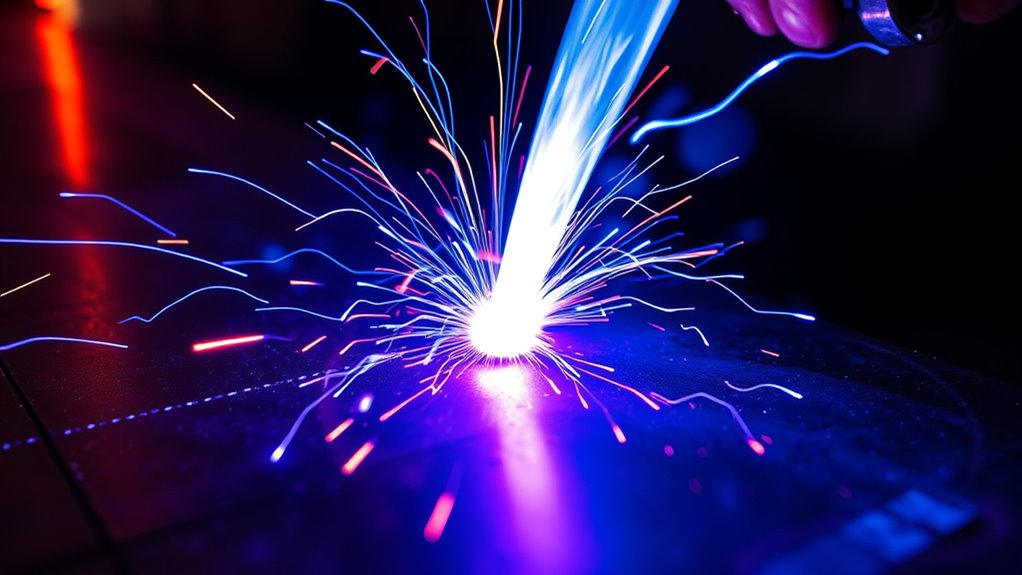
The electric arc is the engine of the plasma torch. It starts the ionization process by creating a high-energy path between the electrode and the workpiece, or between the electrode and nozzle during starting. Once the gas becomes ionized, the arc can stay stable and continue feeding heat into the plasma stream.
Arc and Ionization Process
The process begins when an electric arc creates a path from a negatively charged electrode toward the workpiece. Gas flows around this arc and absorbs energy from it. The heat breaks gas molecules apart and produces charged particles, which turn the gas into plasma.
As the gas ionizes, it becomes a better conductor. This allows current to keep flowing through the plasma column. The torch then produces a focused plasma jet that transfers heat directly into the metal surface.
The efficiency of this process is improved by preflow gas. In many systems, that gas forms a swirling vortex before the main cut begins. The swirl helps center the arc, reduce wandering, and improve the precision of the cut.
Arc’s Role in Heating
The arc generated between the electrode and the workpiece can drive temperatures up to 40,000°F. That extreme heat is necessary because plasma cutting does not grind, saw, or mechanically remove metal. It melts a narrow path through the material and uses gas force to clear the molten metal from the kerf.
The arc’s energy breaks gas molecules into fast-moving electrons and ions. These particles help sustain the plasma jet as long as current and gas flow remain stable. If current, gas pressure, or torch height becomes unstable, cut quality can drop quickly.
| Function | Description |
|---|---|
| Arc Generation | Initiated between electrode and workpiece; ionizes gas to form plasma. |
| Heat Production | Temperatures reach 40,000°F, sufficient for instant melting. |
| Plasma Sustain | Energy maintains the plasma state for continuous cutting. |
This efficient heating pierces and melts metal, while the gas stream blows away the molten material. When the arc is stable, the cut edge is cleaner, the kerf is narrower, and the torch moves more predictably.
Key Components of a Plasma Torch
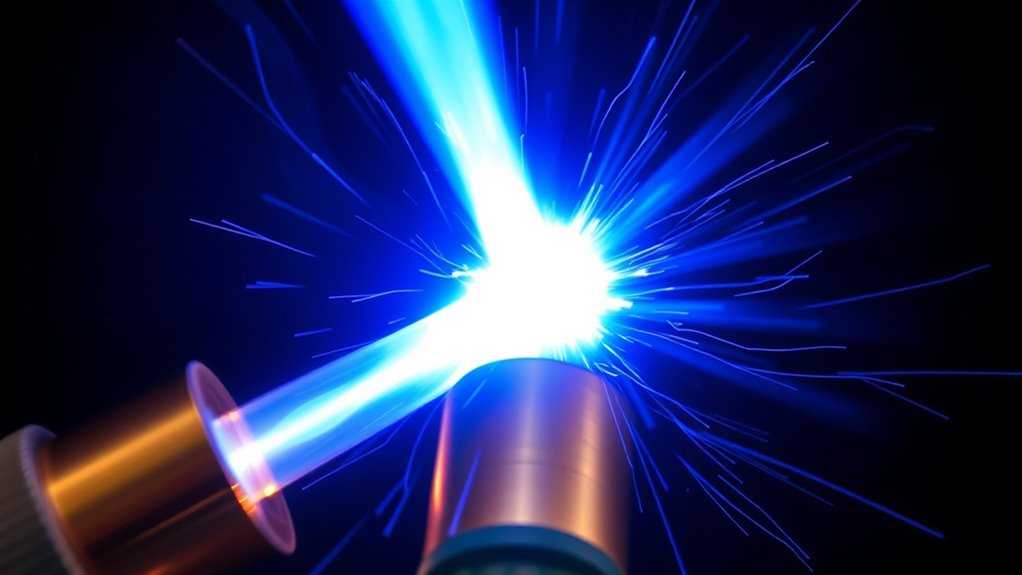
The power supply, electrode, nozzle, gas system, and swirl ring all affect how a plasma torch performs. The power supply converts incoming AC voltage to high DC voltage, the electrode helps start and sustain the arc, and the nozzle focuses the plasma jet. The swirl ring controls gas movement so the arc stays centered and the cut stays cleaner.
Power Supply Functionality
The power supply converts standard AC line voltage into a high DC voltage, typically 200-400 VDC. This conversion allows the arc to ionize gas efficiently and hold steady during the cut. Many systems also use an Arc Starting Console, which can use high-frequency AC voltage around 5,000 VAC at 2 MHz to initiate the spark.
After the pilot arc is established, the power supply increases DC current to the selected cutting amperage. Stable voltage and current are essential for cut quality. Too little current can leave uncut material or heavy dross, while too much current can widen the kerf and wear consumables faster.
Electrode and Nozzle Interaction
When you activate the torch, the electrode and nozzle work as a matched pair. The electrode supports arc formation, while the nozzle constricts the gas and shapes the plasma stream. This narrow opening increases jet velocity and directs heat toward a small area of the metal.
Regular maintenance of consumables is vital. A worn nozzle, enlarged orifice, or pitted electrode can distort the plasma jet. That distortion may cause angled cuts, extra dross, slower cutting, poor starts, and uneven edge quality.
Gas Flow Dynamics
The plasma torch relies on high-velocity gas, often compressed air, oxygen, nitrogen, argon, or gas blends. This gas is forced through the nozzle orifice, where it passes through the arc and undergoes ionization. The gas does more than create plasma. It also cools the torch, shapes the arc, and blows molten metal out of the cut.
The swirl ring aligns the gas flow and creates a vortex that centers the arc within the nozzle. Precise control of flow rate and pressure improves the jet’s density and cutting performance. If pressure is too low, the cut may become rough or incomplete. If pressure is too high, the arc can become unstable and harder to control.
Component Quick Reference
| Component | Main Job | Why It Matters |
|---|---|---|
| Power Supply | Creates controlled DC output for the cutting arc. | Stable current improves cut speed and edge quality. |
| Electrode | Supports arc starting and arc transfer. | A worn electrode can cause poor starts and rough cuts. |
| Nozzle | Constrains and focuses the plasma jet. | Nozzle condition affects kerf width and cut accuracy. |
| Swirl Ring | Creates rotating gas flow around the arc. | Centered gas flow helps stabilize the plasma column. |
| Gas Supply | Feeds the torch with air or selected cutting gas. | Clean, dry, steady gas supports smoother cutting. |
Handheld vs. Precision Plasma Operations
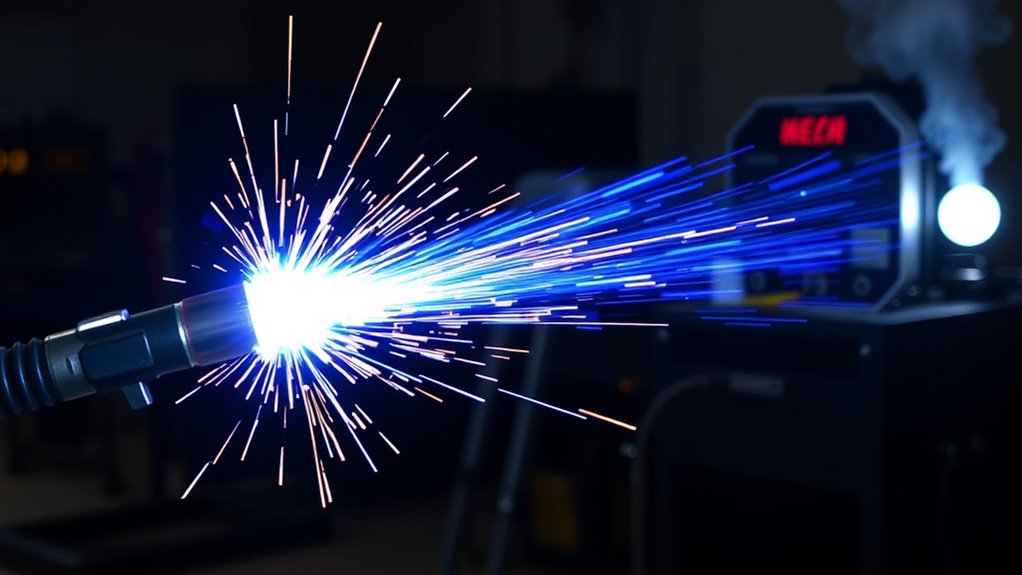
Handheld plasma systems start gas flow and DC current when you press the trigger. These systems are valued for portability and simplicity. They are common in repair work, DIY metal projects, farm maintenance, salvage work, and small fabrication jobs.
With a handheld torch, the operator controls torch angle, travel speed, and standoff distance. That makes technique important. Moving too slowly can widen the cut and create more dross, while moving too fast can leave uncut metal behind.
Precision plasma systems are usually integrated into CNC machines. These systems use controlled torch height, programmed movement, and carefully managed gas flow. They often rely on a swirl ring to separate the electrode and nozzle, creating a swirling vortex that ionizes gas more efficiently.
Precision systems can achieve higher current densities of 40-50K amps/in². This can produce cleaner edges, tighter kerf control, and less dross. Secondary shielding gases may further constrict the arc, giving a cut quality that can rival laser cutting on some material thicknesses.
| Operation Type | Best Use | Main Advantage | Main Limitation |
|---|---|---|---|
| Handheld Plasma | Repairs, field work, hobby fabrication, rough cutting. | Portable, flexible, and easier to set up. | Cut quality depends heavily on user technique. |
| Precision Plasma | CNC tables, production cutting, repeatable parts. | Cleaner edges, better repeatability, tighter control. | Higher equipment cost and more setup requirements. |
Transferred and Non-Transferred DC Plasma Torches
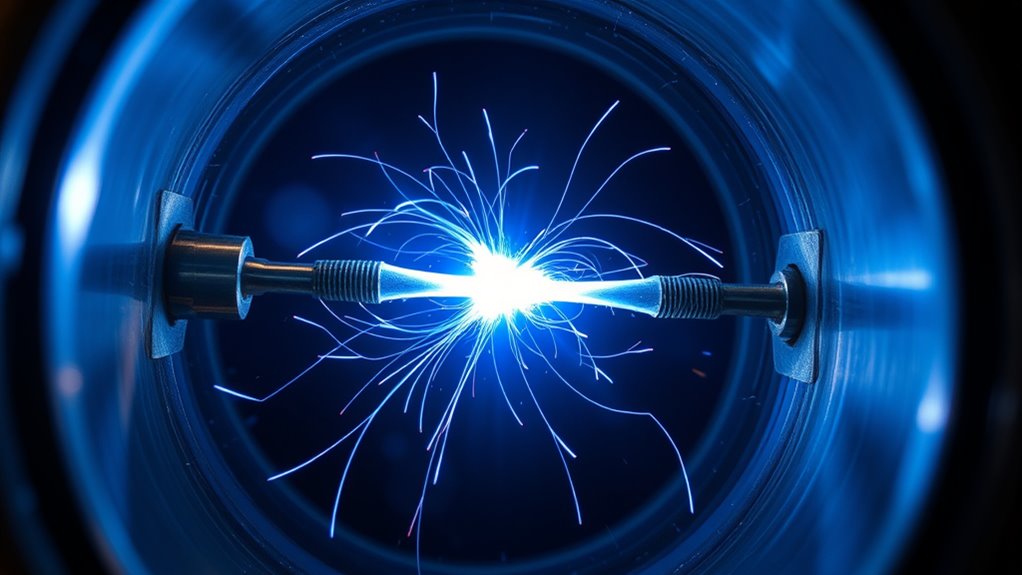
Transferred DC torches establish an arc between the electrode inside the torch and the workpiece itself. This design is highly efficient for cutting electrically conductive metals because the workpiece becomes part of the electrical circuit. Most common plasma cutting systems use this principle when cutting steel, stainless steel, aluminum, and similar materials.
Non-transferred DC torches keep both the electrode and nozzle, or anode, inside the torch body. The arc forms inside the torch instead of transferring into the material. This design is less efficient for cutting thick metal, but it can be useful for non-conductive materials or plasma spraying.
The tradeoff is heat. Since the arc stays inside the torch body, non-transferred systems generate more internal heat. They often need larger electrodes, stronger cooling, or water cooling to protect the torch from damage.
Before You Cut: Standard transferred-arc plasma cutters need an electrically conductive workpiece. Materials such as glass, ceramic, plastic, and wood do not complete the cutting circuit in the same way.
Step-by-Step: What Happens During a Plasma Cut
A plasma torch may look simple from the outside, but several events happen in a tight sequence. Each step affects arc stability, heat transfer, and cut quality.
1. Gas Preflow Begins
Gas starts moving through the torch before full cutting begins. This preflow clears the nozzle area, helps cool consumables, and prepares a stable path for arc starting. In many systems, the swirl ring gives this gas a rotating motion.
2. Pilot Arc Starts
A high-voltage spark starts a pilot arc between the electrode and the nozzle. This pilot arc begins ionizing the gas inside the torch. At this stage, the torch is preparing the plasma stream before the main cutting arc fully attaches to the metal.
3. Arc Transfers to the Workpiece
When the torch gets close enough to conductive metal, the arc transfers from the torch to the workpiece. The workpiece becomes part of the electrical circuit. This transferred arc sends concentrated heat into the cut line.
4. Metal Melts and Gas Clears the Kerf
The plasma jet melts the metal almost instantly at the arc contact point. The high-speed gas stream then pushes molten metal out of the kerf. This is why plasma cutting can move quickly compared with many mechanical cutting methods.
5. Postflow Cools the Torch
After the cut ends, gas may continue flowing for a short time. This postflow helps cool the electrode and nozzle. Stopping airflow too soon can shorten consumable life and increase wear on torch parts.
What Affects Plasma Cut Quality?
Clean plasma cuts depend on more than heat. The torch needs the right gas, steady current, correct height, suitable speed, and healthy consumables. A small change in one area can show up as extra dross, bevel, rough edges, or incomplete cutting.
Gas Type and Air Quality
Compressed air is common for shop use because it is simple and available. Oxygen, nitrogen, argon, and gas blends may be used for more specialized cutting. Clean, dry gas matters because moisture and oil can shorten consumable life and reduce arc stability.
Torch Height and Travel Speed
Torch height controls how the plasma jet meets the metal. Too much distance can make the arc unstable and widen the cut. Too little distance can damage the nozzle or drag the torch. Travel speed also matters. A steady speed helps produce a more even edge.
Consumable Condition
The electrode and nozzle wear during normal use. A pitted electrode or damaged nozzle can create an off-center jet. When that happens, you may see bevel, rough edges, wider kerf, or inconsistent starts.
Material Thickness and Amperage
Thicker metal needs more energy and slower movement. Thin sheet metal usually needs lower amperage and faster travel to reduce warping. Matching amperage to material thickness helps you avoid excessive heat input and poor edge quality.
Pro Tip: If your cut suddenly gets rough, check the nozzle and electrode before changing every machine setting. Consumable wear is one of the most common causes of poor plasma cut quality.
Applications and Advancements in Plasma Cutting Technology
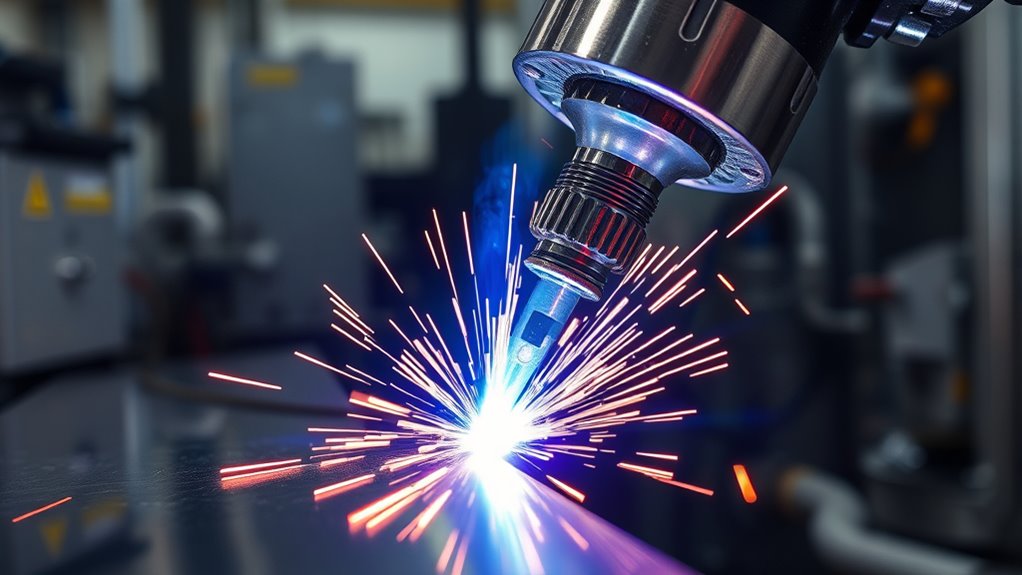
CNC plasma cutters and robotic arms have changed manufacturing sectors such as automotive and aerospace by improving accuracy and repeatability. High-frequency pilot arcs support reliable starts, while advanced shielding gas mixtures can reduce heat-affected zones (HAZ). These improvements help shops cut faster while maintaining cleaner edges.
Plasma technology is also useful outside large factories. Small shops use handheld and CNC plasma systems for brackets, panels, repair parts, signs, frames, and custom metal shapes. The process is popular because it can cut conductive metals quickly without requiring a saw blade or physical cutting edge.
| Feature | Benefit | Industry Impact |
|---|---|---|
| CNC Plasma Cutters | High Precision | Automotive, Aerospace |
| Robotic Arms | Automation | Increased Production Rates |
| Shielding Gas Mixtures | Cleaner Cuts | Enhanced Product Quality |
| Thermal Efficiency | Energy Optimization | Lower Operational Costs |
[Amazon Products Picked for You]

EYE & FACE PROTECTION - Jackson Safety’s GPL550 Safety Goggles with a detachable flip-up face shield ensure your safety in the most demanding environments with indirect vents and anti-fog coating

INFARED (IR) PROTECTION - Certified IR 5.0 protection for use in grinding, oxyfuel cutting, plasma cutting and more

Price For: Each Photochromatic Lens: No Includes: Rubber Earpad Series: ArcArmor UV Protection: 99.9% Frame Material: Polycarbonate Lens Material: Polycarbonate Metal Detectable: No Foam Lined: Yes Safety Glasses Frame Style: Full-Frame Item: Welding Safety Glasses Safety Glasses Size: Universal Gender: Unisex Primary Lens Color: Green Standards: ANSI Z87.1
Common Uses for Plasma Cutting
- Fabrication shops: Cutting plate, brackets, gussets, and custom parts.
- Automotive work: Trimming panels, removing damaged sections, and shaping repair pieces.
- Industrial production: Repeated cutting on CNC tables for consistent part output.
- Metal art and signage: Cutting detailed shapes from sheet metal.
- Maintenance and repair: Removing rusted parts, cutting bolts, and preparing replacement sections.
Safety and Maintenance Basics
A plasma torch creates intense heat, bright arc light, molten metal, sparks, and fumes. You should treat it as a serious cutting process, not just a hot-air tool. Correct safety gear and maintenance habits protect both you and the equipment.
Personal Protection
Use proper eye and face protection rated for plasma cutting. Wear flame-resistant clothing, gloves, and closed-toe footwear. Keep skin covered because arc light and sparks can cause burns.
Ventilation
Cutting metal can produce fumes, especially on coated, painted, galvanized, or dirty material. Work in a well-ventilated area and follow the safety guidance for the material you are cutting. If you are unsure about a coating or metal type, get professional guidance before cutting.
Consumable Care
Inspect the electrode, nozzle, shield, and swirl ring regularly. Replace worn consumables before they cause poor cut quality or damage other torch parts. Keeping air clean and dry can also help extend consumable life.
Work Area Setup
Clear flammable materials from the cutting area. Support the workpiece so molten metal can fall safely. Make sure the ground clamp has a solid connection when using a transferred-arc plasma cutter.
Frequently Asked Questions
How do plasma torches work?
Plasma torches work by ionizing gas with an electric arc to create plasma. This superheated plasma jet melts metal at the cut line, while high-velocity gas blows the molten metal away to form a narrow cut.
What metals cannot be cut with a plasma cutter?
Standard transferred-arc plasma cutters cannot cut non-conductive materials like glass, ceramics, wood, or plastic. They rely on the workpiece being electrically conductive so the cutting arc can transfer properly.
Will a 20 gallon air compressor run a plasma cutter?
A 20-gallon compressor may run smaller plasma cutters for short bursts, but it often lacks the sustained CFM required for continuous cutting. If air pressure drops during a cut, you may see rough edges, dross, poor arc stability, or incomplete cuts.
Does a plasma torch need gas?
Yes. Plasma torches require gas to create the plasma jet, shape the arc, blow away molten metal, and cool the torch. Compressed air is common for general shop use, while nitrogen, oxygen, or argon blends are used for more specialized cutting.
Why does plasma cut metal so fast?
Plasma cutting is fast because the arc delivers concentrated heat into a small area while the gas stream removes molten metal immediately. The torch does not need teeth, blades, or grinding pressure to separate the material.
What causes dross on a plasma cut?
Dross can come from wrong travel speed, incorrect amperage, poor air quality, worn consumables, or improper torch height. Checking consumables and machine settings is usually the first step when cut edges become rough.
Can a plasma torch cut aluminum?
Yes, plasma cutters can cut aluminum because aluminum is electrically conductive. Cut quality depends on the machine output, material thickness, gas choice, torch height, and operator technique.
Conclusion
You have now explored how a plasma torch uses an electric arc, ionized gas, controlled gas flow, and focused heat to create a powerful cutting jet. The torch works because plasma is electrically conductive and hot enough to melt metal quickly, while gas pressure clears the molten material from the cut. Whether you use a handheld unit or a CNC plasma table, understanding these principles helps you improve cutting precision, consumable life, safety, and overall efficiency in metalworking projects.
