
You need a stick welder that is portable enough for field repairs but capable enough for the work you actually do. This roundup compares compact ARC/stick welders for construction repairs, gates, brackets, trailers, farm maintenance, garage fabrication, and practice work.
Whether you want a compact starter kit, a dual-voltage machine for more power flexibility, or a handheld welder for quick touchups, the picks below help you compare power input, portability, electrode support, controls, included accessories, and realistic use limits.
This roundup is reader-supported. When you click through Amazon links, we may earn a referral commission on qualifying purchases at no extra cost to you.
Updated: September 2026. Seller listings and bundled accessories can change, so confirm the current Amazon listing and manual before ordering.
Quick Verdict
Best overall stick welder: ARCCAPTAIN ARC200 if you want dual-voltage flexibility, a clear display, and strong stick-welding features.
Best higher-output option: YESWELDER ARC205DS if you want dual-voltage stick-welding capability with more output headroom on 220V.
Best starter kit: Hpoouo 200Amp 20PCS Rods Stick Welder if you want a compact 110V package with rods and basic accessories included.
Best budget kit: Zeuboary Portable Stick Welder if you want a simple 110V starter setup for small home, farm, and garage repairs.
Most portable: HGNVGZ Handheld Stick Welder if you need a grab-and-go tool for tight spaces and light-to-medium touchups.
Best for learning: Saker Portable Welder if you want a basic 110V stick welder for practice, maintenance, and small repairs.
Top Picks
|
Category |
Product |
Best For |
|---|---|---|
|
🔰 Best Starter Kit |
New welders and quick 110V repairs |
|
|
⭐ Best Stick Welder |
Dual-voltage jobsite and garage use |
|
|
🚀 Best Higher Output |
Higher-output stick welding |
|
|
💸 Best Budget Kit |
Budget home and farm repairs |
|
|
⚡ Most Portable |
Awkward spots and quick touchups |
|
|
🎓 Best For Learning |
Practice and small maintenance jobs |
How We Picked These Welders
You need a welder that matches the work you actually do. We compared these stick welders on input voltage, seller- or manufacturer-listed output, electrode compatibility, portability, setup, arc-start features, included accessories, and practical job fit.
We also considered common buyer concerns such as arc stability, cable and clamp quality, cooling, duty-cycle limits, and whether a machine is better for short repairs or longer sessions. Manufacturer specifications were given more weight where available. For budget and handheld models with inconsistent marketplace specifications, this guide avoids treating disputed amperage or capacity claims as verified facts.
Review-note: Buyer-feedback sections summarize the review themes already analyzed for this roundup; they are not a substitute for checking the current seller listing, manual, or warranty terms.
Before You Buy
- Check your power source: 110V is convenient for lighter repairs, while 220V generally gives dual-voltage machines more usable output headroom. Use the circuit size required by the manual.
- Match rod size to the machine: Confirm the electrode type and diameter supported by the exact model and input voltage you plan to use.
- Respect duty cycle: Follow the manual and give compact machines cooling breaks during longer jobs.
- Budget for PPE: Use a proper welding helmet, welding gloves, flame-resistant clothing, eye protection, and adequate ventilation.
- Verify the current listing: Marketplace titles, amperage claims, accessories, and model revisions can change, especially on budget and handheld welders.
- Know the limit: For structural or safety-critical welds, use equipment that meets the job requirements and have the work performed or inspected by a qualified welder when appropriate.
Best Stick Welders for Construction, Repair, and Maintenance

If you need a compact, no-nonsense stick welder you can carry to a repair spot, this Hpoouo ARC-style machine is worth a look. It is aimed at household power use, small repair work, and beginner practice, so it fits readers who want a starter setup rather than a production-grade machine.
The biggest appeal is the kit format. You get rods and basic accessories, which lowers the friction for learning and quick repairs. It is best treated as a compact repair and practice machine for tack work, brackets, gates, and short fixes around a garage, farm, trailer, or equipment shed. Confirm rod size, material thickness, circuit requirements, and duty-cycle limits in the current manual before starting a demanding job.
What People Say
Buyer feedback commonly highlights the small size, easy setup, and convenience of getting rods and accessories in the box. The most important limitation is that the included accessories are basic, so frequent users may eventually want better clamps, leads, PPE, or rods.
Overall Sentiment: Positive

Ease Of Use
|
Feature |
Ease Level |
|---|---|
|
Setup |
Easy |
|
Controls |
Easy |
|
Portability |
Easy |
Who Should Buy This
Choose this if you want a simple 110V stick welder for learning, small repairs, and light fabrication without buying every accessory separately.
Who Should Avoid This
Skip it if you need long, high-amp welds, thick plate work, or a machine for daily professional production.
Why You’ll Like It
Useful for routine repairs and on-site fixes such as hinges, brackets, gates, and small farm jobs. Its strongest use case is short repair work rather than long, high-output welding sessions.
Key Benefits
- Portable and compact for garage, farm, and quick jobsite repairs
- Runs from standard household-style power for light work
- Hot start, arc force, and anti-stick features help reduce beginner frustration
- Includes rods and basic accessories so you can start practicing sooner
- Good fit for small-to-medium repair jobs rather than heavy industrial welding
Check Product Details on Amazon

If you need a portable stick welder that can handle a wide range of day-to-day repairs, the ARCCAPTAIN ARC200 is one of the strongest fits in this roundup. The dual-voltage design makes it more flexible than basic 110V-only options, while the display and synergic control help you get sensible settings faster.
It is useful for fence and gate repairs, trailer brackets, farm equipment, garage fabrication, and general maintenance work. The hot start, arc force, and anti-stick features make it friendlier when you are working with common rods, especially if you are still building consistency.
What People Say
Buyers often like the portability, bright display, and easier arc starts. Common cautions focus on the factory leads and clamps, which may be fine for light work but worth upgrading if you plan to run longer or hotter jobs.
Overall Sentiment: Positive

Ease Of Use
|
Feature |
Ease Level |
|---|---|
|
Setup |
Easy |
|
Controls |
Moderate |
|
Portability |
Easy |
|
Learning Curve |
Moderate |
|
Maintenance |
Moderate |
Who Should Buy This
Choose this if you want one portable stick welder for home, farm, garage, and jobsite repairs, especially if you want 110V/220V flexibility.
Who Should Avoid This
Skip it if you need an industrial machine for nonstop production welding or if you already know you need a heavier-duty professional rig.
Why You’ll Like It
Useful for everyday repairs and on-site fabrication, including gates, brackets, trailer fixes, and farm equipment. For demanding work, follow the manufacturer’s input-power, electrode, and duty-cycle limits and use the appropriate 220V setup when the job calls for it.
Key Benefits
- Large LED display and synergic control to simplify setup
- Dual-voltage 110V/220V operation for better flexibility
- Hot start, arc force, and anti-stick to improve arc starts and rod handling
- Portable design with shoulder strap for easier transport
- Works well for many common stick-welding repair tasks
- Good balance of beginner-friendly controls and practical jobsite capability
Check Product Details on Amazon
This YESWELDER ARC205DS is the better fit when you want a dedicated stick welder with more headroom than a tiny handheld or starter kit. The dual-voltage design makes it more useful across garage and jobsite setups, while the digital display helps you see your settings clearly.
Use it for trailer work, brackets, gate and fence repairs, and general shop fabrication. Because seller versions and the current manufacturer PRO model may differ, confirm the exact model label, input requirements, electrode range, and included accessories on the Amazon listing before ordering.
What People Say
Buyers commonly like the power-to-size ratio, simple display, and dual-voltage flexibility. Common cautions include checking lead quality, using a proper circuit, and testing settings on scrap before important welds.
Overall Sentiment: Positive

Ease Of Use
|
Feature |
Ease Level |
|---|---|
|
Setup |
Easy |
|
Controls |
Moderate |
|
Portability |
Easy |
|
Learning Curve |
Moderate |
|
Maintenance |
Moderate |
Who Should Buy This
Choose this if you need a portable stick welder with more output flexibility for repair work, garage fabrication, and medium-duty projects.
Who Should Avoid This
Skip it if you only need occasional light-duty practice. A smaller starter kit may be easier and cheaper for basic learning.
Why You’ll Like It
Useful for everyday construction and repair tasks such as trailer patches, brackets, fence work, and general shop jobs. Use the correct input voltage and circuit, and follow the manual rather than assuming the machine can sustain its headline maximum output continuously.
Key Benefits
- Higher-output stick welder design for stronger repair capability
- Large LED display makes current and mode easier to read
- Dual 110V/220V operation for flexible jobsite use
- Hot start and arc force help reduce rod sticking and improve starts
- Portable design for on-site repairs and garage projects
- Good fit for users who want more than a beginner-only machine
Check Product Details on Amazon

This compact Zeuboary welder is made for buyers who want a low-friction starter kit for basic repairs. The listing includes rods, which makes it useful when you want to practice or handle quick fixes without building a full welding setup from scratch.
It is best suited to short repair sessions around the garage, farm, trailer, fence line, or workshop. Treat it as a portable helper rather than a production welder, and verify the exact model, rated output, rod support, and duty-cycle information in the current seller documentation.
What People Say
Buyers tend to like the complete kit format, compact size, and easy setup. The main caution is that budget kits often include basic accessories, so experienced users may prefer better PPE, rods, leads, or clamps.
Overall Sentiment: Positive

Ease Of Use
|
Feature |
Ease Level |
|---|---|
|
Setup |
Easy |
|
Controls |
Moderate |
|
Portability |
Easy |
|
Learning Curve |
Moderate |
|
Accessories Included |
Easy |
Who Should Buy This
Choose this if you want an affordable starter kit for small repairs, practice beads, and occasional home or farm maintenance.
Who Should Avoid This
Skip it if you need verified heavy-duty output, long duty cycles, or a professional machine for daily jobsite use.
Why You’ll Like It
Useful for routine repair tasks such as small brackets, gates, fences, and general workshop jobs. Keep it to the type of short sessions and materials supported by the current seller manual.
Key Benefits
- Complete starter-style kit with rods and basic essentials
- Compact design for easy transport and storage
- Hot start and anti-stick features help reduce electrode frustration
- IGBT inverter design supports steadier current for small repair jobs
- Good choice for budget-minded DIYers and occasional users
- Best for quick repairs, practice, and small fabrication tasks
Check Product Details on Amazon
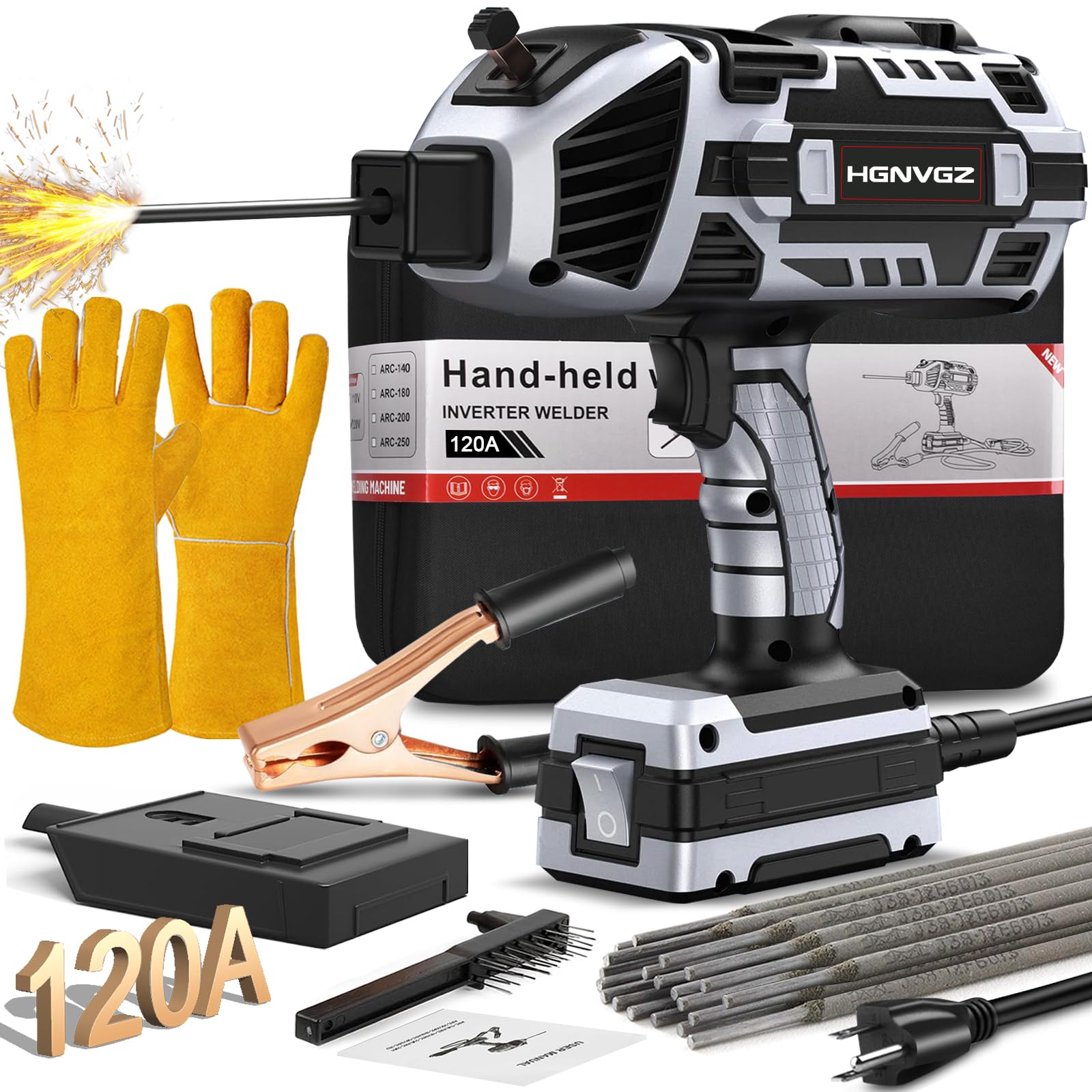
This handheld unit is made for people who want a grab-and-go welder for quick touchups. The handheld form factor can be helpful in awkward spots where a larger box is annoying to position, such as fence posts, brackets, light trailer repairs, and small field fixes.
The tradeoff is sustained output and ergonomics. A handheld design is useful for mobility, but it is not the best choice for long beads, thick plate, or frequent high-output work. Marketplace descriptions for this model are also inconsistent about the exact amperage range, so verify the current listing and manual before choosing rods or planning the job.
What People Say
Customers often point out how portable and convenient this unit is for quick repairs. Common cautions include the basic mask and accessories, plus the need to verify power and rod compatibility before depending on it for important work.
Overall Sentiment: Positive

Ease Of Use
|
Feature |
Ease Level |
|---|---|
|
Setup |
Easy |
|
Controls |
Moderate |
|
Portability |
Easy |
|
Learning Curve |
Moderate |
|
Accessories Included |
Easy |
Who Should Buy This
Choose this if you want a very portable stick welder for light repairs, tight spots, and occasional on-site touchups.
Who Should Avoid This
Skip it if you need long welds, heavy plate capability, or the steadier ergonomics of a traditional box-style machine.
Why You’ll Like It
Useful for light repair tasks such as fixing gates, tack-welding brackets, and handling small fabrication jobs. It is best for mobility-first repairs rather than heavy fabrication.
Key Benefits
- Handheld design for tight spaces and quick repairs
- IGBT inverter support for smoother arc behavior
- Hot start and anti-stick behavior help reduce electrode trouble
- Includes rods and basic accessories so you can start faster
- Good for light-to-medium touchups around the house, farm, or jobsite
- Easy to store in a small shop, truck, or maintenance kit
Check Product Details on Amazon
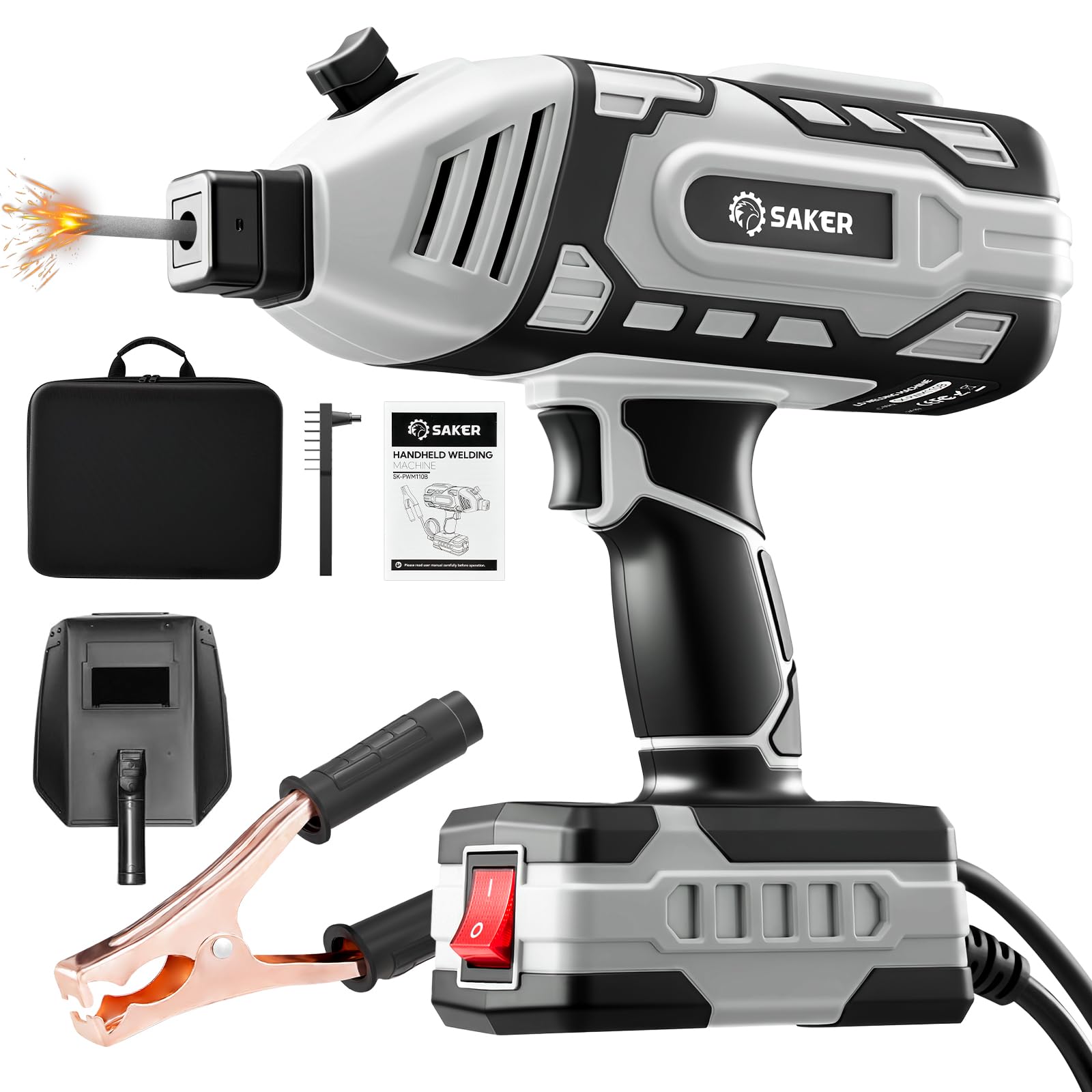
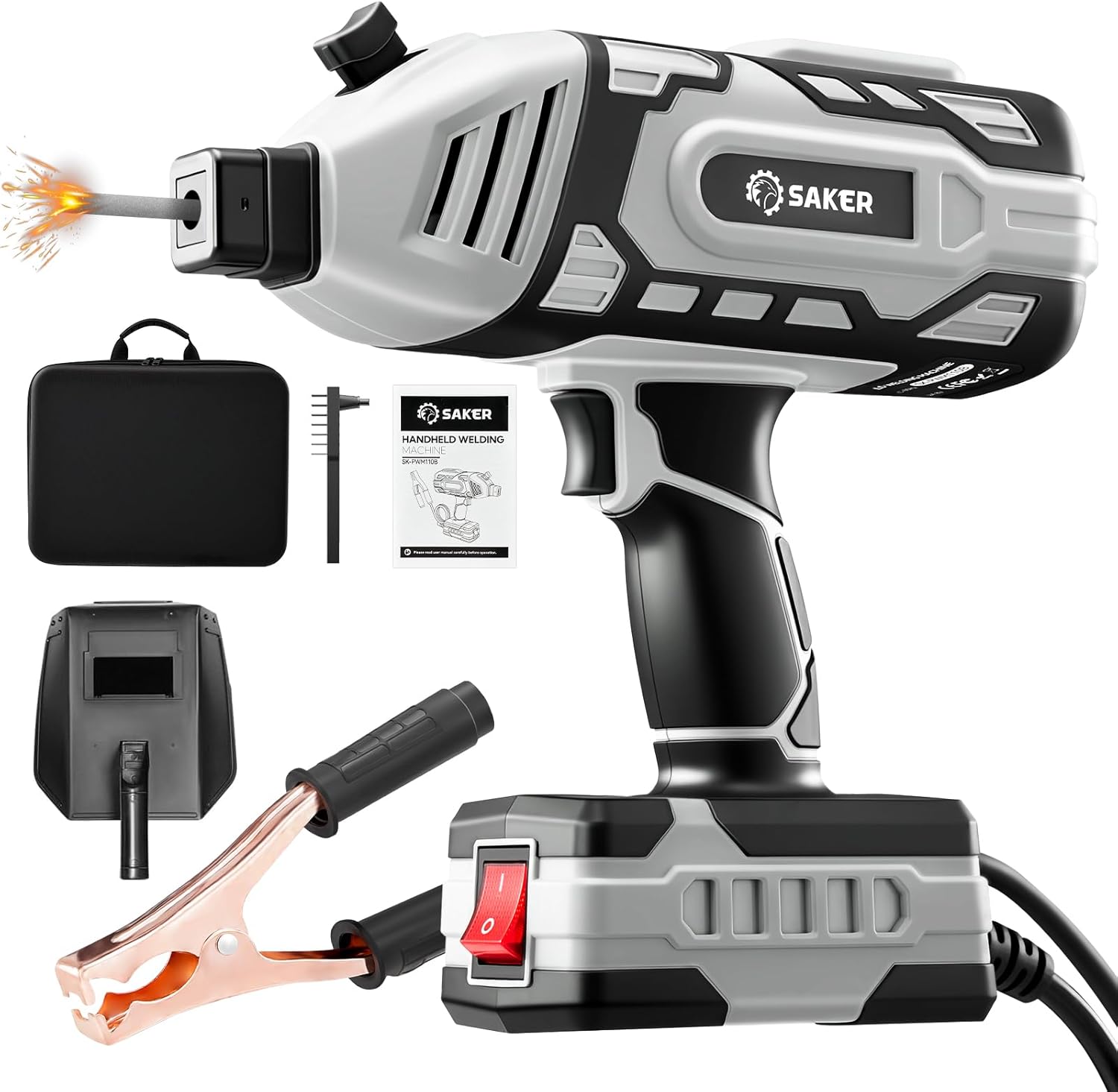
The Saker Portable Welder is a simple choice for practice, maintenance, and small repair jobs. It is best for readers who want to learn stick welding basics without starting with a larger dual-voltage machine.
Because this is a compact handheld welder, plan on bringing compatible rods, a proper helmet, and welding gloves. The current listing says electrodes are not included. It is a better fit for tack work, small brackets, and practice beads than heavy plate or long production welds.
What People Say
Reviewers often praise the portability and convenience for DIY repairs. The main limitations involve accessory quality, short cords, and occasional setup issues, so it is smart to test the unit on scrap before relying on it for an important repair.
Overall Sentiment: Positive

Ease Of Use
|
Feature |
Ease Level |
|---|---|
|
Setup |
Easy |
|
Controls |
Moderate |
|
Portability |
Easy |
|
Learning Curve |
Moderate |
|
Accessories Included |
Moderate |
Who Should Buy This
Choose this if you want an inexpensive, compact welder for practice, small repairs, and occasional maintenance.
Who Should Avoid This
Skip it if you want a welder for frequent jobsite work, thicker material, or long welding sessions.
Why You’ll Like It
This unit is best for on-site touchups and everyday maintenance tasks such as repairing gates, tacking brackets, and practicing beads on scrap metal.
Key Benefits
- Simple portable design for learning and light repairs
- IGBT inverter support for friendlier arc starts
- Basic current adjustment for different light-duty tasks
- Compact size that is easy to carry and store
- Good for DIY, maintenance, and small fabrication where mobility matters
- Best used with proper PPE and quality rods selected for the job
Check Product Details on Amazon
Safety and Specification Note
Welder output depends on input voltage, circuit capacity, electrode type, material preparation, and duty cycle. Do not treat a marketplace headline amperage as proof of continuous usable output. Follow the manual for the exact model you receive, use proper PPE and ventilation, and use qualified welding practices for structural or safety-critical repairs.
FAQ
How Do I Choose The Right Stick Welder For Construction Projects?
When you pick a stick welder for construction work, focus on the material thickness, output range, duty cycle, input voltage, and rod types you plan to use. A compact 110V welder is convenient for quick repairs, while a dual-voltage machine is usually better when you need more sustained output.
Look for useful arc-control features such as hot start, arc force, and anti-stick. Also check whether the included leads, clamp, holder, and PPE are good enough for your work or should be upgraded.
Can Compact 110V Stick Welders Handle Jobsite Repairs And Thicker Steel?
Compact 110V stick welders can handle many short repairs, tack welds, and practice jobs, but capability varies by machine, rod, circuit, and material thickness. If you plan to weld thicker sections or run longer beads, a dual-voltage welder on an appropriate 220V circuit may provide more usable output headroom.
Test settings on scrap from the same material before the final work. If the arc or bead is inconsistent, stop and check electrode choice, amperage, joint preparation, polarity, and power setup before continuing.
What Safety And Maintenance Steps Should I Follow?
Wear a proper welding helmet, flame-resistant clothing, heavy gloves, and eye protection. Work in a ventilated area, keep flammables away, and weld on a suitable non-flammable surface. Keep rods dry, inspect cables before use, and tighten loose connections because poor connections can create heat and reduce output.
Keep ventilation openings clear, let the machine cool when required, and follow the manual for duty cycle, electrode size, polarity, and power requirements. Do not use a compact welder beyond its rated capability, especially on structural or safety-critical work.
Should I Buy A Stick-Only Welder Or A Multi-Process Welder?
If your main goal is stick welding, a dedicated ARC/stick welder is usually simpler and easier to compare. A multi-process welder makes more sense when you genuinely need MIG, flux-core, or TIG capability in the same machine.
For this roundup, the strongest matches are stick-focused machines because they line up better with the buyer intent of someone searching for a stick welder.
Final Recommendation
If you want the best balance of portability, documented specifications, and stick-welding flexibility, start with the ARCCAPTAIN ARC200. Its manufacturer documents dual-voltage operation, synergic control, common stick-electrode support, and a published duty cycle, making it the clearest all-around choice in this group.
If you want more output headroom on 220V, choose the YESWELDER ARC205DS while confirming the exact Amazon version against the current seller documentation. For a low-cost starter kit, the Hpoouo 200Amp Stick Welder is the clearer beginner option. The Zeuboary Portable Stick Welder is another budget choice, but its seller-rated output deserves extra verification. For tight spaces, the HGNVGZ Handheld Stick Welder prioritizes portability, while the Saker Portable Welder is best for practice and short maintenance jobs.
Wrapping Up
When you choose a stick welder for construction or repair work, focus on usable power, electrode support, duty cycle, portability, and the electrical service available where you weld. Pick a compact starter or handheld unit when portability and short repairs matter most.
Choose a well-documented dual-voltage stick welder when you need broader job flexibility and more output headroom. Match the machine to your circuit, electrode, material, work duration, and safety requirements instead of buying on headline amperage alone.
Quick Comparison
Use this table to compare each welder by realistic use case. For any model with marketplace-only specifications, verify the current Amazon listing and manual before relying on a headline amperage, duty cycle, or accessory bundle.
| Product | Image | Best Use | Power / Output Focus | Rod Or Process Fit | Included Components | CTA |
|---|---|---|---|---|---|---|
| 200Amp 20PCS Rods Stick Welder, Super MINI Portable Welding Machine |
 |
Starter kit, home repairs, quick fixes | Compact 110V stick welder; verify usable output for your circuit | Common stick electrodes; verify supported diameter | 20 welding rods, 2 chip hammers, gloves, and manual are listed in the source article; confirm current Amazon bundle | Check Price on Amazon |
| ARCCAPTAIN Stick Welder, 200A ARC/Lift TIG Welding Machine |
 |
Best overall for garage, farm, and jobsite repairs | Dual 110V/220V stick welder | Stick/Lift TIG capability | 10ft Electrode Holder, 10ft Ground Clamp, 110V/220V power adapter, Shoulder Strap, Brush & Hammer, User Manual | Check Price on Amazon |
| YESWELDER ARC205DS 205A Digital Inverter Stick Welder |
 |
Higher-output stick welding and repair work | Dual 110V/220V stick welder | Stick/MMA; Lift TIG support can be version-dependent | Welder, work clamp, electrode holder, and power adapter are listed for the current manufacturer PRO package; verify the Amazon version | Check Price on Amazon |
| Zeuboary Portable Welding Machine with 25 Rods |
 |
Budget starter kit and small repairs | Compact 110V ARC stick welder; verify seller-rated output | Common stick electrodes; verify supported diameter | 25 welding rods and manual are listed in the source article; confirm current Amazon bundle | Check Price on Amazon |
| HGNVGZ Handheld 110V Stick Welder |
 |
Handheld touchups and awkward repair spots | 110V handheld stick welder | Portable stick welding; verify current output range | Gloves, clamp, holder, and 20 rods are listed in the source article; confirm current Amazon bundle | Check Price on Amazon |
| Saker Portable Welding Machine, 110V Arc Stick Welder |
 |
Learning, practice, and small maintenance work | 110V handheld arc stick welder | Practice and short repair work | Electrodes not included; confirm current package contents | Check Price on Amazon |
This roundup is reader-supported. When you click through Amazon links, we may earn a referral commission on qualifying purchases at no extra cost to you.
