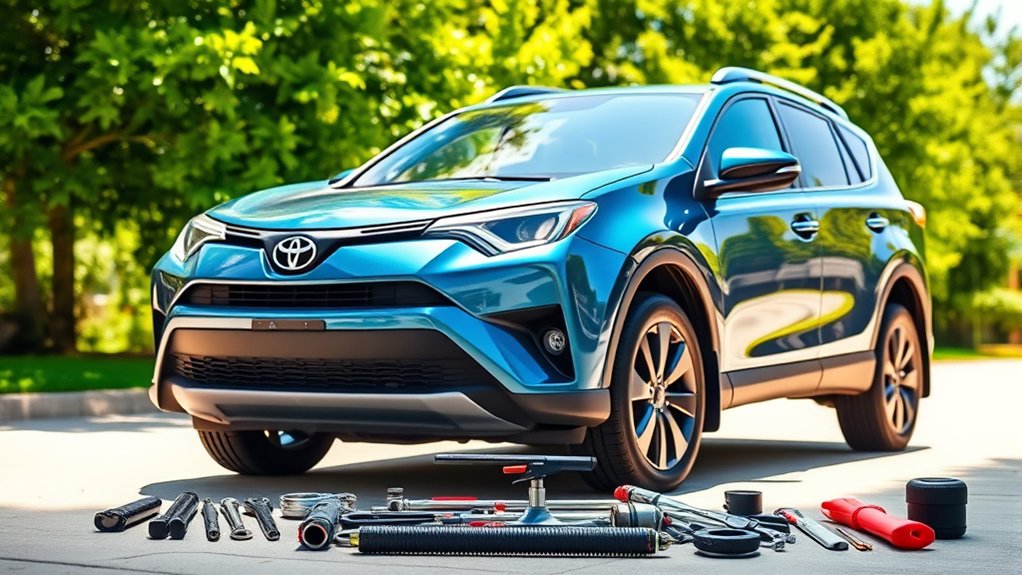
A Toyota RAV4 can deliver many years of dependable service, but no single mileage figure applies to every vehicle. Some well-maintained RAV4s reach 200,000 miles or more, while others become expensive to repair sooner. Your model year, maintenance history, climate, driving pattern, accident history, and willingness to address problems early all affect the final lifespan.
Quick Answer
A properly maintained Toyota RAV4 may reach 200,000 miles or more, but that result is not guaranteed. Current vehicle data estimates a lower average lifespan, while exceptional 250,000-mile and 300,000-mile examples represent the upper end. Condition and service history matter more than the odometer alone.
Key Takeaways
- Reaching 200,000 miles is possible, but 200,000 to 300,000 miles should not be treated as a guaranteed lifespan.
- Toyota generally recommends scheduled maintenance every 5,000 miles or six months, while oil-change timing depends on the model and driving conditions.
- A complete service history can make a higher-mileage RAV4 a better choice than a neglected lower-mileage example.
- Road salt, repeated short trips, towing, heavy loading, dust, extensive idling, and delivery work can increase wear or shorten service intervals.
- Before buying used, check the VIN for recalls, review the vehicle history, and pay for an independent mechanical inspection.
Expected Lifespan of Your Toyota RAV4

A well-kept RAV4 has the potential to become a long-lasting vehicle, but reliable lifespan estimates need context. An iSeeCars analysis for 2026 estimates the RAV4’s average lifespan at about 170,762 miles. The same analysis gives it a 29.9% predicted chance of reaching at least 200,000 miles.
Current vehicle data suggests that reaching 200,000 miles is a realistic high-mileage achievement for some RAV4s, not a guaranteed minimum for every one.
That does not mean your RAV4 must stop at the statistical average. Averages include vehicles lost to accidents, neglect, corrosion, expensive repairs, and early resale or retirement. A carefully maintained example may continue well beyond 200,000 miles.
Owner reports of 250,000, 300,000, or even more miles can be genuine. However, these vehicles are outliers unless their model year, service records, repairs, climate, and operating conditions are documented. Treat those stories as evidence of what may be possible, not what every RAV4 will deliver.
What Determines a RAV4’s Lifespan?
- Model year and powertrain: Different generations use different engines, transmissions, electronic systems, hybrid components, and safety technology.
- Maintenance history: Correct oil, timely service, fluid inspections, tire care, and early repairs reduce avoidable damage.
- Driving conditions: Repeated short trips, extreme heat or cold, heavy traffic, towing, dust, and prolonged idling can increase wear.
- Climate and corrosion: Road salt, coastal air, trapped moisture, and unrepaired paint damage can shorten body and chassis life.
- Accident and repair quality: Poor collision repairs may cause alignment, corrosion, water-leak, or electrical problems later.
- Repair decisions: A vehicle may remain mechanically repairable after the owner decides that the cost is no longer worthwhile.
Why Model Year Matters
Long-term RAV4 data mainly reflects older generations that have had enough time to accumulate high mileage. The redesigned 2026 RAV4 has not been on the road long enough to establish a real-world 150,000-mile or 200,000-mile record. Reliability results from earlier RAV4s provide useful context, but they cannot predict the exact lifespan of a new generation.
Use Toyota’s manual and warranty portal to locate the instructions for your exact year and powertrain. Recommendations for a gasoline RAV4 may differ from those for a Hybrid or Plug-in Hybrid.
Essential Maintenance Practices for Your RAV4
Toyota generally recommends scheduled maintenance every 5,000 miles or six months, whichever comes first. That does not mean every fluid or component must be replaced at each visit. It means the vehicle should receive the inspections, rotations, and services listed for that mileage in its specific maintenance guide.
Do not confuse the scheduled-service interval with the engine-oil interval. On many newer RAV4s, oil and filter replacement may be listed at a longer normal-use interval, while demanding operating conditions can require more frequent replacement. Older models may use different oil, engines, and schedules.
| Interval | What to Do | Important Detail |
| Monthly | Check engine-oil level, tire pressure, visible leaks, exterior lights, and washer fluid. | Check tire pressure when the tires are cold and use the pressure on the door placard, not the maximum printed on the tire. |
| Every 5,000 miles or 6 months | Complete the scheduled inspections and rotate the tires when listed. | Toyota uses whichever limit comes first, so low-mileage drivers should still follow the time limit. |
| Oil and filter | Replace at the interval listed for your exact engine, oil specification, and operating conditions. | Dust, towing, extensive idling, low-speed commercial use, and repeated short trips below freezing may shorten the interval. |
| At scheduled visits | Inspect brakes, steering, suspension, drive-shaft boots, filters, coolant, and other fluids when specified. | Do not authorize a generic fluid flush solely because the odometer reached a round number. Compare the recommendation with the Toyota guide. |
| Major services | Replace coolant, spark plugs, filters, or driveline fluids when your model-specific schedule requires them. | Intervals vary by generation, market, engine, drivetrain, and powertrain type. |
Warning: Stop driving and seek qualified help when you see a low-oil-pressure warning, severe overheating, loss of braking ability, heavy smoke, rapid coolant loss, or major loss of power. Continuing to drive can turn a repairable problem into engine, hybrid-system, transmission, or safety-system damage.
Key Maintenance Factors That Impact RAV4 Longevity
Follow the Correct Maintenance Schedule
Use the schedule for your exact model rather than a universal checklist from a repair shop or website. Toyota’s RAV4 Warranty and Maintenance Guide illustrates how scheduled inspections, normal-use replacements, and special operating conditions are separated.
Keep receipts that show the service date, mileage, oil specification, parts used, and work performed. A complete record helps technicians diagnose problems and gives a future buyer more confidence in the vehicle.
Check the engine-oil level between services. An engine can lose oil because of a leak or consumption before the next scheduled visit, even when you follow the normal replacement interval.
Use Smooth, Appropriate Driving Habits
Smooth acceleration, early braking, and sensible speeds reduce unnecessary stress on tires, brakes, suspension parts, and driveline components. Let the engine reach normal operating temperature during regular use, but do not idle it for long periods simply to warm it.
Steady trips can be easier on some components than repeated cold starts and short stop-and-go journeys. However, highway driving is not automatically harmless. High speed, heavy cargo, towing, extreme heat, potholes, and neglected tires can still cause substantial wear.
Control Moisture, Salt, and Corrosion
Wash road salt, mud, and debris from the body and underbody when conditions allow. Keep body drain openings clear, repair paint chips before bare metal spreads, and inspect brake lines, suspension mounting areas, exhaust components, and the underside during service.
Aftermarket rust treatment may help in some climates, but it is not a substitute for cleaning and inspection. Poor application can cover existing corrosion or block drains. Use a reputable provider and ask how the product affects future inspections and repairs.
Remember Hybrid-Specific Care
RAV4 Hybrid and Plug-in Hybrid models include high-voltage components in addition to the gasoline engine. Keep the hybrid-battery cooling intake free from dust, pet hair, luggage, and other obstructions, and follow the cleaning instructions in your manual.
Do not attempt to open or repair high-voltage components yourself. Hybrid battery warranty coverage is not a promise that the battery will fail when coverage ends, nor does it guarantee that every battery will last for the full warranty period.
Note: Toyota’s current U.S. information lists a 10-year or 150,000-mile hybrid battery warranty for Toyota hybrid vehicles beginning with model year 2020. Earlier models and vehicles sold in other markets may have different coverage.
What Does High Mileage Mean for Your RAV4?
No official mileage number suddenly makes a RAV4 unreliable. Many buyers begin calling a vehicle “high mileage” near 100,000 miles, but age, care, use, and condition matter more than the label.
A documented 160,000-mile RAV4 that received correct maintenance may be a safer purchase than an 80,000-mile vehicle with oil sludge, flood damage, severe rust, collision repairs, or missing records. Once a RAV4 approaches or passes 200,000 miles, expect age-related parts to require closer inspection and occasional replacement.
High-Mileage Items to Inspect
- Engine: Oil leaks, unusual consumption, cold-start rattles, smoke, misfires, overheating history, or coolant loss.
- Transmission and driveline: Delayed engagement, harsh or slipping shifts, vibration, fluid leaks, clicking CV joints, or damaged boots.
- Cooling system: Radiator condition, hoses, water-pump leakage, coolant quality, fans, and signs of previous overheating.
- Suspension and steering: Worn struts, loose joints, wheel-bearing noise, uneven tire wear, or steering play.
- Brakes: Pulsation, pulling, warning lights, corroded lines, seized components, or an unusually soft pedal.
- Body and undercarriage: Structural rust, damaged lift points, water leaks, mismatched paint, or poor collision repair.
- Electrical system: Weak 12-volt battery, intermittent warning lights, failed sensors, water intrusion, or accessory wiring.
- Hybrid system: Blocked battery cooling intake, warning messages, abnormal fan noise, or diagnostic trouble codes.
When Is a High-Mileage Repair Worth It?
Compare the repair cost with the RAV4’s overall condition and the cost of replacing it. A large repair can make sense when the body is solid, the vehicle has a strong service history, and other major systems remain healthy.
Be more cautious when several expensive problems appear together, such as structural corrosion, severe oil consumption, transmission failure, overheating damage, unresolved electrical faults, and worn suspension. Ask a qualified technician to separate urgent safety repairs from maintenance that can be planned.
Tips for Extending the Life of Your RAV4

Build a Consistent Maintenance Routine
- Follow mileage and time limits. Service the vehicle when either limit arrives first.
- Check oil between appointments. Do not assume the level stays full until the next change.
- Use the specified fluids and parts. Match the required viscosity, specification, capacity, and component type.
- Check tire pressure monthly. The NHTSA tire-safety guidance recommends checking all tires cold, including the spare when equipped.
- Investigate warning lights promptly. Read the manual and obtain a proper diagnosis instead of repeatedly clearing codes.
- Repair leaks early. Small oil, coolant, brake-fluid, or water leaks can damage nearby components and hide larger problems.
- Keep records. A folder or digital log should include receipts, inspection results, recall work, tires, batteries, and major repairs.
Reduce Avoidable Wear
- Avoid full-throttle acceleration before the powertrain reaches normal temperature.
- Leave enough following distance to brake smoothly.
- Slow down for potholes, curbs, and rough roads.
- Stay within the vehicle’s payload and towing limits.
- Do not ignore vibration, pulling, new noises, or changing shift quality.
- Combine very short trips when practical, especially in freezing weather.
- Clean mud and salt before they remain trapped for long periods.
Pro Tip: Ask for a documented inspection before a long trip or before your RAV4 reaches a major mileage milestone. Finding a cracked belt, weak battery, leaking water pump, damaged boot, or worn tire early usually gives you more repair options.
Buying a Used RAV4: Key Considerations and Warranties

Do not judge a used RAV4 by mileage alone. Compare its age, trim, powertrain, maintenance history, accident history, title status, climate, previous use, condition, and inspection results.
Used RAV4 Inspection Checklist
- Verify the VIN: Make sure the dashboard, door label, title, registration, and sales documents match.
- Check open recalls: Enter the VIN in the official NHTSA Recall Lookup.
- Review the vehicle history: Look for salvage branding, flood history, odometer inconsistencies, accidents, frequent ownership changes, and registration in severe corrosion areas.
- Read the service records: Confirm oil changes, scheduled inspections, tires, coolant, brakes, recalls, batteries, and major repairs.
- Inspect it cold: Ask the seller not to warm the vehicle before you arrive. Cold starts can reveal smoke, weak batteries, rattles, warning lights, and rough running.
- Test every system: Check climate control, windows, locks, cameras, driver-assistance features, infotainment, charging equipment, and all keys.
- Road-test it fully: Include city speeds, highway speeds, turns, braking, parking, acceleration, and rougher pavement when safe.
- Inspect underneath: Look for leaks, structural rust, damaged shields, crushed lifting points, fresh undercoating, and poor collision repairs.
- Scan the computers: A diagnostic scan may reveal stored, pending, or recently cleared trouble codes.
- Get an independent inspection: The FTC recommends an independent mechanical inspection even when a vehicle is certified or sold with a warranty.
A seller’s refusal to allow an independent inspection is a serious warning sign. A vehicle-history report can reveal useful information, but it may not show current mechanical problems, incomplete repairs, or every past incident.
Understand the Remaining Warranty
Toyota currently lists U.S. basic new-vehicle coverage of 36 months or 36,000 miles and powertrain coverage of 60 months or 60,000 miles, whichever occurs first. Coverage begins on the original in-service date, not the day you buy the vehicle used.
Confirm coverage using the VIN and the applicable warranty guide. Do not rely only on the model year or odometer. Certified-used warranties, hybrid coverage, emissions warranties, dealer warranties, and service contracts have separate conditions.
Are Aftermarket Parts Safe?
A compatible, well-made aftermarket part can be a reasonable choice, but quality and installation matter. Use parts that match the required specifications, especially for brakes, steering, suspension, sensors, emissions equipment, lighting, wheels, and safety systems.
According to the Federal Trade Commission, simply using an aftermarket or recycled part does not automatically cancel the entire warranty. However, damage caused by an unsuitable part or improper installation may not be covered.
RAV4 Owner Experiences: High-Mileage Insights
High-mileage owner stories can show what is possible, especially when a vehicle has served as a commuter, delivery vehicle, or long-distance family car. They also have limits. Owners who reach exceptional mileage are more likely to share their results than owners whose vehicles were retired earlier.
Look for details before drawing conclusions from a testimonial:
- Exact model year, engine, drivetrain, and powertrain
- Current mileage and annual mileage
- Original engine, transmission, and hybrid battery status
- Climate, road salt exposure, and storage conditions
- Towing, delivery, commercial, or off-road use
- Major repairs completed along the way
- Oil use, fluid leaks, corrosion, and warning lights
- Receipts or a documented service history
A RAV4 that reaches 300,000 miles after receiving an engine, transmission, hybrid battery, suspension, and extensive rust repair has still travelled an impressive distance. However, its story differs from a vehicle reaching the same mileage with only routine maintenance and normal wear-item replacements.
Frequently Asked Questions
What problems should you check on a high-mileage RAV4?
Check for oil or coolant loss, overheating history, leaks, unusual engine noise, shifting changes, driveline vibration, worn suspension, braking problems, uneven tire wear, electrical faults, and structural corrosion. The exact risk depends on the model year and powertrain, so use a qualified inspection rather than assuming every generation has the same problems.
Is 200,000 miles too much for a Toyota RAV4?
Not automatically. A documented and well-maintained 200,000-mile RAV4 may continue serving reliably, but it deserves a thorough inspection and a realistic repair budget. Condition, rust, oil use, warning lights, drivability, and maintenance records matter more than the mileage number alone.
How does climate affect a RAV4’s lifespan?
Road salt and coastal moisture can accelerate corrosion, while extreme heat can stress batteries, tires, rubber parts, and cooling systems. Wash contaminants away, repair paint damage, inspect the underbody, maintain correct coolant, and check the battery and tires more often during severe weather.
Are aftermarket parts safe for a RAV4?
They can be safe when they meet the required specifications and are installed correctly. Choose reputable parts and qualified installation for safety-critical systems. Using an aftermarket part does not automatically void the entire warranty, but damage caused by the part or its installation may not be covered.
What fuel should you use in a Toyota RAV4?
Use the minimum fuel grade and octane rating specified in the owner’s manual and on the fuel-door label for your exact model year and market. Do not assume premium fuel will improve power, efficiency, or lifespan when the engine is designed to use regular fuel.
How can you tell whether a RAV4 needs major repairs?
Warning signs include persistent warning lights, overheating, heavy smoke, rapid oil or coolant loss, severe vibration, slipping or harsh shifting, weak braking, major rust, and a sudden drop in performance. Obtain a diagnosis before continuing to drive or approving extensive repairs.
How often should you service a Toyota RAV4?
Toyota generally recommends scheduled maintenance every 5,000 miles or six months, whichever comes first. Individual services, including oil, filters, coolant, spark plugs, and driveline fluids, follow separate intervals. Use the maintenance guide for your exact year, engine, drivetrain, and operating conditions.
Conclusion
A Toyota RAV4 can remain useful well into high mileage, and reaching 200,000 miles is possible with the right vehicle and care. It is not a guaranteed lifespan, and exceptional 250,000-mile or 300,000-mile examples should not replace realistic planning.
Follow the model-specific maintenance schedule, check oil and tires between services, control corrosion, address warning signs early, and keep complete records. When buying used, place more weight on condition, history, recalls, and an independent inspection than on mileage alone.
Sources
- iSeeCars Toyota RAV4 Reliability for 2026 — RAV4 average-lifespan estimate and predicted likelihood of reaching 200,000 miles.
- Toyota RAV4 Warranty and Maintenance Guide — scheduled service, special operating conditions, maintenance responsibilities, and warranty terms.
- Toyota Manuals and Warranties — model-specific manuals, current U.S. warranty information, and hybrid battery coverage.
- National Highway Traffic Safety Administration Recall Lookup — VIN-specific open-recall checks.
- NHTSA Tire Safety — tire-pressure, tread, inspection, and maintenance guidance.
- Federal Trade Commission Used-Car Buying Guidance — vehicle-history reports, warranty documents, and independent inspections.
