
Yes. Current iSeeCars data indicates that a gas Toyota RAV4 retains about 74.6% of its modeled original value after five years, while the dedicated RAV4 Hybrid analysis reports about 75.4%. Both figures are estimates, not guarantees: model year, trim, mileage, condition, accident and title history, location, and the price originally paid can materially change what a specific RAV4 is worth.
Last updated: September 19, 2026. Depreciation figures, competitor comparisons, certification details, and 2026 model information were rechecked against current source data.
Quick Answer
Yes. Current iSeeCars data estimates about 25.4% five-year depreciation for the gas RAV4, leaving 74.6% retained value, versus about 39.9% depreciation for the average compact SUV in the same model-level dataset. Its dedicated RAV4 Hybrid page estimates 24.6% depreciation, or 75.4% retained value. Actual resale value varies by model year, mileage, trim, condition, accident history, location, and market conditions.
Key Takeaways
- Current iSeeCars model pages estimate 25.4% five-year depreciation for the gas RAV4 and 24.6% for the RAV4 Hybrid.
- The gas RAV4 retains about 74.6% after five years in the current iSeeCars model data, compared with 70.3% for the Honda CR-V.
- Different valuation providers can publish different depreciation estimates because their mileage, condition, price, and transaction assumptions differ.
- No model year is automatically the best buy. Purchase price, condition, service records, and inspection results can matter more.
- Mileage matters, but accident history, title problems, rust, poor maintenance, and worn components can create a larger discount.
Why the Toyota RAV4 Holds Its Value Well

The RAV4 benefits from broad buyer recognition, strong new-vehicle demand, several available powertrains across its used inventory, and Toyota’s reputation for long-term ownership. Those factors create a large pool of shoppers when a well-maintained RAV4 enters the used market.
In its current analysis, iSeeCars estimates that a gas RAV4 depreciates by about 25.4% after five years. That leaves approximately 74.6% of its original modeled value, compared with about 60.1% for the average compact SUV in the same model-level dataset.
The RAV4 Hybrid also performs well. The dedicated iSeeCars RAV4 Hybrid analysis currently estimates five-year depreciation of approximately 24.6%, leaving 75.4% of its modeled original value. That is stronger than the 68.0% average retained value listed there for hybrid compact SUVs.
Current iSeeCars model data places both the gas RAV4 and RAV4 Hybrid ahead of their respective segment averages for five-year value retention.
Toyota’s broader resale performance supports the RAV4’s position. Kelley Blue Book named Toyota its 2026 Best Resale Value brand, marking Toyota’s 10th win overall.
Note: A vehicle is normally a depreciating asset rather than a financial investment. Strong resale value reduces ownership cost, but it does not guarantee that you will recover what you paid.
How Much Does a Toyota RAV4 Depreciate?
Depreciation is the difference between a vehicle’s original value and its later market value. A retained-value percentage shows what remains. For example, 25% depreciation means the vehicle retains 75% of its modeled original value.
Resale studies generally compare used transaction prices with estimated original prices. They do not track every individual vehicle from the showroom to its eventual sale. Different studies may also use different trims, regions, mileage assumptions, transaction periods, and data-cleaning methods.
| Vehicle age | Gas RAV4 depreciation | Gas value retained | RAV4 Hybrid depreciation | Hybrid value retained |
|---|---|---|---|---|
| 3 years | 5.4% | 94.6% | 5.0% | 95.0% |
| 5 years | 25.4% | 74.6% | 24.6% | 75.4% |
| 7 years | 36.5% | 63.5% | 37.6% | 62.4% |
| 10 years | 53.9% | 46.1% | 55.9% | 44.1% |
These percentages describe different age groups in the current iSeeCars model datasets. They should not be read as a guaranteed forecast for one specific RAV4. Used-car prices can rise or fall as fuel prices, interest rates, new-vehicle incentives, supply, and consumer preferences change.
Why estimates differ: iSeeCars currently models about 25.4% five-year depreciation for the gas RAV4, while CarEdge estimates about 28% under its own good-condition and 13,500-miles-per-year assumptions. iSeeCars also currently exposes a separate “RAV4 (hybrid)” style entry with a different estimate from its dedicated RAV4 Hybrid model page; this article uses the dedicated RAV4 Hybrid page consistently. Treat national studies as benchmarks, then price your vehicle from recent local comparables.
How to Estimate Your RAV4’s Resale Value
Use national depreciation percentages as a benchmark, not as your asking price. Start with local RAV4 listings that match your model year, trim, powertrain, drivetrain, mileage, condition, and major options as closely as possible. Separate dealer asking prices from real trade-in or instant-buy offers, because they represent different sides of the transaction.
- Build a local comparison set. Save several similar RAV4 listings rather than relying on one unusually high or low price.
- Get multiple live offers. Compare at least a dealer trade-in appraisal and one or more instant-purchase estimates where available.
- Adjust for condition and history. Account for accident or title history, tire and brake condition, warning lights, cosmetic damage, service records, and immediate repair needs.
- Use a range, not one exact number. Your likely resale value sits between what real buyers are offering and what comparable vehicles are being advertised for locally.
How the Toyota RAV4 Compares With Competitors
The RAV4 currently performs well against both the compact-SUV average and several familiar competitors. The Honda CR-V is the closest like-for-like resale-value rival in this comparison. The Hyundai Santa Fe is a larger midsize SUV, while the Jeep Cherokee row is broader historical context rather than a perfect current-model match.
| Vehicle | Segment | Estimated five-year depreciation | Estimated value retained |
|---|---|---|---|
| Toyota RAV4 | Compact SUV | 25.4% | 74.6% |
| Honda CR-V | Compact SUV | 29.7% | 70.3% |
| Hyundai Santa Fe | Midsize SUV | 46.5% | 53.5% |
| Jeep Cherokee | SUV | 48.2% | 51.8% |
| Compact-SUV average | Compact SUV | 39.9% | 60.1% |
The estimates above come from the same provider, which makes the comparison more consistent. They still do not guarantee the offer you will receive for a particular vehicle.
RAV4 vs. Hyundai Santa Fe
The RAV4 retains a larger percentage of its modeled original value than the Santa Fe in the current dataset. However, the Santa Fe is a larger midsize SUV and may offer space or features that better fit some households.
Compare total purchase price as well as retained percentage. Losing 25% of a high transaction price can still cost more dollars than losing a larger percentage of a heavily discounted vehicle.
RAV4 vs. Jeep Cherokee
Current iSeeCars brand-level data lists the legacy Jeep Cherokee at about 51.8% five-year retained value, well below the RAV4’s 74.6% model-level estimate. Treat this as broader historical context rather than a perfect current-model comparison because the Cherokee nameplate and powertrain lineup have changed.
A clean Cherokee with low mileage and a strong maintenance history can be worth more than a neglected RAV4 with accident damage, title issues, worn tires, or overdue repairs.
Which Toyota RAV4 Model Years Are Best for Resale Value?
No single RAV4 model year is the universal resale-value winner. A better approach is to choose the generation and feature set that meets your needs, then find the cleanest example at a fair purchase price.
Model-Year Groups to Consider
| Model years | Why shoppers consider them | What to check |
|---|---|---|
| 2016–2018 | Lower purchase prices and the mature years of the fourth generation can make these vehicles appealing value choices. | Safety equipment, headlight performance, maintenance records, recalls, rust, accident history, and wear associated with age. |
| 2019 | The fifth-generation redesign brought updated styling, platform changes, safety technology, and standard Apple CarPlay compatibility. | Recall completion, service history, trim equipment, and the condition of an early-production redesigned model. |
| 2020–2022 | These years combine fifth-generation design with Android Auto added from 2020 and a wider supply of gas and hybrid used vehicles. | Powertrain type, drivetrain, battery-system maintenance on hybrids, accident repairs, and feature differences by trim. |
| 2023–2025 | Newer technology, lower typical age, and possible remaining warranty coverage can support demand. | The higher purchase price, actual warranty start date, prior rental use, and whether paying more produces enough practical benefit. |
| 2026 | The sixth generation introduces an all-new design and a lineup built around hybrid and plug-in-hybrid powertrains. | Long-term resale data is not yet available. First-year pricing, incentives, supply, and demand may change quickly. |
The 2018 RAV4 can be a sensible used choice when its price, condition, and records are favorable. It was the final model year of its generation, but that alone does not make every 2018 vehicle a better purchase than a newer or older example.
The 2018 RAV4 earned an IIHS Top Safety Pick award only when equipped with specific headlights. Its passenger-side small-overlap rating was Poor, so buyers should review the exact trim and safety equipment rather than relying on the model year alone.
For connectivity, Toyota introduced standard Apple CarPlay compatibility on the redesigned 2019 RAV4. Android Auto was then added across the 2020 RAV4 lineup.
Value-Retention Factors
Model year is only one part of resale value. Buyers and valuation services also consider:
- Purchase price: Paying a large dealer markup can create a bigger dollar loss even when the model retains a strong percentage.
- Trim and equipment: Desirable safety, convenience, drivetrain, and cold-weather features may improve local demand, but expensive options rarely return their full original cost.
- Gas, hybrid, or plug-in hybrid: Fuel prices, local incentives, charging access, and buyer preferences can change demand for each powertrain. For a deeper ownership comparison, see RAV4 gas vs. hybrid costs, MPG, and performance.
- Front-wheel drive or all-wheel drive: AWD may attract stronger demand in snowy or rural regions but may provide less resale benefit in other markets.
- Condition: Body damage, stains, odors, warning lights, cracked glass, worn tires, and neglected repairs reduce buyer confidence.
- History: Accident, salvage, flood, rental, and title records can substantially affect value.
- Documentation: Service invoices and inspection records help show that the vehicle received appropriate care.
- Location and timing: Local inventory, weather, fuel prices, interest rates, and new-car incentives influence used prices.
Key Features That Support RAV4 Resale Value
The RAV4’s resale strength comes from a combination of practical features and market familiarity rather than one specification. A compact footprint, useful cargo space, available all-wheel drive, gas and electrified used-vehicle choices, and broad dealer support keep the model relevant to many buyers.
Safety and connectivity can also affect demand. Later vehicles generally offer more driver-assistance technology, while 2019 and newer models provide more modern smartphone integration. However, feature availability can vary by year, trim, package, and market.
Hybrid models attract buyers who want lower fuel use without moving to a fully electric vehicle. The current five-year hybrid estimate remains strong, although it does not prove that a hybrid will always outperform an equivalent gas model in every location.
Color and modifications also matter. Neutral factory colors often appeal to a wider audience, while extreme suspension changes, oversized wheels, poor-quality electrical accessories, or permanent body modifications can narrow the buyer pool.
Why the RAV4 Excels in the Used-Car Market
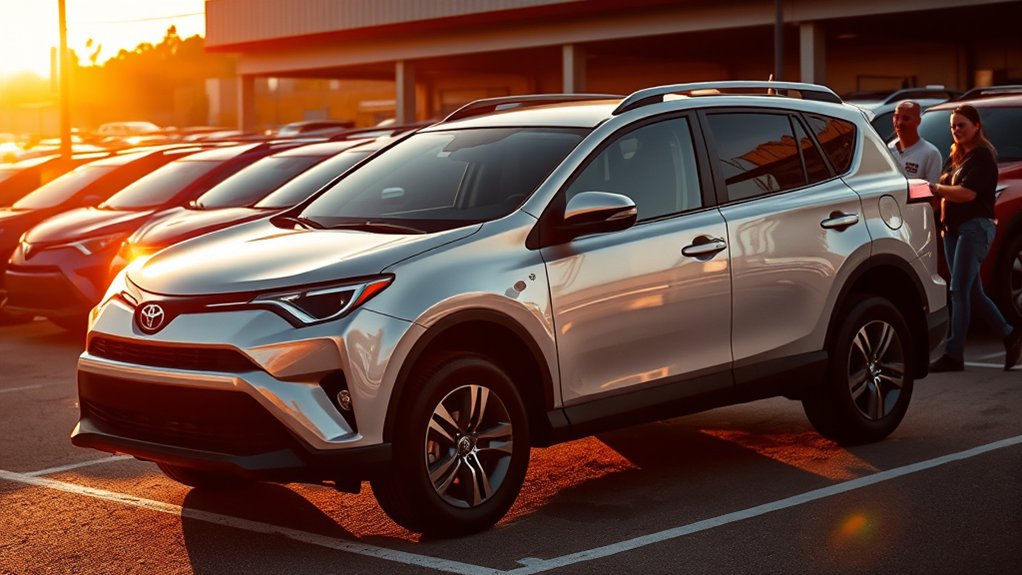
The RAV4 has a large installed base and remains one of the most recognizable small SUVs in the United States. Toyota describes the redesigned 2026 RAV4 as America’s best-selling small SUV, which reflects the broad demand supporting both new and used inventory.
A popular model is usually easier for shoppers to research, compare, service, finance, and insure. Dealers also have more comparable transactions to use when valuing a trade-in.
| Market factor | How it can help | Limitation |
|---|---|---|
| Broad recognition | More shoppers already know the model and may include it in their search. | High supply can also give buyers many alternatives. |
| Multiple trims and powertrains | Used buyers can choose different prices, features, and fuel-economy levels. | Not every trim or option has equal local demand. |
| Dealer and parts availability | Routine service and common repairs may be easier to arrange. | Actual repair cost still depends on the year, fault, labor rate, and parts required. |
| Strong resale reputation | Buyer confidence can support asking prices for clean vehicles. | Reputation cannot erase accident damage, neglect, or an overpriced listing. |
The Impact of Mileage on RAV4 Depreciation
Mileage affects value because it acts as a rough indicator of use and future wear. However, there is no universal RAV4 mileage threshold that automatically causes a specific dollar loss. For a mileage-focused used-shopping framework, see how many miles a used Toyota RAV4 should have.
A lower-mileage vehicle can still be a poor purchase if it has spent years sitting outside, lacks maintenance records, has flood or collision damage, or was driven mostly on short trips under severe conditions. A higher-mileage RAV4 with consistent highway use, timely service, and a clean inspection may be the safer choice.
| Vehicle situation | Likely effect on buyer confidence |
|---|---|
| Low mileage with complete records | Usually positive when the condition matches the odometer reading. |
| Average use with regular documented maintenance | Often easier to evaluate and may represent a balanced used purchase. |
| High mileage with strong records and inspection | Lower value, but potentially acceptable when priced for the mileage and upcoming maintenance. |
| Low mileage with long service gaps | Raises questions about fluids, battery health, tires, seals, and storage conditions. |
| Any mileage with accident, flood, or title problems | Can produce a much larger discount than mileage alone. |
Pro Tip: Keep dated invoices for maintenance, tires, brakes, batteries, inspections, and repairs. A well-organized service file gives buyers evidence that the odometer reading is not the only story.
Does Insurance Change a RAV4’s Resale Value?
Insurance does not directly set a RAV4’s resale value, but it changes total ownership cost and can affect whether keeping, replacing, or selling the vehicle makes financial sense. A single national RAV4 premium is not useful for most buyers because rates can vary significantly even when the vehicle is identical.
How to Estimate Your Insurance Expense
The National Association of Insurance Commissioners lists location, age, driving experience, driving record, claims history, vehicle type, annual mileage, coverage, and deductibles among the factors that may affect premiums. State rules also influence which rating factors insurers may use.
Request comparable quotes for the exact VIN or year, trim, powertrain, and drivetrain you are considering. Use the same liability limits, deductibles, and optional coverages for each quote so the comparison remains meaningful.
- Compare at least three insurers.
- Ask whether safety equipment or anti-theft systems qualify for discounts.
- Check the cost difference between gas, hybrid, and plug-in-hybrid versions.
- Review collision and comprehensive deductibles rather than comparing premiums alone.
- Requote coverage before buying because newer or more expensive trims may cost more to repair.
Maintenance That Helps Protect Resale Value
Toyota’s maintenance guidance varies by model year and powertrain. For example, the 2025 RAV4 Hybrid maintenance guide calls for scheduled maintenance every 5,000 miles or six months, whichever comes first. The service performed at each visit depends on mileage, time, and operating conditions.
| Maintenance area | Why it matters for resale | What to keep |
|---|---|---|
| Scheduled inspections and service | Shows that maintenance followed time and mileage requirements. | Dealer records, shop invoices, and dated receipts. |
| Oil and filter service | Reduces concern about lubrication neglect and internal wear. | Oil specification, mileage, date, and filter details. |
| Tires, alignment, and rotation | Uneven wear can indicate neglected rotation, alignment issues, or suspension problems. | Tire receipts, alignment reports, and rotation records. |
| Brakes and fluids | A buyer can immediately notice brake noise, warning lights, leaks, or poor fluid condition. | Inspection measurements and repair invoices. |
| Hybrid cooling intake and related service | Helps demonstrate care of hybrid-specific components where applicable. | Cleaning and inspection records based on the correct maintenance guide. |
| Recall repairs | Completed safety recalls reduce uncertainty for the next owner. | Dealer repair documentation and VIN lookup results. |
Use the warranty and maintenance guide for your exact model year and powertrain. Oil-change requirements and additional severe-use services may differ, so a universal maintenance-cost table would be misleading.
What to Look for When Buying a Used RAV4
Start with the vehicle rather than assuming a certain model year is automatically reliable. Two RAV4s from the same year can have very different values after years of different driving, maintenance, storage, and repairs.
- Verify the VIN and title. Confirm that the VIN matches the dashboard, door label, title, registration, and seller’s paperwork.
- Obtain a vehicle-history report. Check title brands, insurance loss records, odometer history, reported accidents, and prior use.
- Check open recalls. Enter the VIN in the NHTSA recall lookup. Open safety recalls should be repaired by the manufacturer at no charge.
- Review service records. Look for consistent time- and mileage-based maintenance rather than a few recent receipts prepared for the sale.
- Arrange an independent inspection. The Federal Trade Commission recommends an independent mechanical inspection even when a vehicle is certified or comes with a warranty.
- Inspect for collision and flood evidence. Look for mismatched paint, overspray, uneven panel gaps, corrosion, damp carpets, musty odors, and inconsistent fasteners.
- Check tires, brakes, glass, lights, and fluids. Immediate replacement needs should be reflected in the price.
- Test every feature. Confirm that the climate system, cameras, sensors, infotainment, charging ports, windows, locks, seats, and driver-assistance functions work correctly.
- Complete a cold-start test drive. Listen for unusual noises and check steering, braking, transmission response, warning lights, ride quality, and tracking.
- Compare actual local values. Review dealer listings, private-party listings, trade-in estimates, and recent comparable vehicles with similar mileage and equipment.
Warning: A clean vehicle-history report does not prove that a RAV4 has never been damaged or poorly maintained. The FTC states that a history report is not a substitute for an inspection by an independent mechanic.
A Toyota Certified Used Vehicle may provide additional warranty coverage, but verify the certification level and start dates. Toyota’s current program lists Gold eligibility for vehicles up to six years old with 85,000 miles or less. Gold vehicles include a 12-month/12,000-mile limited comprehensive warranty and a seven-year/100,000-total-vehicle-mile limited powertrain warranty.
Silver certification covers eligible vehicles up to ten model years old with 125,000 miles or less, while excluding vehicles six model years old or newer with 60,000 miles or less. It includes a 12-month/12,000-mile limited powertrain warranty rather than the Gold program’s comprehensive coverage. Review the full Toyota Certified Used Vehicle terms before relying on a certification badge.
Will the RAV4 Continue to Hold Its Value?
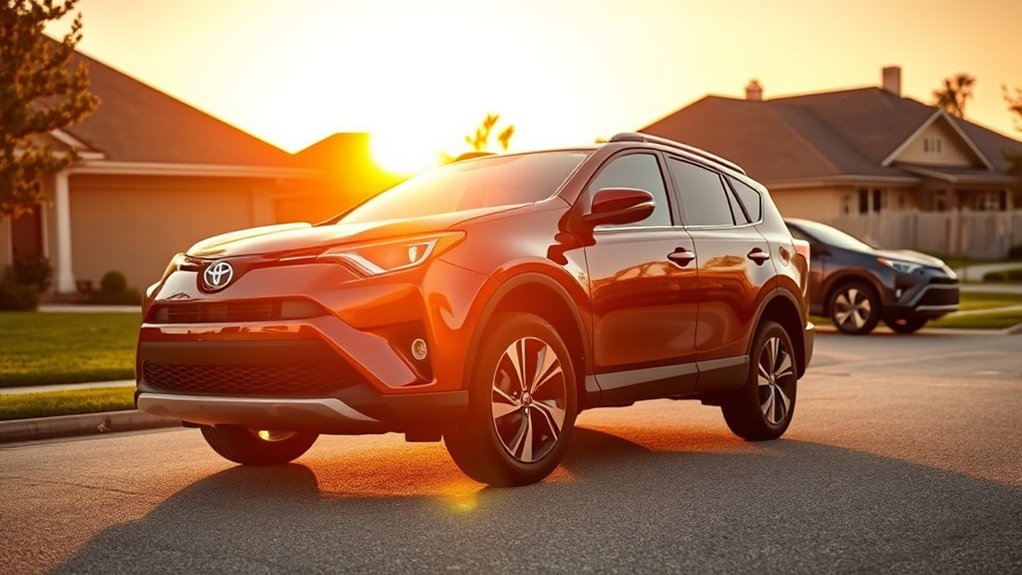
The RAV4 has several reasons to remain a strong resale performer, including broad demand, a large owner base, practical dimensions, available AWD, and continued interest in hybrid vehicles. However, future resale value cannot be guaranteed from historical results.
The redesigned 2026 RAV4 uses hybrid or plug-in-hybrid powertrains rather than offering a conventional gas-only version. That change may support demand for electrified RAV4s, but it may also alter the price relationship between older gas models and newer hybrids.
| Potential tailwind | Potential risk |
|---|---|
| Continued demand for compact SUVs | A shift in buyer preferences toward another vehicle type |
| Strong Toyota brand recognition | Reliability concerns or major model-specific recalls |
| Interest in hybrid efficiency | Changes in fuel prices, incentives, or electrified-vehicle demand |
| Limited supply of clean, well-documented used vehicles | Heavy new-car incentives or excess used inventory |
| Modern safety and connectivity features | Rapid technology changes that make older systems less desirable |
Your best protection is to buy at a fair price, avoid unnecessary dealer markups, maintain the vehicle correctly, repair damage properly, and keep complete records. Those choices are under your control even when the wider market is not.
Frequently Asked Questions
How much does a Toyota RAV4 depreciate after five years?
Current iSeeCars data estimates about 25.4% five-year depreciation for the gas RAV4, leaving 74.6% retained value. Its dedicated RAV4 Hybrid page estimates about 24.6% depreciation, leaving 75.4% retained value. Different providers use different assumptions, so treat these figures as benchmarks rather than a guaranteed offer.
Does the RAV4 Hybrid hold its value better than the gas RAV4?
In the current dedicated iSeeCars model pages, slightly: the RAV4 Hybrid retains about 75.4% after five years versus 74.6% for the gas RAV4. The gap is small enough that purchase price, mileage, condition, trim, location, and market timing can reverse the result for two individual vehicles.
Does the RAV4 hold its value better than the Honda CR-V?
In current iSeeCars model data, the gas RAV4 retains about 74.6% of its modeled original value after five years, compared with about 70.3% for the Honda CR-V. Those are broad model-level estimates, not a guarantee that one specific RAV4 will sell for more than one specific CR-V.
How does maintenance affect a RAV4’s resale value?
Regular maintenance helps protect condition and gives buyers evidence that the vehicle received appropriate care. Keep dated records for scheduled service, oil changes, tires, brakes, inspections, recalls, and repairs. Missing records do not prove neglect, but they can reduce buyer confidence.
What warranty options are available for a used RAV4?
Coverage may come from the remaining original warranty, Toyota Gold or Silver certification, or a separately purchased service contract. Verify the in-service date, mileage limit, covered components, exclusions, deductible, transfer rules, and administrator before buying.
Are there common issues with older RAV4 models?
Potential problems vary by year, powertrain, mileage, and maintenance history. Do not rely on a general reliability claim. Check the VIN for recalls, review service records and manufacturer communications, inspect for rust or accident damage, and have an independent mechanic examine the exact vehicle.
Should I sell my RAV4 before it reaches high mileage?
Selling earlier may produce a higher price, but you also give up more years of use and may face the transaction costs of replacing the vehicle. Compare its expected repair needs, current value, remaining loan balance, replacement cost, and how well it still meets your needs.
Conclusion
The Toyota RAV4 holds its value well compared with the average compact SUV. Current iSeeCars model data suggests about 74.6% five-year retained value for the gas RAV4 and 75.4% for the RAV4 Hybrid, but those figures describe broad market data rather than a guaranteed offer for your vehicle.
Focus on the factors you can control. Buy at a fair price, choose the model year and features you actually need, maintain the vehicle according to its correct schedule, complete recall work, avoid unnecessary modifications, and keep detailed records. When buying used, combine a history report with a VIN recall check and an independent inspection.
Sources
- iSeeCars Toyota RAV4 Resale Value and Depreciation — current gas-model depreciation estimates and compact-SUV comparison.
- iSeeCars Toyota RAV4 Hybrid Resale Value and Depreciation — current hybrid-model depreciation estimates and hybrid compact-SUV comparison.
- iSeeCars Honda CR-V Resale Value and Depreciation — current CR-V comparison data.
- iSeeCars Hyundai Santa Fe Resale Value and Depreciation — current Santa Fe comparison data.
- iSeeCars Jeep Resale Value — current brand-level five-year retained-value data including the Cherokee.
- CarEdge Toyota RAV4 Depreciation — an alternative depreciation model illustrating how assumptions can produce different estimates.
- Kelley Blue Book 2026 Best Resale Value Awards — resale-value methodology and Toyota’s 2026 brand award.
- Toyota USA 2026 RAV4 — sixth-generation powertrain and model information.
- IIHS 2018 Toyota RAV4 Ratings — Top Safety Pick qualification and crashworthiness ratings.
- Toyota RAV4 Hybrid Warranty and Maintenance Guide — scheduled maintenance timing and model-specific service guidance.
- Toyota Certified Used Vehicles — current Gold and Silver eligibility and warranty terms.
- Federal Trade Commission Used-Car Buying Guide — vehicle-history reports, independent inspections, warranties, and dealer buying guidance.
- National Highway Traffic Safety Administration Recall Lookup — VIN-based open-recall checks and safety-repair information.
- National Association of Insurance Commissioners Auto Insurance Guide — common rating factors and coverage considerations.

