
A drawer organizer is worth it if messy drawers slow you down, waste space, or make small items hard to find. The right organizer separates everyday items, protects delicate pieces, and makes each drawer easier to clean. It does not need to be expensive, but it should fit your drawer, match what you store, and be easy to maintain.
Quick Answer
Yes, drawer organizers are worth it for most homes because they save time, reduce clutter, and help you use drawer space more efficiently. They work best when you measure first, declutter before buying, and choose compartments that match the items you use most often.
Key Takeaways
- Drawer organizers make drawers easier to use by keeping items separated, visible, and quick to grab.
- The best organizer depends on drawer size, item type, material preference, and how often you use each item.
- Adjustable dividers, trays, bins, fabric inserts, bamboo organizers, and modular systems all solve different storage problems.
- Measure the inside of your drawer before buying so the organizer fits without sliding or blocking the drawer from closing.
- A drawer organizer is most effective after you declutter and group items by use, size, or category.
Drawer organizers are practical tools designed to maximize the efficiency and functionality of storage spaces within drawers. They come in many shapes, sizes, and materials, so you can use them in kitchens, bathrooms, bedrooms, offices, craft rooms, workshops, and junk drawers.
The idea of drawer organization is not new, but it has become more popular as people look for simple ways to declutter and make their homes easier to manage. A good drawer organizer helps you maintain order, find items quickly, and avoid the daily frustration of digging through a messy drawer.
Early drawer organizers were often simple dividers made from wood or plastic. Today, you can choose from expandable trays, modular bins, bamboo inserts, fabric compartments, acrylic boxes, and custom systems that adapt to different drawer sizes and contents. From kitchen utensils to office supplies, drawer organizers can turn chaotic spaces into neat, easy-to-use storage areas.
Benefits of Using a Drawer Organizer
One of the biggest benefits of using a drawer organizer is better accessibility. When items sit in designated compartments, finding what you need becomes simple. In a kitchen drawer, for example, an organizer can separate spoons, forks, knives, peelers, measuring spoons, and small gadgets so you do not have to search through a pile of utensils.
This saves time and reduces frustration, especially during busy meal prep or when you have guests. Instead of pulling out half the drawer to find one tool, you can reach directly for the item you need.
A drawer organizer also helps with cleanliness and maintenance. A neat drawer is less likely to collect crumbs, dust, and loose debris because items stay contained in specific areas. When you need to clean, you can lift out the organizer, wipe the drawer, and put everything back in place.
Organizers can also protect items from damage. In a bathroom drawer, a makeup organizer can keep compacts from cracking, brushes from bending, and small tools from getting tangled. In an office drawer, separate compartments can prevent pens, paper clips, charging cables, and sticky notes from becoming a mixed mess.
Pro Tip: Before buying an organizer, empty the drawer and sort everything into keep, relocate, donate, and discard piles. You will get a better fit and avoid organizing items you no longer need.
Types of Drawer Organizers
Drawer organizers come in several types, and each one works best for a different storage need. Choosing the right style depends on what you store, how deep the drawer is, and how much flexibility you want.

[Amazon Products Picked for You]

Innovative Extendable & Space-Saving Design: Maximize every inch of your storage space with our innovative telescopic drawer organizers. Out of the 21-piece comprehensive set, 17 bins feature an adjustable length design that smoothly slides to custom-fit various drawer depths and configurations. Perfect for eliminating cluttered corners and fully utilizing horizontal and vertical space in your drawers or countertops.

Multipurpose Use: This utensil drawer organizer is perfect for storing a wide range of items beyond just silverware. It can neatly store cutlery, stationery, jewelry, tools, and even office supplies. Perfect for use in the kitchen, living room, bedroom, office, and utility room, this silverware drawer organizer offers versatile storage for multiple items across various settings.
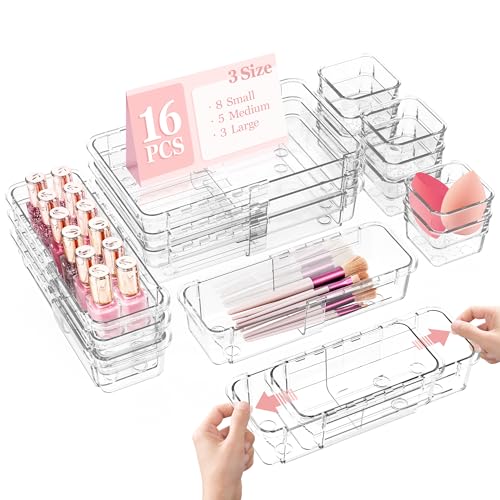
16 Piece Adjustable Drawer Organizer Set: Includes 3 different sizes—3 large adjustable organizer (7-10 x 6.2 x 2.2 inches), 5 medium adjustable organizer (6.4-9.4 x 3.4 x 2.2 inches), and 8 small fixed organizer (2.9 x 2.9 x 2.2 inches). This versatile storage set can be flexibly combined, is perfect for organizing drawers of different sizes
Adjustable or Expandable Organizers
Adjustable or expandable organizers have compartments that can resize to fit different items. These work well in kitchens, offices, and utility drawers where the contents may change over time. For example, an adjustable cutlery tray can expand to hold larger utensils, measuring tools, or small kitchen gadgets.
Modular Drawer Organizers
Modular organizers use separate containers that you can arrange in different layouts. This gives you more control over the drawer setup. They are useful in craft rooms, workshops, makeup drawers, desk drawers, and junk drawers because the items often vary in shape and size.
Compartment Trays
Compartment trays are fixed organizers with built-in sections. They work best when you store the same types of items every day, such as silverware, pens, jewelry, makeup, batteries, sewing tools, or small accessories.
Bins and Baskets
Small bins or baskets offer flexible storage inside larger drawers. They are useful for grouping related items without locking you into a fixed layout. Fabric bins are popular for clothing drawers, while plastic or acrylic bins work well for bathrooms, kitchens, and offices.
Specialized Organizers
Some organizers are built for specific items. Jewelry trays may include ring rolls and small necklace sections. Tool organizers may include slots for screwdrivers, wrenches, and bits. Makeup organizers may include deep sections for bottles and shallow areas for palettes or brushes.
How to Choose the Right Drawer Organizer for Your Needs
Selecting the right drawer organizer starts with the drawer itself. Measure the inside width, depth, and height before you buy anything. A good fit matters because too much extra space can make the organizer slide around, while an overly tight fit can stop the drawer from opening or closing smoothly.
Warning: Do not guess your drawer measurements. Even a small height or width mismatch can make an organizer unusable, especially in shallow kitchen, vanity, or desk drawers.
| Organizer Type | Dimensions | Material | Compartments |
|---|---|---|---|
| Plastic Drawer Organizer | 12.6″ x 9.3″ x 2.2″ | Plastic | 6 compartments |
| Bamboo Drawer Organizer | 17.5″ x 12.5″ x 2.5″ | Bamboo | 5 compartments |
| Adjustable Drawer Organizer | 13″ x 9″ x 2.5″ | Plastic | Customizable compartments |
| Fabric Drawer Organizer | 11″ x 11″ x 5.5″ | Fabric | 4 compartments |
Next, think about the items you plan to store. If you have many small items, such as office supplies, craft pieces, hair accessories, or cosmetics, choose an organizer with smaller compartments. If you need to store larger utensils, tools, folded clothing, or bulky gadgets, choose wider sections or adjustable dividers.
Material also matters. Plastic organizers are lightweight, affordable, and easy to wipe clean. Bamboo and wood organizers look warmer and more decorative, but they may cost more and need gentler care. Fabric organizers work well for clothing, socks, underwear, scarves, and soft accessories, but they may not be ideal for wet bathroom items or messy kitchen tools.
[Amazon Products Picked for You]

Expandable Design for Flexible Fit: This Lifewit silverware organizer adjusts from 8" to 13.8" wide, making it ideal for small to standard drawers. Perfect for everyday forks, spoons, and knives—not designed for oversized utensils. Please measure your drawer before purchase.

Sturdy & Protective Design: Made from durable, shatter-resistant ABS plastic for long-lasting daily use. Non-slip silicone pads on both ends help grip drawer walls securely, while cushioning contact to protect the drawers from friction, scratches, and marks

Maximum Organization: Featuring 3 large compartments (13.4"L × 3.5"D) and 2 expandable slots on the side (14"L × 4.7"D), this utensil organizer offers ample space for storing most cooking utensils in the kitchen, such as spatulas, ladles, tongs, utensil sets, and whisks. Please check drawer dimensions before purchase
Match the Organizer to the Room
Different rooms need different organizer styles. A kitchen drawer often needs wipeable materials because crumbs and food residue can collect over time. A bathroom drawer benefits from plastic, acrylic, or coated materials that handle moisture better. A bedroom drawer may work best with fabric bins or soft dividers. An office drawer usually needs narrow compartments for pens, clips, chargers, labels, and sticky notes.
Check Drawer Height
Height is easy to overlook. Some organizers fit the width and depth of a drawer but are too tall for the drawer to close. Measure the inside height and leave a little clearance above the organizer, especially if you plan to store bulky items.
Choose Flexibility When Your Needs Change
If you are unsure what you will store long term, adjustable or modular organizers are safer choices. They let you change the layout later without replacing the whole system. Fixed trays are better when you know exactly what belongs in the drawer.
Tips for Organizing Your Drawers Effectively
To get the best results from a drawer organizer, start by decluttering. Remove everything from the drawer and decide what you truly use, what belongs somewhere else, and what you can discard. This creates a clean starting point and prevents you from organizing clutter you do not need.
After decluttering, group items by purpose or frequency of use. In a kitchen drawer, keep everyday cooking utensils near the front and less-used tools toward the back. In a desk drawer, group writing tools, paper products, chargers, and small supplies into separate zones.
Use labels if several people share the drawer or if the contents are easy to mix up. Labels work especially well for craft supplies, office drawers, kids’ drawers, hardware, and utility items.
Also, avoid overfilling each compartment. A packed organizer can become just as frustrating as a messy drawer. Leave enough room to remove items easily and put them back without rearranging everything.
Note: The best drawer system is one you can maintain in seconds. If putting items away feels complicated, simplify the layout or use fewer compartments.
Common Drawer Organizer Mistakes to Avoid
One common mistake is buying an organizer before measuring the drawer. This can lead to wasted space, sliding inserts, or drawers that do not close. Another mistake is choosing a beautiful organizer that does not match your actual items. A bamboo tray may look good, but it will not help if the compartments are too small for your tools.
People also tend to keep too many duplicate items. If you have six pens that do not work, expired cosmetics, broken gadgets, or extra kitchen tools you never use, no organizer will solve the problem until you remove the excess.
Finally, avoid treating one organizer as a permanent solution for every drawer. Your needs may change over time, so review busy drawers every few months and adjust the layout when needed.
Cost and Investment of Drawer Organizers

The cost of drawer organizers can vary based on material, size, brand, and design complexity. Basic plastic organizers are usually budget-friendly, while wooden, bamboo, acrylic, expandable, and custom-fit options often cost more because of their materials and construction.
When deciding whether to invest in drawer organizers, think of them as long-term tools rather than one-time purchases. A well-chosen organizer can last for years and improve your daily routine by reducing clutter, speeding up tasks, and protecting the items you store.
That said, you do not always need the most expensive option. A simple plastic tray may work perfectly for a desk drawer. A bamboo organizer may be worth it in a visible kitchen drawer where style matters. Fabric organizers can be a smart low-cost choice for clothing and soft accessories.
[Amazon Products Picked for You]

Bamboo Storage Boxes Set: Transform cluttered spaces instantly! Features a smooth splinter-free surface for living rooms, kitchens, offices & more; perfect for storing cosmetics, accessories, utensils, office supplies & craft items

5-𝑷𝑰𝑬𝑪𝑬 𝑩𝑨𝑴𝑩𝑶𝑶 𝑺𝑻𝑶𝑹𝑨𝑮𝑬 𝑫𝑹𝑨𝑾𝑬𝑹 𝑶𝑹𝑮𝑨𝑵𝑰𝒁𝑬𝑹 𝑺𝑬𝑻: An ideal deep drawer organizer for everyday use, these storage boxes are both beautiful & functional, making them the perfect compliment to your home decor. RCW delivers quality organizers & storage bins, so choose our bamboo storage box set of 5, perfect for home, kitchen, bathroom, office, drawer, art supplies, and crafts organization. Easy to place into and remove from any drawer, the boxes may also be used for countertop essentials organization
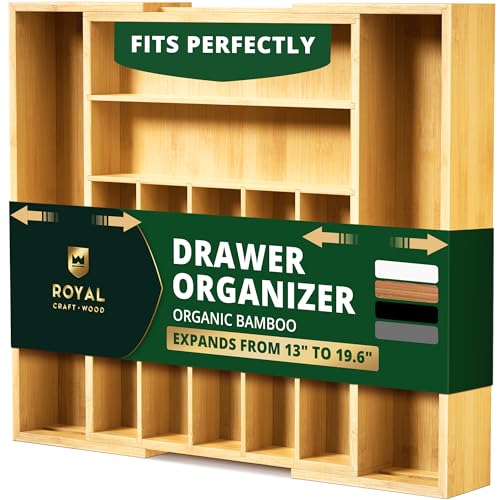
🌿 𝐄𝐗𝐏𝐀𝐍𝐃𝐀𝐁𝐋𝐄 𝐓𝐎 𝐅𝐈𝐓 𝐌𝐎𝐒𝐓 𝐒𝐓𝐀𝐍𝐃𝐀𝐑𝐃 𝐊𝐈𝐓𝐂𝐇𝐄𝐍 𝐃𝐑𝐀𝐖𝐄𝐑𝐒: Our deep bamboo drawer organizer is ideal for saving kitchen storage space, thanks to its adjustable storage drawers that expand from 17”x13” to 17x19.6” wide with 1.9” deep slots. Easy to use and ideal for helping to maximize kitchen storage space, simply pull apart from the sides for additional storage space and a more secure fit for wider drawers. Different sized compartments allow for standard silverware and large utensil placement
When a Budget Organizer Is Enough
A budget organizer is usually enough when you need basic separation for lightweight items. Pens, clips, hair ties, makeup samples, socks, underwear, tea bags, batteries, and small kitchen tools can often be managed with simple trays or bins.
When a Higher-Quality Organizer Makes Sense
A higher-quality organizer may be worth it when the drawer gets daily use, holds heavier items, or sits in a visible area. Kitchen utensil drawers, bathroom vanity drawers, jewelry drawers, and tool drawers often benefit from sturdier materials and a better fit.
Alternatives to Drawer Organizers
While drawer organizers are effective, other storage methods may suit some spaces better. Small bins or baskets can work inside drawers and offer more flexibility than fixed trays. They let you group similar items without forcing everything into narrow compartments.
Tiered trays or risers can help in shallow drawers where a traditional organizer does not fit well. By stacking items slightly, you can make better use of vertical space while keeping things visible.
You can also use small boxes, repurposed containers, removable dividers, or open shelving outside the drawer. Open shelving works well for items you use often and want to display, while drawer dividers are better for items you prefer to keep hidden.
DIY Drawer Organizer Ideas
If you want to organize a drawer without buying anything new, try using small boxes from packaging, clean food containers, cardboard dividers, or spare baskets. These options can work well for temporary setups or low-traffic drawers.
For a more polished DIY setup, cut cardboard or thin wood strips to create custom sections. This can be useful for odd-size drawers that do not fit standard organizers. Just make sure the dividers are smooth, stable, and easy to remove for cleaning.
Is a Drawer Organizer Worth It?
A drawer organizer is worth the investment if it solves a real problem in your daily routine. If you often misplace items, waste time searching, or feel annoyed every time you open a drawer, an organizer can provide quick relief by creating structure and improving access.
The benefits go beyond appearance. A well-organized drawer can help you complete tasks faster, protect belongings, reduce clutter, and make your space feel calmer. This is especially useful in high-use areas such as kitchens, bathrooms, offices, and bedrooms.
Still, the best choice depends on your needs. Some people benefit from high-quality organizers tailored to specific drawers. Others only need simple bins, baskets, or dividers. The goal is not to buy more storage products. The goal is to create a drawer system that works for the way you live.
If you are considering investing in a drawer organizer, you may also want to check out this article on 4 Top Bookends for Shelves. Having a well-organized space can make a big difference in your home, whether it is in the kitchen, office, or living room. Just like a drawer organizer can help keep your items in order, bookends can add style and function to your shelves. If you want to declutter and beautify your space, investing in both a drawer organizer and stylish bookends may be worth it.
Related Guides
Frequently Asked Questions
What is a drawer organizer?
A drawer organizer is a storage tool used to keep items in a drawer neat and easy to find. It usually has dividers, trays, bins, or compartments that separate items and prevent them from shifting around.
What are the benefits of using a drawer organizer?
Using a drawer organizer can help maximize drawer space, keep items accessible, reduce clutter, and protect items from damage. It also makes cleaning easier because you can lift out the organizer and wipe the drawer.
Are drawer organizers worth the investment?
Drawer organizers are worth it for people who value organization, speed, and easy access. They can save time and reduce frustration by keeping everyday items separated and in order.
What are the different types of drawer organizers available?
Common types include adjustable dividers, compartment trays, expandable organizers, modular bins, fabric inserts, bamboo organizers, acrylic containers, and custom drawer inserts. Some are made for specific items such as jewelry, utensils, makeup, tools, or office supplies.
Where can I purchase a drawer organizer?
Drawer organizers are available at home goods stores, department stores, office supply stores, furniture stores, and online retailers. They come in many materials and price ranges, so you can choose one that fits your drawer and budget.
How do I know what size drawer organizer to buy?
Measure the inside width, depth, and height of your drawer before buying. Then compare those measurements with the organizer dimensions and leave a little extra clearance so the drawer opens and closes smoothly.
Which drawer organizer material is best?
Plastic is easy to clean and budget-friendly. Bamboo and wood look more polished and work well in kitchens or visible drawers. Fabric is best for clothing and soft accessories. Acrylic is a good choice when you want a clean look and easy visibility.
