The Toyota Prius OBD system is essential for monitoring vehicle performance and emissions through various sensors. It employs standardized OBD-II protocols to detect issues, utilizing key sensors like the Oxygen Sensor and Mass Air Flow Sensor. Regular scans identify Diagnostic Trouble Codes (DTCs) such as P0420 and P0A80, which indicate specific problems requiring attention. Understanding these elements and employing tools like the Innova 5610 enhances diagnostics and maintenance practices. Further insights can provide a thorough understanding of ideal vehicle management.
Understanding the OBD System and Its Importance
The On-Board Diagnostics (OBD) system serves as a crucial component in modern vehicles, including the Toyota Prius, by continuously monitoring performance metrics and emissions output. This system employs standardized protocols, specifically OBD-II, which were introduced in 1996, ensuring compatibility across various makes and models for diagnostic purposes.
Understanding OBD trouble codes (DTCs) is essential for identifying potential issues, as these codes provide insights into engine performance, emissions, and other critical systems. Regularly checking OBD data can prevent costly repairs by detecting early signs of malfunction, facilitating timely maintenance and enhancing vehicle longevity.
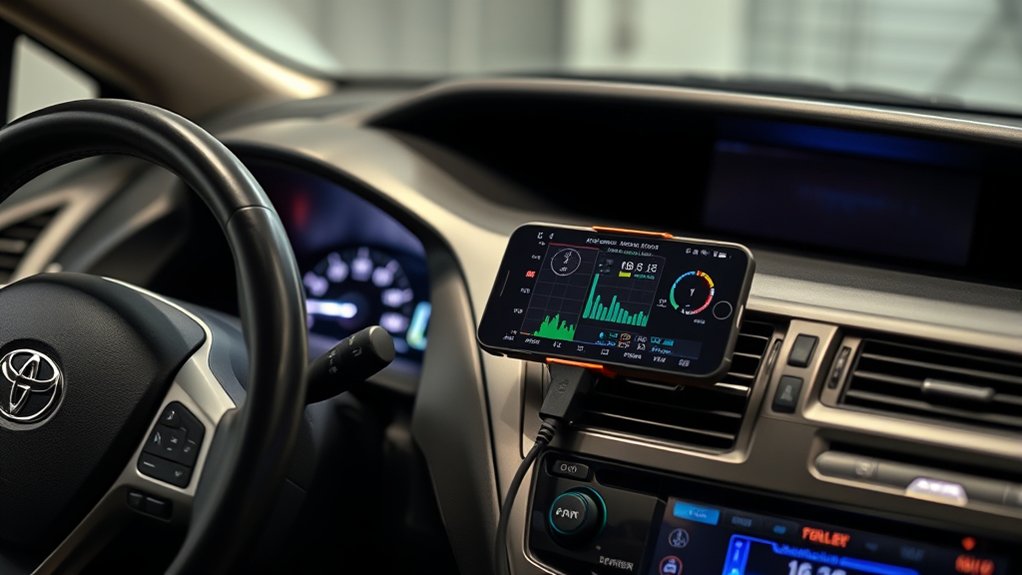
Many OBD2 scanners, designed for the Toyota Prius, can access live data streams, enabling users to monitor real-time sensor performance effectively. This diagnostic tool empowers vehicle owners to make informed decisions regarding maintenance, ultimately supporting both efficient vehicle operation and compliance with environmental regulations.
How OBD2 Scanners Work With the Toyota Prius
Connecting seamlessly to the Toyota Prius’s onboard diagnostic system, OBD2 scanners facilitate real-time monitoring of essential vehicle sensors and systems.
These tools are vital for diagnosing potential issues and enhancing vehicle performance.
Key features include:
- Diagnostic Trouble Codes (DTCs): Help identify issues related to the engine, transmission, ABS, and airbag systems.
- Full System Diagnostics: Many models, like the Innova 5610, provide extensive coverage specifically for Toyota vehicles.
- Live Data Display: Users can view real-time data from sensors, aiding effective troubleshooting.
- Wide Compatibility: Accesses diagnostic information across Toyota models from 1996 to 2024.
Key Sensors Monitored by the OBD System
Key sensors monitored by the OBD system in the Toyota Prius are crucial for maintaining peak vehicle performance and efficiency.
The Engine Coolant Temperature Sensor regulates engine temperature, preventing overheating and enhancing efficiency.
The Mass Air Flow (MAF) Sensor measures the air entering the engine, directly influencing fuel injection and combustion efficiency.
Oxygen Sensors (O2) monitor exhaust oxygen levels, improving fuel efficiency and minimizing emissions by providing essential feedback to the engine control unit.
The Vehicle Speed Sensor (VSS) tracks vehicle speed, supporting transmission and stability control.
Finally, the Throttle Position Sensor (TPS) determines the throttle valve position, influencing engine responsiveness.
For those seeking a thorough sensor functionality overview, understanding these components is critical.
Utilizing sensor troubleshooting tips can help identify issues early, while a detailed sensor replacement guide guarantees effective maintenance, empowering owners to maintain peak performance and efficiency in their Toyota Prius.
Common Diagnostic Trouble Codes (DTCs) for Prius Owners
While driving a Toyota Prius, owners may encounter various Diagnostic Trouble Codes (DTCs) that provide vital insights into the vehicle’s performance and potential issues.
Understanding these codes is essential for effective troubleshooting and maintenance.
Common DTCs for Prius owners include:
- P0420 – Catalytic converter efficiency; consider P0420 troubleshooting tips to assess exhaust system integrity.
- P0131 – O2 sensor circuit low voltage; conducting a P0131 causes analysis can pinpoint sensor failures or wiring issues.
- P3000 – Battery control system malfunction; exploring P3000 battery solutions is important for maintaining hybrid performance.
- P0A80 – Replace hybrid battery pack; indicates potential high-voltage battery failure.
Regularly checking these DTCs using an OBD2 scanner allows owners to make informed decisions, ensuring timely maintenance and extending the vehicle’s lifespan.
Why Regular OBD Scans Matter for Your Vehicle
Conducting regular OBD scans is vital for maintaining vehicle health and performance. These scans identify diagnostic trouble codes (DTCs) that signal potential issues, thereby preventing costly repairs. By aligning OBD scans with recommended maintenance intervals, typically every 5,000 miles, vehicle owners can guarantee timely detection of problems.
Regular OBD scans are essential for vehicle health, identifying issues early to prevent costly repairs and ensure optimal performance.
The ability to access real-time data from all vehicle sensors facilitates a thorough understanding of performance and health.
Moreover, regular diagnostics not only monitor emissions but also enhance fuel efficiency by addressing underlying issues early on. This proactive approach greatly contributes to maintenance benefits, as it simplifies tracking of service needs and reduces dependence on dealer services.
Ultimately, the cost-saving potential of regular OBD scans is substantial, empowering owners to manage their vehicles more effectively while optimizing overall performance.
Picking the Perfect OBD2 Scanner for Your Prius
Selecting the right OBD2 scanner for a Toyota Prius is fundamental for effective diagnostics and maintenance. A well-chosen scanner enhances user experience and facilitates troubleshooting.
To make an informed decision, consider the following:
- Compatibility: Confirm the scanner supports models from 1996 to 2024 for thorough diagnostic access.
- Diagnostic Capabilities: Opt for scanners that provide access to manufacturer-specific protocols, covering systems like ABS and airbags.
- Real-Time Data: Prioritize models that deliver live data and freeze frame capabilities to track performance effectively.
- Budget-Friendly Options: Look into models like the Innova 1000, which pairs with the RepairSolutions2 app, offering premium features without subscription costs.
How to Use the Innova 5610 OBD2 Scanner for Diagnostics
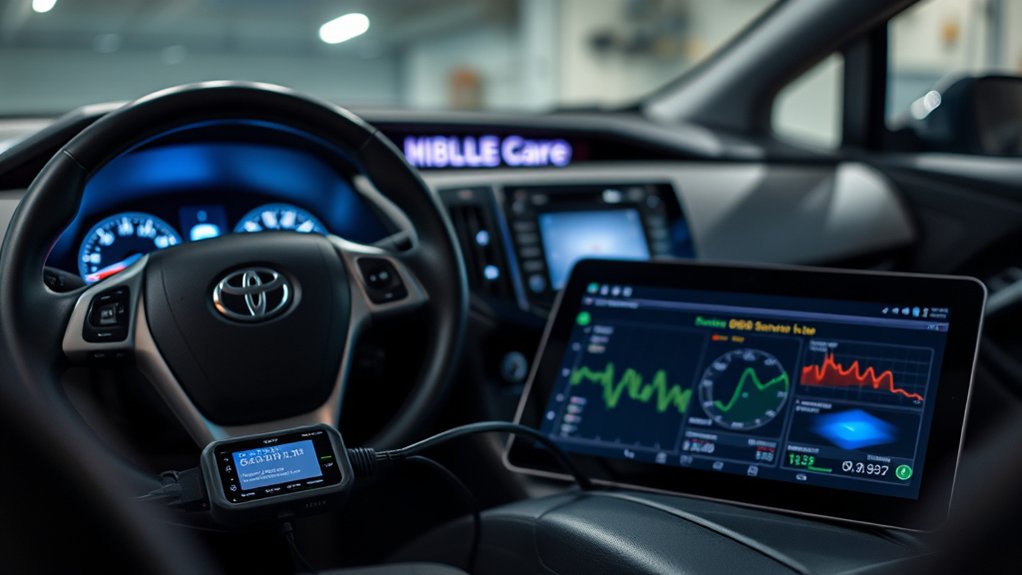
Utilizing the Innova 5610 OBD2 scanner for diagnostics on a Toyota Prius empowers users to access extensive vehicle data efficiently. The scanner setup is straightforward, allowing both professional mechanics and DIY enthusiasts to quickly connect to the vehicle’s OBD2 port.
Once connected, the Innova features full system diagnostics, covering critical components such as the engine, transmission, ABS, and airbag systems. Users can take advantage of live data streaming, which facilitates real-time monitoring of sensor data essential for effective troubleshooting techniques.
Additionally, the scanner supports active tests, enabling functions like fuel pump activation and throttle response checks. This thorough compatibility with Toyota models from 1996 to 2024 guarantees that various Prius generations are adequately supported, allowing for in-depth diagnostics and maintenance.
Interpreting Live Data From Your OBD Scanner
Interpreting live data from an OBD scanner is essential for diagnosing vehicle performance issues effectively. This real-time information enables informed troubleshooting and proactive maintenance.
The following key aspects of live data analysis enhance user understanding:
- Engine RPM: Monitors engine speed, vital for evaluating performance.
- Coolant Temperature: Indicates engine health and overheating risks.
- Fuel System Status: Provides insights into fuel efficiency and combustion issues.
- Sensor Performance: Assesses the functionality of various vehicle sensors.
Most OBD2 scanners display multiple sensor streams simultaneously, which allows users to monitor performance holistically.
Additionally, combining live data with freeze frame data—captured at the moment a trouble code is triggered—can pinpoint issues more accurately.
Understanding these parameters not only aids in troubleshooting techniques but also helps users identify potential problems before they escalate, ensuring ideal vehicle operation.
Common Problems Identified by OBD Data and Their Solutions
OBD data serves as a critical diagnostic tool for identifying common vehicle problems, particularly in the Toyota Prius. Among the prevalent issues, oxygen sensor failures often lead to reduced fuel efficiency, easily resolved by replacing the faulty sensor.
OBD data is essential for diagnosing issues in the Toyota Prius, with oxygen sensor failures notably impacting fuel efficiency.
In addition, diagnostic trouble codes (DTCs) linked to the catalytic converter may signal inefficiency, requiring repair or replacement to restore optimal function. A malfunctioning mass airflow sensor (MAF) can affect engine performance; cleaning or replacement generally rectifies this issue.
OBD data also highlights battery health problems in hybrid models, guiding users to test or replace the battery for enhanced reliability. Moreover, trouble codes associated with the ABS system may indicate sensor malfunctions or brake issues, necessitating prompt attention for safety.
Mastering sensor calibration techniques and employing effective troubleshooting strategies are essential for accurate OBD data interpretation, enabling Prius owners to maintain their vehicles efficiently.
Online Communities for Prius Owners Seeking OBD Insights
While traversing the complexities of vehicle diagnostics, many Toyota Prius owners turn to online communities for valuable insights into OBD scanner usage. These forums and social media groups offer significant community support benefits, enabling members to share knowledge and experiences regarding sensor issues.
Key advantages of engaging in these communities include:
- Expert Guidance: Access to seasoned users who provide troubleshooting strategies for specific diagnostic trouble codes (DTCs).
- Experience Sharing: Members share personal experiences that can enhance understanding of common problems.
- Collaborative Problem-Solving: Users are encouraged to ask questions, fostering a supportive environment for alternative solutions.
- Increased Confidence: Engagement enhances knowledge, empowering Prius owners in managing diagnostics and maintenance tasks.
Frequently Asked Questions
How Many Sensors Does a Toyota Prius Have?
The Toyota Prius boasts over 50 sensors, integral to its hybrid technology. Effective sensor maintenance and diagnostic procedures guarantee peak performance, fuel efficiency, and compliance with emissions standards, highlighting the vehicle’s advanced engineering and technological sophistication.
What Is the Best Scan Tool for a Toyota Prius?
Maneuvering through the diagnostic landscape, the Innova 5610 emerges as the premier scan tool for the Toyota Prius. Its extensive OBD functionality comparison and robust features surpass others, enhancing the user experience with seamless Toyota diagnostic apps.
What Is the Triangle of Death on a Prius?
The Triangle of Death on a Prius indicates critical issues, often linked to hybrid battery failures. Accompanied by warning lights, it necessitates retrieving diagnostic codes to identify and address underlying problems promptly for safe operation.
What Is the Most Common Problem With a Toyota Prius?
The most common problem with a Toyota Prius involves Prius battery issues, alongside hybrid system failures that affect performance. Consequently, fuel efficiency concerns arise, necessitating timely maintenance to mitigate costly repairs and guarantee peak functionality.
Conclusion
In traversing the intricate web of the Toyota Prius’s OBD system, owners are akin to modern-day detectives, unraveling the mysteries of their vehicle’s performance. By harnessing the power of OBD2 scanners and understanding key sensors, they can preemptively address issues that may otherwise lead to costly repairs. Just as a well-tuned engine purrs with efficiency, regular diagnostics guarantee peak performance, safeguarding both the vehicle and the driving experience, echoing the timeless wisdom of prevention over cure.