
A dash cam can only save useful footage if its memory card keeps up with loop recording, parking mode, heat, and repeated overwriting. The best microSD cards for dash cams prioritize endurance and compatibility before headline storage capacity.
For most drivers, the SanDisk High Endurance 128GB is the best-balanced pick because it combines 128GB of storage with a stated high-endurance recording life. The SanDisk High Endurance 64GB is the value pick when a shorter retention window is enough.
These picks were checked against current product listings, manufacturer specifications, endurance claims, speed classes, warranty terms, and dash cam compatibility requirements.
Dash Cam microSD Cards Compared
| Product | Best for | Capacity | Endurance claim | Speed class | Warranty |
|---|---|---|---|---|---|
|
Mid-range
|
Balanced daily dash cam use | 128GB microSDXC | Up to 10,000 hours of Full HD recording | Class 10, U3, V30 | 2-year limited |
|
Premium
|
Longest retention | 256GB microSDXC | Up to 20,000 hours of Full HD recording | Class 10, U3, V30 | 2-year limited |
|
Mid-range
|
Small-capacity write endurance | 32GB microSDHC | Up to 15,000 hours of Full HD recording | Class 10, U3, V30 | 3-year limited |
|
Budget
|
Lower-capacity endurance | 64GB microSDXC | Up to 5,000 hours of Full HD recording | Class 10, U3, V30 | 2-year limited |
|
Mid-range
|
Two-card rotation and spares | 128GB each, 2-pack | No dedicated endurance-hour rating stated | Class 10, V30, A1 | 5-year limited |
Best microSD Cards for Dash Cams: Our Top Picks
1. SanDisk High Endurance 128GB

Bottom line: A strong middle ground for daily driving, road trips, and parking mode when your dash cam supports 128GB microSDXC cards.
- Capacity: 128GB microSDXC, sets the available loop-recording space
- Endurance: Up to 10,000 hours of Full HD recording, frames the stated repeated-recording life
- Speed class: Class 10, U3, V30, supports sustained video recording in compatible hosts
- Transfer speed: Up to 100MB/s read, 40MB/s write, helps with supported recording and file transfers
- Warranty: 2-year limited, manufacturer coverage for the listed model
The 128GB High Endurance model balances retention and endurance without forcing you into the largest capacity. SanDisk designs the line for repeated video recording in dash cams and home-monitoring systems, and the 128GB card carries a stated rating of up to 10,000 hours of Full HD recording under the manufacturer’s conditions.
It also supports Class 10, U3, and V30 video performance. The advertised transfer ceiling is up to 100MB/s read and 40MB/s write, though real speeds depend on the host device and workload.
SanDisk markets the card as temperature-proof, waterproof, shock-proof, and X-ray-proof within its stated limitations. The current warranty for the High Endurance line is two years, so the older lifetime-warranty wording in the draft has been removed.
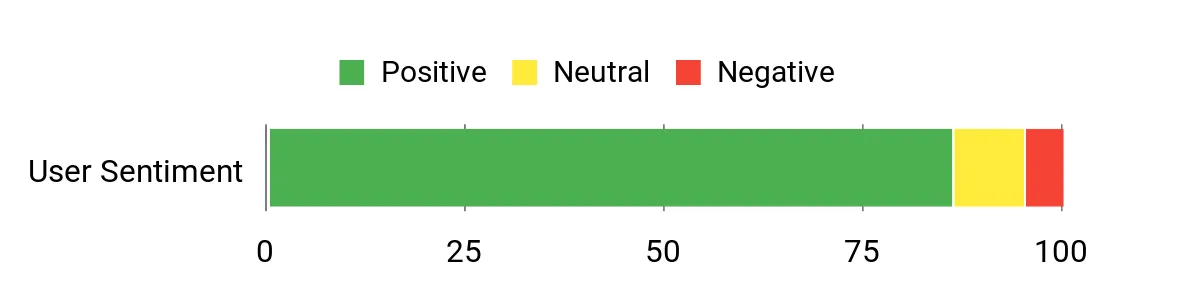
The chart below is retained from the original roundup as a historical editorial snapshot and is not a live product-data feed.
- 128GB capacity gives a useful retention window for many dash cams
- High Endurance line is built for repeated recording and rewriting
- Class 10, U3, and V30 support demanding video-write workloads
- Up to 100MB/s read and 40MB/s write
- Your dash cam must support 128GB microSDXC media
- The 10,000-hour figure applies to Full HD under stated conditions
- Less retention than the 256GB version
2. SanDisk High Endurance 256GB

Bottom line: Choose this capacity when your dash cam supports 256GB and longer loop retention matters more than minimizing card cost.
- Capacity: 256GB microSDXC, sets the available loop-recording space
- Endurance: Up to 20,000 hours of Full HD recording, frames the stated repeated-recording life
- Speed class: Class 10, U3, V30, supports sustained video recording in compatible hosts
- Transfer speed: Up to 100MB/s read, 40MB/s write, helps with supported recording and file transfers
- Warranty: 2-year limited, manufacturer coverage for the listed model
The 256GB High Endurance card doubles the storage capacity of the 128GB pick and carries a stated rating of up to 20,000 hours of Full HD recording. That gives high-resolution, dual-channel, and parking-mode users more room before loop recording overwrites older files.
Its speed positioning matches the smaller High Endurance capacities: Class 10, U3, and V30, with advertised transfers up to 100MB/s read and 40MB/s write. The extra value here is primarily capacity and the higher stated endurance figure, not faster headline transfer speeds.
SanDisk lists the same environmental protection positioning as the other High Endurance cards. The current High Endurance warranty is two years, and compatibility still depends on whether the dash cam accepts 256GB microSDXC media.
The chart below is retained from the original roundup as a historical editorial snapshot and is not a live product-data feed.

- 256GB capacity gives the longest retention in this roundup
- Up to 20,000 hours of Full HD recording under stated conditions
- Class 10, U3, and V30 ratings
- High Endurance design for repeated recording
- Some dash cams do not support 256GB cards
- Higher capacity is unnecessary if your camera caps storage lower
- The endurance figure is a manufacturer rating, not a guaranteed service life
3. SanDisk MAX Endurance 32GB
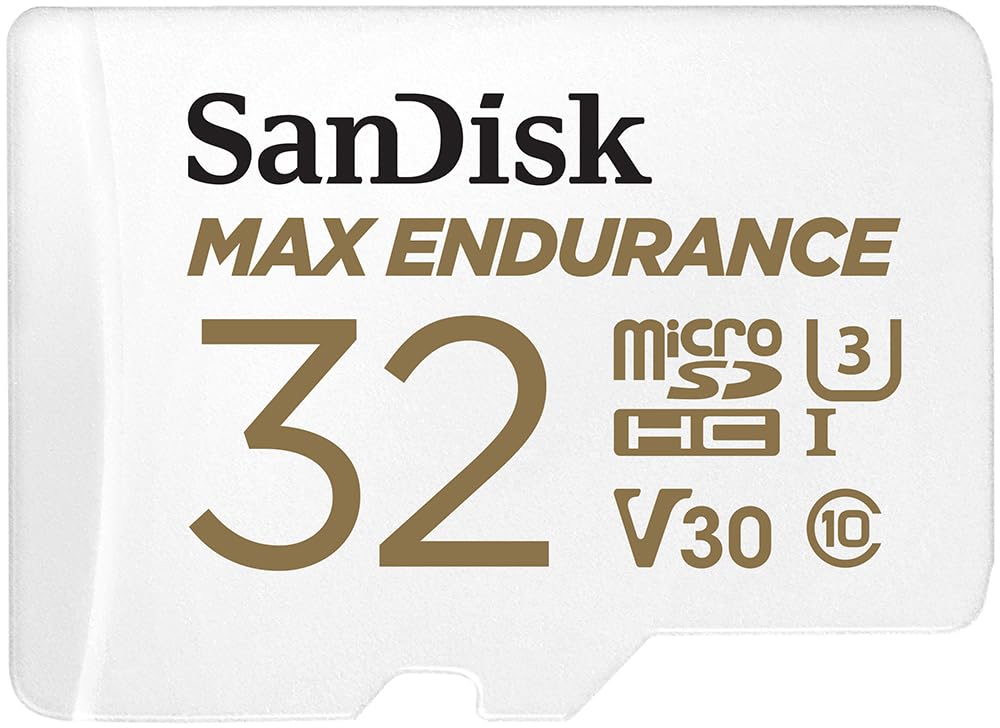
Bottom line: This is the endurance-focused small-capacity pick for compatible dash cams that overwrite frequently but do not need a long archive window.
- Capacity: 32GB microSDHC, sets the available loop-recording space
- Endurance: Up to 15,000 hours of Full HD recording, frames the stated repeated-recording life
- Speed class: Class 10, U3, V30, supports sustained video recording in compatible hosts
- Transfer speed: Up to 100MB/s read, 40MB/s write, helps with supported recording and file transfers
- Warranty: 3-year limited, manufacturer coverage for the listed model
SanDisk’s MAX Endurance line puts more emphasis on repeated recording life. The 32GB version is rated for up to 15,000 hours of Full HD recording under the stated conditions, while total recording hours are lower with 4K video.
The card is Class 10, U3, and V30 and is rated for up to 100MB/s read and 40MB/s write. Its 32GB capacity means footage will cycle out much sooner than it will on the 64GB, 128GB, or 256GB cards in this guide.
SanDisk markets MAX Endurance as temperature-proof, waterproof, shock-proof, and X-ray-proof within its stated limitations. The 32GB model carries a three-year limited warranty.
The chart below is retained from the original roundup as a historical editorial snapshot and is not a live product-data feed.

- MAX Endurance design prioritizes repeated recording cycles
- Up to 15,000 hours of Full HD recording for the 32GB model
- Class 10, U3, and V30 video ratings
- Three-year limited warranty
- 32GB provides the shortest retention window here
- High-resolution or multi-camera footage fills it quickly
- Total endurance hours are lower with 4K recording
4. SanDisk High Endurance 64GB

Bottom line: This is the simpler lower-capacity High Endurance choice when 64GB support is enough and you do not need the longer retention of 128GB or 256GB.
- Capacity: 64GB microSDXC, sets the available loop-recording space
- Endurance: Up to 5,000 hours of Full HD recording, frames the stated repeated-recording life
- Speed class: Class 10, U3, V30, supports sustained video recording in compatible hosts
- Transfer speed: Up to 100MB/s read, 40MB/s write, helps with supported recording and file transfers
- Warranty: 2-year limited, manufacturer coverage for the listed model
The 64GB High Endurance card keeps the same endurance-focused design and video-speed classes as the larger versions. SanDisk rates this capacity for up to 5,000 hours of Full HD recording under its stated conditions.
It supports Class 10, U3, and V30, with advertised transfers up to 100MB/s read and 40MB/s write. For a single-camera commuter setup, 64GB can be enough if you are comfortable with a shorter loop window.
The card carries the High Endurance line’s environmental protection positioning and a current two-year limited warranty. Compared with 128GB, the main sacrifice is retention rather than speed class.
The chart below is retained from the original roundup as a historical editorial snapshot and is not a live product-data feed.

- High Endurance design for repeated loop recording
- Class 10, U3, and V30 ratings
- Up to 100MB/s read and 40MB/s write
- Lower-capacity option for compatible dash cams
- Less retention than 128GB or 256GB cards
- High-resolution and multi-channel footage overwrites sooner
- The 5,000-hour rating applies to Full HD under stated conditions
5. Gigastone 128GB Micro SD Card 2-Pack

Bottom line: This two-pack makes sense when you want a spare or rotation set, but it is not as clearly endurance-focused as the SanDisk options above.
- Capacity: 128GB each, 2-pack, sets the available loop-recording space
- Endurance: No dedicated endurance-hour rating stated, frames the stated repeated-recording life
- Speed class: Class 10, V30, A1, supports sustained video recording in compatible hosts
- Transfer speed: Up to 95MB/s read, 40MB/s write, helps with supported recording and file transfers
- Warranty: 5-year limited, manufacturer coverage for the listed model
The linked Gigastone listing is a two-pack of 128GB microSDXC cards positioned for cameras, dash cams, drones, and other recording devices. The listing specifies Class 10, V30, and A1 performance, with advertised speeds up to 95MB/s read and 40MB/s write.
Two cards can be useful for rotation: you can remove one to save or copy footage while keeping another ready for the camera. The trade-off is that this listing does not state a dedicated continuous-recording endurance-hour figure.
Gigastone lists environmental resistance to water, shock, temperature, and X-rays and provides a five-year limited warranty. For nonstop parking mode or especially write-heavy use, a card with explicit endurance positioning remains the clearer fit.
The chart below is retained from the original roundup as a historical editorial snapshot and is not a live product-data feed.

- Two 128GB cards support rotation, spares, or multiple devices
- Class 10 and V30 video-speed positioning
- Up to 95MB/s read and 40MB/s write
- Five-year limited warranty
- No dedicated endurance-hour rating is stated for this linked model
- Not positioned as clearly for write endurance as the SanDisk endurance lines
- Dash cam file-system requirements still need to be checked
SanDisk High Endurance 128GB vs SanDisk High Endurance 64GB: Is the Upgrade Worth It?
The core trade-off is retention. Both cards share the same High Endurance positioning, speed classes, advertised transfer speeds, and two-year limited warranty, but the 128GB version gives you twice the storage and a higher stated Full HD endurance figure.
- Capacity: 128GB stores roughly twice as much data as 64GB before the loop cycles.
- Endurance rating: SanDisk states up to 10,000 Full HD hours for 128GB versus 5,000 for 64GB.
- Speed: Both are Class 10, U3, V30 with up to 100MB/s read and 40MB/s write.
- Best fit: Choose 128GB for more retention; choose 64GB when shorter loops are acceptable.
Which Dash Cam microSD Card Should You Buy?
- Balanced everyday use: get the SanDisk High Endurance 128GB.
- Longest retention: get the SanDisk High Endurance 256GB.
- Small-capacity write endurance: get the SanDisk MAX Endurance 32GB.
- Lower-capacity value: get the SanDisk High Endurance 64GB.
- Card rotation or a spare: consider the Gigastone 128GB Micro SD Card 2-Pack.
How We Chose
- Endurance first: continuous overwrite workloads matter more than raw capacity for a dash cam.
- Compatibility: capacity, microSDHC versus microSDXC support, and file-system requirements can decide whether a card works at all.
- Video-write capability: Class 10, U3, and V30 ratings were compared where the exact model lists them.
- Manufacturer support: current warranty terms and environmental protection claims were checked against manufacturer information.
- Source discipline: manufacturer specifications and current listings were prioritized; isolated owner comments were not treated as product facts.
Dash Cam microSD Card Buying Guide
Endurance Matters More Than General Storage Speed
Dash cams write, erase, and write again for long periods. That workload is different from occasionally saving photos or files. An endurance-rated card is designed around repeated recording, so start there for daily loop recording or parking mode. For the broadest balance in this group, the SanDisk High Endurance 128GB is the natural middle ground.
Choose Capacity Around Retention and Camera Support
More capacity usually means a longer window before old footage is overwritten, but only if your dash cam supports that size. A 64GB card can suit a simple single-camera setup, 128GB gives more breathing room, and 256GB is useful when retention is the priority. Never assume a larger card will work in an older camera.
Understand U3 and V30
U3 and V30 are speed-class indicators for sustained video writing in compatible devices. They can matter for higher-resolution recording, but they are not substitutes for endurance or compatibility. The dash cam maker’s card requirement should always take priority over a higher-looking speed label.
Check microSDHC, microSDXC, and File-System Requirements
The 32GB MAX Endurance card is microSDHC, while the 64GB, 128GB, and 256GB cards here are microSDXC. Your dash cam may also expect a specific file system or may format the card itself. Follow the camera manual rather than assuming FAT32 or exFAT is correct for every device.
Format and Inspect the Card Regularly
When the dash cam manufacturer recommends in-camera formatting, use that method before first recording and at the maintenance interval in the manual. Check saved clips periodically, especially after a card warning or unexpected shutdown. Back up important incident footage before formatting or before loop recording can overwrite it.
Environmental Protection and Warranty
Cars can expose memory cards to temperature swings and vibration. SanDisk and Gigastone publish environmental-resistance claims for the models or product lines covered here, but those claims come with manufacturer conditions. Warranty length also varies, so treat it as one buying factor rather than proof that a card will last a specific number of years in your dash cam.
Mistakes to Avoid When Buying a Dash Cam microSD Card
- Buying by capacity alone: prioritize endurance and camera compatibility first.
- Ignoring the camera limit: check the maximum supported card size before ordering.
- Assuming V30 means high endurance: speed class and write-cycle endurance describe different things.
- Skipping formatting guidance: use the file system and formatting method your dash cam requires.
- Leaving important clips on the loop: copy incident footage before it can be overwritten.
FAQs
What type of microSD card is best for a dash cam?
A high-endurance microSD card is usually the better fit because dash cams repeatedly write and overwrite video. Capacity still matters, but first confirm the camera’s supported card type and maximum size. In this comparison, the SanDisk High Endurance 128GB offers the strongest balance of endurance positioning, practical capacity, and V30/U3 video-speed support.
Do I need V30 or U3 for a dash cam?
Use the speed class your dash cam manufacturer requires. V30 and U3 indicate sustained video-write capability that can help with higher-resolution recording, but neither rating guarantees long write-cycle life or universal compatibility. A card can have V30 and still lack a dedicated endurance rating, so check speed, endurance, and host requirements together.
What capacity do I need for a dash cam?
Capacity depends on resolution, bitrate, channel count, parking mode, and how long you want footage retained before overwrite. A 64GB card can suit shorter single-camera loops, 128GB is a practical middle ground, and 256GB gives more retention when supported. A 32GB card cycles sooner and works best when short retention is acceptable.
Should I format the microSD card in the dash cam?
Yes, when the dash cam manufacturer recommends in-camera formatting. It lets the camera create the file structure it expects and can reduce avoidable compatibility problems. Follow the manual for first-use formatting and maintenance intervals. Save any important clips somewhere else before formatting because the process erases the card’s existing files.
How can I reduce the risk of lost dash cam footage?
Start with a compatible endurance-rated card from a reputable seller, then format it as the dash cam maker directs. Check recordings periodically instead of assuming every trip saved correctly. Back up important clips soon after an incident, and replace a card that repeatedly shows write errors, missing files, recognition problems, or other persistent recording faults.
Is a two-pack better than one high-endurance card?
A two-pack is useful when you want rotation, a spare, or cards for two compatible devices. It is not automatically better for continuous recording. The Gigastone 128GB 2-Pack offers two V30 cards, but the linked model does not state a dedicated endurance-hour rating, so heavy parking-mode users may prefer an explicitly endurance-rated card.
How Buyers Typically Choose
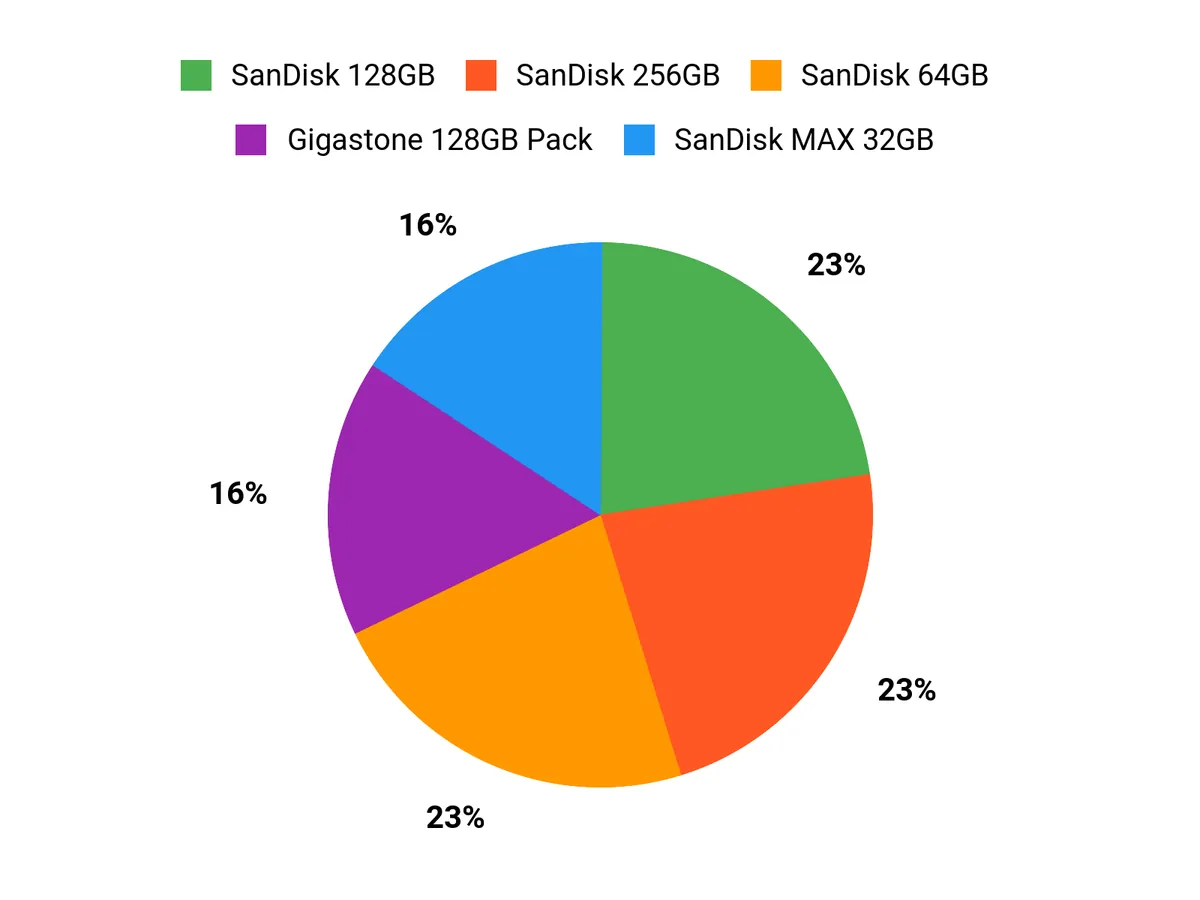
Start with your dash cam’s supported capacity, then decide how much retention you need. The 128GB High Endurance card is the balanced choice, 256GB favors longer retention, 64GB keeps the endurance focus at a lower capacity, and 32GB MAX Endurance prioritizes stated write-cycle life in a small card. The Gigastone two-pack is more useful when rotation or a spare matters.
Detailed Specs Snapshot
| Product Name | Image | Capacity | Endurance Position | Speed Class | Claimed Performance | Warranty / Important Notes |
|---|---|---|---|---|---|---|
| SanDisk High Endurance 128GB |
|
128GB microSDXC | Up to 10,000 hours of Full HD recording | Class 10, U3, V30 | Up to 100MB/s read, 40MB/s write |
|
| SanDisk High Endurance 256GB |
|
256GB microSDXC | Up to 20,000 hours of Full HD recording | Class 10, U3, V30 | Up to 100MB/s read, 40MB/s write |
|
| SanDisk MAX Endurance 32GB |
|
32GB microSDHC | Up to 15,000 hours of Full HD recording | Class 10, U3, V30 | Up to 100MB/s read, 40MB/s write |
|
| SanDisk High Endurance 64GB |
|
64GB microSDXC | Up to 5,000 hours of Full HD recording | Class 10, U3, V30 | Up to 100MB/s read, 40MB/s write |
|
| Gigastone 128GB Micro SD Card 2-Pack |
|
128GB each, 2-pack | No dedicated endurance-hour rating stated | Class 10, V30, A1 | Up to 95MB/s read, 40MB/s write |
|
Final Verdict
The best microSD card for dash cams should match your camera first and your desired retention second. For most users in this comparison, the SanDisk High Endurance 128GB gives the strongest balance of practical capacity, explicit endurance positioning, and V30/U3 support.
If you need less capacity, choose the SanDisk High Endurance 64GB. For longer retention in a supported camera, step up to the SanDisk High Endurance 256GB.