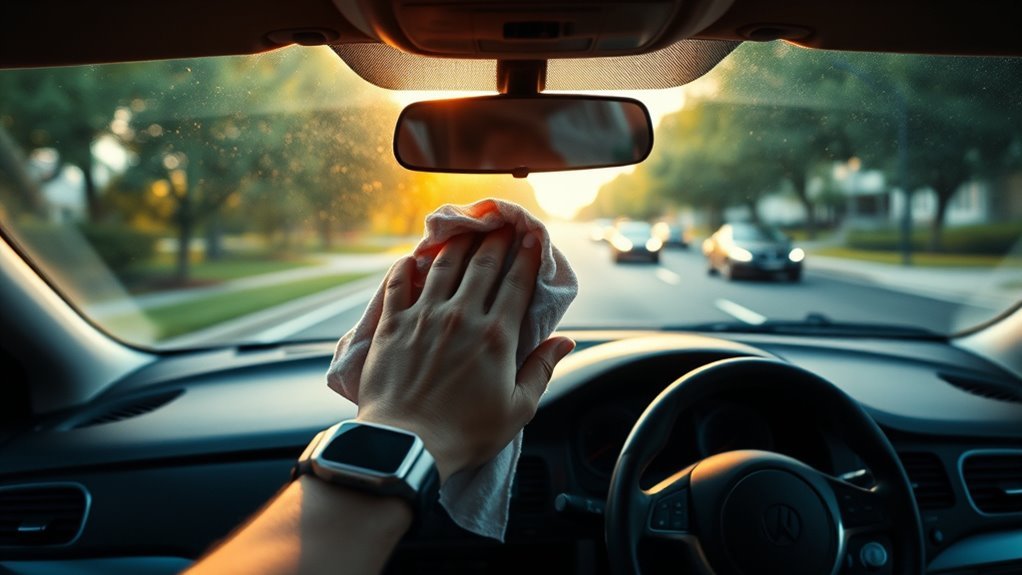
The best way to clean the inside of a car windscreen is to work on cool glass with a clean microfiber towel, a tint-compatible automotive glass cleaner, and a second dry towel for the final buff. Interior haze is often oily rather than dusty, so use only enough cleaner to loosen the film, wipe the entire glass methodically, and dry it before the product can leave residue.
Quick Answer
Park in the shade and let the windscreen cool. Remove loose dust with a dry microfiber towel, apply a tint-safe automotive glass cleaner to a second towel, and wipe the inside glass in overlapping strokes. Finish immediately with a separate dry microfiber towel, then inspect the windscreen from several angles for haze or streaks.
Key Takeaways
- Use clean microfiber towels and an automotive glass cleaner that is compatible with any tint or coating on the windscreen.
- For interior cleaning, applying cleaner to the towel helps control overspray around the dashboard, electronics, and windshield-mounted cameras.
- Use one towel to loosen and remove grime and a separate dry towel to remove remaining moisture and residue.
- Work on cool glass out of direct sunlight so the cleaner does not evaporate before it can be wiped away.
- If greasy haze quickly returns, investigate the cause instead of repeatedly adding more cleaner.
At a Glance
| Time Required | About 10–15 minutes for a typical windscreen |
| Difficulty | Easy |
| Tools Needed | Two or more clean microfiber towels, compatible automotive glass cleaner, optional reach tool |
| Cost | Low; usually only cleaner and microfiber towels are required |
What Tools Do You Need to Clean a Windshield?
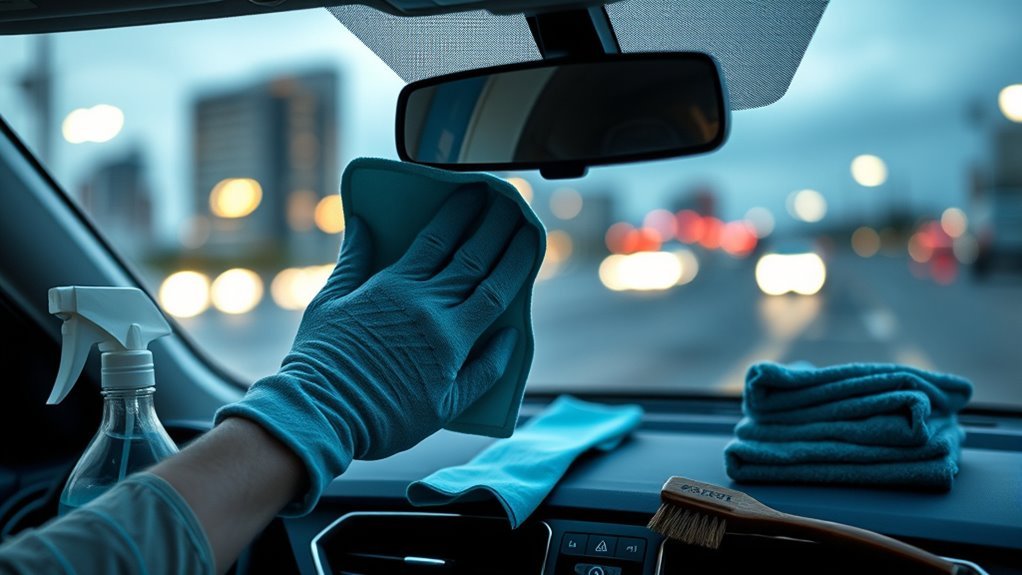
A small set of clean, surface-safe tools makes windshield cleaning easier and reduces the chance of simply moving oily residue from one part of the glass to another. A dedicated glass microfiber towel or waffle-weave microfiber works well because it absorbs liquid while leaving relatively little lint.
Use a glass cleaner specifically labeled for automotive use and check its compatibility with any aftermarket window film or glass coating. Products such as Windex Ammonia-Free Glass Cleaner and Meguiar’s Perfect Clarity Glass Cleaner are marketed for automotive glass and tinted windows.
The finishing towel matters as much as the cleaner: once a towel becomes damp or contaminated, switch to a clean, dry section instead of continuing to spread residue.
A reach-and-clean tool is useful for the deep lower corners of a steeply raked windscreen. Keep separate towels for the cleaning pass and dry finishing pass. If possible, also keep interior-glass towels separate from towels used with waxes, dressings, or exterior detailing products.
[Amazon Products Picked for You]
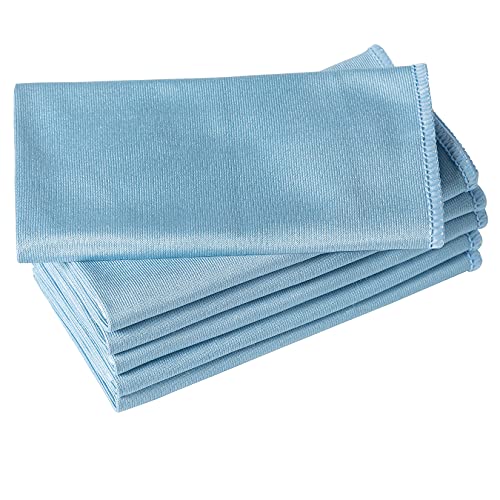
ABSORBENT & FAST DRYING - Microfiber material provides super absorbent water ability of the cloths makes quick drying large surface. They deliver extreme absorbency, so at the same time ensure quick drying.

80/20 Blend (370gsm) Professional Lint-Free, Streak-Free Microfiber Waffle-Weave Towels With Overlock Stitched Edge and Over 300,000 Fibers per Square Inch.

Pack includes 2 blue dual-sided automotive glass cleaner towels measuring 16 inches by 16 inches for your car detailing kit, home, and other glass surfaces
Why Does the Inside of a Windshield Get Hazy?
The film on the inside of a windscreen is often a mixture of dust and oily contamination. Interior plastics, vinyl, dashboard products, fingerprints, cooking or drink vapors, cigarette smoke, and vaping residue can all contribute to a visible film. Heat can make the buildup more noticeable, which is why a windshield may look clean in the garage but suddenly appear hazy when low sunlight or headlights strike it.
Because the contamination can be oily, repeatedly wiping it with a damp or dirty cloth often spreads the film rather than removing it. A clean first towel should loosen and pick up the contamination; a separate dry towel should then remove the remaining cleaner before it dries.
Note: If an oily or greasy film returns unusually quickly and the vehicle also has a sweet coolant-like odor, unexplained coolant loss, persistent window fogging, or damp carpeting, cleaning may not be the whole problem. AAA notes that recurring oily windshield film can sometimes be associated with a small heater-core coolant leak. Have the vehicle inspected if those symptoms are present.
Check Tint, Coatings, and the Camera Area First
Before choosing a cleaner, determine whether the inside surface has aftermarket window film or another applied coating. Factory-tinted glass and aftermarket tint film are not necessarily maintained in the same way, and window-film manufacturers publish their own care instructions.
For example, XPEL recommends a microfiber towel and, when needed, a mild non-ammonia glass cleaner for its automotive film. 3M publishes different care guidance for its films and allows certain neutral, non-abrasive cleaners. Because products differ, an ammonia-free, non-abrasive automotive cleaner is a sensible general-purpose choice, but the tint manufacturer’s or installer’s directions should take priority.
Warning: Many newer vehicles have a forward-facing camera or other equipment near the rear-view mirror. Do not spray cleaner onto the camera lens, touch the lens, or soak the surrounding housing. Toyota’s current owner guidance specifically warns against allowing glass cleaner to contact the front-camera lens. Check your own vehicle owner’s manual for model-specific instructions.
If window film has just been installed, do not assume it is ready for cleaning. Curing instructions vary by film and climate. Follow the installer or film manufacturer’s waiting period before cleaning or operating the affected window.
[Amazon Products Picked for You]

NEW WINDEX AUTOMOTIVE: Windex Auto Spray Cleaner lets you drive in comfort and confidence at your convenience

CAR & AUTO GLASS CLEANER: Cuts through fingerprints, smudges, grease, and road film on car windows and windshields. Dries streak-free with no residue.

STREAK FREE GLASS CLEANER (CLD30016) – Professional-grade formula cleans glass, windows, and mirrors without streaks or residue, leaving crystal-clear visibility on automotive and household surfaces.
How Do You Clean the Inside of a Windshield?
For most cars, the most reliable method is to remove loose dust first, clean with a lightly dampened microfiber towel, and immediately finish with a different dry towel. Using too much liquid makes the job harder because the cleaner can run into the dashboard and leaves more moisture to buff away.
Gather Proper Cleaning Gear
Prepare a compatible automotive glass cleaner, at least two clean microfiber towels, and an optional reach tool. Waffle-weave or tightly woven glass towels are useful because they provide good contact with the glass while producing little lint.
| Item | Purpose | Best Practice |
|---|---|---|
| Automotive glass cleaner | Loosens oily film and fingerprints | Check tint/coating compatibility |
| Glass microfiber towel | Cleans with low lint | Use a clean towel free of wax and dressings |
| Second dry towel | Removes residual moisture and streaks | Keep completely dry until the finishing pass |
| Reach tool | Reaches lower corners | Use a clean removable bonnet or microfiber pad |
Work in shade or a garage and let hot glass cool first. SC Johnson also recommends cleaning automotive windows when the surface is cool and out of direct sunlight whenever possible.
Remove Loose Dust First
Before adding liquid, give the inside glass a light pass with a clean, dry microfiber towel. This removes loose dust that would otherwise become suspended in the cleaner and spread across the windscreen.
Wipe the dashboard first if it is dusty, but do not reuse a dashboard towel on the glass. Interior protectants and dressings can transfer from the towel to the windscreen and create exactly the type of greasy haze you are trying to remove.
Wipe And Buff Glass
For an interior windshield, lightly spray the automotive glass cleaner onto the cleaning towel rather than saturating the glass. This is an overspray-control technique: it reduces the chance of cleaner landing on the dashboard, instrument screens, trim, or camera housing. If the product label gives different application directions, follow the manufacturer’s directions.
Fold the towel into quarters so several clean working faces are available. Wipe the glass with overlapping side-to-side strokes, working from one section to the next. Moderate pressure is usually enough; aggressive scrubbing is unnecessary and should be avoided on window film.
Before the cleaner dries, switch to the second dry microfiber towel. Buff the same section until no visible moisture or haze remains. Rotate to a fresh part of the towel frequently. If the finishing towel becomes damp, replace it with another dry one.
Pro Tip: Sitting in the passenger seat often makes the center and driver’s side of the windscreen easier to reach because the steering wheel is no longer in the way. A reach tool can handle the narrow lower edge where the glass meets the dashboard.
Check For Hidden Streaks
After cleaning, inspect the glass from the driver’s seat, passenger seat, and outside the vehicle. Change your viewing angle so reflected light travels across the glass rather than looking only straight through it.
Daylight is useful for revealing light haze, but the glass does not need to be hot or exposed to strong direct sun while you are actually applying cleaner. A flashlight held at an oblique angle can also reveal smears indoors.
If a streak remains, use a fresh dry section of microfiber first. If that does not remove it, lightly re-clean only the affected area and buff it dry again.
How Do You Clean the Outside of a Windshield?
The outside surface faces different contamination, including road film, insects, tree residue, dust, mineral deposits, and material transferred by the wiper blades. Start with cool glass and an automotive glass cleaner suitable for any coating already on the windshield.
Unlike the interior, direct application to the exterior glass is acceptable when permitted by the product instructions and overspray is controlled. Wipe the cleaner away with a clean microfiber towel and follow with a separate dry towel.
Choose the Right Cleaner
Select a cleaner intended for automotive glass. If the windscreen has a hydrophobic coating, ceramic treatment, or other specialty product, follow that coating manufacturer’s maintenance requirements instead of assuming every glass chemical is compatible.
A dedicated microfiber towel helps prevent exterior road grime from contaminating towels used inside the cabin. Different-colored towels can make this separation easier: for example, keep one set only for exterior glass and another only for interior glass.
Normal glass cleaner removes ordinary dirt and oily road film, but hard-water spots are mineral deposits and may require a compatible mineral- or water-spot remover. Do not aggressively scrape coated or filmed surfaces unless the relevant manufacturer specifically allows it.
Wipe Vertically, Buff Dry
One useful detailing technique is to use one wiping direction outside and a different direction inside. For example, clean the interior horizontally and the exterior vertically. If a streak remains, its direction immediately helps identify which surface needs another pass.
This direction difference is a troubleshooting aid rather than a requirement for the cleaner to work. What matters most is complete coverage, a clean towel, and a final dry buff before residue dries onto the glass.
Also inspect the wiper blades. If they carry oily dirt, wipe them with a product and method approved by the blade manufacturer so they do not immediately transfer contamination back onto freshly cleaned glass.
How Do You Remove Windshield Streaks and Haze?
Persistent streaks usually indicate that something remains on the glass: excess cleaner, oily film, dirty towel residue, lint, dashboard dressing, smoke residue, or minerals on the exterior surface. Adding more cleaner without identifying the contamination can make the problem worse.
For streak-free glass, use the least cleaner needed to loosen the contamination, then remove both the dirt and the remaining liquid with a genuinely clean, dry towel.
- Try a dry buff first. A fresh dry microfiber towel can remove light cleaner residue without another wet pass.
- Re-clean oily sections. Apply a small amount of compatible glass cleaner to a clean towel and work the affected area again.
- Use a fresh finishing towel. Once a towel has absorbed cleaner and oily film, it may begin redepositing both.
- Inspect at an angle. Low-angle light makes faint streaks easier to locate.
For particularly stubborn oily residue on bare glass, isopropyl alcohol can be useful when used appropriately. 3M includes isopropyl or rubbing alcohol among acceptable cleaning options in some of its window-film care guidance. However, aftermarket films and coatings differ, so check their care instructions before using alcohol or any stronger solvent.
Note: Avoid abrasive household cleaning pads, melamine foam, razor blades, aggressive polishing compounds, or strong solvents on unknown tint films or coated glass. A method that is acceptable on bare exterior glass may permanently mark a softer film applied to the inside surface.
Which Glass Cleaner Is Safe for Car Windows?
A non-abrasive automotive glass cleaner is the simplest choice. If the vehicle has aftermarket tint and you do not know the film manufacturer’s specific requirements, an ammonia-free cleaner labeled as tint-safe is a conservative option.
Do not treat all products sold under one brand name as having the same ingredients. SC Johnson currently lists Windex Ammonia-Free Glass Cleaner separately from other Windex formulas and specifically recommends the ammonia-free product for automotive windows, including tinted windows.
That means the FAQ claim that modern Windex formulas generally “lack ammonia” is not reliable. Some Windex Original formulations list ammonium hydroxide, commonly referred to as ammonia. If you want to use Windex in a vehicle, choose the specific ammonia-free product recommended by the manufacturer rather than assuming any blue glass cleaner has the same formula.
Window-film makers can also differ. 3M states that some of its cured automotive films can tolerate commercially available neutral, non-abrasive cleaners, including some ammonia-containing products, while XPEL recommends mild non-ammonia cleaner. Follow the instructions for the film actually installed on your vehicle.
[Amazon Products Picked for You]
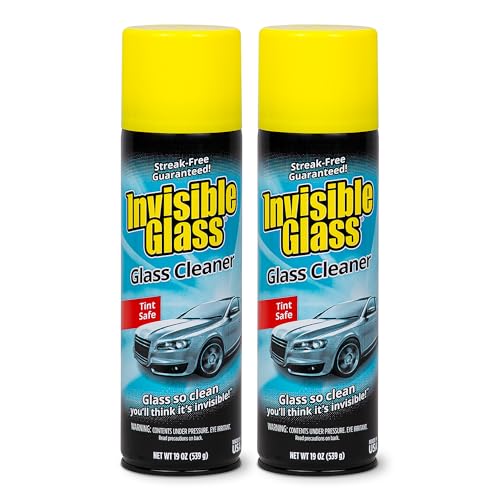
PROUDLY MADE IN THE USA: Invisible Glass is formulated, manufactured, and distributed in the USA. We use premium ingredients to deliver performance and reliability you can trust.
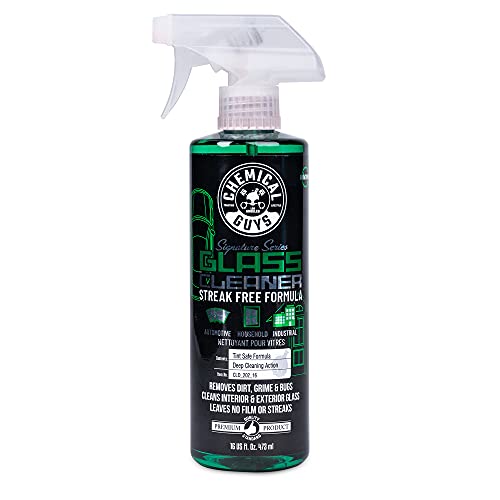
Streak-Free Formula (CLD_202_16SW) - Advanced ammonia-free and streak free glass cleaner that delivers crystal clear clarity without streaks, safe for tinted glass, windows, and mirrors inside or out

CAR & AUTO GLASS CLEANER: High-performance automotive glass cleaner removes fingerprints, smudges, grease, and road film from car windows and windshields for a crystal-clear, streak-free finish
What Windshield Cleaning Mistakes Should You Avoid?
Most streak problems come from technique, contaminated towels, excessive product, or incompatible chemicals rather than from the glass itself.
A clean towel, cool glass, controlled product use, and a complete dry buff prevent more streaks than simply applying additional cleaner.
- Using a dirty microfiber towel: Towels previously used with wax, interior dressing, tire products, or fabric softener can transfer residue to the glass.
- Using too much cleaner: Excess liquid takes longer to remove and is more likely to dry into visible residue.
- Spraying heavily inside the cabin: Direct spraying is not universally prohibited, but applying cleaner to the towel gives better control around dashboards, displays, vents, and electronics.
- Using an incompatible chemical: Tint film and glass coatings have manufacturer-specific cleaning requirements.
- Scrubbing with abrasive materials: Abrasives can scratch window film and may damage coatings.
- Cleaning hot glass in strong sun: Fast evaporation can make streak-free wiping more difficult.
- Touching a windshield camera lens: Keep glass cleaner and hands away from driver-assistance camera lenses unless the vehicle manufacturer gives a specific cleaning procedure.
Microfiber is usually preferable because it is reusable, absorbent, and low-lint when properly cared for. However, it is more accurate to avoid dirty or abrasive paper products than to claim that every paper towel will necessarily scratch glass. 3M’s published window-film guidance permits certain clean, non-abrasive paper towels while discouraging poor-quality paper and newspaper for some applications.
How Do You Inspect the Glass for a Clear Finish?
Inspecting the windscreen is part of the cleaning process because faint residue can disappear when viewed straight ahead and become obvious only when sunlight, streetlights, or oncoming headlights strike the glass.
Start in the driver’s normal seating position, then move to the passenger side. Look through the glass and across it at an angle. Inspect the lower corners, the area around the rear-view mirror, and the perimeter where towels may not have made full contact.
If you used horizontal strokes inside and vertical strokes outside, the orientation of a remaining streak can help identify which side needs attention. Re-clean only the affected area with a fresh towel rather than soaking the entire windshield again.
Finally, make sure there are no drips on the dashboard or surrounding trim and that nothing has been disturbed around a windshield-mounted camera or sensor.
How Do You Keep the Inside Windshield Clear Longer?
Clean interior glass when you first notice haze instead of waiting until glare becomes distracting. The ideal frequency depends on climate, vehicle age, smoking or vaping, interior products, and how quickly film accumulates.
- Keep a dedicated pair of clean glass towels separate from other detailing towels.
- Wash microfiber without fabric softener, which can leave residue on the fibers.
- Avoid spraying dashboard dressings toward the windshield.
- Remove fingerprints promptly rather than spreading them with a dry hand or dirty cloth.
- Keep the cabin filter and climate-control system maintained according to the vehicle manufacturer’s schedule.
- Investigate unusually fast-returning greasy haze instead of continually masking it with more cleaner.
Frequently Asked Questions
What is the best thing to clean the inside of my car windscreen?
Use a clean microfiber towel with a non-abrasive automotive glass cleaner that is compatible with any tint or coating on the windscreen. Apply a small amount to the towel, wipe the glass methodically, and finish with a separate dry microfiber towel.
How do you get rid of haze on the inside of a windshield?
First remove loose dust with a dry microfiber towel. Then clean the oily film with a compatible automotive glass cleaner and immediately buff it dry with a second towel. For stubborn residue, repeat the process with fresh towel surfaces instead of using more and more cleaner.
What is the best way to clean the inside of my car windshield without streaks?
Work on cool glass, use one microfiber towel lightly dampened with cleaner, wipe in overlapping straight strokes, and use a second completely dry towel before the cleaner dries. Fold and rotate both towels so you are continually working with clean surfaces.
Can I use Windex on the interior of my car windshield?
Use the specific product rather than relying on the Windex brand name alone. SC Johnson recommends Windex Ammonia-Free Glass Cleaner for vehicle windows and says it is suitable for tinted automotive glass. Windex Original formulations are not the same as Windex Ammonia-Free.
Can I use rubbing alcohol on the inside of a windshield?
Isopropyl or rubbing alcohol can remove stubborn oily residue from compatible surfaces, but do not assume it is suitable for every aftermarket tint or glass coating. Check the film or coating manufacturer’s instructions first and keep solvents away from interior trim and electronics.
Should I spray glass cleaner directly onto the inside windshield?
Some glass-cleaner manufacturers permit direct application, so it is not universally wrong. Inside a vehicle, however, spraying the towel usually gives better control and reduces overspray onto the dashboard, electronics, trim, and windshield-mounted camera housing.
Why does greasy windshield haze keep coming back?
Interior materials, dashboard products, smoke, vaping residue, fingerprints, and other cabin contamination can rebuild film over time. If greasy haze returns unusually quickly along with a sweet odor, coolant loss, damp carpeting, or persistent fogging, have the vehicle inspected because a heater-core coolant leak is another possible cause.
Sources
- SC Johnson — Windex Ammonia-Free Glass Cleaner — automotive glass and tint compatibility guidance.
- 3M Automotive Window Film Support — window-film cleaning and maintenance guidance.
- XPEL Product Care — aftermarket automotive window-film cleaning recommendations.
- Meguiar’s Perfect Clarity Glass Cleaner — automotive and window-tint-safe glass-cleaner guidance.
- Toyota 2026 Corolla Hatchback Owner Guidance — precautions for cleaning near the windshield-mounted front camera.
- AAA — The Best Way to Wash Your Car’s Windshield — interior-glass cleaning and recurring oily-film troubleshooting.
Conclusion
A clear windscreen depends more on clean tools, compatible products, and complete drying than on aggressive scrubbing. Work on cool glass, remove loose dust first, use a controlled amount of automotive glass cleaner, and finish with a separate dry microfiber towel. Pay special attention to aftermarket tint, coatings, and windshield-mounted cameras. If haze keeps returning despite proper cleaning, identify the source rather than repeatedly covering it with more product.
