
A Camry Hybrid does not always use the usual under-hood battery posts. The positive jump point is often inside the fuse relay box, where a marked metal terminal provides access for a jump pack or cable clamp. The negative lead goes to a solid chassis ground, not a random plastic cover. That setup matters, because one wrong connection can stop the process before the READY light ever appears.
Jump-Start a 2025 Camry Hybrid
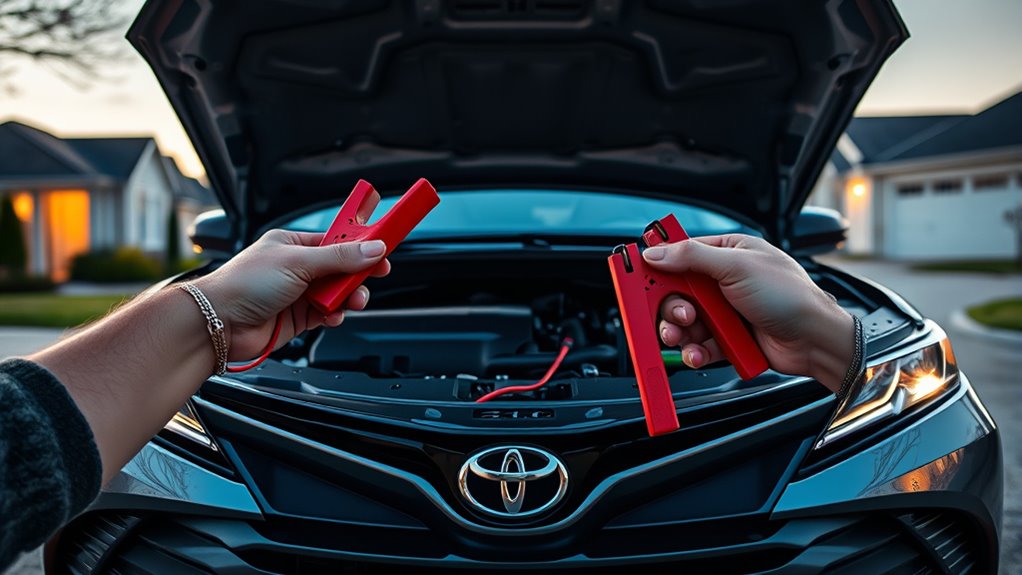
To jump-start a 2025 Toyota Camry Hybrid, the fuse relay box under the hood should be located to access the positive terminal. The procedure requires a stable donor source and disciplined cable handling.
The positive jump cable is attached first to the exposed metal on the positive terminal, then the negative cable is clamped to a suitable grounding point on the car frame. This order reduces the risk of shorts and component damage.
If the battery is completely dead, the jump-start may be less effective and more difficult, so assessment before connection is prudent. Once current transfer begins, the vehicle can be started under controlled conditions.
After the jump-start succeeds, the cables are removed in reverse order, preserving electrical safety. All clamps and surrounding components should be checked and secured before the hood is closed.
Find the Fuse Box Positive Terminal
The fuse relay box under the hood contains the Camry Hybrid’s positive jump point. To find the fuse box positive terminal, the technician opens the fuse relay box cover and inspects the interior for the exposed metal connection point marked for positive access.
This terminal is the designated source for jump starting the 2025 Toyota Camry Hybrid, and it must be identified before any cable is attached. A secure connection depends on contacting the bare metal surface, not the plastic housing or surrounding components.
The area should be examined carefully so the positive lead can be positioned with precision and without guesswork. This method supports safe energy transfer and reduces the risk of short circuits, electrical damage, or unnecessary strain on the vehicle’s systems.
Careful inspection ensures precise placement, safe energy transfer, and reduced risk of electrical damage or short circuits.
The process is straightforward, deliberate, and controlled, giving the operator a clear path toward restoring power with confidence and autonomy.
Connect the Jump Starter or Cables
The positive clamp should be attached first to the exposed metal on the Camry’s positive terminal in the fuse relay box, then to the assisting battery or jump starter output.
The connection must be firm to guarantee a reliable electrical path.
The negative clamp should then be secured to a suitable ground point on the vehicle, not the fuse box or ECM area.
Connect Positive Terminal
Expose the positive terminal in the fuse relay box and attach the positive cable from the jump starter or donor vehicle to the exposed metal contact on that terminal.
This connect positive terminal step should be performed with the system off and the clamp seated firmly on clean metal.
On the 2025 Toyota Camry Hybrid, the fuse relay box provides the designated access point for positive power transfer, allowing controlled recovery from a depleted battery.
The connection must be made before any ground lead is added, preserving the correct order and reducing spark risk.
Precision matters here: a secure fit supports efficient current flow and protects the vehicle’s electronics.
For those seeking liberation from a dead start, disciplined connection technique is the practical path forward.
Attach Negative Clamp
With the positive cable already secured to the exposed metal contact in the fuse relay box, the negative clamp should be attached next to a solid, unpainted metal surface on the vehicle body or engine block.
This attach negative clamp step creates a reliable ground path and keeps the fuse box and ECM area free from damage.
On the 2025 Toyota Camry Hybrid, the clamp must not be placed on painted panels, plastic covers, or electrical housings.
Each connection should be checked for tight contact, and the cables should be routed away from moving parts and hot surfaces.
After the engine starts, disconnect the negative clamp first, then the positive cable, so the system is released in a controlled order that protects the vehicle and preserves independent action.
Attach the Negative Cable Safely
Next, the negative cable should be clamped to a solid, non-painted, corrosion-free metal ground point away from the fuse box and ECM area to reduce the risk of shorts or electrical damage. This step helps attach the negative cable safely while preserving the vehicle’s electronic integrity.
The contact point should be bare metal, firmly fixed, and free of rust, paint, or debris so the clamp can bite securely. A poor ground can weaken the circuit and create instability during the jump procedure.
The cable should never be placed on or near the ECM area, because sensitive modules may be harmed by accidental arcing. After the clamp is seated, the connection should be checked for tightness and stability before any attempt is made to start the vehicle.
Never place the cable near the ECM; verify the clamp is secure before starting the vehicle.
Careful placement supports safe power transfer and gives the driver practical control over the process.
Start the Camry Hybrid
Once the negative cable is secured to a clean ground point, the Camry Hybrid can be started.
The assisting vehicle or power source should remain connected while the jump-start is attempted, allowing the Camry Hybrid’s systems to receive stable voltage.
The operator should enter the vehicle, press the brake, and use the normal start procedure. If the car is not severely depleted, the hybrid system may initialize after a brief pause as the dashboard powers up and the READY indicator appears. That signal confirms the jump-start has succeeded and the vehicle can operate under its own electrical control.
If the start does not occur immediately, the connection should be rechecked for secure contact at the fuse box terminal and ground point, without disturbing surrounding components.
For those seeking mechanical autonomy, this step restores movement with minimal intervention, but only when the battery is not fully dead.
Remove the Cables in Reverse Order
After the Camry Hybrid starts, the negative jumper cable should be disconnected first to reduce the risk of electrical shorts.
The positive cable should then be removed, with care taken to avoid contact with any metal surfaces.
Both cables should be secured away from each other immediately after disconnection.
Disconnect Negative First
The negative cable should be disconnected first, because removing the ground connection first reduces the risk of an electrical short and helps protect the vehicle’s electronics.
To disconnect negative first is to follow the reverse order of connection with discipline, not guesswork. This method keeps the circuit open in a controlled way and lowers the chance of sparks at the battery terminals.
The cable should be lifted away carefully so it does not contact the positive terminal or any metal path. After the ground lead is secure, the remaining cable can be handled with the same precision.
Such procedure is practical, repeatable, and essential for safe vehicle operation. It gives the operator control, reduces damage risk, and supports electrical freedom through orderly action.
Remove Positive Second
With the negative cable already removed, the positive cable should be disconnected second to preserve the correct reverse order and reduce the risk of a short circuit. This remove positive second step protects the 2025 Toyota Camry Hybrid’s electrical system and supports a controlled end to the jump-start.
| Action | Purpose |
|---|---|
| Remove negative first | Breaks the ground path |
| Remove positive second | Limits short-circuit exposure |
| Close fuse relay box | Prevents accidental terminal contact |
The operator should confirm the clamps are fully free before lifting them away from the battery area. Correct sequencing is not optional; it preserves system integrity and supports safe vehicle recovery. Precision here grants liberation from avoidable electrical damage and keeps the process technically sound.
Secure Cables Afterward
Once the positive cable has been removed and the battery area is clear, the cables should be secured in reverse order of connection to prevent shorts and accidental contact.
The negative clamp is removed first from the grounded vehicle, keeping it away from metal surfaces. Then the positive clamp is lifted from the positive terminal without touching adjacent parts.
Each lead should be coiled neatly and stored where it cannot tangle, abrade, or damage nearby components.
Before driving, the fuse relay box should be closed and all connections double-checked for proper seating.
This disciplined finish protects the vehicle and the operator, preserving the freedom to move without interruption.
Let’s go.
Locate the Trunk Battery
On the 2025 Toyota Camry Hybrid, the traditional battery is positioned on the right side of the trunk, behind a cover that is released by pulling two tabs.
This trunk battery is part of the vehicle’s rear storage area and should be identified before any emergency procedure. The cover opens the compartment, revealing the battery location for inspection or service access.
- Right side of trunk: battery position
- Pull two tabs: release the cover
- Restore all components securely after access
Knowing the trunk battery location supports fast, independent action when a jump start is required.
However, this battery is not the jump-start point; the vehicle uses the fuse box for that task. Clear recognition of the compartment prevents confusion, saves time, and reduces unnecessary handling.
After access, the cover and related parts should be returned firmly to their original positions so the trunk remains secure and ready for use.
Replace Camry Wiper Blades
Replacing the windshield wiper blades on a 2025 Toyota Camry is a straightforward maintenance task that can be completed with basic care.
To replace Camry wiper blades, first place a towel on the windshield to protect the glass from accidental contact. Then press the release button on the wiper assembly and pull the old blade outward from the arm. The blade should separate cleanly without force.
Align the new blade with the arm and slide it into position until a distinct click is heard. That click indicates the connection is locked and ready for service.
Before operating the wipers, confirm that each blade is fully seated and secure. This final check supports reliable function and reduces the risk of poor wiping performance.
With a careful hand and a clear procedure, the driver retains control over a small but important task, without dependence on service shop routines.
More Toyota Tips to Try Next
Another useful Toyota tip involves understanding the correct jump-start procedure for a 2025 Camry Hybrid, since the conventional battery is not used for this task. The operator is going to need access to the fuse relay box, where the exposed positive terminal is located.
Positive cable placement must be exact: clamp onto clean metal at the positive terminal, and keep the negative cable away from the fuse box and ECM area. That protects the vehicle’s control systems and preserves freedom from avoidable damage.
- Open the fuse relay box before connecting cables.
- Connect positive to the exposed terminal only.
- Disconnect in reverse order after the start.
It is also wise to know the trunk battery location, even though it is not used for jump-starting. In an emergency, that knowledge reduces confusion and speeds recovery.
Regular windshield wiper replacement remains another practical step, with the release button on the assembly making removal and installation straightforward.
Frequently Asked Questions
How Do I Jump off a Toyota Camry?
Jump-starting a Toyota Camry requires Battery Safety and precise connections.
Access the fuse relay box and locate the exposed positive terminal. Attach the red cable there. Connect the black cable to a clean metal ground point on the engine or chassis, not the fuse box.
Start the donor vehicle, then the Camry. Once running, remove cables in reverse order.
This practical method restores mobility while protecting electronics and preserving mechanical freedom.
Do You Disconnect Positive or Negative First When Jumping a Car?
Negative first, then positive, when disconnecting jumper cables. This Safety Precautions sequence reduces arc risk, short circuits, and damage to the battery or electronics.
The negative clamp should be removed from the grounded metal surface before the positive clamp is taken off the battery terminal. A clean, deliberate order keeps the operator secure and the vehicle’s electrical system liberated from avoidable stress during jump-start removal.
Can You Jump Start a Car With Only Positive?
No. A vehicle cannot be jump-started with only the Positive Connection. A complete electrical circuit requires both positive and negative paths, so the negative lead must attach to a proper ground point or the battery’s negative terminal.
Connecting only positive leaves the circuit open and prevents current flow. For safe, practical liberation from a dead battery, the donor battery must be sound and connections made in the correct order.
When Jumping a Dead Battery, Which Car Do You Start?
The working car should be started first, before any jumper cables are attached to the dead battery. This supports Battery Safety by reducing the chance of electrical surges or accidental shorts.
After the donor vehicle is running, connect positive to positive, then attach the negative to the donor car and ground the remaining clamp on bare metal of the disabled vehicle.
Remove cables in reverse order once the dead car starts.
Conclusion
In practice, the Camry Hybrid does not use the battery posts people expect under the hood. The theory that any exposed metal point will work is misleading; Toyota specifies a fuse-box positive terminal and a solid chassis ground for a reason. Using the correct jump points reduces the risk of damage and safely powers the system long enough to reach READY. Once started, the cables should be removed in reverse order to avoid short circuits.

