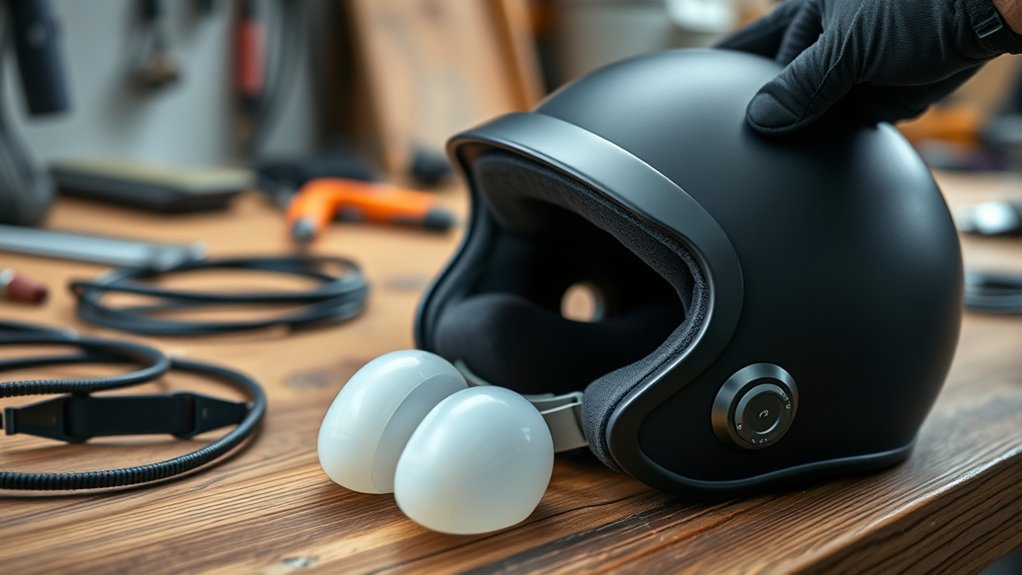
Very soft, low-profile earbuds with memory foam or soft silicone tips usually work best under a crash helmet. Compact, contoured shells reduce pressure points, protrusion, and movement while improving passive wind-noise isolation. A secure seal is important because highway wind can exceed 100 dB. Fit should be tested in the actual riding position and with the specific helmet. Wired models avoid charging and dropouts, while wireless reduces snagging. Further sections outline fit, materials, custom options, and maintenance.
How to Choose Soft Earbuds for a Motorcycle Helmet
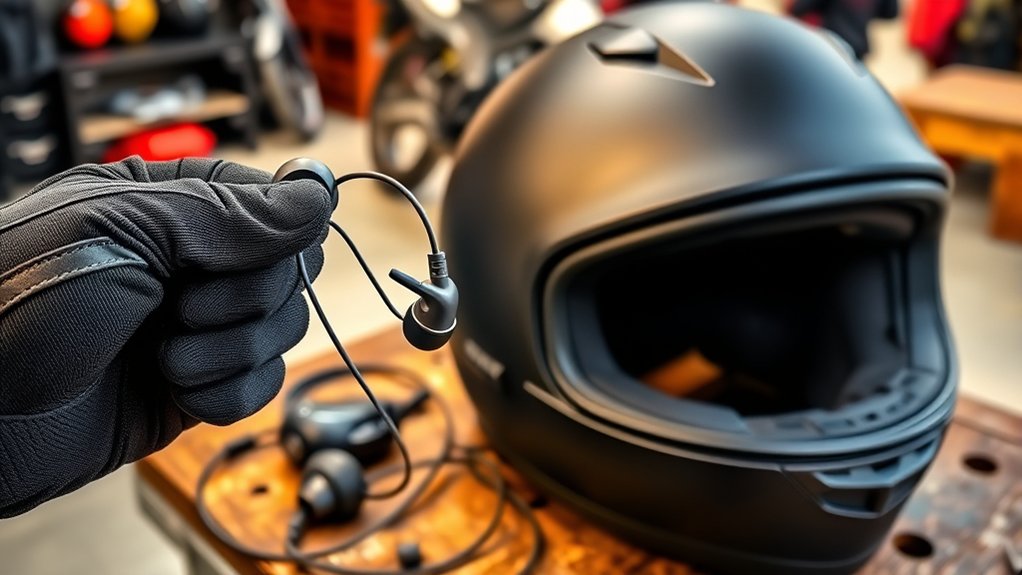
When selecting soft earbuds for use under a motorcycle helmet, priority should be given to low-profile models that reduce pressure points during prolonged wear. This approach supports sustained comfort and helps riders move with fewer distractions.
Soft foam tips are generally preferred because they improve passive noise reduction by limiting wind intrusion without adding bulk. A proper seal also stabilizes audio performance and decreases the likelihood of earbud displacement during motion.
Soft foam tips improve passive noise reduction, stabilize audio performance, and help prevent earbud displacement during motion.
Secure retention remains essential under real riding conditions. Earbuds should stay seated while the helmet is donned, removed, and worn in a forward-leaning posture. Testing in an actual riding position provides more reliable evidence than seated indoor trials, because fit and isolation often change under helmet compression.
Attention should also be directed to durability and moisture resistance. Sweat, temperature shifts, and road exposure can degrade weak materials quickly. Durable, moisture-tolerant construction preserves function, supports long-term value, and reduces avoidable equipment failure.
Which Helmet Earbud Shape Feels Best?
Which earbud shape feels best under a helmet depends primarily on how evenly it distributes contact pressure across the outer ear. Evidence favors rounded, contoured forms that conform to anatomy rather than rigid, angular housings. Such shaping reduces focal compression, limits irritation, and supports longer wear with less fatigue.
Riders seeking liberation from constant adjustment generally benefit from lightweight earbuds using ergonomic designs and compliant materials.
- Contoured shells follow the ear’s natural curves, improving stability and reducing displacement during motion.
- Tips made from soft silicone tips or memory foam cushion the canal entrance and lower localized pressure.
- Foam interfaces also improve sealing, which strengthens passive noise isolation without requiring excessive insertion force.
Clinical comfort data also support shapes that maintain secure placement while avoiding hot spots beneath helmet padding. A balanced earbud combines anatomical contouring, low mass, and gentle surface compliance.
In practical terms, the most comfortable shape is the one that disappears during extended riding.
Why Low-Profile Earbuds Fit Better
Because helmet interiors compress the outer ear, low-profile earbuds generally fit better by reducing protrusion and distributing contact within the canal rather than against the helmet liner. This geometry lowers focal pressure, so riders experience fewer hot spots and less irritation during sustained wear.
In practice, low-profile earbuds occupy less lateral space, allowing the helmet cheek pads and liner to settle naturally without forcing repeated adjustments or creating destabilizing distractions on the road.
A compact housing also improves retention. When secure ear tips seat properly, movement at speed is less likely to dislodge the earbuds, supporting consistent audio delivery and rider focus.
Reduced external bulk further limits wind interference around the ear, which can strengthen passive noise isolation without increasing volume demand. For riders seeking a more liberated, less intrusive setup, the main advantage is practical: better stability, better comfort, and fewer interruptions between helmet fit, environmental control, and the listening experience overall.
Which Earbud Materials Feel Softest Long-Term?
Long-term comfort is most consistently associated with memory foam tips, soft silicone sleeves, and custom-molded materials.
Memory foam typically provides the lowest localized pressure by conforming closely to the ear canal, while soft silicone offers flexible contact and stable tolerance over extended wear.
Custom-molded designs further reduce pressure points through individualized fit, which is especially relevant under the sustained compression of a crash helmet.
Memory Foam Tips
Memory foam tips generally provide the softest sustained feel under a crash helmet, as the material compresses and conforms to the ear canal to create a personalized fit. This adaptive structure distributes contact more evenly, reducing pressure points and limiting ear fatigue during long-distance riding.
High-quality memory foam tips usually rebound slowly, which improves sealing and passive noise reduction without creating excessive firmness.
- Conform closely to individual ear-canal geometry for stable comfort
- Reduce localized pressure points during prolonged helmet use
- Improve passive noise isolation through slow-rebound sealing
Routine maintenance remains important. When kept clean and dry, memory foam tips generally retain softness and durability for longer service intervals.
Riders seeking greater comfort and less sensory burden under a helmet often find this material supports a more liberated, less fatiguing riding experience overall.
Soft Silicone Sleeves
Soft silicone sleeves are widely regarded as one of the most comfortable options for sustained wear under a crash helmet, primarily due to their low surface stiffness and ability to cushion contact at the outer ear.
Their compliant structure distributes pressure more evenly than hard plastic tips, which can reduce localized irritation during prolonged rides and support greater freedom from distraction.
In comparative use, soft silicone sleeves often improve comfort while preserving a stable seal. This can modestly enhance noise isolation without excessive insertion force.
They are also washable and reusable, which supports hygiene and long service life for frequent riders. Relative to firmer materials, silicone generally feels gentler at the ear canal entrance.
TPE tips offer similar flexibility and durability, yet silicone remains a common benchmark for balanced softness, resilience, and helmet-compatible performance overall.
Custom Molded Materials
Among custom-molded options, silicone is frequently identified as one of the softest materials for extended wear under crash helmets because its flexible structure conforms closely to individual ear anatomy. This close adaptation improves comfort, stability, and pressure distribution during long rides, supporting a less restrictive experience.
Evidence also supports memory foam and other soft polymers.
- Silicone tips: flexible, low-pressure, and widely associated with sustained comfort.
- Memory foam and polyurethane: plush contact, reduced pressure points, durable isolation.
- TPE materials: rubber-like softness with plastic-like resilience for repeated use.
The custom-molded process remains clinically significant. By matching the ear’s contours, it secures the earbud, limits friction, and reduces fatigue.
For riders seeking liberation from persistent helmet-related irritation, individualized material selection materially improves long-term wear tolerance.
How Soft Earbuds Block Wind Noise Safely
By forming a snug seal within the ear canal, pliable earbuds provide passive noise isolation that reduces wind noise under a crash helmet without relying on electronic processing. This seal is the primary mechanism by which soft earbuds limit external acoustic intrusion.
At highway speeds, wind noise can exceed 100 dB, a level associated with fatigue and cumulative hearing risk. Silicone and foam tips conform to individual ear anatomy, improving stability and minimizing pressure points during extended rides.
Effective passive isolation allows audio playback at lower volumes, which supports long-term hearing preservation without sacrificing access to music or navigation prompts. Proper fit also matters for safety: when excess wind noise is attenuated, cognitive load may decrease and focus may improve.
Significantly, the goal is not total sensory deprivation, but selective reduction of harmful turbulence noise. In this way, soft earbuds can support a more controlled, comfortable, and self-directed riding experience while preserving environmental awareness where possible.
Should You Choose Wired or Wireless Helmet Earbuds?
Once passive noise isolation and low-profile fit have been addressed, the choice between wired and wireless helmet earbuds becomes a practical question of connection stability, power demands, and in-ride usability. Evidence favors wired earbuds when uninterrupted audio, zero charging, and minimal latency are priorities, particularly for precise navigation prompts at speed.
- Wired earbuds usually maintain consistent signal quality and avoid Bluetooth dropouts.
- Wireless convenience removes cable management but can be compromised by body blockage and speed-related interference.
- Comfort and fit remain decisive, since either design must sit flat under padding without pressure points.
For riders seeking fewer technical constraints, wired models offer dependable performance, although repeated helmet removal may stress cables and connectors over time.
Wireless options increase freedom of movement and reduce snagging, yet battery limits can undermine long-distance use.
The more liberating choice depends on whether the rider values absolute reliability or cable-free operation most during sustained travel and daily commuting.
Are Custom-Moulded Helmet Earbuds Worth It?
Why are custom-moulded helmet earbuds often judged worth the higher upfront cost? Evidence indicates that a personalised fit improves comfort and stability under a crash helmet, especially during long rides. By matching ear anatomy, custom-moulded helmet earbuds reduce pressure points and remain seated more reliably than generic designs. This can support a greater sense of ease and freedom on the road.
Their value also derives from acoustic performance and service life. Superior passive noise isolation lowers exposure to wind and road noise, which can become hazardous at speed, while often improving perceived audio clarity and communication-system intelligibility. Riders frequently report higher satisfaction when distractions are reduced.
The cost premium is commonly balanced by durability without frequent replacement, as these units often outlast standard earbuds. For helmet-specific use, the combined gains in wearability, noise control, and longevity make custom-moulded options a rational investment rather than a luxury purchase for many regular riders overall.
What Mistakes Should You Avoid With Helmet Earbuds?
Even when higher-quality helmet earbuds are chosen, several common mistakes can undermine their benefits. The most frequent error involves ignoring fit and comfort. Earbuds that create pressure points beneath a helmet can impair concentration and reduce tolerance on longer rides, limiting the sense of ease riders seek.
Another avoidable mistake is accepting weak noise isolation. Wind noise commonly reaches 85–100 dB, and inadequate attenuation may increase cumulative hearing risk despite low music volume.
Weak noise isolation leaves riders exposed to 85–100 dB wind noise, increasing hearing risk even when music remains low.
- Choosing earbuds without verifying stable fit and comfort under the specific helmet shell
- Accepting poor noise isolation, which permits harmful wind exposure and degrades audio clarity
- Overlooking durability, Bluetooth reliability, and routine cleaning requirements
Durability also matters. Repeated helmet removal and moisture exposure accelerate failure in poorly constructed models.
Wireless designs require scrutiny, since body positioning and speed can disrupt Bluetooth links. Cleaning should not be neglected; debris on tips weakens the seal, reduces sound quality, and compromises consistent, liberating performance over time for riders.
Frequently Asked Questions
What Are the Best Earbuds to Wear Under a Helmet?
Best options include Snugs Moto, Plugfones Liberate 2.0, Final Audio E3000, and Soundcore Liberty 5 Pro; selection depends on earbud features, noise isolation, and comfort levels, with IP55 durability improving riding freedom and long-term usability.
What Are the Best Earbuds to Use Under a Helmet?
Best options include low-profile Plugfones Liberate 2.0, Snugs Moto customs, Final Audio E3000, and Soundcore Liberty 5 Pro, balancing Earbud Comfort, Sound Quality, and Noise Isolation while enabling liberated, precise, helmet-compatible performance in varied riding conditions.
How to Wear Earbuds Under a Motorcycle Helmet?
First, earbuds are inserted securely before helmet placement; then fit is checked. Comfort factors guide tip selection, Noise isolation reduces wind exposure, and Cable management prevents displacement. This method preserves stability, auditory protection, and rider autonomy.
What Are the Best Headphones to Wear Under a Motorcycle Helmet?
The best headphones for motorcycle helmets are low-profile in-ear models with secure fit, comfort features, and passive noise isolation. Wireless options may help. Strong noise cancellation is less practical than stable sealing, durability, and moisture resistance.
Conclusion
Evidence supports the theory that comfort under a crash helmet depends less on advertised audio quality than on earbud geometry, profile, and material compliance. Low-profile, soft silicone or foam designs generally reduce pressure points and improve seal consistency, which can also moderate wind noise exposure. However, excessive isolation, poor fit, and unstable wireless designs may compromise safety or usability. Consequently, the most effective helmet earbuds are typically those optimized for anatomical fit, low bulk, and predictable performance.