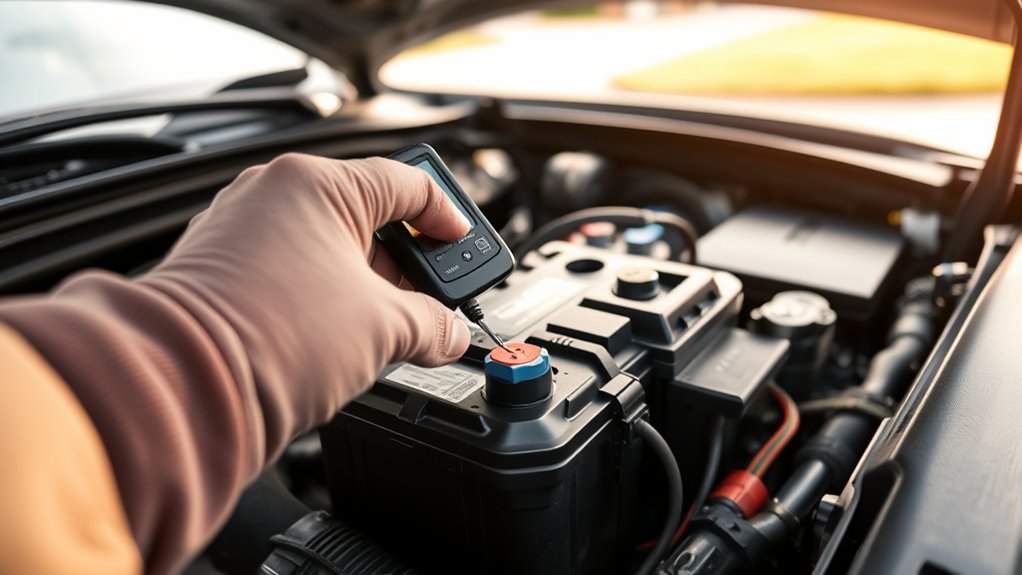
Resetting the battery in a PSA vehicle is crucial for maintaining peak performance after a replacement. It involves specific procedures to avoid losing vehicle settings. For example, power windows and radio codes require resets to guarantee functionality. Choosing the right battery is also critical; match specifications like Cold Cranking Amps and terminal configuration. Regular maintenance checks can prolong battery life. Understanding these factors helps guarantee a smooth experience, with further insights available on essential battery care and procedures.
The Importance of Resetting After Battery Replacement

Resetting after a battery replacement is vital for maintaining vehicle functionality and performance. After you replace your battery, specific procedures must be followed to guarantee all systems operate smoothly.
Resetting your vehicle after a battery replacement is essential for optimal functionality and performance.
For instance, resetting power windows involves placing the ignition in the “On” position, fully rolling the windows down, holding for 10-15 seconds, and then rolling them back up. Additionally, radio codes may need re-entry due to the activation of the anti-theft feature when power is lost.
It’s also important to drive the vehicle for 10-15 miles to recalibrate the ECU’s adaptive memory, which enhances fuel consumption and shift points. Neglecting these steps can lead to rough idling and poor acceleration, thus affecting the driving experience.
Consequently, when choosing the right battery, confirm proper installation and follow these resetting procedures for peak vehicle performance.
Avoid Losing Vehicle Settings During Battery Changes
When a vehicle owner changes the battery, they may inadvertently lose critical settings that enhance driving experience and convenience.
To guarantee peace of mind during this process, they should consider the following:
- Use a Battery Memory Saver (BMS): This device helps retain crucial vehicle settings by maintaining power through the OBDII port or cigarette lighter.
- Disconnect the Negative Cable First: This minimizes the risk of electrical shorts, guaranteeing safety during the battery replacement.
- Reset Essential Systems Post-Replacement: After installing the new battery, settings like power windows may need to be reset by fully rolling them down and up while holding the switch for 10-15 seconds.
Essential Steps for Resetting Electronic Systems After Battery Change
Changing a vehicle’s battery often triggers a cascade of electronic system resets, requiring careful attention to restore functionality.
To reset power windows, the ignition should be turned to the “On” position, with the switch held down for 10-15 seconds during a full down and up motion. Additionally, radio codes may need to be re-entered if the anti-theft feature activates; owners should consult the manual for specific codes.
To reset power windows, turn the ignition to “On” and hold the switch for 10-15 seconds during a full motion.
The ECU’s adaptive memory also resets with a new battery, necessitating a drive of approximately 10-15 miles for proper recalibration of fuel consumption and shift points.
Without a Battery Memory Saver, settings like the clock and presets will revert, requiring manual adjustments. For ideal ECU performance, it’s recommended to drive 75-100 miles before emissions tests, especially if a memory saver was not utilized.
Following these steps guarantees a smooth shift post-battery change.
Choosing the Right Replacement Battery for Your Vehicle
Selecting the right replacement battery is vital for guaranteeing peak vehicle performance, especially since a mismatch can lead to starting issues or electrical failures. To make certain the chosen car battery fits properly, several factors must be considered:
- Specifications: Match the battery’s group number and terminal configuration to your vehicle’s requirements for a secure fit.
- Cold Cranking Amps (CCA): Opt for a battery with an appropriate CCA rating, essential for cold weather starts.
- Battery Type: Choose between flooded lead-acid batteries and AGM (Absorbent Glass Mat) batteries, the latter being ideal for vehicles with stop-start systems.
Additionally, verify the amp-hour (Ah) rating to confirm it meets or exceeds your vehicle’s needs.
Consulting the owner’s manual or a professional can provide clarity on the best battery options, as using an inadequate battery can greatly impact performance and lifespan.
How to Maintain Your New Car Battery?
Maintaining a new car battery is essential for guaranteeing peak performance and longevity. A proactive approach can help drivers avoid unexpected breakdowns and extend battery life. Here are key maintenance tips:
| Task | Frequency | Benefits |
|---|---|---|
| Regularly inspect terminals | Monthly | Prevents corrosion and guarantees good connections |
| Monitor your battery’s charge level | Weekly | Identifies the need for replacement before issues arise |
| Securely mount battery | Always | Reduces vibrations that can damage internal components |
| Schedule annual inspections | After 3 years of use | Catches early signs of wear for timely intervention |
Frequently Asked Questions
What Happens if I Reset My Car Battery?
Resetting a car battery can disrupt electrical systems, requiring diagnostic tools to restore settings. It affects battery performance, necessitating recalibration of the ECU and manual adjustments for features like power windows and radio codes.
How Long Does It Take for a Car Battery to Reset?
After changing a car battery, it typically takes 75-100 miles for ideal performance. Employing charging tips and maintenance practices can enhance battery life, ensuring smoother driving while the ECU recalibrates its settings.
What Happens if I Don’t Code My New Battery?
Neglecting to code a new battery can lead to voltage issues, adversely affecting battery performance. The vehicle’s ECU may fail to recognize the battery, resulting in erratic behavior and compromised overall driving dynamics.
How Many Miles Do You Have to Drive to Reset the Battery?
To reset the battery, driving approximately 10-15 miles is essential, with 75-100 miles recommended for peak performance. Adapting driving habits and following maintenance tips can enhance battery life and overall vehicle efficiency.
Conclusion
In summary, understanding the process of resetting your PSA car’s systems after a battery replacement is essential for maintaining ideal vehicle performance. Notably, nearly 30% of drivers overlook this step, risking loss of critical settings and functionality. By following the necessary steps for resetting and selecting the right battery, owners can guarantee their vehicles remain in peak condition. Regular maintenance of the new battery will further enhance longevity, ultimately leading to a smoother driving experience.

