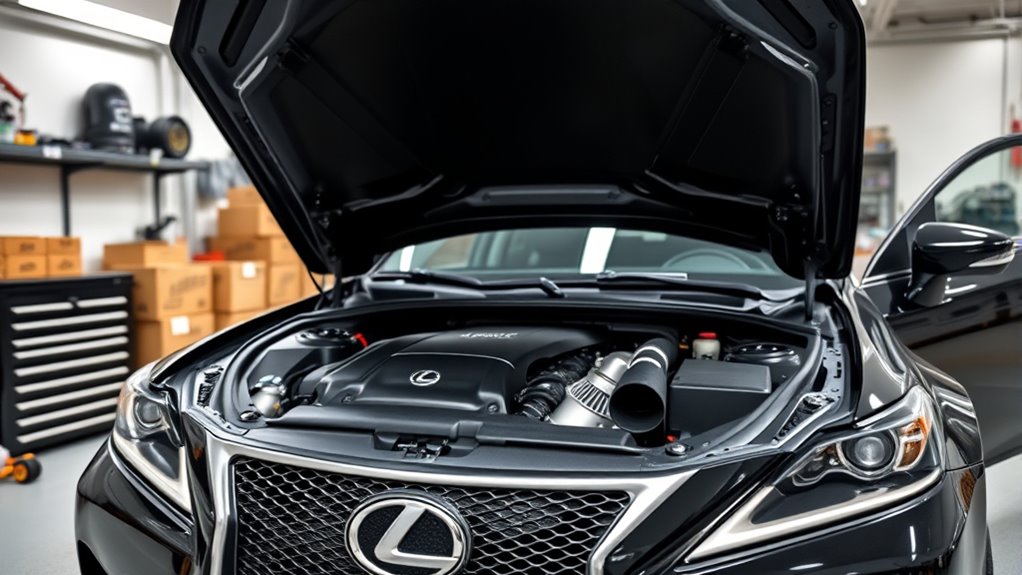
A Lexus IS 250 with a 3GR-FSE swap should use intake hardware matched to the 3GR’s MAF housing, airbox geometry, and ECU calibration. The wrong setup can skew airflow readings, cause lean running, unstable idle, and drivability issues. The GS300 airbox is often the closest fitment reference. Buyers should verify sensor compatibility, tune readiness, and maintenance needs before purchase. The right intake choice can improve response and reveal a better long-term setup.
Key Takeaways
- Confirm the intake matches the 3GR-FSE MAF housing and ECU calibration, not just the IS250’s original hardware.
- A GS300-style airbox is often the closest fitment reference for proper airflow and sensor alignment.
- Mismatched MAF housings can cause unstable idle, lean fueling, and tuning issues, so verify compatibility carefully.
- After installation, monitor AFR and engine behavior closely to catch fueling errors and protect engine health.
- Expect bolt-on gains in throttle response and power, but check reviews, warranty coverage, and install support before buying.
Is a 3GR-FSE Swap Worth the Cost?
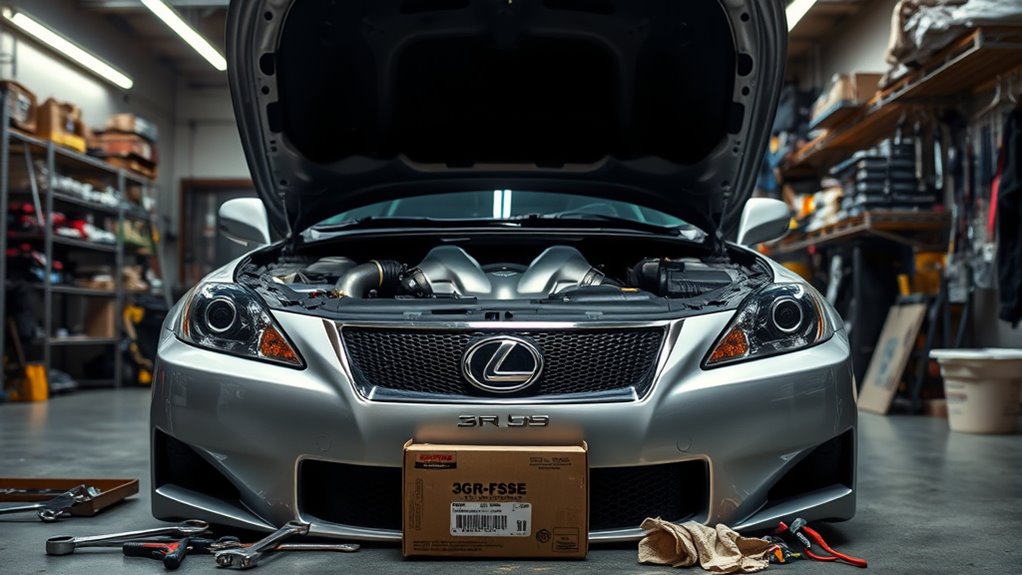
Whether a 3GR-FSE swap is worth the cost depends largely on the desired performance gains versus the added integration work. The 3GR-FSE swap delivers roughly 50 horsepower over the stock 4GR-FSE, making it a meaningful upgrade for an IS250 seeking freer acceleration and stronger midrange response.
However, the gain is not automatic. Compatibility with the existing MAF sensor, airbox, ECU calibration, and harness must be verified, and adjustments are often required for reliable operation. Owners have reported the need for wiring changes, revised programming, and post-swap tuning to stabilize idle and optimize drivability.
These tasks increase both labor and parts expense. Monitoring tools and careful setup may be needed to resolve early tuning issues. Community experience suggests the swap can be rewarding when planned thoroughly, but it is not a low-effort path.
For drivers prioritizing performance and self-directed mechanical freedom, the value can be substantial if research is disciplined.
Which Intake Fits a 3GR-Swapped IS250?
A 3GR-swapped IS250 typically requires an intake matched to the 3GR-FSE MAF housing, since the sensor diameter and signal calibration must remain consistent for correct airflow measurement.
In practice, the GS300 airbox is often the closest fitment reference because its intake geometry aligns more closely with the 3GR swap configuration than the original IS250 setup.
Any replacement should preserve accurate AFR readings and be confirmed for 2005–2013 IS250 or IS350 compatibility before installation.
3GR MAF Compatibility
The MAF calibration on a 3GR-FSE swap is not a straight plug-and-play match for the original IS250 4GR-FSE intake hardware, because the sensor housing and duct geometry differ enough to affect airflow interpretation.
This maf sensor compatibility issue means the engine control unit may misread load, especially if duct taper and sensor position are altered. For a liberated, reliable setup, OEM-style intake parts are usually favored over uncertain aftermarket tubes.
- Verify MAF housing diameter before purchase
- Match sensor location to stock signal behavior
- Inspect duct sealing for unmetered air
- Monitor AFR immediately after installation
- Prefer stable OEM airflow paths for accuracy
GS300 Airbox Fitment
In many 3GR-swapped IS250 setups, the GS300 airbox is the correct fitment because the original IS250 intake hardware does not always align with the 3GR’s MAF housing dimensions and duct routing.
This GS300 airbox fitment supports the engine’s required airflow path and helps preserve sensor accuracy under load. Proper ducting from the airbox to the 3GR intake tract is essential, since any mismatch can cause unstable idle behavior, air metering errors, and tuning complications.
When installed correctly, the GS300 airbox provides a cleaner, more reliable intake interface, reducing the friction of post-swap calibration. For drivers pursuing a liberated and responsive build, correct airbox selection is not cosmetic; it is a structural requirement for stable operation, consistent performance, and fewer drivability setbacks.
Why MAF and Airbox Compatibility Matter
Because the 3GR-FSE and 4GR-FSE rely on different MAF sensor housings and calibration characteristics, intake compatibility becomes a critical factor in preserving accurate airflow readings. MAF sensor compatibility is not a minor detail; it determines whether the ECU receives a clean signal or a distorted one.
- The IS250 intake path must match the 3GR-FSE housing geometry.
- A GS300 airbox often provides the correct physical integration.
- Mismatched housings can prevent proper sensor seating.
- Intake ducting should be checked for secure, stable alignment.
- Airbox and duct connections must support consistent airflow behavior.
When the airbox and sensor mount are aligned correctly, the system can measure intake volume with greater precision, supporting proper drivability and responsive performance.
In contrast, improvised fitment can disrupt measurement consistency and undermine the mechanical freedom expected from a well-executed swap.
How to Avoid Lean Running Problems
Lean running on the Lexus IS250 3GR is best prevented by ensuring the MAF sensor and intake components are fitted exactly as specified, since any mismatch can distort airflow measurement and upset the AFR.
AFR should be monitored closely after installation, with exhaust gas temperature tracking used to confirm that the engine remains within safe operating limits.
Accurate sensor calibration and correct intake alignment together reduce the risk of a persistent lean condition.
Proper MAF Fitment
Proper MAF fitment is critical when installing a 3GR-FSE intake on an IS250, since the sensor housing must match the intake system’s airflow characteristics to preserve accurate load and fuel calculations.
Proper maf fitment prevents lean running that can threaten engine durability and reduce drivability. The GS300 airbox is often used because its geometry aligns well with the 3GR-FSE sensor and intake path, helping maintain stable readings.
- Match the MAF housing diameter to the intake design.
- Use the GS300 airbox when compatibility is needed.
- Verify the sensor sits in the correct airflow orientation.
- Clean the MAF regularly to avoid skewed signals.
- Inspect for air leaks that can distort measured flow.
Monitor AFR Closely
Monitoring air-fuel ratio closely after a 3GR-FSE intake or engine swap is essential to catch fueling errors before they develop into lean running conditions. To monitor afr closely, a Lambda sensor should be used for precise mixture data, while exhaust temperature probes reveal heat rise from excess oxygen.
| Check | Purpose |
|---|---|
| Lambda sensor | Verifies AFR accuracy |
| Temperature probe | Detects lean exhaust heat |
| ECU map update | Restores safe fueling |
A lean condition means insufficient fuel, which can overheat pistons, valves, and catalysts. Even a plug and play intake can alter airflow enough to require ECU recalibration. Regular map updates preserve safe combustion and help maintain mechanical freedom from avoidable damage.
What Maintenance Keeps the 3GR Healthy
Keeping a 3GR healthy depends on routine attention to its intake, combustion, and fueling systems, with engine flushing playing an important role in limiting carbon accumulation, especially on direct-injection variants that are more prone to deposit formation. This maintenance routine supports clean airflow, stable combustion, and long-term reliability without unnecessary intervention.
- Flush the engine at sensible intervals to reduce sludge and carbon deposits.
- Clean intake passages and valves to preserve throttle response and volumetric efficiency.
- Monitor AFR to prevent lean operation and heat-related wear.
- Replace spark plugs on schedule for consistent ignition and efficient burn.
- Treat the 3GR as a distinct platform; its needs differ from the 4GR and reward informed upkeep.
Consistent maintenance allows drivers to keep the engine responsive, durable, and free from avoidable degradation.
Which Intake Setup Works Best?
Which intake setup works best depends on reducing restriction and heat soak, since the factory Lexus IS250 intake tends to limit airflow and dull throttle response.
A mandrel-bent T304 aluminum induction pipe is the strongest choice because it improves airflow geometry and sheds heat better than plastic tubing. That thermal advantage helps preserve intake charge density, supporting cleaner combustion and sharper response.
With the right kit, real-world gains of up to 10 percent in horsepower and torque are plausible, especially when the engine can breathe without the stock bottleneck.
The best setup is a true bolt-on, zero-modification kit that installs in under 60 minutes, keeping the swap done simple for DIY owners seeking more control.
Disconnecting the battery terminal before installation is recommended so the ECU can reset and relearn the new airflow characteristics.
For drivers wanting freer performance without major fabrication, this combination offers the most balanced upgrade path.
Frequently Asked Questions
Is the 3GR-FSE Engine Reliable?
Yes, the 3GR-FSE is generally reliable; its port-injection architecture reduces carbon buildup, and proper maintenance preserves Engine Performance. Failures usually reflect neglected servicing rather than intrinsic design weakness, supporting long-term durability and driver freedom.
What Year to Stay Away From Lexus IS250?
Stay away from 2006–2008 Lexus IS250s, the early Model Variations in this chassis. Like a bridge built with hidden fatigue, they often carry carbon buildup and weaker reliability. Later 2009–2013 versions are generally safer choices.
How to Avoid Carbon Build up in Lexus IS250?
Carbon build-up is reduced by using high Fuel Quality, frequent intake and valve cleaning, regular engine flushing, and strict maintenance intervals. Direct-injection 3GR-FSE engines need proactive service to keep airflow, performance, and reliability free.
What Are the Common Problems With the IS250?
Common IS250 problems include carbon buildup, occasional head gasket leaks, and intake fouling; a neglected sedan may lose power within 60,000 miles. Proper Engine Maintenance usually prevents most failures and preserves responsive, reliable operation.
Conclusion
In the end, the Lexus IS 250 with a 3GR-FSE swap is less a simple bolt-on project and more a finely tuned orchestra, where intake choice, MAF calibration, and airbox fit must play in harmony. A mismatched setup can starve the engine like a lung with a blocked airway, inviting lean conditions and poor drivability. With proper maintenance and the correct intake path, the 3GR can breathe cleanly, run safely, and deliver its intended performance.

