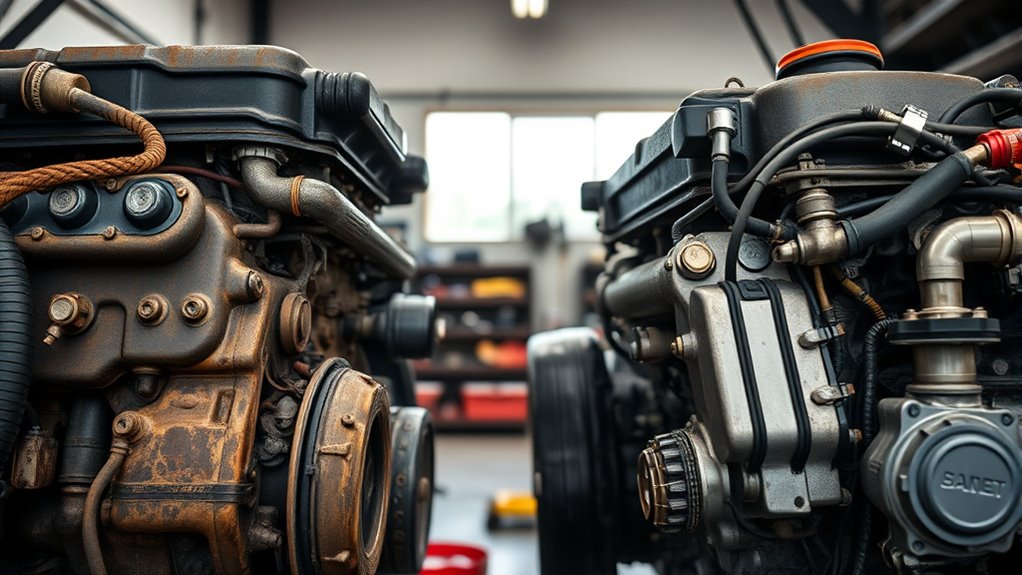
Diesel engines usually get bad more slowly than petrol engines because they are built with stronger internal parts and run at lower RPM. Petrol engines often wear sooner, especially with frequent high-speed use and stop-start driving. Both types last longer with regular servicing, clean oil, and quality fuel. Diesel can be less ideal for short city trips because soot buildup raises wear. The better choice depends on mileage, driving style, and maintenance habits, with more details ahead.
Key Takeaways
- Diesel engines usually last longer because they use stronger components and run at lower RPMs, reducing wear.
- Petrol engines often wear faster due to higher RPM operation and more frequent stress on internal parts.
- Poor maintenance can shorten either engine’s life, but diesel engines need especially careful servicing.
- City driving can hurt diesel engines more because soot buildup and turbo lag increase wear in stop-start traffic.
- Gentle driving and regular oil, filter, and fuel maintenance help both engine types last longer.
Which Engine Wears Out Faster: Diesel or Petrol?
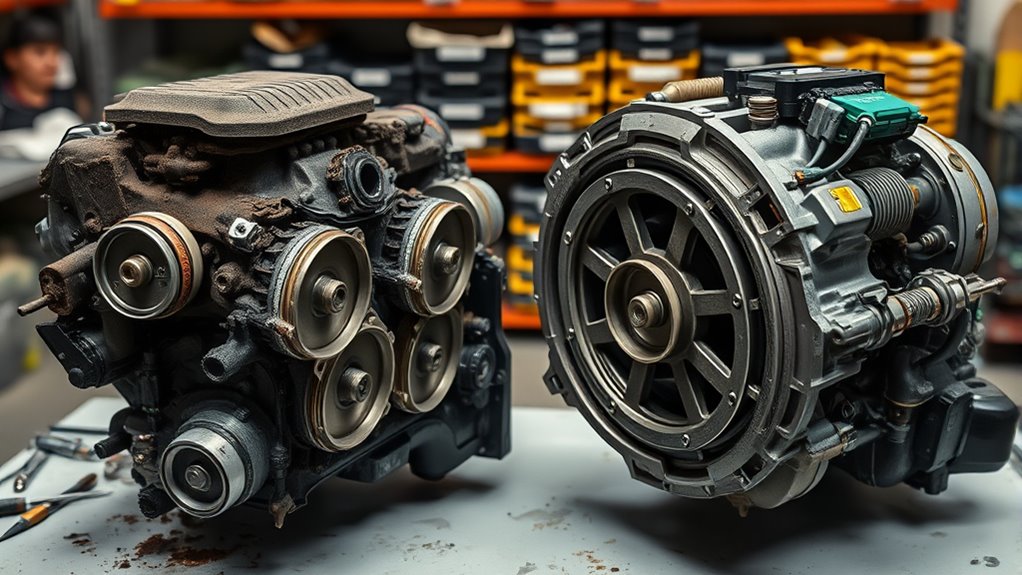
Diesel engines generally wear out more slowly than petrol engines because they are built with stronger internal components and operate at lower RPMs, making them well suited to high-mileage use.
In practice, diesel engines usually last longer under heavy use, while petrol units may wear out faster because they spend more time at higher revs and through frequent acceleration cycles. That added mechanical stress increases component fatigue over time.
However, longevity is not automatic. Poor servicing, dirty fuel, and neglected oil changes can erode durability in either type.
Longevity isn’t guaranteed; poor servicing and neglected oil changes can shorten life in any engine.
Diesel engines can suffer carbon build-up and related wear if maintenance is skipped, while petrol engines commonly face valve and gasket wear as mileage rises.
For operators seeking dependable transport and reduced replacement costs, the key issue is not only engine type but disciplined maintenance, sensible driving, and fuel quality.
These factors decide which engine stays free longest and which one fails early.
Why Diesel Engines Wear More Slowly
A major reason diesel engines wear more slowly is their operating profile and internal design. Diesel engines are built for durability, with reinforced piston rings, heavier-duty parts, and compression-capable structures that tolerate sustained load.
They usually run at lower RPMs than petrol engines, so bearings, pistons, and valve train parts experience fewer stress cycles. Diesel fuel also has higher energy density, which supports better fuel efficiency and reduces how often the engine must work through aggressive fuel events. That steadier operation lowers thermal and mechanical fatigue.
In practice, these machines are engineered to keep working under long service intervals, especially when maintenance is disciplined and clean fuel is used. Commercial diesel units commonly pass 500,000 miles before major repairs, showing how robust construction and calm operating behavior can extend lifespan and reduce dependence on constant intervention.
Why Petrol Engines Need Repairs Sooner
Petrol engines typically need repairs sooner because their spark-ignition design and higher operating speeds create more frequent wear on internal parts. Compared with diesel units, these engines usually have a shorter service life because their simpler architecture still subjects valves, pistons, and bearings to repeated stress.
Petrol engines often need repairs sooner, as higher speeds and spark-ignition wear faster on internal components.
In petrol cars, elevated RPMs can accelerate metal fatigue, while lower fuel energy density means the engine often works harder to produce the same output. That extra demand can shorten component life and increase the chance of carbon build-up in the intake and combustion system.
Regular cleaning and timely oil service become necessary to keep performance stable. Spark plugs and related ignition parts also require routine replacement, adding to maintenance costs over time.
For drivers seeking freedom from surprise breakdowns, these repair intervals matter. Petrol engines can remain dependable, but they generally demand more frequent attention to stay efficient and avoid costly degradation.
How Driving Style Changes Engine Wear
Driving style has a direct effect on engine wear in both diesel and petrol vehicles.
Rapid acceleration, hard braking, and frequent short trips increase thermal and mechanical stress, while smooth throttle and braking inputs reduce component load.
Regular maintenance remains essential, but gentle driving generally improves durability and efficiency.
Aggressive Driving Wear
Aggressive driving places extra mechanical stress on both diesel and petrol engines, with rapid acceleration and hard braking accelerating wear across multiple components.
In aggressive driving, wear rises fastest in petrol engines because sustained high RPM can overheat spark plugs, valves, and related hardware. Diesel units usually tolerate the load better, thanks to stronger construction and higher torque capacity, yet they are not immune.
Turbochargers and combustion chambers may suffer if boost and soot buildup increase under repeated hard use. Fuel efficiency can fall by 20-30%, raising operating cost and forcing more frequent refueling.
Regular maintenance matters for both engine types, because unchecked stress turns avoidable wear into expensive repair. For drivers seeking control, disciplined inputs preserve freedom from mechanical failure.
Gentle Driving Benefits
Gentle driving reduces mechanical load in both diesel and petrol engines by limiting abrupt changes in throttle, speed, and braking force.
Smooth acceleration, steady cruising, and controlled deceleration lower internal stress, support fuel efficiency, and protect engine longevity.
With gentle driving styles, diesel units benefit from reduced torque shock on driveline parts, while petrol engines avoid repeated high-RPM wear.
Holding moderate speeds helps stabilize operating temperature, cutting overheating risk and limiting oil breakdown.
Over time, this approach can extend service intervals, reduce maintenance frequency, and lower repair costs tied to premature wear.
For drivers seeking practical freedom from avoidable expense, calm inputs preserve performance without sacrificing mobility.
What Maintenance Does Each Engine Need?
Diesel engines typically need oil changes every 5,000 to 10,000 miles, along with fuel filter and air filter replacements at regular intervals to control soot and contamination.
Petrol engines usually require more frequent oil changes, plus periodic spark plug replacement and air filter service to preserve combustion efficiency.
In both cases, timely maintenance supports engine longevity and stable performance.
Diesel Service Needs
Routine upkeep differs noticeably between the two engine types, with diesel units demanding more frequent attention to oil quality, fuel filtration, and forced-induction components. For diesel engines, disciplined service preserves efficiency and keeps diesel fuel systems free of contamination.
- Oil changes every 5,000 to 7,500 miles limit sludge and protect internal parts.
- Fuel filters should be renewed every 10,000 to 15,000 miles to prevent injector damage.
- Turbocharger and intercooler inspections catch wear before pressure losses reduce output.
- Exhaust and particulate filter checks help avoid clogging and maintain compliance.
This maintenance pattern is less forgiving than on petrol systems, but it grants durability when followed. Clean fluids, clear airflow, and unobstructed emissions hardware keep diesel engines responsive and dependable.
Petrol Service Needs
Petrol engines generally require more frequent routine maintenance than diesel units, especially for oil changes, spark plug replacement, fuel filter renewal, and air filter service.
Typical oil intervals are 5,000 to 10,000 miles, depending on the maker and driving load. Spark plugs usually need renewal every 30,000 to 100,000 miles so combustion stays efficient and power remains steady.
Fuel filters on petrol systems are commonly changed near 30,000 miles to limit clogging and protect injectors. Air filters often need service every 15,000 to 30,000 miles to preserve airflow.
These shorter intervals mean petrol engines demand closer attention, but they also keep the driver in control of performance, efficiency, and engine health.
How Age and Mileage Affect Wear
As mileage accumulates, engine wear becomes more apparent, but the rate differs considerably between diesel and petrol units. Diesel designs usually endure high mileage with less age-related wear, often surpassing 300,000 miles when maintained properly.
Petrol engines commonly show measurable fatigue sooner, around 150,000 to 200,000 miles, especially where operation is harsh. Age-related wear in petrol units is intensified by higher RPM use, which raises friction and component stress.
Diesel engines resist deterioration more effectively, yet injectors and turbochargers still face load-related wear over time.
- Diesel: slower carbon build-up and stronger internals.
- Petrol: faster valve wear and oil breakdown.
- Both: regular servicing reduces deterioration.
- Both: quality fuel supports cleaner, longer operation.
For those seeking mechanical freedom, the practical rule is clear: high mileage does not punish both engine types equally. Diesel usually keeps its structure longer, while petrol demands earlier attention as age and use compound.
Is Diesel or Petrol Better for City Driving?
In city driving, petrol engines are generally the better fit because they deliver smoother low-speed operation and quicker response in frequent stop-start traffic. Their calibration favors easy acceleration from idle, which helps in tight gaps, short merges, and repeated braking. For most drivers, that means less effort and a more fluid drive.
Diesel vehicles are usually less suited to city driving because turbo lag can dull throttle response at low RPM, making them feel slower when traffic demands quick moves. Their strong torque is useful for towing or loaded travel, but that advantage matters little in urban use.
Petrol engines can also return better fuel efficiency in these lighter conditions, since diesel systems are optimized for longer, steadier runs. Maintenance can tilt the balance further, as diesel vehicles may need more frequent servicing in stop-start use, with soot buildup adding strain.
For urban freedom, petrol remains the practical choice.
Which Engine Lasts Longer for You?
When longevity is the priority, diesel engines usually have the edge, often exceeding 300,000 kilometers with proper maintenance, while petrol engines commonly reach around 200,000 kilometers. Their robust construction and lower RPM operation reduce wear, so diesel tends to deliver longer service life for drivers seeking mechanical freedom and fewer replacements.
Petrol remains viable, but its lighter-duty design generally means shorter lifespan under equal use.
- Maintenance: Regular servicing is decisive for both engines.
- Fuel quality: Clean fuel and additives support durability.
- Driving pattern: Gentle, steady use favors longevity over aggressive cycling.
- Regional use: In Europe, diesel often dominates commercial work because endurance matters.
Diesel requires more specialized care, yet that effort often returns greater mileage and resilience.
For those prioritizing long-term independence from frequent engine replacement, diesel usually offers the stronger longevity advantage, provided upkeep is consistent and conditions are suitable.
Frequently Asked Questions
What Is Worse, Petrol or Diesel?
Neither is inherently worse; petrol suits lighter use, while diesel offers better fuel efficiency and longevity. The better choice depends on engine maintenance demands, emissions priorities, and driving needs, not fuel type alone.
Which Engine Will Last Longer, Petrol or Diesel?
Diesel usually lasts longer: many engines surpass 500,000 kilometers, versus petrol’s 200,000–300,000. Its engine longevity reflects stronger construction, though maintenance costs can be higher. Proper servicing and quality fuel extend either engine’s practical lifespan.
What Goes Bad Faster, Gas or Diesel?
Diesel usually goes bad faster under poor storage conditions because fuel degradation can involve water, microbes, and oxidation; gas degrades sooner overall, typically within months. Proper additives, sealed tanks, and regular rotation reduce both risks.
Is Petrol or Diesel Better for Speed?
Petrol is better for speed. Like a sprinter bursting from the blocks, it delivers quicker acceleration and higher RPMs. In a performance comparison, diesel trades speed for fuel efficiency, torque, and steady long-haul strength.
Conclusion
In the workshop of the road, diesel engines are like iron anvils: slower to tire, built for long labor, and often lasting farther before wearing down. Petrol engines are more like quick-humming clocks: lighter, smoother, but needing attention sooner if pushed hard. The verdict is not fate but use. With proper service, careful driving, and timely repairs, either engine can endure well. The faster-wearing one is usually the one asked to do the wrong job.

