What Would Be the Best Sound System to Install in a 2005?

For a 2005 model, the strongest sound system upgrade combines a Sony 9500ES head unit, Helix DSP Ultra processor, 6.5-inch Hertz Mille Pro or Dynaudio Esotar component speakers, and a JL Audio 13W7 or Acoustic Elegance AV15 subwoofer. Amplification should match RMS ratings cleanly, with 0 gauge OFC wiring, proper fusing, and solid grounds. A realistic full-system budget runs about $500 to $1,500, with installation quality shaping the final result. More specifics follow.

Choose the Best 2005 Sound System Setup

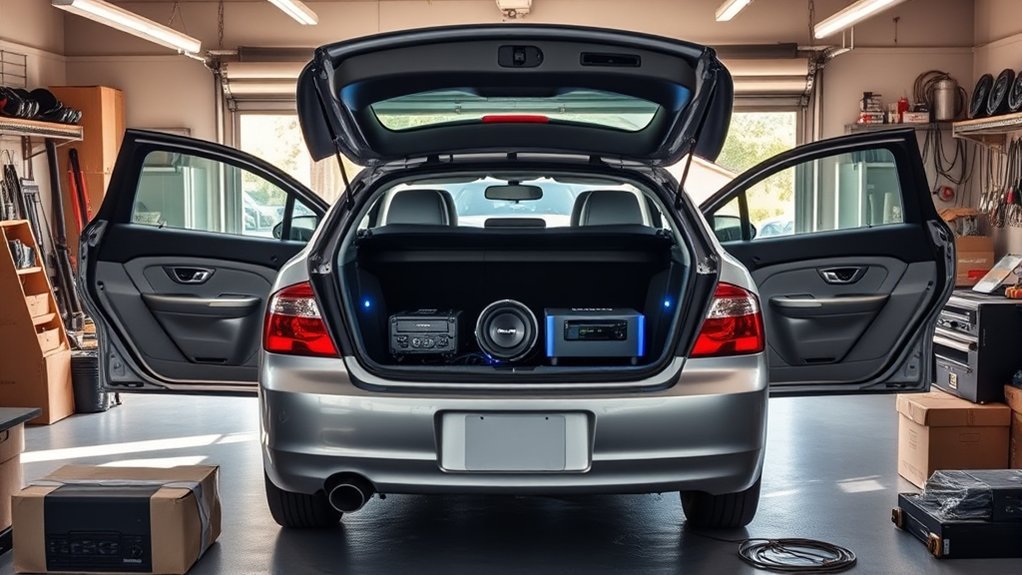
premium 2005 car audio setup

For a 2005 vehicle, the strongest sound-system foundation starts with a Sony 9500ES head unit, which adds modern control, Bluetooth connectivity, and a responsive touchscreen while improving overall source quality.

That source should feed a Helix DSP Ultra processor, enabling precise crossover, time alignment, and equalization control for a liberated, high-fidelity cabin presentation.

Speaker selection defines realism. Hertz Mille Pro drivers handle mids and highs with strong clarity and output, while Dynaudio Esotar mids add body and refinement where many older factory systems collapse.

Low-frequency authority comes from a JL 13W7 or Acoustic Elegance AV15, both capable of delivering depth, impact, and composure without masking upper detail.

To support amplifiers properly, 0 gauge OFC wiring is essential for current delivery and signal stability.

Combined, these components form a practical blueprint for the best car sound system in a 2005 platform, balancing modern usability, tunability, and serious acoustic performance.

Set Your 2005 Sound System Budget

Start with a realistic target: a complete 2005 sound-system upgrade typically lands between $500 and $1,500 once the head unit, speakers, amplifier, and installation are accounted for.

A disciplined budget gives the owner freedom to build the best car audio path without wasting money or sacrificing sound quality. Practical planning keeps the sound system balanced and upgrade-ready.

  1. Allocate 30-40% to core control hardware. This portion influences usability, tuning flexibility, connectivity, and long-term value before they make a purchase.
  2. Dedicate 40-50% to speakers. In many 2005 platforms, efficient aftermarket drivers from JBL, Alpine, or Kicker deliver the biggest jump in clarity, imaging, and tonal richness.
  3. Reserve about 20% for amplification, plus 10-15% for installation. Clean power reduces distortion, especially if subwoofers enter the plan, while proper wiring and fitment protect reliability.

This structure helps buyers escape weak factory audio and invest with intent, precision, and measurable performance gains.

Pick the Right Head Unit for Better Sound

A well-chosen head unit often delivers the most noticeable improvement in a 2005 sound system because it upgrades signal quality, tuning control, and daily usability in one step.

Factory radios typically limit clarity, output voltage, and adjustment range, while a modern head unit facilitates cleaner processing and stronger integration for a more liberated driving experience.

Models such as Pioneer or Sony 9500ES illustrate the advantage: better audio processing, refined EQ options, and feature-rich interfaces that surpass stock hardware.

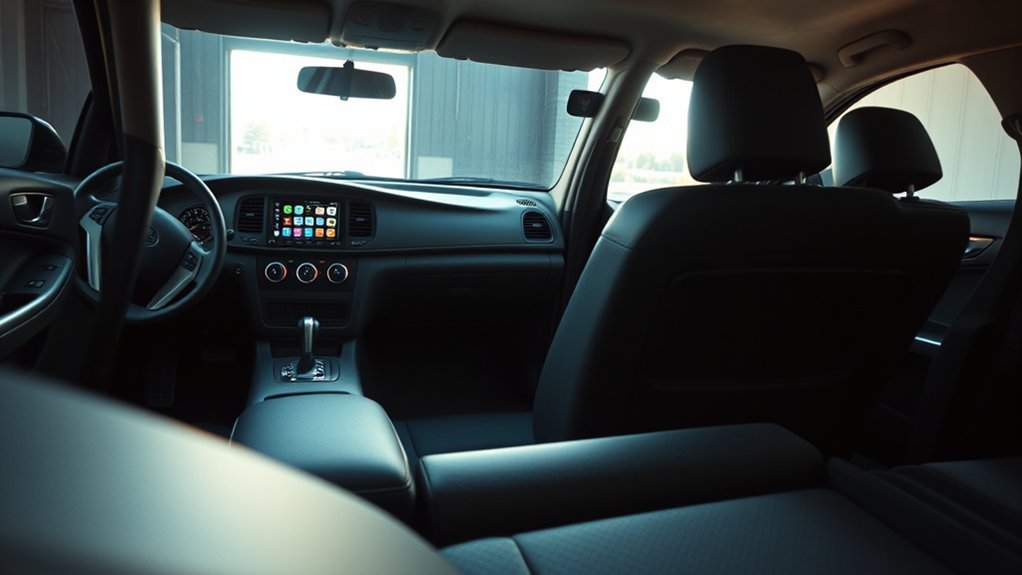
A double DIN head unit usually makes the strongest case, adding a larger display, Bluetooth, touchscreen control, and smartphone integration without sacrificing practicality.

Compatibility remains critical, since the chosen head unit must work correctly with existing amplifiers and wiring to preserve system balance.

Units with a high-quality DAC also deserve priority because they reduce distortion and improve detail retrieval.

Installation can require dash trimming or adapter kits, so proper tools and model-specific guides help maintain a clean, professional finish.

Choose 6.5-Inch Speakers for Your 2005

Most 2005 models are well suited to 6.5-inch speakers, making this size the logical baseline for a meaningful factory-audio upgrade. In practice, they deliver a clear step beyond tired OEM drivers and usually fit more naturally than 5-inch speakers, which can limit output and midbass authority.

For listeners seeking freedom from compressed, smeared stock sound, a quality 6.5-inch set creates a cleaner foundation.

  1. Choose component designs for stronger imaging and clearer frequency separation than basic full-range coaxials. Brands such as JBL, Alpine, and Hertz offer practical options.
  2. Target 50-100 watts RMS so the speakers can exploit the cleaner power available from aftermarket head units or compact amplifiers without audible strain.
  3. Verify cone materials and depth. Polypropylene cones and butyl rubber surrounds improve durability, while mounting depth must match the 2005 door cavity unless adapters or custom baffles are planned.

This approach maximizes clarity, reliability, and upgrade headroom.

Add a Subwoofer to Fill Out the Bass

Adding a subwoofer such as the Acoustic Elegance AV15 or JL Audio 13W7 can extend low-frequency response and give a 2005 system the fuller bass output that 6.5-inch speakers cannot produce alone.

Performance depends heavily on selecting the right enclosure and placement, with properly sized or custom-built boxes typically delivering better output, control, and integration.

Clean results also require a dedicated mono amplifier, 0 gauge OFC wiring, and precise DSP tuning through a unit such as the Helix DSP Ultra.

Choosing The Right Sub

Why does the subwoofer choice matter so much in a 2005 build? It determines whether the system feels constrained or fully liberated across the lowest octaves.

In practical terms, a serious subwoofer such as the Acoustic Elegance AV15 or JL Audio 13W7 delivers stronger low-frequency extension, cleaner transient control, and better long-term durability than budget alternatives.

  1. Match RMS power carefully. The subwoofer should align with amplifier output to prevent distortion, thermal stress, and premature failure.
  2. Choose bass character intentionally. Sealed designs favor tighter, more accurate response, while ported approaches increase output and low-end reach.
  3. Prioritize engineering quality. Premium motor design, suspension control, and cone materials separate merely loud bass from articulate, commanding performance.

A well-chosen subwoofer gives a 2005 system authority, scale, and freedom from thin sound.

Enclosure And Placement

A properly designed enclosure and a disciplined placement strategy determine whether a subwoofer in a 2005 build sounds integrated or disconnected. A custom enclosure reveals cleaner low-frequency response while preserving cargo usability. Sealed designs suit listeners chasing tight, controlled bass; ported layouts deliver greater output and efficiency. Quality matters: MDF or birch plywood resists vibration, improves durability, and keeps the enclosure acoustically honest.

Choice Result
Sealed enclosure Tighter, more accurate bass
Ported enclosure Louder, more efficient bass
Trunk/rear placement Better cabin loading, fuller dispersion

Positioning in the trunk or rear area typically lets the cabin reinforce bass naturally, giving the system more freedom to breathe. A DSP can refine phase and time alignment for stronger subwoofer integration without compromising the character of premium speakers.

Power And Tuning

Round out the low end with a properly powered subwoofer, and a 2005 system gains the weight and extension that factory or front-stage speakers cannot reproduce alone.

Models like the Acoustic Elegance AV15 or JL Audio 13W7 deliver deeper response, but only when matched with clean RMS power.

  1. A dedicated Audison or Helix amplifier supplies stable power, preserving control at high excursion.
  2. A Helix DSP Ultra enables crossover, phase, and delay tuning so bass integrates cleanly instead of sounding detached.
  3. Proper installation matters: a custom enclosure, correct gain structure, and 0 gauge OFC wiring reduce distortion, improve resonance, and prevent voltage drop.

When tuned correctly, the subwoofer stops sounding like an add-on and becomes the foundation of a freer, more immersive system in daily driving.

Choose the Right Amp and Power Setup

Choosing the right amplifier for a 2005 system starts with proper channel matching: a mono amp suits a subwoofer, while a multi-channel Audison or Helix amplifier can run speakers and bass drivers with better system control.

RMS output should match or slightly exceed the speakers’ and subwoofer’s rated handling to maintain clean, balanced performance.

Proper power delivery is equally critical, and 0 gauge OFC wiring, secure mounting, and tidy cable routing help reduce voltage drop, noise, and reliability issues.

Amplifier Channel Matching

For most 2005 sound system upgrades, amplifier channel matching starts with RMS power, channel count, and load stability rather than peak-watt marketing claims. Effective amplifier channel matching frees the system from clipped output and underpowered strain. Practical setups usually target amplifiers delivering roughly 75 to 100 percent of speaker RMS ratings.

  1. A four-channel amplifier suits front and rear full-range speakers, while a dedicated mono amp controls subwoofer duty with greater efficiency.
  2. Speaker impedance matters: common 4-ohm and 2-ohm loads require an amplifier stable at that rating, whether from Alpine, JL Audio, or Rockford Fosgate.
  3. Built-in crossovers improve frequency allocation, preserving clarity and reducing overload risk across mids, tweeters, and bass drivers.

The result is cleaner dynamics, stronger control, and a more liberated listening experience overall.

Proper Power Wiring

Every reliable 2005 sound system build depends on an amplifier and power setup sized for real current demand, not inflated peak figures. RMS ratings should match or slightly exceed speaker handling to avoid clipping, distortion, and long-term damage.

Mono amplifiers suit subwoofers, while multi-channel designs from brands like JL Audio, Alpine, or Rockford Fosgate efficiently run full speaker arrays.

For proper power wiring, 0 gauge OFC cable remains the practical standard for high-current amplifier installations, minimizing voltage drop and preserving output under load. The main power wire should be fused near the battery to guard against shorts and catastrophic failure.

Ground points, terminals, and splices must be tight, clean, and insulated, because unstable connections invite noise, interference, and reduced system authority, limiting the freedom a well-built system should deliver.

Install Your 2005 Sound System Cleanly

Start with a layout that supports both performance and serviceability: in a 2005 vehicle, a clean sound-system install depends on correct component fitment, disciplined wire routing, and secure mounting.

A clean 2005 audio install begins with proper fitment, disciplined routing, and secure mounting for lasting performance and easy service.

The dashboard should accept a properly sized head unit; double DIN models from Alpine, Kenwood, or Sony offer larger displays and freer control if the dash permits.

  1. Use 0 gauge OFC power cable for amplifiers, routing it separately from signal wires to reduce induced noise and preserve dynamic output.
  2. Replace factory speakers with quality component sets, which deliver clearer imaging, stronger frequency response, and a more open listening experience.
  3. Secure every amplifier, crossover, and distribution block firmly, and loom or tie wiring to prevent rattles, abrasion, and future service complications.

A professional install remains a practical option when dash trimming, bracket fabrication, or integration complexity exceeds basic tools.

Clean execution protects performance, simplifies upgrades, and lets the 2005 cabin feel less constrained by factory limits.

Frequently Asked Questions

What Is the Best Sound System to Install in My Car?

The best car sound system prioritizes Sound Quality: a Sony 9500ES head unit, Hertz Mille Pro speakers, an Audison amplifier, and a JL 13W7 subwoofer. This practical, brand-aware combination delivers clean, powerful, distortion-free performance and driving freedom.

Which Is the No. 1 Sound System?

The no. 1 sound system is typically a Helix DSP Ultra–based setup; yet the real surprise is its Sound Quality freedom, released through Audison amplification, Hertz Mille Pro components, and a JL Audio subwoofer.

What Is the Best Sound System for a Car Under $30,000?

The best car sound system under $30,000 uses Budget Options: Pioneer AVH-W4500NEX head unit, Hertz Mille Pro components, Rockford Fosgate R500X1D amplifier, JL Audio 10W3v3 subwoofer, and 0-gauge OFC wiring, delivering practical, distortion-controlled sonic freedom.

What Should I Upgrade First in My Car Audio System?

A practical example: a driver first upgrades the head unit, immediately freeing cleaner signal processing. That step most effectively improves Speaker Quality, while adding Bluetooth, tuning control, and expansion paths for later Audison, Helix, or subwoofer upgrades.

Conclusion

For a 2005 model, the best sound-system upgrade is the one balanced like a well-tuned orchestra: a reliable Alpine, Pioneer, or Kenwood head unit, quality 6.5-inch component speakers, a compact JL Audio or Rockford Fosgate subwoofer, and a properly matched amplifier with clean wiring. Budget, fitment, and power management determine long-term results. When selected and installed with precision, the system delivers modern clarity and impact—proof that even an older cabin can sing with near-concert discipline and confidence.

Sharing Is Caring:
About the Author

Natalie Rhodes is a writer at GoMyReview who focuses on practical automotive troubleshooting, vehicle maintenance, and consumer technology. She creates clear, reader-friendly guides that help everyday users understand common problems and make informed decisions. Her work covers topics ranging from Toyota Camry engine and cooling issues to laptop performance and temperature monitoring. Natalie is committed to careful research, straightforward explanations, and useful solutions that readers can confidently apply.

Leave a Comment