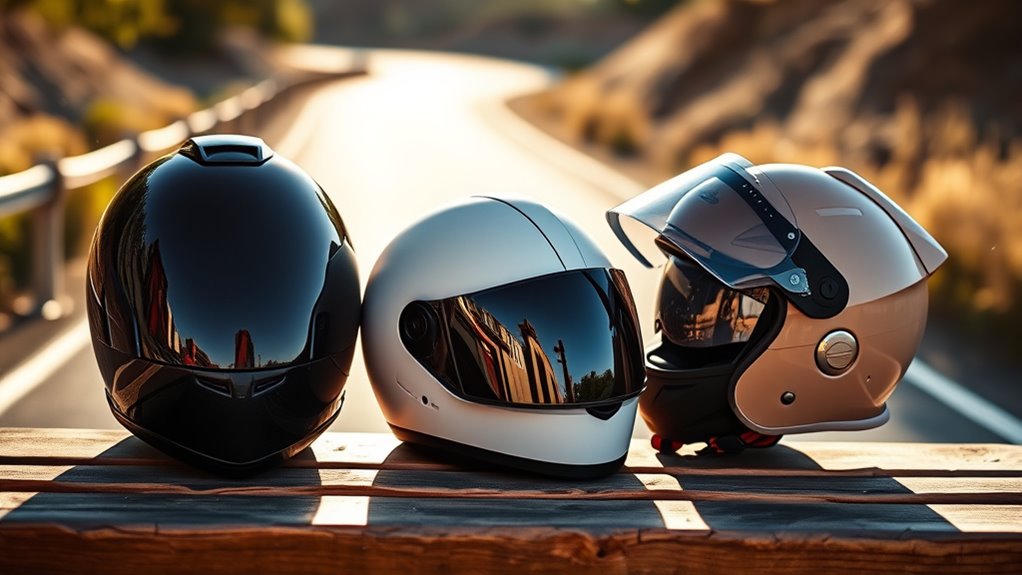
The best motorcycle helmet for sun protection is usually a full-face or modular helmet with an internal drop-down visor. Full-face designs block glare from more angles, while modular models add convenience for changing light. ECE 22.06 certification is a strong safety marker, and adventure helmets with peaks can help in low winter sun. Shoei, AGV, and Nexx are often recommended. The right choice depends on fit, comfort, and riding conditions, with more useful details ahead.
Key Takeaways
- Full-face helmets give the best sun protection by covering the chin, face, and sides from glare and UV exposure.
- Helmets with integrated drop-down sun visors are the most practical for changing light conditions.
- ECE 22.06-certified helmets offer stronger overall safety, making them the best choice beyond sun protection alone.
- Adventure helmets with peaks help block low-angle sunlight and work well for winter or all-day riding.
- Shoei, AGV, and Nexx X.WED3 are strong options because they combine good sun defense with comfort and visibility.
Which Motorcycle Helmet Is Best for Sun?
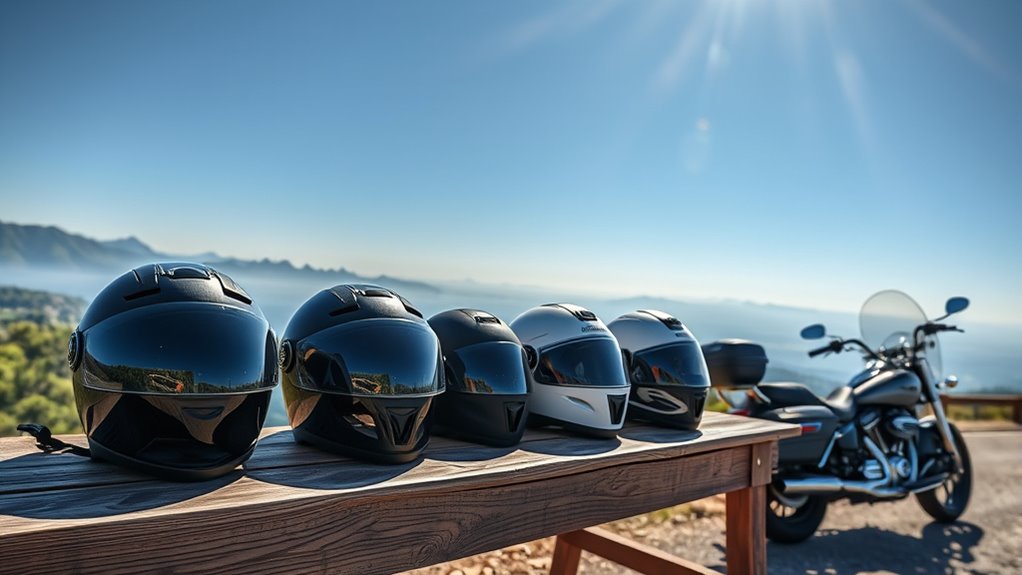
For riders choosing a motorcycle helmet for sun exposure, the best options are typically helmets with integrated drop-down sun visors, such as models from Shoei, AGV, or the Nexx X.WED3, because they block glare without requiring a separate tinted shield.
An internal drop-down sun visor is the most practical answer for changing light, since it can be lowered quickly when glare becomes harsh and raised when visibility improves.
Research and safety standards matter too; helmets meeting ECE 22.06 often reflect stronger overall protection, while some designs also support better glare management.
Peaked adventure helmets, such as the Shoei Hornet ADV 06, help with low-angle sunlight during early or late rides.
Modular helmets with retractable sunshades also offer adaptable comfort.
For riders seeking freedom on the road, these features reduce distraction, preserve clear vision, and support confident movement under bright skies.
Why Full-Face Helmets Block the Most Sun
Full-face helmets block the most sun because the chin bar and visor create a continuous shield across the face, reducing direct exposure from the front and below.
This coverage also helps seal out glare from changing light angles, which supports safer vision in bright riding conditions.
Compared with open-face designs, the tighter enclosure offers more practical protection against UV exposure and sun interference.
Chin Bar Coverage
A full-face helmet’s chin bar provides one of the most effective forms of sun protection because it shields the lower face from direct light and reduces glare entering from multiple angles.
This chin bar coverage limits exposure that open-face and modular designs leave vulnerable, making it a practical choice for riders who want freedom without unnecessary strain.
By enclosing more of the face, the helmet helps keep vision steadier in bright conditions, supporting safer, more confident travel.
Many models also include drop-down sun visors, adding another layer of control against harsh sunlight.
Aerodynamic shaping can improve stability at speed, which matters when bright conditions demand constant attention.
With options from budget to premium levels, riders can select a certified full-face helmet that protects the face while preserving autonomy.
Seal Against Glare
Glare control becomes strongest when the helmet closes off more of the rider’s field from direct sunlight, and full-face designs do this better than other styles by blocking light from multiple angles.
That seal matters most at dawn and dusk, when low sun can flood open areas and strain judgment. A full-face shell, paired with an internal drop-down sun visor, adds a second layer of defense without forcing the rider to compromise visibility.
Aerodynamic shaping also helps by reducing wind buffeting that can scatter attention when heading toward the sun. Brands such as Shoei and AGV build in tinted visors and extended coverage for this reason.
When a helmet meets ECE 22.06, the rider gains tested protection, clear sightlines, and more freedom to ride with confidence.
Are Modular Helmets Good for Sun Protection?
Modular helmets can provide strong sun protection through built-in drop-down visors that reduce glare and improve visibility in bright conditions.
Their adjustable sun shields make them practical for low-sun riding, especially when light changes quickly during long trips.
However, the added flip-front design can create more wind resistance than a full-face helmet, so comfort and protection must be weighed together.
Built-In Sun Shields
Built-in sun shields make modular helmets a practical option for riders who want dependable sun protection without extra accessories. These built-in sun shields provide immediate glare reduction, helping preserve visibility when sunlight strikes directly.
Models such as the Shoei Neotec 3 and Nexx X.WED 3 show how a drop-down visor can be deployed quickly while riding, supporting safer decisions in changing light. This design gives riders a useful balance of freedom and control: the helmet can be adjusted for airflow or visibility without sacrificing sun defense.
For commuters, touring riders, and anyone crossing bright roads, modular helmets with integrated shields offer a researched, functional response to sun exposure. They reduce reliance on add-on gear and keep protection built into the helmet itself.
Low-Sun Riding Comfort
Low-sun riding often tests both comfort and visibility, and modular helmets address that problem with a practical mix of sun protection and ease of use.
Their retractable shields help riders manage glare without interrupting flow, while a drop-down sun visor can be lowered quickly when sunlight turns harsh. The Shoei Neotec 3 shows how a built-in shield can support comfort in bright, low-angle conditions.
Many modular designs also emphasize ventilation, which matters during long sunny rides because trapped heat can reduce focus and endurance. Quick shifts between closed and open configurations further support riders moving between shade and direct sun.
For those seeking freedom on the road, modular helmets offer a balanced, safety-minded way to stay protected and comfortable while keeping control of changing light.
Modular Helmet Tradeoffs
When evaluating sun protection, modular helmets offer a useful compromise rather than a perfect solution. Many modular helmets, including the Shoei Neotec 3, use retractable sunshields that adapt well to changing light, helping riders stay composed and free to focus on the road. The drop-down visor can reduce glare and improve visibility in bright conditions.
However, modular designs may sacrifice aerodynamics, increasing wind resistance and reducing comfort in strong sun and open air. Fit matters: a visor that does not seal properly can let sunlight slip in, weakening protection.
Compared with full-face helmets, modular helmets usually provide less coverage from sunlight and wind. For riders seeking flexibility and control, they are practical, but not the strongest choice for maximum sun defense and long-haul liberation.
Internal Sun Visors vs. Tinted Shields
Internal sun visors offer a practical advantage for riders who face changing light, since they can be dropped down instantly to reduce glare without replacing the main shield. This internal sun visor design supports freedom from extra gear and stops, letting riders adapt while moving through shifting sun and shade.
For commuting or touring, that flexibility can improve comfort and reduce distraction. By contrast, tinted shields provide a fixed level of sun protection, but they can limit visibility when weather turns cloudy, dusk arrives, or a route moves into shade. They also require a stop if conditions change, which adds delay and reduces convenience.
Helmets from brands such as Shoei and AGV show how integrated visors can balance clarity and comfort for long-distance use. For riders seeking practical independence, internal visors usually offer the more versatile solution, while tinted shields suit consistent bright conditions.
Best Adventure Helmets for Low Winter Sun
Adventure helmets suited to low winter sun often combine peak sun shielding with a drop-down visor to reduce glare without sacrificing quick adjustments during changing light.
Models such as the Shoei Hornet ADV 06 and Nexx X.WED3 also add ECE 22.06-certified protection, while removable peaks on options like the Arai Tour-X5 and Schuberth E2 allow coverage to be tuned to conditions.
A wide viewport remains important for winter visibility, and MIPS-equipped designs can add impact protection for riders in variable light.
Peak Sun Shielding
A well-chosen peaked adventure helmet can make a noticeable difference in low winter sun, where glare is often strongest during early morning and late-afternoon rides.
For peak sun shielding, models such as the Shoei Hornet ADV 06 and Arai Tour-X5 are designed to interrupt direct light before it reaches the eyes, supporting clearer vision and calmer decision-making.
Riders seeking practical freedom often value a multi-composite shell and a secure double-D ring fastener, while ECE 22.06-rated options like the Nexx X.WED3 add stronger impact testing.
Reported satisfaction is high because these helmets reduce squinting, improve visibility, and help riders stay focused when the road demands confidence rather than compromise.
Drop-Down Visor Benefit
Drop-down sun visors offer a practical advantage in low winter light by reducing glare without requiring riders to stop and change eyewear.
In adventure helmets, the drop-down sun visor gives immediate shade when the sun sits low on the horizon, helping riders maintain calm focus and a sense of freedom on the road.
Models such as the Nexx X.WED 3 use an internal shield for changing light, while Arai and Shoei systems are also noted for glare control.
Safety remains central: MIPS-equipped helmets add rotational-impact protection, and the Arai Tour-X5 combines a multi-composite shell with a double-D ring fastener for secure fit.
Unlike external peaks, this solution works smoothly with minimal drag, making it a practical choice for liberated winter touring.
Winter Ride Visibility
Low winter sun can turn an otherwise clear ride into a visibility challenge, especially on early morning roads where glare sits at eye level.
Peaked adventure helmets, including the Shoei Hornet ADV 06, help shield the eyes and preserve forward vision when the horizon burns bright. For riders seeking flexibility, an internal drop-down sun visor, as seen in the Nexx X.WED3, lets light levels be managed without stopping.
The Arai Tour-X5 adds quick-release visor adjustment for fast changes. Mips® technology matters too, because reduced rotational forces support safety when visibility is compromised.
Removable peaks can free the rider from glare, yet they may add wind resistance. The best setup balances protection, calm control, and open-road independence.
Do Peaked Helmets Help Against Bright Sun?
Yes—peaked adventure helmets can help against bright sun by blocking direct sunlight and reducing glare, especially when the sun sits low on the horizon during early morning or late afternoon rides.
In practice, peaked helmets offer a simple mechanical advantage: the visor shades the rider’s eyes and can improve forward visibility when the sun is directly ahead. That matters on winter roads, where low-angle light can turn routine travel into a strain.
Many riders also prefer helmets with an internal drop-down sun visor, because it adds another layer of glare control without needing extra shields. Reports from long-distance riders suggest greater comfort and less eye fatigue, which supports safer, freer movement over distance.
Removable peaks may be convenient, but fixed designs often provide steadier sun protection with less wind resistance. For riders seeking clear sightlines and more relaxed control, the peaked format remains a practical choice.
How Mips and ECE 22.06 Improve Safety
When safety is the priority, MIPS and ECE 22.06 add meaningful protection beyond basic shell coverage.
MIPS helps manage rotational forces by letting the helmet move slightly relative to the head during angled impacts, a design intended to reduce the risk of brain injury.
ECE 22.06 strengthens that protection with stricter laboratory testing, including impacts at multiple speeds and positions. Helmets certified to this standard must survive 18 impact points, giving riders a broader measure of real-world resilience.
The test regime also includes higher-speed chin bar checks, which matters when impact energy rises quickly.
Together, MIPS and ECE 22.06 support a more complete safety strategy: one addresses twist forces, the other verifies performance across demanding crash scenarios.
For riders seeking freedom with fewer compromises, these features offer practical evidence that a helmet is prepared for more than fair-weather riding.
Which Helmet Fasteners Are Best for Riding?
For riders choosing a helmet fastener, the double-D ring remains the benchmark for safety because its simple, adjustable design provides the most reliable retention in a crash. Research and current ECE 22.06 practice favor this system for riders who want dependable control without compromise.
Its appeal is practical: it is secure, works well with gloves, and stays consistent on long rides, even under heat and vibration.
Micrometric buckles offer quicker one-handed use, which suits commuters who need fast on-and-off convenience. Ratchet-style fasteners provide easy adjustment, but their security margin is generally lower, so they fit casual riding better than demanding use.
For sun shield-equipped helmets, the fastener should never distract from fit or stability. A helmet that can be adjusted smoothly, then locked firmly, supports both freedom and protection.
In safety terms, the best fastener is the one that stays closed when it matters most.
Best Helmet Brands for Sun Protection
With the helmet securely fastened and fit confirmed, brand choice becomes the next factor in managing sun exposure on the road. Research favors models with an internal drop-down sun visor or a tinted face shield, since they reduce glare without extra gear. Shoei and AGV stand out here; both offer refined mechanisms and ECE 22.06-certified options.
| Brand | Sun-Protection Strength |
|---|---|
| Shoei | internal visor, safety-rated |
| AGV | internal visor, road-ready |
| Arai | peaked adventure design |
| HJC | easy sun visor use |
| Bell | ventilation, aerodynamic shell |
Arai and Nexx suit riders who want peaked adventure helmets for stronger overhead shading and clearer sightlines. HJC and Scorpion emphasize long-distance convenience, letting light changes be managed quickly. Schuberth, Shoei, Bell, and Shark add safety-focused construction, ventilation, and aerodynamic efficiency. Taken together, these brands support freer, safer riding under harsh sun, while keeping protection practical rather than bulky.
How to Choose the Right Fit for Comfort
A proper fit begins with an accurate head measurement taken just above the eyebrows, since helmet size depends on circumference as much as on brand or style. The ideal helmet should rest with even pressure across the skull, not pinch at the temples or float at the crown.
In-store try-ons matter because brands fit differently, and riders who wear glasses should confirm that frames remain comfortable under the padding. For sun exposure, adjustable internal sun visors and removable padding can improve visibility and reduce strain when light changes.
A secure fit supports both protection and ease, especially on long rides where shifting can become distracting. The shell should feel stable without forcing the rider into discomfort.
Regular inspection for wear, loose padding, or stretched retention systems keeps the fit reliable. Comfort is not a luxury; it is a practical condition for riding with confidence and freedom under the sun.
Frequently Asked Questions
What Is the Best Motorcycle Helmet for Hot Weather?
Ventilation-focused helmets are best for hot weather, especially the Schuberth C5 or lightweight HJC C91. Superior Ventilation Features, ECE 22.06 safety, and drop-down sun visors help riders stay cool, protected, and free.
What Is the Best Helmet for Sun Protection?
Hands down, a helmet with an internal drop-down sun visor offers the best protection. Material Matters: ECE 22.06-rated models from Shoei or Nexx, especially peaked adventure lids, reduce glare safely and practically for freer riding.
What Is the Best Bike Helmet for Sun Protection?
A helmet with an internal drop-down sun visor and ECE 22.06 Safety Standards is often best for sun protection. Research-driven riders may also prefer peaked adventure models, multi-composite shells, and MIPS for practical glare reduction.
Which Motorcycle Helmet Has the Best Internal Sun Visor?
Shoei GT-Air 3 appears strongest, with crisp visor quality and smooth operation; the sun drops like a quiet curtain, reducing glare safely. AGV and Neotec 3 also perform well for practical, liberating daytime riding.
Conclusion
In the end, the best motorcycle helmet for sun protection is the one that combines full coverage, a well-designed face shield, and an internal sun visor or high-quality tinted shield. Full-face and many adventure helmets offer the strongest defense against glare, while proper fit matters just as much for comfort and safety. Like a pair of good sunglasses built into armor, the right helmet reduces eye strain, improves focus, and helps keep every ride safer.

