
You spend a lot of time behind the wheel, and automotive glass has a major effect on heat, glare, privacy, and visibility. The right car window tint film can make a cabin more comfortable and help reduce sun exposure, but the best choice depends on which window you are tinting, how much visible light you want to keep, and what your local law allows.
This guide compares three different film styles: a 20% metalized film, a 5% carbon privacy film, and an 80% nano-ceramic film. They solve different problems, so the goal is not simply to choose the darkest option—it is to match the film to your window position, visibility needs, installation confidence, and legal VLT limits.
Affiliate disclosure: This roundup contains Amazon affiliate links. If you buy through them, we may earn a commission at no extra cost to you.
Before you buy: Check your state or local tint law for each window position. VLT rules can apply to the combined glass-and-film system, not just the film by itself. Very dark 5% or 20% film is generally a poor fit for full-windshield use, and even a light 80% film may not be legal on every windshield once combined with factory glass. Do not cover camera, sensor, or inspection areas unless your vehicle maker and local rules allow it.
Top Picks
|
Category |
Product |
Best For |
|---|---|---|
|
🏆 Best Reflective Film |
Heat reflection and DIY-friendly side/rear window projects where 20% VLT is legal |
|
|
💰 Best for Maximum Privacy |
Very dark rear or side glass where 5% VLT is permitted |
|
|
🎯 Best High-Visibility UV Protection |
Drivers who want high VLT with advertised UV and infrared rejection |
How We Selected
When you compare car window tint films, start with the window position and legal VLT limit. A film that makes sense on a rear side window may be unsuitable for the windshield or front side glass. We also looked at construction type, visible light transmission, heat-management claims, UV protection, roll size, installation method, scratch resistance, and whether the film suits a realistic DIY project.
We also considered the tradeoff between darkness and visibility. Metalized film can reflect heat, carbon film is often chosen for privacy and a dark appearance, and ceramic film can provide sun protection with less visible darkening. Because legal limits and factory glass vary, the final installed VLT should be checked rather than relying on the film percentage alone.
Black Magic Tint

Black Magic 5044829 is a 20% VLT metalized tint film in a 24-inch by 78-inch size. The current Amazon listing describes a metalized layer for heat reflection, a scratch-resistant finish, peel-and-stick installation, and use on cars, trucks, vans, and home glass. It also lists the film as removable and reusable.
Why you may like it: it targets buyers who want a darker, reflective film that feels more substantial than a basic dyed sheet and includes an installation kit. The main limitation is the 20% VLT: that level is too dark for many windshield and front-window applications, so treat it as a side/rear-window or non-automotive option only where local rules allow.
[Amazon Products Picked for You]

Protecting Your Eyes: In the early morning or late afternoon, light penetrates right through the windshield and irritates your eyes. Using our tint for car windows significantly reduces the penetration of these rays, helping to keep your view stabilized and reducing glare

HIGH DEFINITION ANTI-GLARE WINDSHIELD TINT STRIP: Our windshield tint strip delivers clear vision and premium anti-glare performance for safer driving. It relieves eye strain during morning commutes, highway trips and night driving, cutting harsh glare to create a cozy, comfortable ride for drivers and passengers

ROCKROSE CARBON WINDOW TINT: To protect the interior of your car, use RockRose cutting-edge window tint car. It is made from superior 2PLY Premium Carbon Film, which produces a powerful barrier that blocks 99% of UV rays. The shade of auto window tint not only blocks UV rays but also cuts down on up to 55% of infrared radiation, reducing cabin heat and creating a cooler ride.
Buyer Feedback Snapshot
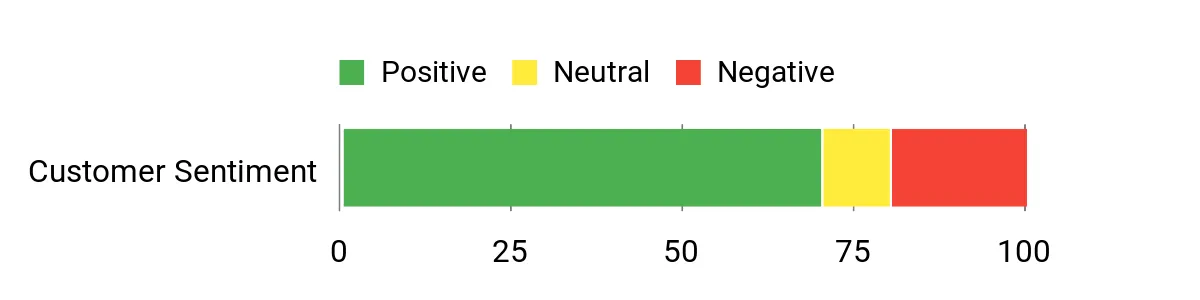
The source article’s review analysis highlights material thickness, heat reflection, and the included installation tools as positives, while curved-glass installation and occasional item-type confusion are noted as drawbacks. Treat the chart below as a snapshot rather than live Amazon review data because ratings and review counts can change.
|
Pros |
Cons |
|---|---|
|
✅ Metalized construction is designed to reflect heat |
❌ 20% VLT is too dark for many windshield and front-window laws |
|
✅ Scratch-resistant finish supports easier maintenance |
❌ Amazon does not list ultraviolet-light protection as a product attribute |
|
✅ Installation kit is included |
❌ Curved automotive glass can be harder for first-time installers |
|
✅ Listing describes the film as removable and reusable |
Long-Term Cost Benefits
A durable film can help you avoid replacing a poorly performing tint as often, and a reflective layer may reduce some solar heat entering through treated glass. Any energy savings will depend on vehicle size, climate, glass area, and how the vehicle is used, so do not treat tint as a guaranteed fuel-saving upgrade.
Return On Investment
The clearest value comes from DIY installation if you can achieve a clean result without wasting material. The included kit reduces the number of extra tools you need to buy, but a failed install on curved glass can erase those savings quickly.
Use Cases
|
Situation |
How It Helps |
|---|---|
|
Legal Side or Rear Window Tinting |
Provides a darker 20% VLT appearance with a metalized layer designed to reflect heat. |
|
Parked In Strong Sun |
Can reduce some solar heat through treated glass and make the cabin feel less exposed to direct sun. |
|
Nonstandard Applications |
The listing also identifies cars, trucks, vans, and home use, giving the roll more flexibility than a vehicle-specific precut kit. |
Versatility
The 24-by-78-inch roll can work for targeted automotive or household-glass projects. It is not a precut vehicle kit, so measure each pane first and allow extra material for trimming.
Aesthetic Appeal
A 20% VLT film creates a noticeably dark appearance without reaching the near-black look of 5% limo tint. The metalized construction can also give the glass a more reflective character than carbon or ceramic film.
Safety Features
Reducing glare can improve visual comfort, but darker film also reduces transmitted light. Do not use this 20% film on a windshield or other visibility-critical glass unless the combined glass-and-film result is legal and appropriate for the vehicle.
Durability
The Amazon listing describes the film as fade- and scratch-resistant and says it has been tested for endurance, clarity, quality, fade, and bubble factors. Installation quality still matters: contamination, creases, or poor edge finishing can shorten useful life.
Energy Efficiency
The metalized layer is designed to reflect heat, which can reduce solar load through treated glass. The real effect will vary by vehicle, weather, and how much glass is covered.
Key Benefits
- 20% VLT for a darker appearance on legally permitted windows
- Metalized layer designed to reflect heat
- Scratch-resistant finish
- Installation kit included
- Removable and reusable according to the listing
Check Product Details on Amazon
LEXEN Carbon

LEXEN’s 2-ply premium carbon roll is listed as a 24-inch by 10-foot film in a 5% limo shade. That makes it the privacy-first option in this comparison. A 5% VLT film is extremely dark, so it makes the most sense for legally permitted rear or side glass rather than a windshield or visibility-critical front window.
Why you may like it: the dark carbon look is appealing if maximum privacy is your priority and you are working on a small, targeted DIY project. Who should avoid it: drivers who need strong night visibility, buyers tinting a windshield, or anyone whose local law requires a substantially higher VLT.
[Amazon Products Picked for You]

5% VLT: A 5% visible light transmission rating means this window car tint blocks 95% of incoming light. Install it along your windshield's upper edge, and it will intercept harsh sunlight and glare right at the top. This significantly cuts down the eye fatigue caused by low-angle sun

Anti-glare Effect: This sun visor film reduces harsh glare from sunlight, oncoming traffic lights, and road reflections, easing eye strain and boosting visibility for safer driving day and night.
99% UV BLOCK & HEAT REDUCTION: This window tint film blocks up to 99% of harmful UV rays while helping reduce infrared heat and solar energy buildup. Helps protect vehicle interiors and home furnishings from sun-related fading while creating a cooler, more comfortable environment.
Buyer Feedback Snapshot
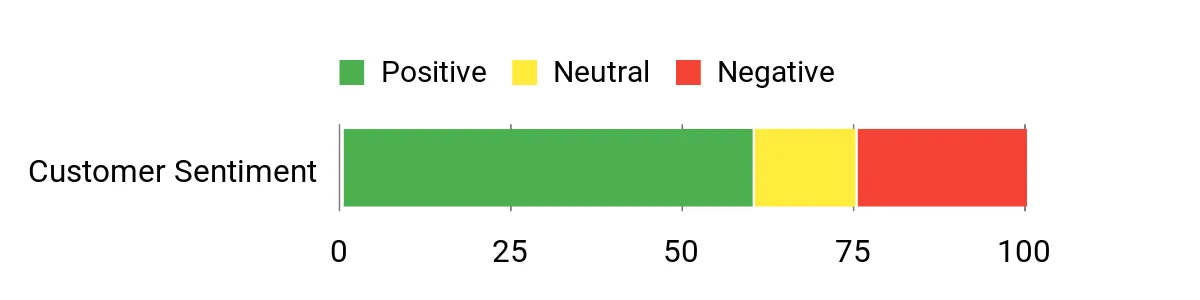
The source article’s review analysis emphasizes the film’s dark appearance and substantial feel, while also noting limitations around roll length, included-tool quality, and consistency. Treat the chart below as a historical snapshot rather than live Amazon review data.
|
Pros |
Cons |
|---|---|
|
✅ 5% VLT delivers very strong privacy |
❌ Too dark for most windshield applications and many front side windows |
|
✅ 2-ply carbon construction targets a dark, non-metalized look |
❌ Very low VLT can make nighttime visibility worse |
|
✅ 24-inch by 10-foot roll suits smaller DIY projects |
❌ One roll may not cover a full larger vehicle |
Long-Term Cost Benefits
If the film is legal for the windows you plan to cover and you install it successfully, DIY tinting can cost less than professional labor. The bigger consideration is whether you will need extra material for mistakes or additional windows.
Return On Investment
The value is strongest for buyers who specifically want deep privacy on a limited number of windows. It is weaker if you need broad vehicle coverage, a lighter legal VLT, or professional-level edge finishing.
Use Cases
|
Situation |
How It Helps |
|---|---|
|
Rear Window Privacy |
Creates a very dark appearance where 5% tint is legal and where maximum outside-to-inside privacy is the priority. |
|
Targeted Side-Window Projects |
The 24-inch by 10-foot roll can suit smaller jobs without buying a large bulk roll. |
|
Practice on Flat Glass |
A roll format lets DIY users cut and fit material themselves, although clean glass preparation and careful trimming are still essential. |
Versatility
This option is more specialized than the other two because the 5% shade is intentionally very dark. It is best considered for rear or side windows that legally allow that level of tint rather than as a universal vehicle-glass solution.
Aesthetic Appeal
The 5% limo shade delivers the darkest look in this comparison. Buyers who want a privacy-focused, near-black appearance will prefer it over the lighter 20% Black Magic film or transparent 80% SW film.
Safety Features
Dark film can reduce bright daytime glare, but 5% VLT also transmits very little visible light. That makes legal placement and nighttime visibility especially important. Avoid using it on visibility-critical glass unless explicitly permitted and safe for your use case.
Durability
The product is marketed as a 2-ply premium carbon film. Long-term appearance depends heavily on surface preparation, correct heat shaping where required, edge finishing, and avoiding contamination during installation.
Energy Efficiency
Carbon tint can reduce some solar load compared with untreated glass, but this article does not have verified manufacturer data for a specific infrared-rejection or total-solar-energy-rejection percentage for this exact LEXEN listing. It is safer to choose it primarily for darkness and privacy rather than a claimed heat-rejection number.
Key Benefits
- 5% limo shade for maximum privacy where legal
- 2-ply premium carbon window tint film
- 24-inch by 10-foot roll for targeted projects
- Best suited to buyers who prioritize a very dark appearance
Check Product Details on Amazon
SW Ceramic

SW Nano Ceramic Car Window Film is the high-visibility option in this roundup. The current Amazon listing identifies the selected roll as 60 inches by 16.5 feet with 80% VLT, PET construction, a self-adhesive 2-ply structure, and a scratch-resistant coating. The listing also claims 99% UV rejection, 90%–95% infrared rejection, 46% total solar energy rejection, and 19% glare reduction.
Why you may like it: it aims to reduce UV and heat without giving the glass the dark look of 20% or 5% film. That makes it the strongest fit here for drivers who want to preserve daylight visibility. Still, do not assume “80% VLT” automatically makes it windshield-legal: the combined VLT of factory glass plus film and your local rules matter.
[Amazon Products Picked for You]

NANO CERAMIC WINDOW TINT: Use our Nano Ceramic window tint for home or for car to fully experience the capabilities of our state-of-the-art heat blocking technology. In addition to giving off a sleek, black appearance, its light transmission (VLT) serves as a powerful barrier providing unrivaled protection that blocks damaging UV rays, infrared radiation, and intense heat.

<p>Product action </p> <p>1:Make your car beautiful, personal and different</p> <p>2:Protect your skin from UV rays. Effectively protect the car from fading and aging</p> <p>3:Avoid overheating caused by solar radiation, reduce the use of air conditioning, save fuel</p> <p>4:Adopting the most advanced ceramic nano technology, it ensures more stable quality. The film color and heat insulation effect can be controlled within a 20% decline in 5 years</p>

NANO CERAMIC WINDOW TINT: Use our Nano Ceramic window tint for home or for car to fully experience the capabilities of our state-of-the-art heat blocking technology. In addition to giving off a sleek, black appearance, its light transmission (VLT) serves as a powerful barrier providing unrivaled protection that blocks damaging UV rays, infrared radiation, and intense heat.
Buyer Feedback Snapshot
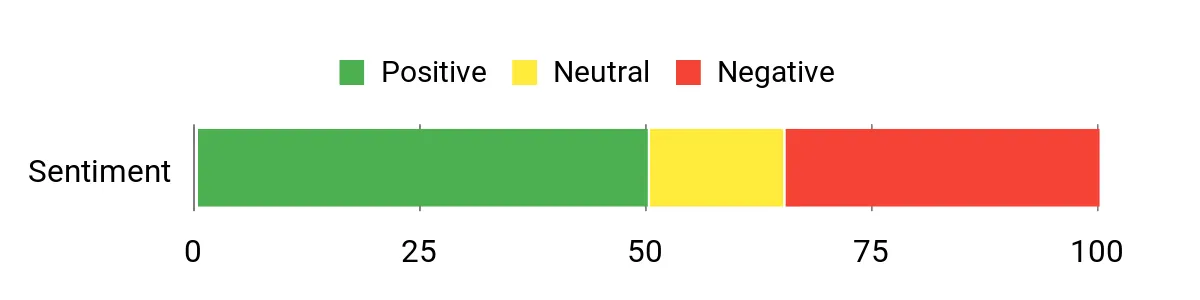
The source article’s review analysis describes heat reduction and preserved visibility as the main attractions, while installation on curved glass is the recurring challenge. Treat the chart below as a snapshot rather than live Amazon review data.
|
Pros |
Cons |
|---|---|
|
✅ 80% VLT keeps the film relatively light |
❌ Curved glass can be difficult for inexperienced installers |
|
✅ Listing claims 99% UV rejection and 90%–95% infrared rejection |
❌ High VLT provides much less privacy than dark tint |
|
✅ Large 60-inch by 16.5-foot roll can cover multiple windows |
❌ Requires careful wet application and bubble removal |
|
✅ Scratch-resistant, self-adhesive 2-ply construction |
Long-Term Cost Benefits
The large roll can provide better value if you need to cover several windows, and the scratch-resistant surface may help preserve appearance. UV rejection can also help reduce sun exposure to interior materials, although actual fade protection depends on the material, exposure time, and installation coverage.
Return On Investment
This film makes the most sense if you value high visibility and sun protection more than privacy. DIY installation can save labor, but professional fitting may be worth considering on complex curves if you want a cleaner finish and less wasted material.
Use Cases
|
Situation |
How It Helps |
|---|---|
|
High-Visibility Automotive Tint |
80% VLT keeps the glass relatively light while the listing targets UV, infrared heat, and glare reduction. |
|
Multiple-Window Projects |
The 60-inch by 16.5-foot roll provides substantially more material than the other two picks. |
|
Home or RV Glass |
The clear appearance can be useful where you want sun protection without heavily darkening the view, provided the surface and installation method are suitable. |
Versatility
The combination of high VLT and a large roll makes this the most flexible choice here for buyers who do not want dark glass. It can suit automotive and other glass projects, but complex curves still require patience and careful technique.
Aesthetic Appeal
The transparent 80% VLT format keeps the appearance closer to factory glass than the other two products. Choose it when preserving a lighter, less tinted look matters more than privacy.
Safety Features
The listing advertises glare reduction and high visible-light transmission, both relevant to visual comfort. However, legality still depends on the final combined VLT and window position, and you should not cover driver-assistance camera or sensor areas unless the vehicle manufacturer permits it.
Durability
The current listing describes PET material, a 2-ply structure, and a scratch-resistant coating. Clean installation is still essential because trapped dirt, creases, and poorly finished edges can reduce clarity and service life.
Energy Efficiency
The listing specifies 90%–95% infrared rejection and 46% total solar energy rejection for the 80% VLT film. Those are manufacturer/listing claims rather than independent test results, so use them as comparison data rather than a guaranteed real-world cabin-temperature reduction.
Key Benefits
- 80% VLT for a relatively clear appearance
- Advertised 99% UV rejection
- Advertised 90%–95% infrared rejection
- 60-inch by 16.5-foot roll for larger projects
- Self-adhesive 2-ply PET construction with scratch resistance
Check Product Details on Amazon
FAQ
Is Car Window Tint Legal?
Tint legality depends on your state, country, vehicle type, and which window you are treating. Windshields and front side windows are usually the most restricted, while rear-side and rear windows may allow darker film in some jurisdictions. Always check the current rule for your registration and driving location before installing film.
Also remember that legal VLT can apply to the finished glass-and-film combination. A film percentage by itself does not tell you the final installed VLT.
Which Tint Type Reduces Heat Best?
Construction matters, but darkness alone is not a reliable measure of heat rejection. Metalized film reflects solar energy, carbon film is often chosen for a dark non-metalized appearance, and ceramic film is designed to manage infrared energy while remaining lighter. Compare verified IR rejection or total solar energy rejection data when the manufacturer provides it.
Can You Install Tint Yourself?
Yes, especially on flat or mildly curved glass, but good preparation matters. Clean the glass thoroughly, measure before cutting, follow the product’s liner and adhesive instructions, use plenty of application solution when specified, and work bubbles toward the edges. Large windshields and complex curves are much less forgiving and often benefit from professional installation.
What Does VLT Mean?
VLT means Visible Light Transmission. A higher percentage lets more visible light through; a lower percentage creates a darker result. In this comparison, SW Ceramic is listed at 80% VLT, Black Magic at 20% VLT, and LEXEN at 5% VLT.
Which Film Is Best for a Windshield?
Of these three, the 80% VLT SW film is the closest match for buyers who want a light appearance, but that does not make it automatically legal or appropriate for a windshield. Check the combined VLT of your existing glass and film, local law, and any vehicle-maker restrictions involving cameras, sensors, or inspection areas. The 20% and 5% films are generally better considered for legally permitted side or rear glass.
Customer Preferences
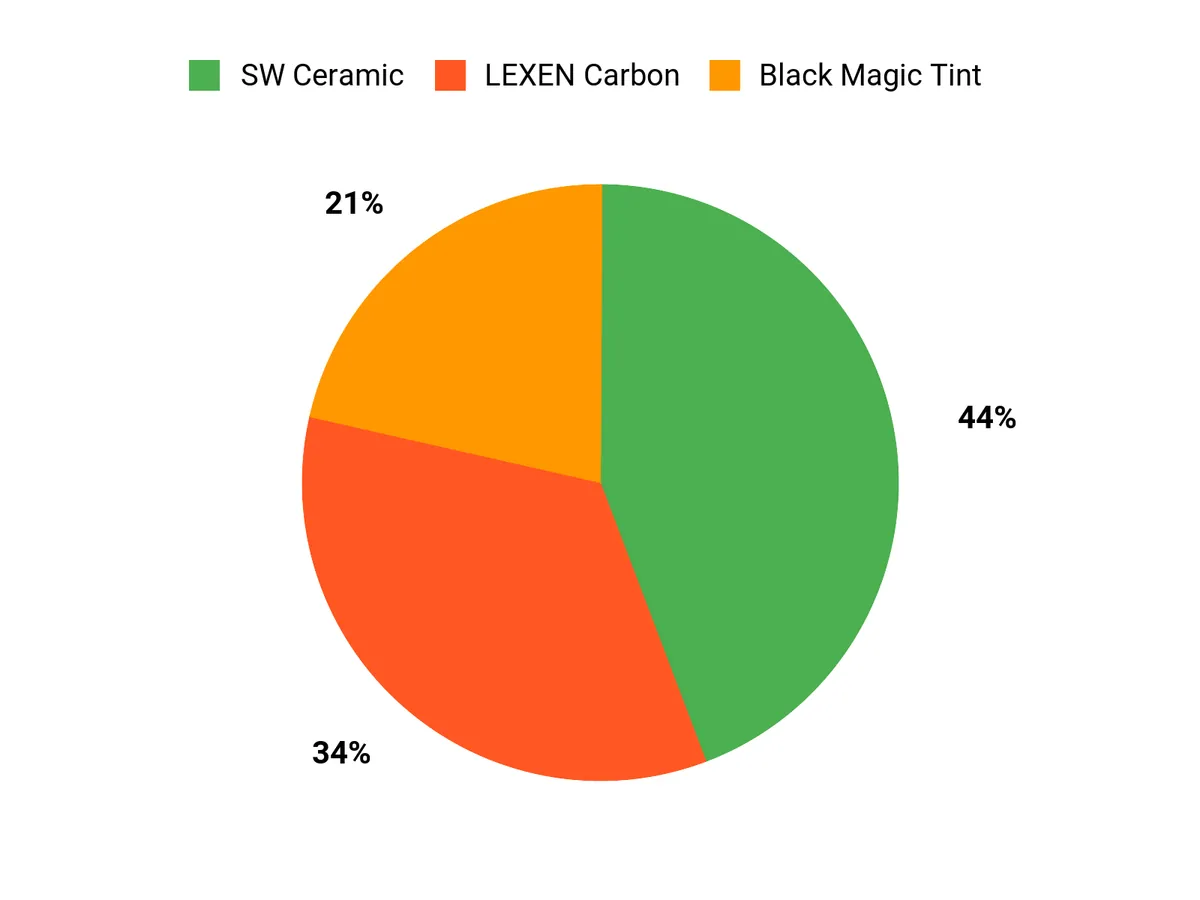
If you want reflective heat management and a darker appearance, Black Magic is the most balanced middle option. If maximum privacy is the goal and 5% tint is legal for the window you are treating, LEXEN is the darkest pick. If you want to preserve visibility while prioritizing advertised UV and infrared rejection, SW Ceramic is the strongest fit.
Wrapping Up
There is no single best tint for every pane of automotive glass. The right choice depends on the job. Black Magic’s 20% metalized film is the best fit here for a darker reflective look on legally permitted side or rear windows. LEXEN’s 5% carbon roll is the privacy-first option for buyers who specifically want limo-dark glass where that VLT is allowed. SW Ceramic is the most visibility-friendly choice, with an 80% VLT and listing claims for 99% UV rejection and 90%–95% infrared rejection.
Before ordering, measure the glass, confirm the roll size, check local VLT rules for each window position, and decide whether you are comfortable handling curved glass. If windshield legality or sensor compatibility is uncertain, a reputable professional installer can help verify the final VLT and avoid an expensive redo.
| Black Magic 5044829 Premium Metalized Coating Tint Film | LEXEN 2PLY 24″ x 10′ Premium Carbon Window Tint Film Roll | SW Nano Ceramic Car Window Film | |
|---|---|---|---|
|
|
|
|
|
| Best For | Reflective 20% tint on legally permitted windows | Maximum privacy with 5% limo shade where legal | High visibility with advertised UV/IR rejection |
| Material | Metalized Film | 2-ply Carbon Window Tint Film | Polyethylene Terephthalate (PET) |
| Visible Light Transmission (VLT) | 20% | 5% | 80% |
| Dimensions | 24″L x 78″W | 24″ x 10′ | 60″L x 198″W |
| Special Highlights |
|
|
|
| Installation Notes | Peel & Stick; installation kit included | DIY roll; measure, trim, and shape carefully | Self-Adhesive; wet application instructions provided |
| Check Product Details on Amazon | Check Product Details on Amazon | Check Product Details on Amazon |
This Roundup is reader-supported. When you click through links we may earn a referral commission on qualifying purchases.
