Ghost guns present a unique challenge in the domain of firearms regulation. Their construction from kits or 3D-printed parts raises questions about safety and accountability. While some states impose strict rules, others take a more relaxed stance. Recent federal changes aim to clarify these issues, but inconsistencies remain. As you navigate this complex landscape, consider how evolving technologies and legal interpretations might shape the future of ghost gun legislation.
Definition and Characteristics of Ghost Guns
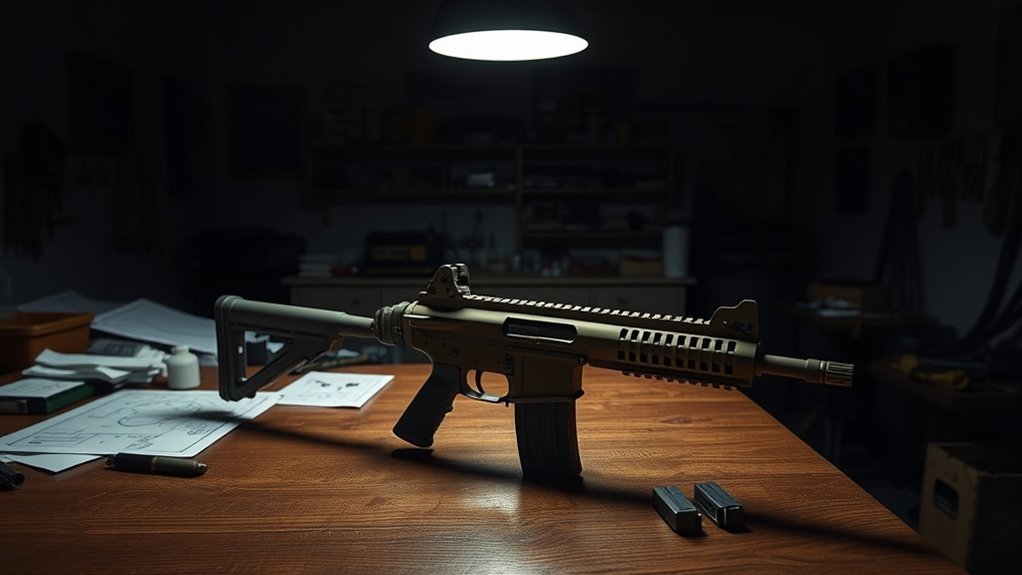
Ghost guns, often referred to as unserialized firearms, are increasingly becoming a focal point in discussions about gun regulation. These weapons are typically assembled from kits or 3D-printed components, allowing individuals to create firearms without serial numbers. This characteristic makes tracing their origins difficult for law enforcement. You’ll find that ghost guns usually lack the same regulatory oversight as traditional firearms, leading to concerns regarding their use in criminal activities. Additionally, they can be constructed using readily available materials and tools, making them accessible to those who might not pass background checks for purchasing conventional firearms. The anonymity surrounding ghost guns raises significant questions about safety, accountability, and the effectiveness of existing gun control measures.
State-by-State Legal Framework
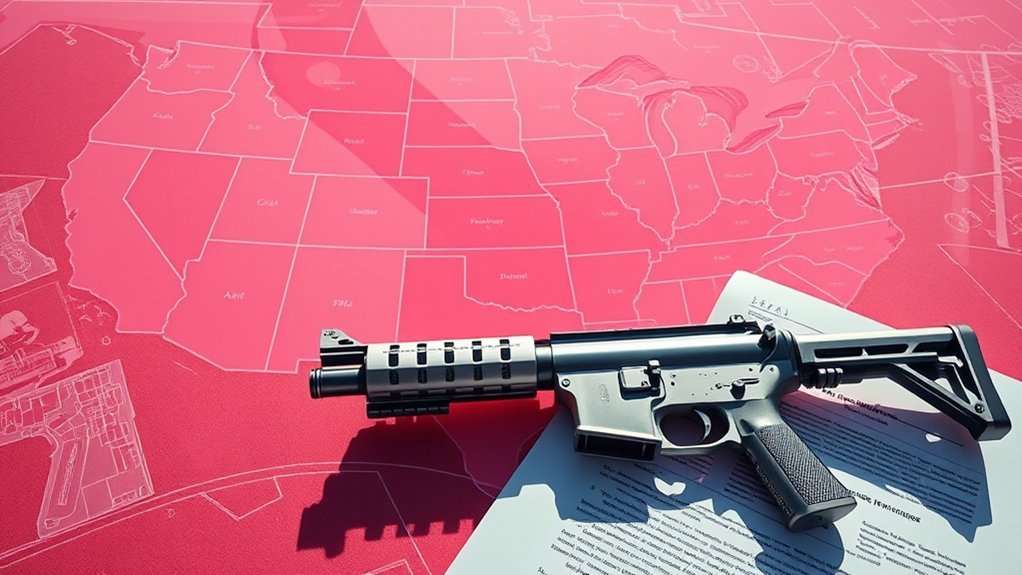
As states grapple with the rise of ghost guns, varying legal frameworks have emerged across the country. Some states, like California and New Jersey, have enacted strict regulations requiring serial numbers on homemade firearms and mandating background checks for parts purchases. Others, like Texas and Florida, maintain more permissive laws, allowing individuals to assemble ghost guns with minimal oversight.
This patchwork of regulations creates confusion, as individuals may unknowingly violate laws while traveling between states. Enforcement varies greatly, with some jurisdictions actively pursuing violations, while others lack resources or interest. You must stay informed about your state’s specific regulations, as the legal landscape continues to evolve in response to growing concerns regarding the accessibility and use of ghost guns.
Federal Regulations and Recent Changes
While states have implemented a variety of laws regarding ghost guns, federal regulations have also evolved in response to rising concerns about their proliferation. The Bureau of Alcohol, Tobacco, Firearms and Explosives (ATF) has introduced new rules aimed at clarifying the definition of firearms and expanding the scope of what constitutes a gun. These changes require manufacturers and sellers of ghost gun kits to be federally licensed and to conduct background checks on purchasers. Additionally, the recent reclassification of certain kits as firearms aims to close significant loopholes that previously allowed individuals to obtain these items without regulation. As these federal regulations tighten, you’ll need to stay informed about how they might impact your rights and responsibilities regarding ghost guns.
Court Rulings Impacting Ghost Gun Legislation
Recent court decisions have notably shaped the landscape of ghost gun legislation, influencing both federal and state regulations. You’ll find that rulings at various levels have led to a patchwork of legal standards, impacting enforcement and compliance. Understanding these outcomes is essential for grasping the evolving legal status of ghost guns.
Recent Court Decisions
Court rulings have considerably influenced the evolving landscape of ghost gun legislation, shaping how states and federal authorities address these firearms. Recent decisions by various courts have clarified the legal definitions around what constitutes a firearm, impacting regulations on ghost guns. For instance, rulings emphasizing the need for serial numbers on homemade guns have prompted some jurisdictions to tighten their laws. Additionally, courts have examined the balance between Second Amendment rights and public safety, with judgments reflecting a growing concern over unregulated ghost gun sales. These decisions not only set precedents but also encourage lawmakers to reassess existing regulations, ultimately shaping the future of ghost gun legislation across the country. Understanding these rulings is essential for anyone involved in the debate.
State-Level Rulings
State-level courts have played a pivotal role in shaping ghost gun legislation, responding to the unique challenges posed by these firearms. In many states, courts have ruled on the legality of regulations aimed at restricting the sale and ownership of ghost guns. These rulings often hinge on interpretations of existing firearm laws, Second Amendment rights, and public safety concerns. For instance, some courts have upheld state laws requiring background checks for ghost gun purchases, while others have struck down overly broad regulations that infringe on individual rights. These decisions reflect a patchwork of legal interpretations, influencing how states enforce their laws and how individuals navigate the complexities of ghost gun ownership. Your understanding of these rulings is essential in grasping the evolving landscape of firearm legislation.
Federal Appeals Outcomes
While many state-level rulings have shaped ghost gun legislation, federal appeals outcomes have also profoundly impacted the legal landscape surrounding these firearms. These rulings often set precedents that can influence nationwide regulations. Key outcomes include:
- Definition of Firearms: Clarification on what constitutes a firearm under federal law.
- Regulatory Authority: Determining the extent of the Bureau of Alcohol, Tobacco, Firearms and Explosives’ (ATF) regulatory powers over ghost guns.
- Constitutionality Challenges: Addressing Second Amendment implications related to restrictions on ghost guns.
- Interstate Commerce: Evaluating how federal laws interact with state regulations regarding the sale and distribution of ghost guns.
Understanding these outcomes is essential as they can greatly alter the enforcement and creation of ghost gun laws across the country.
Advocacy and Opposition: Perspectives on Regulation
As you consider the debate surrounding ghost gun regulations, you’ll find strong arguments on both sides. Pro-regulation advocates emphasize the need for safety and accountability, while anti-regulation supporters raise concerns about personal freedoms and the potential for overreach. Balancing these perspectives is essential for developing effective policies.
Pro-Regulation Arguments
Proponents of stricter regulations on ghost guns argue that such measures are crucial for enhancing public safety and preventing illegal firearm access. They highlight several key points:
- Crime Prevention: Stricter regulations can deter criminals from acquiring untraceable firearms.
- Youth Protection: By regulating ghost guns, you can limit access for minors, reducing the risk of youth involvement in gun violence.
- Accountability: Requiring serialization and background checks guarantees that gun owners are responsible and accountable for their weapons.
- Traceability: Regulations would facilitate law enforcement efforts to trace firearms used in crimes, aiding investigations and promoting justice.
These arguments emphasize the need for a balanced approach to gun ownership that prioritizes safety while respecting individual rights.
Anti-Regulation Concerns
Opponents of stricter ghost gun regulations raise significant concerns about the potential implications for individual freedoms and personal safety. They argue that such regulations could infringe upon the rights of law-abiding citizens to manufacture or possess firearms for self-defense or recreational purposes. Many believe that imposing restrictions on ghost guns may not effectively deter criminal activity, as those intent on breaking the law are unlikely to adhere to regulations. Additionally, critics contend that these measures could lead to unintended consequences, such as increased scrutiny of responsible gun owners or excessive governmental control. Ultimately, they advocate for a balanced approach that prioritizes personal liberties while still addressing public safety concerns surrounding firearm access.
The Role of Technology in Ghost Gun Production
While advancements in technology have transformed numerous industries, the domain of firearms has seen a significant shift with the emergence of ghost guns. These firearms, often assembled from kits or 3D-printed components, highlight the intersection of innovation and regulation. You should consider the following key technological factors:
The rise of ghost guns exemplifies the clash between technological innovation and regulatory challenges in the firearms industry.
- 3D Printing: Enables users to create firearm parts with relative ease.
- CNC Machining: Allows for precise fabrication of components, often from home workshops.
- Online Kits: Provide step-by-step instructions and necessary parts, making assembly accessible.
- Cryptography: Enhances privacy and anonymity in transactions, complicating regulatory efforts.
Together, these technologies have democratized gun production, raising complex questions about legality and safety in the context of ghost guns.
Future Trends and Potential Legislative Developments
As lawmakers grapple with the challenges posed by ghost guns, emerging trends suggest a shift toward more stringent regulations. You’ll likely see more states introducing legislation aimed at regulating the sale of parts and kits used to assemble these firearms. This includes mandatory serialization and background checks for purchases. Federal responses could also evolve, perhaps leading to new ATF guidelines that classify certain ghost gun components as firearms. Additionally, growing public concern over gun violence may motivate legislators to prioritize this issue, resulting in bipartisan support for reform. You should watch for potential legal battles as these regulations unfold, challenging both their constitutionality and effectiveness in curbing illegal gun activity.
Conclusion
As the landscape of ghost guns continues to evolve, the interplay between regulation and innovation resembles a game of chess, with each move shaping the future of firearm ownership. With varying state laws and new federal regulations, traversing this complex terrain can feel like walking a tightrope. The ongoing debates around these weapons reflect broader societal concerns about safety and rights, suggesting that the regulatory framework will need to adapt continually to keep pace with technology and public sentiment.