
Single-Shot Rifle Pros and Cons: When They Fit
Last updated: September 22, 2026
The main single-shot rifle pros and cons come from having only one cartridge ready before a manual reload. The design can reduce feeding-system complexity and encourage a deliberate shooting pace, but it also makes follow-up shots slower. Single-shot rifles can be very accurate, compact, or light, but none of those qualities is guaranteed simply because the rifle holds one round.
A single-shot can make sense for controlled range practice, some hunting situations where regulations allow it, and shooters who prefer mechanical simplicity. A repeating rifle is usually more practical when quick follow-up shots are an important requirement.
Key takeaways
- A single-shot rifle has one cartridge ready at a time and must be manually reloaded before another shot.
- Mechanical simplicity can reduce the number of magazine and feeding components, but it does not automatically make every single-shot rifle more accurate or reliable.
- The main disadvantage is slower follow-up capability compared with a repeating rifle.
- Some models are light and compact, but weight, size, accuracy, and chambering are model-specific.
- A one-round-at-a-time format can simplify supervised instruction, but safe handling still depends on the shooter and instructor.
Understanding Single-Shot Rifles
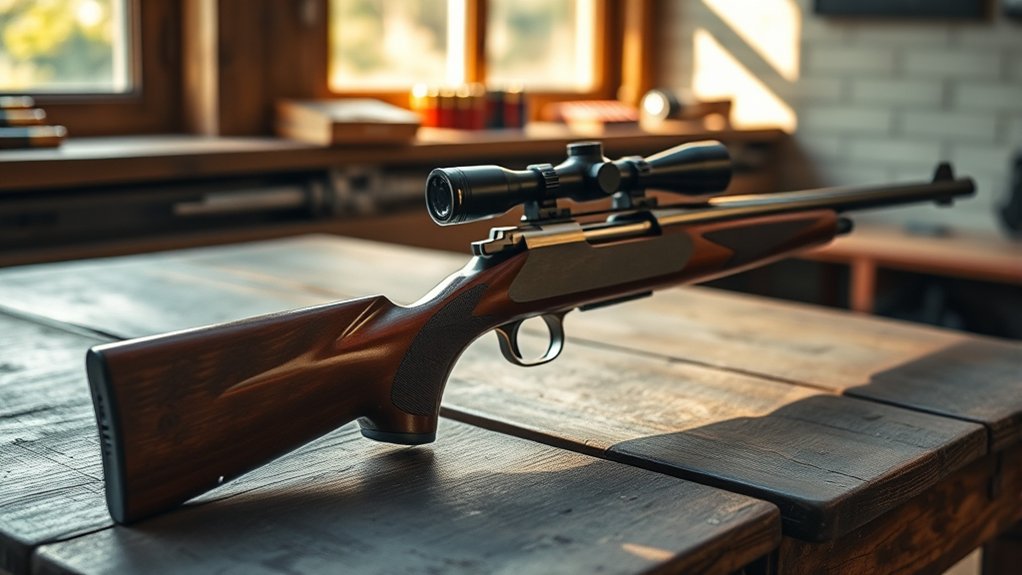
A single-shot rifle is a rifle that has one cartridge available to fire before it must be reloaded. In other words, single-shot describes ammunition capacity, not one specific action mechanism. Hunter-education material distinguishes single-shot firearms, which must be reloaded after each firing, from repeating firearms that keep additional ammunition available in a magazine, cylinder, or additional barrel. See Hunter-ed’s overview of firearm actions.
Common single-shot designs include break-action, falling-block, and single-shot bolt-action rifles. Historical designs also include rolling-block and trapdoor actions. If you are interested specifically in the historical bolt-action side of the topic, see bolt-action single-shot rifles and their history.
Advantages of Single-Shot Rifles
The advantages of a single-shot rifle depend on the specific design, but several characteristics can matter in the right setting.
- Simpler feed system: A true single-shot does not need a repeating magazine and feed path, removing some components found in repeating designs. Any firearm can still malfunction, so simplicity should not be treated as a guarantee of reliability.
- Deliberate shooting pace: Because another cartridge is not immediately available, the format naturally separates one shot from the next.
- Potentially compact or light: Some single-shot rifles have simple, trim designs that are easy to carry. Actual weight and overall length still depend on the individual rifle.
- Varied configurations: Single-shot rifles are offered in different action types and chamberings. Only certain models support interchangeable barrels, so that feature must be checked model by model.
Disadvantages of Single-Shot Rifles
Slow Reloading Time
The clearest disadvantage is the lack of an immediately available follow-up cartridge. After every shot, the rifle must be manually prepared with another cartridge before it can fire again. A repeating rifle keeps additional ammunition available through its feed system, so it generally permits a faster follow-up shot.
Limited Ammunition Capacity
A single-shot rifle has one cartridge ready to fire. That distinction matters most when comparing it with a repeating rifle, because “bolt action,” “pump action,” and similar terms describe mechanisms rather than automatically defining capacity. Single-shot bolt-action rifles exist, while most modern repeating bolt-action rifles use magazines.
| Configuration | Typical ammunition arrangement |
|---|---|
| Single-shot rifle | One cartridge ready; manual reload required after each shot |
| Repeating bolt-action rifle | Usually magazine-fed with additional cartridges available |
| Semi-automatic rifle | Uses a magazine or other feed system, depending on design |
| Repeating pump-action rifle | Uses a magazine or tube, depending on design |
Are Single-Shot Rifles More Accurate?
Not automatically. A single-shot rifle can be extremely accurate, but being single-shot does not by itself guarantee better accuracy than a bolt-action or another repeating rifle.
Practical accuracy depends on the complete rifle and shooting system. Barrel and chamber quality, trigger characteristics, stock or bedding design, ammunition consistency, sights or optics, rifle fit, and shooter technique can all affect results. Some single-shot designs have a strong reputation for accuracy, while other individual rifles may perform no better than comparable repeaters.
The more defensible advantage is behavioral rather than mechanical: because another shot is not immediately ready, some shooters find that the format encourages a slower, more deliberate rhythm.
Single-Shot vs. Repeating Rifles: What Changes?
| Feature | Single-shot rifles | Repeating rifles |
|---|---|---|
| Cartridges immediately available | One | More than one, depending on the firearm and applicable rules |
| Follow-up shot | Slower because another cartridge must be loaded | Generally faster because additional ammunition is already in the feed system |
| Feed-system complexity | No repeating magazine/feed cycle | Includes a system for storing and feeding additional ammunition |
| Weight and size | Model-dependent; some are compact or light | Model-dependent |
| Accuracy | Can be excellent; not guaranteed by capacity | Can also be excellent; depends on the rifle and shooting system |
| Price | Varies widely by manufacturer and model | Varies widely by manufacturer and model |
The most consistent difference is therefore not accuracy, price, or weight. It is how quickly another cartridge is available after the first shot.
Does a Single-Shot Rifle Make Training Safer?
A one-round-at-a-time design can simplify supervised instruction because the firearm must be reloaded before another shot. That can make the sequence easier for an instructor to manage, but the action type does not make a firearm inherently safe.
Normal firearm-safety practices still apply at all times, including controlling the muzzle, keeping the trigger finger outside the trigger guard until ready to fire, treating every firearm as loaded, and knowing the target and what is beyond it. The NSSF firearm-safety rules provide a broader safety reference. New shooters should learn under competent supervision and follow the firearm manufacturer’s instructions.
When Does a Single-Shot Rifle Make Sense?
- Controlled range practice: The one-round-at-a-time format creates a naturally deliberate pace between shots.
- Some hunting situations: A single-shot can fit hunters who accept the slower follow-up capability and whose chosen rifle and ammunition comply with current local hunting regulations.
- Carry-conscious setups: A particular single-shot model may suit someone who wants a compact or lightweight rifle, but the actual specifications should be checked rather than assumed from the action type.
- Classic-firearm interest: Single-shot mechanisms include several historically significant action styles, making the category relevant to shooters and collectors interested in traditional designs.
Making the Right Choice for Your Shooting Needs
To decide whether the format fits your needs, focus on the trade-offs that actually come from the design:
- Do you need a quick follow-up shot? If that is a priority, a repeating rifle generally offers a practical advantage.
- Do you value a simple feed system? A single-shot eliminates the repeating magazine/feed cycle, although the rest of the firearm can still vary greatly in complexity.
- Are weight and size important? Compare the actual specifications of the individual rifles rather than assuming every single-shot is lighter.
- Is it for supervised training? One-round-at-a-time operation can simplify instruction, but supervision and established firearm-safety practices remain essential.
- Is it for hunting? Check the current regulations for the exact jurisdiction, season, firearm type, and ammunition you plan to use.
Frequently Asked Questions
What is a single-shot rifle?
A single-shot rifle has one cartridge available to fire before the firearm must be reloaded. “Single-shot” describes its capacity between reloads rather than one specific action mechanism.
Are single-shot rifles more accurate than bolt-action rifles?
Not necessarily. Single-shot rifles can be very accurate, but accuracy depends on the complete rifle, ammunition, sights or optics, and shooter. The single-shot format alone does not guarantee better accuracy than a repeating bolt-action rifle.
Are single-shot rifles good for beginners?
They can be useful for supervised instruction because only one cartridge is available before another reload is required. That does not make the firearm inherently safe; proper supervision and standard firearm-safety practices are still essential.
What is the biggest disadvantage of a single-shot rifle?
The main disadvantage is slower follow-up capability. Another cartridge must be loaded before a second shot can be fired, while a repeating rifle keeps additional ammunition available in its feed system.
Conclusion
Single-shot rifles trade immediate follow-up capability for a one-round-at-a-time design and a simpler feeding arrangement. They can be accurate, compact, light, or well suited to deliberate range and hunting use, but those qualities depend on the individual rifle rather than its capacity alone.
Choose based on the actual rifle’s fit, weight, specifications, your intended activity, the importance of a quick follow-up shot, and the rules that apply where you shoot or hunt.

