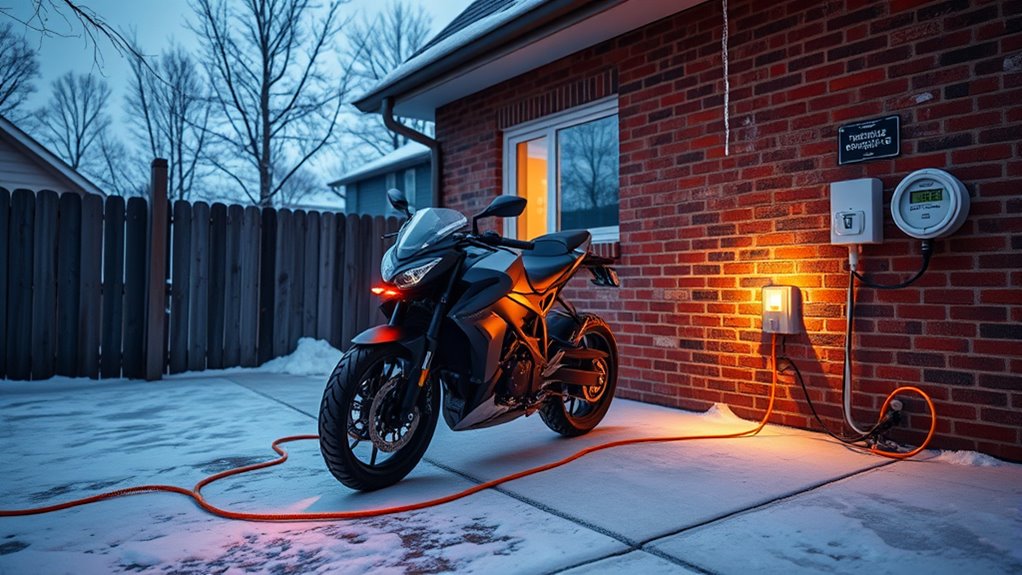
A motorcycle battery tender usually adds only a small electrical cost in winter. Most smart maintainers draw about 1 to 1.5 watts once the battery is near full charge, so the monthly cost is often around $1 to $3, depending on local electricity rates and runtime. Over four months, total cost may stay under $10. Efficiency, accessory load, and charger type affect the final bill, and proper setup can lower it further.
Key Takeaways
- A smart motorcycle battery tender usually uses only 0.75 to 1.5 watts while maintaining charge.
- At about $0.12 per kWh, winter plug-in cost is roughly $3.44 to $5.76 over four months.
- Monthly cost for a battery tender is typically around $5 to $10, depending on local electricity rates.
- Costs rise if you use heated gear or other accessories, which draw far more power than the tender.
- Leaving a motorcycle plugged into a compatible smart charger is generally safe and helps preserve battery life.
How Much Power Does a Battery Tender Use?
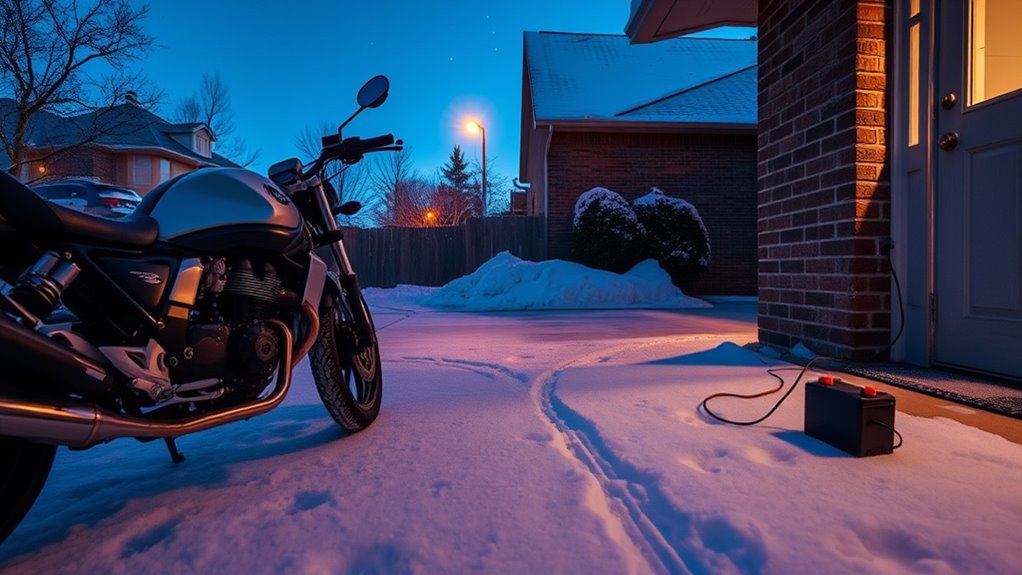
A Battery Tender typically draws only about 0.75 to 1.5 watts while charging, with actual usage dropping further once the battery reaches full charge. This small electrical power demand comes from a modest power supply and an automatic control circuit that limits current as the battery recovers.
In practical terms, the battery tender is designed to maintain charge, not force rapid replenishment, so its load stays low on a standard 110-volt outlet. Once the battery reaches full charge, the shut-off function reduces consumption, allowing continuous connection without meaningful strain on the electrical system.
For riders seeking liberation from winter maintenance anxiety, this means the charger can remain attached with minimal oversight. The device’s efficiency makes it suitable for storage periods, since its low draw preserves battery health while using very little energy.
For winter storage, it can stay connected with minimal oversight, preserving battery health while drawing very little power.
It is a precise, economical tool for keeping a motorcycle ready.
What Does It Cost to Run All Winter?
For most riders, the cost to run a motorcycle battery tender through winter is modest, typically about $5 to $10 per month depending on local electricity rates and the unit’s actual power draw.
A standard tender usually pulls 0.75 to 1 amp at 12 volts, or roughly 9 to 12 watts, so the electrical load remains low. At an average rate of $0.12 per kWh, a full month of continuous operation, about 720 hours, works out to roughly $0.86 to $1.44.
Over a four-month winter, the total is about $3.44 to $5.76. That level of expense is small compared with the value of preserving the battery and avoiding strain on the motorcycle charging system.
A compatible tender helps maintain stable charge, supports efficient power use, and reduces the risk of damage during storage.
What Affects Motorcycle Winter Plug-In Costs?
Plug-in costs in winter are driven mainly by electrical load, runtime, and charger efficiency. Wattage sets the baseline: heated gear such as gloves may draw 27 watts, while a heated jacket liner can reach 77 watts. At a typical U.S. rate of $0.13 per kWh, a 50-watt load running 24 hours costs about $0.15.
Over months, continuous battery power support with a tender can total roughly $10–$30, depending on usage and local rates.
- A slim charger humming beside a cold frame
- Gloves warming under a workbench light
- A battery tender cable against frost-dusted concrete
- A jacket liner folded on a seat, ready for use
- A garage thermometer dropping with seasonal temperature variations
Efficiency matters as well. Older or faulty chargers can waste energy while trying to maintain battery power.
Seasonal temperature variations also affect maintenance frequency, changing how often the charger cycles and altering total cost.
How to Lower Winter Storage Power Costs
Winter storage power costs can be reduced by cutting unnecessary electricity use, starting with a low-draw Battery Tender and disconnecting all nonessential accessories from the motorcycle.
A timer-controlled outlet or switched power strip can limit charger runtime and eliminate continuous consumption when maintenance charging is not required.
Maintaining the battery at an appropriate charge level in a stable environment further reduces charging frequency and helps prevent avoidable replacement costs.
Cut Electricity Usage
Reducing winter storage electricity costs begins with using a Battery Tender or smart charger that supplies only a low trickle charge, maintaining battery health without drawing unnecessary power.
To cut electricity usage, the charger should activate only when voltage falls below its threshold. He should make sure cables are insulated, because winter cold increases losses.
Heated grips and other accessories should remain unplugged during storage to prevent phantom draw.
- A motorcycle resting in a quiet garage
- A slim charger light glowing amber
- Insulated leads clipped to the battery
- An unplugged accessory cluster in shadow
- A technician checking voltage with precision
Regular battery checks reduce reliance on constant charging.
This disciplined approach lowers electrical cost, preserves battery life, and keeps the machine ready for a clean, independent return to the road.
Use Timer Controls
A timer control adds another layer of efficiency to motorcycle winter storage by restricting charger operation to scheduled intervals instead of continuous use.
By pairing a timer control with a battery charger, the system can run only 2 to 4 hours once a week, which is usually enough to preserve battery health. This approach lowers electricity costs by avoiding unnecessary standby operation and by shifting charging to off-peak periods, such as overnight.
A Battery Tender® drawing about 0.75 watts and operating 4 hours weekly may cost only $0.03 to $0.06 per month, depending on local rates.
The timer also helps prevent overcharging, reducing wasted energy and extending battery life. For riders seeking freedom from avoidable expenses, disciplined scheduling delivers practical control.
Is It Safe to Leave a Motorcycle Plugged In?
Yes—leaving a motorcycle plugged into a Battery Tender or similar smart charger is generally considered safe, provided the charger is matched to the battery type.
These heated winter safeguards are what riders need to know when deciding whether the setup is worth the money. Modern smart chargers regulate voltage and current automatically, which prevents overcharging and helps stop sulfation during storage.
- A green indicator light signals maintenance mode
- A lithium battery needs a lithium-compatible charger
- A dry garage reduces moisture-related risk
- A stable, temperature-controlled space limits cold damage
- A fully charged battery starts spring with less strain
For practical use, the charger should remain connected only as designed by the manufacturer.
Periodic checks confirm normal operation and battery health. When the battery chemistry and charger match, continuous connection supports reliable, low-risk winter storage and preserves electrical freedom for the next ride.
Best Battery Tender Setup for Winter Storage
The best Battery Tender setup for winter storage pairs the charger with the correct battery chemistry and allows it to remain connected as a maintenance device rather than a constant high-output charger.
The best Battery Tender setup matches your battery chemistry and maintains charge safely through winter storage.
A Battery Tender is intended to hold the battery at an ideal state, reducing sulfation and protecting battery life during winter storage. For lead-acid units, the battery should be brought to roughly 60-80% charge before storage; lithium batteries require at least 13.0V and a charger rated for lithium chemistry.
When properly matched, the charger may stay connected continuously, and a green indicator confirms safe maintenance without overcharging. Electricity use is low, typically 0.2 to 0.5 kWh per month, or about $0.02 to $0.05 at $0.10 per kWh.
Monthly voltage checks still matter: below 12.4V for lead-acid or 13.0V for lithium, recharge promptly. This setup preserves winter storage independence and minimizes avoidable damage.
Frequently Asked Questions
How Much Does It Cost to Have a Motorcycle Rewired?
A motorcycle rewiring typically costs $200–$1,000, depending on motorcycle wiring complexity, electrical components, and labor rates. A cost estimation should include connectors, fuses, and harnesses; custom accessories can raise expenses 10–20% for reliable performance.
What Is the 12 Second Rule for Motorcycles?
The 12-second rule for motorcycles requires scanning far enough ahead to identify hazards before they become immediate threats, coincidentally improving motorcycle maintenance tips, winter riding safety, and battery care essentials while preserving practical, liberated control.
What Is the Most Expensive Part on a Motorcycle?
The engine is usually the most expensive motorcycle part. In motorcycle maintenance, electrical troubleshooting, and wiring essentials matter, but engine replacement or repair typically outweighs transmission, suspension, and custom components, especially on high-performance models.
What Is the Best Heated Jacket for Motorcycles?
The Keis B601 Ultraflex heated bodywarmer is the strongest all-round choice, delivering 3.4A warmth like a furnace in a snow cave. It offers heated gear benefits, practical battery management, and essential winter riding tips for liberated riders.
Conclusion
In winter storage, a battery tender is a small but steady guardian, drawing only a modest trickle of electricity. Over the cold season, its cost is usually low, though exact expense depends on charger efficiency, local utility rates, and plug-in duration. With proper setup, it acts like a quiet sentinel, keeping the battery healthy without becoming a major power drain. For most riders, the investment is minor compared with the springtime reward of a ready-to-start motorcycle.

