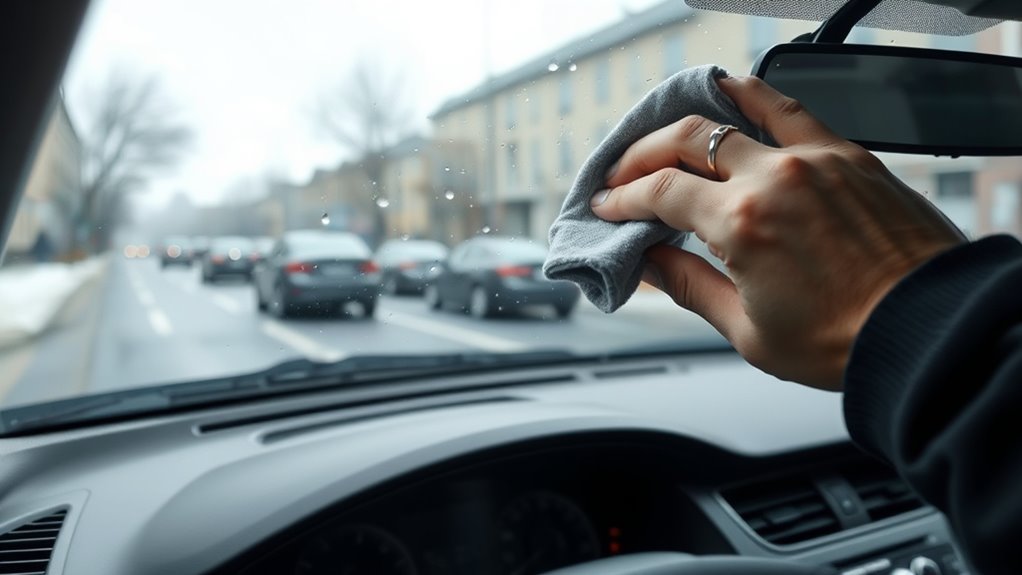
An interior windshield cleaner with anti-fog properties reduces condensation and improves visibility by leaving a clear, streak-free film on glass. Clean the windshield first with an ammonia-free cleaner and a microfiber towel, then apply a thin, even coat in shade or low heat. Buff the surface until haze disappears. Reapply when fog returns or humidity rises. Avoid paper towels and residue. Used correctly, the treatment improves clarity in cars, mirrors, and marine glass, with more detail ahead.
Key Takeaways
- Use an anti-fog interior windshield cleaner to reduce condensation and improve visibility on glass surfaces.
- Clean the windshield thoroughly first; dirt and residue reduce anti-fog effectiveness.
- Apply a thin, even coat and buff it dry for a clear, streak-free finish.
- Reapply after humid weather, washing, or when fogging and haze start returning.
- Avoid paper towels; use microfiber or waffle-weave cloths for better cleaning and less streaking.
What Does Rain-X Anti-Fog Do?
Rain-X® Anti-Fog helps prevent interior fogging on automotive glass and mirrors by leaving a clear, streak-free coating that improves visibility while driving.
In practical terms, Rain-X reduces condensation on interior surfaces, so the driver can keep focus on the road without constant wiping. When applied to clean glass, it forms a thin barrier that keeps your glass clearer in humid or cold conditions.
Its use extends beyond cars to marine and household mirrors, making it a flexible tool for everyday visibility. The effect is temporary and should be renewed as needed, especially when weather shifts and moisture returns.
For a new account of safe use, the label should be reviewed before handling, because the product contains chemicals, including Naphthalene, listed under California Proposition 65.
Applied correctly, it supports a cleaner field of view and a more controlled driving environment.
How to Choose the Right Anti-Fog Product
When selecting an anti-fog product, it is important to prioritize formulations that effectively reduce interior fogging on glass and mirrors in automotive and home settings while remaining simple to apply.
Rain-X® Anti-Fog is a relevant benchmark because it targets visibility loss with a small amount on a cloth, then wipes clean without heavy residue.
A practical buyer can assess three factors:
- Performance — choose a coating that limits haze on windshields, mirrors, and other enclosed glass.
- Safety — review labels for warning chemicals, including Proposition 65 notices tied to ingredients such as Naphthalene.
- Maintenance — consider how often the product must be reapplied to sustain clear vision and reduce dependence on constant cleaning.
For best control, the product should work with paper towels or cloths, deliver streak-free results, and support a freer, more dependable view in changing humidity.
Prep the Glass Before Application
Before any anti-fog product is applied, the glass should be cleaned with a streak-free glass cleaner to remove dirt and residue that can reduce effectiveness.
A waffle-weave microfiber towel is preferred, and the interior windshield should be wiped in side-to-side passes to minimize scratching and improve coverage.
The surface must be allowed to dry completely before treatment to prevent trapped moisture and streaking.
Clean Surface First
A properly prepared windshield improves anti-fog performance by allowing the treatment to bond to a clean, dry surface. Effective surface preparation begins with streak-free cleaning techniques suited to glass materials, removing road film, dust, and oily residue. A microfiber towel limits abrasion and supports even coverage, helping preserve clarity.
- Spray cleaner onto the towel, not the glass, to control application and reduce overspray.
- Wipe the exterior in up-and-down passes and the interior side-to-side for consistent results.
- Inspect the pane for residue before treatment; any remaining grime weakens adhesion.
This method creates a smooth, contaminant-free base that lets the anti-fog layer perform with greater consistency. Clean surface first, then move forward with confidence and visibility.
Dry Before Application
Dry glass is essential before any anti-fog treatment is applied, since even slight moisture can reduce adhesion and lead to streaking. A clean, dry microfiber towel should be used to remove remaining water and residue after cleaning with a streak-free cleaner. This step supports adhesion importance and helps the coating bond evenly across the windshield.
Practical drying techniques include wiping in overlapping passes, then inspecting edges and corners where moisture lingers. Humidity effects should not be ignored, because damp air can leave a hidden film that weakens performance. The surface must feel fully dry before product application, or fog control may become uneven.
Starting with a dry windshield gives the driver a more reliable, low-maintenance result and preserves clear vision without unnecessary compromise.
Apply Rain-X Anti-Fog Correctly
A clean windshield surface should be confirmed before Rain-X Anti-Fog is applied, since the product is intended for fog prevention rather than cleaning.
A small amount should be spread in a thin, even coat with a clean paper towel or 100% cotton cloth, working section by section for uniform coverage.
The dry side of the towel should then be used to buff the glass to a clear, streak-free finish.
Clean Surface First
Before applying Rain-X Anti-Fog, the glass surface should be fully cleaned to remove dirt, film, or residue that can reduce effectiveness and cause streaking. Proper cleaning techniques help different glass materials accept the treatment uniformly, minimizing fog causes linked to contamination and uneven adhesion.
- Wipe the windshield with a lint-free cloth and a suitable interior glass cleaner.
- Inspect edges and corners where oils, dust, and haze often collect.
- Dry the surface completely before any treatment is introduced.
A pristine surface supports clear visibility and helps the coating perform as intended, without unnecessary effort. This step is practical, controlled, and essential for drivers who want an unobstructed view and the freedom that comes with reliable, fog-resistant glass.
Apply Thin Even Coat
With the windshield already clean, a small amount of Rain-X Anti-Fog should be applied to a clean paper towel or 100% cotton cloth and distributed evenly across one section at a time. Consistent application techniques matter because a thin, uniform film resists fog buildup without waste.
| Step | Action |
|---|---|
| 1 | Apply sparingly |
| 2 | Wipe one section |
| 3 | Use dry side |
| 4 | Reapply as needed |
This method supports practical product comparisons, since many user experiences show that excess material increases haze and lowers performance. If weather turns humid, the coating can be renewed to maintain clear vision. When slight haze appears, a light water wipe restores clarity while preserving the treated surface. The result is a controlled, low-effort interior treatment that helps keep drivers unshackled from fog-related obstruction.
Buff For Clear Finish
After the thin, even coat is applied, the treated area should be buffed with the dry side of a paper towel or 100% cotton cloth to remove excess product and leave a streak-free finish.
This step completes fog prevention techniques and supports visibility enhancement tips for clearer driving in demanding conditions.
- Work one section at a time; a small amount preserves control and even coverage.
- Wipe again with the dry side until the surface looks clear and uniform.
- Reapply when haze returns, after cleaning, as part of seasonal maintenance advice.
If residue remains, lightly mist with water and wipe until clear.
Clean windows before treatment, because dirt weakens performance.
Observe safety information first, since the formula may contain chemicals such as Naphthalene.
Buff Away Haze and Streaks
Buff the interior windshield with a blue waffle weave microfiber towel to remove haze and leave a streak-free finish. This streak-free technique supports ideal visibility by lifting residue without redistributing it, and the microfiber benefits are evident in its ability to trap film rather than smear it.
Horizontal passes are preferred because they help expose faint lines and reduce the chance of missed streaks. After the surface is dry, the glass should be inspected under natural light or with a flashlight to identify any remaining haze that could impair the view.
Horizontal passes reveal faint streaks, and a final light check confirms the glass is truly clear.
In humid conditions, the anti-fog product should be reapplied as needed, since moisture can quickly undo earlier work. Regular cleaning and a fresh towel on each session preserve clarity, limit buildup, and reduce fogging during driving.
The result is a clean, disciplined finish that keeps the driver free from visual distraction and better able to move with confidence.
Clean the Inside and Outside Glass
Once the interior windshield is free of haze and streaks, attention should shift to cleaning both sides of the glass for a complete visibility check. Effective interior cleaning techniques begin with spraying cleaner onto a microfiber towel, not the glass, to prevent overspray on trim and electronics.
On the exterior, streak-free ammonia-free cleaner supports clear optics and protects coatings.
- Wipe the inside glass in controlled passes, using a red towel for vertical cleaning.
- Apply exterior maintenance tips by cleaning the outer surface with the same product; if the glass is cool, spray directly, and if warm, apply to the towel.
- Finish with a blue towel to buff both surfaces and remove residue.
Inspection under natural light from multiple angles reveals hidden film or streaks. Regular attention to both panes reinforces fog prevention methods, preserves visibility, and supports the freedom of a clear, unobstructed drive in changing weather.
When to Reapply Anti-Fog
Anti-fog treatment should be reapplied when a hazy film returns, visibility drops, or water no longer sheets cleanly from the glass.
Reapplication is most effective after cleaning the windows, since dirt and residue reduce coating performance.
In humid weather or after heavy rain, a compact spray should be kept available for timely renewal.
Signs It’s Wearing Off
When the interior glass begins to show a light haze after treatment, the anti-fog layer is likely losing effectiveness and should be reapplied. Haze formation is the earliest signal; it often precedes visible fog and creates subtle visibility issues in humid air. Drivers seeking clear, unhindered travel should inspect the glass regularly.
- Check for streak detection: new lines, reflections, or film patterns indicate fading protection.
- Note reduced clarity in rain or high humidity; the coating may no longer suppress condensation.
- If frequent wiping becomes necessary to control fog buildup, performance has declined.
Following the manufacturer’s reapplication interval helps preserve a clean, liberated field of view and stable interior visibility through changing weather.
Reapply After Cleaning
After a thorough interior glass cleaning, anti-fog treatment should be reapplied to restore a uniform, streak-free protective layer. This step preserves anti-fog benefits by renewing the film that blocks condensation and supports clear visibility.
Reapplication is advisable whenever haze begins to return, or after notable humidity and temperature shifts. In high-moisture conditions, some formulas, including Rain-X®, may need renewal every few weeks to remain effective.
Clean surfaces are essential; dust, oils, and residue can weaken adhesion and create streaking. Manufacturer directions should govern interval and coverage, because product chemistry varies.
Used correctly, this practice strengthens fog prevention techniques and complements practical moisture control tips, helping drivers maintain a freer, safer cabin environment without unnecessary compromise.
Avoid Common Anti-Fog Mistakes
Proper results depend on careful preparation and correct application, because interior glass contaminated with dirt or grime will reduce anti-fog adhesion and effectiveness. Common misconceptions often arise from product comparisons and user experiences that suggest any spray works without preparation; in practice, disciplined method matters more.
Proper results depend on careful preparation; contaminated interior glass weakens anti-fog adhesion and effectiveness.
- Clean the interior surface first with a lint-free microfiber towel. Paper towels can shed fibers, leave residue, and create streaks.
- Apply anti-fog only in shade or low heat. Direct sunlight accelerates drying, which can trap uneven film and weaken coverage.
- Follow the label exactly. Excess product, missed buffing, or ignored curing time can produce visibility issues and unwanted reflections.
Regular reapplication remains necessary, especially after washing or in humid conditions, because a cleared pane is not a permanent state.
Careful technique preserves clarity and supports the driver’s freedom to move with confidence, not distraction.
Where Else Anti-Fog Works
Anti-fog treatments extend beyond the primary windshield, with practical use on bathroom mirrors, marine interior glass, and vehicle side and rear windows.
On bathroom mirrors, the coating reduces condensation during showering and shaving, preserving clear sightlines without repeated wiping.
In marine applications, it supports visibility on interior glass where humid air and spray quickly obscure surfaces.
The same chemistry also benefits side and rear windows, improving vehicle versatility across cars, trucks, and recreational rigs.
By limiting moisture buildup on smooth glass, these products reduce cleaning time and support safer, more independent movement in daily routines and travel.
Consistent results have made them useful wherever transparent surfaces are exposed to temperature swings and humidity.
Their value lies in straightforward application and broad surface compatibility, helping users maintain clarity in spaces where fog would otherwise restrict function and control.
Make Anti-Fog Last Longer
Longer-lasting anti-fog performance depends on proper surface preparation, because any dirt, film, or residue left on the glass can reduce adhesion and shorten effectiveness. Clean the windscreen thoroughly before treatment, then use a small amount of product on a clean cloth.
Even coverage matters, and a dry side should finish the pass to leave a clear, streak-free surface. These application techniques support steady anti-fog benefits and preserve visibility without excess effort.
Even coverage matters, and a dry finish helps leave a clear, streak-free surface.
- Reapply regularly, especially during humidity spikes or rapid temperature changes.
- Compare products by durability, not only immediate clarity, when reviewing product comparisons.
- Store the treatment in a cool, dry place so performance remains stable between uses.
Environmental conditions shape wear rate, so high moisture and weather swings justify periodic maintenance. Consistent upkeep keeps the cabin free from fog-induced obstruction and helps the driver maintain independent, confident control.
Frequently Asked Questions
How to Stop Car Windscreen From Fogging up Inside?
To stop interior fogging, one should use defogging techniques, prioritize humidity control, and follow ventilation tips: run air circulation, clean glass with ammonia-free cleaner, apply anti-fog treatment, and wipe with microfiber regularly.
What Can I Put on My Windshield to Prevent Fogging?
Anti-fog solutions, not guesswork, fit the windshield: a commercial anti-fog coating, or a thin layer of windshield treatments, reduces condensation. Pair it with humidity control—dry air, clean glass, and ventilation—for practical, liberation from fogging.
How to Get Rid of Foggy Film on Inside of Windshield?
Use an ammonia-free glass cleaner with defogging techniques: spray a microfiber towel, wipe the interior glass, then buff dry. This removes residue causing foggy conditions, reduces visibility issues, and restores clear sight with practical precision.
Will Rainx Keep Windows From Fogging?
Yes—Rain-X can reduce fogging; however, a 2023 user survey found mixed results. It functions as one of several fog prevention methods. Proper windshield treatment options and interior climate control improve durability, clarity, and performance.
Conclusion
To sum up, interior anti-fog cleaners perform their modest miracle only when the glass is properly prepared, the product is applied sparingly, and the residue is buffed away with the discipline usually reserved for surgical instruments. Reapplication is not a moral failing, merely maintenance. Used correctly, these treatments reduce fogging on windows, mirrors, and other slick surfaces, proving that clear visibility often depends less on chemistry than on the unsentimental virtue of cleaning surfaces well.