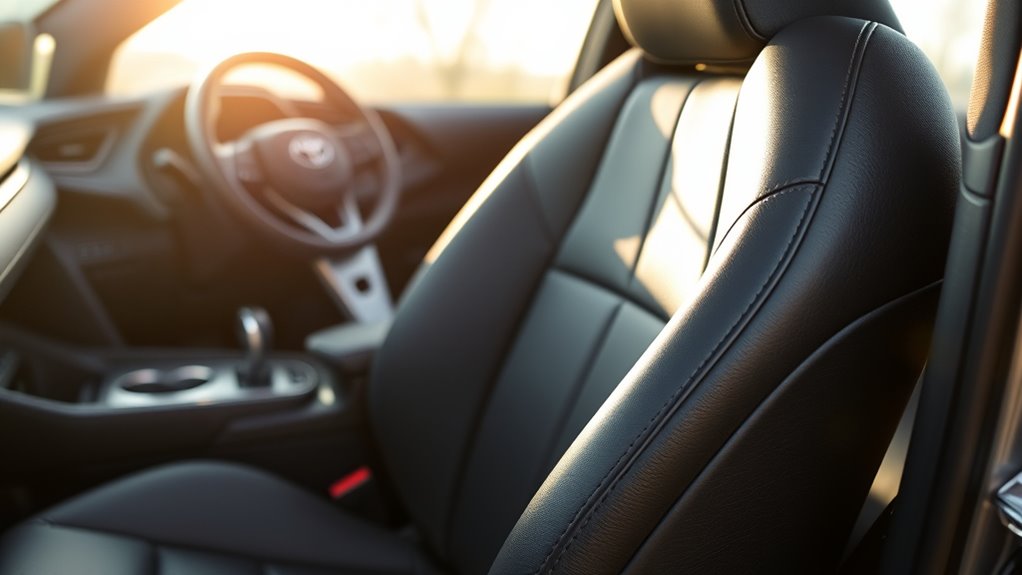
The 2026 Toyota RAV4 memory positioners can store and restore seat, mirror, and climate settings for up to two drivers. Setup typically uses the 12.9-inch touchscreen, a memory button, and key fob or QR-linked driver profiles. Seat position, backrest angle, mirror angles, and heated or cooled seat preferences can be saved after adjustment. If recall fails, the system may need reprogramming or profile updates, and there are a few useful details that follow.
Key Takeaways
- Toyota RAV4 2026 memory seats can store up to two seat and mirror positions for quick recall.
- Save a position by adjusting the seat, then pressing and holding the memory button until the confirmation beep sounds.
- Driver profiles on the 12.9-inch touchscreen can link seat, mirror, climate, language, and unit preferences.
- Key fob detection may automatically restore your saved seat and mirror settings when you enter the vehicle.
- Set all seat adjustments first, then save, and consult the owner’s manual if memory settings need resetting.
Set Up Toyota RAV4 Memory Positioners
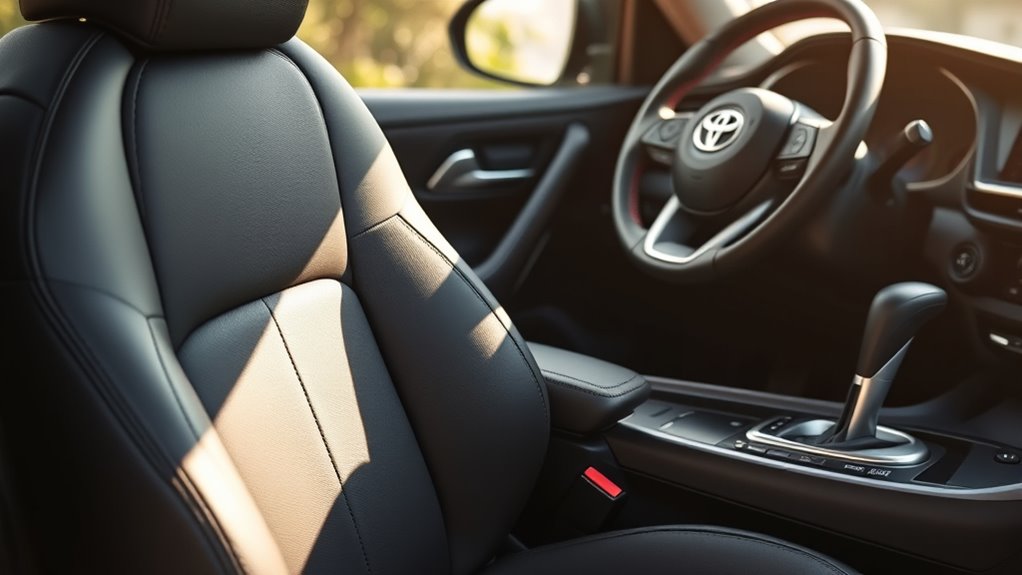
To set up the Toyota RAV4’s memory positioners, the driver first adjusts the seat and mirrors to the preferred positions. Then, they press and hold the memory button until a confirmation beep sounds. This process creates a stored reference point for quick recall, reducing routine friction for different users.
The 2026 model supports up to two distinct seating positions, allowing each driver to retain a personal setup without repeated manual correction. Access through the 12.9-inch screen keeps the interface direct and efficient; users should make sure the selected profile aligns with the intended seating arrangement before saving.
The system complements a liberated driving routine by minimizing dependence on constant readjustment. While sport mode changes vehicle response, it does not alter the saved memory settings. Once stored, the positioners restore the preset seat and mirror configuration with a single command, supporting comfort, consistency, and fast shifts between drivers.
Save a Toyota RAV4 Driver Profile
Creating a driver profile in the 2026 Toyota RAV4 begins during initial setup with a QR code, which links the vehicle to personalized settings such as seat position and climate control. This profile synchronization supports a cleaner user experience, letting each driver claim an independent configuration without negotiation or delay.
- Select profile creation through the setup flow.
- Scan the QR code to bind the account.
- Save language and unit preferences.
- Store display data, including fuel economy.
- Preserve comfort settings for heated and cooled seats.
After saving, the profile remains available through the interface for later modification.
The 12.9-inch screen provides direct access to profile management, so updates can be made when routines change or new preferences emerge. This structure favors autonomy, reducing friction and making the cabin adaptable to distinct drivers while keeping controls organized and responsive.
Adjust Seat Memory on the 12.9-Inch Screen
Seat memory settings on the 12.9-inch touchscreen are accessed from the main interface, where driver preferences can be adjusted with minimal steps.
A profile can then be saved after the seat position is set, linking the configuration to the selected driver account.
This process supports quick recall of personalized seating through the vehicle’s memory system.
Access Memory Settings
The 2026 Toyota RAV4 stores seat memory settings through the 12.9-inch touchscreen, where driver profiles can be created, edited, and recalled. Access begins in the settings menu, either during initial setup or later, allowing precise profile management without friction.
This interface supports seat comfort and driver convenience by linking individualized adjustments to a QR-code profile. Users can store several seating positions for different drivers, then retrieve them instantly.
- Open the settings menu on the touchscreen
- Select the memory seat section
- Choose an existing driver profile
- Review position, lumbar support, and seat temperature
- Confirm changes for immediate recall
Such control gives occupants a cleaner, more autonomous cabin experience, with seat memory aligned to practical movement and personal preferences.
Save Driver Profile
Saving a driver profile on the 2026 Toyota RAV4 is handled through the 12.9-inch touchscreen, where seat memory settings can be adjusted and stored for individualized use.
From the seat memory menu, the driver selects a profile, positions the seat, and confirms the save prompt. This process supports driver comfort by reducing repeated manual adjustments.
Multiple profiles can be registered, allowing different users to recall their preferred configurations with minimal effort. The system can also pair climate control and display preferences with the same profile, reinforcing personalized driving.
For added convenience, voice commands may access the function without interrupting the drive. The interface is designed for efficient control, giving occupants a cleaner, more autonomous setup while preserving precise seat memory settings.
Use RAV4 Memory Positioners for Multiple Drivers
The 2026 Toyota RAV4 supports driver profile setup through the 12.9-inch touchscreen, allowing each user to store seat memory buttons and associated preferences.
Each profile can retain seat position, mirror angles, climate settings, and audio presets for consistent recall.
Quick user switching is handled from the screen, enabling immediate change between saved configurations.
Driver Profile Setup
Multiple drivers can configure personalized profiles in the 2026 Toyota RAV4 using a QR-code setup process that stores seat, mirror, and steering wheel preferences for each user.
This arrangement delivers clear driver profile benefits, supporting personalized settings without repeated manual adjustments. The 12.9-inch touchscreen streamlines initial calibration, allowing each account to save precise positions for later recall.
Such configuration improves family convenience in shared vehicles, where distinct drivers can shift quickly and retain ergonomic control.
- Scan QR code to register the profile
- Adjust seat, wheel, and mirrors
- Save settings on the touchscreen
- Link preferences to each driver
- Restore comfort during driver changes
Seat Memory Buttons
Seat memory buttons in the 2026 Toyota RAV4 provide a fast way to store and recall preferred seating positions for different drivers. Positioned for efficient access, the controls support precise adjustment after the seat is moved to the desired point.
Once set, a press of the designated button saves the configuration, reducing manual repetition and preserving seat comfort benefits. The system reflects memory technology advantages by retaining multiple user profiles, with QR code-based setup helping each driver maintain a personal configuration.
Stored settings may also extend to steering wheel and mirror alignment, creating a coherent driving posture. User experience feedback typically favors the direct, low-friction interface, which supports autonomy and a cleaner shift between drivers without unnecessary complexity or compromise.
Quick User Switching
Quick user switching in the 2026 Toyota RAV4 is designed to reduce driver setup time by allowing up to three memory profiles to be stored and recalled with minimal input. This architecture supports user experience enhancement by keeping seat, mirror, and steering adjustments immediately accessible.
Profile creation via QR code simplifies onboarding, while infotainment controls and physical buttons provide fast recall. For driver comfort optimization, climate and audio preferences may also be linked, preserving a personalized cabin state.
- Three saved profiles for multiple drivers
- QR-based setup for rapid configuration
- Infotainment or button-based switching
- Optional climate and audio memory
- Strong family vehicle convenience for shared use
These features reduce friction, support independence, and make shared mobility more efficient without sacrificing precision or control.
Link Seat Memory to Driver Preferences
The 2026 Toyota RAV4 ties seat memory directly to individual driver preferences through profile-based storage and recall. Each driver can create a QR code-linked profile, binding personalized settings to a specific account for rapid retrieval.
This architecture supports multiple users, allowing the system to preserve distinct seating maps without manual reconfiguration. Position variables such as height, tilt, and fore-aft distance are stored through the 12.9-inch touchscreen, giving precise control over posture and reach.
When the corresponding key fob is detected, the vehicle can restore the saved configuration automatically, reducing entry time and reinforcing user convenience. The result is a streamlined interface that respects individual driver preferences while limiting friction in daily use.
For drivers seeking autonomy from repetitive adjustment, the memory system functions as a practical access layer, delivering consistent seating alignment with minimal effort and clear technical transparency.
Customize Heated and Cooled Seats
Building on the profile-based memory system, the 2026 Toyota RAV4 also extends personalization to heated and cooled seats for both driver and passenger. Seat temperature settings can be tuned through the interface, voice prompts, or direct buttons, giving occupants control without distraction.
These comfort customization options support a more liberated drive in changing weather, while integrated climate control features keep the cabin responsive and efficient.
- Driver and passenger temperatures may be adjusted independently.
- Auto seat temperature control refines output for stable comfort.
- Voice commands enable hands-free temperature changes on demand.
- Physical controls provide fast, tactile access while driving.
- Smart cooling technology targets occupied zones to reduce waste.
Together, these controls create a precise thermal environment that respects individual preference and movement. The result is a cabin that feels adaptable, intentional, and technically refined.
Fix Toyota RAV4 Seat Memory Issues
To resolve seat memory issues in the 2026 Toyota RAV4, the driver’s seat should be positioned correctly and saved again using the memory buttons on the side of the seat.
Precise seat adjustment tips matter: set fore-aft distance, backrest angle, cushion height, and lumbar support before storing the profile.
Set fore-aft distance, backrest angle, cushion height, and lumbar support before saving the seat profile.
Consult the owner’s manual for exact programming steps, especially when multiple drivers use the vehicle.
For memory button troubleshooting, a reset through the infotainment system can clear corrupted settings, after which the seat preferences should be programmed anew.
Key fob association is also important; the fob for the intended driver should remain nearby during setup if the system links memory to that device.
If the seat still fails to recall positions, the issue may involve software or hardware faults.
In that case, a Toyota dealership can perform diagnostics and restore reliable operation without unnecessary delay.
Improve Daily Seat Recall
Daily seat recall on the 2026 Toyota RAV4 is optimized by saving two personalized seating profiles and using the profile creation feature via QR code, which can store seat position and climate settings for rapid restoration.
This method supports seat comfort and reduces repetitive adjustment, enabling a cleaner, more autonomous drive. Physical buttons on the driver’s side door provide immediate recall, while the 12.9-inch screen allows detailed tuning of memory positions and related preferences.
- Save each profile after final calibration.
- Verify climate values during profile setup.
- Use door buttons for fast restoration.
- Review settings on the 12.9-inch interface.
- Apply memory updates when driving habits shift.
Regular memory updates preserve consistency as driving habits evolve, keeping the cabin aligned with daily use.
The result is a precise, liberated seating routine that minimizes friction and protects personal control.
Frequently Asked Questions
What Are the Key Features of the 2026 Toyota RAV4?
The 2026 Toyota RAV4 features seven trims, a 12.9-inch display, interior upgrades, technology enhancements, safety features like Toyota Safety Sense 4.0, heated and cooled seats, smart cooling, and a nine-speaker JBL audio system.
Does the 2026 Toyota RAV4 Have Memory Seats?
Yes—on the money, the 2026 Toyota RAV4 includes memory seat functionality on higher trims like Limited and XSE. User experience feedback suggests convenience for multi-driver setups, while comparison with competitors shows similar premium positioning.
What Is the Biggest Issue With the Toyota RAV4?
The biggest issue appears to be technology complexity, with reliability concerns in driver alerts and voice controls. Interior space and fuel efficiency remain strong, yet limited rear visibility and confusing interfaces can frustrate users seeking autonomy.
How to Start 2026 Toyota RAV4 With Key Fob?
Press the Start button while depressing the brake, with the key fob nearby; the system senses key fob functionality. Smart, silent start follows. If unresponsive, check range, remote start settings, or battery replacement.
Conclusion
In the 2026 Toyota RAV4, memory positioners behave like tiny bureaucrats with impeccable posture: once configured, they file each driver’s seat, mirror, and climate settings with surprising efficiency. The 12.9-inch screen becomes the command center, where profiles are saved, recalled, and occasionally misbehave like a distracted clerk. Properly linked, the system streamlines shared driving; poorly set, it turns every commute into a small calibration drama. Precision setup remains the decisive factor.