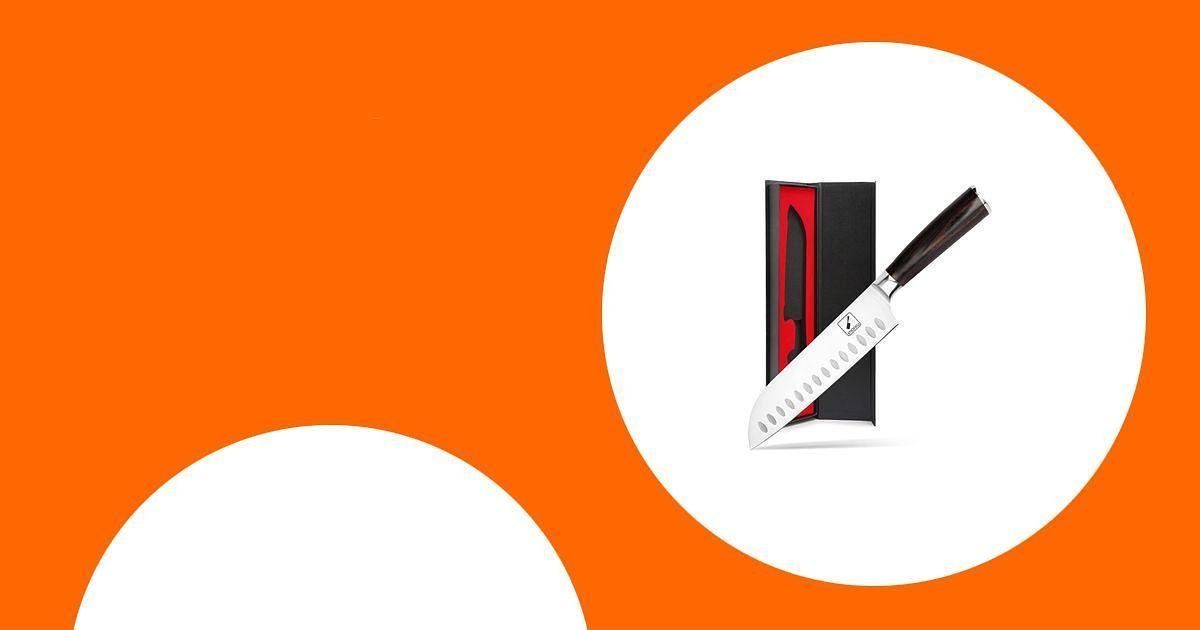
Choosing the right santoku knife can make vegetable prep faster, cleaner, and more enjoyable. A good santoku knife gives you a broad blade for scooping chopped ingredients, a shorter profile than many Western chef knives, and a cutting style that works especially well for slicing, dicing, and chopping vegetables.
This guide compares practical santoku knives for home cooks who want sharpness, balance, comfort, and fair value without overcomplicating the buying process. You will find budget-friendly picks, a two-knife set, a forged option, and lightweight choices for everyday meal prep.
Quick Verdict
Best overall: imarku Chef Knife 7 Inch Kitchen Knife is the strongest all-around choice if you want a classic 7-inch santoku with a comfortable Pakkawood-style handle.
Best two-knife set: HENCKELS Solution Razor-Sharp 2-pc Knife Set gives you two santoku sizes for different prep jobs.
Best budget pick: DDF iohEF Kitchen Knife offers a 7-inch stainless steel santoku at a budget-friendly level.
Best forged feel: Babish High-Carbon 1.4116 German Steel Santoku Knife is a good match if you prefer a full-tang forged knife with a Granton edge.
Best lightweight set: Home Hero 2 Pcs Santoku Knife with Sheath is a simple, affordable option with included blade sheaths for storage.
This roundup is reader-supported. When you click through Amazon links, we may earn a referral commission on qualifying purchases. As an Amazon Associate I earn from qualifying purchases.
Top Picks
- Best Overall: imarku Chef Knife 7 Inch Kitchen Knife
- Best Two-Knife Set: HENCKELS Solution Razor-Sharp 2-pc Knife Set
- Best Budget: DDF iohEF Kitchen Knife
- Best Forged Feel: Babish High-Carbon 1.4116 German Steel Cutlery
- Best Lightweight Set: Home Hero 2 Pcs Santoku Knife with Sheath
Quick Comparison
| Product | Image | Best For | Highlights | Pros | Cons | Price |
|---|---|---|---|---|---|---|
| imarku Chef Knife 7 Inch Kitchen Knife Ultra Sharp Santoku Knife |
 |
Best overall daily vegetable prep knife | 7-inch santoku blade, high-carbon stainless steel, ergonomic Pakkawood-style handle | Comfortable grip, versatile size, strong everyday value | Hand washing is recommended for longer blade life | Check Price on Amazon |
| HENCKELS Solution Razor-Sharp 2-pc Knife Set |
 |
Best for cooks who want two santoku sizes | Includes 5.5-inch and 7-inch santoku knives, stainless steel blades, hollow edge | Two useful sizes, lightweight feel, easy cleanup | Stamped construction may feel lighter than forged knives | Check Price on Amazon |
| DDF iohEF Kitchen Knife, Chef’s Knife In Japanese Stainless Steel |
 |
Best budget 7-inch stainless santoku | 7-inch stainless steel blade, stainless steel handle, double-edged design | Affordable, balanced feel, works for left- and right-handed use | Stainless handle may feel slick to some users when wet | Check Price on Amazon |
| Babish High-Carbon 1.4116 German Steel Cutlery, 6.5″ Santoku Kitchen Knife |
 |
Best forged-feel santoku for controlled chopping | 6.5-inch blade, high-carbon 1.4116 German steel, full tang, Granton edge | Balanced feel, food-release edge, sturdy construction | Shorter blade may feel small if you prefer a larger chef knife | Check Price on Amazon |
| Home Hero 2 Pcs Santoku Knife with Sheath |
 |
Best lightweight set with storage sheaths | Two santoku knives, protective sheaths, 3Cr13 stainless steel, plastic handles | Low-cost set, easy storage, light in hand | Not the best choice for heavy-duty or long-term premium use | Check Price on Amazon |
How We Selected the Best Santoku Knives
When selecting the best santoku knives for vegetables, we focused on blade length, steel type, handle comfort, weight, balance, storage, care needs, and overall value. A good santoku knife should feel controlled during up-and-down chopping, slice cleanly through vegetables, and be comfortable enough for regular weeknight prep.
We also looked for clear use cases. Some cooks need one dependable 7-inch knife. Others may prefer a two-knife set, a forged knife with more structure, or an affordable lightweight knife with a sheath for storage.
Before You Buy a Santoku Knife
- Blade length: A 6.5- to 7-inch santoku is a practical size for most vegetable prep.
- Blade style: Hollow or Granton edges can help reduce food sticking, especially with potatoes, cucumbers, and onions.
- Handle feel: Choose a handle that feels secure when your hands are clean and dry. Avoid any handle shape that feels slippery or too small.
- Care needs: Even if a knife is listed as dishwasher safe, hand washing and immediate drying usually help preserve the edge and handle.
- Use limits: Santoku knives are not meant for bones, frozen foods, or twisting cuts through hard ingredients.
imarku Chef Knife 7 Inch Kitchen Knife
The imarku Chef Knife is a 7-inch santoku-style kitchen knife made for everyday slicing, dicing, and chopping. Its broad blade gives you enough surface area to move chopped vegetables from the cutting board to the pan, while the ergonomic Pakkawood-style handle helps make longer prep sessions more comfortable.
This is the best fit if you want one dependable santoku knife for most kitchen tasks. It is especially useful for home cooks who prep onions, carrots, peppers, herbs, fruit, boneless meat, and other everyday ingredients.
What People Say
Common buyer feedback in the source article highlights sharpness, balance, and good value. As with any sharp kitchen knife, use careful hand placement and store it safely when not in use.
Why You’ll Love It
- 7-inch blade size works well for most home vegetable prep
- Ergonomic handle helps with comfort and control
- Good all-around pick for slicing, dicing, and chopping
Who Should Buy This
Choose this knife if you want one versatile santoku for daily cooking and prefer a traditional handle feel over an all-metal handle.
Who Should Avoid This
Skip it if you want a full knife set, a premium Japanese artisan knife, or a knife you plan to clean in the dishwasher every day.
HENCKELS Solution Razor-Sharp 2-pc Knife Set
The HENCKELS Solution Razor-Sharp 2-pc Knife Set is a smart option if you want more than one santoku size. The set includes a smaller santoku for quick jobs and a larger santoku for bigger vegetables, herbs, fruit, and general meal prep.
The stainless steel blades and hollow edge design make this set practical for everyday cooking. The knives are lightweight, so they should appeal to beginners or cooks who do not want a heavy blade.
What People Say
Buyer feedback in the source article focuses on the set’s sharpness, light feel, and easy handling. The two sizes also make it more flexible than buying a single santoku knife.
Why You’ll Love It
- Two santoku sizes cover small and medium prep jobs
- Lightweight design is easy to handle
- Stainless steel construction helps with day-to-day maintenance
Who Should Buy This
Choose this set if you want one compact santoku and one larger santoku instead of a single all-purpose knife.
Who Should Avoid This
Skip it if you prefer a heavier forged knife, a wood handle, or a single premium blade instead of a set.
DDF iohEF Kitchen Knife, Chef’s Knife In Japanese Stainless Steel Professional Santoku Cooking Knife
The DDF iohEF Santoku Knife is a 7-inch stainless steel kitchen knife made for daily chopping, cutting, and dicing. Its double-edged blade design makes it suitable for both left- and right-handed users, while the stainless handle gives it a clean, modern look.
This knife is a strong budget pick for cooks who want a single 7-inch santoku without spending much. It works best for vegetables, fruit, boneless meat, cheese, and other common kitchen ingredients.
What People Say
Common buyer feedback in the source article highlights sharpness, balance, and affordability. Since the handle is stainless steel, some users may prefer to dry their hands before cutting for better grip.
Why You’ll Love It
- 7-inch blade is useful for everyday vegetable prep
- Double-edged design works for right- and left-handed cooks
- Stainless steel handle is easy to wipe clean
Who Should Buy This
Choose this knife if you want a low-cost santoku with an all-metal look and a balanced feel for daily prep.
Who Should Avoid This
Skip it if you strongly prefer a textured, wood, or rubberized handle for grip comfort.
Babish High-Carbon 1.4116 German Steel Cutlery, 6.5″ Santoku Kitchen Knife
The Babish Santoku Knife is a 6.5-inch knife made from high-carbon 1.4116 German steel. It has a full-tang handle for a balanced grip and a Granton edge designed to reduce drag and food sticking while you slice vegetables, meat, or fish.
This is the best fit if you want a sturdier forged-feel santoku without jumping into a high-end price tier. The slightly shorter 6.5-inch blade also makes it easier to control on smaller cutting boards.
What People Say
Buyer feedback in the source article points to a comfortable handle, sharp edge, and good value. The shorter blade length may be especially useful if you prefer control over extra reach.
Why You’ll Love It
- High-carbon 1.4116 German steel construction
- Full-tang handle helps with balance and control
- Granton edge helps reduce food sticking during prep
Who Should Buy This
Choose this knife if you want a compact santoku with a stronger, more structured feel than many lightweight budget knives.
Who Should Avoid This
Skip it if you prefer a longer 7-inch blade or a very lightweight knife for quick casual prep.
Home Hero 2 Pcs Santoku Knife with Sheath
The Home Hero Santoku Knife set is a budget-friendly two-piece option with protective sheaths for storage. The knives use 3Cr13 stainless steel with plastic handles, making them simple, lightweight, and easy to keep in a drawer when protected by the included sheaths.
This set is best for casual cooking, starter kitchens, dorm kitchens, or anyone who wants a low-cost santoku option for basic vegetable prep. It is not the most premium pick in this roundup, but it is practical if price and storage matter most.
What People Say
Common buyer feedback in the source article highlights sharpness, comfort, and affordability. Because these are very sharp knives, use extra care with fingers and always store them with the sheaths when not in use.
Why You’ll Love It
- Includes two santoku knives for a low-cost setup
- Protective sheaths help with safer drawer storage
- Lightweight design is easy for casual prep
Who Should Buy This
Choose this set if you need an affordable starter option, a backup knife, or a simple knife with included blade covers.
Who Should Avoid This
Skip it if you want a heavier forged blade, premium steel, or a long-term upgrade knife for daily serious cooking.
Which Santoku Knife Should You Choose?
If you want one reliable knife for everyday vegetables, the imarku 7-inch santoku is the safest all-around pick. If you want more flexibility, the HENCKELS two-piece set gives you two useful blade sizes. If price matters most, DDF iohEF gives you a budget-friendly 7-inch option, while Home Hero is better if you want two knives with sheaths. If you care more about a forged feel and food release, Babish is the strongest match.
Knife Safety and Care Note
A sharp santoku knife can be safer than a dull knife because it needs less force, but it still requires careful handling. Use a stable cutting board, curl your fingertips away from the blade, cut only boneless and unfrozen foods, and store the knife in a sheath, block, or magnetic strip. For best edge life, hand wash with mild soap and dry the knife right away.
FAQ
What Should I Look For When Buying a Santoku Knife for Vegetables?
Look for a blade around 6.5 to 7 inches, a comfortable handle, good balance, and a steel type you are willing to maintain. A hollow or Granton edge can help reduce food sticking, which is useful when slicing potatoes, cucumbers, onions, and other vegetables. If you are new to santoku knives, choose a handle that feels secure and a blade that is not too heavy.
Is a Santoku Knife Better Than a Chef Knife for Vegetables?
A santoku knife can be better for cooks who prefer an up-and-down chopping motion and a shorter, lighter blade. A Western chef knife may be better if you like a rocking motion or need a longer blade. For vegetables, many home cooks like a santoku because the flat edge and wide blade make chopping and scooping ingredients easy.
How Do I Properly Maintain My Santoku Knife?
Hand wash the knife with mild soap, dry it immediately, and store it so the edge does not rub against other utensils. Hone it regularly if the edge starts to feel less precise, and sharpen it when honing no longer restores performance. Avoid cutting bones, frozen foods, and very hard items that can chip or roll the edge.
Can I Use a Santoku Knife for Other Foods Besides Vegetables?
Yes. A santoku knife can also handle fruit, herbs, boneless meat, cheese, and fish. It is not the right tool for bones, frozen foods, or heavy chopping through hard items. For those tasks, use a cleaver or another knife designed for the job.
Should I Put a Santoku Knife in the Dishwasher?
Hand washing is the safer choice for most santoku knives. Dishwashers can expose the blade and handle to harsh detergent, heat, and impact with other utensils. Even when a listing says dishwasher safe, hand washing and drying can help preserve sharpness and appearance.
Wrapping Up
A quality santoku knife can make vegetable prep feel smoother and more controlled. For most home cooks, the imarku 7-inch santoku is the best starting point because it balances size, comfort, and everyday versatility. The HENCKELS set is a better pick if you want two blade sizes, while DDF iohEF and Home Hero are more budget-focused. Choose Babish if you want a compact santoku with a forged, full-tang feel.
This Roundup is reader-supported. When you click through links we may earn a referral commission on qualifying purchases.