Programming the TPMS sensors on a 2024 Toyota Tacoma is usually a straightforward reset and registration process, but the exact steps depend on the screen size and sensor setup. The vehicle must be stationary, properly inflated, and then driven long enough for the system to learn each ID. When the warning light does not clear, the cause is often in the setup, not the sensors themselves.
How to Program 2024 Tacoma TPMS Sensors?
To program the 2024 Tacoma TPMS sensors, the vehicle should first sit parked for at least 20 minutes, with all tires inflated to the specified pressure, before the engine is started and the Vehicle Settings menu is accessed through the display.
On a Toyota Tacoma, the TPMS program begins by selecting the appropriate registration option: “Change Wheel” on the 7-inch screen or “Identifying Each Wheel & Position” on the 12.3-inch screen. This action initiates sensor learning without unnecessary delay.
After registration starts, the truck should be driven straight at about 25 mph for 10 to 30 minutes so the system can recognize each sensor. If the process does not complete, the operator should verify tire pressure, confirm timing, and check for nearby vehicles that may interfere.
Proper execution restores accurate monitoring and supports independent movement with minimal error.
How to Register New Tacoma Tire IDs
Registering new tire IDs on a 2024 Toyota Tacoma starts with correctly inflated tires and a parked vehicle left undisturbed for at least 20 minutes. This pause stabilizes tire pressure and gives the TPMS control unit a clean baseline.
From the display screen, the operator enters vehicle settings, then selects the registration function matched to the 7-inch or 12.3-inch interface. Once initiated, the system begins TPMS Programming and waits for the new TPMS signals.
From the display screen, enter vehicle settings and select the registration function for your 7-inch or 12.3-inch interface.
After startup, the vehicle should be driven straight at 25 mph for 10 to 30 minutes. This steady motion allows each sensor ID to be learned and stored. Registration is confirmed when the warning light turns off.
If the process fails, the vehicle should be checked for correct parking duration, proper inflation, and nearby interference from other vehicles. Aftermarket sensors must be pre-programmed, or a programming tool becomes necessary.
Autel Vs. OEM Tacoma TPMS Sensors
Autel and OEM TPMS sensors serve the same basic function on the 2024 Toyota Tacoma, but they differ in cost, setup, and long-term convenience. For drivers seeking autonomy, autel sensors offer lower entry cost and flexible reuse, while OEM sensors emphasize factory-matched behavior.
| Feature | Autel | OEM |
|---|---|---|
| Price | Lower, often near $100/set | Higher |
| Setup | Requires programming tool | Pre-programmed |
| Ownership | Tool supports future use | Simpler, vehicle-specific |
Autel sensors can work effectively when initialized with an Autel TS508, a practical asset for DIY maintenance. OEM sensors reduce preparation and suit owners prioritizing immediate installation. Both can solve a TPMS issue when matched and configured correctly. However, Tacoma reports show mixed aftermarket results, so selection should follow verified community data and exact vehicle specifications. The most rational choice depends on budget, desired control, and willingness to program.
Why Tacoma TPMS Registration Fails
Tacoma TPMS registration can fail when the vehicle is not allowed to sit parked for at least 20 minutes before the procedure begins, since the system needs time to stabilize.
During TPMS registration, unstable conditions prevent clean detection of sensor IDs, and the control unit may reject the new signals. A programming tool is often required when aftermarket sensors are used, especially if they are not pre-programmed.
- Keep the Tacoma stationary and on paved ground.
- Avoid driving below 25 mph, which can interrupt recognition.
- Do not reverse or park near other vehicles, as interference can reset data.
Failure is usually visible when the slow blinking light never appears, or when the warning light returns after driving. These signs indicate the sensors were not learned.
Precise procedure and correct equipment support independent service and reduce dependence on dealership control over TPMS registration.
Tacoma TPMS Tips From Other Owners
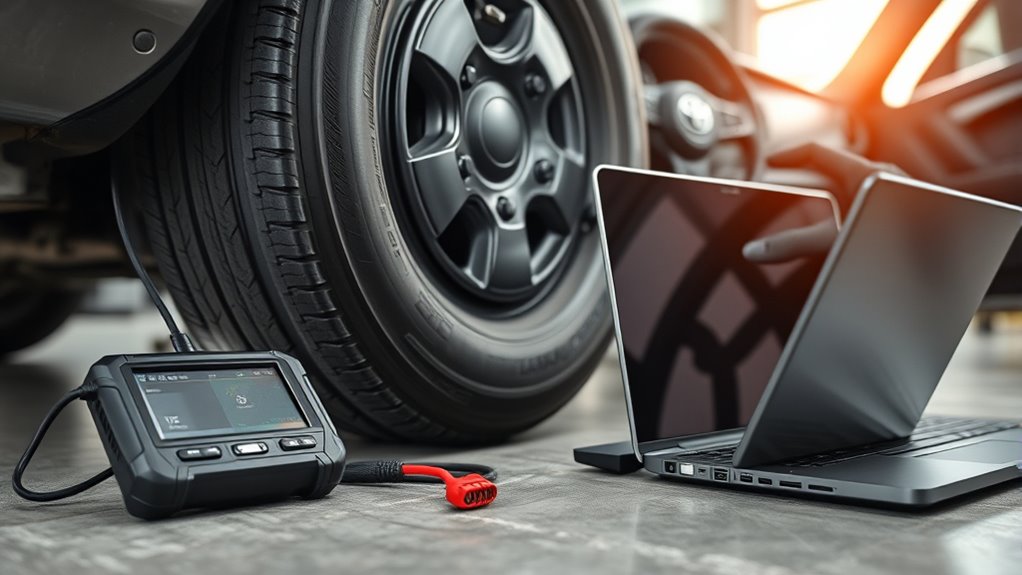
Many owners report that DIY TPMS programming is practical when using an Autel TS508 or a newer equivalent, since these tools can reduce costs versus dealer registration.
DIY TPMS programming is practical with an Autel TS508 or similar tool, often cutting dealer costs.
For Tacoma tire service, the key is sensor readiness: aftermarket sensors should be pre-programmed before installation, because blank sensors usually need a dedicated programming tool for TPMS registration.
Some owners avoid dealer pricing by using large chain tire shops, where TPMS machines often handle registration at lower cost.
After installation, a common procedure is to park for about 20 minutes, then drive at roughly 25 mph for 10 to 30 minutes so the system can complete learning.
Online forums also provide technical guidance, letting owners compare sensor part numbers, diagnose failed reads, and refine procedures.
This shared knowledge supports faster, more autonomous maintenance.
Frequently Asked Questions
How Do I Relearn the TPMS on My 2024 Toyota Tacoma?
The 2024 Toyota Tacoma TPMS relearn begins with proper tire pressure monitoring and a vehicle parked stationary for 20 minutes.
From the gear icon, the driver enters Vehicle Settings and selects wheel registration. After initiation, a steady 25 mph drive for 10 to 30 minutes allows sensor recognition.
TPMS reset procedures end when the warning light extinguishes and readings appear.
Sensor troubleshooting tips include verifying inflation, no interference, and correct driving conditions.
How to Program Toyota Tacoma TPMS Sensors?
To program Toyota Tacoma TPMS sensors, one first confirms correct tire pressure. Then, uses the vehicle display to select Change Wheel and start sensor activation.
Different TPMS sensor types may require pre-programmed aftermarket units or a dedicated programmer. The truck should then be driven at 25 mph for 10 to 30 minutes until registration completes and the warning light extinguishes, enabling precise, self-directed control over the system.
What Is the Best Tool for Programming Toyota TPMS Sensors?
The best tool for programming Toyota TPMS sensors is the Autel TS508, because it supports multiple TPMS sensor types, covers key programming methods, and offers strong sensor compatibility.
It can read, clone, relearn, and diagnose sensors, making it effective for OEM and aftermarket systems.
For users managing dual wheel sets or future replacements, its interface is practical, efficient, and reduces dependence on dealership control.
What Type of TPMS Sensor Is Compatible With a 2024 Toyota Tacoma?
Like a lock meeting its key, the 2024 Toyota Tacoma accepts OEM Toyota TPMS sensors and compatible aftermarket sensors, including Autel units.
Sensor compatibility depends on matching the Tacoma’s TPMS specifications and registering the codes correctly.
OEM sensors arrive pre-programmed; aftermarket options usually require a programming tool.
Accurate tire pressure monitoring supports vehicle safety and keeps the owner free from avoidable warning-light confusion and service dependency.
Conclusion
Programming the 2024 Tacoma TPMS sensors is typically straightforward when the truck is parked for 20 minutes, all tires are set to specification, and the correct menu is selected on the display. Once initiation is complete, driving straight at 25 mph for 10 to 30 minutes usually allows the system to learn the new IDs. Importantly, some owners report that nearly all successful registrations occur after this drive cycle, highlighting how critical motion-based relearning remains.