
Last reviewed: September 12, 2026
If you drive a 2013 Hyundai Sonata, the brake pads you choose affect braking feel, noise, visible wheel dust, maintenance needs, and overall brake-system performance. This guide compares five ceramic brake-pad options listed for compatible Sonata applications so you can decide whether you need a full front-and-rear set, a rear-only replacement, included installation hardware, or a straightforward replacement kit.
Fitment note: Do not buy brake pads based on model year alone. Your exact pad fit can depend on trim, engine, suspension or brake package, axle position, existing pad shape, and other vehicle-specific details. Many replacement catalogs use D1444-style front pads and D1445-style rear pads for 2013 Sonata applications, but you should still confirm compatibility using your VIN, Amazon’s current fitment tool, the existing pad/OE number, or a trusted parts catalog.
This roundup is reader-supported. As an Amazon Associate, we may earn from qualifying purchases when you click through affiliate links, at no extra cost to you.
Quick Verdict
Best overall and best with hardware: Choose the ILONPA ceramic set if you want front and rear pads in one package and prefer a kit listed with installation hardware.
Best full-set alternative: Choose the PM Auto Front-Rear set if you want an 8-piece ceramic replacement and your vehicle fitment check confirms the application.
Best rear-only option: Choose the PM Auto Rear Ceramic Brake Pad if only your rear pads need service and the listing matches your exact rear brake configuration.
Safety note: Brake service is safety-critical. If you are not comfortable identifying the correct parts, supporting the vehicle safely, servicing calipers, checking rotors, torquing fasteners, and verifying pedal operation afterward, have the work performed or inspected by a qualified technician.
Top Picks
| Category | Product | Best For | Action |
|---|---|---|---|
| 🏆 Best Overall / With Hardware | Front Rear Ceramic Disc Brake Pads Set with Hardware (ILONPA) | Full front-and-rear service with listed hardware | Check Product Details |
| ⚡ Best Full-Set Alternative | PM Auto Set of 8 Front-Rear Ceramic Brake Pad For 2011-2015 Hyundai Sonata | One-package front-and-rear pad replacement | Check Product Details |
| 💰 Best Rear-Only Option | PM Auto Rear Ceramic Brake Pad For 2011-2015 Hyundai Sonata | Servicing compatible rear brakes only | Check Fitment on Amazon |
| 🎯 Best Straightforward Full Set | 8pcs Brake Pads Set Ceramic Compatible with 2011-2014 Hyundai Sonata (ALADICHE) | Buyers comparing simple 8-piece ceramic sets | Check Product Details |
| 💡 Alternative Full Set | Brake Pads Sets Fit For Hyundai Sonata 2011-2014 Front & Rear (CCTECHMASS) | Another 8-piece ceramic option for comparison | Check Product Details |
How We Evaluated These Brake Pads
The most important factor is fitment. We focused on products marketed for compatible 2013 Hyundai Sonata applications, then compared front/rear coverage, ceramic friction material, package contents, hardware information, part-reference clarity, and how easy each option is for a buyer to understand.
Many replacement listings for this generation use D1444-style front pads and D1445-style rear pads. However, a matching year range or interchange number should be treated as a starting point rather than a substitute for a VIN-specific fitment check.
We did not use an exact price, star rating, review count, discount, or seller availability as a permanent ranking factor because those details can change. For a safety-critical part such as brake pads, correct fitment and installation matter more than marketing claims.
Before You Buy
- Confirm the exact vehicle: Check your 2013 Sonata trim, engine, brake package, suspension configuration, and VIN.
- Confirm axle position: Make sure you are buying front pads, rear pads, or a true front-and-rear kit.
- Compare part references: If the seller provides FMSI or OE numbers, compare them with a trusted catalog or your existing parts.
- Check the pad shape: Visually compare the replacement pads with the pads removed from your vehicle before installation.
- Check package contents: Eight pads normally indicate four front and four rear pads, but always verify the current listing.
- Check hardware: Confirm whether abutment clips, shims, or other required installation pieces are included or must be purchased separately.
- Inspect the rotors: New pads should not be installed over severely scored, cracked, contaminated, or below-spec rotors.
- Inspect caliper operation: Sticking slides, seized pistons, torn boots, or uneven wear should be corrected before relying on new pads.
- Use safe installation practices: Follow the service procedure for your exact vehicle, support it securely, torque fasteners correctly, and never apply lubricant to friction surfaces.
ILONPA Ceramic Brake Pads (8pcs)
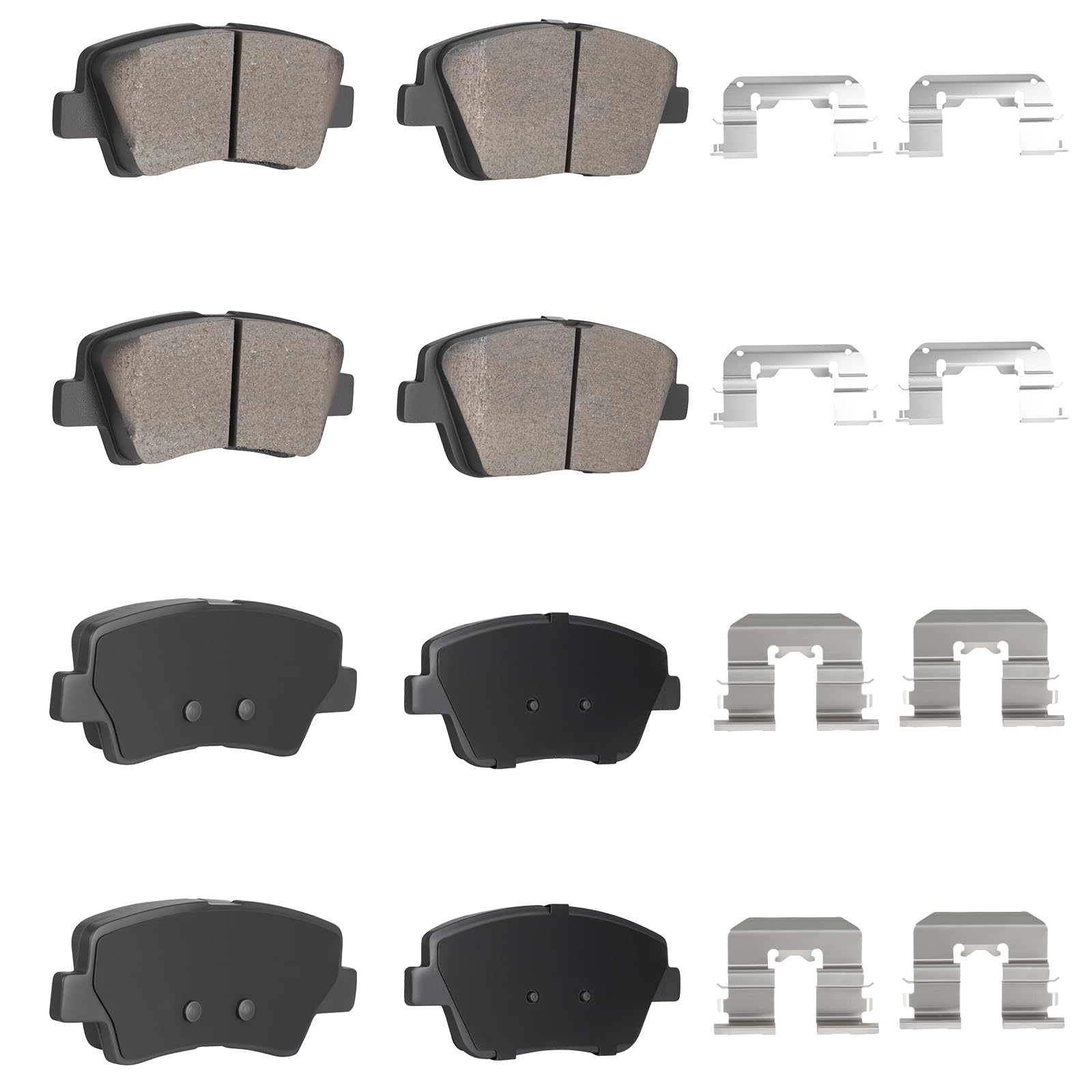
ILONPA is the most complete-looking option in this roundup because the current product information lists both front and rear ceramic pads together with installation hardware. That can simplify a four-wheel pad service when the supplied clips or related pieces match your exact brake setup.
The listing also describes chamfered and grooved pad faces and a coated backing plate. Those design features are commonly used to manage pad contact, vibration, corrosion, and noise, but the real result still depends on rotor condition, hardware condition, installation, and bedding.
Who Should Buy This
Choose ILONPA if you want a full front-and-rear ceramic replacement and prefer a package that is listed with installation hardware.
Who Should Avoid This
Skip it if Amazon’s current fitment information does not confirm your vehicle, if you only need one axle, or if your brake inspection shows that rotors, calipers, hoses, or other parts also require service.
Safety
Included hardware can be useful only when it is the correct hardware for your application. Compare all supplied parts with the original components and follow the correct service procedure rather than assuming every piece in the package belongs on every Sonata configuration.
Durability
Pad life cannot be predicted from material alone. Driving conditions, rotor condition, caliper movement, heat, vehicle load, installation, and bedding all affect wear.
Why You’ll Like Them
- Front-and-rear 8-piece ceramic configuration
- Listed with installation hardware
- Designed as a one-package option for compatible Sonata applications
- Chamfered and grooved pad design listed by the manufacturer
- Useful for buyers who want to avoid sourcing front and rear pads separately
Check Product Details on Amazon
PM Auto Front-Rear Ceramic Brake Pads (Set of 8)
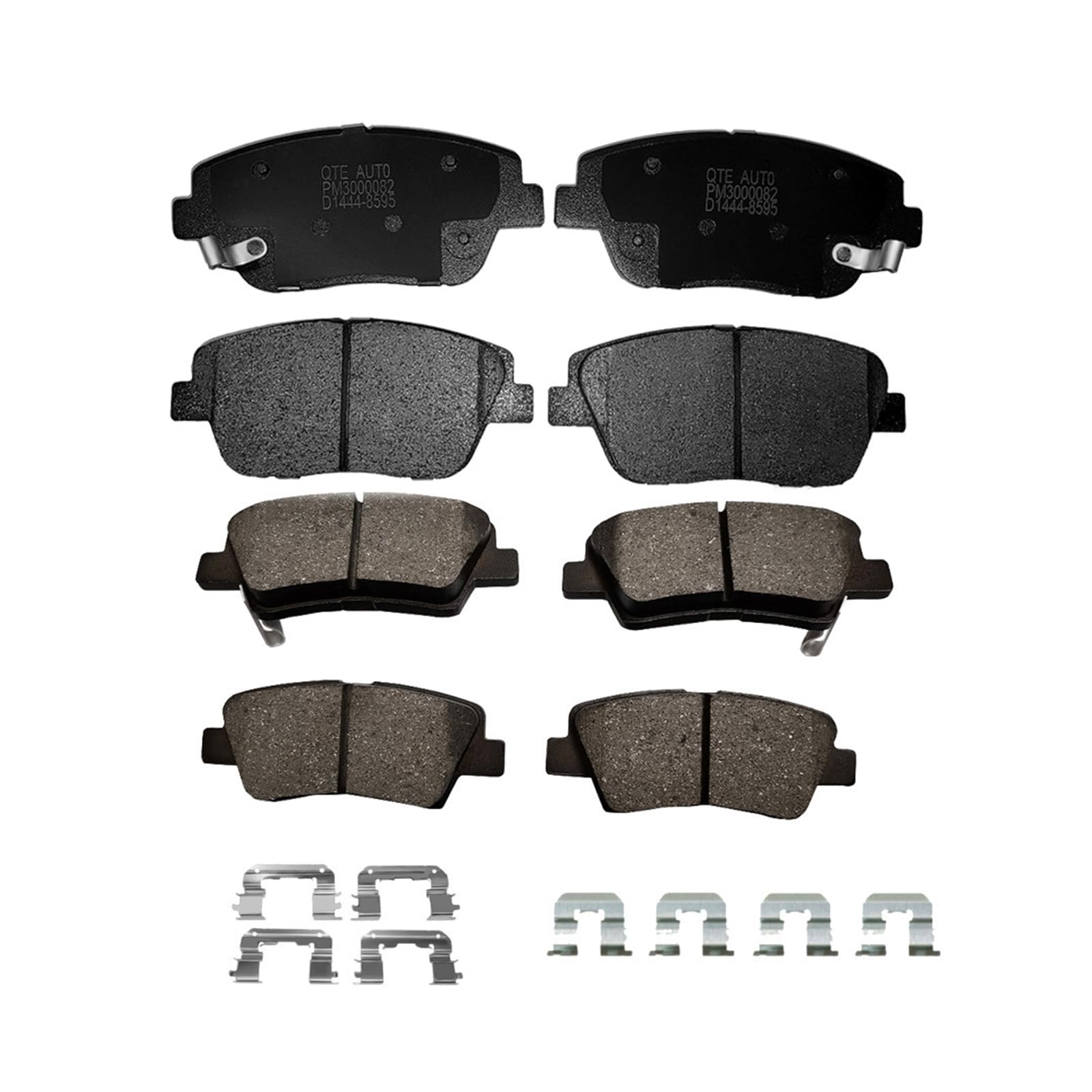
The PM Auto front-and-rear kit is a practical alternative when you want both axles in one order. Its 8-piece configuration is intended to provide four front and four rear pads for compatible applications, reducing the need to shop for two separate pad sets.
Ceramic pads are commonly chosen for daily-use vehicles by drivers who want a balance of normal-road braking characteristics, lower visible dust, and reduced noise compared with some alternative friction formulations. Those benefits are not guaranteed, so rotor condition and correct installation still matter.
Who Should Buy This
Choose this PM Auto set if you are servicing both axles and the current fitment information confirms that the front and rear pad shapes match your 2013 Sonata.
Who Should Avoid This
Skip it if you only need one axle, if you need specific installation hardware that is not shown in the current package contents, or if inspection reveals additional brake-system problems.
Safety
Replacing all pads does not correct seized calipers, worn rotors, contaminated friction surfaces, hydraulic problems, or incorrect installation. Inspect the complete system before putting the vehicle back into normal service.
Durability
Actual service life depends on your driving pattern, traffic, vehicle load, rotor surface, caliper condition, bedding process, and brake-system maintenance.
Why You’ll Like Them
- Eight-pad package intended to cover front and rear
- Marketed for compatible 2011–2015 Sonata applications
- Ceramic friction material
- Convenient alternative to purchasing two separate axle kits
- Good comparison choice for a complete pad service
Check Product Details on Amazon
PM Auto Rear Ceramic Brake Pad
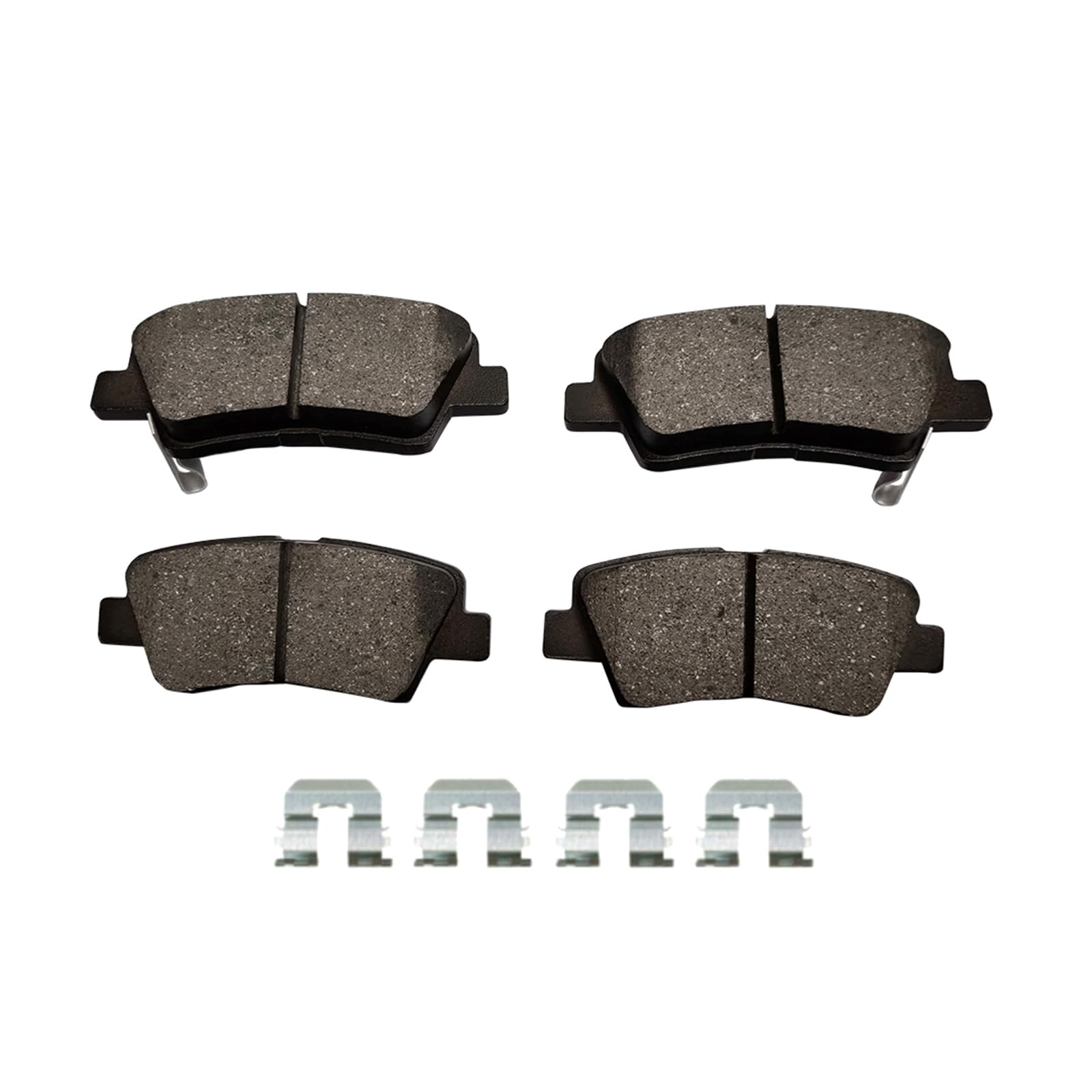
If inspection shows that only the rear pads need replacement, this PM Auto rear-only kit is more targeted than buying a full 8-piece package. That can make sense when the front pads and rotors still have safe service life and are wearing normally.
The important limitation is that rear brake fitment should be checked carefully. Compare the current seller fitment, pad shape, and part references with your existing rear brakes before installation rather than relying only on the 2011–2015 year range.
Who Should Buy This
Choose this kit if you specifically need rear pads and a trusted fitment check confirms the application for your 2013 Sonata.
Who Should Avoid This
Skip it if the front brakes also need service, if the rear pad shape does not match, or if your vehicle has a different brake or parking-brake configuration than the current listing supports.
Safety
Rear brakes contribute to braking balance and stability. Replace pads as an axle set, inspect both rear rotors and calipers, and investigate significant left-to-right wear differences before installing new pads.
Durability
Uneven wear can shorten the life of replacement pads quickly. Make sure slides move correctly and that neither caliper is sticking before assuming new pads alone will solve the problem.
Why You’ll Like Them
- Rear-only alternative when front pads do not need replacement
- D1445-style application listed for compatible Sonata models
- Ceramic friction material
- Avoids purchasing an unnecessary front-pad set
- Useful for a focused rear brake service after proper inspection
ALADICHE 8pcs Ceramic Brake Pads

ALADICHE is another straightforward option if your goal is to buy front and rear ceramic pads in one package. The listed model-year range includes the 2013 Sonata, but you should still compare the exact pad references and vehicle fitment before ordering.
This set makes the most sense for a normal full-pad replacement where the rest of the braking system has already been inspected and found serviceable.
Who Should Buy This
Choose ALADICHE if you want an 8-piece ceramic front-and-rear set and its current fitment information matches your vehicle.
Who Should Avoid This
Skip it if you need confirmed installation hardware that is not shown in the current package, if you only need one axle, or if the pad references do not match your Sonata.
Safety
Verify both front and rear pad shapes before installation. A full eight-pad package is useful only when both axle sets are correct for the vehicle.
Durability
Ceramic material does not prevent abnormal wear caused by rotor problems, seized caliper components, poor bedding, or incorrect installation. Correct those conditions before expecting normal pad life.
Why You’ll Like Them
- Eight-piece front-and-rear configuration
- Listed for compatible 2011–2014 Hyundai Sonata applications
- Ceramic friction material
- Simple one-order option for a full pad refresh
- Useful alternative when comparing several D1444/D1445-style sets
Check Product Details on Amazon
CCTECHMASS 8PCS Ceramic Brake Pads
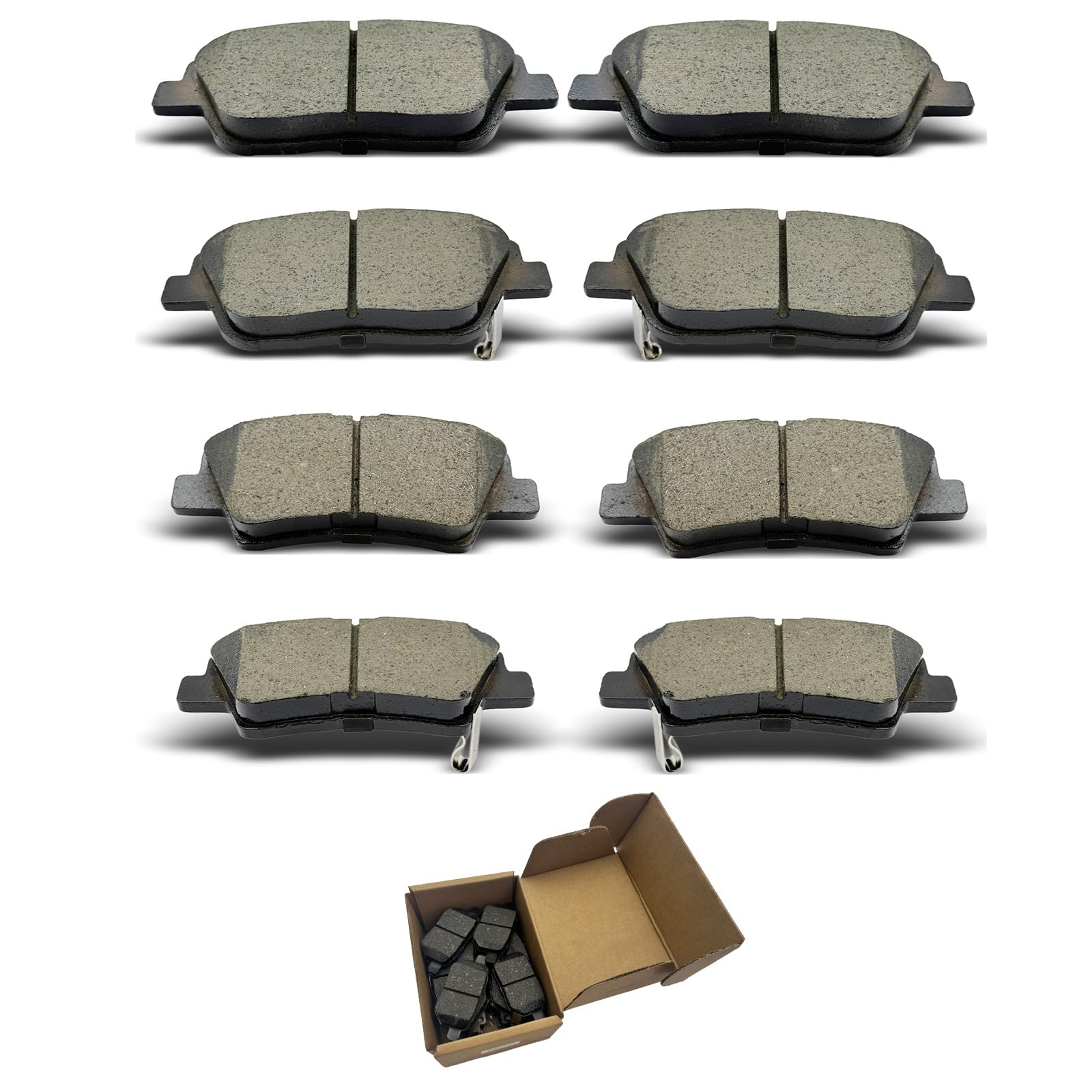
CCTECHMASS gives you another full-set choice for the 2011–2014 Sonata generation. Like the other 8-piece options, its main advantage is convenience when both axles need pads and the listed front and rear pad shapes match your car.
Check the current Amazon package contents before assuming that clips, shims, or other hardware are included. If the original hardware is corroded, distorted, or damaged, replace it with the correct parts rather than reusing it simply because the new pad kit did not include replacements.
Who Should Buy This
Choose CCTECHMASS if you are comparing full front-and-rear ceramic sets and the current fitment details match your 2013 Sonata.
Who Should Avoid This
Skip it if the current listing does not confirm your exact configuration or if you specifically need a package with clearly documented new installation hardware.
Safety
Make sure each pad moves correctly in the caliper bracket and that all required hardware is present and serviceable. Never force a pad into a bracket when the shape or hardware appears wrong.
Durability
Normal wear depends heavily on rotor condition and free caliper movement. Persistent grinding, pulling, overheating, or uneven wear after installation should be inspected rather than treated as a normal bedding characteristic.
Why You’ll Like Them
- Eight-pad front-and-rear configuration
- Listed for compatible 2011–2014 Sonata applications
- Ceramic friction material
- Convenient full-set format
- Another option for buyers comparing compatible D1444/D1445-style replacements
Check Product Details on Amazon
How to Choose Brake Pads for a 2013 Hyundai Sonata
Start With Fitment, Not Brand
The safest starting point is the pad shape and part application. Enter your exact vehicle information into the current seller fitment tool, then compare the listed front and rear references with a reliable parts catalog or the pads already on your car.
Decide Whether You Need Front, Rear, or Both
You do not automatically need all eight pads just because a complete kit is available. Measure or inspect both axles. If only one axle is worn and the other is safely within specification, an axle-specific replacement can be appropriate. Pads should still be replaced in left-and-right pairs on the axle being serviced.
Check Hardware Before Starting
Abutment clips, shims, slide-pin boots, and related hardware can affect pad movement and noise. If the kit does not include the parts your brake system requires, inspect the originals and obtain the correct replacements before installation.
Inspect the Rotors and Calipers
Do not expect new pads to fix deeply scored rotors, excessive runout, seized slides, leaking hydraulic components, sticking calipers, or uneven wear. Correct underlying brake-system problems first.
Ceramic vs. Other Pad Materials
Ceramic pads are popular for passenger cars because many formulations are designed with street-driving noise and visible dust in mind. The word “ceramic” alone does not prove that one pad will stop shorter, last longer, or perform better than every semi-metallic or OE-style alternative.
FAQ
How Do I Choose the Right Brake Pads for My 2013 Hyundai Sonata?
Confirm the axle position, trim, engine, brake package, and current fitment information for your specific vehicle. Many replacement catalogs use D1444-style front pads and D1445-style rear pads for 2013 Sonata applications, but VIN-specific fitment or a trusted parts catalog is safer than relying on the year range alone.
When possible, compare the replacement pad’s shape and interchange numbers with the pads already installed before completing the job.
Should I Buy a Full Set or Rear-Only Brake Pads?
Buy a full set when inspection shows that both front and rear pads need replacement and the complete kit matches both axles. A rear-only set makes more sense when the rear pads require service but the front brakes remain in safe condition.
If pad wear is unusually uneven, diagnose the reason before installing replacements. A sticking caliper, seized slide, rotor problem, or other fault can quickly damage new pads.
Do Ceramic Brake Pads Produce Less Dust?
Many ceramic formulations are marketed for reduced visible dust and lower noise compared with some semi-metallic formulations, which is one reason they are popular on daily-driven passenger cars. Actual dust and noise vary by pad formulation, rotor condition, installation, driving style, and bedding.
Can I Install These Brake Pads Myself?
Brake pads can be serviced by experienced DIYers who have the correct tools, vehicle-specific service information, safe lifting equipment, and the ability to inspect the complete braking system. The job is not a good place to learn by guesswork.
Use jack stands or the support method specified for the vehicle, follow the correct caliper and torque procedures, keep grease away from friction surfaces, and make sure the brake pedal becomes firm before moving the vehicle. If you are uncertain about any part of the work, use a qualified technician.
What Should I Do After Installing New Brake Pads?
Before driving normally, make sure all components are installed correctly and pump the brake pedal as needed to restore a firm pedal. Check the manufacturer’s bedding instructions for the pads you purchased and test the brakes at low speed in a safe location.
If you notice persistent grinding, pulling, overheating, fluid leakage, warning lights, an unusually soft pedal, or severe vibration, stop treating the issue as normal bedding and have the braking system inspected.
Do I Need New Rotors When I Replace Brake Pads?
Not automatically. Rotors should be inspected for thickness, scoring, cracking, heat damage, surface condition, and other service limits. Reuse or replacement should be based on their actual condition and the vehicle manufacturer’s service specifications rather than age alone.
Final Recommendation
Choose ILONPA first if you want a complete front-and-rear ceramic package and value the convenience of hardware being listed with the kit.
Choose PM Auto Front-Rear if you want another simple 8-piece full-set option and current fitment confirms your vehicle.
Choose PM Auto Rear when only the rear brakes need pads and its rear application matches your exact Sonata.
ALADICHE and CCTECHMASS remain useful alternatives when their current fitment and package contents better match what you need.
Wrapping Up
The best brake pads for a 2013 Hyundai Sonata are not simply the pads with the longest feature list. Start with exact fitment, decide which axle actually needs service, check whether the required hardware is included, and inspect the rotors and calipers before installing anything.
For most buyers comparing the products in this roundup, ILONPA is the strongest starting point because it combines a front-and-rear ceramic configuration with listed installation hardware. PM Auto provides useful full-set and rear-only alternatives, while ALADICHE and CCTECHMASS give you additional compatible full-set choices to compare.
Before ordering, confirm the current Amazon fitment for your exact 2013 Hyundai Sonata and compare the replacement parts with trusted vehicle-specific information. Correct installation and a healthy braking system matter more than any marketing label on the box.

