
Staying comfortable in your tent can turn a hot, humid night into more restful sleep, but a true camping air conditioner requires more planning than a fan. You need enough cooling capacity for the space, a reliable power source, a complete venting setup, and a practical way to transport a compressor-based unit.
This streamlined guide compares two portable tent air conditioners with distinct use cases. The Outohome 5200BTU model is the stronger all-around option for car camping and RV use, while the more compact ZY.Hyisinn 3300BTU model is worth considering only after you confirm its voltage requirements with the seller. Neither unit is designed for backpacking.
Affiliate disclosure:. As an Amazon Associate I earn from qualifying purchases. This article contains Amazon affiliate links. If you make a qualifying purchase through a link, we may earn a commission at no additional cost to you.
Top Picks
|
Category |
Product |
Best For |
|---|---|---|
|
🏆 Best Overall |
Car campers and RV users who want the clearer 110V setup and stronger listed cooling output |
|
|
🔍 Best Compact Option |
Small tents and vans, but only after confirming the correct operating voltage |
Quick verdict: The Outohome is the safer first choice because its current listing clearly specifies 110V operation, 5,200 BTU, approximately 400W, and a 31.9-pound weight. The ZY.Hyisinn is smaller and lower-capacity, but its product page contains conflicting 110V and 220V information, so it should not be ordered until compatibility is confirmed.
Best use case: Both are vehicle-transportable compressor air conditioners for powered campsites, generators, large portable power stations, vans, or RVs—not hike-in campsites.
How We Chose These Units
We prioritized products that are genuine compressor-based portable air conditioners intended for tents, vans, trucks, or RVs. We compared listed cooling capacity, continuous power draw, voltage, noise, weight, venting requirements, included accessories, portability, listing consistency, and the clarity of the current buying information.
We also removed duplicate variants and listings that did not provide a dependable current purchase path. Because portable camping AC listings can change quickly, always recheck voltage, included hoses, warranty terms, seller details, and return options before ordering.
Before You Buy a Camping Air Conditioner
- Plan the exhaust route: Hot condenser air must be vented completely outside the tent or vehicle.
- Check voltage first: A unit marked 220V is not a direct substitute for a standard North American 110–120V campsite outlet.
- Allow for compressor startup: Your inverter, generator, or power station needs enough surge capacity as well as adequate continuous output.
- Estimate runtime realistically: Divide the battery’s usable watt-hours by the AC’s expected running watts, then leave a margin for inverter losses and cycling.
- Expect vehicle-based transport: These units weigh roughly 28 to 32 pounds before hoses and accessories.
- Reduce the heat load: Shade, a reflective rainfly, sealed hose openings, and a smaller insulated space can improve results.
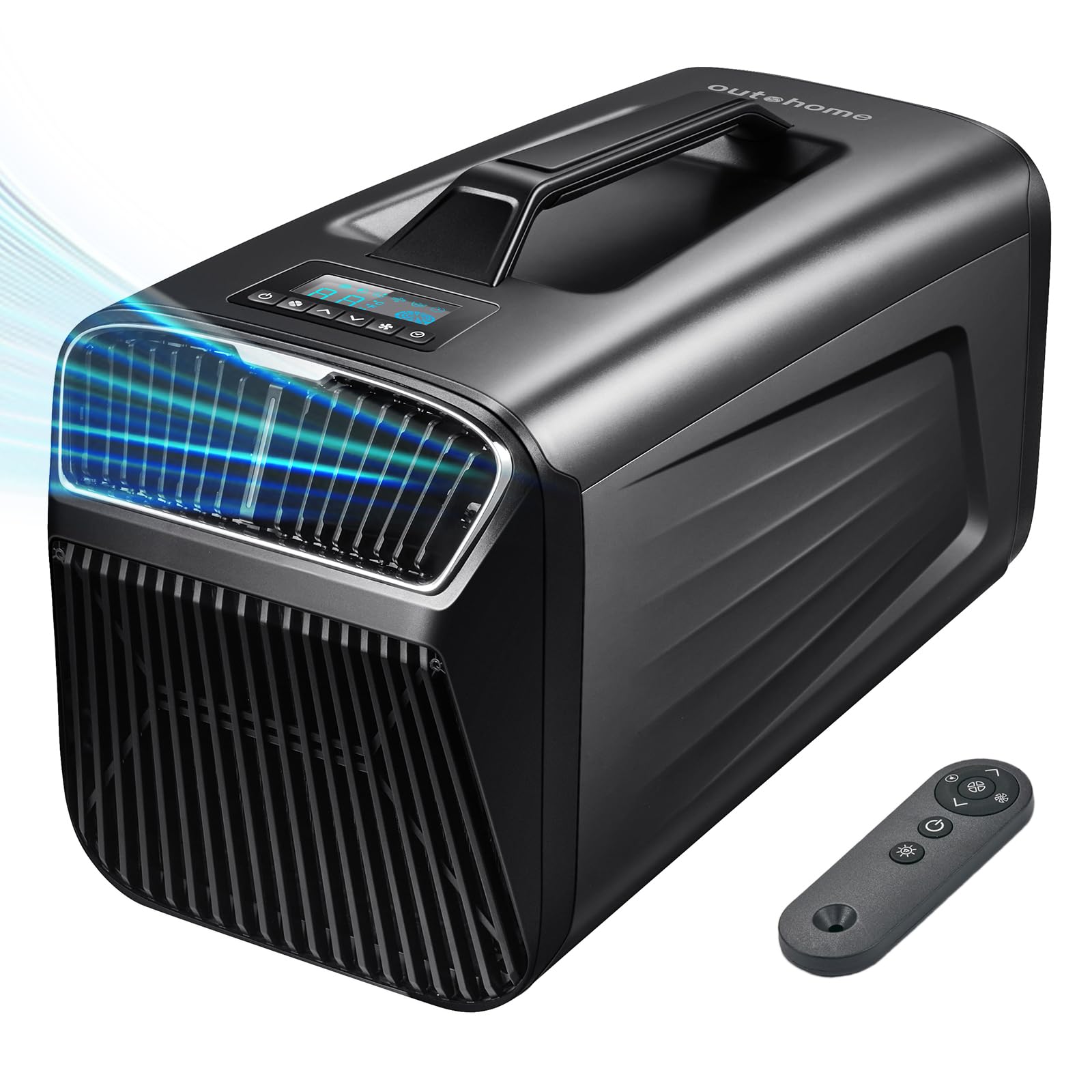
The Outohome is the stronger all-around choice for powered car camping, small RV spaces, truck sleepers, and similar compact areas. Its listing specifies 5,200 BTU of cooling, 110V operation, approximately 400W of power draw, a 46 dB noise rating, and a 31.9-pound weight.
That combination gives it more listed cooling capacity than the smaller option without increasing the stated continuous wattage. It can be positioned outside a tent with cooled air routed inside, or placed inside when the hot-air exhaust is sealed and vented outdoors.
Why You’ll Like It
- Higher listed cooling output for small tents, truck sleepers, vans, and compact RV areas
- Clearly listed 110V compatibility for standard powered campsites and suitable generators
- Cooling, dry, sleep, and fan modes for changing weather and humidity
- Listed 400W draw is relatively manageable for a compressor-based camping AC
- Carry handle and compact footprint suit vehicle-based trips
Who Should Buy This
Choose this model if you camp near your vehicle, have dependable 110–120V power, and want the stronger of the two listed cooling capacities. It is also the better fit when you value clearer electrical specifications and want a unit that can serve a small RV, truck, garage, or temporary indoor space between trips.
Who Should Avoid This
Skip it for backpacking, primitive sites without a properly sized power source, large group tents, or situations where you cannot vent hot air and manage condensation. At nearly 32 pounds, it is portable by vehicle rather than by trail.
Buyer Feedback Snapshot
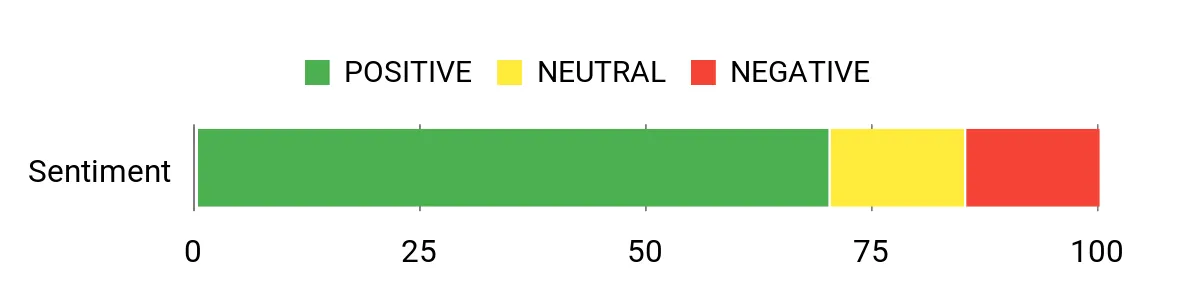
The source material describes generally favorable feedback about cooling speed and noise, but the available feedback base is limited. Treat the chart below as a directional snapshot rather than proof of broad long-term reliability.
Before You Buy
- Confirm that your generator, inverter, or power station can handle compressor startup as well as the listed running draw.
- Check which cold-air, intake, exhaust, and drain hoses are included with the current seller’s package.
- Plan a sealed vent opening so hot exhaust does not leak back into the cooled space.
- Keep the unit upright after transport and follow the current manual before first use.
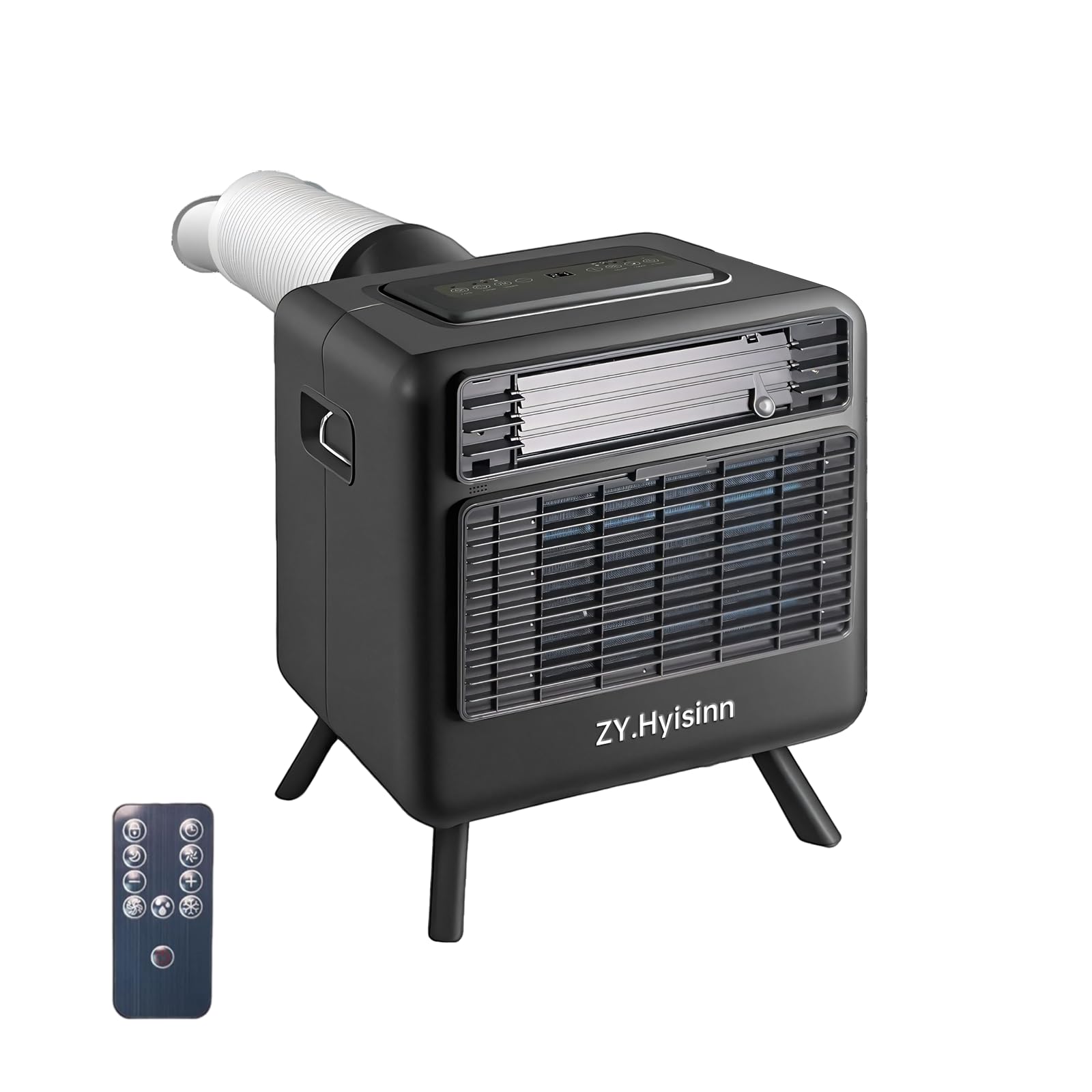
The ZY.Hyisinn is the smaller-capacity option, with a listed 3,300 BTU output, approximately 436W of power, a 49 dB noise rating, and a current listed weight of about 28 pounds. It includes multiple ducts, a remote, a drain pipe, and a water bag, which can simplify a compact tent or van setup.
Important voltage warning: The product page contains conflicting electrical information: the specification table lists 220V, while the product copy says it plugs into a standard 110V outlet. Confirm the exact voltage and plug configuration shown on the current unit, manual, and seller page before ordering. Do not assume compatibility.
Why You’ll Like It
- Lower listed cooling capacity may suit a tightly enclosed two-person tent or compact van sleeping area
- About 28 pounds, making it somewhat easier to move than the larger Outohome
- Includes several setup accessories for routing air and handling condensation
- Cooling, dehumidifying, and fan modes add flexibility in humid weather
- Remote control and timer functions can make overnight adjustments easier
Who Should Buy This
Consider this unit only if you need a compact camping AC and can verify that the exact electrical version matches your outlet, inverter, generator, or shore-power setup. It is better suited to a small enclosed space than a large family tent.
Who Should Avoid This
Avoid it if you need guaranteed plug-and-play 110–120V compatibility, cannot obtain a clear voltage answer from the seller, or want a product for a large tent. It is also not suitable for carrying long distances on foot.
Buyer Feedback Snapshot
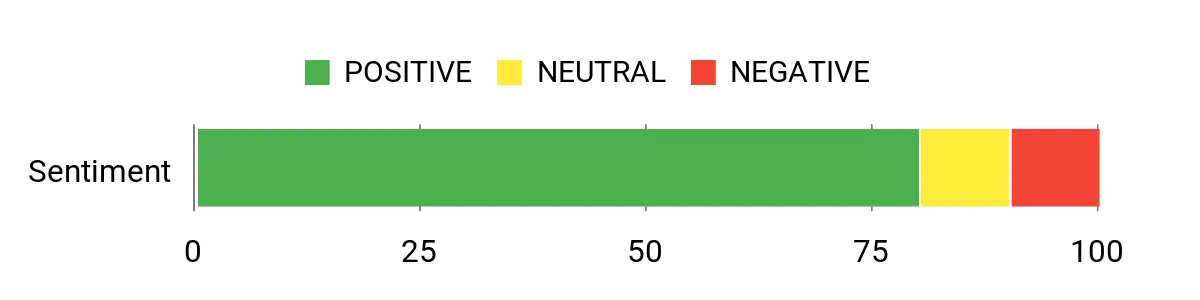
The source material reports positive early feedback, but the evidence base is very small. Use the chart below only as a limited snapshot and rely more heavily on current seller details, return terms, and electrical compatibility.
Before You Buy
- Get written confirmation of voltage and plug type from the current seller.
- Verify that your power source can support the compressor’s startup surge and approximately 436W running draw.
- Confirm the current package includes the ducts, remote, drain pipe, window spacer, and water bag you need.
- Measure your tent or van layout before ordering so the unit and hoses do not obstruct sleeping or exit paths.
FAQ
How Do I Choose the Right Camping Air Conditioner for My Tent?
Start with the size and heat load of the space rather than BTU alone. A shaded two-person tent with sealed hose openings is easier to cool than a large, sun-exposed family tent. Compare compressor cooling capacity, voltage, continuous wattage, startup surge, noise, weight, hose layout, drainage needs, and the temperature range in which the unit is designed to operate.
Can I Run a Camping Air Conditioner From a Portable Power Station or Solar?
Potentially, but the power station must support both the AC’s continuous load and the compressor’s startup surge. Estimate runtime by dividing usable battery watt-hours by expected running watts, then reduce the result to account for inverter losses and compressor behavior. Solar panels can extend runtime, but output varies with sun, panel angle, temperature, and charge-controller limits.
What Is the Best Tent AC Setup?
Place the compressor unit outside when the hose system supports that arrangement, or keep it inside while venting all hot exhaust outdoors through a sealed opening. Keep intake and exhaust paths unobstructed, minimize hose length and sharp bends, route condensate safely, and avoid recirculating hot exhaust into the tent.
Are Portable Tent Air Conditioners Good for Backpacking?
No. The two units retained here weigh about 28 to 31.9 pounds before hoses, cords, and power equipment. They are practical for car camping, powered campsites, vans, trucks, and RVs rather than hike-in camping.
Why Is Voltage Verification So Important?
Using the wrong voltage can prevent the AC from operating and may damage the unit or power equipment. Match the exact voltage, frequency, plug type, continuous wattage, and startup requirement to your outlet, generator, inverter, or power station before purchase.
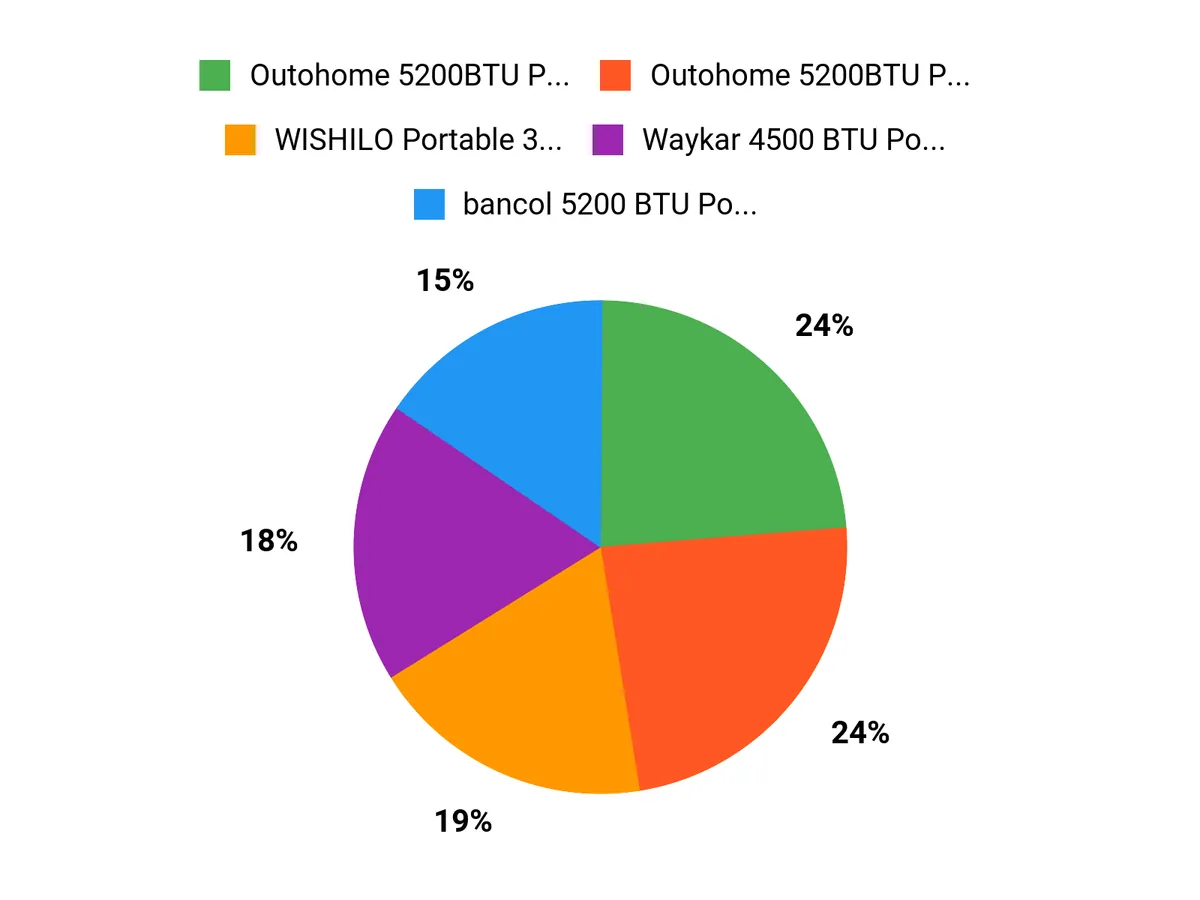
What Campers Prefer
The choice comes down to stronger listed cooling and clearer 110V compatibility versus a somewhat lighter, lower-capacity unit that requires extra electrical verification. The Outohome is the more straightforward recommendation for most powered car-camping setups. The ZY.Hyisinn may fit a smaller space, but only after the seller resolves the voltage conflict.
The chart below is retained from the source article as a directional comparison. Recheck current specifications before buying.
Wrapping Up
For most car campers, the Outohome 5200BTU Portable AC is the better starting point. Its listing provides a clearer 110V specification, higher cooling capacity, and a manageable stated running draw for a compressor-based tent AC.
The ZY.Hyisinn 3300BTU model is the more compact alternative, but the conflicting voltage information is a meaningful buying risk. Confirm compatibility before ordering, then match either unit to your tent size, venting plan, power source, transport method, and expected weather.
| Product Name | Image | Best For | Cooling Power | Noise Level | Weight | Power / Voltage | Amazon Details |
|---|---|---|---|---|---|---|---|
| 5200BTU Portable Tent Air Conditioner (Black Grey) |
 |
Best overall for powered car camping and compact RV spaces | 5,200 BTU | 46 dB listed | 31.9 pounds | Approximately 400W / 110V listed | Check Amazon |
| 3300BTU Portable Air Conditioner (ZY.Hyisinn) |
 |
Compact tents and vans after voltage verification | 3,300 BTU | 49 dB listed | About 28 pounds | Approximately 436W; listing shows conflicting 110V / 220V information | Verify Specs |
This Roundup is reader-supported. When you click through links we may earn a referral commission on qualifying purchases.