When you are planning mountain approaches or overnight climbing trips, your shelter has to balance carry weight, weather protection, durability, ventilation, and realistic seasonal limits. A tent that works at a sheltered summer campsite may be unsuitable for exposed ridgelines, strong wind, or snow.
This guide focuses on three tents that still fit the original mountain-travel buyer intent after a product-relevance and specification audit. The picks cover a roomy solo three-season shelter, a balanced two-person three-season option, and a colder-weather model for climbers who need more protection.
Important: “Four-season” is a manufacturer category, not a guarantee of expedition-grade wind or snow-load performance. For exposed alpine routes, winter storms, or high-altitude expeditions, confirm the manufacturer’s current specifications and choose a shelter designed for the expected conditions.
Affiliate disclosure:. As an Amazon Associate I earn from qualifying purchases. This roundup is reader-supported. When you click qualifying Amazon links, the publisher may earn a commission at no extra cost to you.
Top Picks
|
Category |
Product |
Best For |
Season |
|---|---|---|---|
|
🏆 Best Value Solo |
Sheltered three-season approaches and roomy solo camping |
3-season |
|
|
🎯 Best Balanced Two-Person |
Weekend mountain approaches and two-person three-season use |
3-season |
|
|
❄️ Best Cold-Weather Option |
Cold-weather practice, shoulder seasons, and protected winter camps |
Manufacturer-listed 4-season |
How We Picked These Tents
We screened the original product list for relevance to mountain travel, current listing status, seasonal design, verified or clearly disclosed specifications, carry weight, pole structure, rain protection, ventilation, setup, and realistic use cases. Products were removed when they were unavailable, primarily suited to fair-weather or car camping, supported by inconsistent listing data, or too weakly verified to recommend confidently for this topic.
The remaining models are not interchangeable. The TETON and OneTigris are three-season shelters for protected sites and moderate conditions. The GEERTOP adds a snow skirt and colder-weather positioning, but buyers should still avoid treating a marketplace “four-season” label as proof of expedition performance.

The TETON Mountain Ultra 1 is the practical choice when you value interior room, straightforward setup, and three-season rain protection more than minimum trail weight. The current listing identifies the one-person model at about 4.7 pounds, with an 80-by-30-inch floor, aluminum poles, a full mesh inner, and a 3000 mm waterproofing specification.
Its main tradeoff is weight: this is not an ultralight solo tent. It is better suited to shorter approaches, beginner backpacking, vehicle-assisted climbing weekends, or basecamps in protected terrain than to long, steep carries where every ounce matters. The one-person version has one door and one vestibule, so the original article’s dual-door claim has been corrected.
Who Should Buy This
Solo campers who want a forgiving, roomy three-season shelter for moderate mountain approaches, established campsites, and shorter trips.
Who Should Avoid This
Ultralight hikers, exposed-ridge campers, and anyone expecting heavy snow, severe wind, or technical winter-mountaineering performance.
Review Snapshot
The original review analysis emphasized setup, ventilation, waterproofing, and useful vestibule storage. Treat historical review themes as directional rather than current proof, and check recent feedback for the selected size and color before ordering.
Situational Benefits
|
Situation |
How It Helps |
|---|---|
|
Short Solo Approaches |
Freestanding setup and a roomy solo floor make camp simple after a moderate hike, without the cramped feel of a bivy. |
|
Warm, Clear Nights |
The full mesh inner supports ventilation and stargazing when conditions allow the rainfly to be removed. |
|
Wet Three-Season Camps |
A full rainfly, coated floor, and sealed-seam construction provide a more protective system than a minimal single-wall shelter. |
|
Car-Supported Climbing Weekends |
The extra weight matters less when the approach is short, while the added room improves comfort between climbs. |
Key Benefits
- Roomy one-person floor with useful headroom
- Freestanding aluminum-pole structure
- Full mesh inner for airflow in suitable weather
- Full rainfly and 3000 mm listed waterproofing
- One vestibule for boots or a compact pack
- Best suited to protected three-season sites rather than severe alpine exposure
Check Current Amazon Availability

The COSMITTO 2P is the balanced option for climbers who want more shared space than a solo shelter without moving into a heavy family tent. The current technical details identify it as a three-season, two-person model weighing about 2.3 kg, with aluminum poles and a coated rainfly.
The listing contains a waterproof-rating inconsistency: its technical details show 1500 mm, while some product graphics reference 2000 mm. Because variants and listing content can change, verify the exact version before purchase. This is a moderate-weather mountain-approach tent, not a winter or expedition shelter.
Who Should Buy This
Solo campers wanting generous gear space or two people planning short, protected three-season mountain trips.
Who Should Avoid This
Gram-counting backpackers, winter climbers, and users who need verified high wind or snow-load performance.
Review Snapshot
The source review analysis highlighted setup, interior room, ventilation, and vestibule usefulness. Check recent reviews for the currently selected variant, especially for zipper layout, included stakes, and rainfly coating.
Situational Benefits
|
Situation |
How It Helps |
|---|---|
|
Two-Person Weekend Approaches |
The two-person footprint and freestanding structure make it practical for short shared trips in moderate conditions. |
|
Solo Camping With Gear |
One occupant gains extra room for clothing and equipment without stepping up to a large basecamp tent. |
|
Warm or Humid Nights |
The mesh inner supports airflow and helps manage condensation when the tent is correctly vented. |
|
Protected Rainy Camps |
The rainfly and bathtub-style floor provide three-season coverage, provided the tent is fully guyed and the selected variant matches the listing. |
Key Benefits
- Freestanding aluminum-pole design
- Two-person capacity with enough room for a spacious solo setup
- Mesh inner for ventilation
- Rainfly and vestibule storage for three-season use
- Approximately 2.3 kg listed weight
- Best for moderate, protected conditions rather than winter exposure
Check Current Amazon Availability

The GEERTOP 2P is the strongest cold-weather match in this shortlist. Its current listing describes a double-wall design with a snow skirt, aluminum poles, two doors, two vestibules, sealed seams, and 3000 mm waterproofing. The listing’s weight fields vary, showing roughly 2.59 kg in technical details and about 6.8 pounds in the marketing copy, so confirm the current packaged and trail weight before planning a long carry.
This model is more appropriate for shoulder seasons, winter practice, protected snow camps, and cold-weather backpacking than the other two picks. However, it should not automatically be treated as an expedition mountaineering tent. Severe alpine wind and snow loading require a shelter with clearly documented structural performance for the route.
Who Should Buy This
Campers who need more cold-weather coverage for protected winter sites, shoulder-season trips, or mountaineering practice near a safe retreat.
Who Should Avoid This
Expedition climbers who need independently documented high-wind and heavy-snow performance, or fast-and-light hikers seeking a truly ultralight shelter.
Review Snapshot
The source review analysis emphasized straightforward setup, rain protection, two-door access, and usable solo space. Verify current feedback for pole durability, snow-skirt use, packed weight, and fit for taller occupants.
Situational Benefits
|
Situation |
How It Helps |
|---|---|
|
Protected Winter Camps |
The snow skirt, double-wall design, and full fly add coverage in cold weather when the site is sheltered and the tent is properly anchored. |
|
Shoulder-Season Backpacking |
More fabric coverage than a mesh-heavy three-season tent helps reduce drafts in cool, wet conditions. |
|
Two-Person Cold-Weather Trips |
Two doors and two vestibules improve access and help keep wet gear outside the sleeping area. |
|
Solo Basecamp Use |
A solo user gains room for layers and equipment while retaining a relatively compact freestanding footprint. |
Key Benefits
- Double-wall design with snow skirt
- 3000 mm listed waterproofing and sealed seams
- Two doors and two vestibules
- Freestanding aluminum-pole structure
- Better cold-weather coverage than the three-season picks
- Not a substitute for a route-specific expedition shelter
Check Current Amazon Availability
Before You Buy: Mountain Tent Checklist
- Match the season to the forecast: A three-season tent is not a winter shelter, and a “four-season” label alone does not prove expedition capability.
- Check the real carry weight: Compare trail weight, packaged weight, and any required footprint, extra stakes, or repair kit.
- Size for people plus gear: Two-person tents can feel tight when both occupants carry climbing packs, helmets, boots, and wet layers.
- Inspect pole and guy-out design: More secure anchoring and a low, stable profile matter as exposure increases.
- Plan for condensation: Ventilation, site selection, and correct fly tension are as important as waterproof coatings.
- Practice before the trip: Pitch the tent at home, confirm every component is present, and learn how to anchor it with gloves or in low light.
FAQ
How Do I Choose the Right Tent for High-Altitude Mountain Climbing?
Start with the worst credible conditions, not the average forecast. For exposed high-altitude routes, look for a purpose-built mountaineering tent with a strong pole geometry, multiple secure guy points, full fly coverage, robust fabrics, and clearly documented snow and wind suitability. None of the three products in this article should be assumed to meet expedition requirements solely because a marketplace listing uses words such as “mountaineering” or “four-season.”
For lower-elevation approaches and protected camps, balance season rating, weight, usable floor space, vestibule capacity, ventilation, and setup complexity. Always confirm the current manufacturer specifications for the exact variant you are buying.
How Should I Care for, Pack, and Maintain My Tent on Long Treks?
Pitch the tent before the trip, inspect seams and pole sections, and carry a small repair kit. Use a correctly sized footprint when abrasion is likely, but do not let it extend beyond the tent floor where it can collect rainwater. Dry the tent fully before storage, clean it gently according to the manufacturer’s care instructions, and avoid storing it compressed for long periods.
At camp, orient the lowest or strongest end toward prevailing wind, tension the fly evenly, use every relevant guy point, and choose anchors suited to soil, rock, sand, or snow. Never cook inside a standard backpacking tent because of fire and carbon-monoxide risks.
What Do Tent Capacity, Season Labels, and Waterproof Ratings Really Mean?
Capacity is usually based on sleeping bodies, not generous gear storage. A two-person tent may be comfortable for one climber with equipment but tight for two people carrying bulky packs. Season labels describe a design category rather than insulation: tents do not keep you warm the way sleeping bags and pads do.
Hydrostatic-head ratings help compare coated fabrics, but the complete shelter system matters more. Seam construction, floor shape, rainfly coverage, ventilation, pole strength, guy-out points, and correct setup all affect performance. Ratings also vary by component and product variant, so verify the exact listing before purchase.
Quick Comparison
| Product Name | Image | Best For | Occupancy | Listed Weight | Weather Notes |
|---|---|---|---|---|---|
| Teton Sports Mountain Ultra 1 |
 |
Roomy solo three-season use | 1 person | 4.7 lb | 3000 mm listed waterproofing; protected sites only |
| OneTigris COSMITTO 2P |
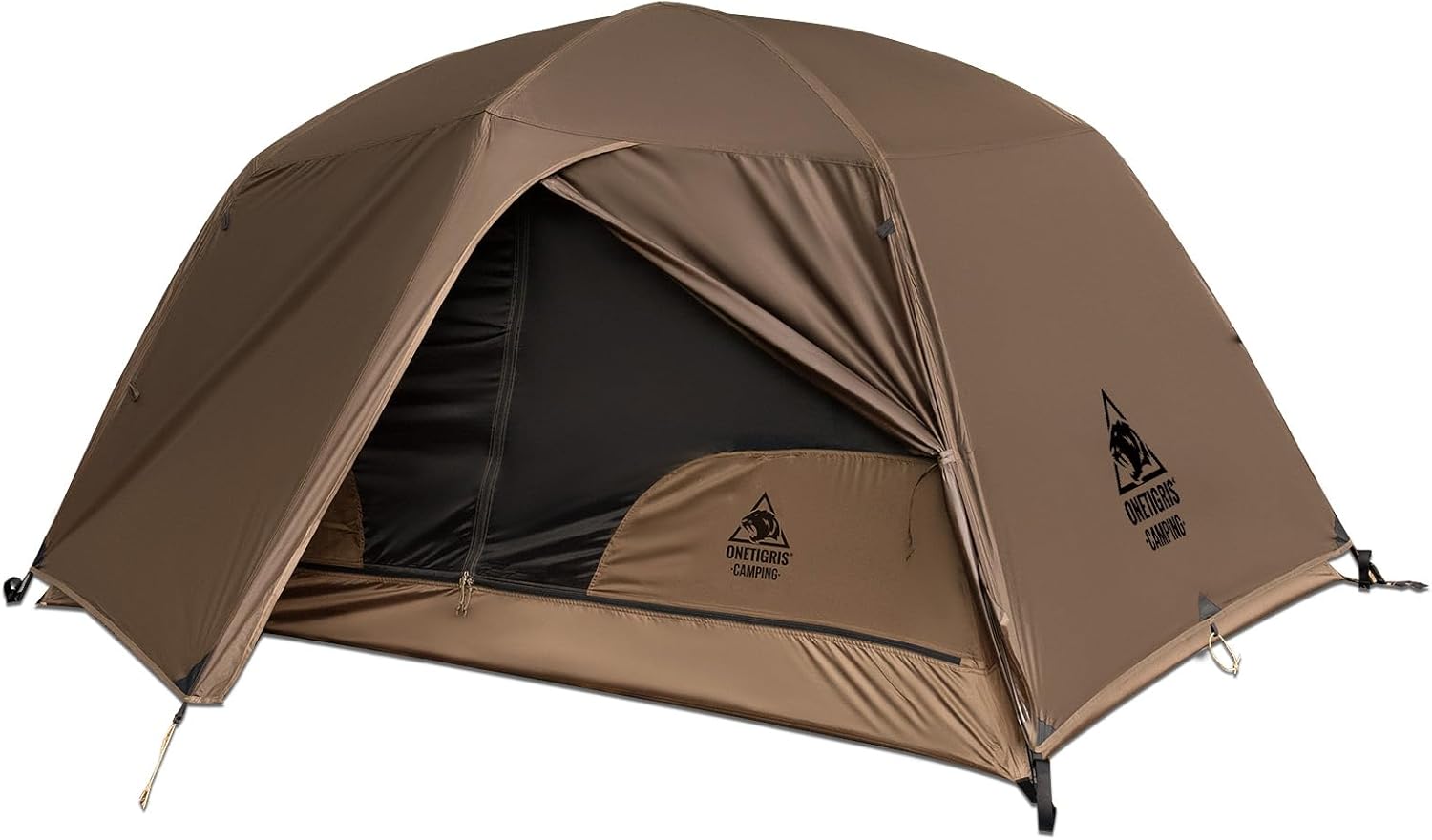 |
Balanced two-person three-season trips | 2 people | About 2.3 kg | Technical details list 1500 mm; verify variant because listing graphics differ |
| GEERTOP Ultralight 2P Tent |
 |
Cold-weather practice and protected winter camps | 2 people | Approx. 2.59 kg to 6.8 lb; listing varies | 3000 mm, snow skirt, manufacturer-listed four-season; not automatically expedition-grade |
Wrapping Up
Choose the TETON Mountain Ultra 1 when you want a roomy, easygoing solo shelter for moderate three-season trips. Pick the OneTigris COSMITTO 2P when shared space and a balanced three-season setup matter more than ultralight weight. Choose the GEERTOP Ultralight 2P when colder-weather coverage, a snow skirt, and two-door access are priorities—but keep its limits in perspective.
The safest buying decision comes from matching the tent to the specific route, campsite exposure, forecast, and retreat options. Check the current listing and manufacturer guidance for the exact variant before relying on any shelter in consequential mountain weather.
This roundup is reader-supported. When you click through qualifying links, the publisher may earn a referral commission.