
This roundup is reader-supported. When you click through Amazon links, we may earn a referral commission on qualifying purchases. As an Amazon Associate I earn from qualifying purchases.
You want one welder that can cover repairs, fabrication, and skill-building without filling your garage with several single-purpose machines. This guide focuses on compact VEVOR multi-process welders that can help you switch between MIG, flux-core, stick, lift TIG, pulse MIG, or AC/DC TIG depending on the model.
The right multi-process welder saves bench space, reduces setup time, and gives you more ways to handle metal repairs at home or on a jobsite. Use this guide to match the machine to your power supply, material thickness, welding process, and comfort level.
Quick Verdict
Best overall for most garages: VEVOR 160A 4-in-1 Welder. It balances MIG, flux-core, stick, lift TIG, portability, and dual-voltage flexibility.
Best step-up pick: VEVOR 200A 4-in-1 Welder. Choose it if you want more headroom for thicker material and longer practice sessions.
Best for pulse MIG and higher output: VEVOR Pro 250A 5-in-1 Welder. It is the stronger choice if you want pulse MIG and more process range, but check the included torch package before buying.
Best TIG-focused option: VEVOR TIG-200. It is the pick for AC/DC TIG and aluminum practice, not for shoppers who need MIG.
Top Picks
|
Category |
Product |
Best For |
|---|---|---|
|
Best Overall |
Most garage repairs and mixed-process learning |
|
|
Best Step-Up Power |
Thicker steel and heavier garage projects |
|
|
Best High-Amps |
Pulse MIG, stronger output, and broader wire options |
|
|
Best Portable Kit |
Mobile repairs with included MIG and TIG torches |
|
|
Best Starter Welder |
Beginners who want flux-core, stick, and lift TIG |
|
|
Best TIG Versatility |
AC/DC TIG, pulse TIG, spot TIG, and stick welding |
How We Chose
You need a welder that fits real work, not just a big number on the box. We focused on process flexibility, useful amperage range, dual-voltage support, setup difficulty, portability, included accessories, and whether the machine makes sense for home garages, mobile repairs, and hobby fabrication.
We also looked for common buyer concerns such as short leads, sparse manuals, unclear accessory bundles, and the need to buy separate torches or consumables. Because Amazon ratings, review counts, prices, and availability change often, check the current product page before you buy.
Before You Buy
- Match the process to the job: MIG and flux-core are easiest for many garage repairs, stick is useful outdoors, and TIG is best when you need cleaner control.
- Check your outlet: A 110V welder is convenient, but 220V support gives you more headroom on thicker material.
- Verify the duty cycle: Higher amperage does not help if the machine overheats quickly at the settings you need.
- Confirm what is included: Some models require separate TIG, aluminum, gas, regulator, or spool-gun accessories.
- Plan for safety: Use a proper helmet, gloves, jacket, ventilation, and clean work surfaces before welding.
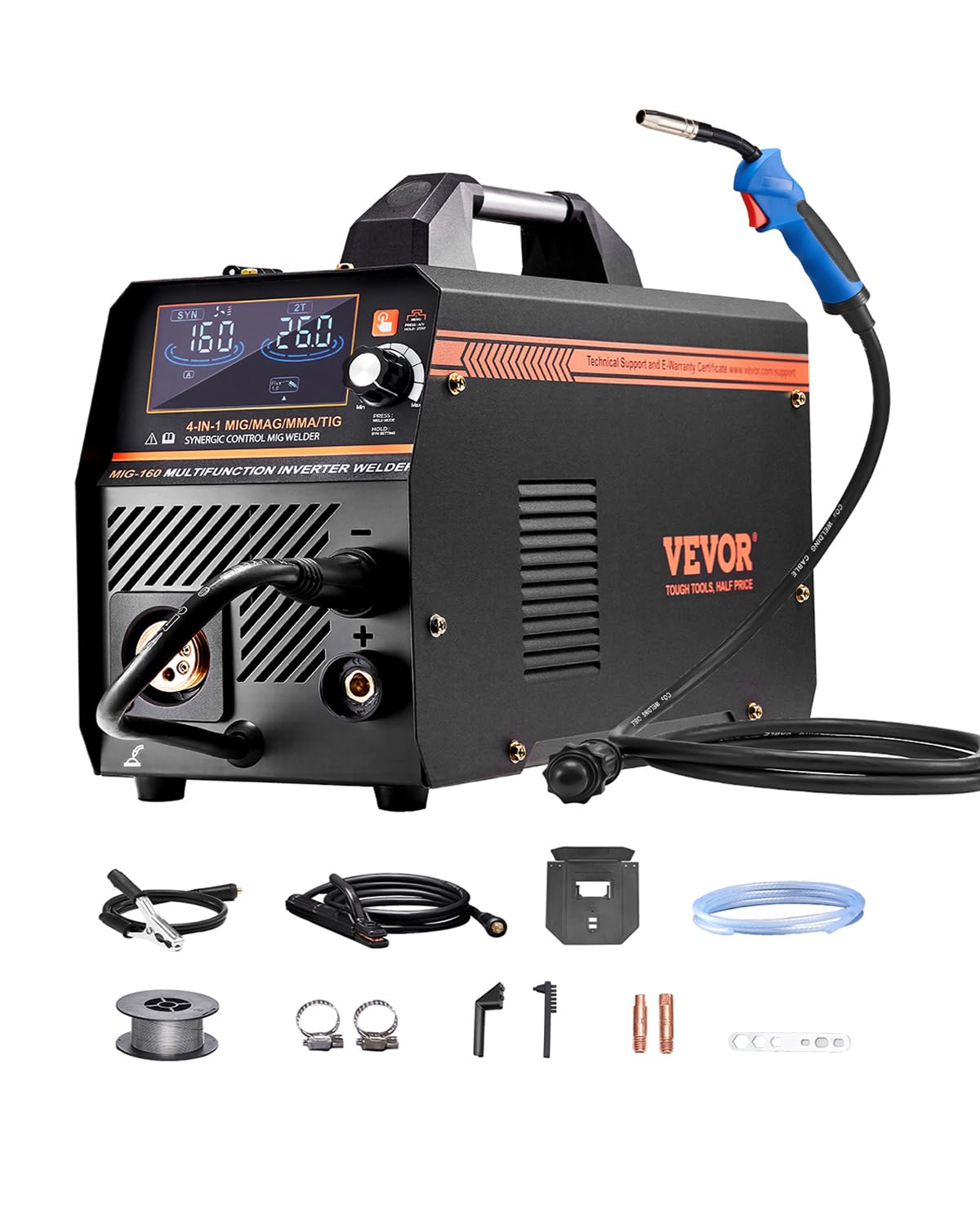
You get the most balanced pick in this guide because it covers the processes many garage users want: gas MIG, flux-core MIG, stick, and lift TIG. The dual-voltage design also gives you a practical upgrade path. You can start on a standard 110V outlet for light work, then move to 220V when you need more output.
The LCD and synergic controls help reduce setup guesswork, which is useful if you are still learning how wire speed, voltage, and travel speed work together. It is a good fit for brackets, gates, patch panels, light fabrication, and general repair work.
What People Say
Reported buyer feedback highlights the versatility, compact size, and easier setup compared with basic knob-only machines. Common cautions include short leads and limited manual detail, so you may want extra setup references and longer compatible cables if your workspace is spread out.
Overall Sentiment: Positive, based on the provided review summary. Check current Amazon reviews before buying.

When It Fits
|
Situation |
How It Helps |
|---|---|
|
Basic home repairs |
Lets you tack, stitch, and patch sheet metal, repair brackets, or fix garden gates without renting a larger rig. |
|
Automotive bodywork |
Provides useful control for tack-welding and stitch welding on thin-to-medium panels. |
|
Shop overflow or tight access |
The small footprint makes it handy as a second machine when space or access is limited. |
|
Outdoor or mobile jobs |
Dual 110V/220V capability helps you adapt to different power sources and temporary setups. |
|
Hobby fabrication |
Switching between wire types and modes lets you practice on metal art, frames, and light structural pieces. |
Practical Use
Setup is straightforward: feed the wire, pick the process, choose the material setup, and let the synergic function get you close. Fine-tune after a few beads on scrap, especially when switching between flux-core, gas MIG, and stick.
Keep spare tips, nozzles, and wire on hand. If your projects require more reach, plan for compatible longer leads.
Why You’ll Like It
- Four welding modes: gas MIG, flux-core MIG, stick, and lift TIG
- Synergic control helps match current and wire feed for quicker setup
- Dual voltage gives you more flexibility than a 110V-only unit
- LCD display improves setting visibility
- Compact enough for smaller garages and mobile repair work
Who Should Buy This
Choose this model if you want one welder for common repairs, learning multiple processes, and occasional fabrication without jumping to the biggest machine in the lineup.
Who Should Avoid This
Skip it if you mainly weld thick stock for long stretches, need advanced TIG control, or want a machine with a very detailed printed manual.
Check Product Details on Amazon

The VEVOR 200A 4-in-1 is the better fit if you like the 160A model’s process range but want more output headroom. It still gives you gas MIG, flux-core, stick, and lift TIG, but it is better suited to users who expect to work on thicker steel or larger weekend builds.
The main benefit is flexibility. You can use MIG or flux-core for faster repairs, stick for rougher outdoor work, and lift TIG when you want more control. It is still not a heavy industrial machine, so pay attention to duty cycle and cooling time.
What People Say
Reported buyer feedback points to strong value, a readable display, and helpful dual-voltage operation. The most common concerns are a sparse manual, metric-only references in some areas, and short ground or torch cables.
Overall Sentiment: Positive, based on the provided review summary. Check current Amazon reviews before buying.

When It Fits
|
Situation |
How It Helps |
|---|---|
|
Garage repairs |
Lets you tack, patch, and stitch sheet metal or repair brackets without needing a dedicated machine for each process. |
|
Automotive bodywork |
Gives useful control for tack welding and stitch welding on thin-to-medium panels when you practice on scrap first. |
|
Mobile or outdoor jobs |
Dual 110V/220V compatibility makes it easier to work from different power sources. |
|
Light fabrication |
Switching between processes helps with metal art, frames, brackets, and small structural pieces. |
|
Growing skill level |
The higher output range gives you more room to grow than a smaller starter unit. |
Practical Use
Feed the wire, choose the process, set your voltage, and test on scrap before touching the final part. The synergic mode is helpful, but manual fine-tuning still matters when changing wire size, metal thickness, or shielding gas.
Expect to spend a little time building your own starting chart because the manual may not give enough detail for every material and wire combination.
Why You’ll Like It
- Four processes in one: gas MIG, flux-core MIG, stick, and lift TIG
- More output headroom than smaller 130A or 160A machines
- Dual 110V/220V use for home outlets or heavier circuits
- Large LCD and built-in overheat or overload protection
- Good fit for users who want one machine to grow with them
Who Should Buy This
Pick this one if you want a stronger all-around garage welder and expect to work beyond thin sheet metal.
Who Should Avoid This
Choose a smaller model if you only need occasional light repairs, or choose a TIG-focused unit if AC aluminum TIG is your main goal.
Check Product Details on Amazon
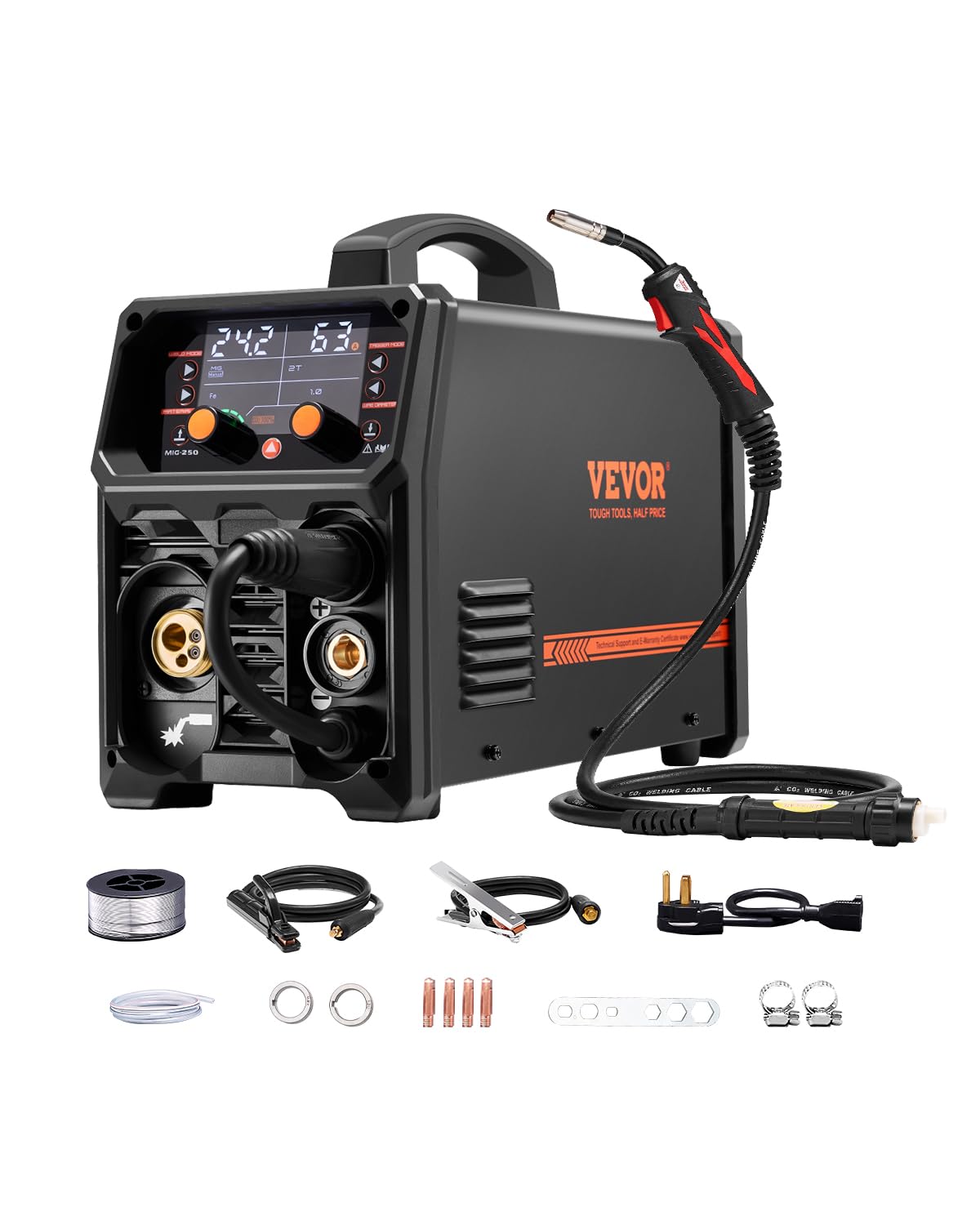
The VEVOR Pro 250A 5-in-1 is the strongest feature match for shoppers who want pulse MIG in addition to standard MIG, flux-core, stick, and lift TIG. Pulse MIG can help with lower-spatter beads and better heat control when the settings are dialed in correctly.
This is the model to consider if you want room to grow into more demanding projects. Just check the current Amazon listing carefully because some accessories, including aluminum or TIG-specific torches, may be sold separately depending on the package.
What People Say
Reported buyer feedback highlights the power, process range, and readable LCD. Common cautions include a short ground lead, a brief manual, and accessory bundles that may not include every torch needed for specialty work.
Overall Sentiment: Positive, based on the provided review summary. Check current Amazon reviews before buying.

When It Fits
|
Situation |
How It Helps |
|---|---|
|
Quick shop fixes |
Lets you tack, patch, and stitch metal quickly without switching machines. |
|
Auto body work |
Pulse MIG and heat control can help reduce warping on thin panels when you use proper stitch technique. |
|
Light fabrication |
Multiple processes let you build brackets, frames, and small structural pieces with one machine. |
|
Aluminum projects |
Can work with aluminum wire when properly equipped, but confirm the required torch and setup before buying. |
|
Mixed-power sites |
Dual 110V/220V support helps when you move between a home garage and a shop circuit. |
Practical Use
Load the spool, select the process, and let the synergic mode get you near a usable starting point. Then run a test bead and adjust based on sound, bead shape, penetration, and spatter.
Before planning aluminum or TIG work, check which torch and consumables are included with the current package. Accessory assumptions can lead to extra purchases.
Why You’ll Like It
- Five process options: pulse MIG, gas MIG, flux-core MIG, stick, and lift TIG
- Synergic control helps simplify first settings
- Dual 110V/220V operation for home and shop use
- LCD display and built-in protection features
- Broader wire compatibility than simpler starter machines
Who Should Buy This
Buy this model if you want a stronger feature set, pulse MIG, and a machine that can handle more varied fabrication work.
Who Should Avoid This
Skip it if you want a simple beginner setup with every specialty accessory already included, or if you do not need pulse MIG.
Check Product Details on Amazon

The VEVOR MIG-270 3-in-1 stands out because it is presented as a ready-to-start kit with MIG and TIG torches, leads, wire, and basic accessories. That makes it appealing if you want one portable setup for garage repairs, jobsite fixes, and learning multiple processes.
The article copy lists a 50-220A working range, so do not judge it by model number alone. Confirm the current output range, duty cycle, and included accessories on Amazon before you decide.
What People Say
Reported buyer feedback highlights portability, included accessories, and the convenience of having MIG and TIG options in one unit. Common concerns include a thin manual, shorter leads, and claims that the top advertised amperage may feel optimistic in real use.
Overall Sentiment: Positive, based on the provided review summary. Check current Amazon reviews before buying.

When To Use It
|
Situation |
How It Helps |
|---|---|
|
Quick garage repairs |
Switch between MIG and stick quickly for patching brackets, repairing gates, or fixing rust spots. |
|
Mobile or field work |
Dual voltage and included torches help you show up with fewer separate pieces of gear. |
|
Auto body and thin metal |
Lift TIG and adjustable wire speed can help manage heat when you practice proper stitch welding. |
|
Weekend fabrication |
You can experiment with brackets, frames, and small projects that need different processes. |
|
Learning and tinkering |
Having MIG, TIG, and stick in one box makes it easier to try different techniques. |
Practical Tips
Mount the spool, set 110V or 220V, pick the process, and use the LCD to tune voltage and wire speed. Run test beads before welding final parts, especially if you are changing material thickness or wire type.
Because the manual may be brief, save a reliable setup chart or video before your first project. Also confirm whether the machine is suitable for aluminum with your intended torch and wire setup.
Why It Works
- Three processes in one: MIG, MMA (stick), and lift TIG
- IGBT inverter design for smoother arc performance
- Dual 110V/220V operation for home or shop circuits
- LCD display and wire-feed control make settings easier to read
- Includes MIG and TIG torches plus basic consumables to get started
- Built-in overheat protection for safer operation
Who Should Buy This
Choose this model if included accessories matter and you want a portable kit for light-to-medium repairs.
Who Should Avoid This
Skip it if you need verified heavy-duty amperage at the top end or a detailed printed manual for every process.
Check Product Details on Amazon
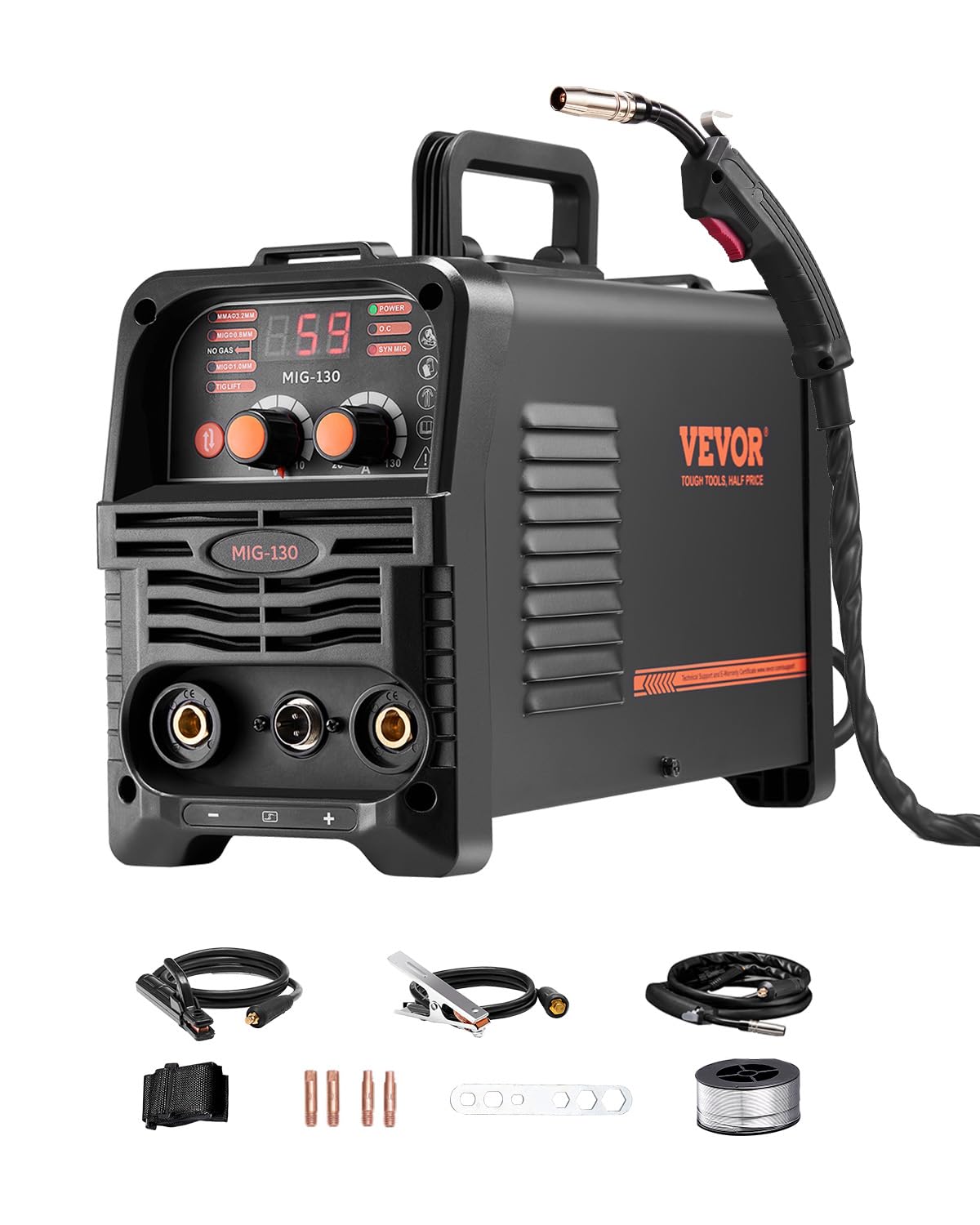
The VEVOR MIG-130 3-in-1 is the beginner-friendly pick because it keeps the package smaller and simpler while still giving you flux-core MIG, stick, and lift TIG. It runs on 110V, which makes it easier to use in a home garage without a dedicated 220V circuit.
It is best for light repairs, small fabrication, and learning basic setup habits. It is not the right choice if you expect thick material, long continuous beads, or frequent high-output work.
What People Say
Reported buyer feedback highlights the compact size, useful included wire, and solid flux-core performance for small jobs. The most common cautions are short leads, a brief manual, and the need to rely on outside setup guidance.
Overall Sentiment: Positive, based on the provided review summary. Check current Amazon reviews before buying.

When To Use It
|
Situation |
How It Helps |
|---|---|
|
Small garage repairs |
You can switch between flux-core MIG and stick to mend brackets, patch panels, or repair light gear. |
|
Mobile jobs |
The small 110V setup is easier to carry and use with common outlets. |
|
Auto body and thin metal |
Adjustable settings help you practice heat control on thin sheet metal. |
|
Weekend fabrication |
Three processes let you prototype small brackets, frames, and hobby projects. |
|
Learning new techniques |
You can try flux-core, stick, and lift TIG on one affordable platform. |
Practical Tips
Mount the spool, attach the ground, choose the process, and use the digital readout to set current or wire speed. Start with scrap metal so you can learn how the arc reacts before working on a final part.
If you need more reach, consider compatible longer leads. Keep spare tips and wire on hand because small machines are sensitive to worn consumables and poor setup.
Why It Works
- Three processes in one: flux-core MIG, MMA (stick), and lift TIG
- IGBT inverter and synergic control for easier setup
- Compact 110V form that runs on common outlets
- Digital display makes voltage and current easier to see
- Comes with wire and basic accessories so you can start faster
- Good starter choice for light repairs and practice
Who Should Buy This
Buy this model if you want a small starter welder for light garage work and do not have a 220V circuit.
Who Should Avoid This
Skip it if you want gas MIG, higher output, or a machine that will handle thicker material more comfortably.
Check Product Details on Amazon

The VEVOR TIG-200 is different from the MIG-focused picks above. It is the right option if your priority is TIG control, AC aluminum capability, pulse TIG, spot TIG, and stick welding. It is not the right pick if you need a MIG machine.
Choose this one if you are ready for a learning curve and want cleaner TIG work on steel, stainless, or aluminum. Beginners can learn on it, but TIG setup takes more patience than basic flux-core MIG.
What People Say
Reported buyer feedback highlights the AC aluminum capability, pulse features, and LED display. The main cautions are the learning curve, support concerns, and possible accessory limitations such as foot-pedal control or lead upgrades.
Overall Sentiment: Mixed, based on the provided review summary. Check current Amazon reviews before buying.

When To Use It
|
Situation |
How It Helps |
|---|---|
|
Home garage repairs |
Switch between stick and TIG to fix brackets, patch exhausts, or work on thinner parts. |
|
Aluminum projects |
AC TIG and waveform options help you practice cleaner aluminum welds once settings are dialed in. |
|
Mobile or shop work |
Dual voltage lets you plug into common outlets or a 220V supply. |
|
Learning TIG |
Pulse modes and a visible LED readout help you practice heat control and arc stability. |
|
Fabrication and prototyping |
Multiple TIG modes let you experiment without buying several specialty machines. |
Practical Tips
Attach the ground, connect your torch, choose the process on the LED panel, and practice on clean scrap before working on a final part. TIG is sensitive to metal prep, gas flow, tungsten choice, and hand control.
Plan for a learning curve. Check the current listing for foot-pedal support, torch details, and included accessories before buying.
Why It Works
- Six modes: AC/DC TIG, AC/DC Pulse TIG, Spot TIG, and MMA/Stick
- Dual voltage for home or shop use
- AC mode supports aluminum TIG practice
- LED display and synergic control simplify basic adjustments
- IGBT inverter and pulser options help with arc stability and heat control
- Built-in protection features such as VRD, overheat, and overcurrent safeguards
Who Should Buy This
Buy this model if TIG, pulse TIG, and aluminum practice matter more to you than MIG convenience.
Who Should Avoid This
Skip it if you need MIG welding, want the easiest beginner process, or do not want to troubleshoot TIG accessories and settings.
Check Product Details on Amazon
FAQ
How Do I Choose The Right Multi-Process Welder For My Garage?
Start with the work you do most often. If you mostly repair thin steel, brackets, gates, and small frames, a MIG or flux-core machine with stick and lift TIG gives you plenty of flexibility. If you plan to weld thicker material, choose a higher-output model with 220V support and confirm the duty cycle at the amperage you expect to use.
If aluminum or clean TIG work is your priority, look for an AC/DC TIG-capable unit instead of a MIG-first machine. Also check the accessory bundle, cable length, spool size, polarity setup, gas fittings, replacement consumables, and return policy.
Do I Need 110V Or 220V?
Use 110V for convenience, light repairs, and common household outlets. Choose 220V when you need more output, more stable performance on thicker stock, or longer welding sessions. Dual-voltage machines are useful because they let you start with a standard outlet and move to a stronger circuit later.
What Should I Know About Setup, Consumables And Common Gotchas?
Use the correct wire diameter, polarity, shielding gas, and process setting for your material. Flux-core and gas MIG often require different polarity or setup steps, so verify the manual and product page before welding.
Short leads and basic manuals are common complaints in budget multi-process welders. Keep spare contact tips, nozzles, wire, tungsten, and compatible leads available. If you use gas, confirm the regulator and fitting requirements before buying.
Can A Multi-Process Welder Replace Separate MIG, TIG, And Stick Machines?
For many home users, yes. A good combo welder can cover small repairs, light fabrication, and skill practice. For production work, heavy structural welding, or advanced TIG work, dedicated machines may still be better because they often offer stronger duty cycles, finer control, and more robust accessories.
How Do I Weld Safely And Get More Consistent Results?
Use a proper auto-darkening helmet, welding gloves, flame-resistant clothing, eye protection, and good ventilation. Clean rust, paint, oil, and coating from the joint before welding. Clamp the work securely, practice on scrap, and let the machine cool according to its duty cycle.
If the arc feels inconsistent, check ground connection, polarity, wire type, contact tip condition, gas flow, and cable tightness before making large setting changes.
Which VEVOR Welder Should You Pick?
If you want the safest all-around choice, start with the VEVOR 160A 4-in-1. It offers the best mix of process range, portability, and dual-voltage flexibility for most home garages.
Choose the VEVOR 200A 4-in-1 if you want more output headroom. Step up to the VEVOR Pro 250A 5-in-1 if pulse MIG and broader capability matter. Pick the VEVOR MIG-270 3-in-1 if included accessories and portability are your main priorities. Choose the VEVOR MIG-130 3-in-1 if you want a small starter machine. Pick the VEVOR TIG-200 only if TIG and aluminum capability matter more than MIG.
Wrapping Up
You do not need a separate machine for every welding task. Pick the welder that matches your power supply, material thickness, and the processes you will actually use. A smaller 3-in-1 model is enough for light repairs and learning, while 4-in-1 and 5-in-1 machines give you more room for heavier garage work.
If you plan to weld aluminum or focus on TIG, choose an AC/DC TIG-capable unit and confirm the included accessories. If budget and portability matter most, a compact flux-core or MIG combo will help you start quickly. Always check current Amazon details for availability, ratings, accessory bundles, warranty terms, and return policy before buying.
| Product | Image | Best For | Power Output | Dimensions | Weight | Details |
|---|---|---|---|---|---|---|
| VEVOR MIG Welder, 160A Synergic |
 |
Best overall for mixed garage use | 160A, 4-in-1 (MIG/Flux Core/Stick/TIG) | 15.94 x 6.5 x 11.81 inches | 23.8 pounds | Check Price |
| VEVOR MIG Welder, 200A Synergic |
 |
Best step-up power | 200A, 4-in-1 (MIG/Flux Core/Stick/TIG) | 16.93 x 7.09 x 12.6 inches | 29.3 pounds | Check Price |
| VEVOR Pro MIG Welder, 250A |
 |
Best high-amp feature set | 250A, 5-in-1 (Pulse MIG/Gas MIG/Flux Core/Stick/TIG) | 7.09 x 7.09 x 12.6 inches | 29.3 pounds | Check Price |
| VEVOR MIG Welder, 270A |
 |
Best portable kit | Listed 50-220A, 3-in-1 (MIG/Lift TIG/Arc) | 20.4 x 12.2 x 15 inches | 30 pounds | Check Price |
| VEVOR MIG Welder, 130Amp 3-in-1 |
 |
Best starter welder | 130A, 3-in-1 (Flux Core MIG/Stick/TIG) | 12.6 x 5.91 x 9.84 inches | 14.11 pounds | Check Price |
| VEVOR TIG Welder, 200A 6-In-1 |
 |
Best TIG and aluminum option | 200A, 6-in-1 (AC/DC TIG/AC Pulse TIG/DC Pulse TIG/Spot TIG/MMA) | 16.93 x 16.93 x 14.17 inches | 33.1 pounds | Check Price |
This roundup is reader-supported. When you click through Amazon links, we may earn a referral commission on qualifying purchases.