
When you restore cars, the right welding setup affects the quality, speed, and durability of every repair. A good machine can help you make cleaner tacks, control heat on thin panels, repair brackets, and prepare metal before final welding.
This guide helps you compare Hobart welders and one cutting companion so you can choose the right welder or metal-prep tool for body panels, chassis work, rust removal, patch fabrication, or heavier garage repairs.
This roundup is reader-supported. When you click through qualifying links, we may earn a referral commission at no extra cost to you. As an Amazon Associate I earn from qualifying purchases.
Top Picks
|
Category |
Product |
Editorial Fit Score |
|---|---|---|
|
🏆 Best Multiprocess |
92/100 |
|
|
🚀 Best Voltage Flexibility |
90/100 |
|
|
💰 Best Value Workhorse |
89/100 |
|
|
🎯 Best 120V MIG |
91/100 |
|
|
⚡ Best High Power |
88/100 |
|
|
💼 Best Lightweight Stick |
82/100 |
|
|
🔪 Best Metal-Prep Cutter |
95/100 |
How We Picked These Welders
You want a welding setup that matches the projects you do most. We prioritized machines based on power range, arc control, process flexibility, voltage options, portability, duty cycle, included accessories, and long-term value. Because car restoration also involves cutting out rust and shaping patches before welding, we included one plasma cutter as a metal-prep companion, not as a welding replacement.
We also looked for user-friendly details such as clear setup charts, simple controls, quick process changes, and practical accessory support. These features matter because thin automotive sheet metal punishes poor settings, rushed prep, and too much heat.
Quick Verdict
Best all-around welding choice: the Hobart Multi-Handler 200 is the easiest recommendation if you want MIG, DC TIG, stick, and flux-core capability in one compact machine.
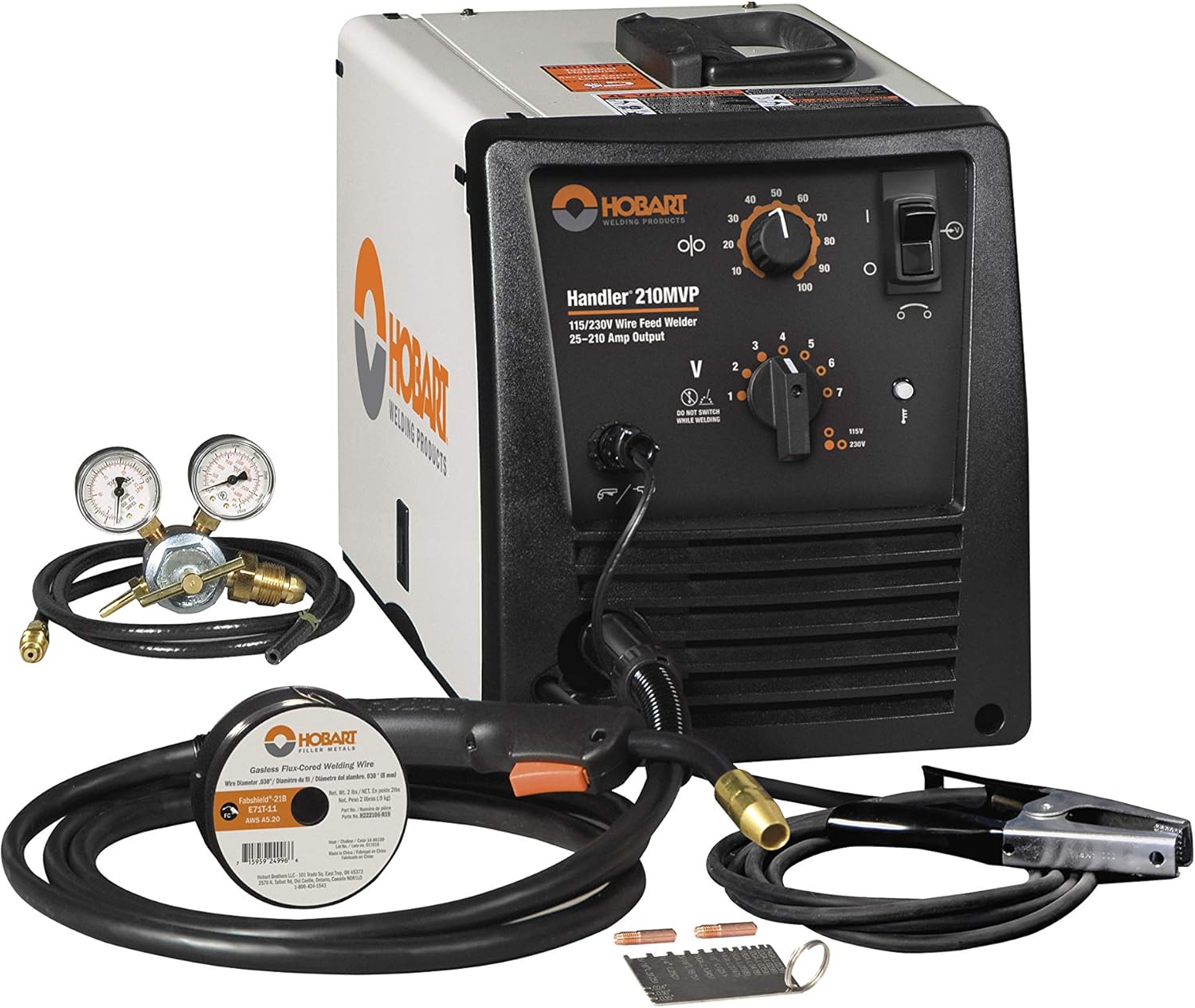
Best simple garage MIG choice: the Hobart Handler 210 MVP gives you useful 115 V/230 V flexibility for body panels, brackets, floor pans, and heavier repair work.
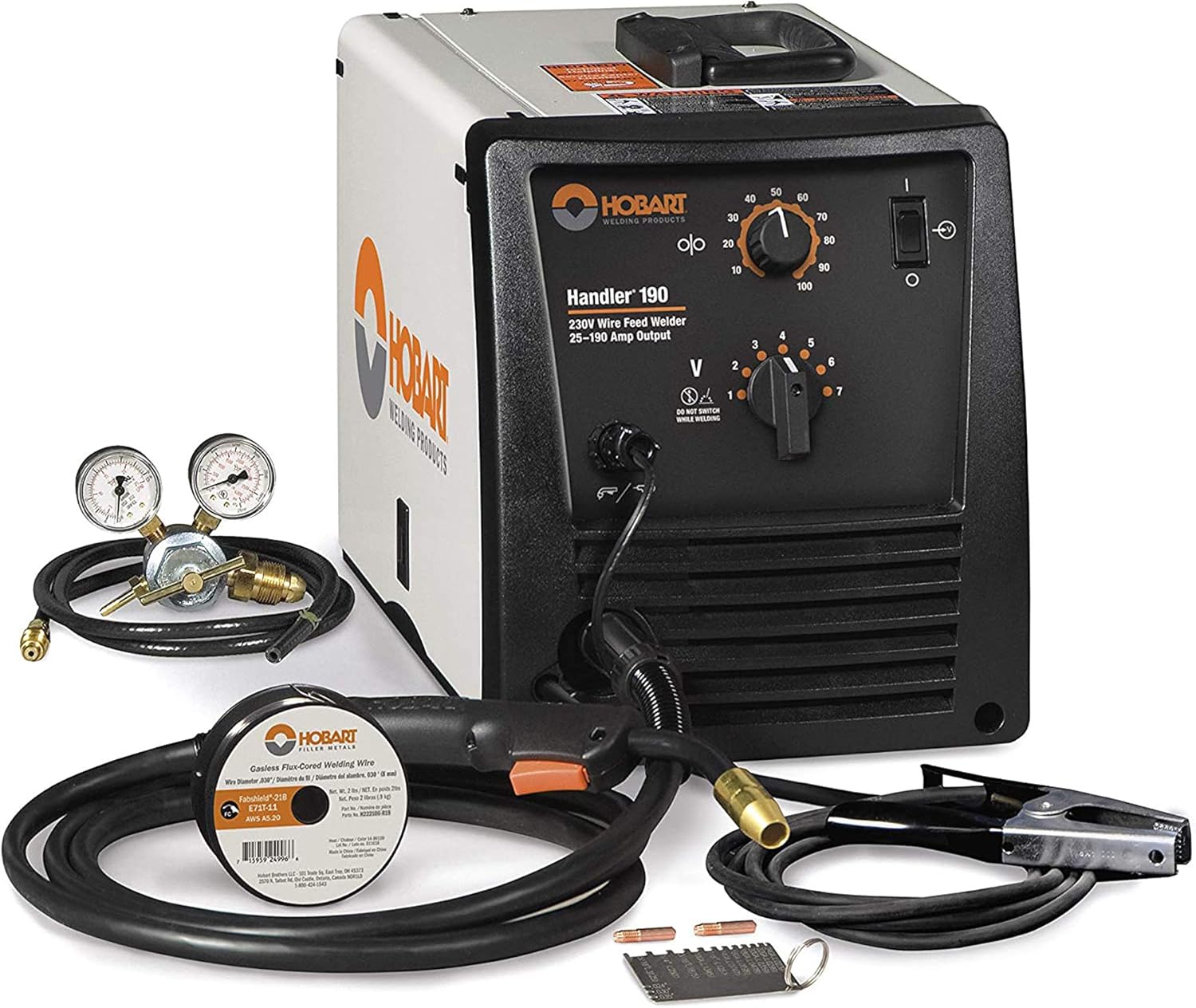
Best value 230 V MIG choice: the Hobart Handler 190 is a strong pick if you already have a 230 V circuit and want a straightforward MIG/flux-core workhorse.
Best metal-prep companion: the Hobart AirForce 40i is a plasma cutter, not a welder, but it can speed up rust removal, panel trimming, and patch fabrication before you weld.
Safety Note Before You Weld On A Car
Automotive welding can expose you to paint fumes, seam sealer, undercoating, fuel vapors, electrical risk, and hidden fire hazards. Before welding or cutting, disconnect the battery, move or shield fuel lines, clear flammables, use proper ventilation, wear PPE, and keep a fire watch after the work area cools. Practice on scrap from the same metal thickness before touching visible panels.

You get a versatile workhorse with the Hobart Multi-Handler 200. It handles MIG, flux-cored, stick, and DC TIG, so whether you’re patching floor pans, tacking brackets, or doing cleaner seam work, you do not have to switch machines.
The color LCD and Quick Select drive roll make setup more approachable, and the multi-voltage plug means you can run it on 120 V in your garage or switch to 240 V at the shop. It comes with useful starter accessories and stays compact enough for a crowded restoration space.
For many home restorers, this is the best fit when you want one welder that can cover daily auto-body repairs and occasional heavier jobs without building a wall of separate machines.
What People Say
Buyer feedback commonly focuses on the appeal of having multiple welding processes in one box, along with simple setup and steady performance for mixed garage work. Check the current Amazon listing for the latest rating, review count, and availability before buying.
Overall Sentiment: Positive

DIY Guide
For car restoration you’ll probably use MIG for most sheet metal repairs and body panels because it is fast and forgiving. Switch to TIG when you need cleaner, more controlled welds on thin or stainless parts. Use flux-cored wire for outdoor work when shielding gas is not practical. Start with clean edges, tack parts in place, check alignment before final passes, and use short stitches on thin metal to reduce warping.
Versatility
This welder shines because it is truly multiprocess and portable. The included MIG gun, TIG torch, and clamp set let you move from bodywork to bracket fabrication without swapping machines. The MVP dual-voltage plug means you can use standard garage outlets or step up to 240 V for heavier work.
Key Benefits
- Multiprocess capability: MIG, TIG, stick, and flux-cored in one unit
- Dual-voltage MVP plug lets you use 120 V or 240 V without separate adapters
- User-friendly controls with color LCD and Quick Select drive roll
- Good fit for restorers who do not yet know which process they will use most
- Compact enough for home garages with limited space
Who Should Buy This
Choose the Multi-Handler 200 if you want one compact machine for MIG bodywork, stick repair, flux-core outdoor work, and occasional DC TIG.
Who Should Avoid This
Skip it if you only need basic 120 V MIG for thin sheet metal or if you expect high-volume shop production where a dedicated heavy-duty MIG may offer a simpler workflow.
Check Current Amazon Availability
If you work on cars in a home garage, this is one of the most practical choices in the group. You can swap the plug and run it from 115 V for quick jobs or 230 V when you need more penetration, and the lid chart helps you get close without wasting time.
The feed head and dual-groove drive roll are useful for reducing feeding headaches, while the spool-hub and spool-gun readiness make it easier to add aluminum capability if your projects call for it. It is on the heavy side, so think of it as a movable garage machine rather than a grab-and-go tool.
What People Say
Buyers often like the Handler 210 MVP because it blends garage convenience with enough power for thicker repair jobs. The MVP plug, setup chart, and feeding system are the details most likely to matter during real restoration work. Check the current Amazon listing for the latest rating, review count, and availability.
Overall Sentiment: Positive

DIY Guide
Confirm whether you’ll use 115 V or 230 V and fit the correct plug. Pick a starting voltage and wire speed from the weld chart, then run a few test beads on scrap to check penetration and bead shape. Use flux-cored wire if you are outside or skipping gas; switch to solid wire with shielding gas for cleaner interior panel work.
For thin sheet, tack and stitch rather than trying a single heavy pass to avoid burn-through. Consider upgrading the ground clamp and keeping spare contact tips and a spare liner on hand. Always use proper PPE and ventilate the area.
Versatility
This welder is a true garage multitool: patch panels, floor pans, brackets, frame tabs, and light structural repairs are all in its wheelhouse. With a spool gun or Hobart’s spool-hub setup, you can tackle aluminum panels, though it will not replace TIG for delicate stainless or precision finish work.
Key Benefits
- Multi-voltage plug lets you use 115 V or 230 V depending on the job
- Seven output voltage settings and weld chart speed up setup on common panel thicknesses
- Spool-hub and built-in spool-gun circuitry make aluminum work easier to add
- Dual-groove quick-change drive roll and solid feed head help reduce wire feeding issues
- Built-in gas solenoid and dual-gauge regulator included for shielded-gas welding
- Good fit for bodywork, brackets, and moderate repair work when set up correctly
Who Should Buy This
Choose the Handler 210 MVP if you want one MIG/flux-core welder that can run from household-style power for lighter work and 230 V for thicker repair jobs.
Who Should Avoid This
Skip it if you want TIG or stick capability in the same machine. The Multi-Handler 200 is stronger for multiprocess flexibility.

If you’re doing car restoration in a garage with 230 V power, this is a workhorse you can lean on. You set one of the seven voltage presets, use the lid chart to get close fast, and then fine-tune on scrap before touching the actual panel.
The feed head feels solid, the spool-gun circuitry is already built in, and the machine has enough output for floor pans, patch panels, brackets, and heavier bits that need real penetration. It is not the lightest unit to carry, but for steady bodywork and chassis repair, it is a practical choice.
What People Say
Owners tend to like the Handler 190 for consistent operation, simple voltage settings, and stronger penetration than many smaller machines. Common hesitation points are the weight and the basic stock ground clamp. Check the current Amazon listing for the latest rating, review count, and availability.
Overall Sentiment: Positive

DIY Guide
Start by confirming you have a proper 230 V circuit and a compatible plug. Use the weld chart under the lid to pick a starting voltage and wire speed, then make a couple of test passes on scrap to check penetration and bead shape.
Choose flux-cored wire if you’re welding outside or do not want to run gas. Switch to solid wire with shielding gas for neater beads on interior panels. For thin spots, tack and make multiple light passes instead of one heavy bead to reduce burn-through.
Versatility
This is a strong all-around MIG/flux-core machine for bodywork: floor pans, patch panels, brackets, and frame tabs. It handles thin sheet metal when dialed in carefully and can move into thicker work with proper technique. With the optional spool gun, you can add aluminum capability.
Key Benefits
- Built for 230 V power with useful headroom for thicker repairs
- Seven preset voltage positions and a clear weld chart make setup faster
- Dual-groove drive roll and solid feed head help reduce feeding issues
- Spool-gun circuitry built in so aluminum capability is easier to add
- Good fit for regular garage restoration work when 230 V power is available
Who Should Buy This
Choose the Handler 190 if you already have a 230 V circuit and want a strong, simple MIG/flux-core machine for steady restoration work.
Who Should Avoid This
Skip it if you need to switch between household and shop outlets. The Handler 210 MVP is the better fit when voltage flexibility matters.

If you’re restoring cars in a home garage, this is the kind of dependable MIG/flux-core machine that keeps setup simple. You plug it into a standard 120 V outlet, choose the right setting, and use the weld chart under the lid to get close before testing on scrap.
The feed head and factory gas solenoid make it useful for hobbyists who want to switch between flux-core and shielding-gas MIG. It is best for small patches, brackets, and light garage repair rather than regular thick structural work.
What People Say
Feedback often highlights ease of use, garage-friendly 120 V power, and the convenience of a gas-ready setup. Common gripes include carry weight and the basic ground clamp. Check the current Amazon listing for the latest rating, review count, and availability.
Overall Sentiment: Positive

DIY Guide
Start by reading the weld setup chart under the lid because it is the quickest way to get close. Use flux-cored wire when you are working outside or do not want to bother with gas. Switch to MIG with shielding gas for cleaner beads on interior panels. Clamp a good ground as close to your workpiece as possible, then make test passes on scrap to confirm penetration and bead shape.
For thicker spots, use multiple light passes rather than one heavy pass to reduce burn-through. Keep spare contact tips and a spare liner on hand, and always wear proper PPE with ventilation.
Versatility
This machine fits common light restoration tasks: repairing small rust patches, floor sections, simple brackets, and small tabs. It will not replace a larger 230 V machine for frequent structural work, but it is a sensible starting point when you have household power and limited space.
Key Benefits
- Runs on common 120 V circuits for typical home garages
- Factory-installed gas solenoid for switching between flux-core and MIG with gas
- Durable feed head and quick-release tension lever for smoother wire feeding
- Simple setup chart helps shorten the learning curve
- Good fit for small patches, brackets, and light repair work
Who Should Buy This
Choose the Handler 125 if you work mostly from household power and want a straightforward MIG/flux-core machine for small patches, brackets, and light garage repair.
Who Should Avoid This
Skip it if you expect regular thick structural work. A 230 V machine gives more headroom for heavier jobs.
Check Current Amazon Availability

You’re looking at a workhorse MIG that is built for serious shop and restoration work. The Ironman 240 gives you a broad amperage window, fine control with voltage and wire-feed adjustments, and a dual-geared wire drive that can support everything from thin sheet to heavier repair pieces when set correctly.
It is spool-gun ready for aluminum, accepts large spools, and has built-in running gear with a cylinder rack so you can reposition it around the garage. For frequent chassis tabs, floor repairs, brackets, and heavier fabrication, it gives you more headroom than a smaller 120 V unit.
What People Say
Buyer feedback tends to focus on strong arc performance, adjustability, and its role as a dedicated shop machine. On the other hand, it is heavy and less convenient than a compact inverter welder. Check the current Amazon listing for the latest rating, review count, and availability.
Overall Sentiment: Positive

DIY Guide
For car restoration, start by cleaning mating surfaces where possible, then tack pieces to hold alignment. Use short stitch welds and let the assembly cool between runs to limit warping. If a long seam is needed, backstep or stitch-and-skip to spread heat.
For thin outer panels, dial down voltage and wire feed and practice on scrap until the bead looks controlled. For patch panels and thicker stock, increase output carefully and use multiple passes where appropriate. If you weld aluminum, attach a compatible spool gun and test feed speed before working on the actual part.
Versatility
This machine is versatile across many restoration tasks: chassis repair, floor repairs, brackets, fabrication jobs, and heavier metal work. It is heavier than a portable inverter, so it is better suited as a stable shop centerpiece than a tool you carry from job to job.
Key Benefits
- Wide output range for light to heavy repair work
- Fine voltage and wire-feed control for tuning bead shape and spatter
- Spool-gun ready and accepts larger wire spools for longer jobs
- Dual-geared reversible wire drive supports smoother feeding
- Built-in running gear makes it easier to move around a shop
Who Should Buy This
Choose the Ironman 240 if your garage or small shop handles frequent chassis work, thicker brackets, fabrication jobs, or longer MIG sessions where power and control matter more than portability.
Who Should Avoid This
Skip it if you need a machine you can lift in and out of a vehicle often. It is better as a dedicated shop machine than a grab-and-go welder.
Check Current Amazon Availability
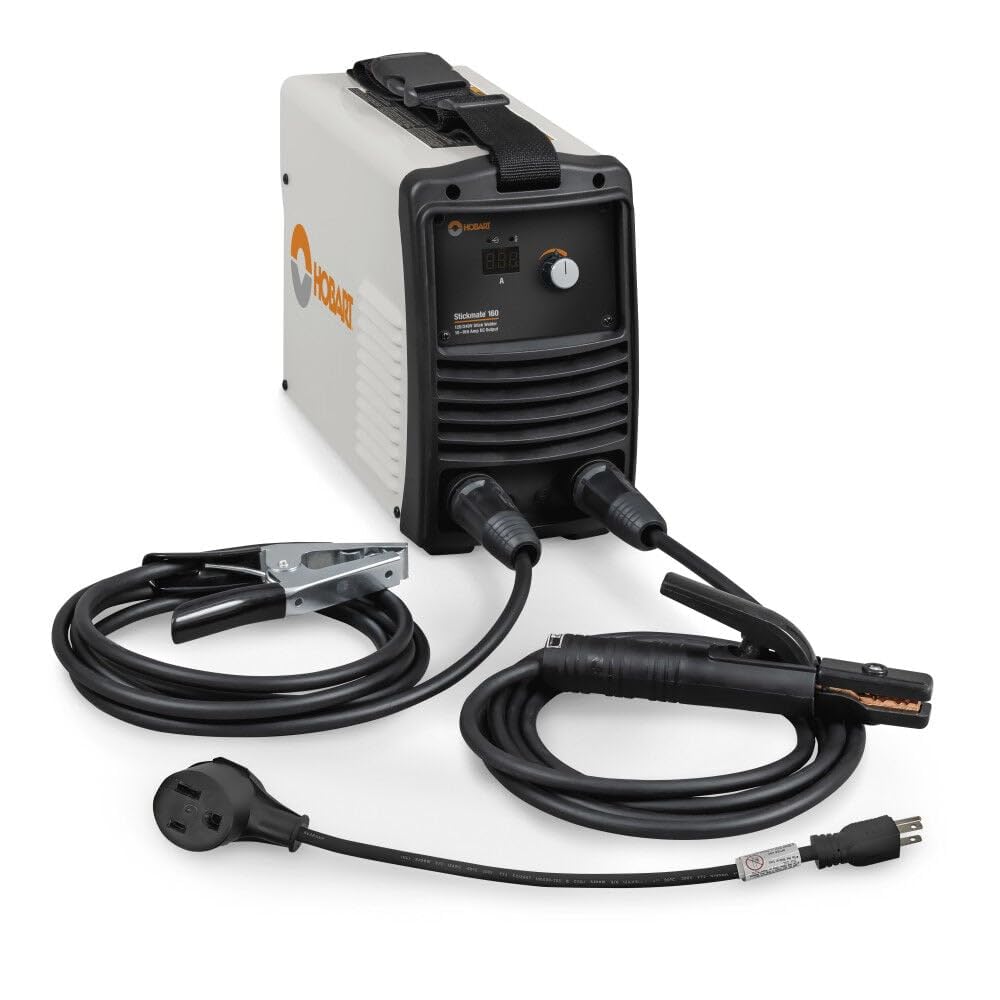
You get a no-nonsense, portable stick welder that is easy to move around the garage or take to a job site. The Stickmate 160 lets you switch between 120 V and 240 V using the included adapter, so you can use it on a standard outlet or step up to shop power when a job calls for more output.
For car-restoration tasks, this is better suited to brackets, chassis repairs, suspension tabs, and rusted patchwork than delicate outer body panels. It is a dependable support tool if you often work outdoors, on thicker metal, or on less-than-perfect surfaces.
What People Say
Owners commonly like the balance of portability and practical stick-welding power. They also tend to appreciate the dual-voltage setup and fine amperage control. Check the current Amazon listing for the latest rating, review count, and availability.
Overall Sentiment: Positive

DIY Guide
For car restoration, use stick rods for chassis work, brackets, and rusty patches where a clean gas-shielded setup is not practical. Clean or wire-brush mating surfaces where you can, tack parts to hold alignment, then stitch weld in short runs to avoid heat distortion.
Start on scrap to dial in rod type and amperage. A smoother rod can help with cleaner appearance, while a penetrating rod may be better for dirtier metal. Switch to 240 V when you need extra current for thicker pieces.
Versatility
This machine is versatile within the stick category. It is great for farm repairs, suspension tabs, brackets, and any repair that needs a robust arc. It will not replace a MIG for delicate outer body panels, but it fills the gap for tough, outdoor, or dirty jobs where simplicity matters.
Key Benefits
- Dual-voltage flexibility with included adapter
- Portable and compact design for garage or job-site use
- Infinite 1-amp amperage control for fine tuning
- Includes electrode holder and work cable to get started
- Good fit for thicker, rusted, or outdoor repairs
Who Should Buy This
Choose the Stickmate 160 if you need a lightweight stick welder for brackets, farm-style repairs, suspension tabs, or outdoor work where gas shielding is inconvenient.
Who Should Avoid This
Skip it if your main work is thin exterior body panels. A MIG machine with shielding gas is usually easier to control on delicate sheet metal.
Check Current Amazon Availability

If you work on cars in a home garage, this is the kind of plasma cutter that can make cutting panels and clearing out rusted sections less of a chore. You get multi-voltage flexibility with the MVP plug, so you can run lighter trimming jobs on 120 V or switch to 240 V when the cut demands more power.
The XT40R torch, fan-on-demand, and postflow cooling are useful quality-of-life details for restoration prep. For trimming floor pans, cutting out rusted sections, removing damaged metal, and shaping patch panels, it can save time before the welder comes out.
Important fit note: this is a plasma cutter, not a welder. It belongs in this guide as a restoration-prep tool because cutting out rust and shaping replacement metal often happens before welding starts.
What People Say
Feedback often centers on clean cuts, dual-voltage convenience, and the comfortable torch. Some buyers mention upgrading the ground clamp or keeping support options in mind. Check the current Amazon listing for the latest rating, review count, and availability.
Overall Sentiment: Positive

DIY Guide
Start by matching your plug to the outlet with the MVP adapters. Use 240 V when you need deeper cuts and 120 V for thin sheet. Hook up clean, dry shop air to the built-in filter/regulator and set the pressure per the manual. Inconsistent air can leave rougher edges.
Clamp a solid ground as close to the cut as possible and practice a few passes on scrap to dial in speed and torch height. Keep spare tips and electrodes on hand, swap consumables at the first sign of dullness, and always wear a respirator, eye protection, gloves, and proper clothing.
Versatility
This cutter is versatile for restoration prep: cutting out rusted sections, trimming replacement panels, removing damaged metal, and fabricating patch pieces or tabs. Remember that it is strictly a cutting tool, so you still need a welder to join the metal afterward.
Key Benefits
- Dual-voltage MVP lets you use common 120 V outlets or switch to 240 V for tougher cuts
- Ergonomic XT40R torch with cooling-focused design
- Fan-on-demand reduces contaminants and power draw when idle
- Postflow cooling helps extend consumable and torch life
- Built-in gas/air filter and regulator simplify setup
Who Should Buy This
Choose the AirForce 40i if you regularly cut out rust, trim panels, remove damaged sections, or shape patch pieces before welding.
Who Should Avoid This
Skip it if you are looking for a machine that joins metal. This is a plasma cutter only, so you still need a welder for final repair work.
Check Current Amazon Availability
Which Hobart Machine Fits Your Restoration Work?
If you mainly repair thin body panels, floor pans, and small brackets, start with a MIG-focused machine such as the Handler 125, Handler 190, or Handler 210 MVP. MIG is usually the easiest process for quick tacks and controlled stitch welds on sheet metal.
If you want one machine that covers the widest mix of jobs, the Multi-Handler 200 gives you MIG, flux-core, DC TIG, and stick capability. It is the most flexible pick for a home restorer who does not yet know which process they will use most.
If you work on thicker chassis pieces or fabrication jobs, the Ironman 240 gives you more output and steadier shop performance. If you often work outside or on rougher metal, the Stickmate 160 keeps things simple. If cutting and panel removal slow you down, the AirForce 40i can improve prep speed, but it must be paired with a welder for final repairs.
Before You Buy
- Check your power: 120 V is convenient for small garages, while 230/240 V gives more room for thicker repairs and longer sessions.
- Match the process to the metal: MIG is easiest for most auto-body work, TIG is better for precision, stick is rugged for thicker or dirty metal, and plasma is for cutting only.
- Plan for accessories: budget for shielding gas, wire, contact tips, nozzles, clamps, PPE, ventilation, and a better ground clamp if the stock one feels weak.
- Protect the vehicle: disconnect the battery, move or shield fuel lines when needed, clear flammables, and keep a fire watch after welding or cutting.
- Practice first: dial in voltage, wire speed, amperage, or torch travel speed on scrap from the same metal thickness before touching visible panels.
FAQ
How Do I Choose The Right Welder For Car Restoration Projects?
Start with the specific work you expect to do most. Thin sheet metal and body panels usually favor MIG or TIG because heat control matters. Thicker patch panels and structural repairs often call for MIG with enough output, while outdoor or dirty repairs may be easier with flux-core or stick.
Check whether your workspace has 120 V, 230 V, or both. Also compare duty cycle, portability, included accessories, spool-gun support for aluminum, warranty coverage, and how easy it is to get consumables such as contact tips, wire, nozzles, liners, and shielding gas.
Is A Plasma Cutter The Same Thing As A Welder?
No. A plasma cutter removes or shapes metal, while a welder joins metal. The AirForce 40i belongs in this guide only as a restoration-prep tool for cutting out rust, trimming panels, and shaping patches before welding. If you need to attach panels or brackets, choose one of the welding machines in this guide.
Can A Multiprocess Welder Replace Separate MIG, TIG, And Stick Machines?
For most hobbyist and restoration work, a multiprocess unit can cover many tasks because it lets you switch processes without buying and storing three separate machines. The trade-off is specialization. A dedicated TIG machine may give more refined control for precision work, while a heavy-duty dedicated MIG may be better for long production sessions.
Before buying, check whether the TIG setup includes the control accessories you want, whether spool-gun support is included for aluminum, and whether the duty cycle matches the amperage you plan to use.
What Accessories And Safety Tips Should I Prioritize When Welding Cars?
Start with an auto-darkening helmet rated for your welding process, quality leather gloves, flame-resistant clothing, eye protection, and a respirator suitable for paint and metal fumes. Auto-body work often exposes you to coatings, seam sealer, undercoating, and contaminants that should not be inhaled.
Disconnect the car battery, move or shield fuel lines, clear flammable materials, and use a close ground clamp so the return path is short and reliable. Prep joints to bare metal, stitch weld to reduce warpage on thin panels, and keep spare contact tips, nozzles, tungsten, and other consumables for your chosen process.
Is 120 V Enough For Auto Body Welding?
For small patches, thin sheet metal, and light brackets, a 120 V MIG or flux-core machine can be enough when the metal is clean and your settings are dialed in. For thicker brackets, frame tabs, heavier patch work, and longer sessions, a 230 V or dual-voltage welder gives more headroom.
Which Process Is Best For Thin Car Panels?
MIG with shielding gas is usually the easiest starting point for thin automotive steel because it is fast and easy to tack. TIG can produce cleaner, more controlled welds, but it takes more skill and time. Use short stitches, skip around the panel, and allow cooling time to reduce warping.
What Buyers Prefer
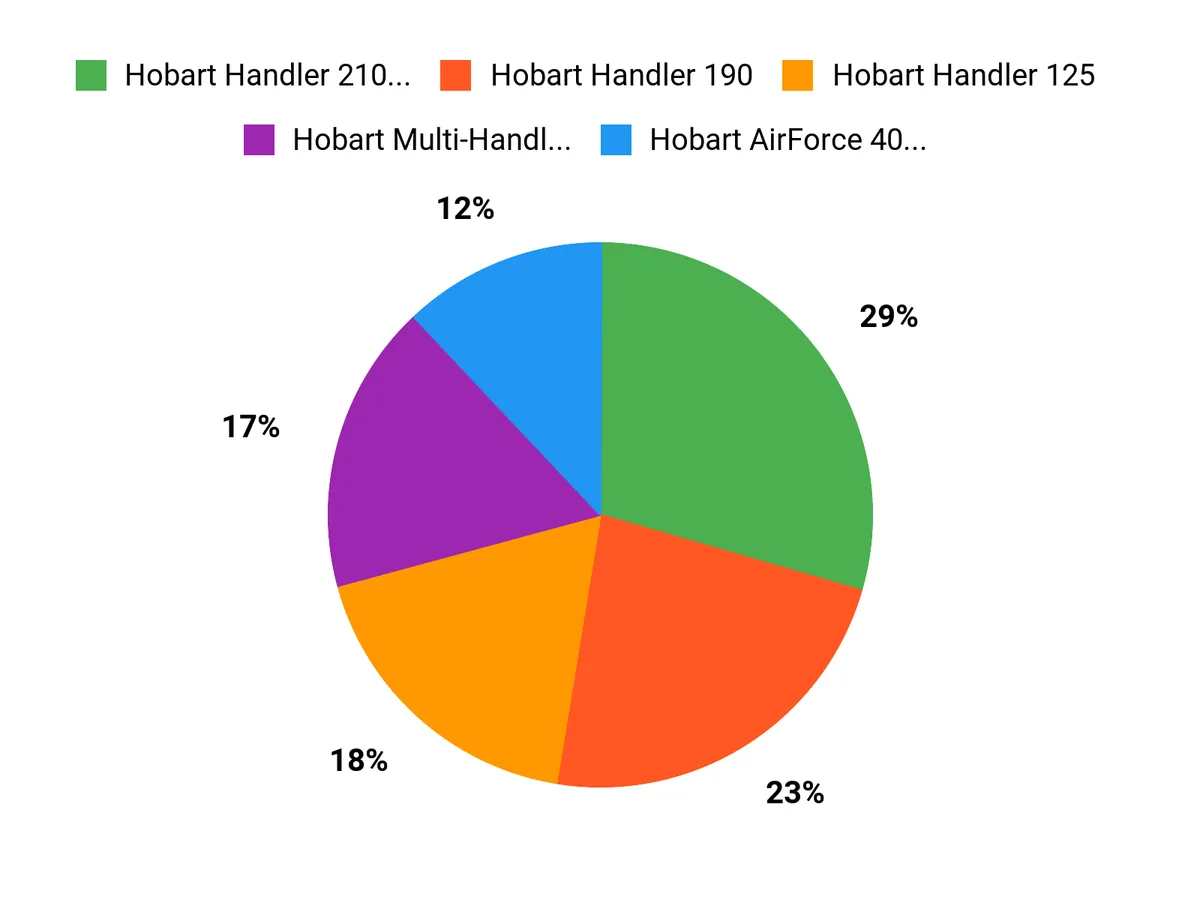
You typically prioritize process fit, power, and how often you work on thick metal. The Multi-Handler wins if you want MIG plus TIG and stick flexibility, the Handler 210 MVP makes sense if you want dual-voltage MIG convenience, and the Handler 190 fits buyers who already have 230 V power. For thin body panels you want fine control and low heat; for frames and thick steel you want more sustained output, better cooling, and a power source that will not hold the machine back.
Wrapping Up
Car restoration requires different tools for different jobs. If you need versatility for MIG, TIG, and stick, the Hobart Multi-Handler gives you multiprocess capability and easier setup in one machine.
For a garage-focused MIG, the Handler 210 MVP is the strongest all-around choice if you want 115 V and 230 V flexibility. The Handler 190 is a smart workhorse if you already have 230 V power, while the Handler 125 keeps things simpler for smaller 120 V jobs.
For heavy structural work, choose a higher-output unit such as the Ironman 240. The Stickmate 160 is the pick when lightweight stick portability is critical, and the AirForce 40i is the prep-focused plasma cutter for cutting and shaping metal before welding. Match your choice to the thicknesses, power supply, and welding processes you use most, and you’ll make stronger, cleaner repairs with fewer setbacks.
| Product | Image | Best Fit | Power Output | Weight | Recommended Use Cases |
|---|---|---|---|---|---|
| Hobart 500578 Multi-Handler 200 |
 |
Best multiprocess choice | 200 amps | 38.4 pounds |
|
| Hobart Handler 210 MVP |
 |
Best dual-voltage MIG | 210 amps | 79 pounds |
|
| Hobart Handler 190 |
 |
Best 230 V workhorse | 190 amps | 68 pounds |
|
| Hobart Handler 125 |
 |
Best 120 V starter MIG | 125 amps | 58 pounds |
|
| Hobart Ironman 240 |
 |
Best high-power shop MIG | 30-280 amps | 186 pounds |
|
| Hobart Stickmate 160 |
 |
Best lightweight stick welder | 160 amps | 19.51 pounds |
|
| Hobart AirForce 40i Plasma Cutter |
 |
Best cutting companion | 40 amps | 21 pounds |
|
This roundup is reader-supported. When you click through links we may earn a referral commission on qualifying purchases.