
Last updated: September 19, 2026 — model status, magazine examples, safety references, and comparison guidance reviewed.
Lever-action vs pump-action rifles differ mainly in how the shooter manually cycles the action. A lever-action uses a lever below the receiver, while a pump-action uses a sliding fore-end. Neither action is automatically more accurate or reliable. The more important differences are ergonomics, magazine design, cartridge and model availability, rifle fit, maintenance, and how naturally you operate the controls.
Quick Answer
Lever-action rifles usually appeal to shooters who want classic handling, a compact manual action, and strong new-production availability in traditional hunting and recreational configurations. Pump-action rifles use the support hand to cycle a sliding fore-end and can feel especially familiar to shooters with pump-shotgun experience. Magazine design is model-specific: traditional lever rifles commonly use tubular magazines, while pump rifles may use either tubular or detachable box magazines. Neither action type is automatically more accurate.
Lever-Action vs Pump-Action Rifles: Quick Comparison
| Factor | Lever-Action | Pump-Action |
|---|---|---|
| Cycling control | Lever below the receiver, operated mainly by the firing hand | Sliding fore-end, operated by the support hand |
| Magazine design | Many traditional models use tubular magazines; magazine type still varies by model | May use tubular or detachable box magazines depending on the rifle |
| Accuracy | Depends mainly on the specific rifle, barrel, ammunition, sights, fit, and shooter | Also model-dependent; the action type alone does not guarantee greater accuracy |
| Reloading | Fixed tubular magazines are commonly topped off one cartridge at a time | Detachable-box models allow magazine removal; tubular models load differently |
| 2026 market position | Broadly represented by new-production hunting and recreational rifles | Centerfire pump rifles are comparatively niche; several well-known examples are discontinued |
| Best fit | Shooters who like traditional balance and lever cycling | Shooters who prefer support-hand cycling and pump-style ergonomics |
Method: This comparison uses manufacturer manuals, published specifications, current manufacturer history pages, and other cited references. It does not claim a controlled head-to-head test of every lever-action and pump-action rifle.
Key Takeaways
- Lever-action rifles cycle with a lever under the receiver, while pump-action rifles cycle with a sliding fore-end.
- Neither action is universally faster; clean cycling depends on fit, familiarity, and safe technique.
- Accuracy depends more on the exact rifle, barrel, ammunition, sights or optics, trigger, and shooter than on the action label.
- Magazine type is model-specific. A lever or pump action does not automatically mean tubular or detachable-box feeding.
- The Remington 7600 is a useful pump-action benchmark, but Remington lists it as discontinued in 2020.
- Always follow the exact owner’s manual, use the correct ammunition, and comply with applicable firearm laws.
What Is a Lever-Action Rifle?

Lever-action rifles use a manually operated lever beneath the receiver. Moving the lever through its full travel opens the action, extracts and ejects the fired case, and prepares the rifle to chamber another cartridge. Returning the lever closes the action and chambers the next round.
Many traditional lever-action rifles use tubular magazines, which contribute to their slim receiver profile and familiar balance. Magazine design is not universal, however, so specifications should always be checked on the exact model rather than inferred from the action type.
Lever-action designs have deep historical roots. Rifles such as the Winchester 1873 and Model 1894 helped establish the platform’s association with hunting, ranch use, recreational shooting, and collecting. Modern lever-actions continue to combine that traditional operating system with updated sights, optics mounting, materials, and chamberings.
What Is a Pump-Action Rifle?

Pump-action rifles, also called slide-action rifles, use a sliding fore-end to cycle the action. The support hand moves the fore-end rearward and then forward through its complete travel. The motion extracts and ejects the fired case and chambers the next cartridge according to the design of the specific rifle.
Pump-action rifles can feel familiar to shooters who already use pump-action shotguns because the support hand performs a similar cycling motion. The magazine system varies by model. Some pump rifles use tubular magazines, while others use detachable box magazines.
How Does the Pump Mechanism Operate?
The support hand performs the main cycling motion on a pump-action rifle. On the Remington Model 7600, for example, the manufacturer’s manual instructs the user to pull the fore-end fully rearward and then return it forward as part of normal operation. The manual also shows a detachable magazine holding four cartridges (Remington 7600 Owner’s Manual).
Incomplete cycling can cause feeding or ejection problems on manually operated actions. The correct procedure varies by rifle, so the owner’s manual for the exact model should take priority over generalized instructions from an article.
Warning: Keep your finger outside the trigger guard while cycling either action. Keep the muzzle pointed in a safe direction, confirm your target and what is beyond it, and follow the owner’s manual for your specific rifle.
Where Are Pump-Action Rifles Commonly Used?
Pump-action rifles have been used for hunting, recreational shooting, rimfire practice, and other lawful sporting purposes. Their appeal comes largely from the support-hand cycling motion and, on some models, detachable-magazine feeding.
The current market is different from the historical market. The Remington Model 7600, one of the best-known centerfire pump rifles, was produced from 1981 through 2020 and is now listed by Remington as discontinued (Remington Model 7600 history). That makes it a useful technical comparison point, but not a current-production baseline for every pump rifle available in 2026.
How Do Lever-Action and Pump-Action Rifles Cycle?

The practical mechanical difference is which hand performs the cycling motion. A lever-action uses a lever beneath the receiver, so the firing hand normally works the lever. A pump-action uses the sliding fore-end, so the support hand cycles the mechanism.
The action type changes the shooter’s cycling motion; it does not by itself determine accuracy, magazine type, cartridge performance, or reliability.
- Lever-actions use a downward-and-returning lever stroke.
- Pump-actions use a rearward-and-forward fore-end stroke.
- Both require complete, deliberate cycling according to the rifle’s manual.
- Magazine and ammunition requirements are model-specific.
- Fit and familiarity strongly influence which system feels more natural.
A lever-action may feel more natural if you prefer traditional balance and lever controls. A pump-action may feel more natural if your support hand is already accustomed to cycling a fore-end. Whenever possible, evaluate fit and controls under qualified supervision rather than choosing solely from specifications.
Which Action Cycles Faster?
There is no universal speed winner between lever-action and pump-action rifles. Both require a complete manual cycle between shots. A pump lets the support hand perform that motion while the firing hand remains in place. A lever uses the firing hand to operate the lever. Individual technique, rifle geometry, recoil, fit, and familiarity all affect practical follow-up speed.
Safe and complete operation matters more than raw cycling speed. Rushing either mechanism can disturb the sight picture, encourage incomplete cycling, or create unsafe handling habits.
For a real-world comparison, concentrate on whether you can operate the controls smoothly while maintaining a consistent shooting position. The action you cycle most cleanly is usually more useful to you than an action that is theoretically faster in someone else’s hands.
[Amazon Products Picked for You]

[Portable Design] Ludex is the only .22 /22lr/22s tubular magazine speed loader available on the market today,with all-in-one portable design.

Browning BLR Goes Modern!

*Made of 500D nylon fabric,High quality and easy to install.
How Do Magazine Type and Reloading Differ?
Magazine design should be compared by exact rifle rather than by action category. Many traditional lever-action centerfire rifles use fixed tubular magazines. Some lever-action designs use other feed systems. Pump-action rifles can also use tubular or detachable box magazines.
A useful historical comparison is the Winchester Model 94 Carbine and the Remington 7600. Winchester’s 2013 catalog listed a 20-inch .30-30 Model 94 Carbine with a seven-round magazine, while the Remington 7600 manual instructs the user to load four cartridges into its detachable magazine after chambering a round (Winchester 2013 catalog; Remington 7600 Owner’s Manual).
What Does Magazine Design Change?
- A fixed tubular magazine is commonly loaded one cartridge at a time.
- A detachable box magazine can be removed from the rifle for loading or unloading according to the manufacturer’s procedure.
- Tubular magazines can often be topped off without removing a magazine.
- Capacity depends on caliber, barrel or magazine-tube length, and the specific configuration.
- Legal magazine limits can differ by jurisdiction and hunting regulation.
The key distinction is therefore not simply “lever versus pump.” It is the combination of action type + magazine system + cartridge + specific model.
How Does Ammunition Capacity Compare?
There is no single lever-action or pump-action capacity. The seven-round Winchester Model 94 Carbine and four-round Remington 7600 magazine are representative examples, not universal standards. Different calibers, barrel lengths, magazine systems, and jurisdictional rules can change capacity substantially.
The Remington 7615 was a specialized pump-action design made to accept AR-15/M16-pattern magazines, illustrating how different one pump rifle can be from another (American Rifleman).
Note: Magazine-capacity and hunting regulations vary by location. Check current federal, state, provincial, and local requirements that apply where you live or hunt.
Which Is More Accurate: Lever-Action or Pump-Action?
Neither action type is universally more accurate. The exact rifle matters more: barrel quality, action lockup, ammunition, trigger, sights or optics, stock fit, maintenance, shooting position, and shooter skill all influence results.
Traditional lever-action designs can have accuracy characteristics affected by the way the fore-end and tubular magazine attach around the barrel. Outdoor Life’s 2026 discussion of lever-gun accuracy describes how those contact points can influence barrel vibration and point of impact on some rifles (Outdoor Life). That does not mean every pump rifle is more accurate; it means individual design details matter.
Effective range also should not be assigned from action type alone. A .30-06 pump and a .30-30 lever, for example, differ substantially in cartridge characteristics, so any range difference cannot fairly be credited to “pump versus lever.” For more context, see maximum vs effective range.
- Compare specific rifles, not just action labels.
- Cartridge and ammunition choice strongly affect trajectory and retained performance.
- Sights or optics influence how precisely a shooter can use the rifle.
- Stock fit and balance affect steadiness from real field positions.
For hunting, practical accuracy should always connect to ethical shot placement. Choose a rifle, cartridge, and sighting system that you can use reliably under the conditions in which you actually hunt.
Which Action Handles Better?
Weight and handling vary more by model than by action type. Winchester’s 2013 catalog listed its 20-inch .30-30 Model 94 Carbine at a nominal 6.5 lb. A published test of a full-size Remington 7600 .30-06 listed that rifle at 7.5 lb unloaded (Winchester 2013 catalog; Gun Tests). These figures illustrate two particular configurations, not an action-wide rule.
[Amazon Products Picked for You]
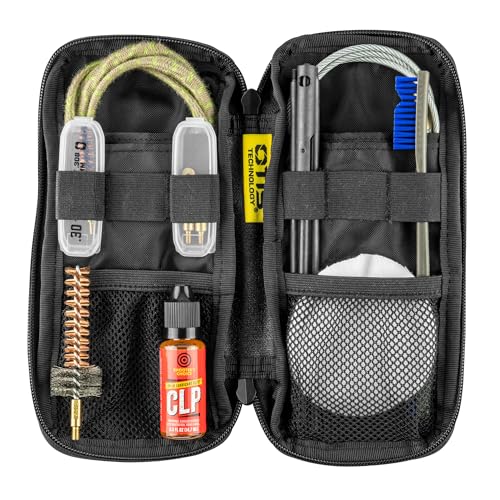
Quick Cleaning: Facilitating speedy cleaning, the .308 cal/7.62mm Ripcord offers swift, one-pass cleaning while on the go, ensuring efficient maintenance in field conditions.
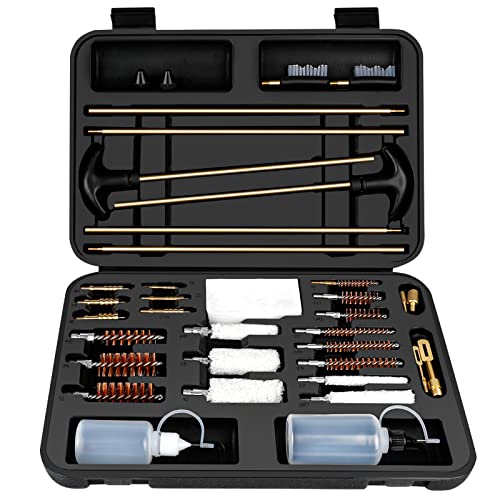
【Brass Accessories That Won't Harm Your Guns】 Compared to inferior plastic accessories, this cleaning kit contains 9 brass brushes, 6 brass jags, 2 brass slotted tips, 4 brass cleaning rods, 2 T-grip, 5 mop brushes, 2 large brush, 100 cleaning patches, 2 empty oil bottle and storage case.

All-in-one: Use for all types of shotguns, pistols cleaning. Everything needed to clean common caliber guns is included in a compact case. Our case is designed to keep the pieces organized, with two spaces for storing cleaning oil and solvent.
What Handling Factors Matter Most?
- A lighter rifle can be easier to carry for long periods.
- A heavier rifle may feel steadier but can increase carrying fatigue.
- Balance can matter as much as total weight.
- Stock length and comb height affect how naturally the sights align.
- The cycling motion should not force you into an awkward grip or position.
Lever-action carbines often feel slim through the receiver. A pump rifle places a moving fore-end under the support hand. Neither layout is automatically more comfortable, so evaluate the exact rifle rather than treating action type as a substitute for fit.
Which Is Easier to Operate?
A lever-action requires the firing hand to work the lever beneath the receiver. A pump-action lets the support hand cycle the fore-end. Shooters with previous pump-shotgun experience may find the second motion more familiar, while others prefer the rhythm and grip of a lever.
Hand size, arm length, stock dimensions, shooting position, safety location, and sight setup can matter more than the action category. Left-handed shooters should also check safety placement, ejection direction, and control access on the exact rifle.
Pro Tip: Before choosing either action, evaluate the rifle from the positions you actually use, such as standing, kneeling, seated, or from a supported rest. A rifle that feels comfortable at a counter may balance differently in the field.
Which Is Easier to Maintain?
Maintenance depends more on the exact rifle than on whether it uses a lever or pump. Both designs need appropriate cleaning, lubrication, inspection, and storage. Field-strip procedures differ substantially by model, so follow the manufacturer’s manual rather than a generic online disassembly sequence.
Ammunition requirements also matter. Winchester’s current Model 94 manual instructs owners of its centerfire tubular-magazine rifle to use ammunition suitable for that magazine design and specifically warns against pointed or conical-point bullets in that rifle (Winchester Model 94 Owner’s Manual). Always follow the ammunition requirements for your exact firearm rather than applying one lever-gun rule to every model.
Durability depends on storage, corrosion protection, maintenance, ammunition, parts condition, and proper operation. A well-maintained example of either action can provide long service, while corrosion, incorrect ammunition, neglected maintenance, or improper repairs can shorten service life.
[Amazon Products Picked for You]


Officially licensed Marlin BB rifle

Optimized for Marlin Lever Actions: Specifically designed for all Marlin Lever Actions made in 1983 or later, including models 39A, 39M, 1984, 1984C, 1985S, 336C, 336T, 375, 444S, and Glenfield 30A.
What Models Best Illustrate the Difference?
The Winchester Model 94 is one of the best-known lever-action sporting rifles and remains a useful example of traditional lever handling, tubular-magazine feeding, and hunting-oriented design. Winchester continues to publish a current Model 94 owner’s manual covering current-production Model 1894 rifles (Winchester Model 94 Owner’s Manual).
The Remington 7600 is a useful historical benchmark for pump-action centerfire rifles. Its four-round detachable magazine and support-hand cycling illustrate how a centerfire pump can differ from a traditional tubular-magazine lever rifle. Remington officially lists the Model 7600 as produced from 1981 through 2020, so it should now be described as a discontinued model rather than a current-production recommendation (Remington Model 7600 history).
Lever-action rifles remain associated with hunting, recreational shooting, ranch use, collecting, and historical interest. Pump-action rifles remain relevant to hunting, recreational use, rimfire shooting, and collectors, but centerfire pump rifles occupy a smaller modern-market niche.
Which Action Better Fits Your Needs?
Choose by the exact rifle rather than by nostalgia or action type alone. A useful decision framework is to compare the features that directly affect your use.
- Fit: Does the stock place your eye naturally behind the sights or optic?
- Controls: Can you operate the safety and action comfortably without changing your grip awkwardly?
- Magazine system: Do you prefer a fixed tubular magazine or a model with a detachable box magazine?
- Cartridge: Is the chambering appropriate for your lawful intended use and readily available?
- Sights and optics: Does the rifle support the sighting system you want?
- Availability: Is the model in current production, or will you depend on the used market and older replacement parts?
A smaller-framed shooter may prefer a shorter, lighter carbine regardless of action type. A shooter with pump-shotgun experience may find pump controls familiar. A shooter who values traditional handling may prefer a lever. For another useful size-and-handling comparison, see carbine vs rifle.
What Legal and Safety Issues Should You Check?
Firearm laws can affect possession, magazine capacity, transportation, storage, hunting methods, and where a firearm may lawfully be used. Rules vary significantly by jurisdiction, so technical categories such as “lever-action” and “pump-action” are not substitutes for checking the current law where you live, travel, or hunt.
Safe storage is equally important. Current ATF safety guidance tells firearm owners to keep stored firearms unloaded and secured against unauthorized access and to keep ammunition secured appropriately. ATF also advises owners to familiarize themselves with applicable federal, state, and local laws (ATF firearm safety and security guidance).
Warning: Never rely on an article as a substitute for professional firearm training, the owner’s manual, or current law. Get instruction from a qualified professional before handling, loading, firing, cleaning, or storing any firearm.
Frequently Asked Questions
Which is more accurate, a lever-action or pump-action rifle?
Neither action is universally more accurate. The specific rifle, barrel, ammunition, sights or optics, trigger, stock fit, maintenance, and shooter have a greater effect. Some traditional lever designs have barrel and magazine-tube attachments that can influence consistency, but that does not make every pump rifle more accurate.
Which cycles faster, a lever-action or pump-action rifle?
There is no universal winner. A pump uses the support hand while a lever normally uses the firing hand. Practical speed depends on the rifle, shooter fit, familiarity, recoil control, and complete safe cycling.
Do pump-action rifles use detachable magazines?
Some do, but not all. The discontinued Remington 7600 used a four-round detachable box magazine, while other pump-action rifles use tubular magazines. Magazine type must be checked model by model.
Are lever-action rifles good for hunting?
Yes, when the rifle, cartridge, sights, shooter ability, game, conditions, and local hunting rules are properly matched. Lever-actions are especially well known for compact hunting configurations, but ethical range depends on the complete rifle-and-ammunition system rather than the action alone.
Are pump-action rifles still common?
Pump-action rifles still exist, but centerfire pumps are a comparatively niche category in 2026. The well-known Remington 7600 was discontinued in 2020, so many centerfire pump comparisons now involve older or used-market rifles rather than a large selection of current models.
Are lever-action and pump-action rifles legal everywhere?
No universal rule applies. Firearm classifications, magazine limits, hunting regulations, transportation requirements, and storage laws vary by country, state, province, and locality. Check the current rules that apply to your location and intended use.
Conclusion
The most useful way to compare lever-action vs pump-action rifles is to separate the action mechanism from the other features of the rifle. Lever-actions use a receiver-mounted lever; pump-actions use a sliding fore-end. Neither mechanism automatically provides better accuracy, reliability, range, or magazine capacity.
If you prefer traditional lever handling and broad modern lever-rifle availability, a lever-action may fit your needs. If you prefer support-hand cycling and find a pump rifle with the cartridge, magazine system, fit, and parts support you need, a pump-action may fit better. Compare the exact model, cartridge, weight, stock fit, sights, magazine design, production status, and safety controls before deciding.
Sources
- Remington 7600 Owner’s Manual — pump-action operation and four-cartridge detachable-magazine instructions.
- Remington Model 7600 History — introduction year, 2020 discontinuation, chamberings, and model history.
- Winchester Model 94 Owner’s Manual — current Model 94 operation, tubular-magazine ammunition guidance, and safety instructions.
- Winchester 2013 Catalog — representative Model 94 Carbine capacity, barrel length, and nominal weight.
- American Rifleman — Remington 7615P — detachable AR-15/M16-pattern magazine design.
- Outdoor Life — Lever-Action Accuracy — discussion of traditional lever-gun barrel, fore-end, and magazine-tube influences on accuracy.
- Gun Tests — Remington 7600 — tested weight, magazine configuration, handling, and accuracy data for one .30-06 example.
- ATF Firearm Safety and Security — current U.S. handling and storage guidance.
