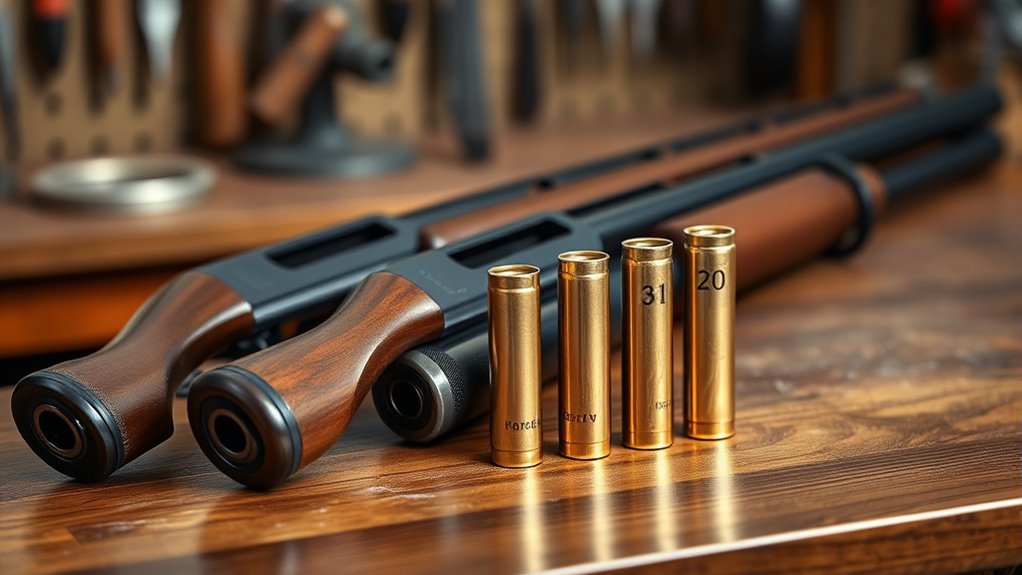
Bore, gauge, and caliber describe firearm barrel size, but they do not mean the same thing. Understanding bore vs gauge vs caliber helps you read firearm specifications and recognize why ammunition names can be confusing. The distinction is especially important when comparing shotguns with rifles and handguns.
Quick Answer
Bore is a barrel’s internal diameter. Gauge identifies most shotgun bores through a traditional lead-ball weight system, where smaller numbers mean larger bores. Caliber identifies rifled barrel size or a cartridge designation, usually in inches or millimeters. The .410 shotgun is an exception because its name refers to bore diameter rather than gauge.
Key Takeaways
- A 12-gauge shotgun has a larger bore than a 20-gauge shotgun.
- Common shotgun sizes include 10, 12, 16, 20, and 28 gauge, plus .410 bore.
- Caliber names are often approximate and do not always equal actual bullet diameter.
- Two cartridges with similar caliber names are not necessarily interchangeable.
- Shotgun shell length must not exceed the firearm’s approved chamber length.
- Firearm markings, ammunition packaging, and manufacturer specifications must agree before ammunition is used.
What’s the Difference Between Bore, Gauge, and Caliber?
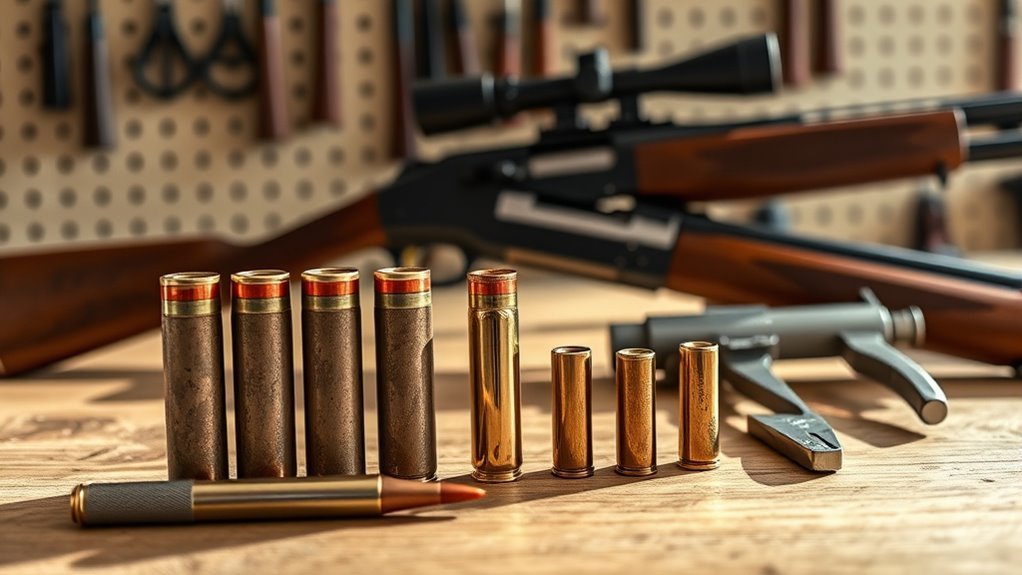
Bore, gauge, and caliber describe related dimensions using different conventions. Bore refers to the inside of the barrel, gauge expresses a traditional shotgun size, and caliber describes a nominal barrel diameter or cartridge designation.
The distinction becomes clearer when you examine each term separately.
What Is Bore?
Bore is the internal passage through a firearm barrel. Its diameter is measured differently depending on whether the barrel is smooth or rifled.
In a shotgun, bore diameter is measured forward of the chamber and before any restrictive choke. In a rifled barrel, the technical bore diameter is measured across the tops of the lands.
This distinction follows the SAAMI bore diameter definition.
The term also appears in descriptions of mortars, cannons, and other large-bore firearms.
What Is Gauge?
Gauge is the traditional sizing system for most shotgun bores. It comes from the number of round lead balls, each matching the barrel’s bore diameter, that together weigh one pound.
For example, twelve bore-sized lead balls weighing one pound correspond to 12 gauge.
Because larger balls weigh more individually, fewer are needed to make one pound. That explains why a lower gauge number represents a larger bore.
What Is Caliber?
Caliber is a nominal barrel diameter or cartridge designation, commonly expressed in inches or millimeters.
Examples include .223 Remington, .308 Winchester, and 9mm Luger.
However, a cartridge’s caliber name is not always its exact bullet diameter. Historical naming practices and different measurement conventions explain many of these differences.
The SAAMI caliber definition recognizes both the firearm’s bore designation and the cartridge for which it is chambered.
For ammunition selection, the complete cartridge designation matters more than the approximate diameter alone.
Why Shotguns Use Gauge and Rifles Use Caliber
Shotguns generally use gauge because their sizing system developed around the weight of lead balls. Rifles and handguns usually use caliber because their barrels and cartridges are identified through nominal dimensions.
These conventions developed before modern ammunition standards became widespread.
Shotguns traditionally fired round balls or multiple pellets through smooth barrels. The lead-ball system gave manufacturers and shooters a practical way to describe relative bore size.
Rifled firearms developed cartridge names based on barrel dimensions, bullet dimensions, and historical naming conventions.
The distinction remains useful, although modern shotguns can also have rifled barrels.
SAAMI’s official gauge definition identifies .410 bore as the main exception to the conventional shotgun gauge system.
Neither system tells you everything about ammunition compatibility. Chamber dimensions, cartridge design, and the firearm manufacturer’s specifications remain essential.
How Is Gauge Measured in Shotguns?
Shotgun gauge comes from the number of bore-sized lead balls required to weigh one pound. A 12-gauge ball represents one-twelfth of that weight, while a 20-gauge ball represents one-twentieth.
Therefore, the 12-gauge ball is larger, giving the 12-gauge shotgun a wider nominal bore.
The resulting bore diameters are approximately 0.729 inches for 12 gauge and 0.615 inches for 20 gauge.
These are nominal measurements. Actual barrel dimensions can vary because of manufacturing tolerances, back-boring, and other design choices.
Back-boring refers to a shotgun barrel with an internal diameter larger than the conventional nominal size for its gauge.
A choke is different. It narrows the barrel near the muzzle to influence the shot pattern.
Neither variation changes the firearm’s designated gauge or makes ammunition from another gauge interchangeable.
The .410 bore does not follow the lead-ball naming system. Its designation refers to an internal diameter of approximately 0.410 inches.
How Is Caliber Measured in Rifled Barrels?
Caliber in rifled barrels is generally expressed in inches or millimeters. The nominal number may come from bore diameter, groove diameter, or a historical cartridge designation.
Rifling consists of raised lands and recessed grooves that help spin and stabilize a bullet.
- Land diameter: The distance across the tops of opposite lands.
- Groove diameter: The distance across the bottoms of opposite grooves.
- Bullet diameter: The actual diameter of the projectile.
These measurements are related, but they are not identical.
For example, the .303 British designation traditionally refers to bore diameter across the lands rather than the projectile’s full diameter.
Different cartridge families follow different naming traditions, so caliber alone cannot establish compatibility.
Consider .308 Winchester and .30-06 Springfield. Both use similar nominal bullet diameters, but they are different cartridges with different chamber dimensions.
Likewise, a firearm marked for one cartridge should never be assumed to accept another merely because their caliber numbers look similar.
The correct reference is the complete standardized cartridge designation approved for that firearm.
Why Barrel Markings Can Be Misleading
Barrel markings identify the intended caliber or gauge, but they do not always describe the barrel’s exact internal dimensions. Many markings are nominal cartridge names rather than direct measurements.
This distinction can confuse owners who compare stamped numbers with measurements taken from the barrel.
For example, a barrel with a slightly larger measured bore may still be correctly marked for its standard shotgun gauge.
Similarly, a rifle’s caliber designation may differ from its actual bullet diameter.
Other sources of confusion include:
- Historical cartridge names and abbreviations.
- Different land and groove measurement conventions.
- Similar cartridge names with different case dimensions.
- Older firearms with worn or incomplete markings.
- Replacement barrels or firearms with an uncertain modification history.
Do not assume that a barrel measurement or similar-sounding cartridge name proves compatibility.
If markings conflict with known specifications, a qualified gunsmith should identify the chamber and assess the firearm before use.
A bore measurement by itself cannot establish every chamber dimension or pressure limitation.
How Do You Match Ammo to the Right Firearm?
Matching ammunition requires the firearm’s complete chamber designation, not just its approximate bore diameter. The ammunition must meet the manufacturer’s approved specifications.
Begin with the firearm’s markings and instruction manual.
- Identify the firearm’s designation. Read the caliber or gauge marking on its barrel or receiver.
- Check the manufacturer’s specifications. Confirm the complete cartridge name or approved shotshell dimensions.
- Read the ammunition packaging. Compare its designation with the firearm’s approved ammunition.
- Verify shotgun chamber length. Confirm the shell’s marked length does not exceed the approved chamber length.
- Check additional restrictions. Follow the manufacturer’s instructions concerning ammunition type, pressure, and approved loads.
- Resolve any uncertainty. Ask the manufacturer or a qualified gunsmith before proceeding.
Warning: Never force ammunition into a chamber or assume that a cartridge is compatible because it physically fits. Incorrect ammunition can cause excessive pressure, firearm damage, or serious injury.
The NSSF firearm safety rules explain why correct ammunition and an unobstructed barrel are essential.
One particularly dangerous example involves a 20-gauge shell entering a 12-gauge shotgun. The smaller shell can become lodged in the barrel and create a dangerous obstruction.
This is why different shotgun gauges must never be treated as interchangeable.
Which Shotgun Gauge Should You Buy?
The appropriate shotgun gauge depends on intended use, firearm fit, ammunition availability, and manageable recoil. The 12-gauge and 20-gauge are common starting points for comparing general-purpose shotguns.
However, gauge alone does not determine recoil, effective range, or shooting performance.
Gauge Size Basics
Common gauges run from larger bores to smaller ones as the gauge number increases. The .410 bore is smaller than the conventional gauges discussed here.
A larger bore can accommodate different payload combinations, but the actual result depends on the ammunition.
Compare the firearm’s weight, stock fit, and approved loads alongside its gauge.
A lightweight 20-gauge firing a heavy load can produce substantial recoil. It should not automatically be considered easier to handle than every 12-gauge shotgun.
Matching Gauge to Purpose
Different shotgun sizes offer different combinations of firearm weight, available ammunition, and payload options.
These are common applications rather than fixed performance limits:
- 12 gauge: Commonly used for clay target shooting, hunting, and other general-purpose applications.
- 20 gauge: Often selected for upland hunting and recreational shooting, including situations where a lighter firearm is preferred.
- 10 gauge: A specialized option associated with heavy waterfowl loads.
- 16 gauge: Traditionally associated with upland bird hunting.
- 28 gauge: Commonly associated with lightweight sporting and upland shotguns.
- .410 bore: Used in small-game hunting and recreational shooting, with a smaller shot payload than larger conventional gauges.
A .410 may produce less recoil with suitable ammunition, but its smaller payload can make moving targets more demanding.
For beginners, a firearm that fits properly and produces manageable recoil is more important than choosing the smallest available bore.
Hunting ammunition must also comply with applicable wildlife regulations and the firearm manufacturer’s restrictions.
What Are the Most Common Shotgun Gauges?
The main conventional shotgun gauges are 10, 12, 16, 20, and 28. The .410 bore is commonly grouped with them, although it uses a different naming system.
The following table shows approximate conventional bore diameters.
| Gauge or Bore | Approximate Diameter | Common Association |
|---|---|---|
| 10 gauge | 0.775 in | Specialized waterfowl use |
| 12 gauge | 0.729 in | General hunting and sporting use |
| 16 gauge | 0.662 in | Traditional upland hunting |
| 20 gauge | 0.615 in | Upland hunting and sporting use |
| 28 gauge | 0.550 in | Lightweight sporting applications |
| .410 bore | 0.410 in | Small-game and recreational shooting |
These conventional dimensions appear in the American Rifleman shotgun bore reference.
Less common gauges include 24 and 32, which appear in some regional and specialty markets.
Historical large-bore firearms also used designations such as 8, 7, 6, 4, 3, and 2 bore. These are now associated mainly with historical or specialized firearms rather than ordinary modern shotgun use.
Remember that nominal bore diameter is a sizing reference, not a substitute for checking the actual firearm and its chamber designation.
Where Did Gauge Sizes Come From?
The gauge system developed from an older method of describing firearm bore size through the weight of a round lead ball. It provided a shared measurement before modern cartridge and chamber standards existed.
The system is related to historical artillery terminology, where cannons were often described by the weight of the projectile they fired.
An early recorded use of gauge terminology in firearms dates to 1677.
The British Gun Barrel Proof Act 1855 formed part of the development of more formal barrel testing and manufacturing standards.
Today, shotgun gauges are standardized designations rather than measurements that an owner must calculate using lead balls.
The .410 bore remains the notable exception. Its approximately 0.410-inch diameter corresponds to roughly 67 gauge under the traditional weight-based system.
Despite its occasional description as 36 gauge in historical or regional terminology, .410 bore is the familiar modern designation.
What Safety Checks Should You Make Before Buying Ammo?
Before purchasing ammunition, confirm the firearm’s chamber designation and approved ammunition specifications. For shotguns, check both gauge and chamber length.
These checks matter because a shell or cartridge may physically fit without being safe to fire.
Check Firearm Markings
Start with the firearm’s barrel or receiver markings. Compare the complete designation with the information in the manufacturer’s manual.
A caliber number alone may not identify the cartridge precisely.
For example, different .30-caliber cartridges can have substantially different case dimensions and intended applications.
The same principle applies to shotgun markings.
A marking such as 12 gauge identifies the gauge, but chamber length and other ammunition restrictions must still be confirmed.
If a firearm has been modified, has a replacement barrel, or carries unclear markings, its original documentation may not fully describe its present condition.
Note: If the chamber designation is missing, damaged, or uncertain, have the firearm examined by its manufacturer or a qualified gunsmith before selecting ammunition.
Match Ammo to Chamber
Shotgun ammunition must match the firearm’s gauge and approved chamber length. The shell’s marked length refers to its nominal fired length, not simply its shorter folded or crimped length before firing.
This distinction matters because a longer unfired shell may appear to fit inside a shorter chamber.
For example, a 3-inch shell must not be fired in a shotgun with a 2¾-inch chamber.
Generally, a shorter shell of the same gauge can be used in a longer chamber when the firearm manufacturer approves it. The reverse is unsafe.
The American Rifleman shotshell guide explains shell length, packaging information, and the risks of an overlength shell.
Use the following checklist when comparing ammunition with firearm specifications.
| Check | Purpose |
|---|---|
| Stamp | Identifies the firearm’s designated caliber or gauge |
| Chamber | Establishes the approved cartridge or shell dimensions |
| Package | Identifies the ammunition and its specifications |
| Manual | Confirms approved ammunition and restrictions |
| Gunsmith | Resolves uncertain markings or chamber identification |
Also inspect ammunition for visible damage and follow the manufacturer’s instructions for the specific load.
Never rely on shell color, appearance, or a dealer’s assumption as the sole means of identification.
Frequently Asked Questions
What Are the 3 Best Rifle Calibers to Own?
Three commonly compared rifle cartridges are .308 Winchester, .223 Remington, and 6.5 Creedmoor. They offer different combinations of recoil, ammunition availability, and intended applications. No single group suits every shooter. The appropriate choice depends on the firearm, lawful intended use, and the shooter’s needs.
Why Is 25 Caliber Prohibited?
.25 caliber is not universally prohibited. In Canada, handguns designed or adapted to discharge .25- or .32-caliber cartridges fall within the prohibited-firearm definition under section 84 of the Criminal Code, subject to specified sporting exceptions. Other countries have different laws. Legal classification depends on jurisdiction and firearm type.
Is 12 Bore and 12-Gauge the Same Thing?
Yes. The terms 12 bore and 12 gauge generally refer to the same shotgun size, with a nominal bore diameter of approximately 0.729 inches. However, the shared designation does not establish shell-length compatibility. A firearm’s approved chamber length and ammunition specifications must also match.
Which Is More Powerful, 30 Bore or 9mm?
Neither designation alone establishes which cartridge is more powerful. In Pakistan, 30 bore commonly identifies the 7.62×25mm cartridge, as reflected in the government product database. A meaningful comparison requires the exact 9mm cartridge, ammunition specifications, and measured performance. The two designations do not imply interchangeability.
Conclusion
Bore, gauge, and caliber are related measurements, not interchangeable terms. Bore describes the barrel’s internal diameter, gauge identifies most shotgun sizes, and caliber describes nominal firearm or cartridge dimensions.
For ammunition compatibility, the complete cartridge designation and approved chamber specifications matter more than the number alone. Confirm those details against the firearm manufacturer’s instructions before purchasing or using ammunition.
Sources
- SAAMI: Bore Diameter: Official definition of bore measurements.
- SAAMI: Caliber: Caliber terminology and cartridge identification.
- SAAMI: Gauge: Shotgun gauge definition and .410 exception.
- American Rifleman: Ammunition Reference: Conventional shotgun bore diameters.
- American Rifleman: Reading a Shotshell Box: Shotgun shell markings and chamber length.
- NSSF: Firearm Safety Rules: Correct ammunition and barrel obstruction risks.
- Gun Barrel Proof Act 1855: Historical British barrel-proof legislation.
- Government of Canada: Criminal Code, Section 84: Legal classification of certain handguns.
- Pakistan Government Product Database: Identification of 7.62×25mm ammunition as 30 bore.
