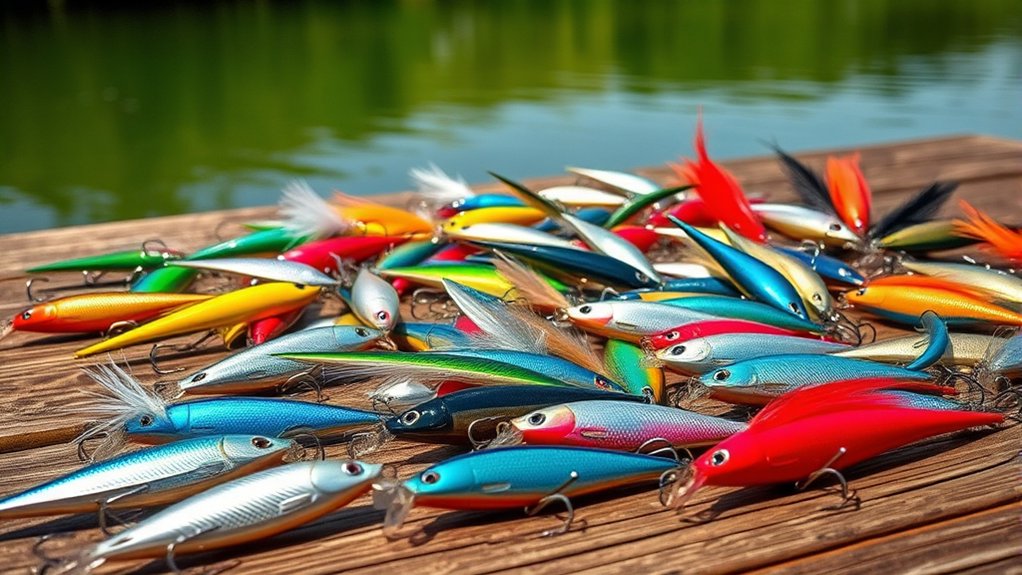
Choosing the right fishing lure gets easier when you match three things: the fish you want to catch, the water conditions in front of you, and the way local baitfish move. Lures work because they copy prey through flash, vibration, shape, color, and action. Once you understand how each lure type behaves, you can stop guessing and start making smarter choices on the water.
Quick Answer
Choose a fishing lure by matching it to your target species, water clarity, depth, cover, season, and the fish’s current feeding mood. Use natural colors in clear water, brighter or louder lures in stained water, and adjust size and retrieval speed until fish respond.
Key Takeaways
- Start with the target species, then choose a lure that matches its common prey and feeding style.
- Use lure depth, size, color, vibration, and speed to match water clarity, season, and fish location.
- Jigs, soft plastics, crankbaits, spinnerbaits, spoons, buzzbaits, and plugs each solve different fishing problems.
- Change one variable at a time, such as retrieve speed or lure color, so you know what triggers bites.
At a Glance
| Time Required | 5 to 10 minutes to choose a starting lure; longer if you test several colors, depths, and retrieves. |
| Difficulty | Beginner to moderate. The main skill is matching the lure to depth, cover, water clarity, and fish behavior. |
| Tools Needed | Rod and reel, appropriate line, tackle box, pliers, hooks, weights, and a small selection of lures. |
| Cost | Low to moderate. You can start with a few versatile lures before building a larger tackle selection. |
Understanding the Importance of Lures
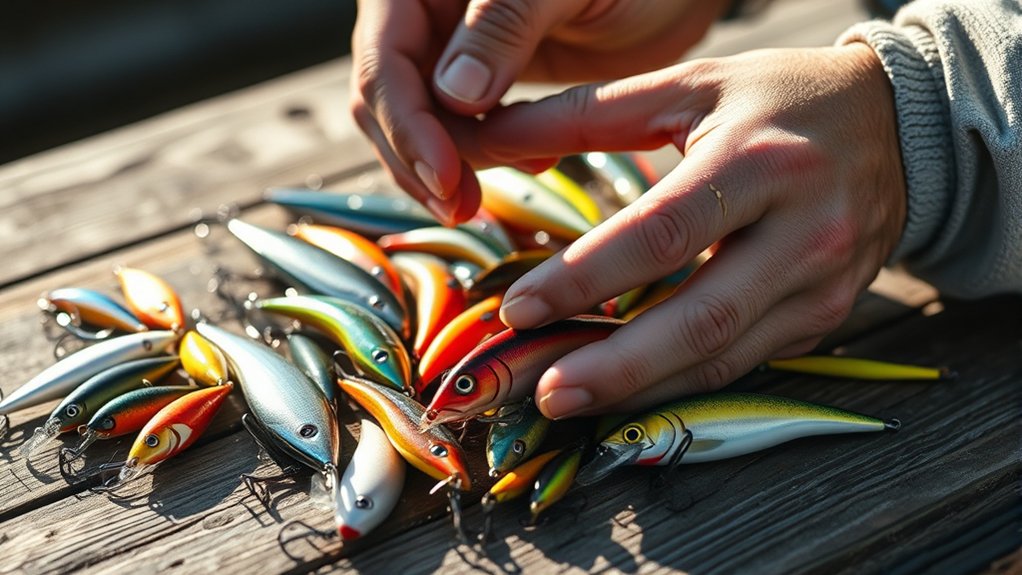
When you head out to fish, understanding the importance of lures can greatly improve your chances of success. Lures are crafted to mimic natural prey, making them useful for attracting fish in many conditions. Their effectiveness comes from how they engage fish senses through movement, color, flash, sound, and vibration.
Different types of lures, such as spinners, jigs, crankbaits, soft plastics, spoons, buzzbaits, and plugs, let you adjust your approach based on fish species and water conditions. Size and color matter because fish often respond best to lures that resemble the forage they already eat.
Local fish behavior also matters. A bass feeding around shallow weeds may need a very different lure than a walleye holding near a rocky drop-off. When you combine lure knowledge with water temperature, depth, cover, and season, you make better decisions and waste less time.
A good lure choice starts with one question: what are the fish eating right now, and where are they positioned?
Types of Lures: An Overview
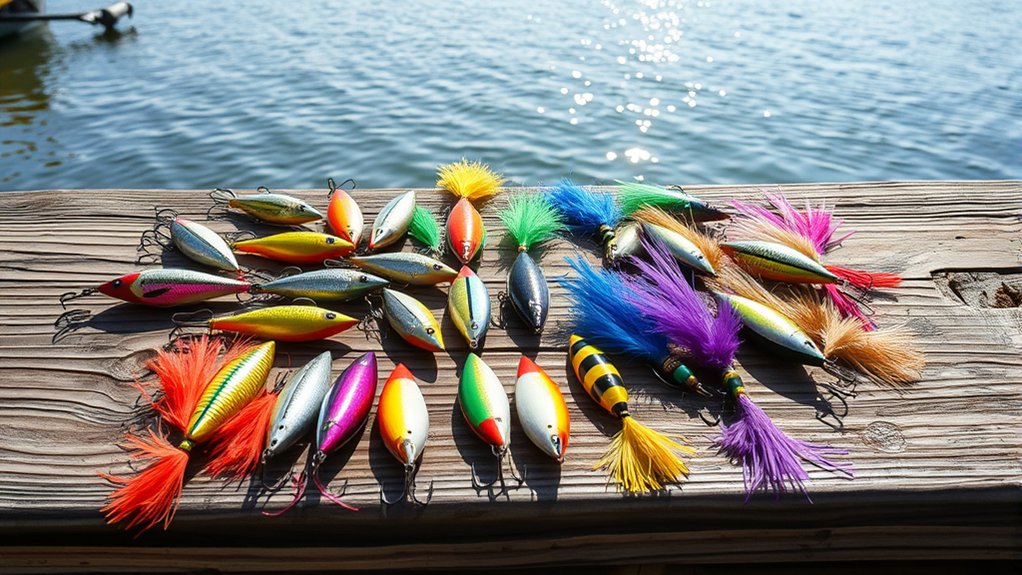
Selecting the right lure can greatly influence your fishing success, and understanding the different types available is key. Here’s a quick overview of some popular lures you should consider:
Choosing the right lure is crucial for fishing success; knowing the various types can make all the difference.
- Spinners: These have a rotating blade that creates flashes and vibrations, which can draw fish in from nearby cover or open water.
- Crankbaits: These mimic the movement of prey fish and dive to specific depths, making them useful for covering water quickly.
- Buzzbaits: These create surface commotion and work well when fish are active near shallow cover.
- Spoons: Their wobble mimics injured baitfish, and they can be effective when fish are deeper or chasing flash.
How to Match a Lure to the Fishing Conditions
Before you tie on a lure, look at the water. Clear water, muddy water, shallow grass, rocky points, and deep ledges all call for different choices. You do not need a huge tackle box to start. You need a simple process that helps you pick the best first option.
- Clear water: Use more natural colors such as silver, shad, green pumpkin, brown, or translucent shades. Subtle action often works better.
- Stained or muddy water: Choose lures with stronger vibration, brighter colors, darker silhouettes, or more flash.
- Shallow cover: Try spinnerbaits, buzzbaits, Texas-rigged soft plastics, or weedless jigs.
- Deep structure: Use jigs, spoons, deep-diving crankbaits, Carolina rigs, or heavier soft plastic presentations.
- Cold water: Slow down your retrieve and use lures that can stay in the strike zone longer.
- Warm water: Fish may chase faster-moving lures, especially early and late in the day.
Note: Fish do not always follow rules. If the “right” lure does not get bites, change depth, speed, color, or profile before moving to a completely different spot.
Jigs: Underwater Puppeteers
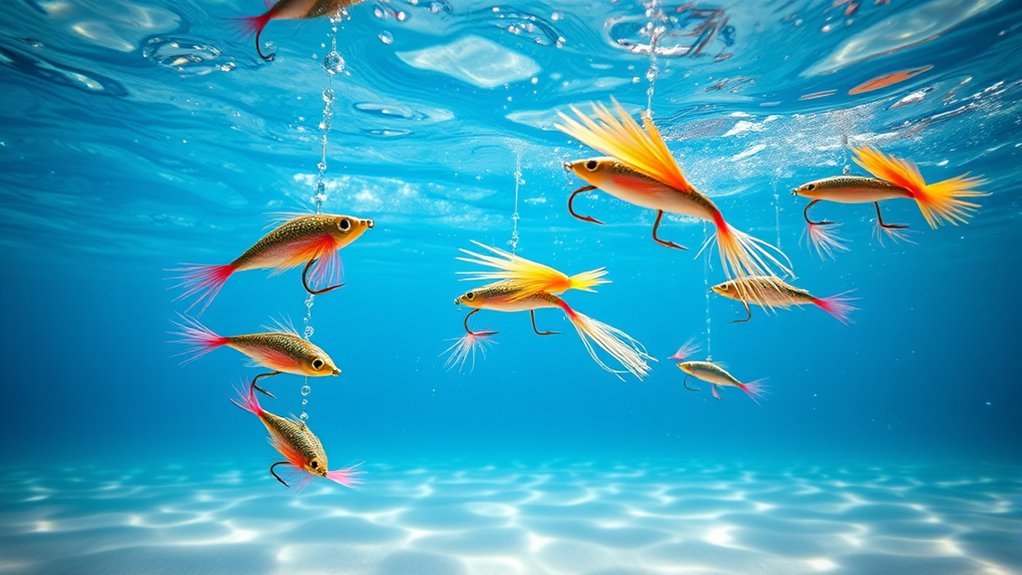
While jigs might seem simple at first glance, they’re some of the most versatile lures in your tackle box. With a weighted head and a body often dressed with hair, feathers, silicone, or soft plastics, jigs can attract many freshwater species. The secret to mastering jigs is in your rod tip movement. Small lifts, hops, shakes, and pauses can make the lure look alive.
Jigs are especially useful for bass fishing, but they can also work for walleye, crappie, trout, and other species when matched with the right size and trailer. You can fish them on the bottom, swim them through vegetation, pitch them into cover, or work them vertically below a boat.
Whether you’re casting in still or moving water, jigs excel at targeting Largemouth Bass and Smallmouth Bass around rocks, docks, grass lines, brush, and drop-offs. With a bit of technique and creativity, you can make these underwater puppeteers dance, drawing in fish like a pro.
Best Times to Use Jigs
Use jigs when fish are holding close to cover or feeding near the bottom. They can be especially useful in spring and fall, during cold fronts, and anytime fish want a slower presentation. A lighter jig falls slowly and looks natural, while a heavier jig reaches deep water faster and punches through cover better.
Common Jig Mistakes
- Fishing too fast: Many jig bites happen on the fall or during a pause.
- Using the wrong weight: Too much weight can look unnatural, while too little weight may not reach the fish.
- Ignoring line feel: A jig bite can feel like a tap, pressure, or sudden slack.
Spinnerbaits: Harnessing the Power of Spin
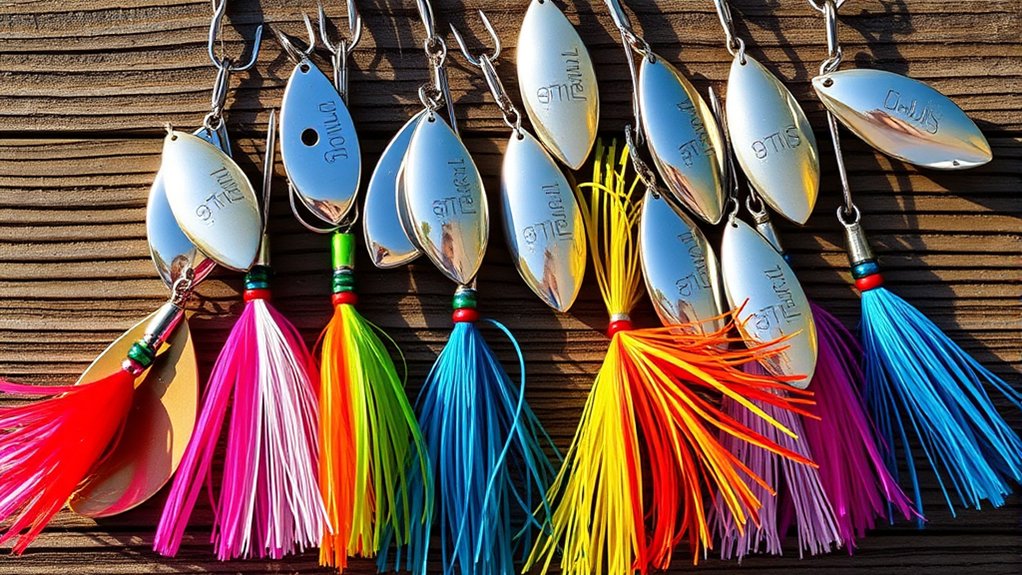
Spinnerbaits are a dynamic tool in your tackle box. They combine spinning metal blades, a weighted head, a skirt, and a hook to create flash and vibration in the water.
By mastering different retrieval techniques, you can adjust your approach to match the conditions and target species.
Whether you’re casting near submerged structures, slow-rolling along the bottom, or burning the lure near the surface, spinnerbaits offer many ways to trigger a strike.
Spinnerbait Design Features
The design of spinnerbaits plays an important role in their effectiveness on the water.
These lures are built to create attraction through flash, vibration, and movement, making them a dependable choice for many anglers.
Key design features include:
- Metal Blades: They spin around a wire frame, creating vibrations and visual commotion that can draw in fish.
- Weighted Head: This helps the bait sink properly and lets you control the depth during the retrieve.
- Rubber or Silicone Skirt: The skirt adds bulk, movement, and a prey-like profile.
- Versatility: You can retrieve spinnerbaits at different speeds and depths, adapting to water conditions and cover.
In stained or murky waters, their vibrations and flashes can be especially effective for luring species like Largemouth Bass, Pike, and Musky.
Retrieval Techniques and Strategies
Mastering retrieval techniques can greatly improve your spinnerbait fishing success.
Focus on varying your speed and depth. A slow roll near the bottom can entice deeper fish, while a quick retrieve just below the surface can mimic fleeing prey. You can also use a stop-and-go technique to trigger strikes, particularly from Largemouth Bass, because the sudden change in movement can resemble injured baitfish.
Spinnerbaits shine in heavy cover, like submerged wood, grass edges, and brush, where their vibration can draw fish out.
Experiment with different blade sizes and shapes. Colorado blades create more thump, willow blades create more flash, and Indiana blades offer a balance of both. These changes can affect the action and vibration of your spinnerbait, helping you adapt to the conditions and target species.
Get out there and start experimenting.
Soft Plastics: Crafting the Illusion
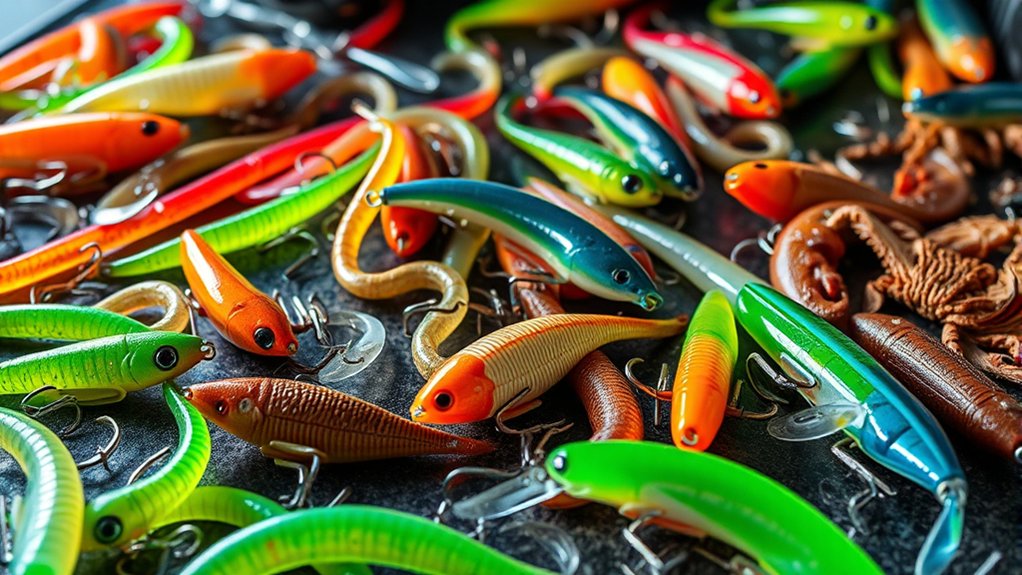
Soft plastics are a game-changer for anglers because they offer many rigging techniques that let you adapt to different fishing conditions.
Their ability to mimic worms, minnows, crawfish, insects, and other prey makes them especially effective in clear to moderately stained waters. They also work well when fish are pressured and may ignore louder, faster lures.
Versatile Rigging Techniques
When it comes to fishing with soft plastics, versatile rigging techniques can make all the difference in your success. Here are four effective methods to consider:
- Texas Rigging: Slide a weight and hook onto your line to fish through heavy cover with fewer snags.
- Carolina Rigging: Position a weight above a swivel, allowing your soft plastic to move freely, which is useful for covering larger areas and detecting subtle bites.
- Wacky Rigging: Hook your soft plastic through the middle to create a natural, fluttering action that mimics struggling prey.
- Adjust Weight and Hook Size: Experimenting with different weights and hook sizes can improve the effectiveness of your soft plastics in different depths and conditions.
Mimicking Natural Movements
Successfully rigging soft plastics opens the door to mimicking natural movements that entice fish. These lures come in various shapes, sizes, and colors, allowing you to imitate the appearance and actions of real prey.
Techniques like Texas or Carolina rigging enhance their adaptability across different environments. When you present soft plastics with subtle movements, you can trigger the predatory instincts of fish, especially in clear to moderately stained waters.
Target species like Largemouth Bass, Smallmouth Bass, Walleye, and Crappie are often responsive to this realistic presentation. By varying your retrieval methods, you can create an illusion that’s hard for fish to resist, boosting your chances of a successful catch.
Soft Plastic Color and Size Tips
For clear water, start with natural shades like green pumpkin, watermelon, smoke, or shad. For stained water, try darker colors such as black and blue, or brighter colors such as chartreuse, white, or pearl. Match the size to the forage. Small baits often work better when fish are pressured, while larger baits can attract bigger predators.
Pro Tip: When fish follow but do not bite, downsize your soft plastic or slow the retrieve. A smaller, more natural presentation can turn followers into strikes.
Crankbaits: Diving Into Action
Crankbaits are a game-changer for anglers looking to mimic the natural movements of baitfish, crawfish, or other prey. These versatile lures dive and wobble, helping you cover water quickly and find active fish.
Here’s why you should consider using crankbaits on your next outing:
- Variety: They come in various shapes, sizes, diving depths, and colors, allowing you to match conditions and target species.
- Seasonal Efficiency: Crankbaits can work from spring through fall, especially when fish are active in cool to warm water.
- Structure-Friendly: They are useful around rock piles, points, stumps, docks, and sunken trees.
- Feeding Frenzy: Use them during active feeding periods, especially early morning and late evening.
Target species include Largemouth Bass, Smallmouth Bass, Pike, Walleye, Trout, and Salmon.
With the right crankbait, you’ll dive into action and increase your fishing success.
How to Choose Crankbait Depth
Crankbaits are usually designed to run at specific depths. Pick a shallow-diving crankbait for flats, riprap, and shallow cover. Choose a medium-diving crankbait for points, weed edges, and mid-depth structure. Use deep-diving crankbaits when fish are holding on ledges, drop-offs, or deeper rocky areas.
A good rule is to choose a crankbait that occasionally touches the bottom or bumps cover. That contact can create sudden deflections, which often trigger reaction strikes.
Spoons: The Lure of the Wobble
Spoons are a must-have for many anglers because their curved design creates an enticing wobble that can mimic injured baitfish.
You can adjust your retrieval speed to match fish activity, making them effective in many conditions and for targeting species like Bass, Walleye, Trout, Pike, and Crappie.
With their reflective flash and simple design, spoons are useful whether you’re just starting out or looking to add a reliable lure to your fishing setup.
Design and Features
The unique design of spoons makes them a favorite among anglers. Their oval or curved shape creates a side-to-side wobble that can mimic injured baitfish and draw in predators.
Here are some key features that make spoons stand out:
- Adjustable Wobble: Vary your retrieval speed to create different movements that entice fish at different activity levels.
- Reflective Flash: Their shiny surfaces can attract predatory fish in clear to slightly stained waters.
- Versatility: Spoons target a wide range of species, including Bass, Pike, Walleye, Trout, and Crappie.
- Seasonal Effectiveness: They can work well in colder months when fish hold deeper and respond to flash.
Effective Retrieval Techniques
When using spoons, mastering effective retrieval techniques can improve your fishing success. Spoons create a distinctive side-to-side wobble that mimics injured baitfish and attracts predatory species.
Start with a steady retrieval pace, then mix in pauses or sudden jerks to create erratic motions. Adjust your retrieval speed to manipulate the wobble effect, keeping in mind that slower speeds can be more enticing when fish are sluggish.
In colder months, when fish may be deeper, use the reflective flash of spoons in clear to slightly stained waters. Experimenting with different depths and speeds can help you discover what works best in your fishing conditions, ultimately increasing your catch rates.
Stay adaptable, and you’ll find the best technique for your next outing.
Target Species and Conditions
Although many lures can attract fish, few rival the simplicity and usefulness of spoons, particularly for species like Bass, Pike, Walleye, Trout, and Crappie.
Their unique side-to-side wobble mimics injured baitfish, making them appealing to predators.
Here are key conditions to evaluate when using spoons:
- Water Clarity: They can be effective in clear to slightly stained waters because of their reflective flash.
- Seasonal Timing: They can be productive in colder months when fish stay deeper.
- Retrieval Speed: Varying your speed can create erratic action and entice more strikes.
- Versatility: They can work in freshwater and saltwater when matched to the right species and size.
With these factors in mind, you’ll maximize your fishing success with spoons.
Buzzbaits: Creating a Commotion
Buzzbaits are a game-changer for anglers looking to create a commotion on the water’s surface. These lures combine noise, vibration, and disturbance, making them particularly effective for Largemouth Bass. As you retrieve a buzzbait, the spinning blade churns the water, mimicking prey in distress and enticing predatory fish to strike.
They shine in warmer conditions, especially during early mornings or late evenings when fish are active and feeding near the surface. Buzzbaits excel in heavy cover areas, like lily pads, grass edges, shallow wood, and submerged logs, where fish often lie in ambush.
But it doesn’t stop with bass. Their loud presence and erratic action can attract other predators, including Pike and Musky.
When Buzzbaits Work Best
Use buzzbaits when fish are willing to strike upward. Warm water, low light, wind-blown banks, shallow grass, and active baitfish can all make buzzbaits more effective. Keep the retrieve steady enough to keep the blade on the surface, but be ready to pause or change direction around key cover.
Plugs: Diving Deep Into Tactics
Plugs are an essential tool in any angler’s arsenal because they can effectively mimic baitfish and entice predatory species.
These lures come in various sizes, shapes, buoyancy styles, and swimming actions, making them useful for different fishing scenarios.
Here are some tactics to maximize your success with plugs:
- Diving Depth: Choose plugs designed to dive to specific depths, targeting fish near the bottom or in mid-water columns.
- Active Feeding Periods: Fish are often more willing to strike during early morning or late evening, so focus your efforts during those periods.
- Structure Fishing: Cast around rocks, drop-offs, weed edges, docks, and submerged wood where predatory fish ambush prey.
- Vary Retrieval Techniques: Experiment with different speeds, pauses, twitches, and sweeps to replicate the natural behavior of baitfish.
With these strategies, you’ll enhance your plug fishing experience and land more fish.
Floating, Sinking, and Suspending Plugs
Floating plugs rise when you pause, which can help them crawl over cover. Sinking plugs drop through the water column and can reach deeper fish. Suspending plugs hold their depth during a pause, making them useful when fish follow a lure but need extra time to commit.
Tips for Effective Lure Selection
Selecting the right lure can make all the difference in your fishing success. Start by considering your target fish species; many fish have preferences for certain lure sizes, colors, profiles, and actions.
Match your lure’s color and pattern to local prey to improve visibility and realism in both clear and murky waters. Don’t hesitate to experiment with various lure types, such as spinners, jigs, soft plastics, spoons, or crankbaits, to see what works best as conditions change with time of day and water temperature.
Also, pay attention to the depth where the fish are swimming. Choose lures with the right buoyancy or diving depth so they run at the ideal level.
Finally, tap into local knowledge from bait shops, fishing reports, or experienced anglers. Understanding local conditions and fish behavior can greatly boost your lure’s effectiveness. By following these tips, you’ll be well on your way to reeling in a better catch.
Lure Color, Size, and Action Guide
Lure selection becomes easier when you separate it into color, size, and action. These three details control what fish see, feel, and chase.
- Color: Use natural shades in clear water and high-contrast or bright colors in stained water.
- Size: Match the lure to the size of the baitfish or prey in the area. Downsize when fish are pressured or bites are light.
- Action: Use subtle action in cold or clear water. Use louder action, more vibration, or more flash when fish need help finding the lure.
- Depth: Keep the lure in the strike zone. A great lure at the wrong depth may never get noticed.
Seasonal Lure Selection
Season affects where fish hold and how aggressively they feed. You can improve your odds by choosing lures that match those seasonal patterns.
- Spring: Try jigs, soft plastics, spinnerbaits, and shallow crankbaits around warming shallows, vegetation, and spawning areas.
- Summer: Use buzzbaits early and late, then switch to deeper crankbaits, jigs, spoons, or soft plastics as fish move deeper.
- Fall: Fish often chase baitfish, so crankbaits, spinnerbaits, spoons, and plugs can work well.
- Winter: Slow down with jigs, spoons, suspending plugs, and subtle soft plastics. Fish may want a slower presentation.
Warning: Always check local fishing regulations before using multiple hooks, treble hooks, scented baits, or live bait with artificial lures. Rules can vary by state, waterbody, season, and species.
Common Lure Selection Mistakes
Even experienced anglers make lure mistakes. The good news is that most of them are easy to fix once you know what to watch for.
- Choosing by favorite lure only: Your confidence lure may not match the current conditions.
- Ignoring depth: Fish often hold at a specific depth. Match your lure to that zone.
- Changing too many things at once: Change one factor at a time so you can learn what worked.
- Using too large of a lure: Big lures can attract big fish, but downsizing can save a slow day.
- Fishing too fast: Slow retrieves often work better in cold water, after cold fronts, or when fish are pressured.
Frequently Asked Questions
How do you know which lure to use when fishing?
Choose a lure by looking at your target species, water clarity, depth, cover, season, and local baitfish. In clear water, start with natural colors and subtle action. In stained water, use more flash, vibration, contrast, or sound. If fish do not respond, change retrieve speed before switching lures.
What is the Perfect 10 fishing lure?
“Perfect 10” commonly refers to a deep-diving hard bait or crankbait-style lure designed to reach about 10 feet, depending on line size, retrieve speed, and casting distance. Anglers often use this type of lure to target fish such as bass and walleye when they are holding in mid-depth water.
How do you select a lure?
To select a lure, begin with the fish species you want to catch. Then match the lure size to local prey, choose a color based on water clarity, and pick a lure that reaches the right depth. Finally, adjust your retrieve speed and action until the fish respond.
What is the 100000 dollar lure?
The “100000 dollar lure” is usually used as a phrase or idea rather than a standard lure category. It can refer to a rare collectible lure, a custom-made lure, or the idea that the right lure at the right time could help land a valuable trophy fish. For everyday fishing, focus on proven lure selection instead of hype.
What lure color should you use in muddy water?
In muddy or stained water, use colors that create contrast, such as black, blue, chartreuse, white, orange, or bright patterns. Lures with vibration, rattles, blades, or strong silhouettes can also help fish find the bait.
What is the best all-around fishing lure for beginners?
A beginner-friendly lure depends on the species, but soft plastics, inline spinners, small crankbaits, and jigs are good starting points. They are versatile, easy to fish, and can catch many freshwater species when matched to the right size and depth.
Conclusion
In fishing, mastering lure selection starts with observation. Look at the water, identify the likely forage, choose a lure that reaches the right depth, and adjust your retrieve until fish respond. You do not need every lure on the market. You need a smart system for choosing the right one.
Jigs, spinnerbaits, soft plastics, crankbaits, spoons, buzzbaits, and plugs all have a place in your tackle box. When you understand what each lure does best, you can fish with more confidence and adapt faster when conditions change. The right lure at the right time can turn a quiet day on the water into an unforgettable adventure.
Sources
- Take Me Fishing — general fishing lure types and tackle guidance.
- Texas Parks and Wildlife Department — recreational fishing information and regulation awareness.
- New York State Department of Environmental Conservation — fishing guidance and regulation reminders.
- Florida Fish and Wildlife Conservation Commission — fishing resources and responsible angling information.