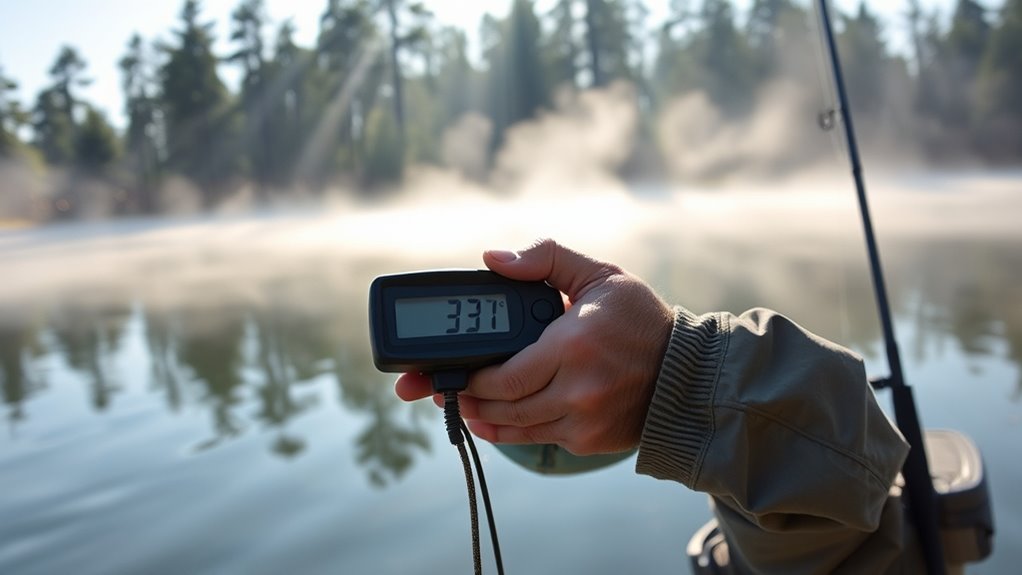
Water temperature can make or break a fishing trip because it affects fish metabolism, oxygen demand, feeding windows, and where fish hold in the water column. Instead of fishing every spot the same way, use temperature as a clue. Check shallow water, deeper water, shade, current, and seasonal patterns so you can match your depth, lure speed, and release practices to the conditions.
Quick Answer
The best water temperature for fishing depends on the species. Many freshwater fish feed well in moderate water, but trout often prefer cooler water, bass become more active as water warms, and catfish thrive in warmer conditions. Check temperature at several depths, then fish the most comfortable, oxygen-rich zones.
Key Takeaways
- Fish are cold-blooded, so water temperature directly affects their digestion, movement, and feeding mood.
- Cold water usually calls for slower retrieves, smaller movements, and deeper or more stable areas.
- Warm water can improve feeding, but extreme heat lowers dissolved oxygen and increases fish stress.
- The best depth changes by season, time of day, sunlight, current, oxygen, and the species you target.
- Catch and release needs extra care in warm water because fish recover more slowly under heat stress.
At a Glance
| Time Required | 1 to 3 minutes to check temperature before you start, then repeat during major depth or location changes. |
| Difficulty | Easy for bank anglers, kayak anglers, and boat anglers. |
| Tools Needed | Fishing thermometer, sonar temperature reading, mapping app, local fishing report, or handheld temperature probe. |
| Cost | Low. A basic fishing thermometer is usually enough, though sonar makes depth checks easier. |
The Importance of Water Temperature in Fishing
Understanding water temperature is essential for any angler who wants to improve fishing success. Fish do not warm or cool themselves like people do. Their body temperature follows the water around them, so even small changes can affect how quickly they digest food, chase prey, and recover after being caught.
Many freshwater fish feed best in comfortable temperature ranges, often from the mid-50s through the low-80s°F depending on species. That range is not a universal rule, though. Trout, salmon, bass, panfish, walleye, and catfish all respond differently, so the best temperature depends on what you are targeting.
Water temperature shapes fish behavior, but oxygen, depth, light, current, and food sources decide where fish become easiest to catch.
When the water is cold, fish often become lethargic. They may still eat, but they usually do not chase fast-moving lures for long distances. In those conditions, slower presentations, smaller movements, and precise casts often work better.
Warmer water can increase activity, especially in spring and early summer. However, very warm water can also reduce dissolved oxygen and raise stress. When that happens, fish may slide into shade, deeper water, current, springs, vegetation edges, or other areas with cooler, more oxygen-rich conditions.
You’ll often find ideal fishing spots where temperature changes meet structure. Examples include creek mouths, windblown banks, shaded docks, drop-offs, spring-fed pockets, weed edges, and the upper edge of a thermocline. By monitoring temperature, you can stop guessing and start choosing water that fits the fish’s needs.
How Temperature Affects Fish Behavior
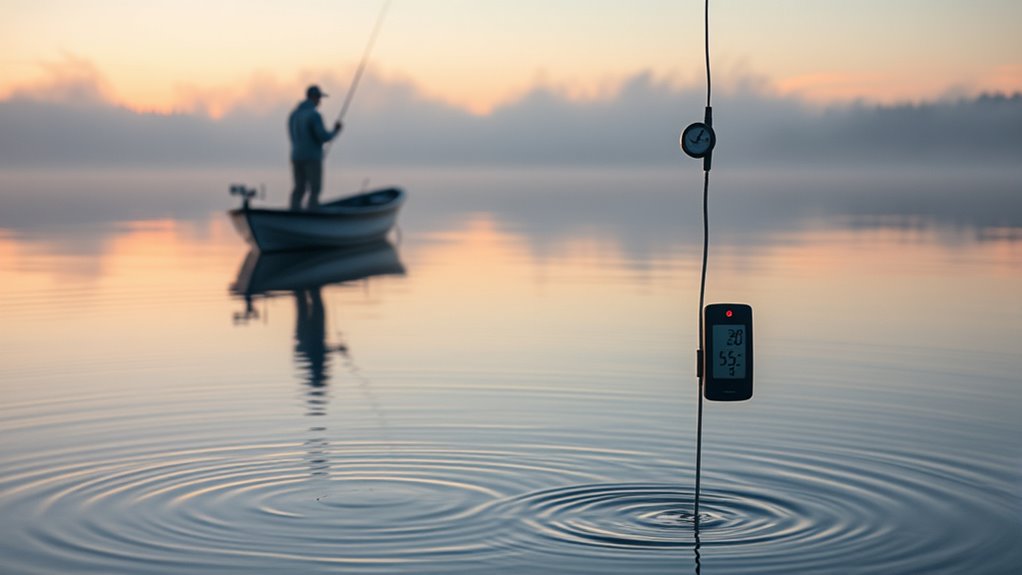
As you plan your next fishing trip, remember that temperature plays an essential role in determining fish behavior. Fish are cold-blooded, so their feeding and metabolism change as the water warms or cools.
Understanding these patterns can greatly improve your fishing success because you can match your location and retrieve speed to the fish’s energy level.
- Cold water slows digestion, so fish often feed in shorter windows.
- Moderately warm water can boost feeding, especially near baitfish and shallow cover.
- Overheated water can make fish sluggish because oxygen levels often drop.
- Preferred temperature ranges vary by species, season, and local habitat.
- Sudden temperature shifts can push baitfish and gamefish to deeper or more stable water.
Temperature also affects strike style. In cold water, bites may feel light because fish often nip or pin bait instead of crushing it. In comfortable water, strikes may become more aggressive. In hot water, fish may feed early and late, then rest during the brightest, warmest part of the day.
Pro Tip: Do not rely on one surface reading. Check water near the bank, near shade, near current, and at different depths when possible. A two-degree change can matter when fish are grouped tightly.
Understanding Oxygen Levels and Their Impact
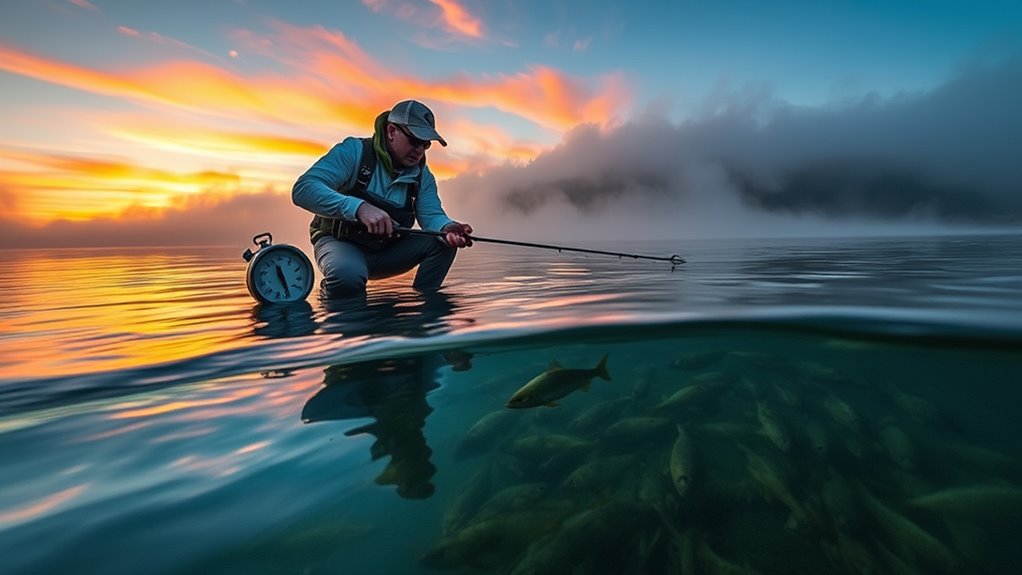
Understanding oxygen levels in water is essential for successful fishing because fish rely on dissolved oxygen to breathe and recover. Temperature matters here, too. Cooler water generally holds more dissolved oxygen than warm water, which is why summer heat can make fish harder to catch and harder to release safely.
Wind, current, wave action, aquatic plants, inflowing water, and weather changes can all affect fish activity. Instead of thinking about temperature alone, look for water that combines comfortable temperature with fresh oxygen and nearby food.
Oxygen’s Role in Fish
Oxygen levels in water play an essential role in the health and behavior of fish, influencing activity, feeding, and survival.
Dissolved oxygen is crucial for respiration. When oxygen levels are higher, many fish can move, feed, and recover better. Here’s why you should pay attention:
- Cold water usually holds more dissolved oxygen than warm water.
- Areas with vegetation, wind, current, and inflows often provide oxygen-rich environments.
- Fish species vary in their tolerance to low oxygen levels.
- Better fishing conditions often develop where oxygen, food, and comfortable temperature overlap.
During hot weather, shallow backwaters, stagnant ponds, and areas with heavy decaying vegetation may lose oxygen. In those moments, fish often move toward deeper water, current, springs, or windblown banks.
Barometric Pressure Effects
Barometric pressure can influence fishing, but it does not work like a simple on-off switch. Pressure changes often come with changing weather, wind, clouds, temperature, and light. Those combined conditions can affect fish behavior more than pressure alone.
Stable conditions can help fish settle into predictable feeding patterns. A falling pressure trend before a front may trigger feeding for some species, while a strong cold front can slow the bite. After the front passes, bright skies, cooler water, and changed wind patterns may push fish deeper or tighter to cover.
Use barometric pressure as one clue in your fishing strategy, not as the only reason to choose a spot. Pair it with water temperature, oxygen clues, bait movement, and seasonal patterns for a more reliable plan.
Current and Wave Action
As you explore the water, you’ll notice that current and wave action can improve oxygen levels and position baitfish, which directly influences fish behavior.
Moving water can make fish more active and ready to feed, especially when it pushes bait against structure or creates an easy ambush point. Here’s why you should pay attention to these factors:
- Current creates turbulence, which helps oxygen mix into the water.
- Wave action can stir up food and reveal the presence of baitfish.
- Windblown banks often concentrate plankton, baitfish, and feeding predators.
- Areas where currents meet rocks, weeds, docks, points, or laydowns often hold feeding fish.
- Oxygen-rich current can be especially important during hot summer conditions.
Understanding these dynamics can improve your fishing experience, allowing you to locate prime spots with better oxygen, cover, and food.
Seasonal Temperature Changes and Fishing Strategies
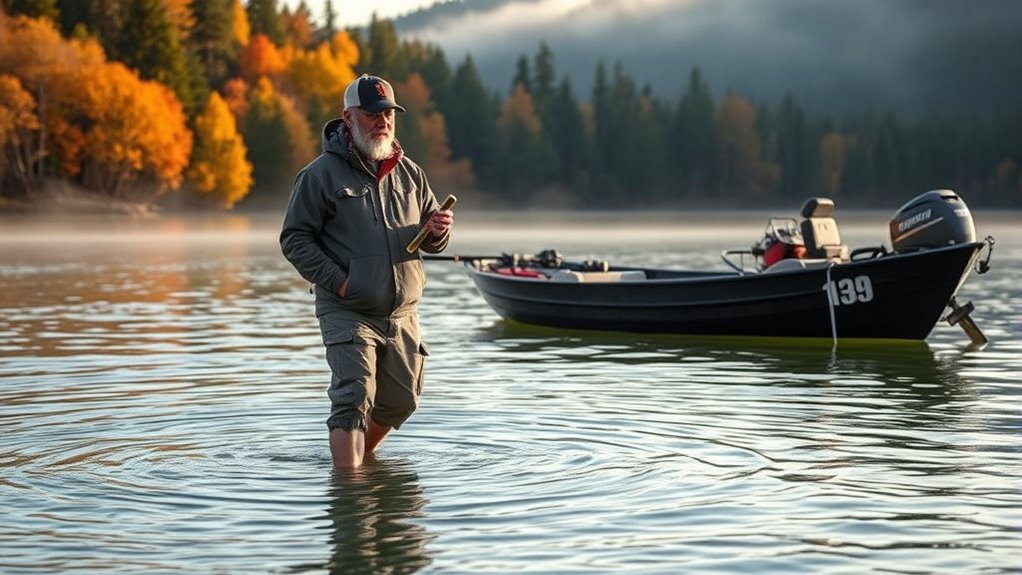
Understanding how seasonal temperature shifts affect fish behavior can greatly improve your fishing success. As water conditions change with the seasons, fish move, feed, spawn, and rest in different areas.
Seasonal temperature shifts influence fish location, feeding speed, lure choice, and the safest way to handle released fish.
In spring, warming water often pulls baitfish and gamefish toward shallower areas. Bass may stage near points, creek channels, flats, and protected coves before spawning. Trout may feed well in cool, oxygen-rich water, especially during stable weather.
In summer, early morning and evening often produce better action because shallow water is cooler and fish feel safer. During midday heat, many fish retreat to shade, vegetation, current, deeper breaks, or the thermocline if one is present.
In fall, cooling water can restart aggressive feeding as baitfish move and fish prepare for winter. Windblown banks, creek mouths, points, and shallow flats can become productive again.
In winter, many species slow down and hold near deeper, more stable water. During colder months, focus on deeper areas during the morning, then check sun-warmed shallows later in the day if the weather has been stable.
Keep an eye on sudden temperature drops. After a cold front, slower fishing techniques often work better for lethargic fish. Understanding local temperature dynamics, especially thermocline effects, can help you identify hotspots where fish can find the right blend of comfort, oxygen, and food.
Identifying Preferred Temperature Ranges for Species
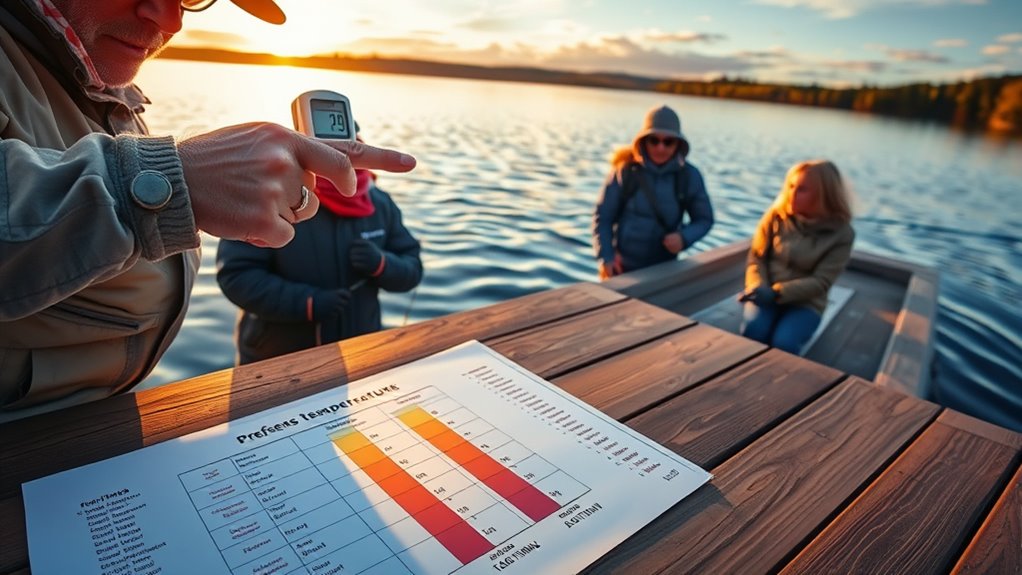
To maximize your fishing success, you need to understand the preferred temperature ranges for different species. These ranges are general guidelines, not hard rules, because local strain, water clarity, oxygen, depth, forage, and season can change fish behavior.
For example, cold-water species like trout usually prefer cooler water, while bass, bluegill, crappie, and catfish often become more active in warmer environments.
Temperature Preferences by Species
When fishing, knowing the temperature preferences of different species can make a major difference in your success.
Understanding these ranges allows you to optimize your fishing strategy and target species when they’re more likely to feed.
Here are some key temperature ranges to keep in mind:
- Trout: Often feed well around 50°F to 65°F, with warm-water stress increasing as temperatures climb.
- Largemouth Bass: Often become active in warmer water, commonly around 65°F to 85°F.
- Smallmouth Bass: Often feed well in moderate water, commonly around 60°F to 75°F.
- Catfish: Often prefer warmer water, commonly around 75°F to 85°F.
- Bluegill and Panfish: Often become active in mild to warm water and may move shallow during stable conditions.
- Walleye: Often prefer cooler, low-light conditions and may feed shallower at dawn, dusk, night, or on cloudy days.
Seasonal Temperature Variations
While seasonal temperature changes can impact fish behavior considerably, being aware of these variations allows you to adjust your fishing tactics effectively.
Different fish species thrive in specific temperature ranges. For instance, cold-water species like trout often do best in cooler water, while warm-water species, such as bass and catfish, usually become more active as temperatures rise. Smallmouth bass in northern regions may remain active in cooler water than largemouth bass, showing how geography and habitat matter.
During colder months, many species show reduced feeding activity when temperatures dip below their preferred range. They may still bite, but they often need slower presentations and better lure placement.
Spawning seasons also connect closely to water temperature. Bass, crappie, bluegill, trout, and salmon all use temperature cues along with daylight, flow, and habitat. Knowing when your target species usually spawns can help you choose the right depth, location, and release approach.
Impact on Feeding Behavior
Understanding seasonal temperature variations helps you recognize how temperature directly impacts fish feeding behavior.
Water temperature affects the activity levels of various fish species, and knowing these preferences can improve your fishing success.
- Many fish become more active as water warms into their comfort range.
- Cold-blooded species like trout slow down and feed less when water gets too cold or too warm.
- Warm-water species such as largemouth bass often feed more aggressively in mild to warm water, especially near cover and bait.
- The thermocline can be important in lakes because fish may gather near comfortable temperature and oxygen layers.
- When water gets extremely warm, fish may feed during low-light hours and rest during the hottest part of the day.
Techniques for Fishing in Cold Water Conditions
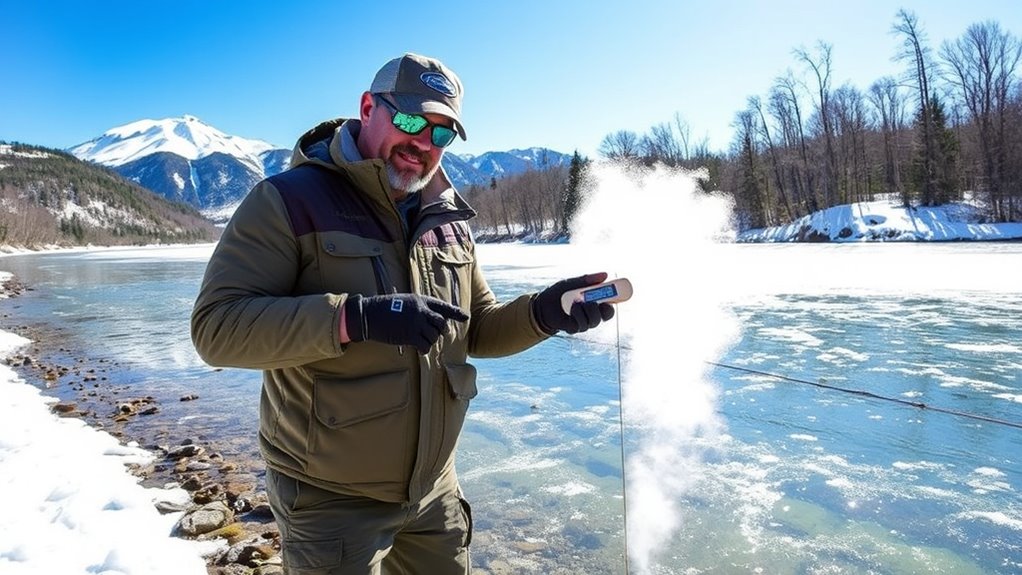
As temperatures drop, fish often become less active because their metabolism slows. That means you’ll need to adjust your fishing techniques to increase your chances of success.
Focus on deeper waters, steep breaks, channel swings, points, rock piles, brush, and other stable areas during cold water conditions. Fish often gather where temperature changes are less dramatic and food is still available.
Target stable water, slow your retrieve, and keep your lure in the strike zone longer when fish are cold and reluctant to chase.
Use slower retrieval techniques with lures to tempt lethargic fish. Slow-dragging soft plastics, suspending jerkbaits, hair jigs, blade baits, finesse worms, small swimbaits, and live bait can all work when matched to local rules and target species.
Pay attention to water temperature fluctuations. Fish may be more active during brief warming trends, especially in the afternoon when shallow rocks, dark bottoms, docks, and protected coves absorb heat.
Don’t forget to target areas with current or structure, like drop-offs, bridge pilings, rocky points, timber, weed edges, and vegetation. These places can hold bait and give fish an easy ambush position even when they are moving slowly.
Note: In cold water, a light bite can feel like added weight, a tiny tick, or a sudden slack line. Watch your line closely and keep contact with your lure.
Strategies for Fishing in Warmer Temperatures
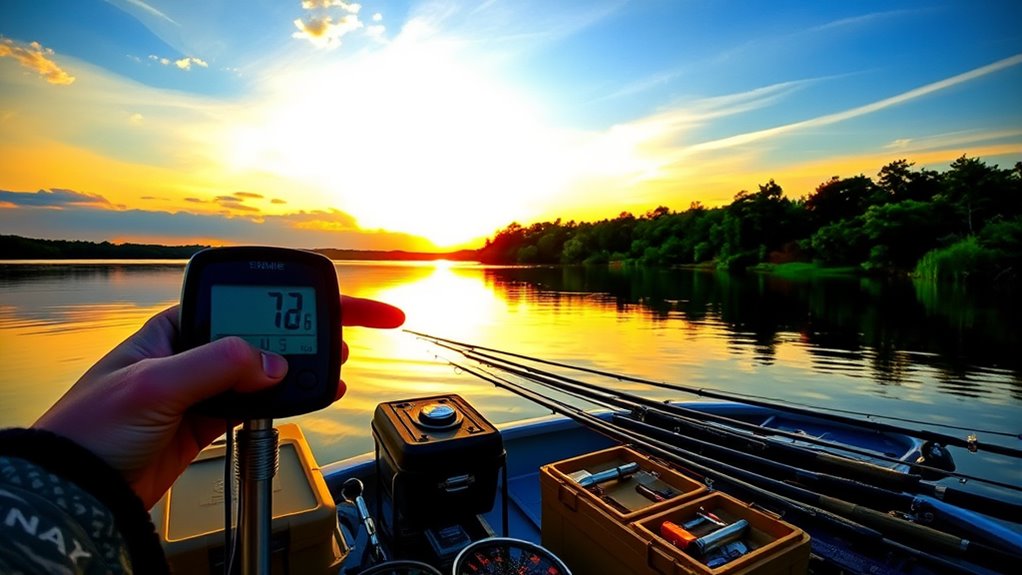
When the water warms into a species’ comfort zone, fish become more active and ready to feed, especially during the early morning and late afternoon hours.
To make the most of these warmer conditions, consider these strategies:
- Focus on shallow areas during low light when fish hunt for food.
- Use lures that mimic natural prey, such as topwater baits, soft plastics, spinnerbaits, swim jigs, and crankbaits.
- Look for shade, docks, laydowns, grass, lily pads, and vegetation because these spots provide cover from heat and predators.
- During the hottest parts of the day, target deeper, cooler water where fish may retreat.
- Fish current, windblown banks, creek mouths, and aerated areas when oxygen becomes a limiting factor.
Warm water does not always mean fast fishing. If the water becomes too hot, fish may feed in short bursts. In that case, slow down, fish shade carefully, and avoid stressing fish during release.
Warning: Warm water can increase fish stress during catch and release, especially for trout and other cool-water species. If fish struggle to recover, switch species, fish cooler water, or stop targeting them until conditions improve.
Monitoring Water Conditions for Better Catch Rates
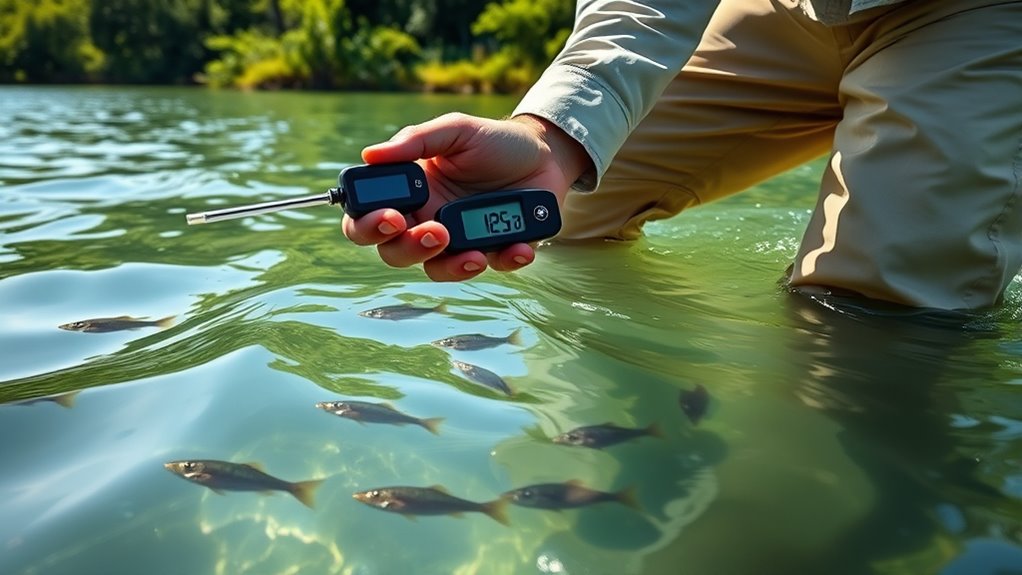
Monitoring water conditions is essential for enhancing your catch rates because fish behavior is heavily influenced by temperature, oxygen, clarity, light, and current. Regularly checking the water temperature can help you identify when fish are more active and where they are likely to hold.
Use a temperature gauge, sonar reading, or local fishing report to find ideal fishing spots. Surface readings help, but they do not tell the full story. Deeper water may be cooler, warmer, or lower in oxygen depending on the season and lake structure.
Throughout the day, observe temperature fluctuations. As shallow waters warm, baitfish and gamefish may move into them to feed. As the sun gets high, those same fish may pull back to shade, weeds, docks, or deeper edges.
Be wary of sudden temperature drops that can lead to lethargy. After a cold front or heavy runoff, you may need to use slower fishing techniques, smaller lures, and more precise casts to entice bites.
Track water clarity alongside temperature. Clear water usually calls for subtle bait presentations, lighter line, natural colors, and longer casts. Murky water may allow bolder colors, vibration, scent, and more aggressive tactics.
How to Check Water Temperature Accurately
You can check water temperature in several simple ways. A basic fishing thermometer works from the bank, dock, kayak, or boat. Lower it below the surface and give it enough time to stabilize before reading it.
If you use sonar, remember that many units read temperature near the transducer, not at every depth. That surface or near-surface reading is useful, but it may not show what fish experience 10, 20, or 30 feet down.
- Check the surface near the bank before you start fishing.
- Check shaded water and sunny water separately.
- Compare shallow flats with deeper breaks.
- Check inflows, springs, current seams, and windblown banks.
- Repeat your checks if clouds, wind, rain, or sun change during the trip.
Write down your best catches with the water temperature, time, depth, lure, and weather. Over time, your own fishing log can become more useful than any generic chart.
Reading the Thermocline
A thermocline is a layer where water temperature changes quickly with depth. In many lakes, fish may hold above or near this layer if oxygen is better there. During summer, water below the thermocline can sometimes hold less oxygen, even if it feels cooler.
If you use sonar, look for baitfish, suspended fish, and consistent depth bands. If fish keep appearing at the same depth over deep water, temperature and oxygen may be part of the reason.
For bank anglers, thermocline readings are harder to measure, but you can still use clues. Creek mouths, points near deep water, shaded banks, and windblown areas often give fish access to different temperatures without forcing them to move far.
Best Practices for Catch and Release in Varying Temperatures
Understanding the impact of water temperature on fish behavior is key to successful catch and release practices. As temperatures rise, fish often experience higher stress levels, making careful handling critical for survival.
Here are some tips to keep in mind:
- Minimize handling time and use barbless hooks when practical for easier release.
- Avoid targeting heat-stressed trout and other cool-water fish during very warm conditions.
- Keep fish in the water as much as possible before release.
- Wet your hands before handling to protect the fish’s slime coating.
- Use rubberized landing nets instead of rough mesh when possible.
- Support larger fish horizontally instead of hanging them by the jaw.
- Revive fish gently in clean, moving water until they can swim away under their own power.
Warm water makes good handling even more important. A fish that fights hard in low-oxygen water may need longer to recover. If fish keep rolling, floating, or struggling after release, change locations, target a hardier species, or stop fishing until conditions improve.
Common Temperature Mistakes Anglers Make
Many anglers check the weather but ignore the water. Air temperature matters, but water changes more slowly and often tells you more about fish behavior.
- Using one temperature rule for every species: Trout, bass, catfish, walleye, panfish, and salmon do not share the same comfort zone.
- Trusting only the surface reading: Fish may hold much deeper than your thermometer reading suggests.
- Fishing too fast in cold water: Slow fish often need slower presentations.
- Ignoring oxygen in hot water: Warm water may look active at the surface while fish hold near current, shade, or deeper breaks.
- Missing afternoon warmups: In cold seasons, a small afternoon temperature rise can create the best bite of the day.
- Overlooking runoff: Rain can cool, warm, muddy, or oxygenate water depending on the season and location.
A better approach is to treat temperature as one part of a pattern. Combine it with bait movement, structure, weather stability, water clarity, and the fish species you want to catch.
Frequently Asked Questions
What water temperature is best for fishing?
The best water temperature for fishing depends on the species. Many freshwater fish feed well in moderate water, while trout prefer cooler conditions and bass or catfish often become more active in warmer water. Use species-specific ranges instead of one universal number.
What is the 120 rule for water temperature?
The 120 rule is a common trout-fishing guideline that adds air temperature and water temperature together. When the combined number rises above 120°F, trout may face more stress during catch and release. It is a caution rule, not a guarantee of safe or unsafe fishing.
How do you check water temps for fishing?
Use a fishing thermometer, sonar temperature reading, or local fishing report. Check more than one spot because shallow water, shaded water, current, and deeper areas can all have different temperatures. Repeat your checks as sun, wind, rain, and cloud cover change.
How deep are fish in 50-degree water?
In 50-degree water, many fish hold in deeper, more stable areas, often near breaks, channels, vegetation, rocks, or wood. A common starting range is 15 to 30 feet in lakes, but depth depends on species, clarity, oxygen, sunlight, and available forage.
Do fish bite better when water is warming or cooling?
Fish often bite better during a gradual warming trend in cold seasons and during cooling periods in hot seasons. Sudden temperature changes can make fish harder to catch, while stable conditions usually help them settle into predictable feeding patterns.
Is surface temperature enough to find fish?
Surface temperature is useful, but it is not enough by itself. Fish may hold deeper where temperature and oxygen are more comfortable. Check multiple depths when possible, and watch for baitfish, current, shade, vegetation, and structure.
Conclusion
Water temperature gives you one of the clearest clues about where fish are and how they will feed. When you understand how temperature affects metabolism, oxygen, depth, and seasonal movement, you can fish with a plan instead of guessing.
Use cooler conditions to slow down and target stable water. Use warming trends to explore shallow feeding areas. During hot weather, focus on shade, current, oxygen, and safe release practices. As seasons shift, adjust your approach with them.
The more you track water temperature, the better your patterns become. Check it, record it, compare it with your catches, and let the water guide your next cast.

