Last updated: August 2026
Cold weather, towing, heavy trucks, and low-speed cruising can expose a weak torque curve fast. A camshaft will not fix ignition, fuel, compression, or cooling problems, but the right Ford 460 cam can help your big block Ford make power where you actually use it.
For most 460 Ford truck owners, the best cam is one that builds low- and mid-range torque without demanding a race converter, steep gears, or constant tuning. This guide compares four COMP Cams hydraulic flat tappet profiles for Ford 429/460 engines, covering towing, daily-driver, EFI-friendly, and aggressive street builds.
Quick Verdict
Best overall for most 460 trucks: COMP Cams 34-235-4 Xtreme 4×4. Strong mid-range torque, COMP’s own notes call it a good match for heavy towing and daily driving, and it suits stock-converter builds better than the more aggressive profiles.
Best smooth-idle choice: COMP Cams 34-225-4 High Energy. Pick it when you want better torque with calmer street manners.
Best EFI-friendly choice: COMP Cams 34-255-5 Xtreme Energy Computer Controlled. COMP lists this grind as working with a stock speed-density computer, and it is the only grind here listed that way.
Best for sound: COMP Cams 34-600-5 Thumpr. Choose it only if you want a choppy idle and you are willing to match converter, gearing, compression, and valvetrain.
Fitment and Compatibility Note Before You Buy
All four cams here are hydraulic flat tappet camshafts for Ford 429/460 big-block engines. Ford’s 429/460 used hydraulic flat tappet cams from the factory, so this is the correct cam type for a stock big block Ford. Read these points before ordering:
- Listed engine family: COMP lists these part numbers for Ford 429/460 c.i. 8-cylinder engines, roughly 1968–1995. Some kit listings for the same grinds show 1968–1994. If you have a 1996–1997 truck, confirm fitment with the seller or COMP before buying.
- Only one of these is an EFI computer-controlled grind. If your 460 still runs the factory speed-density EFI computer, the 34-255-5 is the grind COMP lists for that use. The 34-235-4, 34-225-4, and 34-600-5 are not listed as computer-controlled profiles.
- Lifters are not included. These Amazon listings are camshaft only. A new flat tappet camshaft must be installed with new matching lifters — never reuse old ones. COMP also sells cam-and-lifter kits and larger kits under related part numbers if you would rather buy it all together.
- Aftermarket valve springs are required. COMP lists “valve springs required: yes” for every one of these grinds. Do not assume tired factory springs will work.
- These are cast iron cams. Use the correct iron or steel distributor gear. If your engine currently runs a roller cam with a bronze or composite gear, that gear must be changed to match a cast iron camshaft.
- Published lift figures assume the factory 1.73:1 rocker ratio. Some retailer listings quote slightly different lift numbers for the same cam because of rocker ratio assumptions.
- Emissions and legality: these grinds do not carry a CARB Executive Order number. They are generally listed as exempt only for race or competition-only vehicles, and some sellers will not ship certain part numbers to California. Check your state and local rules before buying for a street-driven truck. A California Proposition 65 warning applies to these parts.
- Also confirm: engine year, lifter type, compression ratio, converter stall, rear gear ratio, exhaust, EFI or carb setup, pushrod length, rocker preload, valve spring installed height, and retainer-to-valve-seal clearance.
Top Picks
| Category | Product | Best For | Check Price |
|---|---|---|---|
| 🏆 Best Overall | Comp Cams 34-235-4 Xtreme 4×4 218/226 | Towing, daily driving, stock converter builds | Check Price on Amazon |
| 🚚 Best Smooth Daily Driver | COMP Cams 34-225-4 High Energy 212/212 | Smooth idle, towing, mild street use | See Today’s Price on Amazon |
| 💡 Best EFI-Friendly | COMP Cams 34-255-5 Xtreme Energy Computer Controlled Hydraulic Flat Cam | Speed-density EFI, stock computer setups | Check Product Details on Amazon |
| 🔊 Best Aggressive Street Sound | Comp Cams 34-600-5 Thumpr 226/241 Hydraulic Flat Cam | Choppy idle, street performance, stronger mid-range | Check Current Amazon Availability |
How We Chose These Cams
You need a cam that matches how you actually use your Ford 460. A cam that sounds great at idle can still feel lazy in a heavy truck if the RPM range, converter, and gearing do not match. Every pick below was screened against COMP’s published catalog data rather than guesswork.
Our method, stated plainly: we have not dyno-tested or hands-on installed these camshafts. Every specification, RPM range, idle description, and compatibility note in this article comes from the manufacturer’s published catalog data and dealer listings for these exact part numbers. Where sources disagree or a claim cannot be confirmed, we say so instead of filling the gap.
- Application match: We only kept cams that COMP lists for Ford 429/460 engines in street, truck, towing, or EFI use. Marine and race-only grinds were excluded because they do not serve this article’s reader.
- RPM range: Lower operating ranges matter more for towing, daily driving, and winter drivability.
- Converter and gearing needs: A cam that works best with a higher-stall converter may not suit a stock truck.
- Idle quality: Smooth or noticeable idle works better for daily use, while choppy idle fits performance builds.
- EFI compatibility: Computer-controlled trucks need a grind COMP lists as compatible with a stock speed-density setup.
- Supporting parts and compression: Every cam here requires new lifters and aftermarket valve springs, and the milder grinds suit the roughly 8:1 to 9:1 compression common in most post-1972 stock 460s. Early 429/460 engines and Cobra Jet variants ran higher compression, so verify your own engine rather than assuming.
- Install requirements: Hydraulic flat tappet cams need correct springs, new lifters, assembly lube, and a proper break-in procedure.
Comp Cams 34-235-4 Xtreme 4×4

If you drive a Ford 429/460 truck and want more usable torque without turning it into a peaky race setup, this is the cam to start with. The 34-235-4 Xtreme 4×4 (grind X4262H, also listed as X4 262H-11) is a hydraulic flat tappet cam with a 1,400–5,600 RPM operating range, 218/226 duration at .050″, 262/270 advertised duration, .505/.515 valve lift, and a 111° lobe separation angle.
That range makes it a sensible fit for towing, hauling, winter driving, and daily use because the power comes in earlier than aggressive street/strip grinds. COMP’s own catalog notes describe it as a good mid-range cam for heavy towing or daily driving with a noticeable idle, and as the largest grind in the Xtreme 4×4 line that still suits a stock converter.
Pick this cam if you want a strong all-around upgrade for a heavy Ford 460 truck. It gives you better mid-range pull while avoiding the biggest drivability compromises of larger profiles. Remember to budget for new lifters and valve springs.
Why You’ll Like It
The problem it solves is simple: a stock 460 feels lazy off idle when it is loaded, and a big street cam makes that worse. This grind moves the torque you already have into the range where a loaded truck actually operates, without forcing a converter or gear change first.
Best For
- Ford 460 trucks used for towing or hauling
- Daily drivers that need better low- and mid-range response
- Builds that still use a stock or mild converter
- Drivers who want a noticeable idle without going too radical
Who Should Avoid It
- Race-only builds that need strong power above 6,000 RPM
- Trucks running the factory speed-density EFI computer, since this is not a computer-controlled grind
- Owners who want a completely stock-smooth idle
- Anyone not prepared to buy new lifters and valve springs
Key Specs and Benefits
- Grind number X4262H, hydraulic flat tappet, cast iron, 1-bolt cam gear
- Broad 1,400–5,600 RPM operating range
- 218/226 duration at .050″, 262/270 advertised, 111° lobe separation
- .505/.515 valve lift at the factory rocker ratio
- Strong mid-range torque for towing and daily driving
- Assembly lubricant included; lifters not included; valve springs required
- Direct-fit hydraulic flat tappet cam for Ford 429/460 engines
Check Current Amazon Availability
COMP Cams 34-225-4 High Energy

The COMP Cams 34-225-4 High Energy (grind 260H, listed as FF 260H-10) is the mildest and most street-friendly pick here. It uses a 1,200–5,200 RPM operating range, 212/212 duration at .050″, 260/260 advertised duration, .484/.484 valve lift, and a 110° lobe separation angle.
That makes it a strong choice for a truck owner who wants better roll-on power without giving up smooth idle quality. COMP positions the High Energy family around street engines in the 8:1 to 9:1 compression range that keep mostly stock components, which describes a lot of unmodified 460 trucks. COMP’s own summary for this grind calls it a good cam for trucks and towing with strong mid-range torque and a smooth idle.
You should still confirm valve springs, new lifters, pushrods, and break-in requirements. Even a mild hydraulic flat tappet cam needs the right supporting parts to live a long service life.
Why You’ll Like It
This is the low-drama option. If your priority is a truck that still idles like a truck, still pulls a trailer smoothly, and does not need a converter or gear change to feel right, the 260H asks the least of the rest of your combination.
Best For
- Mild Ford 460 truck builds
- Towing and daily driving with calmer idle manners
- Owners who want torque without a radical exhaust note
- Mostly stock combinations that need a sensible upgrade
Who Should Avoid It
- Drivers who want a loud, lopey cam sound
- High-RPM performance builds
- Builds that need a wider upper RPM range
- Trucks running the factory speed-density EFI computer, since catalog listings do not show this grind as computer-controlled compatible
Key Specs and Benefits
- Grind number 260H, hydraulic flat tappet, cast iron, 1-bolt cam gear
- Usable 1,200–5,200 RPM operating range
- 212/212 duration at .050″, 260/260 advertised, 110° lobe separation
- .484/.484 valve lift at the factory rocker ratio
- Smooth idle compared with larger profiles
- Assembly lubricant included; lifters not included; valve springs required
- Direct-fit hydraulic flat tappet cam for Ford 429/460 engines
Check Current Amazon Availability
COMP Cams 34-255-5 Xtreme Energy Computer Controlled
The COMP Cams 34-255-5 is the most sensible pick here if your Ford 460 still uses a stock speed-density EFI computer. It is a computer-controlled hydraulic flat tappet cam (grind XE256H-14) with a 1,000–5,200 RPM operating range, 212/219 duration at .050″, 256/268 advertised duration, .490/.495 valve lift, and a wide 114° lobe separation angle.
That wider lobe separation is the reason this grind behaves itself on a stock computer: it keeps more manifold vacuum, which helps idle quality and power brakes. COMP’s catalog description for this part is EFI speed density, works with stock computer, with strong torque and good idle quality. The result is a profile aimed at daily trucks, cold starts, and low-speed driving rather than a rough performance idle.
Even though this cam is designed with stock electronics in mind, you should still check fuel, timing, vacuum, and idle quality after installation. A cam swap changes how the engine breathes, and a proper tune-up can make the difference between better and annoying.
Why You’ll Like It
Most 460 owners with EFI hesitate on a cam swap because they are afraid of check-engine lights, hunting idle, and endless tuning. This grind exists specifically to avoid that problem, which makes it the low-risk way to add torque to a computer-controlled truck.
Best For
- EFI speed-density Ford 460 setups
- Daily drivers that need better low-end torque
- Owners who want good idle quality and strong manifold vacuum
- Trucks that still use stock-style computer control
Who Should Avoid It
- Drivers chasing a rough, old-school idle sound
- High-RPM performance combinations
- California street trucks, since this grind is not CARB approved and some sellers restrict shipping there
Key Specs and Benefits
- Grind number XE256H-14, hydraulic flat tappet, cast iron, 1-bolt cam gear
- Low 1,000–5,200 RPM operating range for street torque
- 212/219 duration at .050″, 256/268 advertised, 114° lobe separation
- .490/.495 valve lift at the factory rocker ratio
- Listed by COMP as compatible with stock speed-density computers
- Assembly lubricant included; lifters not included; valve springs required
- Direct-fit hydraulic flat tappet cam for Ford 429/460 engines
Comp Cams Thumpr 34-600-5
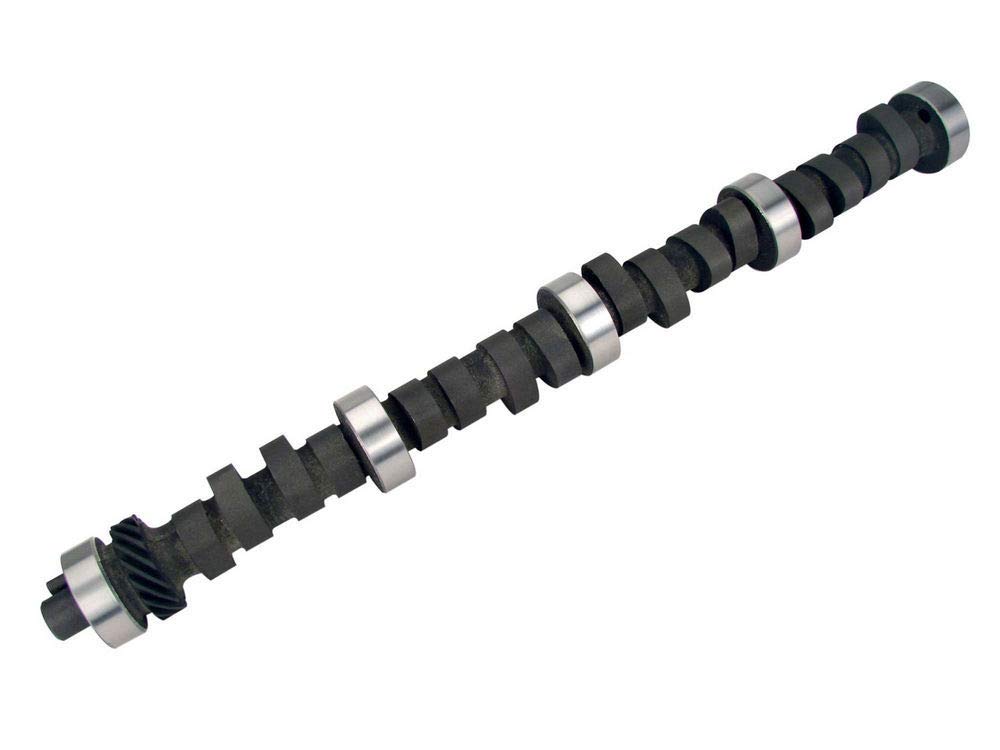
You want this cam for personality as much as performance. The Thumpr 34-600-5 (grind 279TH7) is a hydraulic flat tappet cam for Ford 429/460 engines with a 2,000–5,800 RPM operating range, 226/241 duration at .050″, 278/296 advertised duration, .506/.493 valve lift, and a tight 107° lobe separation angle.
That tight lobe separation and long exhaust duration are what create the overlap behind the thumping idle. COMP notes that a stock converter can work with this grind, but that it performs best with a 2,000+ stall converter and more rear gear. Some dealer listings go further and recommend roughly 9.5:1 or higher compression along with gears and a 2,200+ stall converter. Since many stock 460s sit closer to 8:1, that is worth checking before you order. A healthy valvetrain matters here too.
This is not the first choice for a heavy tow rig that spends most of its time just off idle, and the tighter lobe separation means less manifold vacuum for power brakes. Choose it when sound, street character, and mid-range punch matter more than smooth stock-like manners.
Why You’ll Like It
Nothing else on this list changes how the truck feels at a stoplight. If the reason you are cam shopping is that your 460 sounds like an appliance, this is the grind that fixes it, and it adds real mid-range on top of the sound.
Best For
- Street-driven Ford 460 builds with performance attitude
- Drivers who want a choppy, thumping idle
- Weekend trucks or cruisers with supporting converter and gear changes
- Owners who value exhaust note and mid-range punch
Who Should Avoid It
- Heavy towing builds that need calm low-speed manners
- Stock trucks where converter and gearing will not be upgraded
- Low-compression stock 460s where the supporting combination will not be changed
- Drivers who want smooth idle, quiet operation, or strong brake vacuum
- Stock speed-density EFI trucks, since this is not a computer-controlled grind
Key Specs and Benefits
- Grind number 279TH7, hydraulic flat tappet, cast iron, 1-bolt cam gear
- Strong 2,000–5,800 RPM street performance range
- 226/241 duration at .050″, 278/296 advertised, 107° lobe separation
- .506/.493 valve lift at the factory rocker ratio
- Choppy Thumpr idle for classic big-block sound
- Assembly lubricant included; lifters not included; valve springs required
- Direct-fit hydraulic flat tappet cam for Ford 429/460 engines
What You Also Need to Buy With the Cam
Every camshaft on this list is sold as a camshaft only. Plan your budget around the full job, not just the cam:
- New hydraulic flat tappet lifters: mandatory. Never install a new flat tappet cam on used lifters. Buying the cam and lifters together as a matched set from the same manufacturer is the safer route.
- Matching valve springs: COMP lists valve springs as required for all of these grinds. Do not exceed the recommended open spring pressure, since excess pressure shortens flat tappet cam life.
- Valve spring installed height check: confirm installed height and retainer-to-valve-seal clearance when you change springs, especially on higher-lift grinds.
- Break-in oil or a high-ZDDP additive: modern low-zinc oils are a common cause of flat tappet lobe failure.
- Assembly lube: included with these COMP cams, but confirm it is in the box.
- Timing set: a worn chain undoes the benefit of a new cam.
- Correct distributor gear: these are cast iron cams and need a matching iron or steel gear. If your engine currently runs a bronze or composite gear for a roller cam, change it.
- Pushrod length check and correct rocker preload: especially if you change springs, rockers, or have milled heads.
- Gaskets and coolant: front cover, intake, and related gaskets for the teardown.
COMP also offers cam-and-lifter kits and larger kits under related part numbers if you would rather buy the pieces together than source them separately.
Flat Tappet Break-In: The Step That Decides Cam Life
Safety and reliability note: a flat tappet camshaft can wipe a lobe within minutes of first startup if break-in is done wrong. This is the most common cause of a failed cam swap, and it is avoidable.
- Follow the instruction sheet that comes with your specific camshaft. It takes priority over any general advice, including everything below.
- Use new lifters and coat the lobes, journals, lifter faces, and distributor gear with the supplied assembly lube.
- Do not pre-pump the hydraulic lifters before installation.
- Fill with a proper high-ZDDP break-in oil, not a standard modern API-rated oil.
- Have the engine ready to fire immediately: fuel, timing, and coolant sorted before the first crank.
- Run at the elevated RPM and duration the cam maker specifies. Instruction sheets commonly call for a varied fast idle in the 2,000–2,500 RPM range for roughly 20 to 30 minutes, but use the figures on your own cam card rather than these.
- Avoid extended low-speed idling during break-in.
- Watch oil pressure and listen for valvetrain noise throughout the break-in run.
- Change the oil and filter after break-in, recheck the valvetrain, and keep using a suitable high-zinc oil afterward.
If any of this is outside your comfort level, have the cam installed and broken in by an experienced engine shop. A wiped lobe can send metal through the whole engine.
Before You Buy: Match the Cam to Your Build
- Stock converter truck: Start with 34-235-4 or 34-225-4.
- Smooth daily driving: Choose 34-225-4 if idle quality matters most.
- EFI speed-density setup: Choose 34-255-5 first. It is the only computer-controlled grind on this list.
- Aggressive street sound: Choose 34-600-5, ideally with a 2,000+ stall converter, more rear gear, healthy compression, and a matched valvetrain.
- Mostly stock compression: Milder grinds suit the roughly 8:1 to 9:1 compression common in most post-1972 460s. Verify your own engine before assuming.
- Flat tappet reliability: Use proper assembly lube, break-in oil or additive, correct springs, and new matched lifters.
- Emissions: Confirm local rules first. These grinds do not carry a CARB Executive Order number.
FAQ
Which cam should you choose for winter torque and daily driving?
For most Ford 460 trucks, choose the Comp Cams 34-235-4 Xtreme 4×4 if you want the best balance of towing torque, daily drivability, and stock-converter compatibility. Choose the COMP Cams 34-225-4 High Energy if you want a smoother idle and a milder street feel.
Which cam is best for a stock computer Ford 460?
The COMP Cams 34-255-5 Xtreme Energy Computer Controlled is the best match in this list for a stock speed-density EFI setup, and it is the only grind here listed that way. COMP lists it as working with a stock computer, it keeps the operating range low, and its 114° lobe separation supports idle quality and manifold vacuum.
Is the Thumpr 34-600-5 good for towing?
It can work in some street trucks, but it is not the first choice for heavy towing. The Thumpr 34-600-5 has a choppy idle and a 2,000 RPM starting operating range, and COMP notes it performs best with a 2,000+ stall converter and more rear gear. Some dealers also suggest higher compression than a typical stock 460 has. For towing, the 34-235-4 or 34-225-4 usually makes more sense.
Will these cams fit a 1996 or 1997 Ford 460?
Catalog listings generally show these part numbers for Ford 429/460 engines from roughly 1968 to 1995, and some kit listings show 1968 to 1994. If your truck is a 1996 or 1997, confirm fitment directly with the seller or the manufacturer before ordering rather than assuming the range extends.
Should you buy the camshaft alone or a cam kit?
Because every grind here needs new lifters and aftermarket valve springs, compare the camshaft-only listing against the related kit part numbers before buying. Cam-and-lifter kits, small kits with a timing set, and larger kits with springs and retainers are all offered under related part numbers, and buying a matched set reduces the risk of mixing components.
How much difference will a cam alone make in a heavy truck?
A cam moves the torque curve rather than creating power out of nothing. In a heavy truck with restrictive exhaust, tall rear gears, and a stock converter, the gain shows up mostly as better response in the range the cam targets. If ignition, fuel delivery, compression, or the exhaust are already weak, fix those first, because a camshaft will not compensate for them.
Do these camshafts come with lifters?
No. These listings are camshaft only, and assembly lubricant is included but lifters are not. You must install new hydraulic flat tappet lifters with a new flat tappet camshaft. Reusing old lifters is a common cause of early cam failure.
Do I need new valve springs?
Yes. COMP lists aftermarket valve springs as required for all of these grinds. Use springs matched to your chosen cam, and stay within the recommended open pressure, since excess spring pressure shortens flat tappet cam life.
Are these cams emissions legal for a street truck?
These grinds do not carry a CARB Executive Order number, and they are generally listed as exempt only for race or competition-only vehicles. Some retailers will not ship certain part numbers to California. Check your state and local emissions rules before buying for a street-driven truck.
Will these cams work with a stock Ford 460 setup?
The milder grinds are designed to work with mostly stock components, but you still need to confirm valve springs, new lifters, pushrod length, rocker preload, converter stall, rear gear ratio, fuel delivery, and exhaust. A cam that physically fits can still drive poorly if the rest of the combination does not match.
What installation and break-in steps matter most?
Use new hydraulic flat tappet lifters, fresh assembly lube, proper valve springs, high-ZDDP break-in oil, and the manufacturer’s break-in process. Do not pre-pump the hydraulic lifters, avoid long idle time during initial break-in, monitor oil pressure, listen for valvetrain noise, and change the oil and recheck the setup after the first run cycle.
Final Recommendation
If you want one safe starting point for a Ford 460 truck, pick the Comp Cams 34-235-4 Xtreme 4×4. It gives you the strongest mix of practical torque, towing usefulness, and daily-driver manners.
If you want smoother operation, choose the COMP Cams 34-225-4 High Energy. If your truck uses stock speed-density EFI, choose the COMP Cams 34-255-5. If sound and street attitude matter most, the Thumpr 34-600-5 is the fun pick, provided your converter, gearing, compression, and valvetrain are ready for it.
Whichever you choose, budget for new lifters, matched valve springs, and a proper break-in. That is what decides whether the cam lasts.
| Product | Image | RPM Range | Duration @ .050″ / Lift / LSA | Best For |
|---|---|---|---|---|
| Comp Cams 34-235-4 Xtreme 4×4 218/226 Hydraulic Flat Cam Check Price on Amazon |
 |
1,400-5,600 RPM | 218/226 · .505/.515 · 111° | Towing and daily driving. Noticeable idle, stock converter friendly. Best all-around choice for many truck builds. Not a computer-controlled grind. |
| COMP Cams 34-225-4 High Energy 212/212 Hydraulic Flat Cam See Today’s Price on Amazon |
 |
1,200-5,200 RPM | 212/212 · .484/.484 · 110° | Smooth idle and mild towing use. Stock converter friendly. Good choice when street manners matter most. Not a computer-controlled grind. |
| COMP Cams 34-255-5 Xtreme Energy Computer Controlled Hydraulic Flat Cam Check Product Details on Amazon |
|
1,000–5,200 RPM | 212/219 · .490/.495 · 114° | EFI speed-density setups. Good idle quality and strong vacuum. The only grind here listed for stock computer compatibility. |
| Comp Cams 34-600-5 Thumpr 226/241 Hydraulic Flat Cam Check Current Amazon Availability |
 |
2,000-5,800 RPM | 226/241 · .506/.493 · 107° | Aggressive street sound with a choppy idle. Best with a 2,000+ stall converter, more rear gear, and supporting parts. Not for heavy towing or stock EFI. |

