
Choosing a stroller gets easier when you understand what each type is built to do. Some strollers work best for daily walks, shopping trips, and long days out. Others focus on travel, jogging, newborn car-seat transfers, or carrying more than one child. The right choice depends on your child’s age, your storage space, your car, your terrain, and how often you plan to fold or carry the stroller.
Quick Answer
The main types of strollers include full-sized, umbrella, jogging, double, infant car seat, travel system, compact, wagon, convertible, and specialty strollers. Full-sized strollers suit everyday use, umbrella and compact models help with travel, jogging strollers support active parents, and double or wagon strollers work well for multiple children.
Key Takeaways
- Full-sized strollers offer the best mix of comfort, storage, and everyday features, but they can feel bulky in small cars or tight spaces.
- Umbrella and compact strollers are easiest to carry, fold, and store, but they usually have less padding, storage, and sun coverage.
- Jogging strollers are made for running and rougher paths, but they are not the same as regular daily strollers.
- Double, wagon, and convertible strollers help families with twins, siblings close in age, or changing seating needs.
- Always check the stroller’s age, weight, car seat compatibility, harness, brake system, and manufacturer instructions before use.
Full-Sized Strollers
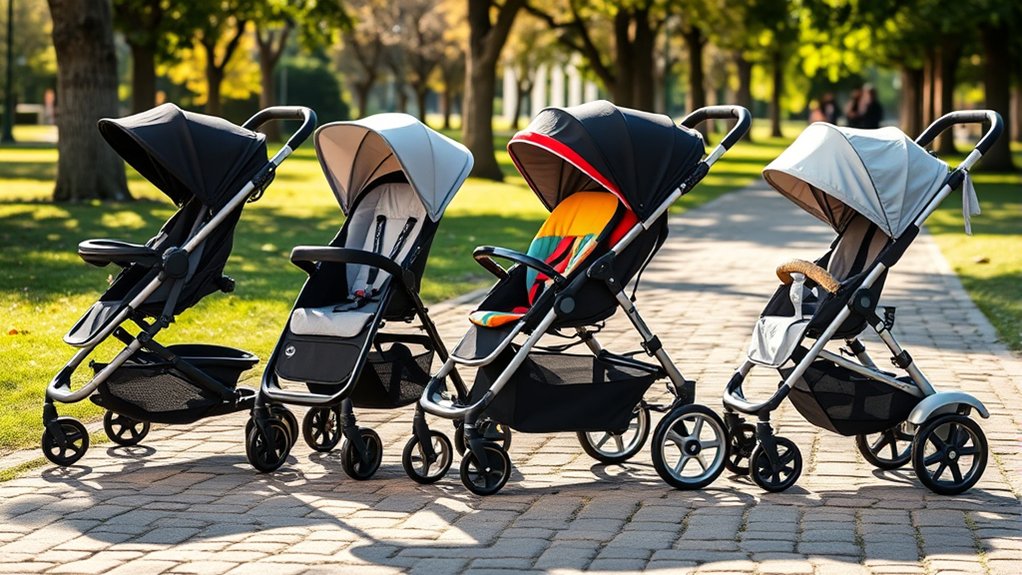
When you need a reliable stroller for daily use, full-sized strollers stand out because they offer sturdy frames, roomy seats, and generous storage. These models often include adjustable seating positions, larger canopies, parent trays, child trays, and under-seat baskets for diapers, snacks, bags, and small shopping items.
Safety is also a major reason parents choose full-sized strollers. Most quality models include a five-point harness, parking brake, stable wheelbase, and a seat that supports your child during longer outings. Many full-sized strollers also work with compatible infant car seats, which makes it easier to move your baby from the car to the stroller without a full seat change.
While bulkier and heavier than other types, full-sized strollers are useful for long walks, shopping trips, park visits, and everyday errands. Many models support children up to about 50 to 60 pounds, though you should always follow the exact weight limit listed by the manufacturer.
If you value comfort, storage, and a smooth ride more than ultra-light portability, a full-sized stroller can be a smart long-term choice. It gives you the features most parents reach for every day, especially during the baby and toddler years.
Note: A full-sized stroller may not be the best choice if you live in a walk-up apartment, drive a very small car, or need to lift the stroller often. Measure your trunk and storage area before buying.
Umbrella Strollers
Umbrella strollers are known for their lightweight, simple, and portable design. They usually fold into a slim shape, which makes them helpful for quick errands, public transportation, airports, and short walks where a larger stroller would feel inconvenient.
However, umbrella strollers usually come with trade-offs. Many have smaller canopies, limited storage, less padding, and fewer recline options. Some are designed only for babies who can sit upright with good head and neck control, so they are not always suitable for newborns.
They work best when you already have a more supportive stroller at home and need a lighter option for travel or fast outings. If you want portability but still need better recline, storage, and canopy coverage, a modern compact stroller may be a better fit.
Lightweight and Portable Design
Lightweight and portable, umbrella strollers are ideal for parents who want less gear to carry. Many models weigh about 10 to 15 pounds, though exact weights vary by brand and design. Their compact fold makes them easier to store in closets, car trunks, or small entryways.
Here are some key points to consider:
- Minimal storage options, often limited to a small basket or pouch
- Smaller canopies that may provide less sun and heat protection
- Better suited for babies who can sit upright with steady head control
- Simple fold designs that make quick trips easier
- Less padding and fewer premium features than larger stroller types
While they may not offer the same comfort as larger models, umbrella strollers can be very practical when you need a lightweight backup stroller.
Limited Features and Comfort
For parents considering an umbrella stroller, it is important to understand its limits. The minimalist frame helps keep the stroller light, but it can also reduce comfort. Many umbrella strollers have less seat padding, smaller wheels, and limited suspension, so your child may feel more bumps on rough sidewalks.
Sun protection can also be limited. Smaller canopies may not cover your child well during hot or bright days. Some models do not recline enough for naps, while others may not support younger babies safely.
Storage is another common drawback. If you carry a diaper bag, water bottle, snacks, toys, and extra clothing, the small basket may not be enough. For short trips, this may not matter. For long days out, it can become frustrating.
Ideal for Travel Use
When you are on the go, an umbrella stroller can make travel simpler. These strollers are easy to fold, lift, and move through crowded places. They can be useful for airports, bus rides, train stations, theme parks, and short city trips.
Here are a few travel stroller tips to keep in mind:
- Check the fold size: A slim fold helps when storing the stroller in cars or small hotel rooms.
- Look for a carry strap: This helps when you need to carry the stroller up stairs or through transit areas.
- Check the recline: If your child still naps often, a deeper recline can make travel easier.
- Review the canopy size: Better shade matters during warm-weather trips.
- Confirm the age range: Some umbrella strollers are not suitable for babies under six months.
With the right umbrella stroller, you can move through busy areas with less stress while still giving your child a simple seat when they get tired.
Jogging Strollers
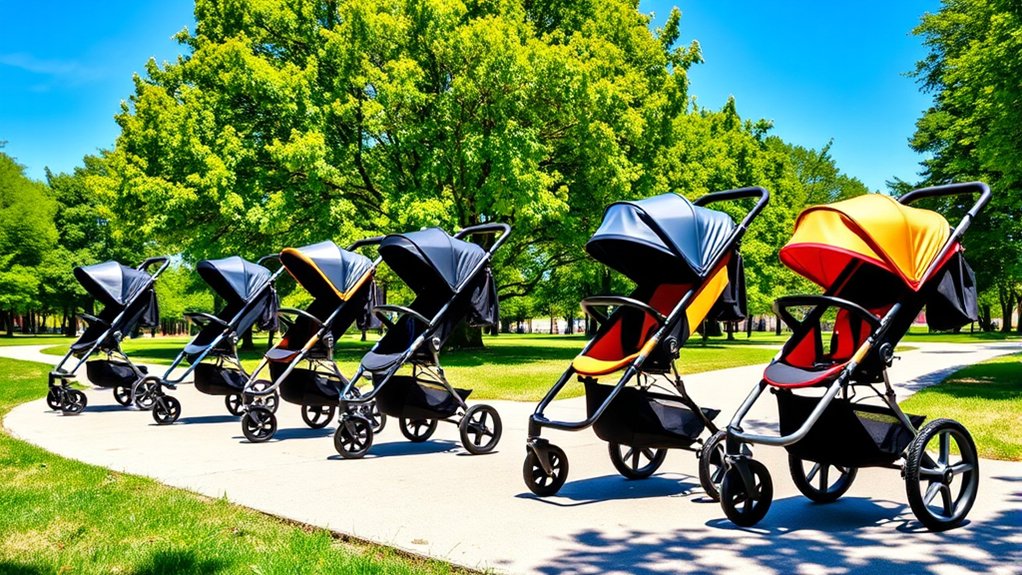
If you are an active parent, jogging strollers offer features designed for running, fitness walks, and uneven paths. They usually have three large wheels, air-filled tires, stronger suspension, and a front wheel that can lock for better stability at speed.
These strollers are not just regular strollers with bigger wheels. Their design supports smoother movement and better control during faster activity. A good jogging stroller can help you stay active while your child rides more comfortably over sidewalks, packed trails, and park paths.
Still, jogging strollers are usually heavier and larger than compact or umbrella strollers. They may take up more trunk space and can be harder to use in tight store aisles. If you mainly need a stroller for shopping or travel, a jogging stroller may be more stroller than you need.
Warning: Do not jog with a young baby unless your pediatrician and the stroller manufacturer’s instructions say it is safe. Many babies need stronger head and neck control before riding during running.
Benefits of Jogging Strollers
While many strollers handle everyday outings, jogging strollers stand out for active use. They combine comfort, stability, and control so you can move at a faster pace without giving up stroller safety features.
Key advantages include:
- Fitness support: You can walk, jog, or run while spending time with your child.
- Safety features: Many include five-point harnesses, wrist straps, and handbrakes for added control.
- Enhanced suspension: Larger tires and better suspension help reduce bumps on rougher paths.
- Stable design: A locking front wheel improves tracking when you move faster.
- Outdoor comfort: Larger canopies and roomy seats can make longer outdoor outings easier.
With the right jogging stroller, you can keep an active routine while still giving your child a secure and comfortable ride.
Key Features to Consider
Choosing the right jogging stroller means looking closely at safety, wheel design, and comfort. Large, durable wheels are important because they roll more smoothly over uneven surfaces. Air-filled tires can improve comfort, but they may need occasional inflation and maintenance.
A fixed or lockable front wheel is another important feature. A swivel front wheel helps with turning during casual walks, but it can wobble at running speed. Locking it forward helps the stroller track straight while jogging.
Also look for a five-point harness, reliable parking brake, strong frame, adjustable handlebar, wrist strap, and good canopy coverage. A handbrake can be especially helpful if you run on hills.
Before using a jogging stroller, read the manufacturer’s manual. Each model has its own age, weight, speed, and terrain limits.
Double Strollers
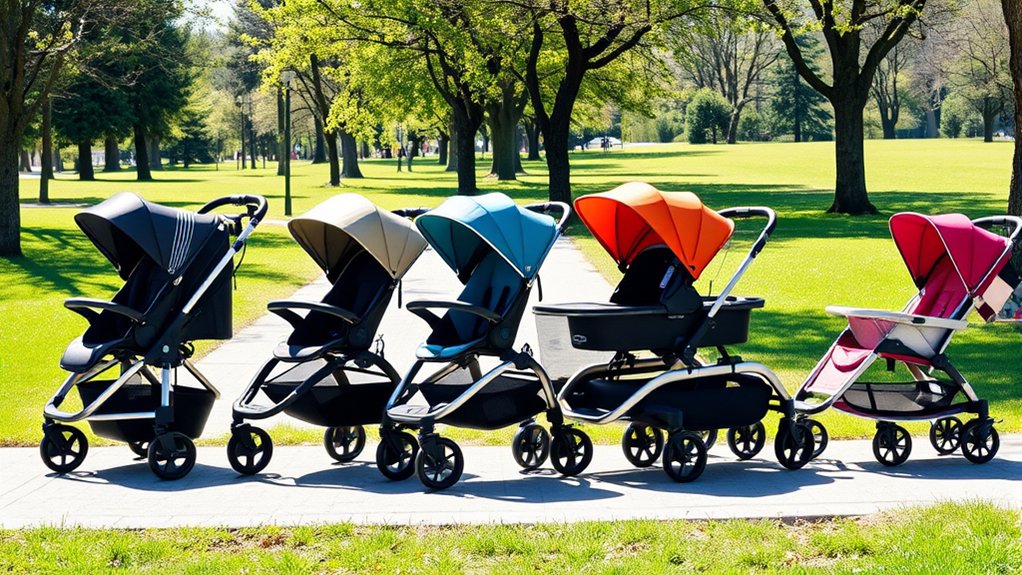
Double strollers are useful for parents with twins, siblings close in age, or two young children who still need stroller support. They allow you to carry both children in one stroller instead of pushing one stroller while managing another child by hand.
Double strollers usually come in two main layouts: side-by-side and tandem. Side-by-side models place both children next to each other. They can feel easier to steer and allow both children to see out, but they are wider. Tandem models place one child in front of the other. They are narrower, which helps in doorways and store aisles, but they can be longer and harder to turn.
Here are some key features to evaluate:
- Seating arrangements: Choose side-by-side for easier interaction or tandem for a narrower footprint.
- Adjustable options: Some seats can face forward, face the parent, or face each other.
- Safety features: Look for secure harnesses, strong brakes, and stable weight distribution.
- Storage options: A larger basket helps when carrying supplies for two children.
- Fold size: Double strollers can be large, so check your trunk space before buying.
Some double strollers can also convert into single strollers, which helps as your family’s needs change. With the right double stroller, you can make busy outings more manageable while keeping both children comfortable and secure.
Infant Car Seat Strollers
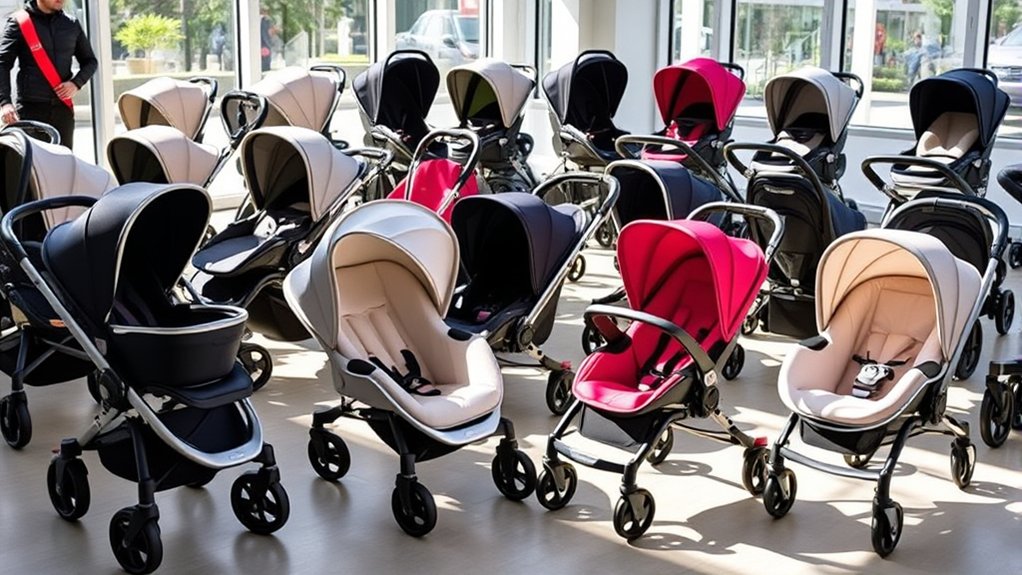
An infant car seat stroller is a practical solution for parents who want convenience during the newborn stage. These strollers are designed to hold a compatible infant car seat, so you can move your baby from the car to the stroller frame without removing them from the seat.
This setup can be helpful during short errands, doctor visits, and quick trips when your baby is sleeping. The car seat clicks into the stroller frame or adapter, creating a simple travel setup for the earliest months.
However, car seat strollers are not meant to replace safe sleep spaces. Babies should not spend longer than necessary in a car seat outside the car. For longer walks, a stroller seat or bassinet-style setup that supports a flatter position may be more comfortable, depending on the model and your baby’s age.
Lightweight frames are common in this category, so they can be easy to fold, lift, and store. Many parents use an infant car seat stroller during the first months, then switch to a full-sized, compact, or convertible stroller as the child grows.
Pro Tip: Before buying, confirm that your exact car seat model is compatible with the stroller. Brand names alone are not enough because adapters and seat versions can vary.
Travel System Strollers
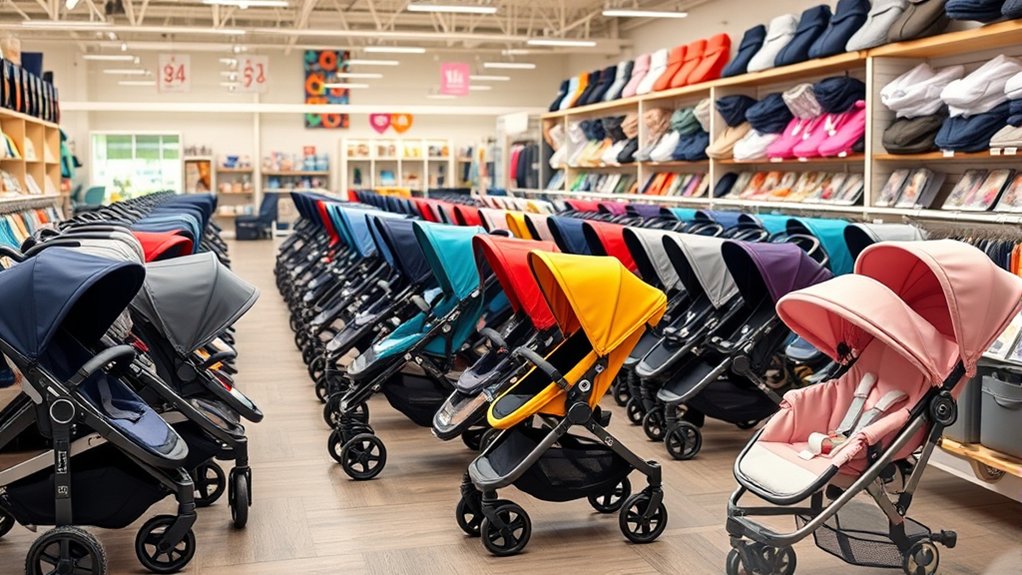
While adjusting to life with a newborn, travel system strollers can simplify the switch between car and stroller. A travel system usually includes an infant car seat, a car seat base for the vehicle, and a stroller that accepts the car seat.
The biggest benefit is convenience. You can click the car seat into the stroller when running errands, then click it back into the car base when leaving. This can help avoid waking a sleeping baby during short trips.
Key features of travel system strollers include:
- Compatible infant car seat and stroller pieces designed to work together
- Safety features that help keep your baby secure during travel
- Larger canopies that provide shade and weather protection
- Storage baskets for diapers, wipes, blankets, and feeding supplies
- Longer usability when the stroller seat supports your child into toddlerhood
Travel systems can be bulkier than standalone stroller frames, but their all-in-one design appeals to many parents. If you want a single purchase that covers the newborn stage and beyond, a travel system can be a convenient option.
Compact Strollers
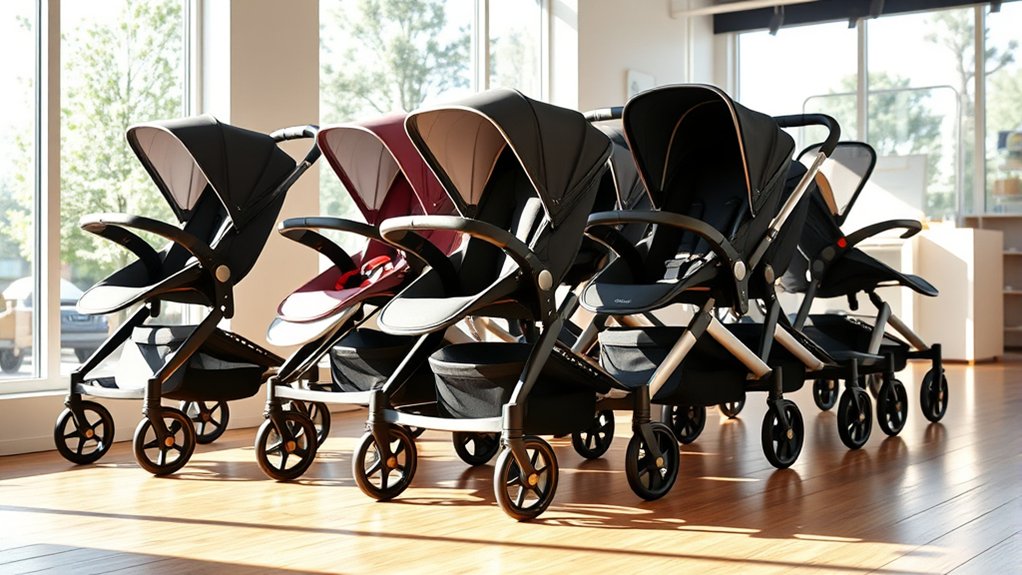
When you are moving through busy city streets, tight stores, public transit, or airports, compact strollers can make life easier. They are designed to fold smaller than many full-sized models while still offering more features than a basic umbrella stroller.
Many compact strollers include better recline, larger canopies, improved wheels, and more comfortable seats than older umbrella-style designs. Some models also work with compatible infant car seats, which makes them useful from the baby stage through toddlerhood.
Compact strollers are a strong choice if you want one stroller that is easier to store and carry but still comfortable enough for regular use. They are especially helpful for apartment living, travel, and parents who need to lift a stroller in and out of the car often.
Benefits of Compact Strollers
Compact strollers offer a range of benefits for parents who need portability without giving up every comfort feature. Their lightweight frames and smaller folds work well in urban environments and small living spaces.
Here are some key benefits:
- Portable: Many models are light enough to carry more easily than full-sized strollers.
- Space-saving: They fold compactly for car trunks, closets, apartments, and travel.
- User-friendly: One-hand folds and simple setups can make daily use easier.
- Crowd-friendly: Smaller frames help you move through tight aisles and busy sidewalks.
- Better than basic umbrella models: Many compact strollers offer more recline, shade, and storage.
With these features, compact strollers can simplify errands, travel, and daily walks while keeping your child comfortable.
Key Features to Consider
Choosing the right compact stroller involves looking at more than just weight. A very light stroller may be easy to carry, but it still needs a stable frame, safe harness, dependable brakes, and a comfortable seat.
Look for a secure harness system, sturdy frame, smooth fold, usable storage basket, and canopy large enough for sun protection. Adjustable seating is helpful if your child naps in the stroller. Easy-to-clean fabric also matters because spills, crumbs, and muddy shoes are part of everyday stroller life.
If you plan to travel, check the folded dimensions and carrying method. Some compact strollers fold small enough for easier travel, but rules for airplanes and storage areas can vary. Always check with your airline or transportation provider before relying on a stroller as carry-on gear.
Best Compact Stroller Options
As you compare stroller types, you will find that compact options stand out for practical daily use and travel. Compact strollers, including umbrella and ultra-compact models, are popular with parents who want a lighter stroller without moving all the way down to a bare-bones design.
Common compact stroller examples include:
- Baby Jogger City Tour 2: Known for lightweight construction and compact foldability, making it useful for travel.
- UPPABaby MINU V2: Blends style and function with a simple fold and everyday-friendly design.
- Summer Infant 3Dlite: Offers basic features while remaining budget-friendly and easy to carry.
- Chicco Bravo Quick-Fold: Combines convenient folding with infant car seat compatibility in compatible setups.
Use these examples as starting points, not automatic picks. The best compact stroller for you depends on your child’s age, your car seat, your storage space, and how often you travel.
Wagon Strollers
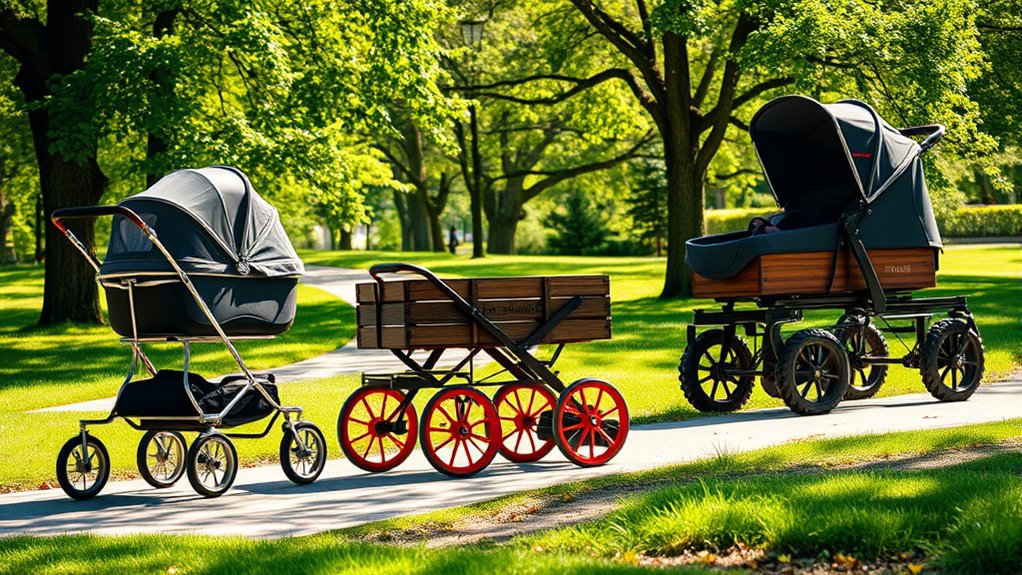
When planning a family outing, wagon strollers can be a practical choice for transporting multiple children and extra gear. They often have spacious seating areas, larger weight capacities, and more room for bags, blankets, toys, and snacks.
Many wagon strollers include push and pull handle options, which gives you more control across different settings. A push handle can feel more stroller-like, while a pull handle can help on grass, sand, or park paths, depending on the model.
Wagon stroller benefits go beyond space. Models such as the Radio Flyer Odyssey Stroll N Wagon and the Keenz 7S+ 4-Passenger Wagon may include removable canopies, storage pockets, cup holders, padded seats, and foldable frames. These features can make parks, zoos, festivals, and family walks more comfortable.
However, wagon strollers can be large and heavy. They may not fit well in tight stores, small trunks, or narrow sidewalks. Some places may also have rules about stroller wagons, especially crowded venues. Check size rules before taking one to an amusement park, stadium, or event.
If you need extra room for more than one child and gear, a wagon stroller can make outings more relaxed. If you mainly need a stroller for quick errands, it may feel too big for daily use.
Convertible Strollers
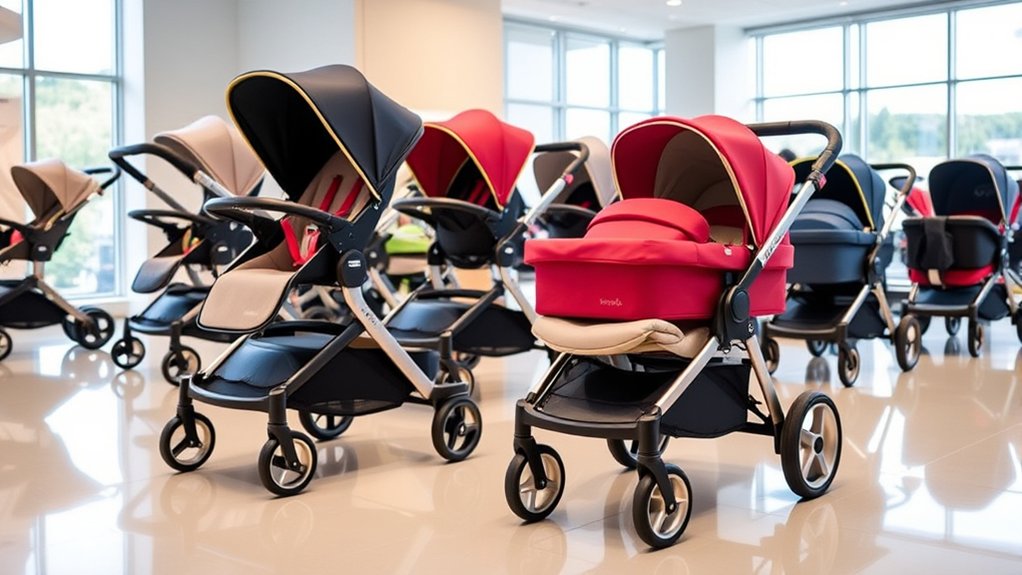
Wagon strollers provide space for family outings, but convertible strollers focus on flexibility. These strollers are designed to adapt as your child grows or as your family changes. Many can start as a single stroller and later convert into a double stroller with an added seat, bassinet, or riding board.
Convertible strollers are helpful if you are planning for another child or want one stroller that can handle different stages. They may offer parent-facing seats, forward-facing seats, bassinets, toddler seats, and car seat adapters.
Key benefits of convertible strollers include:
- Interchangeable seating arrangements for different ages and needs
- Possible conversion from a single stroller to a double stroller
- Adjustable handlebars, footrests, and reclining seats for comfort
- Compatibility with some infant car seats when the correct adapter is used
- Long-term value for growing families
The main drawback is that convertible strollers can be expensive and heavier than simple compact models. They may also require extra parts to unlock their full flexibility. Before buying, check what comes in the box and what must be purchased separately.
With a convertible stroller, you are investing in a flexible option that can grow with your family. It is a strong choice if you want one stroller system for several stages instead of replacing your stroller often.
Specialty Strollers
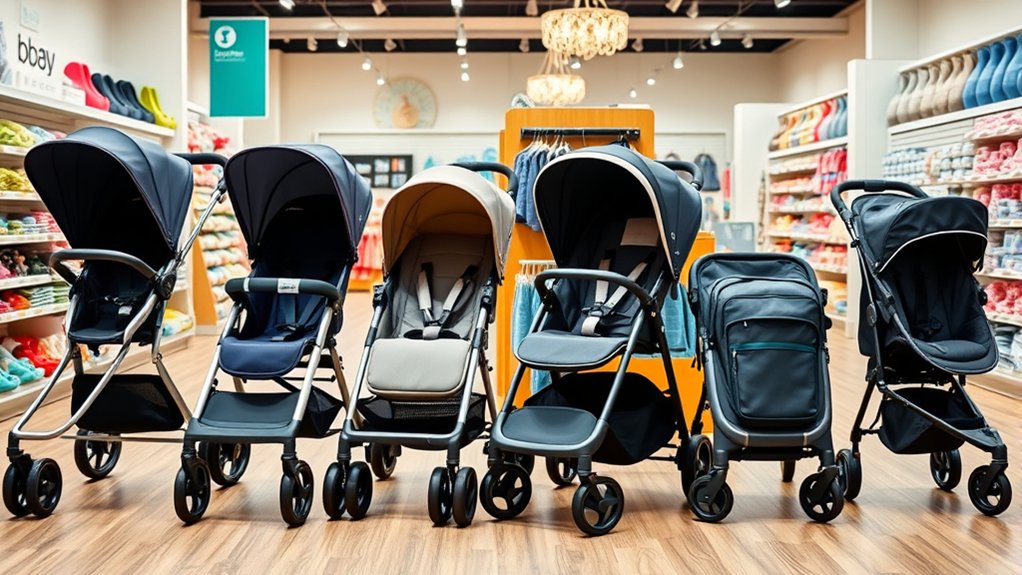
Specialty strollers are designed for specific needs that regular strollers may not handle well. This category can include jogging strollers, all-terrain strollers, travel strollers, double strollers, modular strollers, stroller wagons, and strollers built for special medical or mobility needs.
For active parents, jogging strollers offer larger wheels and better suspension for running and outdoor routes. For frequent travelers, umbrella and compact strollers provide lightweight portability. For families with twins or siblings close in age, double strollers offer practical seating options.
Travel system strollers combine an infant car seat and stroller for easier transitions. Modular strollers let you switch between parent-facing and world-facing seats. Wagon strollers work well when you need more room for multiple children and gear.
Specialty strollers can make parenting easier when they match your real lifestyle. The key is not to buy the most feature-packed stroller just because it looks impressive. Choose the stroller that fits your daily routine, child’s age, storage space, terrain, and budget.
How to Choose the Right Stroller Type
Once you understand the main stroller types, compare them against your daily routine. A stroller that works perfectly for one family may feel frustrating for another. Your best choice depends on how and where you use it most.
Start with these questions:
- How old is your child? Newborns need proper head, neck, and recline support.
- How often will you fold it? If you fold it daily, weight and fold design matter a lot.
- Where will you use it? Smooth sidewalks, gravel paths, malls, airports, and parks all favor different designs.
- How much storage do you need? Daily errands usually require more basket space than short walks.
- Do you need car seat compatibility? Check the exact stroller and car seat models before buying.
- Do you plan to have another child soon? A convertible stroller may save money later.
- How much space do you have? Measure your trunk, hallway, closet, and entryway.
If you are choosing your first stroller, a full-sized stroller or travel system often works well for everyday use. If you already own a larger stroller, a compact or umbrella stroller can make travel easier. If you run or walk on rougher paths often, consider a jogging or all-terrain stroller.
Stroller Safety Features to Check
No matter which stroller type you choose, safety features should come first. A stroller should feel stable, lock securely when folded or opened, and hold your child safely in the seat.
Look for these safety features:
- Five-point harness: This helps secure your child at the shoulders, waist, and between the legs.
- Reliable brakes: Parking brakes should be easy for you to use but hard for a child to release.
- Stable frame: The stroller should not tip easily during normal use.
- Safe fold lock: The frame should lock open and closed as designed.
- Clear weight limits: Follow the manufacturer’s limits for the seat, basket, and accessories.
- Canopy coverage: Shade helps protect your child from sun and heat during outings.
- Wheel condition: Wheels should roll smoothly and stay securely attached.
Never hang heavy bags from the handlebar unless the manufacturer says it is safe. Extra weight on the handle can make some strollers tip backward. Use the storage basket as directed instead.
Frequently Asked Questions
What age range is suitable for using different stroller types?
Newborns usually need a stroller that supports a flat or near-flat recline, a bassinet, or a compatible infant car seat setup. Many umbrella strollers are better for babies around six months and older who can sit with steady head and neck control. Toddler strollers can support children from about one year through preschool age, depending on the model’s height and weight limits.
How do I clean and maintain my stroller?
Start by checking the manufacturer’s care instructions. In general, wipe the frame with a damp cloth, clean fabric with mild soap when allowed, remove crumbs from the seat, and check the wheels for dirt, hair, or debris. Inspect brakes, buckles, tires, and folding locks regularly so the stroller stays safe and easy to use.
Are strollers compatible with all car seats?
No. Not all strollers work with every car seat. You need to check the stroller manufacturer’s compatibility list and confirm the exact car seat model. Some strollers need a separate adapter, and some only work with car seats from the same brand or a limited list of approved models.
What safety features should I look for in a stroller?
Look for a five-point harness, sturdy frame, reliable brakes, stable wheelbase, safe folding lock, and clear weight limits. A good canopy, smooth wheels, and secure car seat connection also matter. Always read the manual before using a new stroller.
How much do strollers typically weigh?
Stroller weight varies by type. Umbrella strollers and compact strollers are often lighter, while full-sized, jogging, double, wagon, and convertible strollers tend to weigh more. Many everyday strollers fall somewhere around 15 to 30 pounds, but you should check the exact model before buying.
Which stroller type is best for travel?
Compact and umbrella strollers are usually best for travel because they are lighter and easier to fold. For air travel, check the folded size, carry method, recline, canopy, and storage. If you are traveling with a newborn, make sure the stroller supports your baby’s age and car seat needs.
Is a jogging stroller safe for everyday use?
A jogging stroller can be safe for everyday use when used according to the manufacturer’s instructions. However, it may feel heavier, larger, and harder to store than a regular stroller. If you run often, it can be a great choice. If you mostly shop, travel, or use public transit, a compact or full-sized stroller may be easier.
Conclusion
Choosing the right stroller is like picking the right tool for a specific job. Each type serves a different purpose. Full-sized strollers offer comfort and storage for daily use. Umbrella and compact strollers make travel easier. Jogging strollers support active parents. Double, wagon, and convertible strollers help when your family needs more seats or more flexibility.
Before you buy, think about your child’s age, your daily routine, your car space, and where you will use the stroller most. Then check the weight limit, harness, brakes, fold size, canopy, storage, and car seat compatibility. When the stroller matches your lifestyle, outings feel smoother, safer, and more enjoyable for both you and your child.

