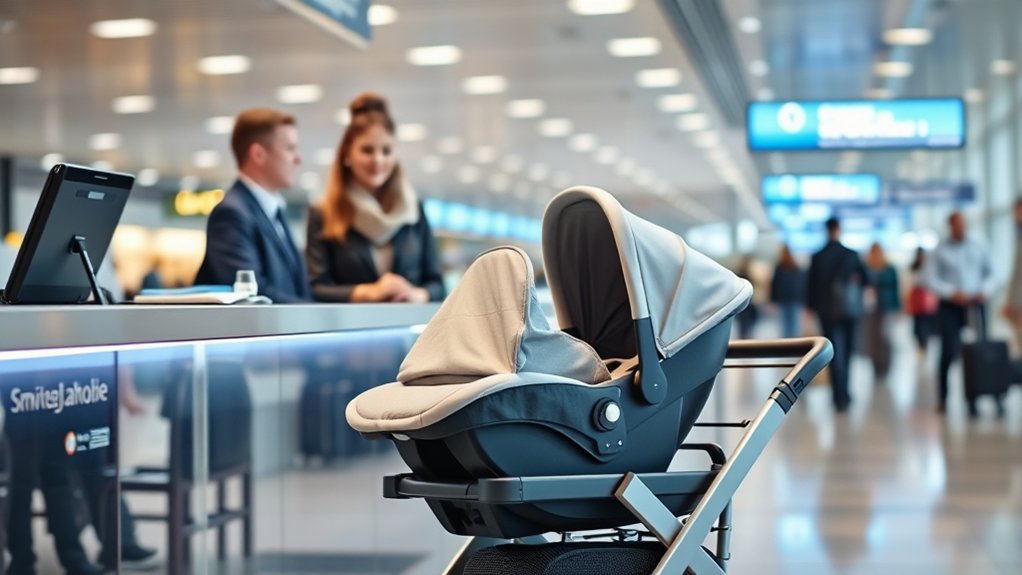
Flying with a baby or toddler comes with a lot of gear. The good news: on most major U.S. airlines, you can check at least one stroller and one car seat per child for free, either at check-in or at the gate. Knowing the rules ahead of time makes the whole trip calmer, especially when you understand size limits, gate-check options, and how to protect your gear.
Quick Answer
On most U.S. airlines, yes, you can check a car seat and stroller for free when flying with a child. Each child is usually allowed one car seat and one stroller that do not count toward standard checked-bag limits. You can typically check them at the ticket counter or gate.
Key Takeaways
- Most major airlines let you check at least one stroller and one car seat per child for free, though size, weight, and gate-check rules vary by carrier.
- Strollers and car seats can usually be checked at the ticket counter or at the gate, so you can keep the stroller for airport walks if you prefer.
- Car seats used on board must be approved for aircraft use and generally work best in a window seat, away from exit rows.
- A padded travel bag, clear luggage tag, and pre-flight photos can help protect your stroller or car seat and support a damage claim if needed.
At a Glance
| Best Option | Gate-check the stroller and check the car seat at the counter unless you bought a seat for your child and plan to use the car seat on board. |
| Cost | Usually free for one stroller and one car seat per child on major U.S. airlines. |
| Check Before Flying | Airline stroller size limits, gate-check rules, aircraft-approved car seat label, and your child’s seat assignment. |
| Helpful Gear | Padded travel bag, gate-check bag, luggage tag, phone photo of your gear, and a compact stroller if your airline has strict gate-check limits. |
Benefits of flying with a car seat and stroller
Flying with a car seat and stroller not only improves your child’s comfort but also makes the whole travel day more manageable. Familiar gear can reduce stress and irritability, helping your baby or toddler settle more easily in busy airports and on long flights.
A stroller gives you instant mobility in the terminal so you can navigate crowds, security lines, and long walks to the gate while keeping your child contained and safe. Having your own car seat and stroller at your destination also means you avoid questionable rentals and know your equipment is clean, adjusted, and familiar.
Lightweight or travel strollers are especially helpful once you land, letting you juggle kids, carry-ons, and checked bags with less stress. Using your own setup from home streamlines the whole travel experience and gives you extra peace of mind.
Airline regulations for checked car seats and strollers
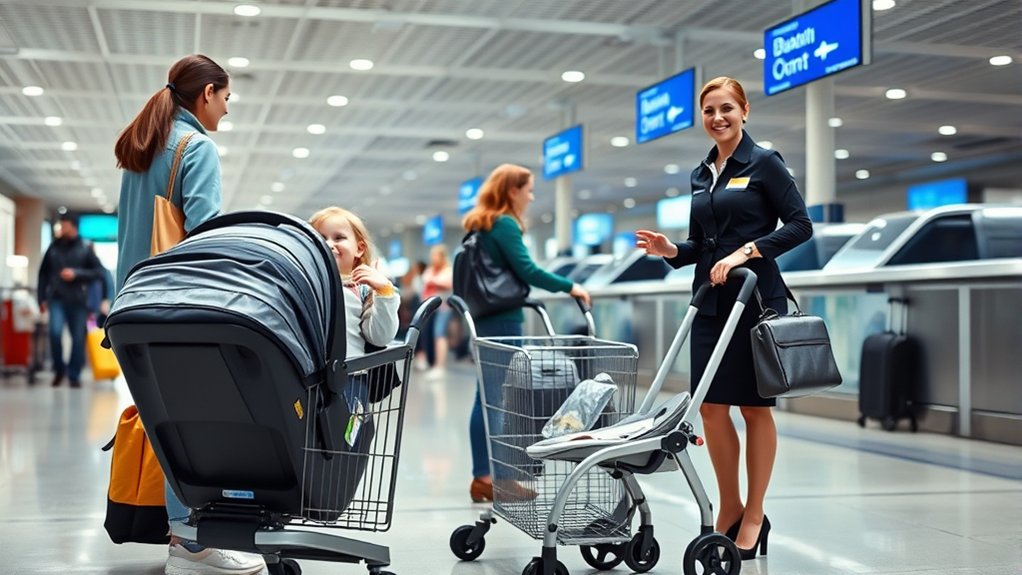
When you travel with kids, understanding your airline’s rules for checking car seats and strollers is essential. Most U.S. airlines allow you to check at least one stroller and one car seat per child for free, but each carrier sets its own size, weight, and gate-check rules.
Free check policies
The typical pattern is that strollers and child restraint systems, often called CRSs, travel free and do not count toward your standard checked-bag allowance when they are for a child on your reservation. Airlines such as Alaska, Delta, Frontier, Southwest, United, and Breeze commonly allow free checking for one stroller and one car seat or booster per child, with some minor variations. Always check your carrier’s page before you fly because policies can change.
Size and weight limits
Airlines rarely charge for a stroller or car seat used for a child, but they may enforce size or weight limits, especially for gate-checked items and large, non-collapsible strollers. Use the table below as a quick reference and confirm details with your airline shortly before travel.
| Airline | Free items allowed | Size / weight notes |
|---|---|---|
| Alaska Airlines | 1 stroller and 1 car seat per child | Stroller wagons may be allowed if they meet the airline’s size and weight rules; items usually travel free as checked baggage. |
| American Airlines | 1 stroller and 1 car seat per ticketed passenger | Small, collapsible strollers may be gate-checked; larger or heavier strollers may need to be checked at the ticket counter. |
| Delta Air Lines | Strollers and car seats checked free | Strollers and child-restraint seats generally do not count toward baggage allowance and may be checked at the curb, counter, or gate. |
| Frontier Airlines | 1 stroller and 1 car seat per child | Strollers and car seats can usually be checked free and often gate-checked; they do not count toward carry-on or personal-item limits. |
| United Airlines | 1 stroller and 1 car seat per child | Small, collapsible strollers can usually be checked at the gate; larger ones are checked at the counter and may have more limits. |
Gate check options
Gate checking lets you use a stroller through the airport, then hand it to staff at the aircraft door. It is tagged like a checked bag and usually returned to you on the jet bridge after landing. This is often the best choice for families because you keep the stroller until the last moment.
Most airlines allow you to gate-check one stroller and sometimes a car seat at no extra cost. Very large, heavy, or non-collapsible strollers, however, often must be checked at the ticket counter instead. When in doubt, ask at check-in so you are not surprised at boarding time.
Note: Gate-check rules can vary by aircraft size, route, and airport staff. If you are traveling with a jogging stroller, stroller wagon, or double stroller, confirm the gate-check policy before your travel day.
Free check-in options for strollers and car seats
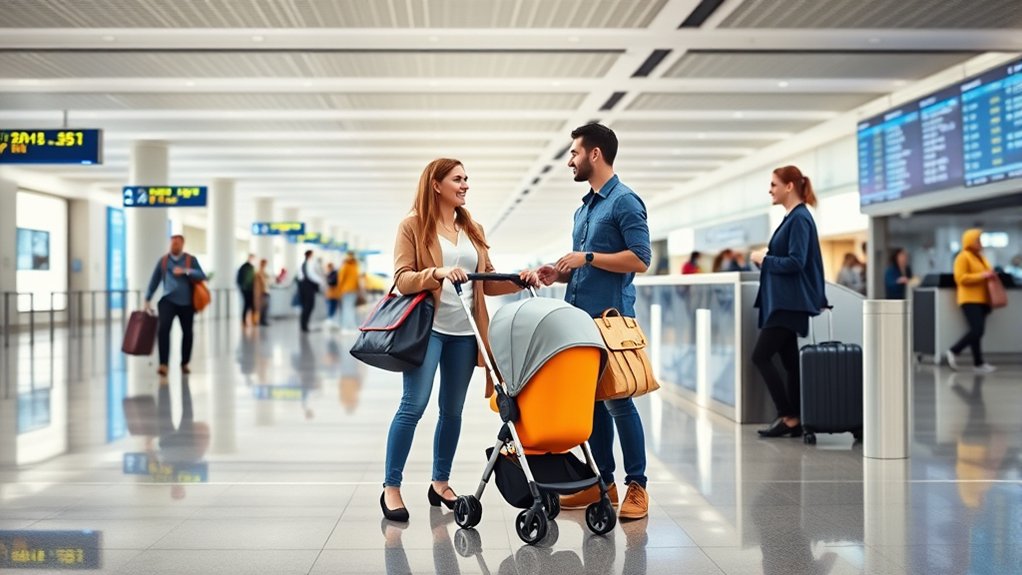
You can normally choose where to check your stroller and car seat: curbside where available, the ticket counter, or at the gate. The table below shows common patterns for a few popular airlines; always treat it as a starting point rather than a guarantee.
| Airline | Free check-in options | Notes |
|---|---|---|
| Alaska Airlines | One stroller and one car seat | Check at curbside, ticket counter, or gate when available; stroller wagons may be allowed within size limits. |
| American Airlines | One stroller and one car seat per ticketed passenger | Larger or heavier strollers may need to be checked at the ticket counter; smaller umbrella strollers may be gate-checked. |
| United Airlines | One stroller and one car seat per child | Small collapsible strollers can often be checked at the gate; others usually go at the counter. |
Counter checking is best when your stroller is bulky, expensive, or likely to be refused at the aircraft door. Gate checking is best when you need the stroller for long airport walks, naps, or keeping a toddler contained until boarding.
Preparing your car seat for air travel
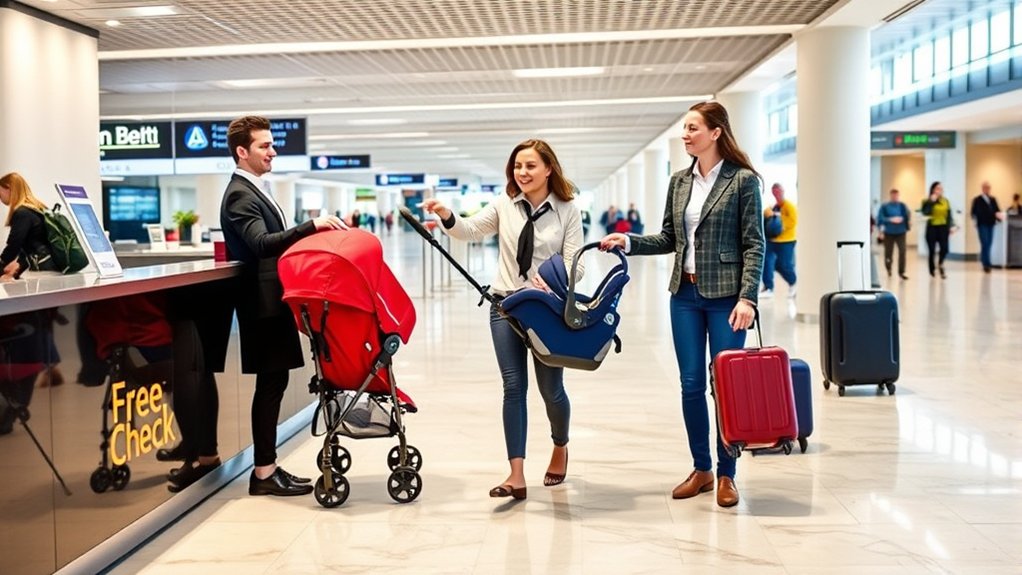
Before you leave for the airport, it pays to get your car seat ready. This helps you move quickly at check-in, reduces the risk of damage, and makes it easier to use your seat safely on the plane or at your destination.
First, confirm that your car seat is approved for airplane use. For U.S. seats this usually means a label stating that the restraint is certified for use in motor vehicles and aircraft. That label is what flight attendants may look for before allowing the seat on board.
The FAA recommends that children travel in their own seat with an appropriate child restraint system instead of riding as lap infants when possible. Using your CRS on board gives your child a secure restraint during turbulence, taxi, takeoff, landing, and unexpected movement.
- Remove toys, cup holders, and anything that could snap off or tangle on conveyors.
- Use a padded travel bag or gate-check bag to shield the seat from dirt and rough handling.
- Attach a luggage tag with your name, phone number, and email address.
- Take quick photos of the seat before checking it, in case you need them for a claim.
- Check your airline’s seat-width and installation rules if you plan to use the seat on board.
- Bring the car seat manual or save a digital copy so you can install it correctly after landing.
Warning: Never use a car seat on an airplane unless it has the required aircraft-use approval label and fits the aircraft seat. Car seats are also not allowed in exit rows.
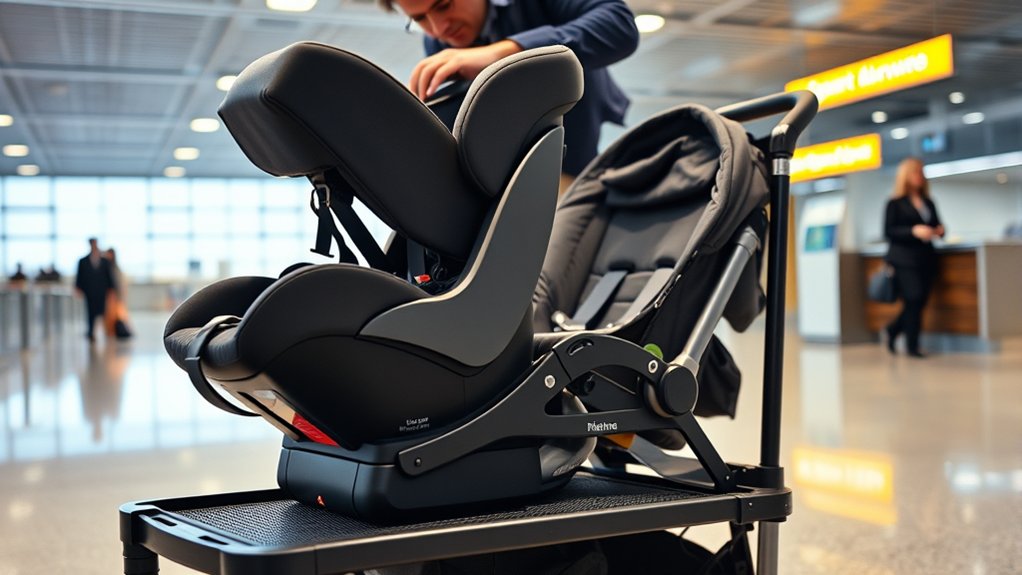
Traveling with infants and young children
Flying with infants and toddlers can feel overwhelming, but a bit of planning goes a long way. Most airlines let you check a stroller and car seat for free, which helps with airport logistics. Gate-checking the stroller lets you use it right up until boarding.
Any car seat used in the cabin must be approved for aircraft use and installed in a suitable seat, usually by the window and never in an exit row. Many safety experts recommend buying your child a ticket and using an approved car seat even if a lap-infant option is available.
Attach luggage tags to car seats and strollers as soon as they are tagged by staff. Keeping claim checks somewhere safe, such as a phone photo or travel wallet, makes pickup and any troubleshooting much easier.
Pro Tip: If you are flying with a baby, keep the stroller until boarding and place diapers, wipes, snacks, medicine, and one outfit change in a carry-on bag that fits under the seat.
Tips for smooth airport navigation
The airport itself is often the most stressful part of the trip. A few small habits can make a big difference when you are shepherding kids, a stroller, and a car seat through check-in and security.
- Gate-check your stroller so you can use it from curb to aircraft door.
- Tag items early as soon as staff print tags, then attach them securely to strollers and car seats.
- Pack essentials in one easy-access bag so you are not digging through multiple carry-ons at security.
- Check TSA guidance before travel so you know how strollers, formula, breast milk, baby food, and child gear may be screened.
- Arrive a bit earlier than you would without kids, especially during holidays or busy weekends.
- Use a baby carrier as backup in case your stroller must be checked earlier than expected.
At security, expect to fold the stroller and send it through screening if it fits. If it does not fit, officers may inspect it separately. Keep your child’s most important items together so you can move quickly after screening.
Handling lost or damaged strollers and car seats
Even with careful packing, strollers and car seats sometimes arrive damaged or go missing. Most airlines transport these items under limited liability, meaning they may not cover normal scuffs or cosmetic damage, but you should still report problems right away.
Reporting lost items
If your stroller or car seat does not arrive, go directly to the airline’s baggage service desk at baggage claim. Provide your baggage tags, boarding passes, and a clear description of the item. Ask for a written report or file number and save it for follow-up.
Compensation policies explained
Each airline’s Contract of Carriage sets limits on compensation for lost or damaged items. Some carriers may reimburse a portion of the cost or cover rental gear temporarily, while others may offer only repair or a travel credit. Keep receipts and any previous photos of your gear to support your claim.
Timely claims submission
Airlines often require that you report and file claims within a short window, sometimes on the same day or within a few days of travel. To protect your rights:
- File an initial report at the airport before you leave.
- Photograph any damage and keep broken parts if safe to do so.
- Submit the official claim form promptly, with receipts and photos attached.
- Follow up by email if you do not hear back within the stated timeframe.
Alternative travel solutions for families
Car seats and strollers are incredibly helpful, but they are not your only tools. Depending on your child’s age, travel style, and destination, you may want to mix and match a few solutions to keep everyone comfortable.
| Solution | Benefits | Tips |
|---|---|---|
| Gate-check strollers | Easy access during boarding and right after landing | Label clearly and fold just before boarding for quick handoff. |
| Use approved car seats | Best in-flight restraint option for infants and toddlers with their own seat | Check the approval label and book a window seat for installation. |
| Complimentary check-in | Most airlines check car seats and strollers free | Confirm your airline’s policy before travel and factor it into packing. |
| Lightweight travel strollers | Much easier to carry, fold, and gate-check | Look for compact, umbrella-style models that fold with one hand. |
| Baby carrier or sling | Keeps hands free and kids close in crowded terminals | Choose a comfortable fit and practice putting it on before your trip. |
A baby carrier is especially useful when your stroller has already been tagged or when you are boarding a smaller aircraft. For older toddlers, a compact travel stroller may be easier than a full-size stroller, especially if you have connecting flights.
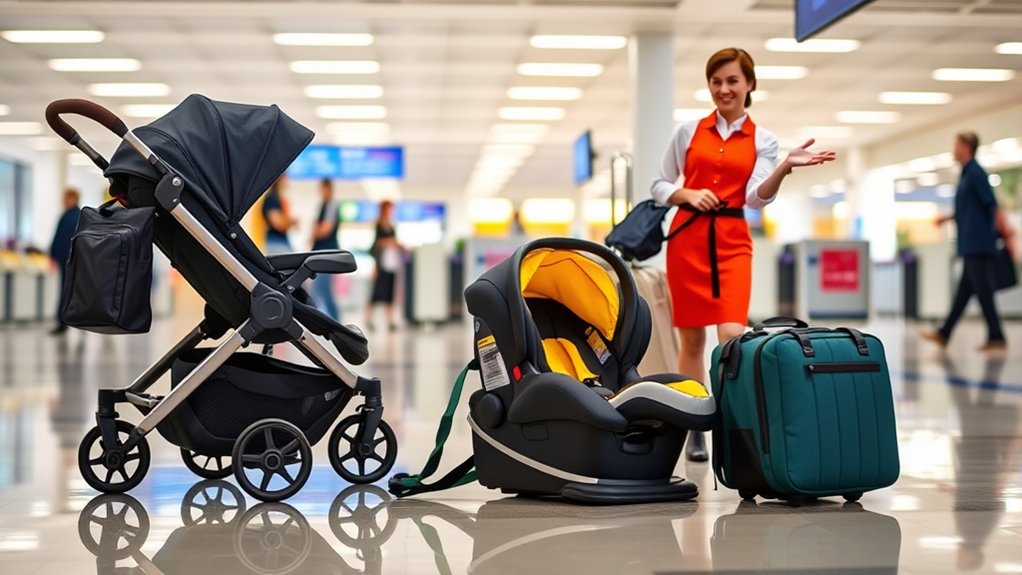
Recommendations for different airlines
Policies change, but these general guidelines apply to many popular U.S. carriers. Always double-check your specific route before you fly, especially for international legs, basic economy fares, partner airlines, or codeshares.
- Alaska Airlines: Usually transports your child’s stroller and car seat free as checked baggage. You can often check them with luggage or at the gate; stroller wagons may be allowed within set size and weight limits.
- American Airlines: Commonly allows one stroller and one car seat per ticketed passenger. Small, lightweight strollers may be gate-checked, while heavier or non-collapsible models may need to go at the counter.
- Delta Air Lines: Does not typically charge for strollers or child-restraint seats, and they do not count toward baggage allowance. You can usually check them at the curb, ticket counter, or gate.
- Frontier Airlines: Lets families check a stroller and car seat for free. You can often use the stroller in the airport and gate-check it; items do not count toward carry-on or personal-item limits.
- United Airlines: Accepts one stroller and one car seat free of charge for each child; small folding strollers can often be checked at the gate, while bigger ones usually go at the counter.
- Other family-friendly carriers: Southwest and Breeze also commonly offer free checking for a stroller and car seat per child, plus convenient gate-check options on many routes.
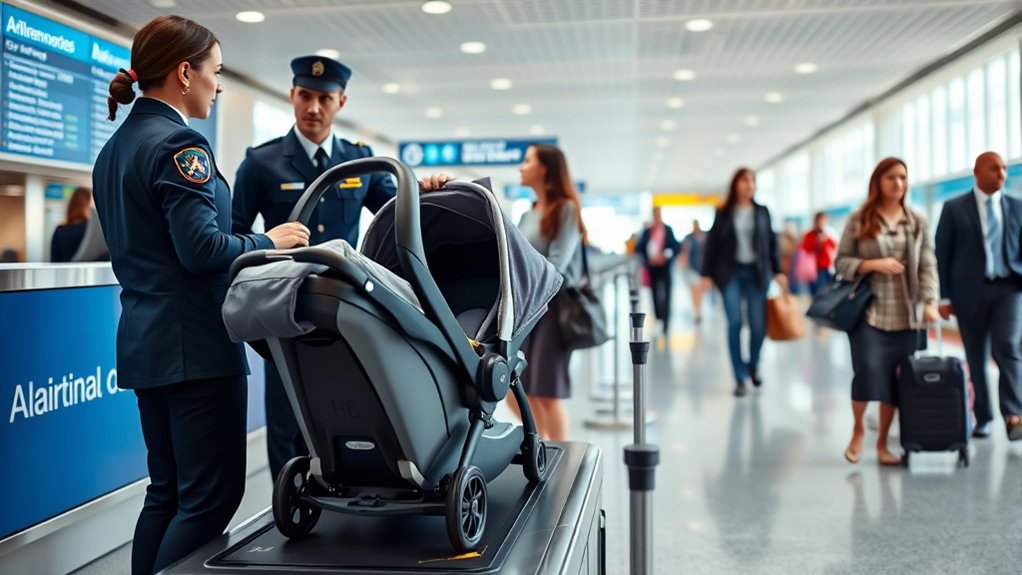
Resources for parents traveling with children
Reliable information makes family travel much easier. Before your next flight, bookmark a few key resources so you can quickly confirm what is allowed and how to keep your child safest in the air.
- Review official safety guidance in FAA guidance on flying with children so you know how to choose and use a child restraint system on board.
- Check security procedures on the TSA traveling with children page, including tips for screening strollers, formula, and breast milk.
- Confirm airline-specific rules directly, for example through Delta’s stroller and car seat policy or your own carrier’s baggage section.
Beyond official sources, packing checklists, lightweight travel stroller guides, and destination-specific family travel blogs can help you fine-tune your plans and feel more confident before you head to the airport.
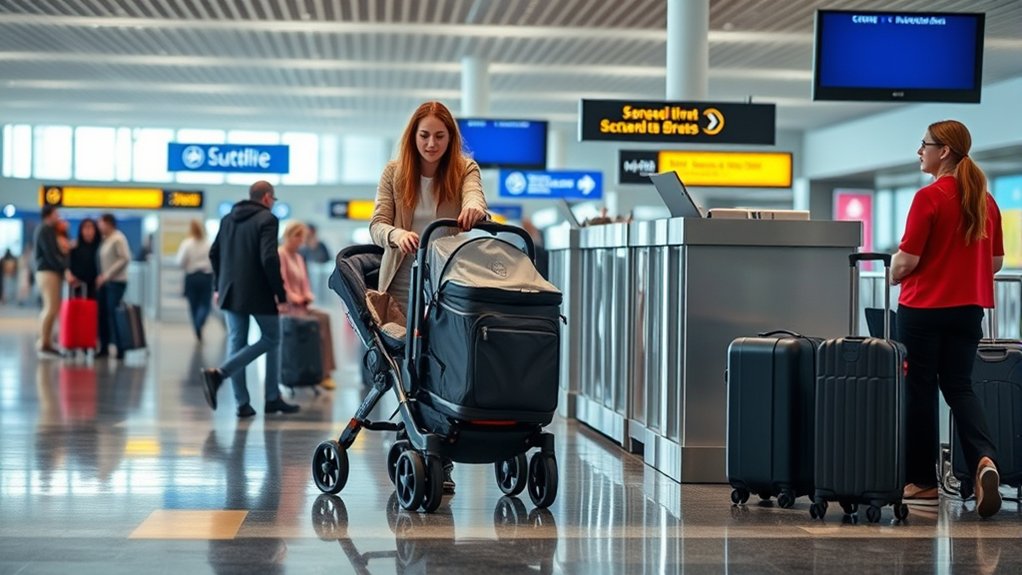
Glossary
- Gate check
- A process where you hand your stroller or car seat to airline staff at the boarding gate instead of the ticket counter; the item rides in the hold and is usually returned on the jet bridge after landing.
- Lap infant
- An infant under two who travels without their own seat and sits on an adult’s lap. This can reduce cost but does not provide the same level of restraint as an approved car seat secured to the aircraft seat.
- FAA-approved car seat
- A child restraint system labeled as certified for use in motor vehicles and aircraft. This label shows that the seat may be used on planes, subject to each airline’s rules and aircraft seat fit.
- Child restraint system
- A safety restraint designed for a child, such as an infant car seat, convertible car seat, or approved harness system used according to the manufacturer’s instructions.
Related Guides
Frequently Asked Questions
Can I check a car seat and stroller for free when flying?
On most airlines, you can check at least one car seat and one stroller for free when traveling with a child. Rules vary by airline, aircraft, and route, so always confirm your carrier’s policy before you fly.
Do car seats and strollers count toward my baggage allowance?
On most major U.S. airlines, strollers and car seats checked for a child travel free and do not count toward your standard checked baggage allowance. Oversize, overweight, or extra child gear may still be subject to limits or fees.
Is it better to gate-check or check my stroller at the counter?
Gate-checking is better if you need the stroller through the airport and want to hand it over near the aircraft door. Counter checking is better for bulky, heavy, fragile, or non-collapsible strollers that may not meet gate-check rules.
Can my child use a car seat on the airplane?
Yes, your child can usually use an approved car seat on the plane if you buy them a seat and the car seat fits the aircraft seat. It is generally placed in a window seat and cannot be used in exit rows.
How do I protect a car seat or stroller from damage?
Use a padded travel bag, remove loose accessories, tighten straps, and label the car seat or stroller with your contact details. Taking photos before checking also helps if you need to file a damage claim later.
What should I do if my car seat or stroller is lost or damaged?
If your car seat or stroller is missing or damaged, report it to the airline’s baggage service desk before leaving the airport. Keep all tags and receipts, photograph any damage, and submit a written claim as soon as possible.
Can I bring both a stroller and a baby carrier?
Yes. A baby carrier does not replace your stroller allowance on most airlines, and it can be very helpful during boarding, security screening, or baggage pickup when your stroller is folded or checked.
Conclusion
Traveling with little ones can feel like steering through a busy sea of people, bags, and airline rules, but knowing you can usually check a car seat and stroller for free takes a lot of weight off your shoulders. Choose whether to gate-check or counter-check based on your stroller size, your child’s needs, and your airline’s policy.
Before you fly, confirm the latest rules with your airline, label every item, protect your gear with a travel bag, and keep claim tags handy. With a bit of prep and a clear plan, you can move through the airport with less stress and focus more on the family trip ahead.
About the author
The Go My Review Editorial Team focuses on practical travel guides that help real families feel confident on the road and in the air. Our writers research airline policies and safety guidance so you can spend more time enjoying the trip and less time decoding fine print.
Related articles
- Best travel car seats for airplanes
- Flying with a baby: complete packing checklist
Sources
- FAA: Flying with Children — guidance on child restraint systems and safer air travel for children.
- TSA: Traveling with Children — screening guidance for strollers, child gear, formula, breast milk, and baby food.
- Delta Air Lines: Children & Infant Items — airline example for checking strollers and child-restraint seats.

