
When it comes to air travel with kids, a stroller can make the airport much easier to manage. You may be able to bring a compact stroller as a carry-on, but most full-size strollers need to be gate checked or checked with baggage. Because airline rules can vary, the safest plan is to know your stroller’s folded size, check your airline’s policy before flying, and choose the option that gives you the easiest airport experience.
Quick Answer
Yes, you can usually bring a stroller when flying, but whether it counts as a carry-on depends on its folded size and your airline’s rules. Compact travel strollers may fit in the overhead bin, while larger strollers are usually checked for free at the gate or ticket counter.
Key Takeaways
- Most airlines let you check one stroller for free, either at the gate or ticket counter.
- Compact, lightweight strollers have the best chance of fitting in an overhead bin.
- Always check your airline’s stroller size and weight limits before your trip.
- Gate checking lets you use the stroller through the airport until boarding.
- A stroller travel bag can help reduce scratches, dirt, and damage during handling.
Understanding Airline Policies on Strollers

When you’re planning to travel with a stroller, understanding airline policies can save you a lot of hassle. Most airlines allow you to check strollers for free, so they often do not count against your regular carry-on or checked baggage limit. However, the exact rules depend on the airline, route, aircraft size, and stroller type.
If you have a compact and lightweight stroller, you may be able to place it in the overhead bin if it meets the airline’s carry-on size rules. Some airlines also allow you to check your stroller at the gate, which means you can use it through the airport until just before boarding.
The key is to check your airline’s stroller policy before your flight. Look for rules about folded dimensions, weight limits, whether a stroller bag is required, and where the stroller will be returned after landing.
Note: Airline stroller rules can change and may differ for domestic, international, basic economy, and regional flights. Always confirm the policy directly with your airline before travel day.
Options for Taking a Stroller on a Plane
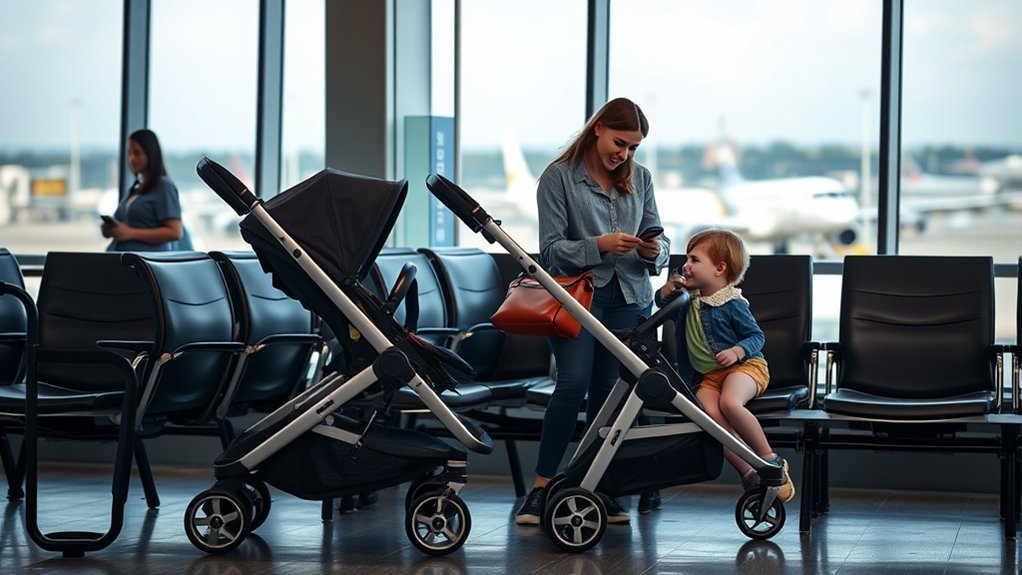
If you’re traveling with a little one, knowing your options for taking a stroller on a plane can make a big difference in your travel experience. In most cases, you have three main choices: carry it on, gate check it, or check it with baggage.
Many airlines allow lightweight, compact strollers as carry-on items if they fold small enough to meet the airline’s cabin baggage rules. This can be helpful because your stroller stays with you and is available right after you leave the aircraft.
Another popular option is to check your stroller at the gate. This lets you use it while walking through security, waiting at the gate, and getting ready to board. You usually collapse it before boarding and pick it up after landing.
You can also check your stroller at the ticket counter with your baggage. This works best for larger, heavier, or non-collapsible strollers that are unlikely to fit in the cabin or at the aircraft door.
At a Glance
| Best Option for Small Travel Strollers | Carry-on if it meets the airline’s folded size limit |
| Best Option for Everyday Strollers | Gate check for easy airport use before boarding |
| Best Option for Large Strollers | Check at the ticket counter with baggage |
| Helpful Gear | Stroller bag, luggage tag, removable accessory pouch, and proof of purchase |
Stowing Your Stroller in Overhead Bins
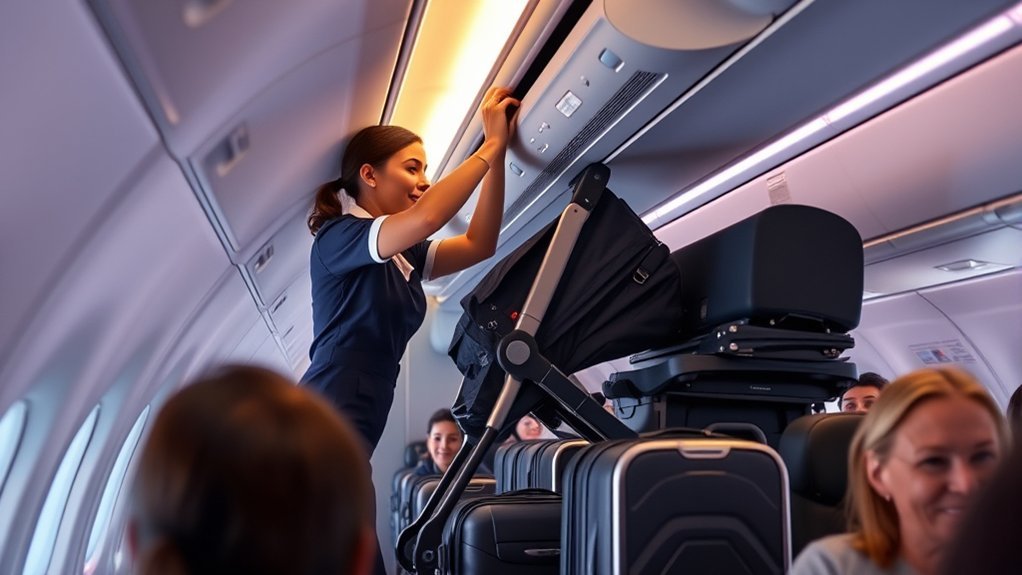
Bringing a compact stroller on board can simplify your travel experience considerably. If your stroller folds small enough to meet your airline’s carry-on size limit, you may be allowed to store it in the overhead bin as carry-on luggage.
A commonly used carry-on guideline is around 22 inches long, 14 to 18 inches wide, and 9 to 10 inches deep, but airline limits are not always identical. Some carriers are stricter, and smaller aircraft may have less overhead bin space. That means a stroller that fits on one flight may still need to be gate checked on another.
Before boarding, fold the stroller completely and secure any loose straps, wheels, cup holders, or trays. A stroller that is not folded properly may take up too much bin space or be refused by the crew. Keeping your stroller in the cabin can also reduce the risk of scratches and make it easier to use immediately after landing.
Pro Tip: Measure your stroller after it is fully folded, not while open. Include wheels, handles, and any attached accessories because airline staff may check the complete folded size.
Checking Your Stroller at the Gate
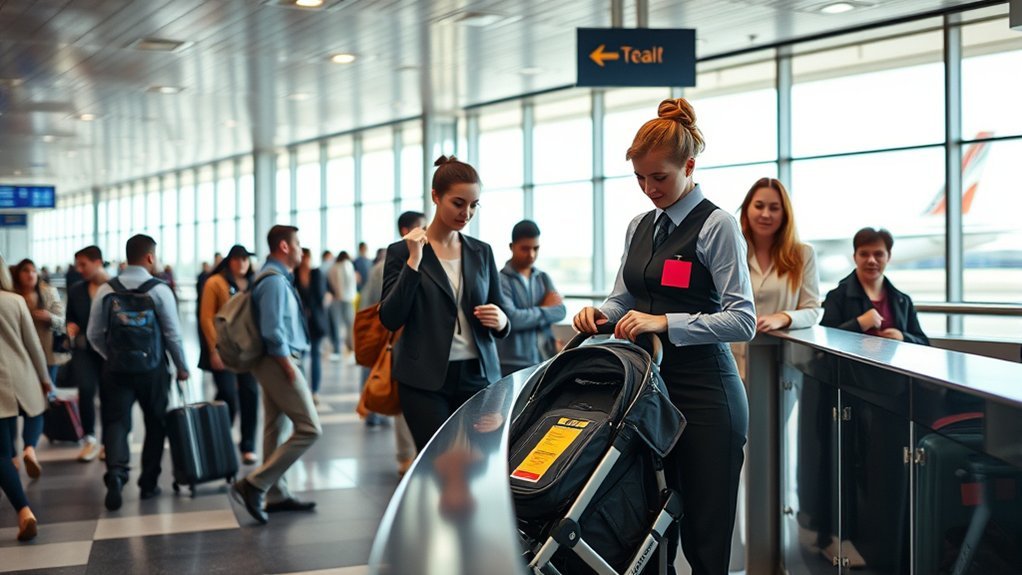
Checking your stroller at the gate offers a convenient way to keep it until you board, making it easier to navigate the airport with your child. Most airlines allow this service for free, meaning you usually do not have to worry about it counting against your baggage limit.
Gate checking is especially useful when you have a tired toddler, a long walk to the gate, a layover, or extra bags to manage. You can use the stroller through check-in, security, and the gate area, then collapse it just before boarding.
Just remember to remove loose items before handing it over. Toys, blankets, rain covers, snack trays, and cup holders can fall off during handling. A protective bag can also help keep the stroller cleaner and reduce scratches.
Benefits of Gate Checking
Gate checking your stroller offers a practical solution for traveling parents, allowing you to keep your essential gear until the last moment before boarding. One of the biggest gate check advantages is the convenience for parents, as you can easily move your child through the airport without carrying them the whole time.
Most airlines allow gate-checked strollers for free, treating them as special child travel items rather than regular carry-on luggage. Strollers are often returned near the jet bridge or aircraft door, although some airports may return them at baggage claim instead.
This option gives you faster access to your stroller after landing and can make connecting flights, immigration lines, and long terminal walks much easier.
How to Gate Check
When you’re ready to board your flight, gate checking your stroller is a straightforward process that lets you use it right up until the last moment. First, inform the airline staff at the gate that you want to gate check your stroller. They may give you a gate check tag to attach to the stroller.
Next, collapse the stroller before handing it over. Make sure the tag is attached securely and that your name or contact details are also on a separate luggage tag. Most airlines permit this for free, and it usually will not count against your luggage allowance.
To improve stroller safety, consider using a protective bag or wrap. This can reduce the risk of dirt, scratches, and bent parts while the stroller is stored in the cargo hold. After landing, ask a crew member whether your stroller will be returned at the aircraft door, jet bridge, or baggage claim.
Airline Policies Overview
Airline policies regarding stroller check-in can vary, so it’s important to understand what to expect before you travel. Many airlines allow you to check strollers for free at the gate, letting you use them until just before boarding. Here are some travel tips to keep in mind:
| Stroller Type | Carry-On Eligibility | Gate Check Benefits |
|---|---|---|
| Lightweight | Yes, if it meets size rules | Easy airport movement |
| Compact/Foldable | Often eligible | Quick access after landing |
| Standard | Sometimes, but often too large | Useful until boarding |
| Double | Check with airline | Helpful for two children in the terminal |
| Jogger | Check with airline | Usually better gate checked or checked as baggage |
Be sure to verify your airline’s specific dimensions and weight guidelines for strollers before your trip. This helps you avoid surprises at the gate and gives you time to choose the best check-in option.
Checking Your Stroller With Baggage

When it comes to checking your stroller with baggage, understanding the procedures and size regulations is essential. Most airlines let you check strollers for free, but you should confirm the specific rules before you arrive at the airport.
Checking a stroller at the ticket counter can be the better choice if your stroller is bulky, heavy, non-collapsible, or difficult to manage through security. It can also reduce what you have to carry through the airport. The trade-off is that you will not have the stroller available between check-in and baggage claim.
Before checking it, fold the stroller securely and remove anything that could detach. If possible, use a padded stroller travel bag and add a luggage tag with your name, phone number, and email address.
Baggage Check Procedures
Before you head to the airport, it’s important to understand how to check your stroller as baggage. Most airlines allow one stroller per child for free, but you still need to be aware of baggage weight and size restrictions specific to your airline.
To avoid damage, remove any stroller accessories like cup holders, snack trays, hooks, toys, and hoods before checking it at the ticket counter. Large or non-collapsible strollers usually need to be checked there rather than at the gate, so plan accordingly.
Consider using a durable stroller bag or protective wrap for added safety during handling. Knowing these procedures will help your stroller arrive in better condition and make your travel day less stressful.
Stroller Size Regulations
Understanding stroller size regulations is key to ensuring a hassle-free travel experience. Each airline has different policies, so you should check the exact requirements before your trip. A compact stroller is more likely to qualify as a carry-on, while larger models are more likely to be checked.
Here’s a quick reference table for common stroller travel situations:
| Airline Situation | Typical Size Concern | Checked Stroller Policy |
|---|---|---|
| Compact travel stroller | Must fit carry-on or overhead bin rules | Usually free to gate check if not carried on |
| Umbrella stroller | Often slim but may be long when folded | Usually free for one per child |
| Full-size stroller | Often too large for overhead bins | Usually free for one per child |
| Double stroller | May be oversized or heavy | Check airline rules before travel |
If your stroller does not meet carry-on requirements, you can usually check it with baggage or at the gate at no additional cost. Still, airline rules vary, so confirm the policy before your departure date.
Warning: Do not leave valuables, passports, electronics, medication, or irreplaceable items in a stroller that will be gate checked or checked with baggage. Keep those items in your personal bag.
Key Considerations for a Travel Stroller
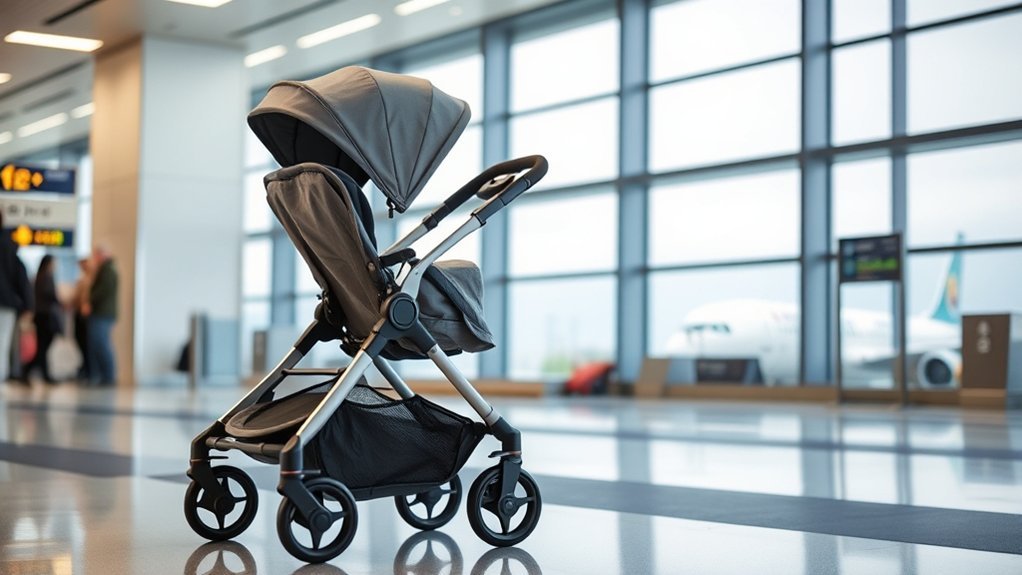
How do you choose the right travel stroller for your adventures? Start by prioritizing lightweight models under 15 lbs, because they are easier to lift, fold, carry, and place into a car, shuttle, or overhead bin.
Look for a stroller with a one-hand fold option. This feature helps when you are holding your child, managing boarding documents, or moving through a busy security line. Also check whether the stroller stands on its own when folded, has a carry strap, or comes with a travel bag.
To improve carry-on compatibility, measure the folded stroller and compare it with your airline’s rules. Don’t forget to evaluate everyday features like large storage baskets, wide canopies for sun protection, reclining seats, brakes, and a secure harness.
Finally, consider stroller age compatibility. A newborn may need a near-flat recline or car seat connection, while an older toddler may need more legroom and a higher weight limit. Choosing a stroller that fits your child’s age, size, and sleep needs will make the trip smoother.
Recommended Travel Strollers for Air Travel

When you’re jet-setting with little ones, choosing the right travel stroller can make all the difference in your journey. The best models are compact, simple to fold, easy to steer, and light enough to carry when needed.
Here are some top lightweight stroller options that include helpful travel stroller features:
- Babyzen YOYO2 6+ Complete Stroller: Weighs about 13.6 lbs and folds compactly, making it a popular option for air travel.
- Cybex Libelle 2 Lightweight Stroller: Folds very small at about 13.7 lbs and includes a UPF 50+ canopy for sun protection.
- Joolz Aer+ Stroller: Ultra-compact at about 13.2 lbs, features a quick fold, and includes a travel bag for convenience.
These strollers can improve comfort for your child while making airport navigation easier for you. Still, always compare the folded dimensions with your airline’s current rules before assuming any stroller will be accepted as a cabin item.
Benefits of Using a Compact Stroller
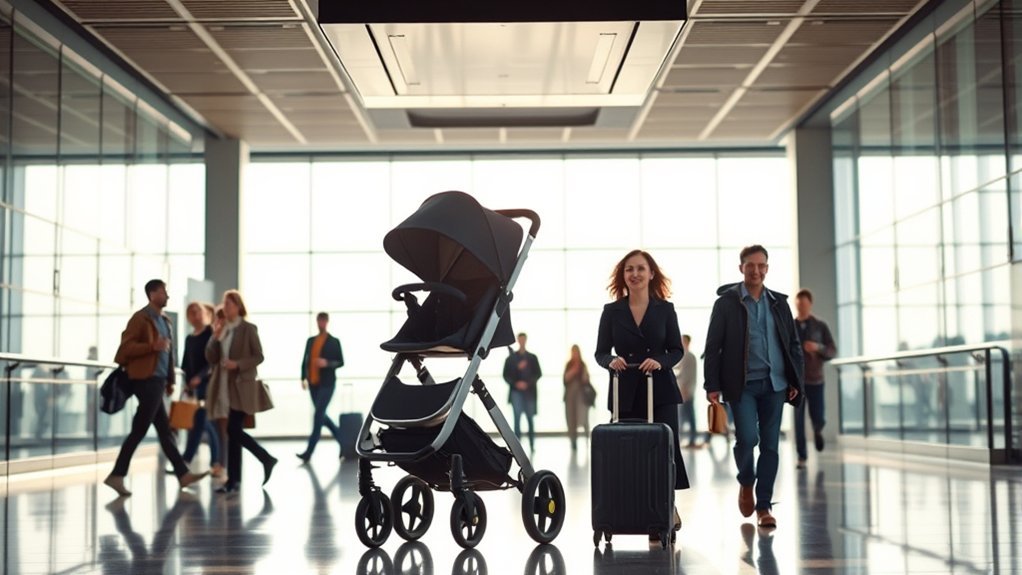
While traveling with little ones can be overwhelming, using a compact stroller can greatly ease your journey. These strollers typically weigh less than 15 lbs, giving you a lightweight design that’s easier to lift, fold, carry, and store in crowded airports.
Many compact strollers fit within common carry-on size ranges, which can improve your travel convenience during boarding. A one-hand fold feature also lets you collapse the stroller while holding your child or managing a bag.
Some compact strollers include smooth ride suspension, sun canopies, reclining seats, and small storage baskets. They are also easier to store in rental cars, hotel rooms, elevators, shuttle buses, and small entryways.
| Feature | Benefit |
|---|---|
| Lightweight Design | Easy to carry through airports |
| One-Hand Fold | Convenient when holding your child |
| Smooth Ride Suspension | More comfortable for babies and toddlers |
| Compact Size | Fits better in small spaces |
Tips for Traveling With a Stroller
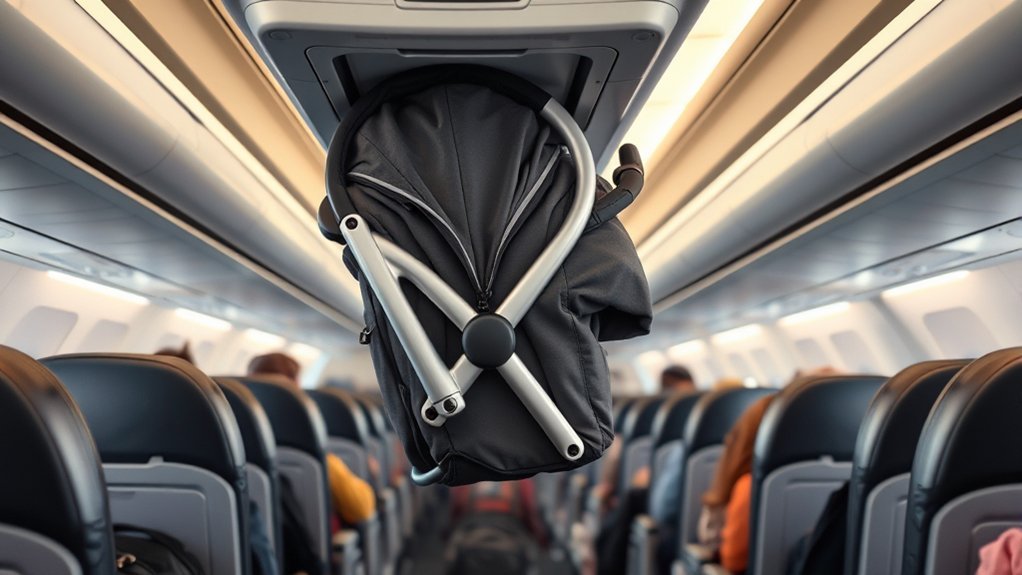
Traveling with a stroller can be much easier if you keep a few key tips in mind. Prioritize travel convenience by choosing a lightweight, compact stroller that meets your airline’s rules and your child’s comfort needs.
Look for essential stroller features that make your journey smoother:
- A one-hand fold feature for easy handling while carrying your child.
- A weight of ideally less than 15 lbs for easier lifting and storage.
- A luggage tag with your name and contact details.
- A stroller bag to protect the frame and fabric during handling.
- Removable accessories packed separately before check-in.
Most airlines allow you to check strollers for free at the gate, so you can keep it until boarding. By planning ahead and selecting the right stroller, you’ll create a stress-free travel experience that helps you focus on the journey instead of the gear.
Handling Lost or Damaged Strollers During Travel
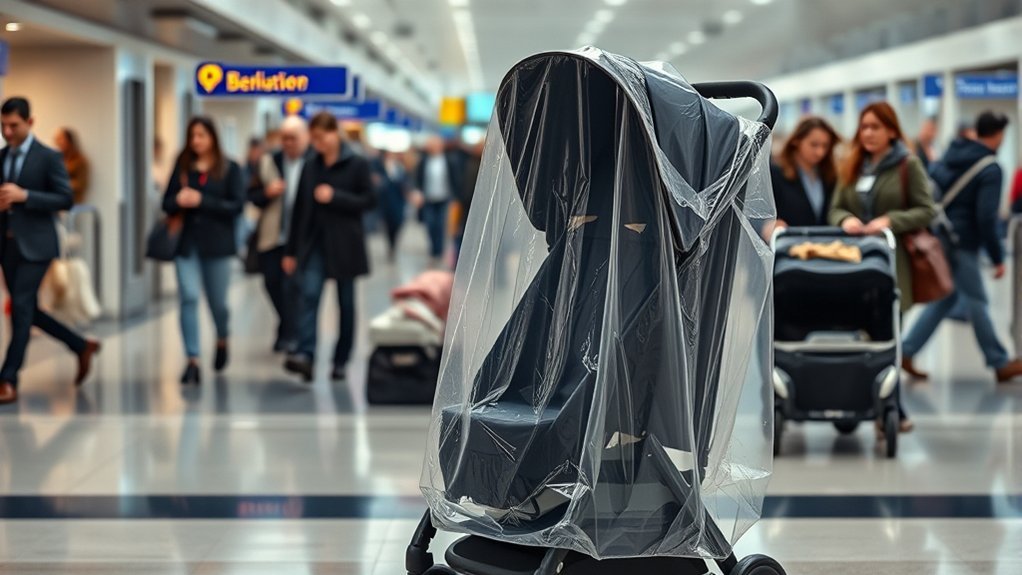
What should you do if your stroller gets lost or damaged during your travels? First, go straight to the airline’s baggage service office before leaving the airport. Reporting the issue immediately is important because many airlines require damage or loss claims to be filed within a limited time.
Each airline has different policies on compensation for a lost stroller or a damaged stroller. You may need to provide a baggage claim ticket, gate check tag, photos, and proof of purchase. If the stroller is damaged, take clear photos before and after the flight, including wheels, handles, frame, fabric, and missing parts.
If you have travel insurance or a credit card with baggage coverage, check whether strollers are included. Keep all receipts for repairs, replacement rentals, or replacement purchases until the claim is resolved.
Frequently Asked Questions
Can I bring a stroller if my child is over a certain age?
Yes, many airlines allow strollers for children beyond the baby stage, but some may apply age, size, or practical-use limits. Check your airline’s specific stroller policy before flying, especially if your child is older or the stroller is large.
What documentation do I need for my stroller during travel?
You usually do not need special documentation for a stroller. However, keep your baggage claim ticket, gate check tag, and proof of purchase handy in case the stroller is lost or damaged.
Are there fees for oversized or heavy strollers?
Most airlines do not charge for one stroller per child, but oversized, heavy, or unusual stroller types may be handled differently. Always check your airline’s baggage and stroller rules before travel day.
Can I use a stroller in the airport before boarding?
Yes, you can usually use a stroller in the airport before boarding. Many parents use the stroller through check-in, security, and the gate area, then gate check it before entering the aircraft.
What should I do if my stroller is lost during travel?
File a report with the airline’s baggage service office before leaving the airport. Keep your baggage tag, gate check tag, photos, and proof of purchase. If you have travel insurance, check whether your policy covers delayed, lost, or damaged baby gear.
Is gate checking safer than checking a stroller with baggage?
Gate checking can reduce the amount of time your stroller spends in the baggage system, but it does not remove all risk of damage. A protective stroller bag, luggage tag, and removed accessories can help either way.
Can I take a double stroller on a plane?
You can usually bring a double stroller to the airport, but it may be too large for the cabin. Most double strollers are better suited for gate check or baggage check. Confirm your airline’s policy before flying.
Conclusion
To sum up, bringing a stroller on a plane can make family travel much easier, but the best option depends on your stroller’s folded size and your airline’s rules. A compact stroller may work as a carry-on, while a larger stroller is usually better for gate checking or baggage check.
Before you travel, measure your stroller, remove loose accessories, add a luggage tag, and confirm the policy with your airline. With a little planning, your stroller can be a reliable travel companion from the airport entrance to your final destination.
