
Choosing among Arc’teryx winter jackets is mostly a question of job: do you need a waterproof shell, built-in insulation, or a light layer that packs small?
Arc’teryx Beta AR Men’s Jacket is the top technical shell because it combines GORE-TEX PRO protection, pit zips, and a helmet-compatible hood. For a lower-cost insulated option, Arc’teryx Atom SV Hoody Men’s gives you warm synthetic insulation without paying for a waterproof shell.
We checked each linked ASIN against current manufacturer specifications, indexed marketplace records, and U.S. recall records, then separated shells from insulated jackets so you can compare the right features.
Arc’teryx Winter Jackets Compared
| Product | Best for | Weather protection | Insulation | Hood |
|---|---|---|---|---|
|
Premium
|
Technical shell for storms and flexible winter layering | GORE-TEX PRO waterproof shell | None; add your own warm layers | Helmet-compatible DropHood |
|
Premium
|
Cold, wet conditions when you want one waterproof insulated jacket | 2L GORE-TEX ePE, waterproof and windproof | Coreloft Continuous 90 synthetic insulation | Helmet-compatible StormHood |
|
Mid-range
|
Warm synthetic insulation for active cold weather and damp conditions | Wind-resistant face fabric with FC0 DWR | Coreloft 120 synthetic insulation | Insulated, helmet-compatible StormHood |
|
Premium
|
Everyday winter wear with waterproofing and moderate synthetic warmth | 80D 2L GORE-TEX ePE, waterproof and windproof | Coreloft 80 body; 60 hood and underarms | Insulated DropHood |
|
Mid-range
|
Hiking, commuting, and travel when you want a simpler waterproof shell | 80D 3L GORE-TEX ePE with C-KNIT backer | None; designed for layering | Low-profile adjustable StormHood |
|
Mid-range
|
Dry cold, travel, and low-bulk warmth beneath a shell | Light water-repellent face fabric; not waterproof | 850-fill down with Coreloft in moisture-prone zones | Insulated StormHood |
Arc’teryx Winter Jackets: Our Top Picks
1. Arc’teryx Beta AR Men’s Jacket

Bottom line: Choose this jacket if you want a durable technical shell that can handle wet, windy mountain weather while letting you change insulation underneath. It is protection first, not a warm coat by itself.
- Weather protection: GORE-TEX PRO waterproof shell.
- Insulation: None; add your own warm layers.
- Hood: Helmet-compatible DropHood.
- Heat management: Pit zips, useful for dumping heat during active use.
This linked jacket is an uninsulated GORE-TEX PRO shell built around weather protection and layering. That makes it useful when your winter activity level or temperature changes through the day.
Pit zips help dump heat, and the helmet-compatible DropHood suits alpine and snowsport use. The trade-off is simple: you must supply the warmth with a base layer and midlayer, and the technical shell can feel like more jacket than a mild commute needs.
- Waterproof, windproof GORE-TEX PRO shell
- Helmet-compatible DropHood for technical use
- Pit zips provide direct ventilation
- Layering system adapts across temperatures
- No built-in insulation
- Technical shell can feel excessive for casual use
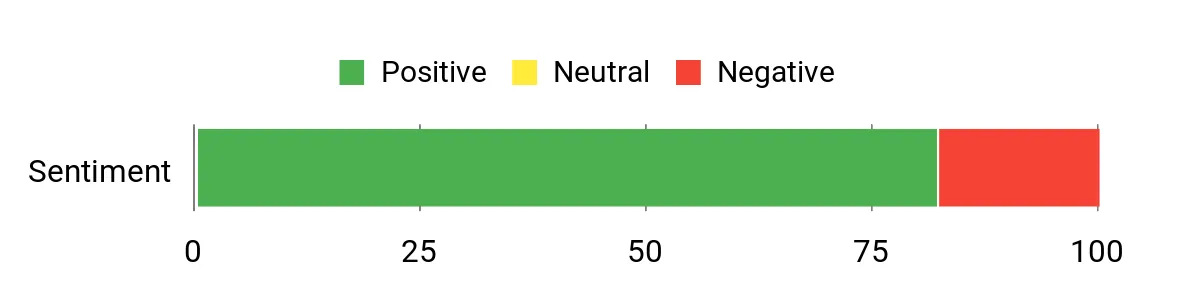
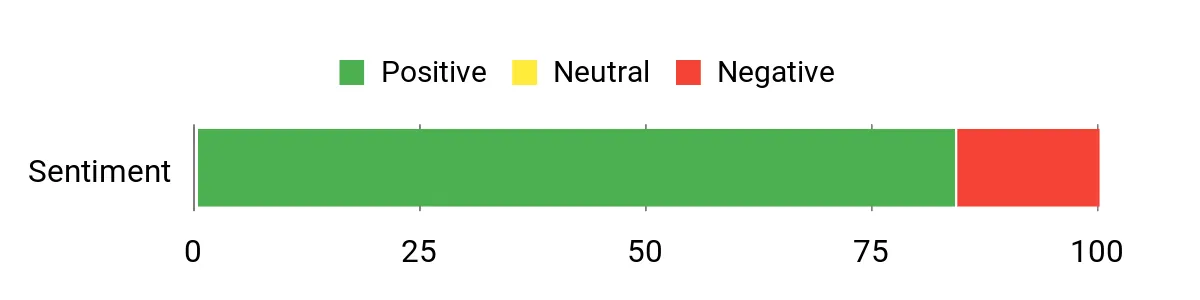
Historical feedback snapshot: The retained chart below comes from the original article and is not treated as live review data.
2. Arc’teryx Beta Insulated Jacket Men’s
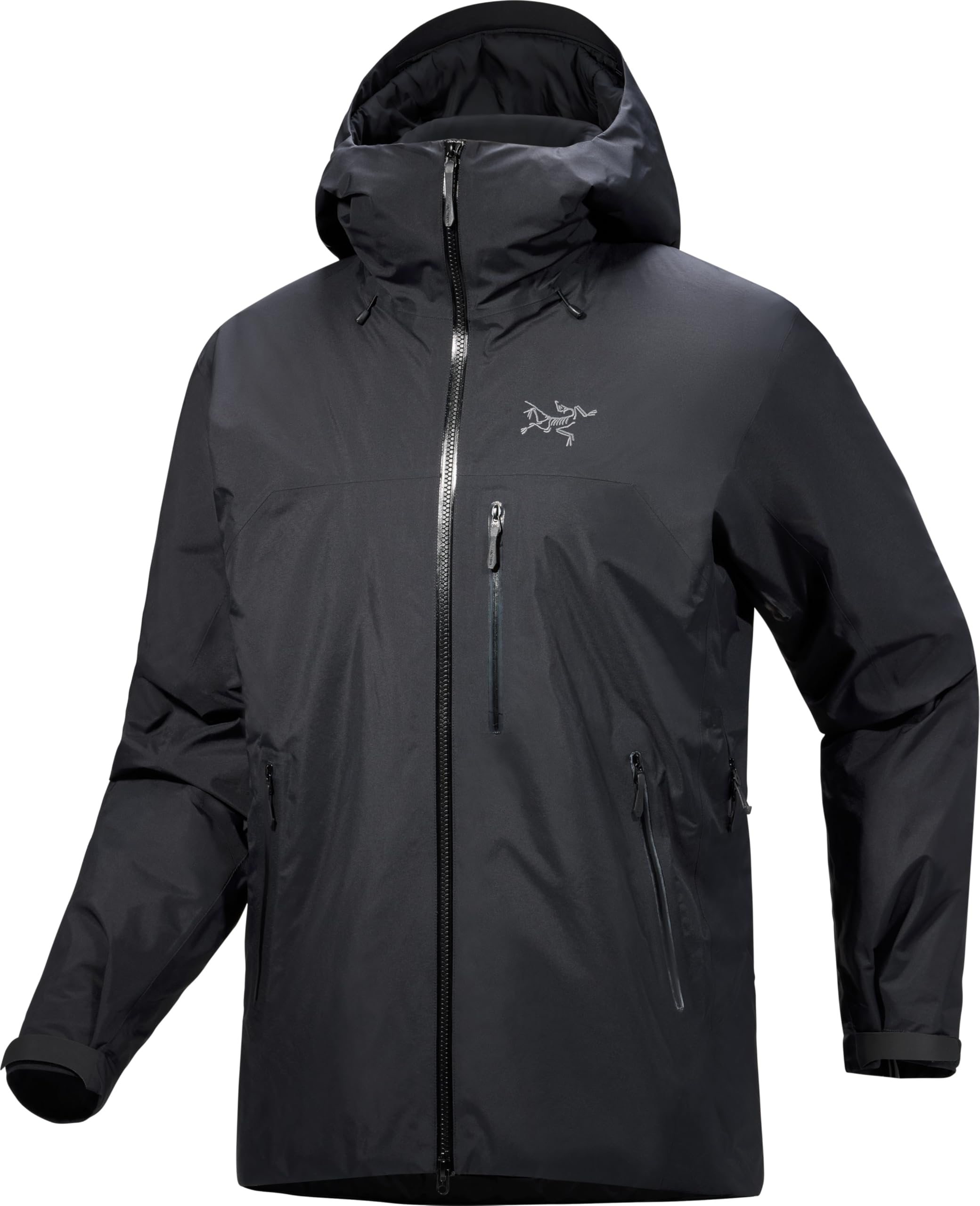
Bottom line: This jacket is the easiest pick here when you need waterproof protection and built-in synthetic warmth in one jacket. It suits cold, wet days better than an uninsulated shell when you do not want to manage separate layers.
- Weather protection: 2L GORE-TEX ePE, waterproof and windproof.
- Insulation: Coreloft Continuous 90 synthetic insulation.
- Hood: Helmet-compatible StormHood.
- Heat management: Pit zips, useful when effort level rises.
Arc’teryx pairs a 2-layer GORE-TEX ePE shell with Coreloft Continuous 90 insulation. The combination is designed for cold mountain conditions while still providing pit zips for ventilation.
A helmet-compatible StormHood and regular fit make it practical for winter hiking and alpine use. Its main limitation is flexibility: a fixed insulated shell can feel too warm indoors or during sustained high-output activity.
- Waterproof, windproof shell with built-in warmth
- Synthetic insulation remains useful in damp conditions
- Pit zips help manage heat
- Helmet-compatible hood
- Less adaptable than separate shell and midlayer
- Can be too warm for high-output use or heated spaces
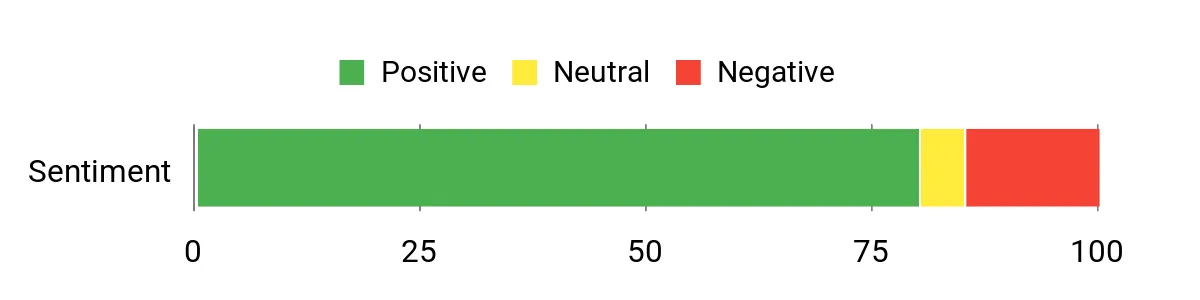
Historical feedback snapshot: The retained chart below comes from the original article and is not treated as live review data.
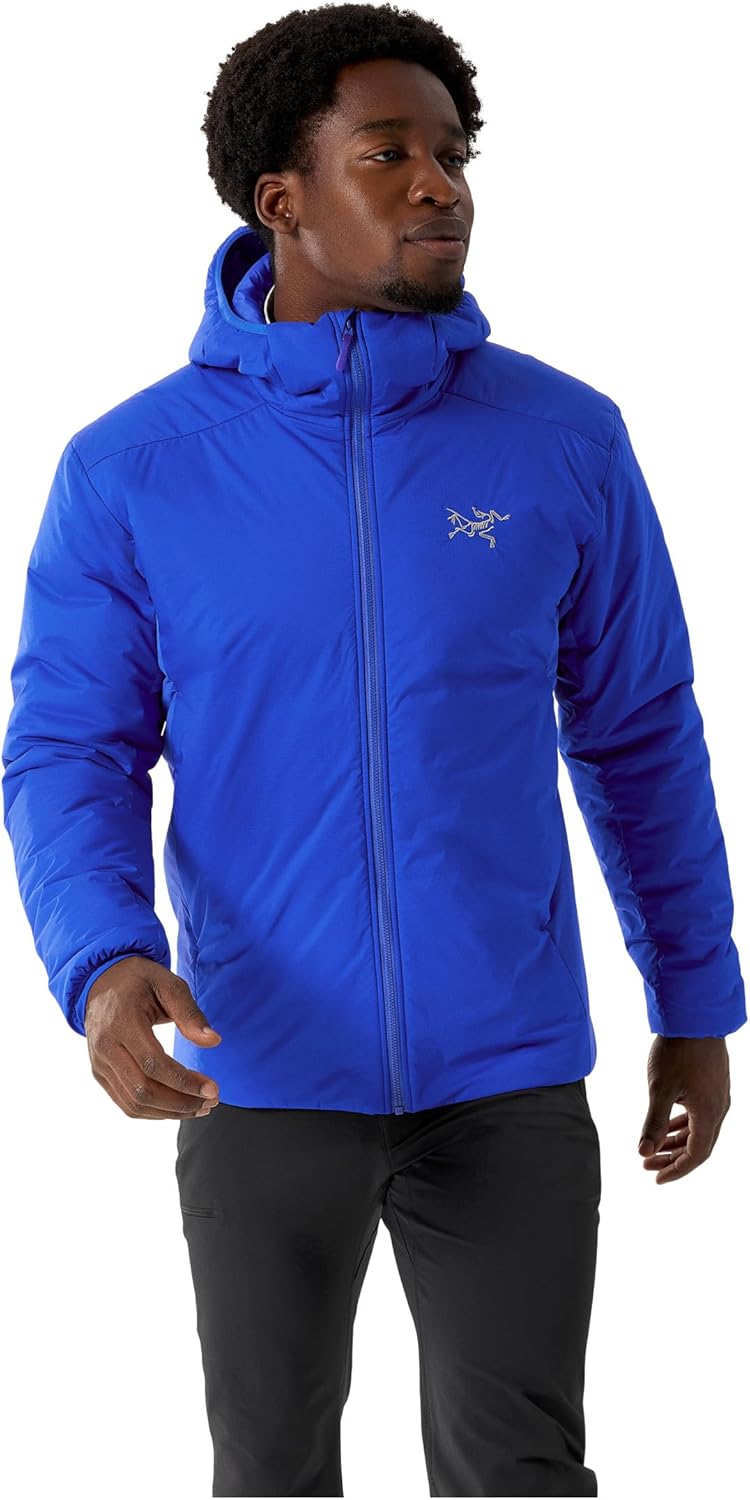
3. Arc’teryx Atom SV Hoody Men’s
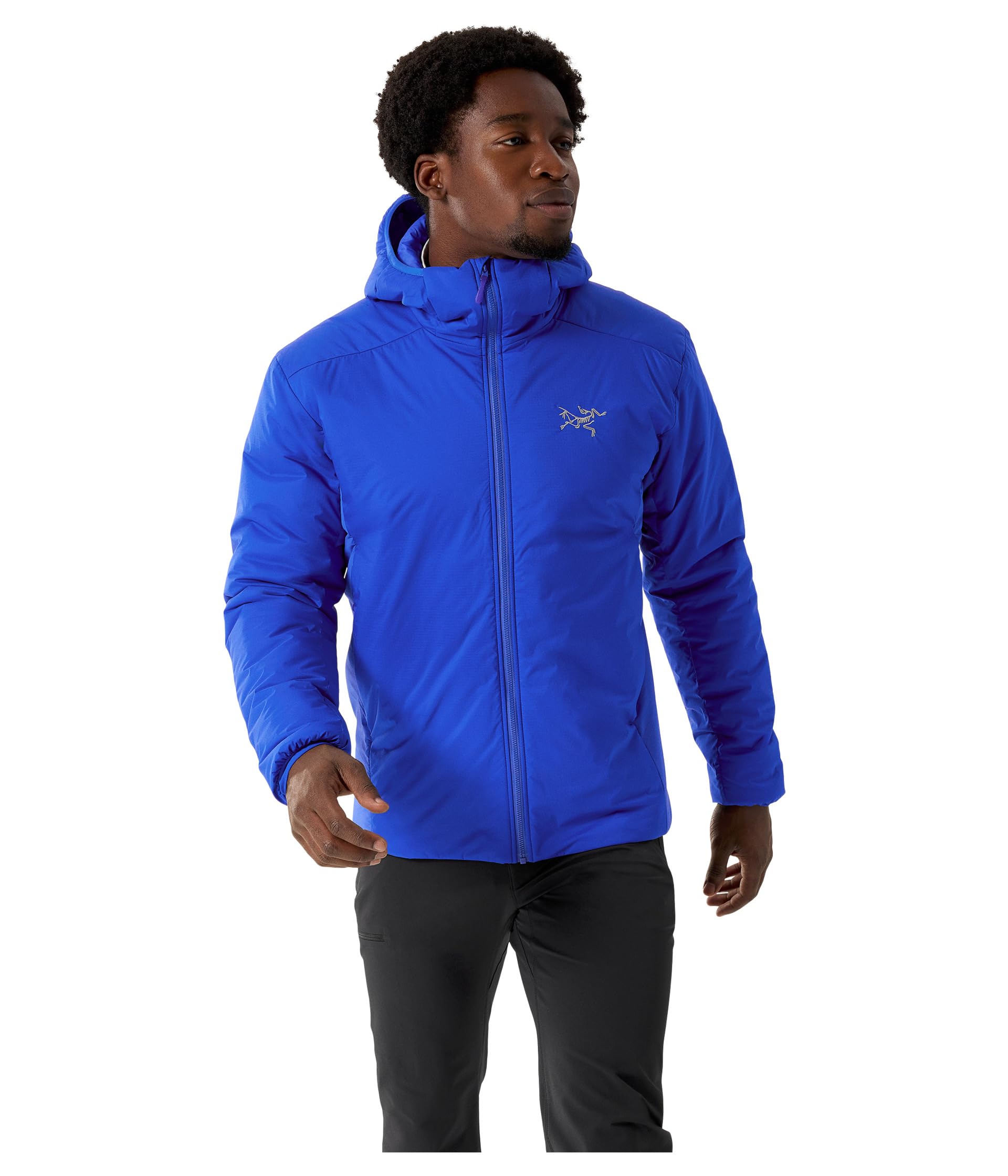
Bottom line: This hoody is the best value in this group if you need substantial synthetic warmth without paying for a waterproof GORE-TEX shell. It works well as a cold-weather outer in dry conditions or under a shell when precipitation increases.
- Weather protection: Wind-resistant face fabric with FC0 DWR.
- Insulation: Coreloft 120 synthetic insulation.
- Hood: Insulated, helmet-compatible StormHood.
- Heat management: Breathable stretch side panels, useful during movement.
This is the warmest model in the Atom family. Coreloft 120 insulation supplies warmth even when damp, while full-length stretch side panels improve breathability during movement.
The Tyono 30 face fabric is wind resistant and treated to shed light moisture, but it is not a waterproof shell. For sustained rain or wet snow, pair it with a true waterproof outer layer.
- Warm synthetic insulation that handles damp conditions
- Breathable side panels reduce bulk and heat buildup
- Helmet-compatible insulated hood
- Works as a standalone layer or under a shell
- Not waterproof for sustained precipitation
- Less protective than a hardshell in strong wind-driven weather
Historical feedback snapshot: The retained chart below comes from the original article and is not treated as live review data.
4. Arc’teryx Ralle Insulated Jacket Men’s
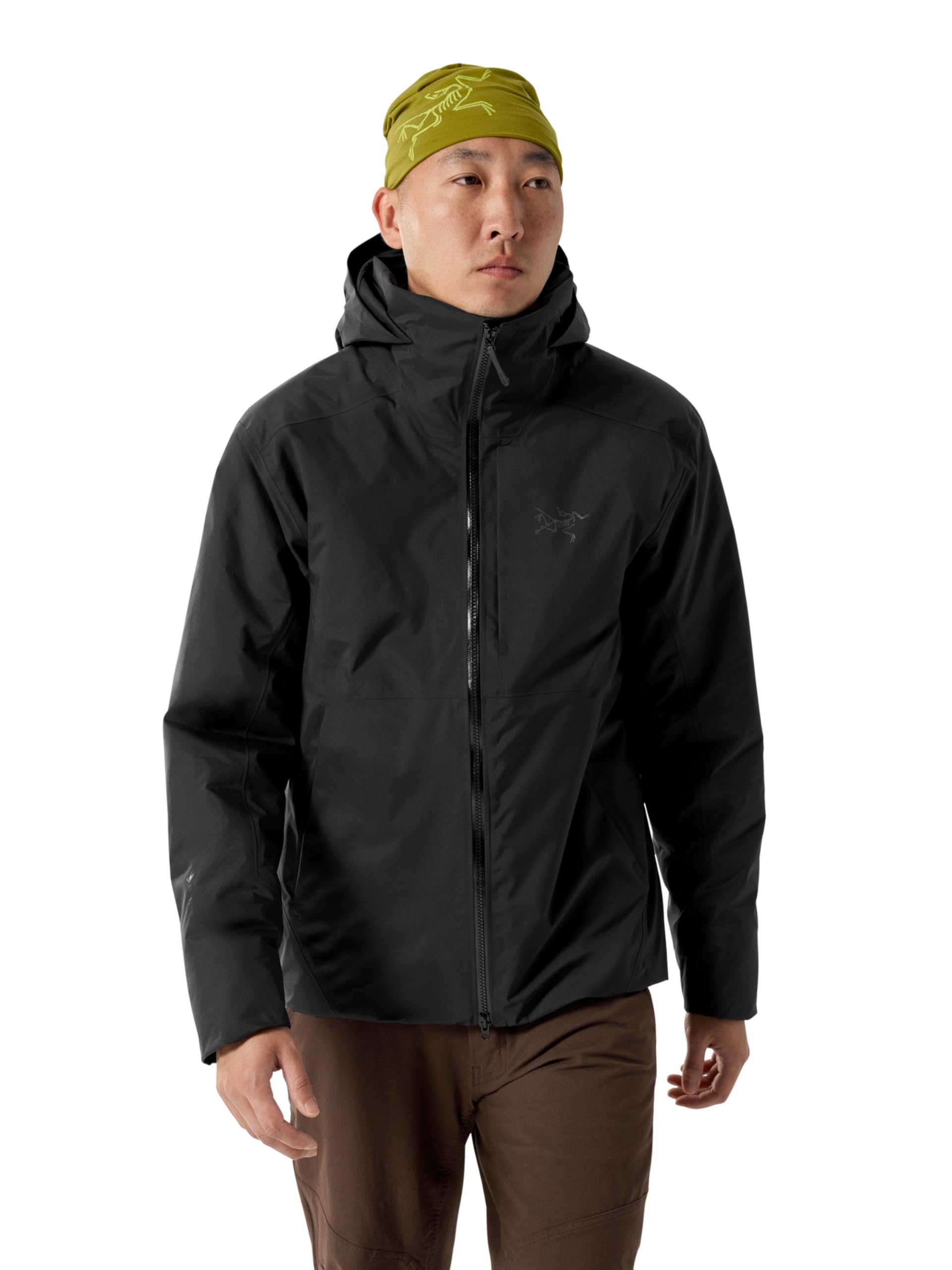
Bottom line: This jacket is the everyday option for buyers who want waterproof GORE-TEX protection with moderate synthetic warmth and a less alpine look. It fits wet commutes, travel, and general winter use.
- Weather protection: 80D 2L GORE-TEX ePE, waterproof and windproof.
- Insulation: Coreloft 80 body; 60 hood and underarms.
- Hood: Insulated DropHood.
- Heat management: Mapped insulation, less bulk at hood and underarms.
Its 80D 2-layer GORE-TEX ePE shell provides full rain and wind protection. Coreloft insulation is mapped with more in the body and less in the hood and underarms to reduce bulk where mobility matters.
An insulated DropHood and regular fit add coverage without turning it into a technical alpine shell. The compromise is packability: it is heavier and bulkier than a light shell or down midlayer.
- Waterproof GORE-TEX shell for wet winter weather
- Synthetic insulation works well in damp conditions
- Insulated hood and internal cuff gaskets
- Cleaner everyday design than a technical shell
- Less packable than a shell-and-midlayer setup
- Fixed insulation can feel warm indoors
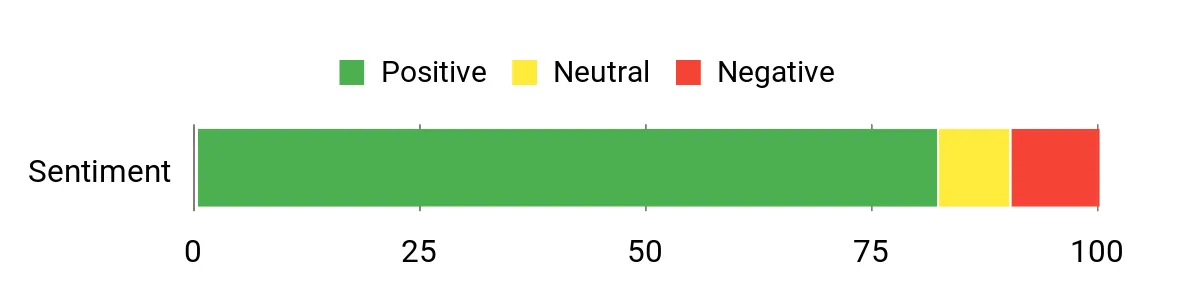
Historical feedback snapshot: The retained chart below comes from the original article and is not treated as live review data.
5. Arc’teryx Beta Jacket Men’s
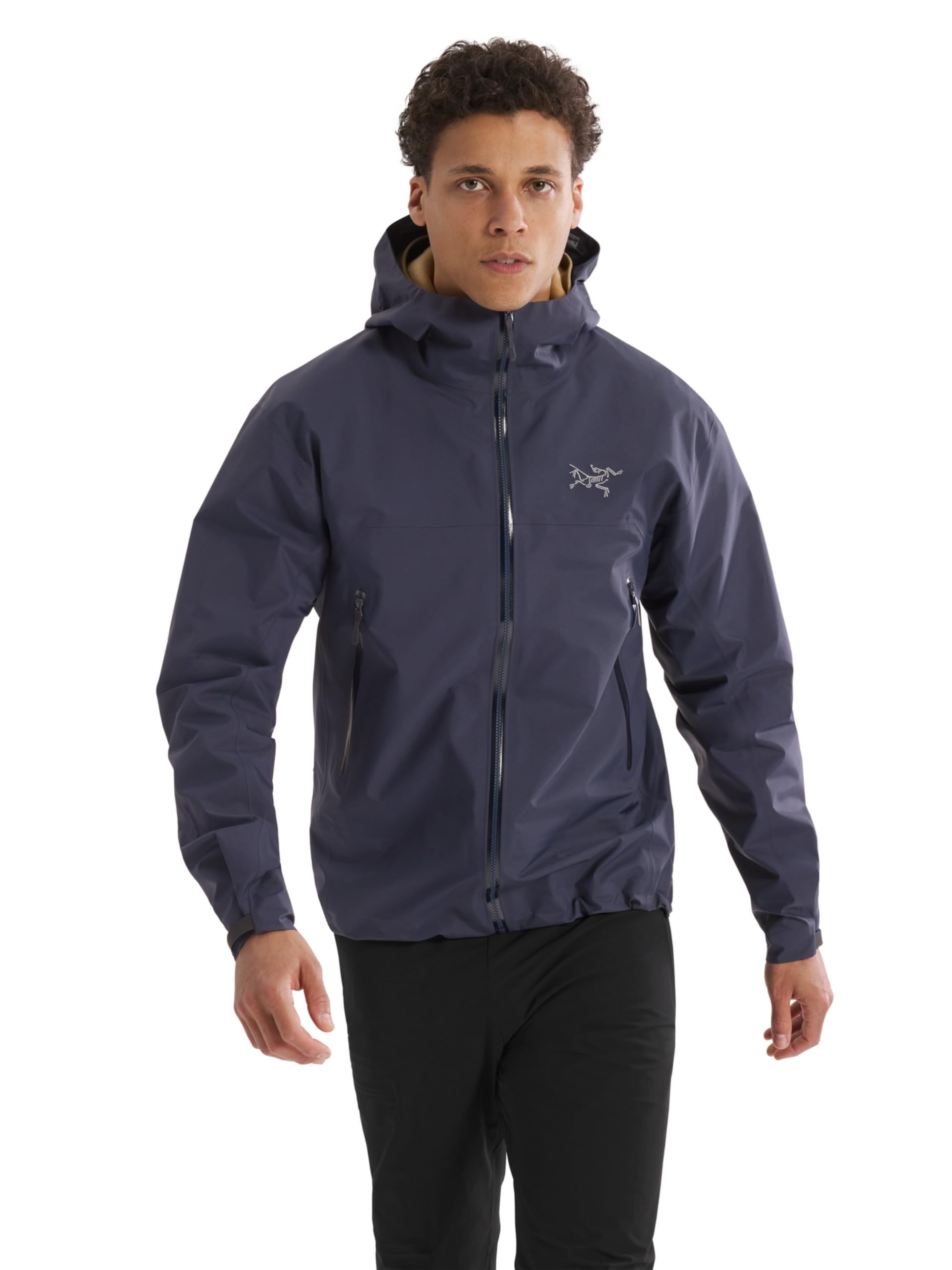
Bottom line: This jacket is the simpler waterproof shell for hiking, commuting, and travel. It gives you full GORE-TEX weather protection with a softer backer, but no insulation and no pit zips on this model.
- Weather protection: 80D 3L GORE-TEX ePE with C-KNIT backer.
- Insulation: None; designed for layering.
- Hood: Low-profile adjustable StormHood.
- Heat management: No pit zips, simpler design for everyday use.
The 80D 3-layer GORE-TEX ePE construction uses a C-KNIT backer for a more comfortable feel against normal clothing. It is lighter in features than the Arc’teryx Beta AR Men’s Jacket, which can be a benefit for everyday use.
The low-profile StormHood keeps the silhouette clean, but it is not the helmet-focused hood found on the Arc’teryx Beta AR Men’s Jacket. Arc’teryx confirms this model does not have pit zips, so high-output users may prefer a more technical shell.
- Waterproof, windproof, breathable GORE-TEX shell
- C-KNIT backer improves next-to-layer comfort
- Streamlined design for hiking and daily wear
- Easy to pair with your preferred insulation
- No built-in insulation
- No pit zips on this model
- Low-profile hood is less helmet-focused than the Arc’teryx Beta AR Men’s Jacket
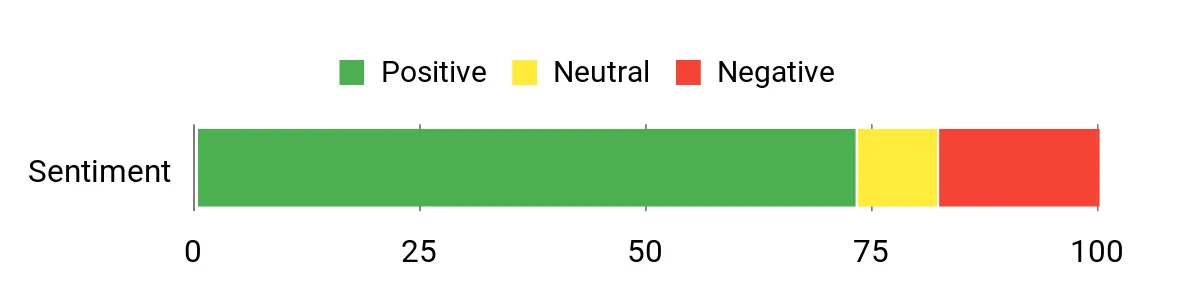
Historical feedback snapshot: The retained chart below comes from the original article and is not treated as live review data.
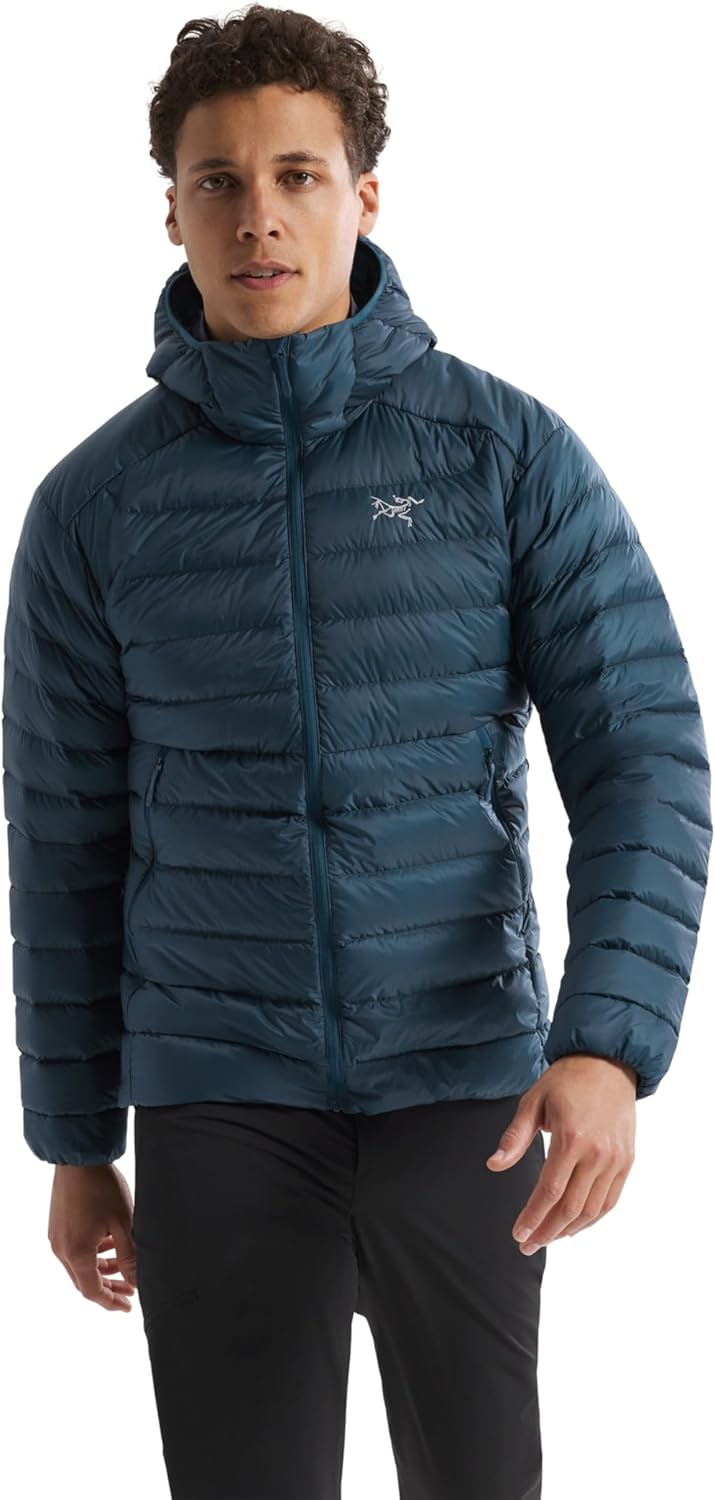
6. Arc’teryx Cerium Hoody Men’s
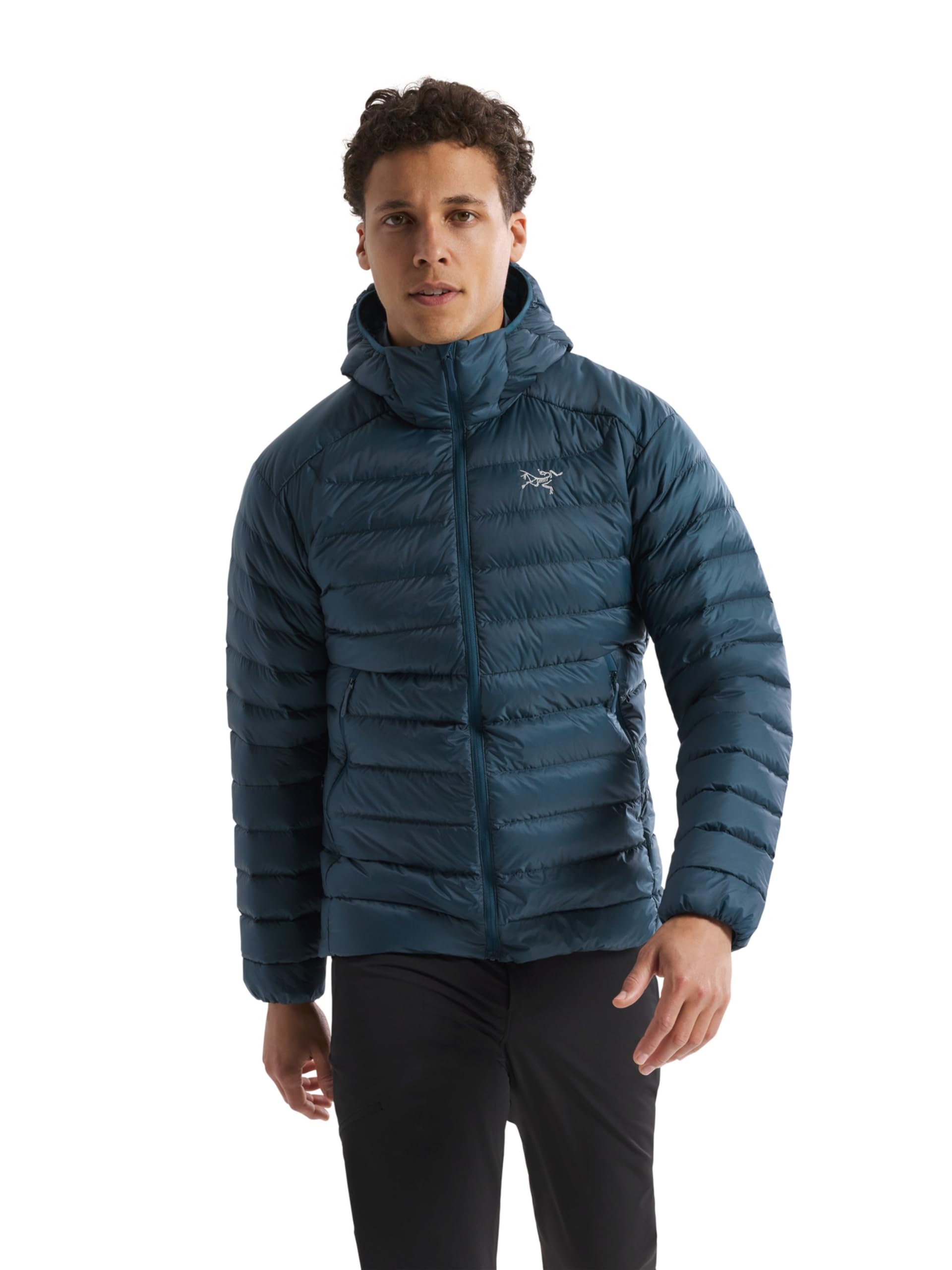
Bottom line: This hoody is the packable choice when warmth-to-weight matters more than wet-weather protection. It works best in dry cold, at camp, or under a waterproof shell.
- Weather protection: Light water-repellent face fabric; not waterproof.
- Insulation: 850-fill down with Coreloft in moisture-prone zones.
- Hood: Insulated StormHood.
- Heat management: Low-bulk design, easy to carry under a shell.
Its 850-fill down supplies high warmth for the packed size, while Coreloft synthetic insulation is placed in moisture-prone areas. That hybrid approach makes it more forgiving than an all-down layout, but it still is not a rain shell.
The light face fabric helps keep bulk down for travel and backpacking. Protect it from prolonged precipitation and rough abrasion, especially if you plan to use it as an outer layer.
- High warmth-to-weight from 850-fill down
- Compressible for travel and backpacking
- Synthetic insulation in moisture-prone zones
- Insulated hood adds head and neck warmth
- Not waterproof for sustained rain or wet snow
- Light face fabric needs more care around abrasion
- Down performance drops when thoroughly soaked
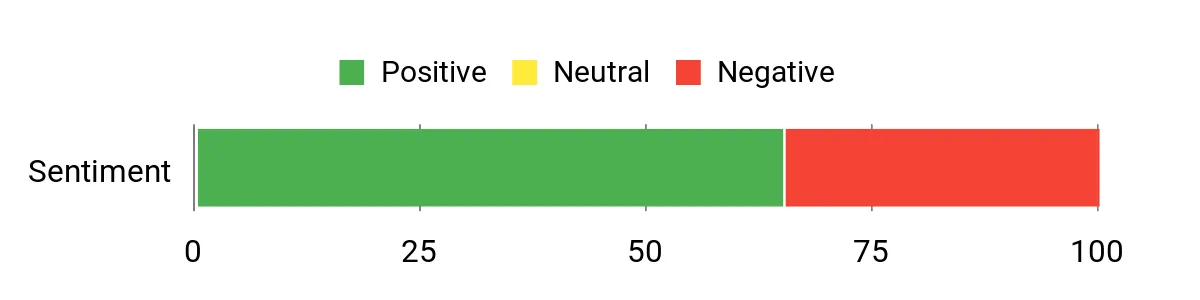
Historical feedback snapshot: The retained chart below comes from the original article and is not treated as live review data.
Arc’teryx Beta AR Men’s Jacket vs Arc’teryx Atom SV Hoody Men’s: Is the Upgrade Worth It?
These are not direct substitutes. The Arc’teryx Beta AR Men’s Jacket emphasizes waterproof shell protection, while the Arc’teryx Atom SV Hoody Men’s emphasizes synthetic warmth.
- Weather protection: The Arc’teryx Beta AR Men’s Jacket is the waterproof hardshell; the Arc’teryx Atom SV Hoody Men’s is weather resistant, not waterproof.
- Warmth: The Arc’teryx Atom SV Hoody Men’s includes Coreloft 120 insulation; the Arc’teryx Beta AR Men’s Jacket has no built-in insulation.
- Layering: The Arc’teryx Beta AR Men’s Jacket lets you change insulation as conditions change.
- Use case: The Arc’teryx Atom SV Hoody Men’s is simpler for dry or lightly damp cold weather and active layering.
Which Arc’teryx Winter Jacket Should You Buy?
- Technical storm shell: get the Arc’teryx Beta AR Men’s Jacket.
- Cold and wet all-in-one: get the Arc’teryx Beta Insulated Jacket Men’s.
- Active synthetic warmth: get the Arc’teryx Atom SV Hoody Men’s.
- Wet-weather daily wear: get the Arc’teryx Ralle Insulated Jacket Men’s.
- Simple everyday shell: get the Arc’teryx Beta Jacket Men’s.
- Packable down warmth: get the Arc’teryx Cerium Hoody Men’s.
How We Chose
- Exact listing match: We checked each ASIN against indexed marketplace records to confirm the linked model.
- Manufacturer specs: We prioritized Arc’teryx product pages for membrane, insulation, hood, fit, and construction details.
- Use-case fit: We separated waterproof shells, insulated waterproof jackets, synthetic insulation, and down so different jobs are not scored as if they were identical.
- Safety: We checked U.S. CPSC recall records for Arc’teryx. The search surfaced a historical ski-boot recall, not these jacket models.
- Owner feedback: We did not add owner-specific claims where multiple independent non-Amazon sources did not show a clear, consistent trend.
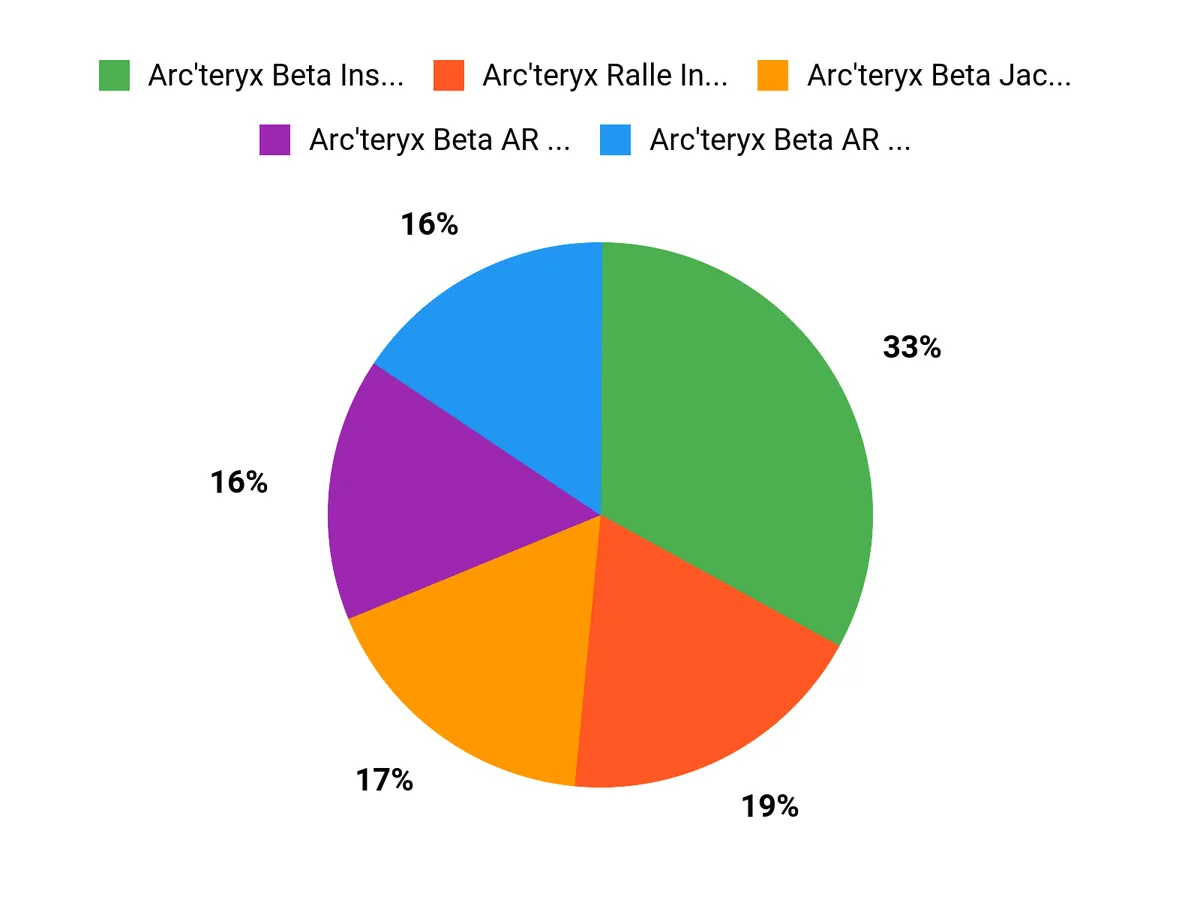
Historical Customer Favorites Snapshot
The original article included the chart below. It is retained to preserve the source article, but it should be treated as a historical snapshot rather than current shopping data.
Wrapping Up
The six original comparison-table images are retained below so the article keeps every source image unchanged. Use the verified comparison table near the top for current decision-making.




Arc’teryx Winter Jacket Buying Guide
Shell or Insulated Jacket?
An uninsulated shell blocks wind and precipitation but does not create much warmth. Choose the Arc’teryx Beta AR Men’s Jacket or Arc’teryx Beta Jacket Men’s if you want to adjust base and midlayers as temperatures change. Choose the Arc’teryx Beta Insulated Jacket Men’s when you want waterproofing and insulation in one piece.
Wet Cold or Dry Cold?
Synthetic insulation is the easier choice when damp weather is common because it continues to insulate when wet. That makes the Arc’teryx Atom SV Hoody Men’s and the insulated GORE-TEX models practical for variable winter weather. For dry cold and maximum packability, the Arc’teryx Cerium Hoody Men’s is the more natural fit.
How Much Ventilation Do You Need?
High-output hiking and climbing create heat even in winter. The Arc’teryx Beta AR Men’s Jacket and Arc’teryx Beta Insulated Jacket Men’s include pit zips, while the Arc’teryx Atom SV Hoody Men’s uses breathable side panels. The Arc’teryx Beta Jacket Men’s is simpler and has no pit zips, so it suits lower-output use better.
Do You Need a Helmet-Compatible Hood?
If you wear a ski or climbing helmet, check hood compatibility before buying. The Arc’teryx Beta AR Men’s Jacket and Arc’teryx Beta Insulated Jacket Men’s are built around helmet use. The Arc’teryx Beta Jacket Men’s uses a lower-profile hood, which is cleaner for hiking and commuting but less suited to helmets.
Fit and Layering Room
Try to size for the layers you actually plan to wear. A shell needs enough room for a base layer and insulation without restricting your shoulders. An insulated jacket may need less underneath. Check sleeve length, hem coverage, hood adjustment, and mobility with your real winter layers before removing tags.
Model Year and Listing Match
Arc’teryx often revises fabrics, membranes, fit, and small features while keeping the same family name. Match the ASIN, model number, material description, and hood details before buying. This matters most for the Arc’teryx Beta AR Men’s Jacket because the linked listing represents an earlier generation than the newest Arc’teryx revision.
Mistakes to Avoid When Buying an Arc’teryx Winter Jacket
- Expecting a shell to be warm: add insulation under either uninsulated shell in this roundup.
- Using down as a rain shell: protect the Arc’teryx Cerium Hoody Men’s with waterproof outerwear in sustained precipitation.
- Ignoring ventilation: choose pit zips or breathable panels for high-output use.
- Assuming every model year is identical: confirm the linked generation and feature list.
- Buying by badge alone: choose the jacket whose protection and insulation match your real conditions.
FAQs
Which Arc’teryx jacket is best for winter?
The Arc’teryx Beta AR Men’s Jacket is the strongest technical shell in this roundup, but it needs insulation underneath. The Arc’teryx Beta Insulated Jacket Men’s is better when you want waterproofing and built-in warmth together. For dry cold and packability, the Arc’teryx Cerium Hoody Men’s is the better fit.
Is the Arc’teryx Beta AR Men’s Jacket warm enough for winter?
The Arc’teryx Beta AR Men’s Jacket can work very well in winter, but it is an uninsulated shell. Its job is to block wind and precipitation. Your warmth comes from the base layer and midlayer you wear underneath. This setup is flexible because you can change insulation as temperature, wind, and activity level change.
What is the difference between the Arc’teryx Beta AR Men’s Jacket and Arc’teryx Beta Jacket Men’s?
The Arc’teryx Beta AR Men’s Jacket is the more technical shell, with GORE-TEX PRO, pit zips, and a helmet-compatible DropHood. The Arc’teryx Beta Jacket Men’s is simpler, using 80D GORE-TEX ePE with a C-KNIT backer and a low-profile hood. It also lacks pit zips.
Is down or synthetic insulation better for winter?
Down usually gives you better warmth for its packed size, which is why the Arc’teryx Cerium Hoody Men’s works well for dry cold and travel. Synthetic insulation is more forgiving when damp and is easier to use in variable winter weather. Your choice should depend more on moisture exposure and activity than on insulation type alone.
Can the Arc’teryx Cerium Hoody Men’s be worn in rain?
The Arc’teryx Cerium Hoody Men’s can handle light moisture better than bare down because its face fabric is treated and synthetic insulation is used in moisture-prone zones. It is not a waterproof shell, though. For sustained rain, wet snow, or long exposure, wear it under a waterproof jacket rather than using it as your only outer layer.
How should I wash a GORE-TEX Arc’teryx jacket?
Follow the care label for your exact jacket because instructions can vary by model. In general, close fasteners, avoid fabric softener, rinse thoroughly, and use the specified tumble-dry setting when allowed. Cleaning and proper drying help maintain the face fabric and water-repellent finish. Never substitute generic care advice for the garment label.
What should I verify on Amazon before buying?
Confirm the exact Arc’teryx model, ASIN, size, color, seller, return terms, membrane description, insulation type, hood design, and model number when shown. A family name such as Beta or Cerium can remain the same across revisions, so two listings with similar names may use different fabrics or features.
Final Verdict
For Arc’teryx winter jackets, start with the job rather than the price tier. The Arc’teryx Beta AR Men’s Jacket is the best overall technical shell here because it combines serious weather protection with ventilation and helmet compatibility, but you still need insulation underneath.
If you want warmth built in, the Arc’teryx Beta Insulated Jacket Men’s is the more direct cold-and-wet option. If packability matters most, the Arc’teryx Cerium Hoody Men’s is the light down-focused choice for dry cold and layering.
For value, see the Arc’teryx Atom SV Hoody Men’s. For a premium insulated waterproof jacket, see the Arc’teryx Beta Insulated Jacket Men’s.
