
For the U.S. market, the 2026 Toyota RAV4 answers the engine question clearly: every model uses a 2.5-liter four-cylinder as part of either a hybrid or plug-in hybrid system. The main differences are drivetrain, total system output, fuel economy, electric range, charging equipment, and towing capacity.
Quick Answer
Yes. Every U.S.-market 2026 Toyota RAV4 uses a 2.5-liter inline-four engine, but none is gas-only. Regular hybrid models make 226 horsepower with front-wheel drive or 236 with all-wheel drive. Plug-in hybrid models use the same engine size, standard AWD, and a 324-horsepower system.
Key Takeaways
- The new U.S. 2026 RAV4 lineup includes hybrid and plug-in hybrid models only.
- Hybrid output is 226 horsepower with FWD and 236 horsepower with AWD.
- Every plug-in hybrid has AWD and produces 324 net combined horsepower.
- Manufacturer-estimated PHEV electric range varies from 48 to 52 miles by grade.
- Towing capacity depends on the trim and equipment, not AWD alone.
Note: This guide covers U.S.-market specifications. Trims, power ratings, range estimates, charging equipment, and warranties can differ in other countries. Confirm the final window sticker, owner’s manual, and regional Toyota information before buying or towing.
What Engine Does the 2026 Toyota RAV4 Use?
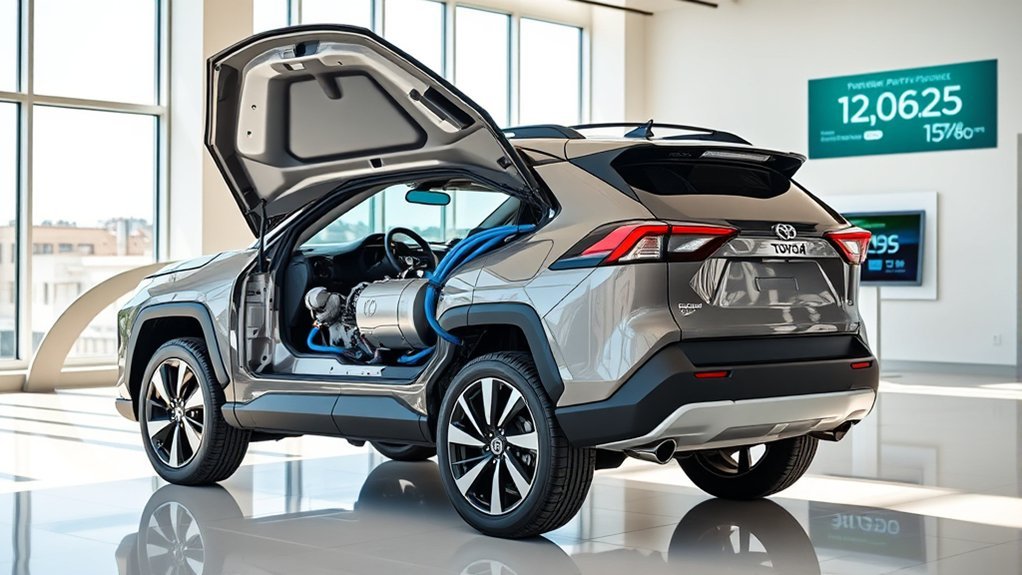
Every U.S. 2026 RAV4 uses a 2.5-liter A25A-FXS inline-four-cylinder engine. The gasoline engine works with electric motors instead of operating as a stand-alone, gas-only powertrain.
According to Toyota’s updated U.S. specifications, regular hybrid models use the company’s fifth-generation hybrid system. Plug-in hybrid models introduce a sixth-generation PHEV system with a larger traction battery, external charging capability, and stronger electric motors.
The lineup offers three output levels:
- Hybrid FWD: 226 net combined horsepower
- Hybrid AWD: 236 net combined horsepower
- Plug-in hybrid AWD: 324 net combined horsepower
Toyota does not offer a new gas-only 2026 RAV4 in the United States. A listing described as a non-hybrid RAV4 may be an earlier model year, a used vehicle, or a model intended for another market.
2026 RAV4 Hybrid vs. Plug-In Hybrid
| Powertrain | Drivetrain | System Output | Manufacturer Estimate | External Charging |
|---|---|---|---|---|
| Hybrid | FWD | 226 hp | Up to 47 city, 40 highway, and 43 combined mpg | No |
| Hybrid | AWD | 236 hp | Combined mpg varies by grade, with current estimates ranging from the upper 30s to low 40s | No |
| Plug-in hybrid | AWD standard | 324 hp | 37 to 40 combined mpg in hybrid operation and 48 to 52 miles of electric range, depending on grade | Yes |
Regular Hybrid Powertrain
The regular hybrid is the simplest choice if you want strong fuel economy without connecting the vehicle to a charger. The engine, electric motors, and regenerative braking system manage the battery automatically while you drive.
FWD models use the gasoline engine and front electric motor to drive the front wheels. AWD models add a separate rear electric motor, which supplies rear-wheel power when the system needs more traction or stability.
The hybrid can sometimes move at low speed with its gasoline engine off, but its EV mode is intended for short distances under suitable conditions. It does not provide the extended electric-only driving of the plug-in hybrid.
Plug-In Hybrid Powertrain
The plug-in hybrid combines the 2.5-liter engine with stronger electric motors, a higher-capacity traction battery, and standard electronic AWD. It can complete many local trips using electric power when you begin with a charged battery.
Current manufacturer estimates list:
- SE and XSE: Up to 52 miles of electric range and 40 mpg combined in hybrid operation
- Woodland: Up to 49 miles of electric range and 38 mpg combined in hybrid operation
- GR SPORT: Up to 48 miles of electric range and 37 mpg combined in hybrid operation
After the usable electric charge is depleted, the vehicle continues operating as a hybrid. You do not become stranded simply because you cannot reach a charger, although regular charging is necessary to receive the main electric-driving benefit.
Pro Tip: A PHEV usually makes the most sense when you can charge at home or work and your routine trips fit within its electric range. Without regular charging, you carry the larger battery while using the vehicle mainly as a conventional hybrid.
Engine and Drivetrain Options Across RAV4 Trims
The engine size remains consistent, but powertrain and drivetrain availability change by grade.
| Trim | Hybrid Availability | Plug-In Hybrid Availability |
|---|---|---|
| LE | FWD or AWD | Not offered |
| XLE Premium | FWD or AWD | Not offered |
| Limited | AWD | Not offered |
| SE | FWD or AWD | AWD |
| XSE | AWD | AWD |
| Woodland | AWD | AWD |
| GR SPORT | Not offered | AWD |
FWD is available only with the regular hybrid. Every plug-in hybrid includes electronic AWD as standard equipment.
[Amazon Products Picked for You]

Enhanced style: Elevate the appearance of your car with this Front Windshield Wiper Side Cowl Extension Cover Trim.

【Custom-designed 】 These splash guards are specifically made for RAV4 and RAV-4 Hybrid. Fit for four RAV-4 trims: LE, XLE Premium Limited, they are also fit for 2019 2020 2021 2022 2023 2024 2025 RAV-4 hybrid 2 trims: LE and Limited, But NOT fit for ADVENTURE trim, TRD Off-Road trim, or 2021 RAV4 Prime.

Reference Numbers: 4341042281; 66-5446; 4341042280; NCV69106; TO-8387
How the RAV4 Electronic CVT Works
Toyota describes the regular hybrid as using a planetary-type continuously variable transmission. You may also see it called an electronic CVT or eCVT.
This design does not operate like a traditional automatic with a fixed set of gears. It also differs from the belt-and-pulley CVTs used in many non-hybrid vehicles. A planetary power-split device coordinates the gasoline engine and electric motor-generators, allowing their speeds and power contributions to change smoothly.
The result is steady acceleration without conventional gear changes. Engine speed may rise and remain high during hard acceleration, which is normal for this type of hybrid system.
How the Engine Options Affect Fuel Economy
The regular hybrid generally provides the highest gasoline-only efficiency because it carries a smaller battery than the PHEV and does not rely on external charging.
Toyota currently lists the hybrid FWD configuration at up to 47 mpg city, 40 mpg highway, and 43 mpg combined. AWD estimates vary by trim because tires, ride height, equipment, and vehicle weight differ.
PHEV mileage needs two separate measurements:
- Electric range: The estimated distance available before the gasoline engine is needed during a full-charge trip
- Hybrid-operation MPG: Fuel economy after the vehicle is operating like a hybrid
Do not compare the PHEV’s electric-mile estimate directly with a hybrid’s combined MPG. They measure different things. Actual results depend on temperature, speed, climate-control use, terrain, cargo, driving style, battery condition, and charging habits.
What Makes the Plug-In Hybrid RAV4 Unique?
The PHEV is the most powerful 2026 RAV4 powertrain, producing 324 net combined horsepower. Its larger battery also allows meaningful electric-only travel rather than the short, low-speed EV operation available in the regular hybrid.
Charging hardware varies by grade:
- XSE and Woodland: An 11-kW onboard AC charger and CCS1 port with DC fast-charging capability. Toyota estimates a 10% to 80% DC charge in approximately 30 minutes under ideal conditions.
- SE and GR SPORT: A 7-kW onboard charger and J1772 port for Level 1 and Level 2 charging. Toyota estimates roughly four hours for a 10% to 80% Level 2 charge.
- All PHEV grades: A dual-voltage cable that supports 120-volt or 240-volt charging.
Charging time can change substantially with temperature, charger output, battery temperature, starting charge level, and power sharing at the charging station.
Why a Four-Cylinder Engine Works Well in the 2026 RAV4
Efficient Hybrid Operation
The four-cylinder engine does not need to handle every driving condition alone. Electric motors can assist during acceleration, move the vehicle under suitable low-load conditions, and recover energy during deceleration.
This arrangement lets Toyota tune the gasoline engine for efficient hybrid operation while the electric system fills in power when needed. The regular hybrid therefore produces more total system power than the gasoline engine could provide by itself.
Regenerative Braking
During deceleration, the motor-generators can convert some of the vehicle’s motion back into electrical energy. The system stores that energy in the traction battery and reuses it later.
Regenerative braking cannot recover all energy, and real-world efficiency still depends on driving conditions. Smooth acceleration, early braking, proper tire pressure, and moderate highway speeds can help you approach the vehicle’s rated efficiency.
AWD Without a Mechanical Driveshaft to the Rear
AWD models use a dedicated rear electric motor to power the rear wheels. The system can add rear-wheel assistance during acceleration, cornering, or slippery conditions without relying on a conventional mechanical connection from the front powertrain.
AWD can improve available traction, but it does not overcome tire limits or the laws of physics. Appropriate tires and careful driving remain essential in snow, ice, rain, or loose terrain.
2026 RAV4 Towing Capacity
The highest published towing capacity is 3,500 pounds, but that figure does not apply to every AWD RAV4.
- LE AWD: Toyota lists a 1,750-pound towing capacity.
- XLE Premium AWD: Toyota lists up to 3,500 pounds.
- Woodland HEV or PHEV: Toyota lists up to 3,500 pounds.
- AWD SE configurations: Toyota lists up to 3,500 pounds.
Warning: Never choose a towing limit from the engine or AWD badge alone. Confirm the exact trim, hitch equipment, trailer-brake requirements, cargo load, tongue-weight limit, and instructions in the owner’s manual. Passengers and cargo can reduce the weight available for towing.
Which RAV4 Engine Option Is Best for You?
- Choose a hybrid FWD model if maximum gasoline fuel economy and a lower-complexity ownership routine are your priorities.
- Choose a hybrid AWD model if you want added traction or a trim that is available only with AWD.
- Choose a PHEV if you can charge regularly, want electric driving for local trips, and value the strongest system output.
- Choose the Woodland if you need its rugged equipment, higher ground clearance, standard AWD, and published 3,500-pound towing capacity.
- Choose the GR SPORT if handling-focused chassis tuning matters more than maximum electric range or fuel economy.
The PHEV is not automatically the cheapest option to operate. Its value depends on purchase cost, electricity rates, gasoline prices, available incentives, charging access, and how often your daily mileage fits within the electric range.
[Amazon Products Picked for You]

[Vehicle Fitment]: Replacement for Toyota: Avalon (2019-2022), Camry (2018-2025), Corolla (2019-2025), Corolla Cross (2022-2025), CROWN (2023-2024), C-HR (2018-2022) [IMPORTANT: Fits Japan Built Models ONLY, VIN starts with 'J'],Highlander (2020-2025), Prius (2016-2025), Prius AWD-E (2019-2022), Prius Prime (2017-2024), RAV4 (2019-2025), RAV4 Prime (2021-2024), Sienna (2021-2025), Venza (2021-2024), Grand Highlander (2024-2025), GR Corolla (2023-2025).

[Vehicle Fitment]: Replacement for Toyota: Avalon (2019-2022), Camry (2018-2025), Corolla (2019-2025), Corolla Cross (2022-2025), Crown (2023-2024), C-HR (2018-2022),GR Corolla (2023-2025),Grand Highlander (2024-2025),Highlander (2020-2025), Prius (2016-2025), Prius AWD-E (2019-2022), Prius Prime (2017-2024), RAV4 (2019-2025), RAV4 Prime (2021-2024), Sienna (2021-2025), Venza (2021-2024)

Compatible with Toyota Avalon (2019-2022), C-HR (Japan Built Models Only)(2018-2022), Camry (2018-2026), Corolla (2019-2025), Corolla Cross (2022-2025), Crown (2023-2025), Crown Signia (2025-2026), GR Corolla (2023-2025), Grand Highlander (2024-2026), Hiace (2020-2024), Highlander (2020-2025), Hilux (2017-2025), Prius (2016-2025), Prius AWD-E (2019-2022), Prius Prime (2017-2024), RAV4 (2019-2025), RAV4 Prime (2021-2024), Sienna (2021-2025), Venza (2021-2024)
Performance Upgrades on the 2026 RAV4
The GR SPORT is the performance-focused model, but Toyota does not describe it as having a higher-output engine than the other PHEV grades. It uses the same 324-horsepower PHEV system.
Its upgrades focus on how the vehicle steers, corners, and responds. They include:
- GR-tuned suspension and steering
- Dedicated dampers and coil springs
- Additional chassis reinforcement
- A lower ride height
- Wider wheel placement and summer performance tires
- Functional front and rear aerodynamic parts
- Unique steering calibration in Sport mode
Summer performance tires can improve warm-weather grip but are not intended for freezing temperatures, snow, or ice. Drivers in cold climates may need a separate suitable tire set.
[Amazon Products Picked for You]


Backed by a 45-day Trial

Genuine Passion. Exceptional Drives. Derived from the legendary Michelin Pilot Super Sport, the Michelin Pilot Sport 4 S is #1 in max performance summer tires.
Frequently Asked Questions
Can I buy a new gas-only 2026 RAV4 in the United States?
No. Toyota’s U.S. 2026 lineup consists of regular hybrid and plug-in hybrid models. A gas-only listing may refer to an earlier model year, a used RAV4, or a vehicle sold in another market.
Does every 2026 Toyota RAV4 have a four-cylinder engine?
Every U.S.-market 2026 RAV4 uses a 2.5-liter inline-four-cylinder engine. The engine is paired with either a regular hybrid system or a plug-in hybrid system.
What is the towing capacity of the 2026 RAV4?
Published capacity varies by grade and equipment. Toyota lists 1,750 pounds for the LE AWD and up to 3,500 pounds for specified configurations such as the XLE Premium AWD, Woodland, and AWD SE. Check the exact vehicle and owner’s manual before towing.
Does the RAV4 Plug-In Hybrid have to be charged?
It can continue driving as a gasoline-electric hybrid when the plug-in charge is depleted. However, regular charging is necessary to use its extended electric range and receive the main benefit of choosing the PHEV.
How does the RAV4 Hybrid compare with competing hybrid SUVs?
The RAV4’s key advantages include an all-hybrid U.S. lineup, available FWD or AWD on selected hybrid grades, and an optional 324-horsepower PHEV. Compare final fuel-economy labels, cargo space, ride quality, insurance, pricing, and local dealer support before deciding.
Does the GR SPORT have more engine power than other RAV4 PHEVs?
No separate power increase is listed. The GR SPORT uses the same 324-horsepower PHEV system, while its performance upgrades focus on suspension, steering, chassis rigidity, aerodynamics, wheels, tires, and ride height.
What engine and hybrid warranties come with the 2026 RAV4?
Toyota lists a 3-year/36,000-mile basic warranty, a 5-year/60,000-mile powertrain warranty, 8-year/100,000-mile coverage for specified hybrid components, and a transferable 10-year/150,000-mile hybrid-battery warranty. Terms and exclusions apply.
Conclusion
Every U.S.-market 2026 Toyota RAV4 has a 2.5-liter four-cylinder engine, but the engine always works within an electrified powertrain. The regular hybrid offers 226 horsepower with FWD or 236 horsepower with AWD, while the plug-in hybrid provides 324 horsepower, standard AWD, and up to 52 miles of manufacturer-estimated electric range.
The best option depends on more than engine size. Consider charging access, drivetrain, grade-specific fuel economy, towing requirements, electric range, and purchase cost. Confirm the final specifications for the exact vehicle because ratings and equipment can change by trim and market.
Sources
- Toyota USA Newsroom: 2026 RAV4 specifications — U.S. powertrains, horsepower, fuel economy, range, charging, towing, trim availability, and warranty coverage.
- Toyota USA Newsroom: All-new RAV4 debut — initial U.S. powertrain and model-generation information.
- Toyota Global Newsroom: All-new RAV4 world premiere — global model introduction and market-context information.
